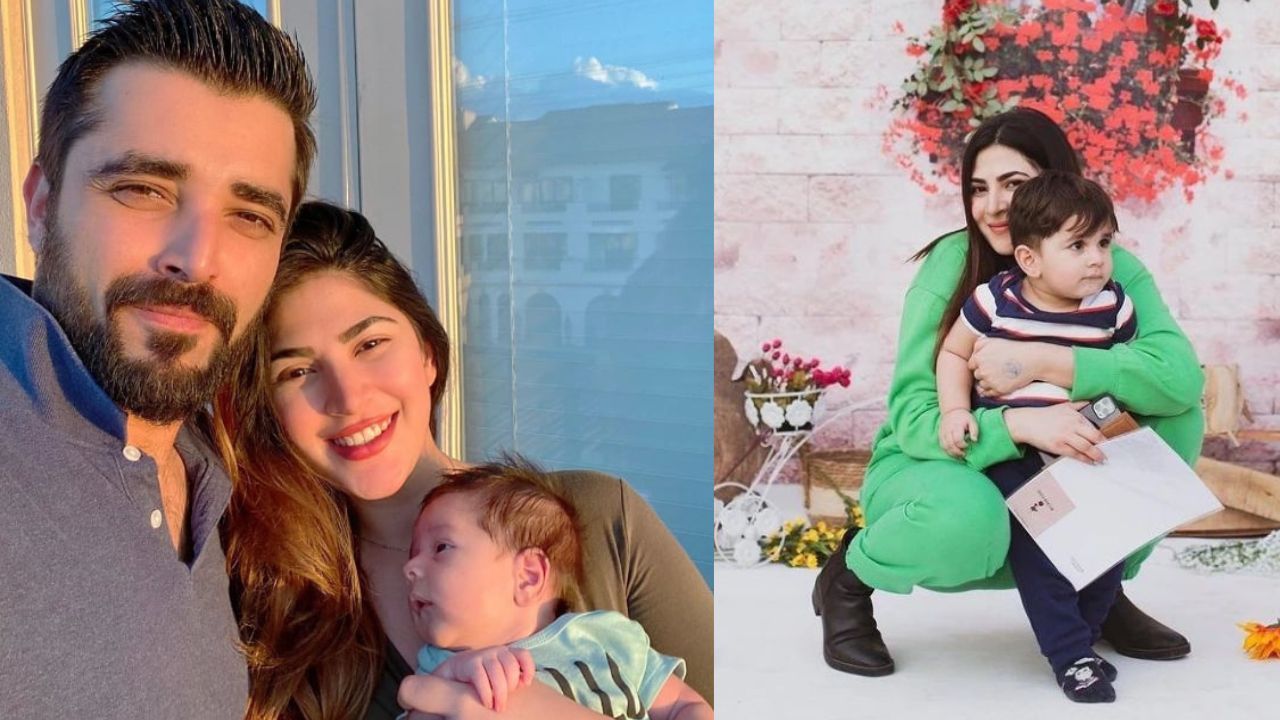
Actor and artist Naimal Khawar recently opened up about her experience with postpartum blues and embracing motherhood on Zara Noor Abbas’s podcast, No Momsense. She discussed the challenges she faced after becoming a mother, the support systems she relied on, and the lessons she learned.
She candidly admitted that she wasn’t prepared for the emotional toll of motherhood. She recalled that her pregnancy during the peak of COVID-19 was mostly peaceful, thanks to her supportive husband Hamza Ali Abbasi. However, she said the postpartum phase was unexpected and it took her three years to fully recover.
“I wasn’t aware that this phase would come. No one told me,” she said. “My elder sister told me she’d be there if I needed anything, but I didn’t realize what she meant. All of a sudden, I felt really angry. There would be nights where I’d be depressed and cry my heart out for no reason. It was the stress, the baggage that comes with having a child.”
She explained how the societal shift in focus—from the mother during pregnancy to the baby post-birth—left her feeling forgotten and overwhelmed.
Adding to her ordeal was the physical toll on her body. “The first three months after giving birth are very important. I never had backache before, but this pain would crawl up my spine while I was simply having dinner. It was so bad I’d start crying. For one year, I tried everything—gym, exercise—but nothing worked. Then a doctor recommended Moringa powder, which healed my body. Otherwise, I couldn’t even pick up my baby.”
For Khawar and Abbasi, parenthood also meant reimagining their relationship dynamics and clearly defining their roles.
“When Mustafa came into our lives, we sat down and talked. I think everyone should talk, even before marriage. You should discuss expectations about marriage and having a baby. We decided that he’d earn and I’d take care of the baby, but we can also switch if needed. Women need to have their own lives too.”
Commenting on the unfair societal expectations placed on women, she added, “In our society, the pressure of being a homemaker is always on the woman. If a man even changes a diaper, he’s celebrated. Thankfully, Hamza is very supportive. Whenever I have a shoot, he takes care of Mustafa. Right now, I am here and he is with the baby.”
The road to recovery was neither easy nor short for Khawar. It took her three years to regain a sense of normalcy. “I couldn’t paint anymore, I would sit with a paintbrush in one hand, and stare at the canvas,” she said.
“For someone like me, who lived a free life—studying in an art school, being on set, or travelling—it was hard to adjust.”
What helped Khawar most, she shared, was setting boundaries and focusing on mental health. “Nobody talks about this, but it’s also very important to cut out toxic people from your life, especially before and after pregnancy. Your friends circle naturally changes because you stop relating to people who aren’t going through the same experience.”
She also credited Abbasi and her sister as pillars of support during the darkest times.
“Hamza was there through it all. My sister, through video calls, made sure I wasn’t getting any suicidal thoughts. I didn’t take therapy, but my doctor kept a check on me too. She made sure I left the baby with Hamza for an hour every day to take a walk or spend time with myself.”
Emphasising the significance of self-care, she continued, “It’s so important to keep your mental health in check and be in a happy state of mind. You have to prioritize yourself to be the best version for your child.”
As she reflected on her journey, she urged couples to have honest conversations and set realistic expectations before entering marriage and parenthood. She highlighted the need for society to change its approach to parenting, where fathers are equally responsible and mothers are given the space to rediscover themselves.