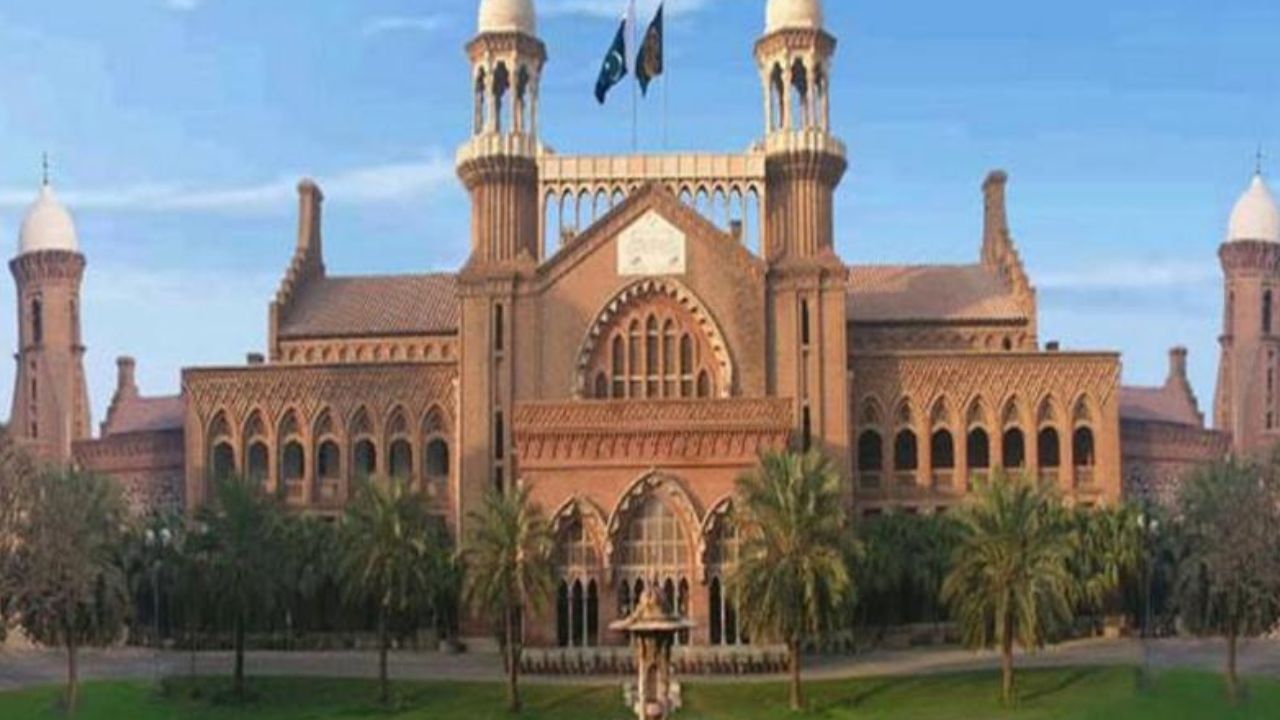
Justice Chaudhry Muhammad Iqbal of Lahore High Court (LHC) has ruled that a non-Muslim can’t inherit a Muslim relative’s property, neither as a successor nor a predecessor.
When hearing a case pertaining to the devolution of land among inheritors, the judge issued the verdict upholding the decisions of two lower courts. The case centres around the devolution of land spanning over 83 kanals in Gojra tehsil of district Toba Tek Singh.
As per the details of the case, after the Muslim owner passed away, the property was devolved to his three sons and two daughters.
However, a Muslim grandson of the deceased challenged the mutation in favour of one of his uncles while alleging that the uncle was an Ahmadi by faith and that he could not inherit property from his deceased Muslim father.
During the legal process of cross-examination, one of the heirs of the non-Muslim man also testified that his father was an Ahmadi.
The lower courts decreed in favour of the grandson, who had asked for the cancellation of the legal mutations.
However, the Lahore High Court observed that it was established that the man was an Ahmadi by faith, but he did not disclose this position while incorporating the inheritance mutation of his Muslim father.
“It is settled law that admitted facts need not be proved,” the judge maintained.
Justice Iqbal emphasised that according to Sharia, property left by a deceased Muslim landowner cannot be inherited by a non-Muslim heir. To explain further, the honourable judge quoted the sayings of the Holy Prophet (peace be upon him) from Vol. 4 of Sahih Muslim, asserting, “A Muslim does not inherit from a disbeliever, and a disbeliever does not inherit from a Muslim.”
The High Court asserted that in pre-partition times, British law protected the personal laws of the different communities living in India.
Similarly, Muslim Personal Laws were also made applicable to Muslims through the Muslim Shariat Application Act of 1937.
Resultantly, the principles of the Holy Quran and Sunnah are applicable to the inheritance of the estate of a deceased Muslim.
Quoting these facts, Judge Iqbal said that a non-Muslim was not entitled to inherit any share from the estate of his Muslim relative as either a successor or a predecessor.
Additionally, the provisions of Article 260(3), defining the terms for Muslim and non-Muslim for legal purposes, are applicable here as well.
The top court said that the trial court rightly ruled the suit, which was lawfully upheld by the appellate court.
While dismissing the petition, the Judge concluded in the verdict, “The concurrent findings of fact are against the petitioners which do not call for any interference by this court in the exercise of its revisional jurisdiction in the absence of any illegality or any error of jurisdiction.”