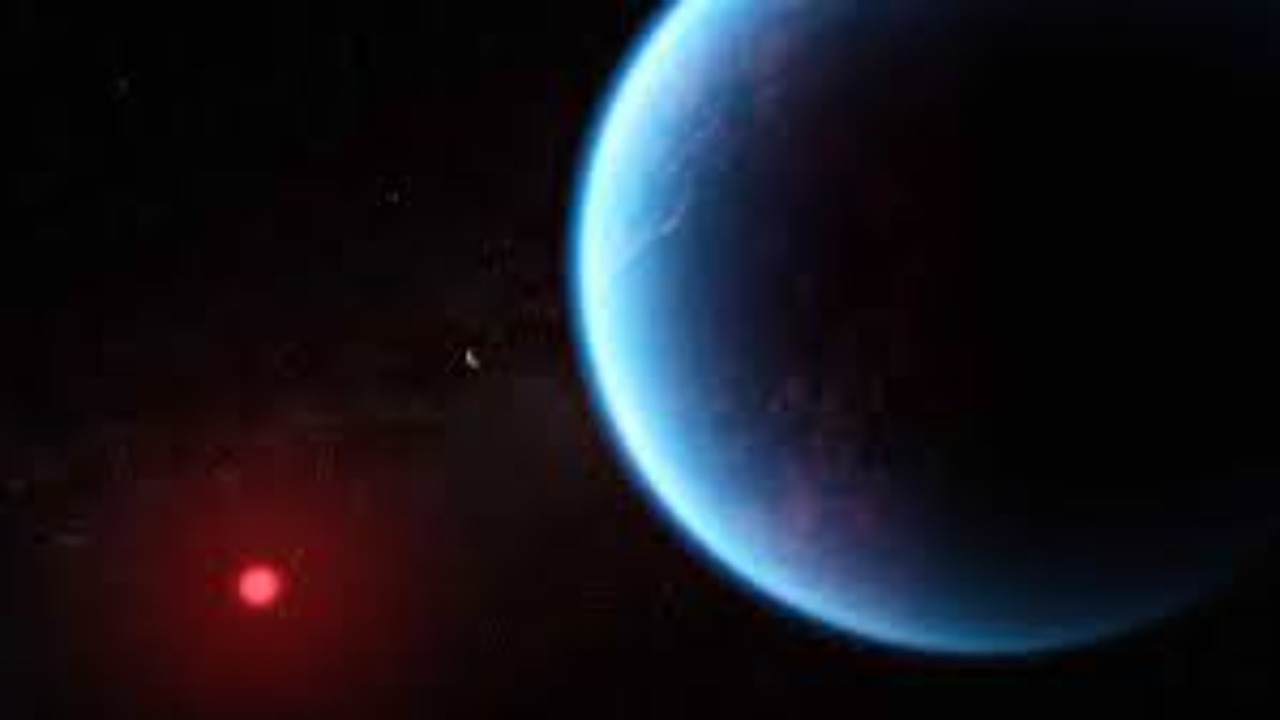
In a stunning revelation that has caught the world’s attention, recent discoveries have shifted the landscape of astrobiology and planetary science. For decades, the idea of alien planet life has captured human imagination, with countless stories in science fiction and speculation about life beyond Earth. But now, it’s not just fiction. Evidence of possible life on another planet has emerged, sending ripples across the scientific community and beyond. The discovery, linked to the exoplanet K2-18b, has ignited global excitement. Notably, NASA played a pivotal role, using its cutting-edge technology to find chemical markers that suggest the existence of life beyond our home planet. This discovery represents the strongest evidence yet for alien planet life—and it’s only the beginning.
Breakthrough Discovery Explained
The discovery on K2-18b, located 124 light-years away in the Leo constellation, has made headlines for several reasons. NASA’s James Webb Space Telescope (JWST) recently identified chemical markers in the planet’s atmosphere, including dimethyl sulfide (DMS) and dimethyl disulfide (DMDS), compounds typically produced by microorganisms on Earth, particularly in marine environments. Their presence on K2-18b suggests that microbial life could exist or have once existed there.
This breakthrough is made possible by the advanced technology of the JWST, which allowed scientists to analyze the planet’s atmosphere in unprecedented detail. Using its infrared capabilities, the telescope detected trace gases otherwise difficult to observe with traditional instruments. While the discovery doesn’t confirm alien life, it opens the door to the possibility, making the idea of life on other planets more plausible than ever.
Why This Discovery Stands Out
This discovery stands out not only for detecting life-related chemicals but also for challenging previous assumptions about where life can exist. While scientists have focused on the “habitable zone,” K2-18b is a hycean world, larger than Earth with possible oceans under a hydrogen-rich atmosphere. This raises the question: Can life exist outside the habitable zone?
Unlike previous claims of alien life, such as on Mars or Venus, this discovery is supported by concrete evidence—life-related chemicals verified by the JWST. This makes alien planet life a more tangible possibility.
The excitement is palpable, with social media and news outlets buzzing about the discovery’s implications. For many, it’s a giant leap toward answering the question: Are we alone in the universe?
Earth vs. Other Planets: Why Life Thrives Here
While the excitement over the discovery on K2-18b is undeniable, it raises an important question: Why is life possible on Earth and not on other planets? To understand this, it’s essential to examine the conditions that make Earth uniquely suited to support life.
Earth is located in the “Goldilocks Zone,” the perfect distance from the Sun where temperatures allow water to exist in liquid form—a key ingredient for life. In addition, Earth has a stable atmosphere that protects life from harmful radiation, a diverse range of ecosystems, and a carbon-based biochemical system that supports life as we know it.
In contrast, most other planets in our solar system lack one or more of these crucial elements. For example, Mars, once thought to have supported microbial life, is now cold and dry with a thin atmosphere. Venus, on the other hand, has a surface temperature hot enough to melt lead due to its thick, toxic atmosphere.
However, as K2-18b’s discovery shows, there might be worlds out there that defy our expectations. This hycean world, with its thick atmosphere and potential oceans, could offer a different set of conditions that allow life to exist in ways we’ve yet to fully understand. The finding challenges the conventional idea that Earth-like conditions are the only ones that could support life.
What This Means for the Future of Space Exploration
So, what does this discovery mean for the future of space exploration? The implications are far-reaching. NASA’s next steps include sending more probes and telescopes to further explore K2-18b and similar exoplanets in the search for more signs of life. Scientists are already planning future missions to study this planet in greater detail, particularly looking for direct evidence of microbial life or biosignatures that would further confirm the planet’s habitability.
This discovery also signals a shift in the approach to space exploration. While much of the focus has been on Mars, the hunt for alien planet life now seems to extend to a broader range of planets. As technology advances, missions to study distant exoplanets in even greater detail could become the norm. In the long run, the exploration of alien planet life might provide humanity with not just answers, but a new direction for interplanetary travel and colonization.
As we continue to explore the universe, the dream of finding life on other planets becomes more tangible. This discovery could be the first of many, driving the push for advanced space missions and the possibility of humans one day venturing beyond Earth to explore—and perhaps even settle on—alien worlds.
Conclusion
The discovery of possible alien planet life on K2-18b has forever changed the landscape of astrobiology. It represents the strongest evidence yet that life beyond Earth is not just a theoretical possibility, but something that could be achievable. As NASA and other space agencies continue to explore the cosmos, the question of whether we are alone in the universe is shifting from “What if?” to “When?”
With the role of alien planet life NASA at the forefront of this journey, humanity stands on the cusp of an exciting new era of discovery. As we look to the stars, the findings from K2-18b are just the beginning—offering a glimpse into a future where life beyond our world might one day become a reality.
For more insights on space exploration, check out this post on asteroid impacts: Asteroid Hurtling Towards Earth Looks More Dangerous by the Minute.