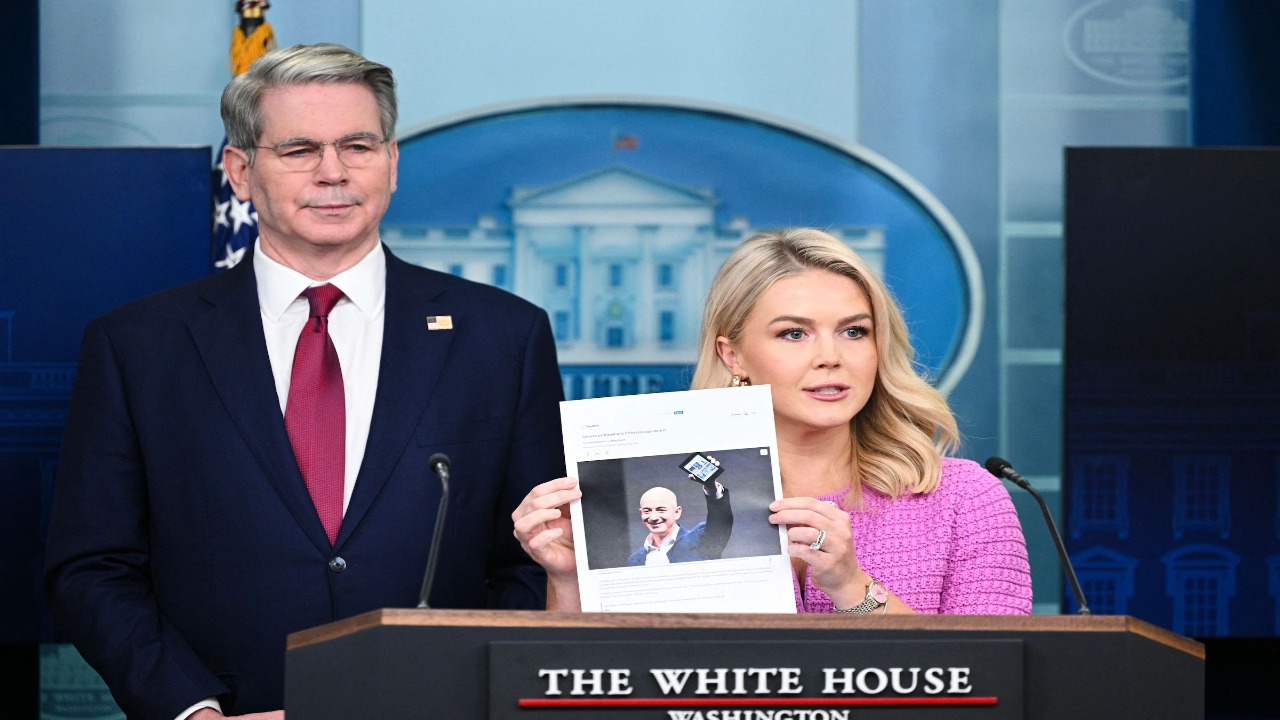
The battle over Amazon tariffs just escalated to the highest level of government. On April 29, 2025, President Donald Trump personally called Amazon founder Jeff Bezos to express his anger over reports that the retail giant was considering showing tariff-related price breakdowns on its platform. The idea, according to sources, was to show consumers how much of a product’s cost was attributed to import duties a move Trump reportedly viewed as provocative.
The reported change would have made it clear to consumers how the White House’s steep import levies particularly the newly imposed 145% tariffs on Chinese goods and the 10% blanket tariff on imports from other countries were influencing product pricing. While the concept was never rolled out, and Amazon has since denied any such plans for its main website, the controversy has ignited a political and economic firestorm.
Trump vs. Bezos: A Heated Exchange Over Amazon Tariffs
According to CNN, two senior White House officials confirmed that Trump was “pissed” after being briefed on the Amazon tariffs display idea. The president swiftly picked up the phone to call Bezos, warning against what he viewed as a public relations attack on his administration’s economic policy.
Trump later described the conversation as “a good call” and even praised Bezos: “He solved the problem very quickly. Good guy.” Despite this diplomatic tone, insiders painted a different picture of the president’s mood. “Of course he was pissed,” one senior official said. “Why should a multibillion-dollar company pass off costs to consumers?”
White House Press Secretary Karoline Leavitt further stoked the flames, labeling the alleged move “a hostile and political act.” Commerce Secretary Howard Lutnick echoed her sentiment in an interview with CNBC, calling it “nonsense” that a 10% tariff would significantly affect prices — despite overwhelming data suggesting otherwise.
Amazon Denies Implementation, Points to Spinoff Experiment
An Amazon spokesperson clarified that the idea of displaying Amazon tariffs was never intended for the main Amazon platform. However, they acknowledged that the company had internally discussed listing import charges on certain items sold through Haul, a spinoff site offering goods priced under $20.
“This was never approved and not going to happen,” Amazon’s spokesperson stated. While the clarification defused immediate tension, it highlighted the delicate position large corporations face when dealing with politically sensitive topics like tariffs and trade wars.
Transparency or Tactic? The Debate Over Tariff Disclosure
Supporters of the disclosure plan say it would increase transparency and educate consumers about the real-world impact of economic policy. Senate Minority Leader Chuck Schumer publicly encouraged other major retailers to follow suit, urging them to “show your customers how much tariffs are hurting in their pocketbook.”
Schumer’s remarks underscore a growing divide between business leaders and policymakers over Amazon tariffs and broader trade practices. While the Trump administration defends the tariffs as necessary for national security and domestic manufacturing, critics argue they function as a hidden tax on consumers one that corporations like Amazon are now being criticized for even considering to expose.
Industry Reactions: Temu and Shein Already Charging
Interestingly, other e-commerce platforms like Temu and Shein have already taken steps to adapt to the new tariff regime. Temu has introduced a visible import charge during checkout, and Shein has incorporated tariff costs into product pricing. Both companies source heavily from China and are among the most vulnerable to the administration’s latest tariff wave.
These adjustments stand in contrast to Amazon’s more cautious approach. Yet they illustrate the mounting pressure on global retailers to find ways to remain competitive and transparent amid escalating Amazon tariffs and trade restrictions.
Political Undercurrents: China, Censorship, and Corporate Loyalty
In a surprising twist, the White House also brought up a 2021 Reuters report linking Amazon to a “Chinese propaganda arm” that allegedly censored user reviews on its China site. Press Secretary Leavitt used the opportunity to encourage Americans to “buy American” and support domestic supply chains connecting current tariff policy with long-standing concerns about U.S.-China tech relations.
The broader subtext is unmistakable: the Trump administration expects loyalty, and any deviation from the narrative even in the form of pricing transparency — will be met with resistance. Amazon, eager to maintain its political capital, may have shelved its tariff breakdown experiment to avoid prolonged scrutiny.
Bezos, Trump, and the Billionaire Balancing Act
Interestingly, despite these tensions, Jeff Bezos has worked to maintain a cordial relationship with President Trump during his second term. He congratulated Trump after his reelection, dined at the White House, and even greenlit a documentary featuring First Lady Melania Trump. Amazon also contributed $1 million to Trump’s inaugural fund.
But not all has gone smoothly. Bloomberg’s Billionaire Index reports that Bezos’ net worth has dropped by $30 billion since the start of the year a decline partially attributed to Trump’s aggressive tariff policies and the resulting market uncertainty. As Amazon tariffs continue to impact supply chains and stock prices, even one of the world’s richest men isn’t immune.
Conclusion
The clash over Amazon tariffs is far from over. What began as a behind-the-scenes business decision escalated into a full-blown political confrontation, exposing the fragile intersection of commerce, transparency, and governance. While Amazon has backed off — for now — the broader question remains: should companies show customers how government policy directly affects them?
In an age where economic decisions are increasingly politicized, the lines between corporate responsibility and political allegiance are blurring. And as global trade tensions rise, this won’t be the last time we see companies like Amazon caught in the crossfire.
For more on how public figures navigate the chaos of online rumors and media scrutiny, read about how actress Alizeh Shah responded to false reports in this exclusive story on The Current.