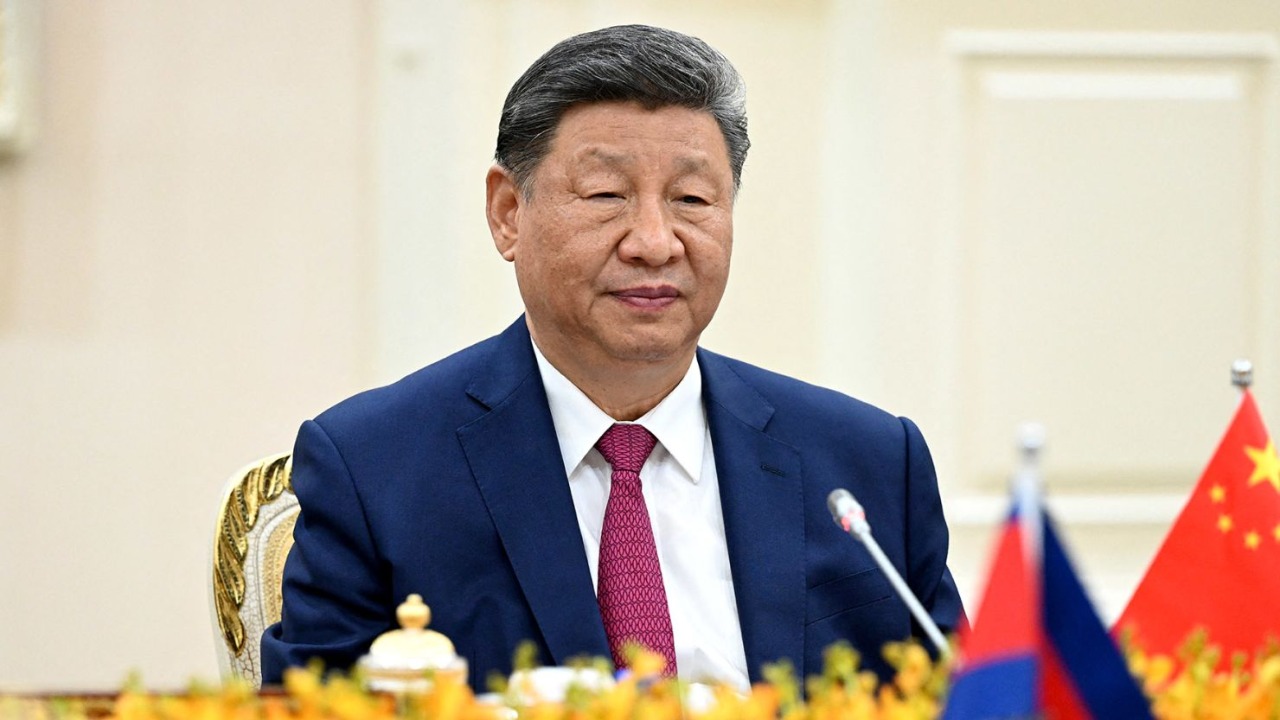
Xi Jinping is a name that dominates global political discussions today. As the paramount leader of China, he holds the key positions of General Secretary of the Chinese Communist Party (CCP), President of the People’s Republic of China (PRC), and Chairman of the Central Military Commission (CMC). These roles give him unparalleled influence and control in one of the world’s most powerful nations. This article aims to provide a detailed and insightful look at Jinping, his rise to power, his leadership style, and his influence on China and the world.
Who is Xi Jinping?
Xi Jinping was born into a politically connected family on June 15, 1953. His father, Xi Zhongxun, was a prominent revolutionary and senior official in the Chinese government. However, Jinping’s early life was marked by hardship during the Cultural Revolution (1966–1976), when his family fell from grace. Xi was sent to the countryside for re-education through labor, which shaped his worldview and sense of resilience.
After years of hardship, Xi studied chemical engineering and later political science at prestigious universities in China. He gradually ascended through the political ranks, with significant roles in various Chinese provinces. However, it wasn’t until 2012 that Jinping achieved the pinnacle of power, becoming the General Secretary of the CCP.
Xi Jinping’s Rise to Power
Xi’s rise to power was marked by strategic positioning and political victories. He was appointed Vice President of China in 2008, and in 2012, he succeeded Hu Jintao as the General Secretary of the Communist Party. A year later, he was formally elected President of China, cementing his control over the nation’s political, military, and economic systems.
Under Xi’s leadership, China has seen significant shifts in both domestic and foreign policies. Domestically, Xi has emphasized the importance of a strong and unified China, reinforcing the authority of the CCP and curbing potential challenges to its power. His anti-corruption campaign has been one of his most high-profile moves, targeting high-ranking officials and lower-level bureaucrats.
Xi Jinping’s Leadership Style
Xi Jinping is often described as a strong and assertive leader. His leadership style is characterized by a combination of traditional Chinese values, nationalism, and a firm grip on power. Unlike his immediate predecessors, Xi has positioned himself as an authoritative figure unafraid to challenge Western norms and assert China’s place in the global order.
The “Chinese Dream” and Nationalism
One of Xi’s most prominent political slogans is the “Chinese Dream,” which envisions a prosperous, powerful, and rejuvenated China. He frequently emphasizes the idea of China returning to its historical status as a global power. Under Xi’s leadership, there has been a strong focus on economic growth, technological advancements, and military modernization, all aimed at restoring China’s global standing.
Nationalism has also played a crucial role in Jinping’s policies. He has often championed Chinese sovereignty, particularly in Taiwan, Hong Kong, and the South China Sea. This has made Xi’s leadership controversial in many parts of the world, especially in the West, where there are concerns about China’s growing influence and assertiveness on the global stage.
The Belt and Road Initiative (BRI)
One of Xi Jinping’s flagship foreign policy initiatives is the Belt and Road Initiative (BRI), which seeks to build a vast network of infrastructure projects across Asia, Europe, Africa, and beyond. The BRI is seen as an effort by China to expand its global influence through economic partnerships. While the initiative has been praised for boosting trade and investment in developing countries, it has also raised concerns about China’s growing geopolitical power and the potential for debt-trap diplomacy.
Technology and Surveillance State
Xi Jinping has also been instrumental in pushing China to become a global leader in technology. Under his leadership, China has made significant strides in artificial intelligence, 5G networks, and high-tech manufacturing. However, this technological growth comes with a downside—China’s increasing use of surveillance technology to monitor its population. Critics argue that Xi’s government is tightening control over its citizens through digital means, with facial recognition technology, social credit scores, and extensive data tracking becoming the norm.
China’s Xi Jinping Travels to Russia for Victory Day
In recent years, Jinping’s influence has also expanded on the international stage. One notable example is his ongoing relationship with Russia. In May 2025, Xi Jinping traveled to Moscow for the 80th anniversary of the Soviet Union’s victory in World War II, also known as the Great Patriotic War.
A Strong Alliance with Russia
Xi’s visit to Russia marks another chapter in the growing alliance between China and Russia. With over 29 foreign leaders in attendance, the Victory Day celebrations allowed both countries to demonstrate solidarity. Moscow has been keen to show that Western efforts to isolate Russia through sanctions and diplomatic pressure have largely failed. By attending this event, Xi Jinping helped reinforce the close relationship between China and Russia, two of the world’s largest and most powerful countries.
Implications for Global Politics
The China-Russia partnership, as highlighted by Jinping’s visit, has significant implications for global geopolitics. Both nations are increasingly positioning themselves as challengers to the West, especially in the face of U.S. influence. By attending major events like the Victory Day celebrations, Xi strengthens China’s ties with Russia and sends a clear message to the West that China is committed to standing by its allies.
Economic and Military Collaboration
Beyond political symbolism, Jinping’s state visit to Russia also carries economic and military significance. Both countries have ramped up their energy, defense, and trade cooperation. China is one of Russia’s largest trading partners, and the two countries have made strides in building closer military ties. This growing alliance between China and Russia will likely continue to shape global relations for years.
Xi Jinping’s Global Influence and Future Challenges
Jinping’s leadership transformed China into a major global power, but his rule was not without challenges. Domestically, China faces issues such as an aging population, income inequality, and environmental degradation. Xi’s assertive policies have led to growing tensions with countries like the United States, India, and Japan on the global stage.
Relations with the United States
One of the most significant aspects of Xi Jinping’s tenure has been his relationship with the United States. Under Xi’s leadership, China has taken a more confrontational stance in international trade, technology, and military affairs. The trade war between China and the U.S. during the Trump administration and ongoing concerns over intellectual property theft and human rights have strained relations. However, Xi’s government has also sought to build strategic partnerships with countries in Africa, Asia, and Europe, diversifying China’s global alliances.
The Future of Xi Jinping’s China
Looking ahead, Jinping’s vision for China remains firmly rooted in his goal of achieving the “Chinese Dream.” As the country grows economically and militarily, Xi will likely face increasing pressure to balance internal reforms with external challenges. His leadership style will continue to be a subject of global scrutiny, particularly as China plays an increasingly influential role on the world stage.
Conclusion
Jinping is one of modern history’s most powerful and influential leaders. Through his leadership, China has become a formidable force on the global stage, with growing influence in economic and political affairs. While significant achievements have marked his governance, it has also raised questions about China’s future direction and its relationship with the rest of the world. Xi’s strong leadership and vision for China’s rejuvenation will likely define global geopolitics for years.
In a humorous twist on international relations, Shafaat Ali mocks India’s “Operation Sindoor” in a viral spoof of Modi.