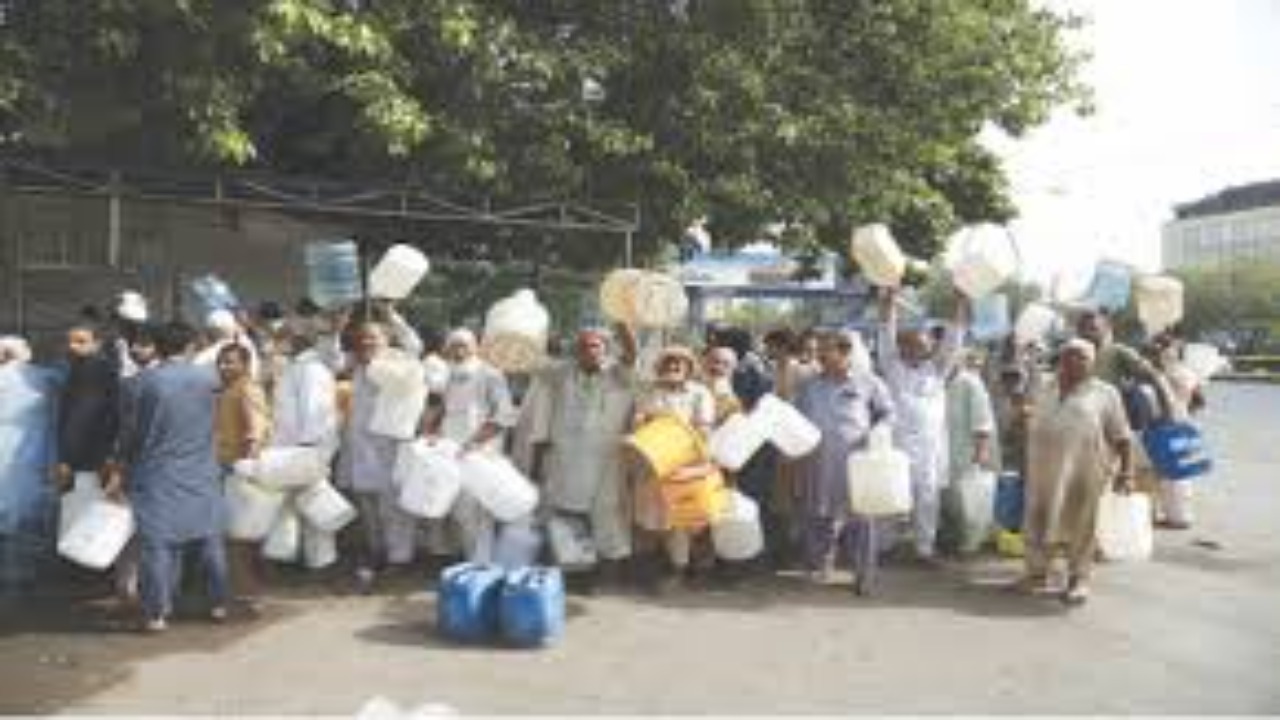
The Karachi severe water crisis is far from over. Despite official claims that the situation is improving, many parts of the city have remained without water for nearly two weeks. The crisis began after a major pipeline burst near Karachi University on April 29, and citizens are still waiting for regular supply to resume.
Although repair work on the pipeline was completed, the water situation in many areas remains grim. Residents are growing increasingly frustrated. Many are forced to buy water at high prices just to meet their daily needs.
What Happened?
On April 29, an 84-inch main pipeline near the Karachi University campus burst, significantly disrupting the water supply to the city. This pipeline is one of Karachi’s most crucial water sources. The Karachi Water and Sewerage Corporation (KWSC) immediately initiated repair work, but it was not as simple as expected. The repair work, which was initially projected to take 96 hours, took far longer than anticipated due to the replacement of a 32-foot section of the damaged line.
Following the damage, Sindh Chief Minister Syed Murad Ali Shah took notice of the situation and directed KWSC to restore the water supply by the following Saturday. However, despite this directive, full water supply has not yet been restored in many areas, and some citizens have not seen water for over 12 days.
Water Still Not Available
Residents in several localities, including PECHS, Gulshan-i-Iqbal, Scheme 33, Bahadurabad, Tariq Road, and more, have been without water for over 12 days. Even when the water supply does return, it comes with very low pressure, making it almost impossible for residents to use. In many cases, water is only available briefly, and the supply is inadequate.
Zaid Rabbani, a resident of PECHS, expressed his frustration. “There has been no water since the pipeline burst. We had to arrange for a water tanker, but it cost us a lot of money,” he said.
Tauseef Ali Shah, a resident of Gulshan-i-Iqbal, also shared his experience. “The supply came back for just an hour. However, the pressure was so low that we could only fill two buckets of water,” he lamented.
This situation has left thousands of residents struggling to meet their daily water needs. Many are resorting to buying expensive water tankers, further increasing their burden.
Supply vs. Demand
Karachi, a city of over 20 million people, requires more than 1,200 million gallons of water daily (MGD). On average, the city receives around 650 MGD, but due to the recent pipeline damage, the supply has dropped to just 400 MGD, which is only about 40% of the required amount.
With the temperatures soaring in recent weeks, the crisis has become even more pressing. Water is essential not only for drinking but also for sanitation, cooking, and other daily activities. As a result, the ongoing water shortage has become a significant public health concern. Families are now facing serious issues related to hygiene, which could lead to other health risks.
The situation is also becoming a significant burden on businesses, mainly where water is used for manufacturing or food production. Many have had to scale back operations due to the lack of water.
Why the Delay?
While KWSC officials have stated that the regular water supply will be restored soon, the situation remains uncertain. They explain that water pressure has been kept low deliberately as a precautionary measure to avoid further damage to the repaired pipeline. Additionally, the entire water distribution system had been drained during the repair work, and now refilling the network is gradually taking place.
KWSC sources say that water levels in the city’s main lines are returning to normal, and they expect the situation to stabilize soon. However, many residents remain skeptical, given the persistent delays.
Despite KWSC’s reassurances, people are beginning to lose confidence in the utility’s ability to resolve the issue promptly. Their patience is wearing thin, and the frustration is growing, especially as the days without water drag on.
Old Infrastructure to Blame
One of the primary reasons for the delay and the severity of the Karachi water crisis is the poor condition of the city’s water infrastructure. The main pipelines were laid back in 1956 and 1971. Over the years, the pipes have deteriorated, and leakages have become a common problem. Many of these pipelines are well past their lifespan, and their inability to handle increased pressure or rapid repairs makes them prone to frequent failures.
This is not the first time Karachi has experienced water shortages due to infrastructure issues. Karachi’s water supply network had been plagued by similar problems earlier, but the city has not seen significant upgrades in the past few decades. The lack of investment in modernizing the city’s water supply system is one of the key contributors to this ongoing crisis.
Public Response
Residents are taking to social media to express their frustration as the water crisis continues. Videos showing dry taps and empty water tanks are circulating widely, and many people are voicing their concerns online. There are growing calls for the government to take more decisive action to address the issue. Protest rallies have been organized in several areas, demanding a permanent solution to the water crisis.
People want the government to immediately fix the city’s infrastructure and ensure such a situation does not happen again. The KWSC demands better water management, stronger regulation, and more efficient operations.
What’s Next?
KWSC has assured the public that regular supply will resume within a few days, but many citizens are doubtful. They have heard similar promises, only to face continued delays. The situation is becoming dire, and the public is growing more impatient with every passing day.
The Karachi severe water crisis is a warning sign that the city’s water supply system is outdated and ill-equipped to meet the demands of its growing population. Without urgent action, Karachi could face even more severe water shortages.
Conclusion
The ongoing Karachi severe water crisis highlights the critical need for long-term solutions to the city’s water woes. The city’s infrastructure must be upgraded to handle the demands of its growing population. Until then, the people of Karachi will continue to face hardships due to the inadequate water supply. This crisis is not just about a pipeline burst; it reflects deeper systemic issues that need immediate attention.
Also Read: ‘Six teams, zero fear’; Here’s when PSL 10 is restarting