Brazil recently hosted the BRICS summit in Rio de Janeiro. But two important leaders did not attend. Russian President Vladimir Putin skipped the trip because of an arrest warrant. Chinese President Xi Jinping also stayed away and sent his prime minister instead. These absences made headlines and raised doubts about unity in the group.
Still, the BRICS countries showed a strong front. They criticized U.S. trade tariffs introduced during Donald Trump’s presidency. They called them unfair and harmful to the world economy. The leaders at the summit spoke in favor of global cooperation. They said the world should be multipolar, not led by just a few rich countries.
Global health, artificial intelligence, and climate change were also part of the talks. But the main message was clear. The BRICS countries want more power in global decisions. They want to reduce the control of the West over world affairs.
What Are BRICS Countries?
The BRICS countries include Brazil, Russia, India, China, and South Africa. The name BRICS comes from the first letter of each country. These nations started working together in 2009. They wanted to build a new group outside of Western control.
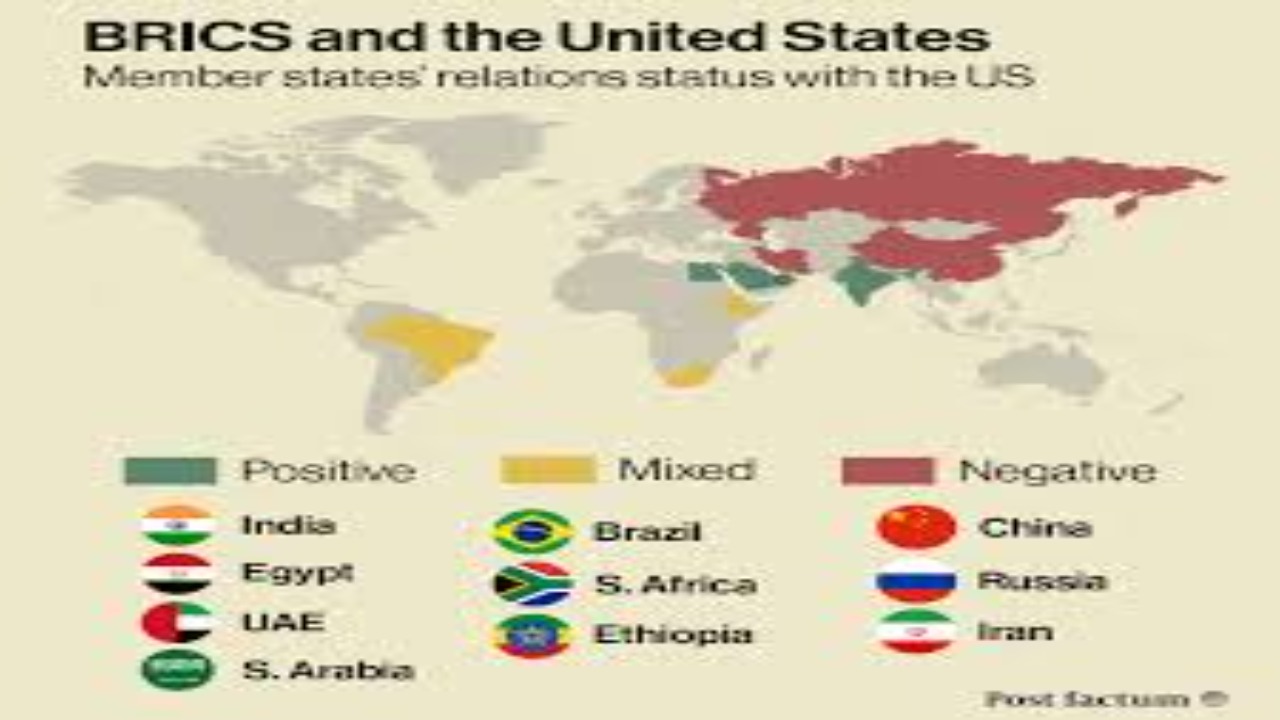
The original five members now have new partners. In recent years, BRICS added more countries. These include Egypt, Iran, Ethiopia, Indonesia, Saudi Arabia, and the United Arab Emirates. The group now covers large parts of Asia, Africa, and the Middle East.
Together, the BRICS countries have almost half the world’s population. They also cover over one-third of the Earth’s land area. Their total economic power is around one-fourth of the global output. This shows how big and important the group has become.
What BRICS Countries Want
The BRICS countries believe the current world system is unfair. They say the West, especially the United States and Europe, controls global trade, finance, and politics. The BRICS nations want change. They want equal treatment and a bigger voice.
One of their key goals is to reduce the power of the U.S. dollar. Many global deals are done in dollars, which gives the U.S. a lot of control. BRICS leaders have discussed creating their currency for trade. They also support using local currencies in deals between themselves.
BRICS has its bank, too. It is called the New Development Bank. This bank gives loans to help members build roads, power plants, and schools. It is seen as a rival to the World Bank and the International Monetary Fund.
Tensions Within BRICS
Even though the group looks strong, there are problems. The BRICS countries are very different. They have different cultures, goals, and political systems. Some are democracies, while others are run by one party or one leader.
India and China, for example, are not always friendly. They have had border fights and do not always trust each other. Russia is also a special case. Its war in Ukraine makes it harder for other BRICS members to stand by it in public.
Iran and Saudi Arabia recently joined the group, but they have a long history of conflict, too. These differences could make it hard for BRICS to act as one team. Still, they agree on one thing. They all want to reduce Western control in global affairs.
The Role of the United States
The United States is watching the BRICS group closely. For many years, the U.S. has been the leader of the world economy and politics. The rise of BRICS could change that.
If BRICS countries start trading without the dollar, that could reduce U.S. financial power. If the New Development Bank grows stronger, it could replace the World Bank in many regions. These shifts may affect how the U.S. deals with developing nations.
At the same time, the U.S. still has strong allies and more global influence. It is not easy for BRICS to match that. The group must first solve its internal issues before it can compete directly with the West.
Can BRICS Countries Shape the Future?
The BRICS countries want a new world order. They want fair trade, equal power, and respect for all cultures. They are asking for a system where the Global South has a real voice.
This is an important goal. For too long, many countries have felt left out of key decisions. BRICS offers them a platform. But change will not be easy. The group must stay united and clear about its goals.
Some experts say BRICS is more of a message than a real power. It has no army or strict rules. But others believe that even without those things, BRICS can still change the world. Its growing membership and strong message are signs of a shift.
Final Thoughts
The BRICS countries are gaining attention around the world. Their leaders are standing up to old powers and asking for fairness. They are building new systems and working with each other more than ever before.
At the same time, challenges remain. The group is large and diverse. Not all members agree on everything. But their common goal is clear. They want a world where power is shared and all nations have a say.
For people in the United States, it is important to understand this shift. The BRICS countries are not just distant nations. They are part of a global change that affects trade, money, politics, and peace.
As BRICS continues to grow, it could shape the future of the world. Whether it becomes a true force or fades over time will depend on how well its members work together. But one thing is certain. BRICS has already changed the conversation about global power.
Read the full story here: Australian man dies from ‘extremely rare’ bat bite virus.