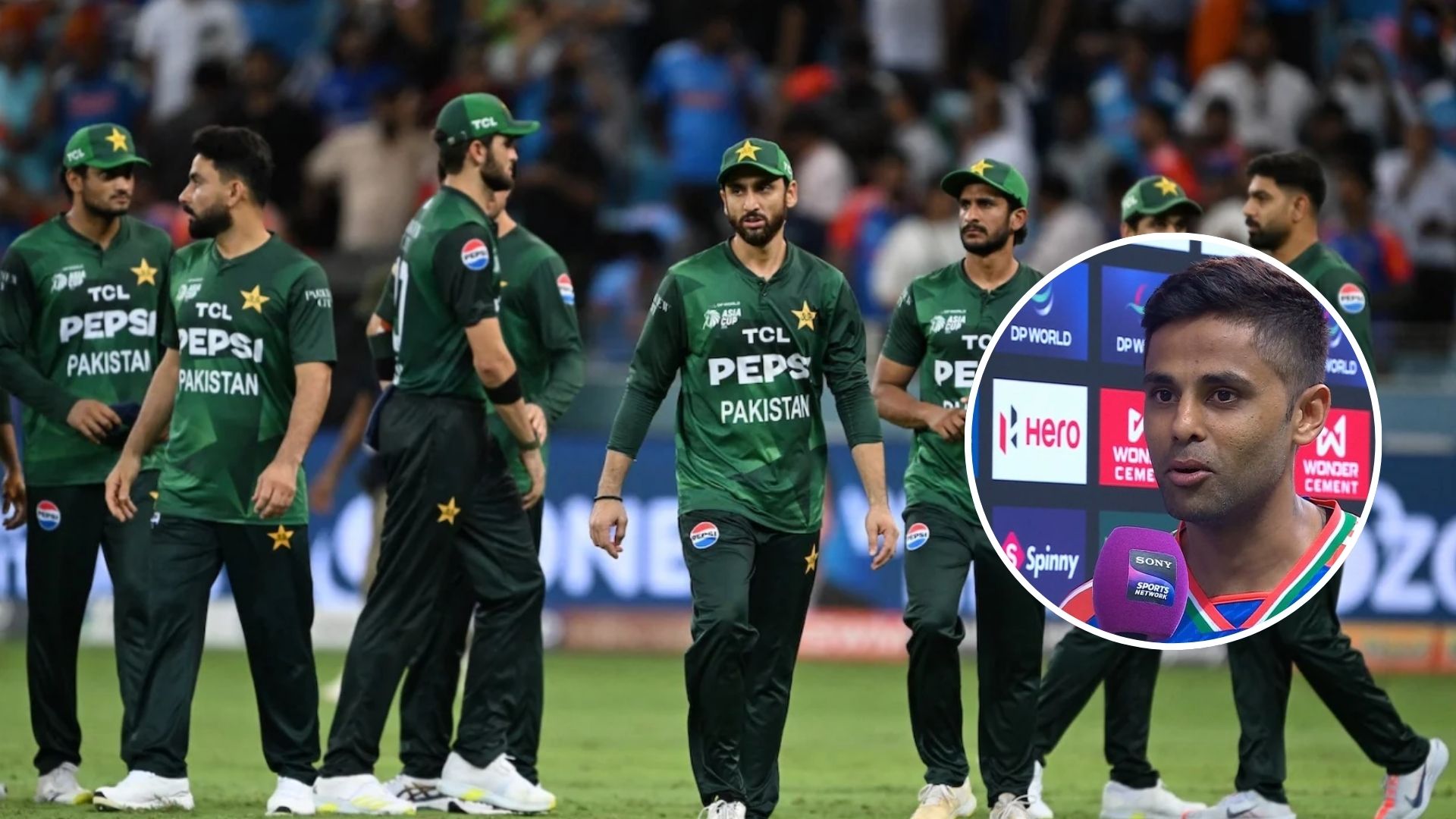
The Asia Cup 2025 clash between Pakistan and India at Dubai International Stadium ended in controversy, not just on the field but also off it, as Indian skipper Suryakumar Yadav faced heavy backlash for mixing politics with cricket and refusing to follow handshake traditions.
At the toss, Yadav avoided shaking hands with Pakistan captain Salman Ali Agha. The snub came days after he faced intense criticism in India for greeting Pakistan Cricket Board chairman Mohsin Naqvi, a moment that went viral on social media.
The tensions deepened after India’s seven-wicket win. Instead of greeting their rivals, the entire Indian team walked straight back to the dressing room. Reports said Salman Ali Agha and head coach Mike Hesson even approached the Indian camp, but no player came out.
Yadav then made political remarks, dedicating the win to the Pahalgam terror attack victims and praising the armed forces during the post-match ceremony. “Perfect occasion, taking the time out — we stand by the families of the victims of the Pahalgam terror attack. We express our solidarity. I want to dedicate this win to all our armed forces who showed great bravery. I hope they continue to inspire us, and we give them more reasons on the ground to smile whenever we get the opportunity,” he said.
“We took a team call. We had come only to play. We had given them a reply. Some things are beyond sportsmanship,” Suryakumar said.
The comments sparked outrage online. Mohsin Naqvi, PCB and Asian Cricket Council (ACC) chairman, called it “utterly disappointing to witness the lack of sportsmanship today. Dragging politics into the game goes against the very spirit of sports. Let’s hope future victories are celebrated by all teams with grace.”
Social media users also voiced frustration. One user wrote: “Dedicating a win to victims is understandable, but dragging armed forces into a cricket ceremony crosses ICC’s code of conduct and the spirit of the gentleman’s game. Sadly, we handed them this stage through our own poor play; had we won, there’d be no room for such theatrics.”
Another user said: “The Indian captain’s political remarks after the match are a blatant violation of ICC regulations and sportsmanship.”
A third fan added: “Politics should never hijack cricket. The world loves this game because it unites nations. Let’s ensure every victory shines with respect, humility and sportsman’s spirit — that’s the real win.”
One more user agreed: “Cricket should not be politicized, I agree.”
Another post read: “Totally agree, it was a cheap act.”
Pakistan’s head coach Mike Hesson said the team was disappointed. “We were ready to shake hands at the end, but the Indian players were already gone. It was a sad way to close the match,” he said.
Analysts linked India’s behavior to growing national pressure after military setbacks earlier this year, including the downing of Indian Rafale jets. On Pakistani social media, hashtags mocking India’s Rafale losses trended as fans called the incident another example of India’s frustration spilling onto the cricket field.
Traditionally, cricket captains shake hands at the toss and both teams greet each other after the match.
Reports revealed that the referee himself had requested both captains not to shake hands at the toss. Pycroft, who hails from Zimbabwe, became a central figure in the controversy.
After the controversy unfolded, Pakistan lodged an official protest after India refused to shake hands following their Asia Cup 2025 clash in Dubai.
Team manager Naveed Akram Cheema complained to match referee Andy Pycroft, who admitted he had been “asked” to make such a request, sparking anger in the Pakistan camp.