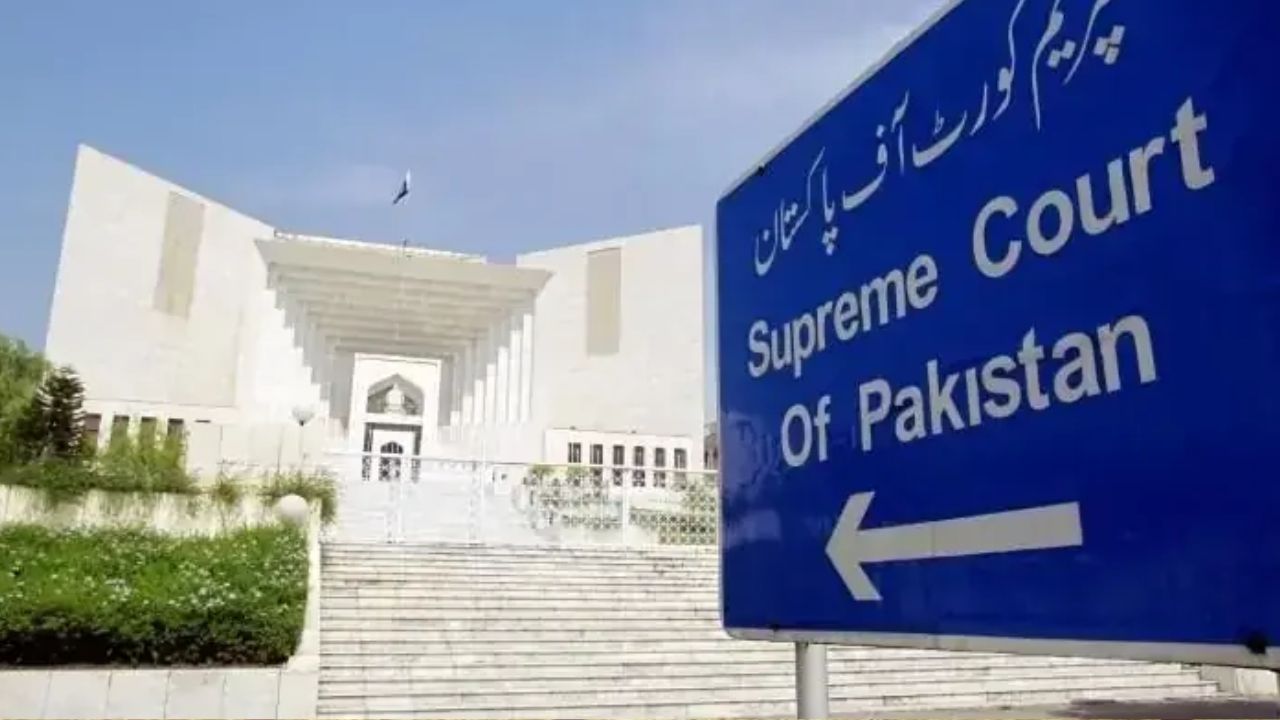
A day after the 27th Amendment significantly curtailed its powers, more than a dozen Supreme Court judges gathered in the chief justice’s chambers to discuss how the judiciary should move forward.
But even though the judges were clearly frustrated, a suggestion that they all retire in protest was met with silence, a news report has revealed.
Four Supreme Court judges were promoted to the Federal Constitutional Court on November 14, the day of the meeting, which was presided over by Chief Justice of Pakistan Yahya Afridi.
The meeting took place after the resignations of Justice Mansoor Ali Shah and Justice Athar Minallah a day earlier.
The two departing justices and Justice Salahuddin Panwhar had written to the CJP before the meeting, requesting that he call a full court session to discuss the 27th Amendment in order to “discharge their solemn duty to the Constitution.”
A fly-on-the-wall account of the judges’ internal discussions on how to respond to the amendment revealed deep unease over parliament’s expanding powers.
The conference, which took place in the CJP’s chambers, began in a noticeably tense atmosphere, with senior justices referring to the development as “a very sad day,” according to a person acquainted with the proceedings.
The atmosphere grew even more heavy when one judge asked whether the Supreme Court had any constitutional authority left to restrain parliament from passing legislation or constitutional amendments.
While the judges continued weighing the consequences of the amendment, the CJP reportedly remarked that rather than sending letters, the judges should have approached him directly, stressing that “his doors were always open”, the source added.
At least 13 judges attended the meeting. Justice Munib Akhtar and Justice Ayesha A. Malik were absent, while Justice Musarrat Hilali was unable to join due to illness.
The Federal Constitutional Court had previously received nominations for the remaining four judges: Ali Baqar Najafi, Hasan Azhar Rizvi, Aamer Farooq, and Aminuddin Khan.
‘Strong institutional response’
The judges apologized for their colleagues’ resignations during the discussion and emphasized the necessity for a strong and unified institutional response from the court.
Some members suggested that they issue a formal letter to the government, but the CJP repeated his earlier point that judges should have reached out to him directly instead of writing letters.
The source said the CJP further clarified that the Supreme Court still held the authority of judicial review to examine the constitutionality of legislation but only after a law had been enacted. He emphasised that the court “cannot stop parliament from making laws”.
As calls for a forceful institutional response continued, one participant proposed that all judges including the CJP should resign if they truly wanted to register a meaningful protest beyond the constitutional framework, the source stated.
But the idea was met with silence, signalling that there was no agreement on such a drastic step.The meeting ultimately concluded without any consensus.