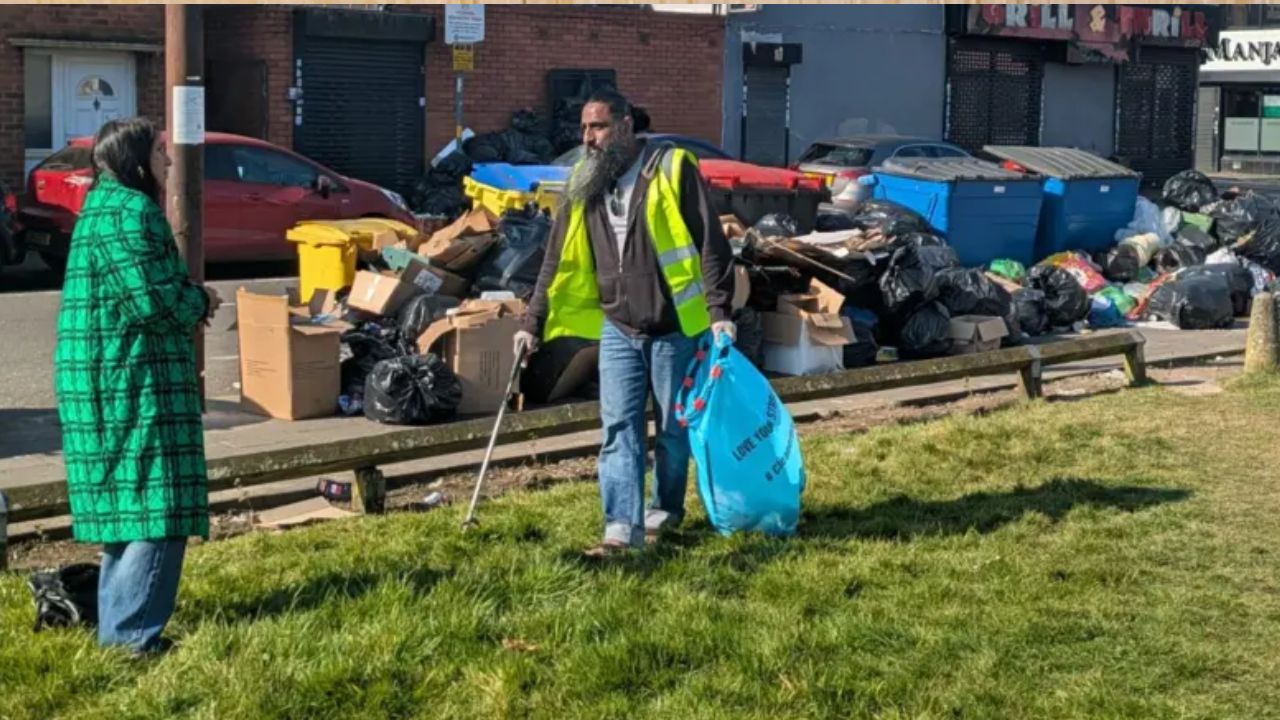
The Punjab Waste Authority has engaged digitally with volunteers in Birmingham, England, to share strategies for maintaining clean streets and neighbourhoods.
The Punjab team shared a recognized waste-management technique used in Pakistan through online discussions as part of the collaboration.
Guidance centered on how to properly dispose of waste, educate neighbors, and emphasize the value of a clean environment.
Naveed, a community volunteer and organiser in Birmingham, said:
“It is unfortunate to admit this, but the biggest problem is our own people.”
“Many believe that paying taxes gives them the right to throw rubbish anywhere. Picking up trash in our community has become a necessity rather than a positive activity. Islam teaches the importance of cleanliness, yet we have fallen behind in practising it.”
Naveed added that the interactions introduced a new perspective on civic responsibility:
“After speaking to the Punjab team, I realised that instead of taking pride in our environment, we in the West have begun behaving like a developing country.”
Lahore Waste Management Company Chief Executive Officer Babar Sahib Din said:
“The Punjab Waste Authority’s blueprint is simple yet effective. It focuses on education, community engagement, and converting waste into something useful.”
He added: “We taught communities how to dispose of waste correctly and how to convert it into something valuable. We are proud that our work has been recognised internationally, and we are enthusiastic about sharing it with a city like Birmingham, which is facing waste-management challenges.”
Birmingham has frequently seen overflowing trash cans after sanitation workers went on a strike.
Birmingham volunteers and the Punjab Waste Authority have received advice on the initiative from Professor Faraz Khan, a climate change specialist at St. Mary’s University. He told the BBC that Punjab has created a waste management model that could be adapted by institutions worldwide.
Waste can be efficiently utilized and reinvested, he continued, and Birmingham might profit from such approaches.
Additionally, Faraz noted that Islam emphasizes cleanliness as a form of devotion, which is reflected in the volunteers’ work. He also pointed out that although Birmingham citizens recognize the value of cleanliness, practices do not always align with these principles.
Naveed pointed towards other issues, such as council members who merely participate in elections, stressing the need for leaders who are dedicated to maintaining clean neighborhoods. He said community voices should be represented in local elections, as these individuals work in the best interests of their areas.
He added that the initiative seeks to create an atmosphere that Birmingham locals can be proud of by combining local volunteer efforts with Punjab’s experience. For the volunteers, the project is not just about waste disposal but also about connecting cities and promoting civic responsibility.