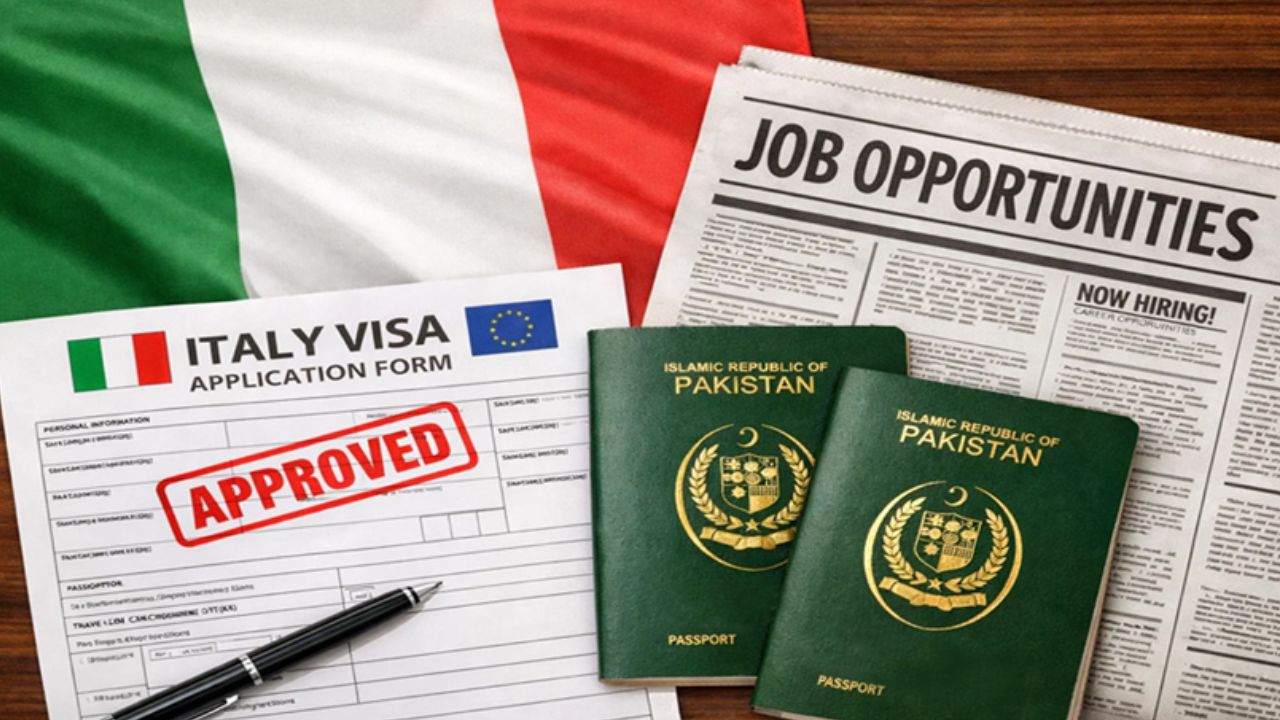
Italy has allocated 10,500 jobs for Pakistani workers over the next three years, creating a structured legal pathway to enter Europe.
According to the Ministry of Overseas Pakistanis and Human Resource Development, the arrangement will allow 3,500 Pakistanis to work in Italy annually, split between 1,500 seasonal positions and 2,000 non-seasonal roles.
With the initiative, Italy has become the first European country to formally open its labour market to Pakistan through a quota-based system. Officials believe the model could encourage similar agreements across Europe.
The development comes as outward migration from Pakistan accelerates sharply.
According to reports, nearly 2.9 million Pakistanis left the country over the past three years due to low wages, high inflation, unemployment and rising education costs.
The Economic Survey 2024-25 showed more than one million Pakistanis went abroad for work in a single fiscal year.
Officials view the Italian quota as a legal alternative to irregular migration, which reportedly surged 280% in 2022.
Thousands of Pakistanis attempt dangerous journeys through Libya, Egypt and other transit routes, often falling victim to smugglers or facing detention, deportation or death while crossing the Mediterranean.
The state-backed European access aims to reduce desperation-driven migration and direct workers into regulated channels.
The positions in Italy have been allocated across shipbreaking, hospitality, healthcare and agriculture. Available roles include welders, technicians, chefs, waiters, housekeeping staff, nurses, medical technicians, farm workers and agricultural laborers. The scheme targets skilled and semi-skilled labor to address Italy’s workforce shortages.
Punjab, Pakistan’s largest source of overseas labor, stands to gain most from the arrangement. Official records show the province has sent more than 7.2 million emigrants since 1981, followed by Khyber Pakhtunkhwa (KP), Sindh and Azad Jammu and Kashmir.
Reports indicate around 40% of Pakistanis, particularly in urban areas, want to leave the country, creating urgent demand for safe and legal migration options.