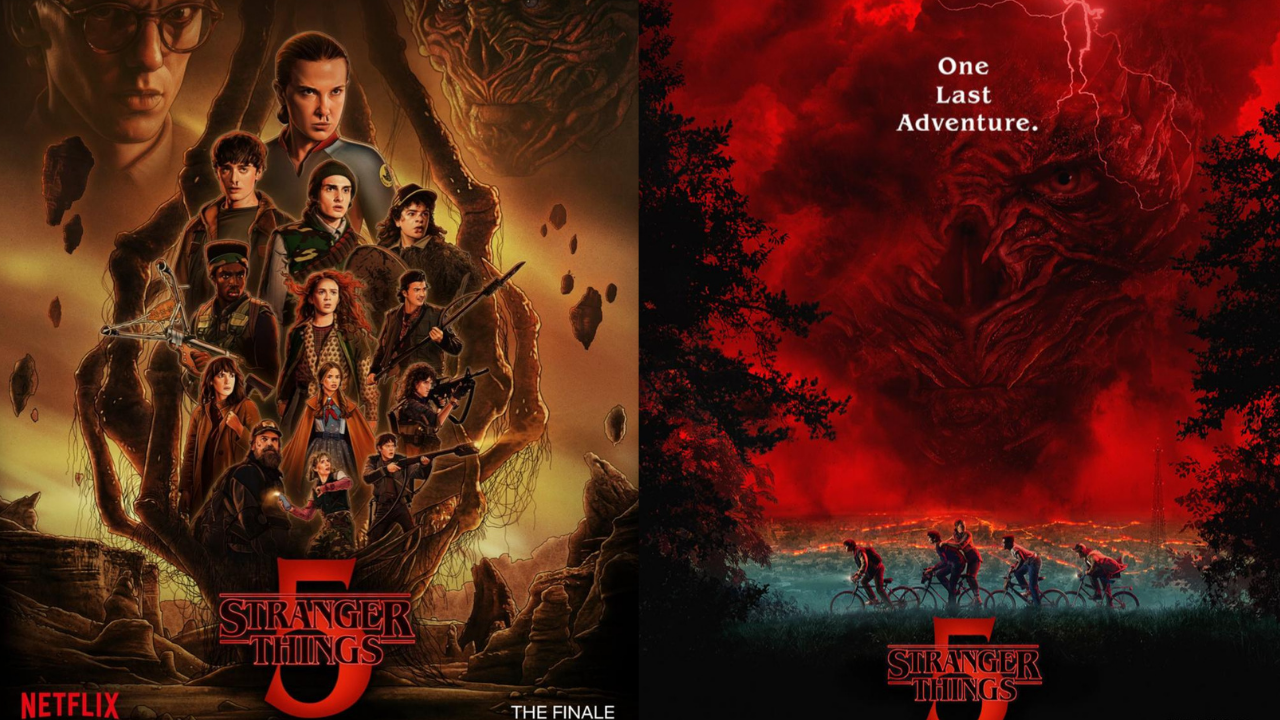
After nearly a decade and five seasons, Netflix’s monster hit show Stranger Things has finally wrapped up its story with a two-hour-plus finale that landed on New Year’s Eve. What started in 2016 as a nostalgic ’80s sci-fi adventure in Hawkins, Indiana, has grown into a sprawling tale of friendship, monsters, and alternate dimensions. The series finale attempted to balance a climactic showdown, emotional closure for its characters, and lingering mysteries that fans will debate for years.
The centerpiece of the finale was the battle against Vecna, now fully revealed as Henry Creel, One, and Mr. Whatsit, operating through the Mind Flayer. Inside the Abyss, Eleven faced Vecna directly, while her friends fought the Mind Flayer outside with flamethrowers, guns, and improvised weapons.
Nancy, with her big baddie energy, and Will, wielding his newfound powers, added memorable moments of heroism. Joyce’s head-on attack on Vecna was a standout sequence, proving that the heart of the story has always been teamwork and loyalty.
Yet, the finale raised more questions than it answered. How did the Mind Flayer, supposedly defeated in previous seasons, return with such immense power, only to be killed in minutes by the kids?
Much of the lead-up to the battle involved repetitive monologues between characters, like Hopper and Eleven, which slowed the tension rather than heightening it
Where did the demogorgons go? What happened to the pregnant women injected with Kali’s blood, who had been a central subplot earlier in the season? And the mysterious stone Henry carried in the cave, critical to his transformation into Vecna was barely explained, leaving a gap in the lore that fans will debate for years.
Dr. Kay, played by Linda Hamilton, was hyped as a major threat but ended up underutilized, and her story’s resolution was baffling at best.
Character moments had their share of triumphs and inconsistencies. Max, after being in a coma for two years, suddenly graduates high school alongside her friends, a scene that made us laugh, but also question the timeline.
Will’s coming-out scene during a world-ending fight felt misplaced. Mike, long considered the safest character in Hawkins, ended the finale without personal closure, leaving a bittersweet note.
Meanwhile, the breakup between Nancy and Jonathan added a touch of realism but also left all of us confused, given how much screen time the finale dedicated to happy resolutions.
Despite these inconsistencies, the finale excelled in emphasizing friendship and emotional connection. The Dungeons & Dragons moments bookended the series perfectly, reminding all of us that even in adulthood or post-apocalypse these kidsremained a team.
Robin’s careful memorization of everyone’s favorite songs to protect them, Dustin’s tribute to Eddie, and Derek’s surprising transition from dipshit Derek to delightful Derek highlighted the series’ recurring theme: loyalty, ingenuity, and empathy often matter as much as power or strategy.
The balance of spectacle and character arcs definitely deserves some appreciation. While the Mind Flayer was visually terrifying, the finale allowed room for the emotional payoffs: Hopper and Joyce’s long-awaited romance, Eleven choosing her own path, and characters like Murray, Mike’s mom, and Robin receiving meaningful moments, even if brief.
The finale’s ambiguous ending will likely fuel debate. Eleven disappearing to explore new lands leaves fans questioning whether she is truly alive, and what her absence means for the balance of the Upside Down. Mike’s theory about Eleven’s journey, Kali’s role, and the lingering mysteries of Henry’s transformation keep the door open for speculation or potential spin-offs. And while we all may have expected shocking deaths during the battle with the season’s “world’s scariest monster,” almost everyone survived, leaving the finale on a hopeful, if slightly anticlimactic, note.
Goodbye, Stranger Things.