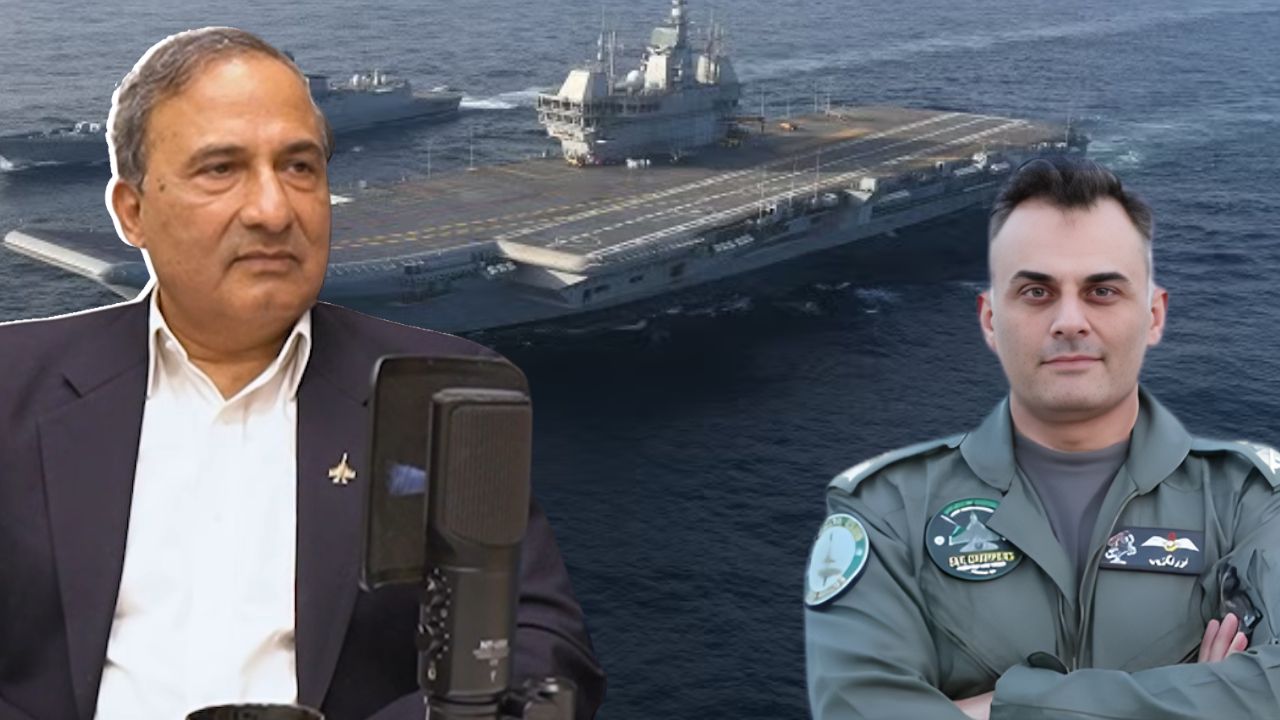
Former Pakistan Air Force (PAF) fighter pilot, Air Commodore (r) Khalid Chishti, has revealed that the PAF had a dedicated plan to destroy Indian aircraft carrier INS Vikrant during the May 2025 conflict between the two neighbours.
Speaking on The Current Podcast, Chishti revealed that the PAF maintained a specific programme to target the Indian carrier throughout the confrontation, assigning a dedicated squadron for the mission.
“The PAF had a dedicated program exclusively aimed at hitting Vikrant, and I can confirm that,” he said, explaining that India kept the carrier approximately 600 to 700 kilometers away from the coast due to threats from both Pakistan’s navy and air force.
“The air force had assured the navy that if Vikrant posed any threat at any stage, the PAF would knock it out,” Chishti revealed.
He added that India’s decision to keep the carrier far from Pakistani waters demonstrated their awareness of the threat. “When they got the news, they took it far out into the sea.”
“Obviously, the Indians knew about what Pakistan did up north, and the seven planes we shot down. So, if they have the guts to come down south, Insha’Allah, if they dare to show up, we’ll knock them out,” Chishti explained.
During the interview, the former fighter pilot was also critical of INS Vikrant’s operational utility, calling it more of a liability than an asset.
“Even when I was in the air force and did all those war games, we never really understood what Vikrant was meant for. It’s neither a liability nor an asset. Actually, it is more of a liability,” he said.
It is pertinent to note that Pakistan’s armed forces demonstrated commanding strength, showing the world their capabilities during the conflict in May 2025.
After India’s cowardly attack on May 7, Pakistan launched Operation Banyan Un Mursoos, in which Pakistan shot down hundreds of Indian drones.
Pakistan also destroyed an S-400 battery, reportedly three French-made Rafales, and four other jets. Several Indian bases were also targeted in retaliatory strikes by Pakistan.
The conflict came to an end on May 10 after a ceasefire mediated by the United States.