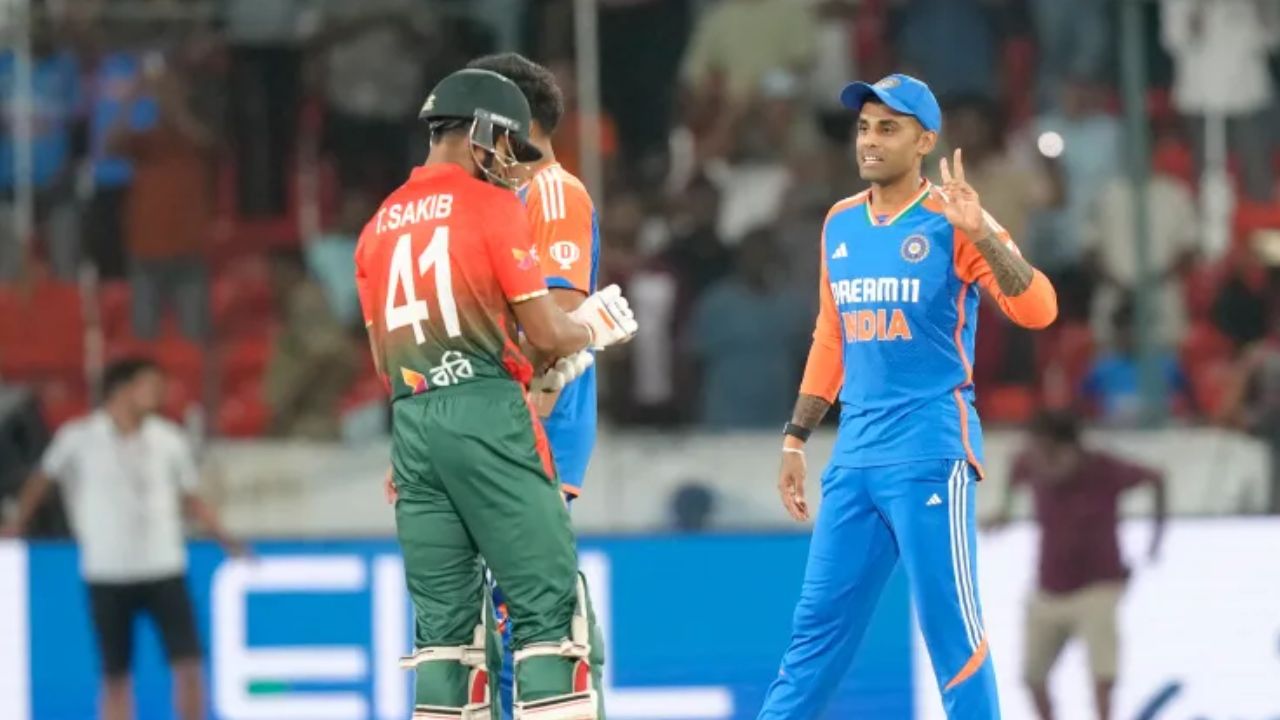
The International Cricket Council (ICC) on Wednesday rejected Bangladesh’s demand to relocate its T20 World Cup matches from India to Sri Lanka, maintaining that the tournament schedule will proceed as planned.
As per details, the ICC Board made this decision during a meeting after the Bangladesh Cricket Board (BCB) asked to move its fixtures out of India over security concerns.
The cricket watchdog said the decision was based on comprehensive security assessments, including independent reviews, which found no threat to Bangladesh players, officials, media personnel or fans at any tournament venue in India.
It also said that changing the schedule so close to the tournament was not feasible.
Officials noted that altering fixtures without any credible security threat could set a dangerous precedent that would threaten the integrity of future ICC events and compromise the organisation’s neutrality as a global governing body. It also reaffirmed its commitment to acting in good faith, upholding consistent standards and safeguarding the collective interests of the global game.
It may be noted that the security concerns surfaced after the Board of Control for Cricket in India (BCCI) removed Bangladeshi pacer Mustafizur Rahman from the Indian Premier League (IPL) over Hindu extremists’ threats to attack Bangladeshi players.
It was followed by Bangladesh announcing that they would not play their matches in India, questioning that if India could not provide security to one player, how could it assure the safety of the entire team.
ICC management held several meetings and exchanged correspondence with the BCB to resolve the issue, sharing detailed information about the event security plan, including layered federal and state law enforcement support.
An ICC spokesperson explained that the organisation engaged with the BCB in sustained dialogue over several weeks, sharing independent security assessments, comprehensive venue-level security plans and formal assurances from host authorities.
The spokesperson noted that the BCB maintained its position by linking its participation to “a single, isolated and unrelated development concerning one of its player’s involvement in a domestic league”, emphasising that it had no bearing on the tournament’s security framework or participation conditions.