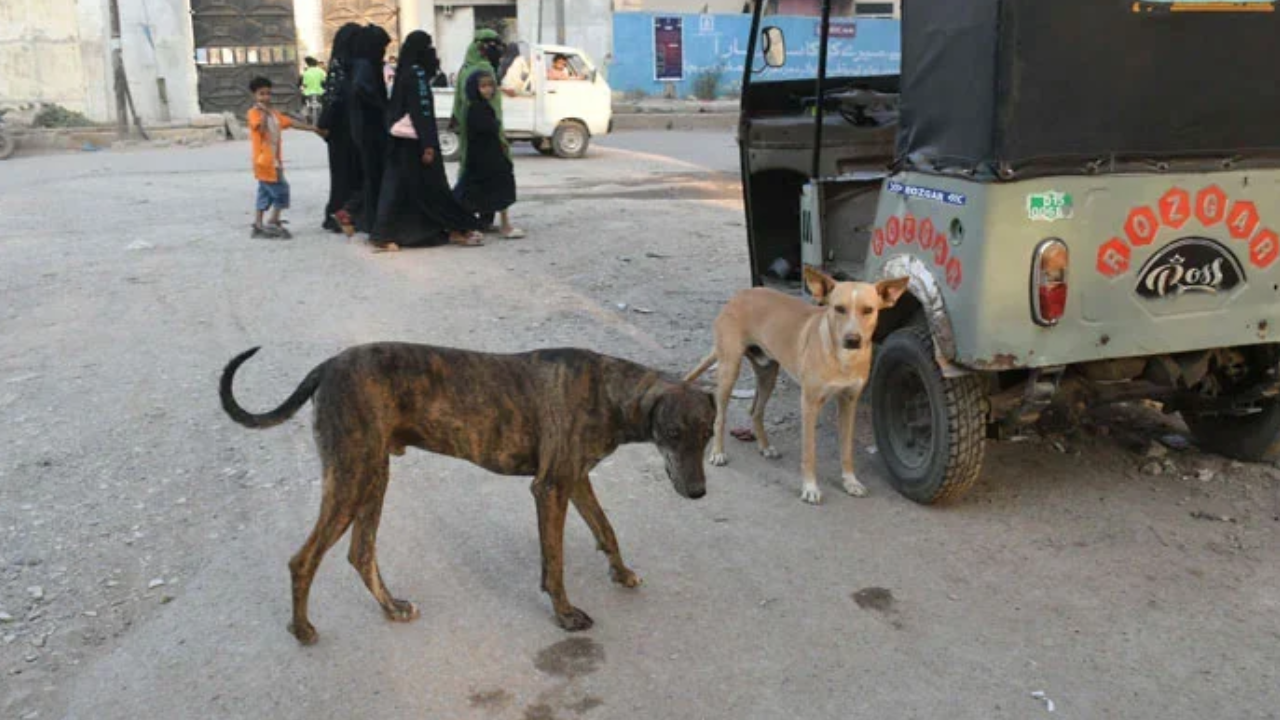
Sindh has reported its first rabies death of 2026 after an eight-year-old girl from Sanghar district died from the virus, highlighting gaps in dog-bite treatment, post-exposure care and public awareness.
As per the details, the girl was bitten by a stray dog about one-and-a-half months ago and sustained multiple deep wounds. She was initially taken to several public-sector health facilities where post-exposure prophylaxis — treatment given or action taken to prevent disease – was reportedly started.
Dr Gohar Aftab, in-charge of the Dog Bite Clinic at Indus Hospital, said the girl was shifted to Indus Hospital Karachi over the weekend.
Hospital officials noted that the treatment she received at earlier facilities was incomplete and that rabies vaccine was not administered properly, leaving her unprotected against the virus. Doctors added that the child developed hydrophobia and aerophobia, symptoms of advanced rabies encephalitis, indicating that the disease had reached its final stage.
At Indus Hospital Karachi, the girl received palliative care, as rabies is almost always fatal once clinical symptoms appear.
Health authorities confirmed this was the first rabies death reported in 2026 as the province continues to see a high number of dog-bite incidents.
More than 3,000 dog-bite cases have been recorded in Sindh this month alone, raising concerns about potential new rabies cases in the coming weeks. Public health experts say the child’s death reflects systemic failures rather than an isolated incident.
Experts stress that rabies is preventable if wounds are washed immediately with soap and water for at least 15 minutes, followed by timely and complete administration of rabies vaccine and immunoglobulin in severe cases.
Delays, incomplete vaccination schedules and lack of immunoglobulin continue to contribute to preventable deaths.
Official data shows that 21 people died of rabies in Sindh last year, while over 60,000 dog-bite cases were reported across the province. Most victims live in low-income, rural or peri-urban areas, where access to emergency care and rabies immunoglobulin is limited.
Doctors report that many dog-bite victims either delay seeking care or receive only tetanus injections and antibiotics, while essential steps such as wound washing, rabies vaccination and immunoglobulin are often missed.
In some cases, patients move between multiple facilities without proper documentation or continuity of care.