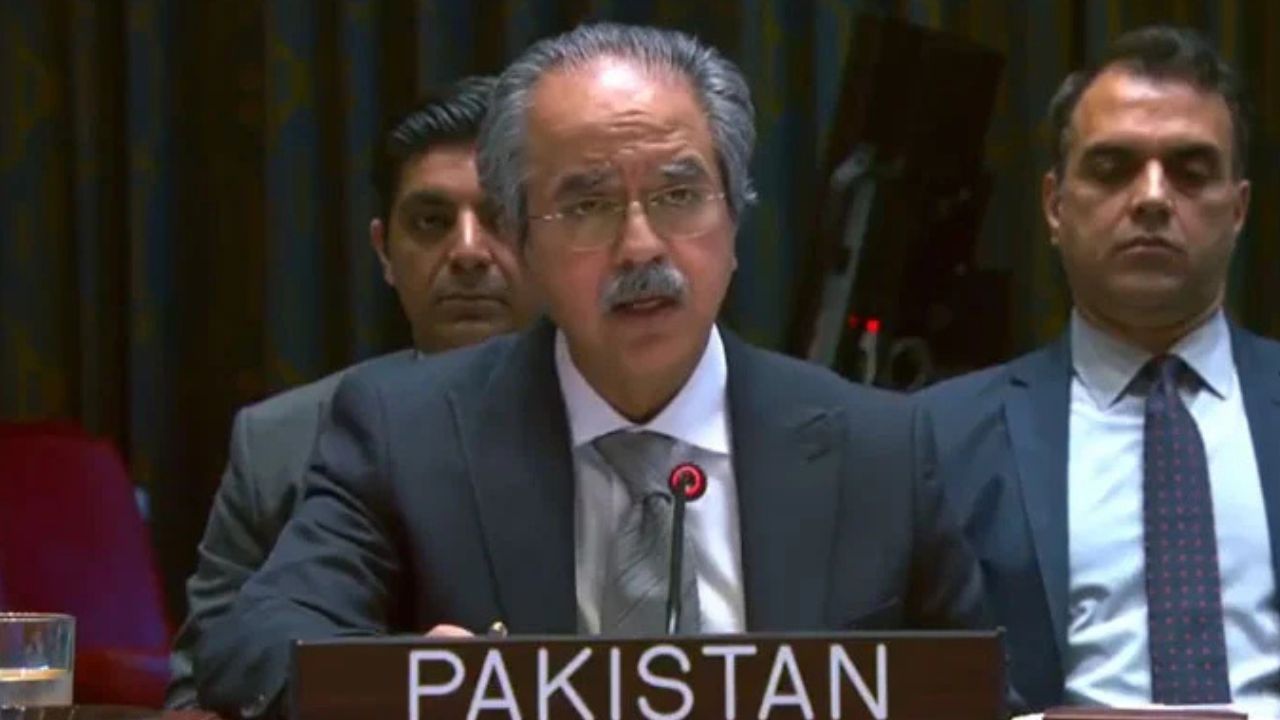
Pakistan has told the United Nations Security Council (UNSC) that terrorist groups operating from sanctuaries inside neighbouring Afghanistan remain the gravest threat to its national security, calling on the issue to be addressed as a priority for regional peace.
Speaking at the council’s briefing on Afghanistan, Pakistan’s Permanent Representative to the UN Ambassador Asim Iftikhar Ahmad underscored that Islamic State-Khorasan, Al-Qaeda, Tehreek-e-Taliban Pakistan (TTP), East Turkestan Islamic Movement (ETIM), Balochistan Liberation Army (BLA), the Majeed Brigade and others were among the terrorist entities that continued to operate from Afghan sanctuaries.
Ahmad said more than 60 terrorist camps were functioning as hubs for cross-border infiltration and attacks. “We have credible evidence of collaboration among these groups through joint training, illicit weapons trade, refuge to terrorists and coordinated attacks aimed at civilians, security forces and development projects in Pakistan.”
He said the threat extended to cyberspace where about 70 propaganda accounts traced back to Afghan IP addresses were spreading extremist messaging. “Curbing these networks requires full cooperation from social media platforms,” he stressed.
The envoy said Pakistan and China had jointly requested the UN’s 1267 Sanctions Committee to list the BLA and Majeed Brigade and expressed hope for swift action on the proposal. He detailed that the outlawed TTP had an estimated 6,000 fighters, as according to him, it was the largest terrorist group on Afghan soil.
He added that Pakistan had thwarted several infiltration bids, seizing sophisticated military-grade weapons left behind by foreign forces during their withdrawal from Afghanistan.
“These efforts come at a heavy price […] just this month, 12 Pakistani soldiers were martyred in a single incident,” he noted.
Drawing attention to Afghanistan’s economic and humanitarian crisis, the ambassador pointed out that the UN’s 2025 Humanitarian Needs and Response Plan had received only 27 per cent of its required funding. He further highlighted that Pakistan hosted millions of Afghan refugees for over four decades, often with inadequate international assistance, and called for a fairer sharing of the burden.
Ahmad acknowledged that civil war in Afghanistan had ended for the first time in 40 years; however, the situation remained deeply worrying, stressing that sustained engagement rather than isolation was the only way to achieve peace.