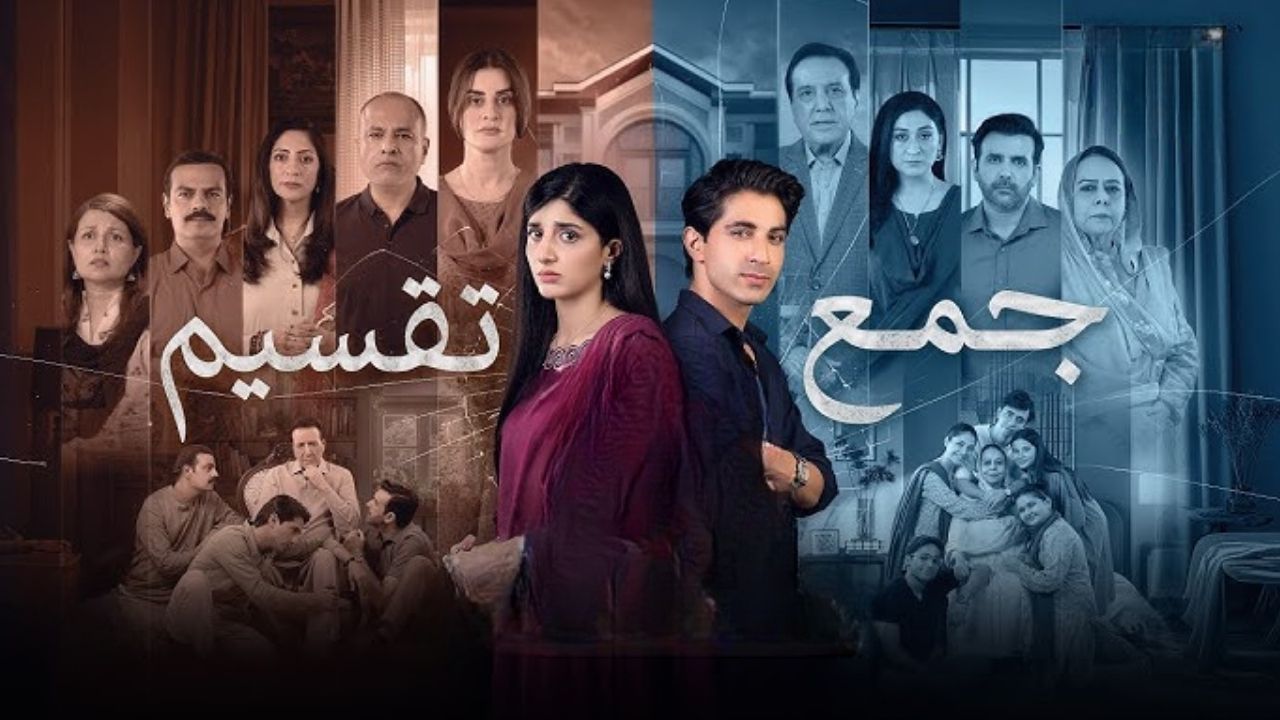
This week’s episodes of Jama Taqseem, took a very soft but fascinating turn. Laila (Mawra Hocane) and Qais (Talha Chahour) both have their parents living in the same house with the couple.
Two different mindsets clash, with Qais’ mother worried that Laila’s mother is taking over her ‘son’s house’ and Laila’s mother worried that Qais’ parents want to take over her daughter’s personality.
The conservative vs. the modern is presented through both parents and what is interesting is that this could only happen when parents, the baras, get involved and things become raw and very direct.
Social media users are all team Laila’s mom and Mawra Hocane in a recent interview said that she was too. Laila’s mom is bitingly direct, the modern working woman, who raised her only child to be independent and strong. She doesn’t want to live in Laila’s house, preferring the comfort of her own but after realising that Qais’ parents are trying to control her daughter, she decides to stay to give Laila the strength to own her own life. And she does give her that strength.
Laila goes to the job interview that she’s been so excited to get but wasn’t planning on going when she finds out that Qais’ parents don’t want her to work. She only manages to go – and gets the job – when her mother forces her to do it, telling her that she would manage Qais’ parents (and in turn, their criticism) and protect her daughter. Which she does.
She, sometimes, very intensely, lashes back at the ‘jaahil soch’ that Qais’ parents have of the girl’s parents not being in their son-in-laws’ house, women not working and women having their own lives.
At this point, you can’t really tell which mother is more judgey but it becomes clearer who is more in the wrong when Abba Jee, Qais’ father (Javed Shaikh) attacks Laila’s father, Asher (Deepak Parwani) for not saying his prayers, passing comments about how Laila’s father doesn’t know how to say his namaz.
It’s a classic game isn’t it? Bringing in religion to support your point of view and posturing a feeling of superiority. Abba Jee does that and immediately you realise that no matter what Laila and her father and mother do, it’s Qais’ parents that will ultimately have to change. Because judging people on the way they practice their religion is not okay under any circumstance.
If you had to guess what will happen next, it seems as is Qais might be out of a job soon and Laila will be the one working and when the tables turn, Qais’ parents won’t be able to handle their son living on his wife’s income – but he will have to and they will have to accept it. Another stereotype broken so beautifully in this very well made drama.
We’re all Team Laila’s mom in this series and we can’t wait to see how Laila grows as she accepts that she can be more than someone who compromises to please her husband and his parents. And while there is trouble brewing, only time will tell how Qais will manage it all.