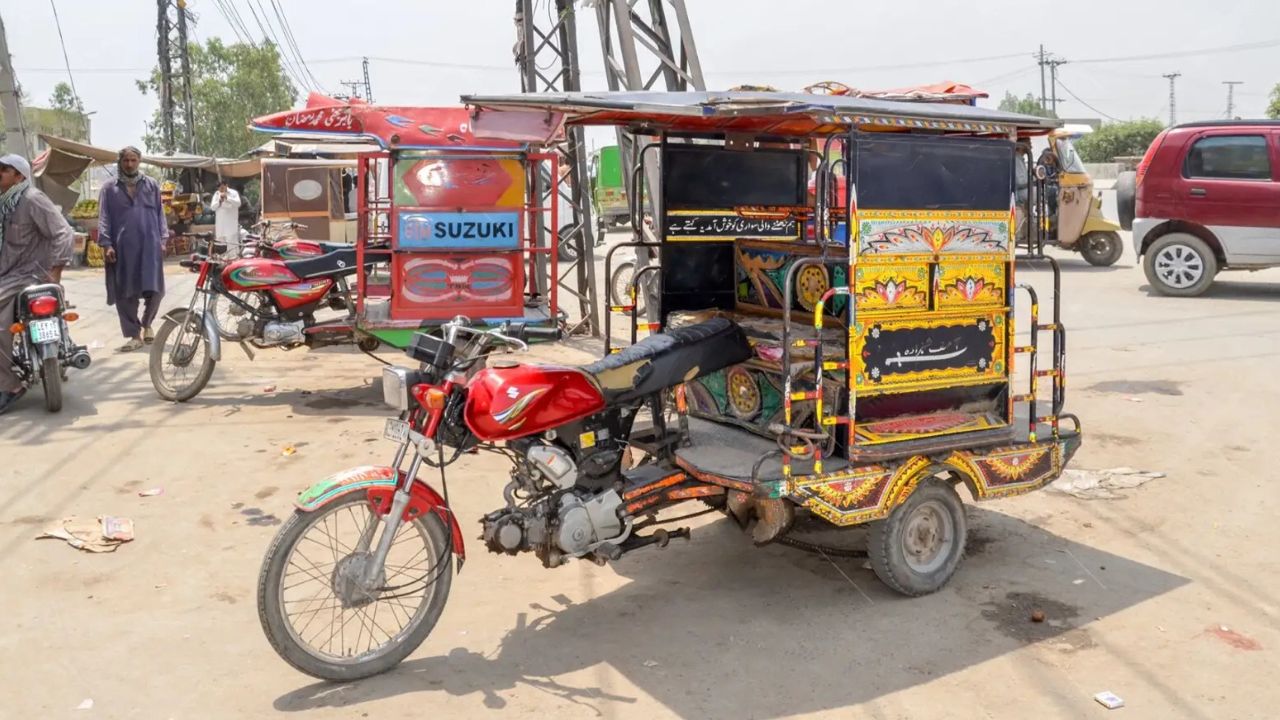
The Punjab government has decided to ban the production of petrol-run motorcycle rickshaws, multiple news outlets have reported.
The decision was made during a Cabinet Committee meeting on anti-smog measures held on Thursday, chaired by Punjab Chief Minister Maryam Nawaz.
Key decisions included an immediate ban on the production of petrol-run motorcycle rickshaws and an in-principle decision to phase out the production of petrol-run motorcycles.
The meeting also finalized the purchase of electric vehicles and electric motorcycles for government departments.
Additionally, the government will impose strict penalties for burning plastic and smoke-producing toxic materials, emphasizing zero tolerance for actions that harm citizens’ health and the environment. It was also decided to install colored waste bins across Punjab, similar to modern international practices.
Senior Provincial Minister Marriyum Aurangzeb briefed the committee, stating that Punjab’s first state-of-the-art Air Quality Monitoring Network has been established and a comprehensive anti-pollution operation is underway.
She reported an 88 percent reduction in crop burning incidents in Lahore and its surrounding areas, noting that drones are being used for surveillance to prevent such incidents.
Chief Minister Maryam Nawaz expressed satisfaction with the environmental improvement measures and commended the entire team.
She said, “The spirit, hard work, and focus with which the institutions and the team have worked in the last one and a half years are commendable. We also thank the citizens who fully cooperated with the government and institutions.”
Despite these efforts, Lahore’s air quality is experiencing a severe decline, pushing the city to the second position on the global pollution index as of 7:00 PM on Thursday.
According to the Air Quality Index (AQI) data, Lahore registered an overall pollution level of 226, which falls under the “very unhealthy” category.
Certain areas within the city are facing alarmingly high levels of contamination. The vicinity of the Civil Secretariat was identified as the most polluted zone, with AQI levels skyrocketing to 788. Other areas severely impacted include Johar Town (695), Cantonment (581), Barki Road (403), Askari-X (327), and Allama Iqbal Town (298).
The crisis is not limited to the provincial capital. Several other major cities across Punjab, including Sialkot, Gujranwala, Multan, and Bahawalpur, are also grappling with severely compromised air, with their AQI levels consistently categorized as “very unhealthy.”
Earlier, the Provincial Disaster Management Authority (PDMA), Punjab issued a smog and fog alert.
The PDMA directed all Commissioners and Deputy Commissioners across the province to immediately implement timely preventive measures to mitigate the health and environmental risks posed by the high pollution levels.