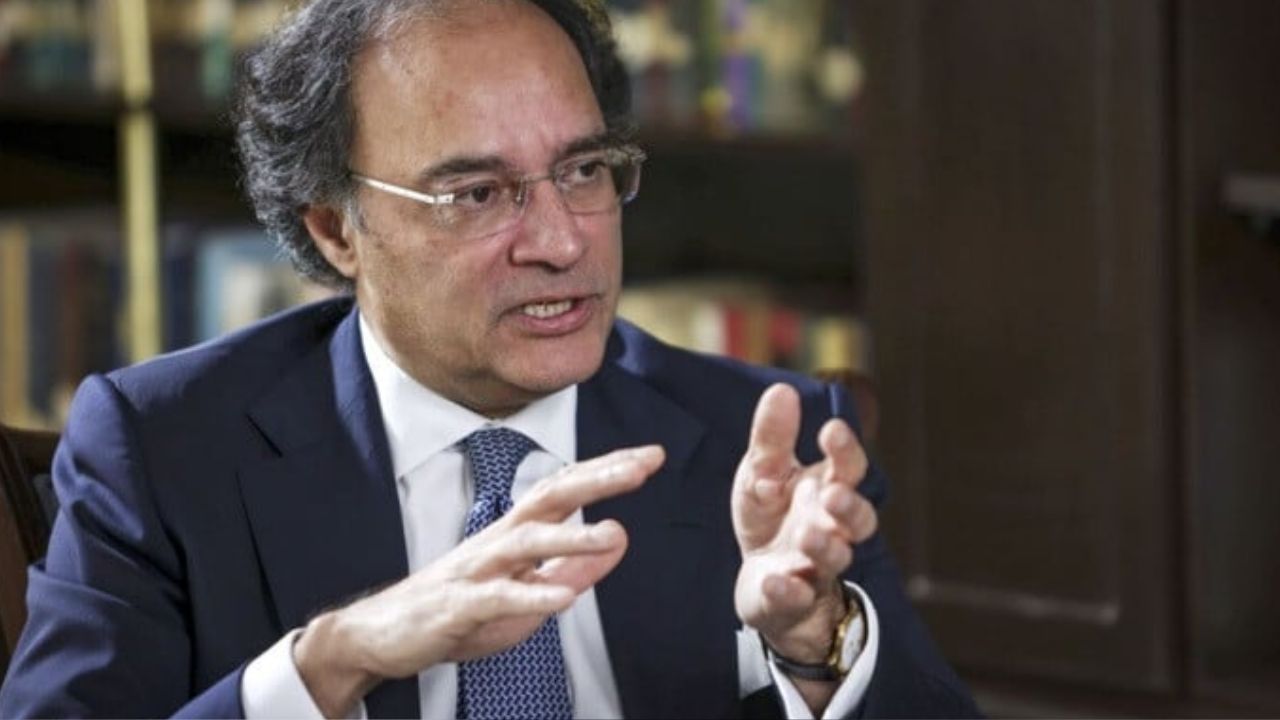
Finance Minister Muhammad Aurangzeb on Sunday described the IMF’s ‘Governance Diagnostic and Corruption Report’ as a chance to accelerate institutional reforms, saying the assessment should serve as guidance rather than criticism of government policy.
He stated during a press conference that the government had requested the assessment on its own as part of its emphasis on transparency. He continued by saying that the IMF had observed progress in public financial management, taxation, governance, and procurement.
He said several major reforms were already in progress, while the remaining recommendations would be taken forward to address long-standing structural gaps. “Institutional reform remained essential to sustaining Pakistan’s economic turnaround,” he said.
“The decision to end the 0.25 percent levy, along with overhauling the governance of the Export Development Fund, reflected Prime Minister Shehbaz Sharif’s directive to place the private sector at the centre of economic expansion,” he said. He added that the summary had been sent to the cabinet and implementation would begin once approved.
Aurangzeb pointed out that recent indicators showed improving economic activity. Between July and October, cement production rose 16 percent, fertiliser nine percent, petroleum four percent, automobiles 31 percent and mobile phone assembly 26 percent.
He mentioned that large-scale manufacturing experienced a 4.1 percent increase in the first quarter following a downturn last year, stressing that the main challenge is sustaining growth without being affected by external shocks or experiencing boom-and-bust trends.
Aurangzeb announced a five percent rise in exports, with IT exports experiencing growth of over 20 percent, marking consecutive monthly highs in September and October. The $3.5 billion financing secured for Reko Diq has reached its financial close and is anticipated to yield nearly $3 billion in annual export earnings once production commences.
The finance czar also indicated that remittances reached $38 billion last year and are expected to surpass $41 billion this year, bolstering the current account while imports are being regulated under an updated tariff framework that emphasizes raw materials and intermediate goods, gradually eliminating protection over the next four to five years.