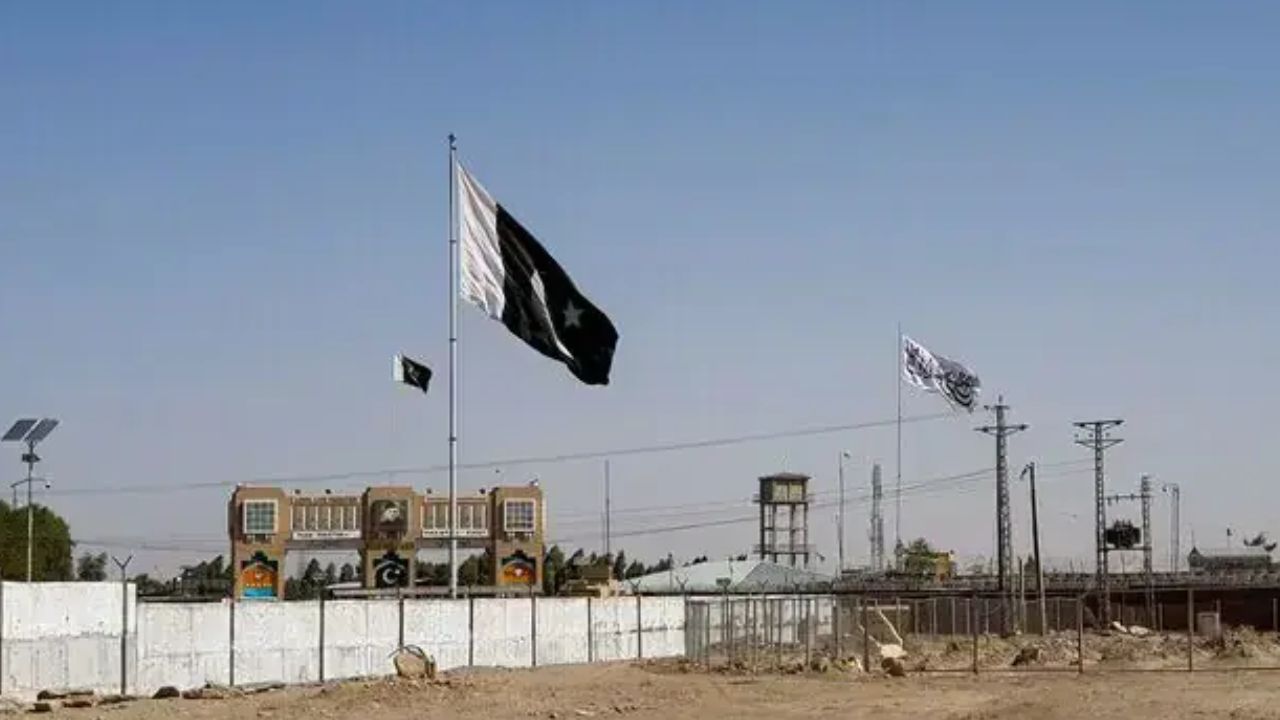
Pakistan has emerged as the country most severely impacted by the Afghan Taliban’s return to power in 2021, the International Crisis Group (ICG) has said, warning that Islamabad could again resort to military action if militant attacks continue.
In a new report, the Brussels-based independent think tank states that ties between Pakistan and Afghanistan have sharply deteriorated, largely due to the Taliban’s refusal to act against the Tehreek-i-Taliban Pakistan (TTP).
Militancy in Pakistan has surged since 2022, with 2025 alone witnessing more than 600 members of Pakistan’s security forces being killed, most of them in Khyber Pakhtunkhwa and Balochistan – the two provinces bordering Afghanistan.
Islamabad holds the banned TTP responsible for most of the attacks, alongside Baloch insurgent groups. Pakistani authorities say they have evidence linking the groups to Indian backing, a charge New Delhi denies.
“UN monitors assert that the TTP enjoys Taliban support, but the Taliban publicly deny that Pakistani militants are even in Afghanistan and say Islamabad provoked what they paint as homegrown violence,” the report says.
Tensions escalated further in October after 11 Pakistani soldiers were martyred in a TTP attack. In response, Pakistan carried out cross-border airstrikes, including its first-ever strike on Kabul, which it said targeted TTP chief Noor Wali Mehsud. Afghanistan retaliated by striking Pakistani military positions, leading to casualties on both sides, including civilians.
The ICG warns that Pakistan is likely to strike again if future attacks are traced back to Afghan territory. While the Taliban lack the military strength to match Pakistan, the report cautions that any retaliation from Kabul could still prove deadly.
Afghan authorities have claimed they possess missiles capable of reaching Pakistani cities – a scenario that would almost certainly trigger a harsher response from Islamabad.
Beyond its western border, Pakistan’s regional outlook remains tense. The report notes that after brief conflicts with both Afghanistan and India in 2025, the current calm is fragile and could quickly unravel if another major militant attack occurs.
The Afghanistan-Pakistan standoff is listed among the ICG’s 10 conflicts to watch in 2026, alongside Myanmar, Israel and the United States versus Iran, Israel-Palestine, Syria, Ukraine, Mali and Burkina Faso, Ethiopia-Eritrea, Sudan, and Venezuela.
The report argues that global instability was accelerating well before Donald Trump’s return to the White House. His second term, it says, has so far done little to slow the trend. After a deadly 2025, the outlook for 2026 appears equally grim.
Trump’s return has injected unpredictability into international crisis management. Having campaigned on promises to restore peace, he has placed himself at the centre of multiple conflicts, reviving attention on deal-making after years of stalled diplomacy.
His approach, often built on prior diplomatic groundwork, relies heavily on leveraging US power – whether through pressure on allies such as Israel or by threatening tariffs and dangling business opportunities.
Meanwhile, progress remains scarce in conflicts where Washington is less engaged. European leaders, preoccupied with security threats closer to home, have limited capacity to broker peace beyond their immediate region, the report adds.