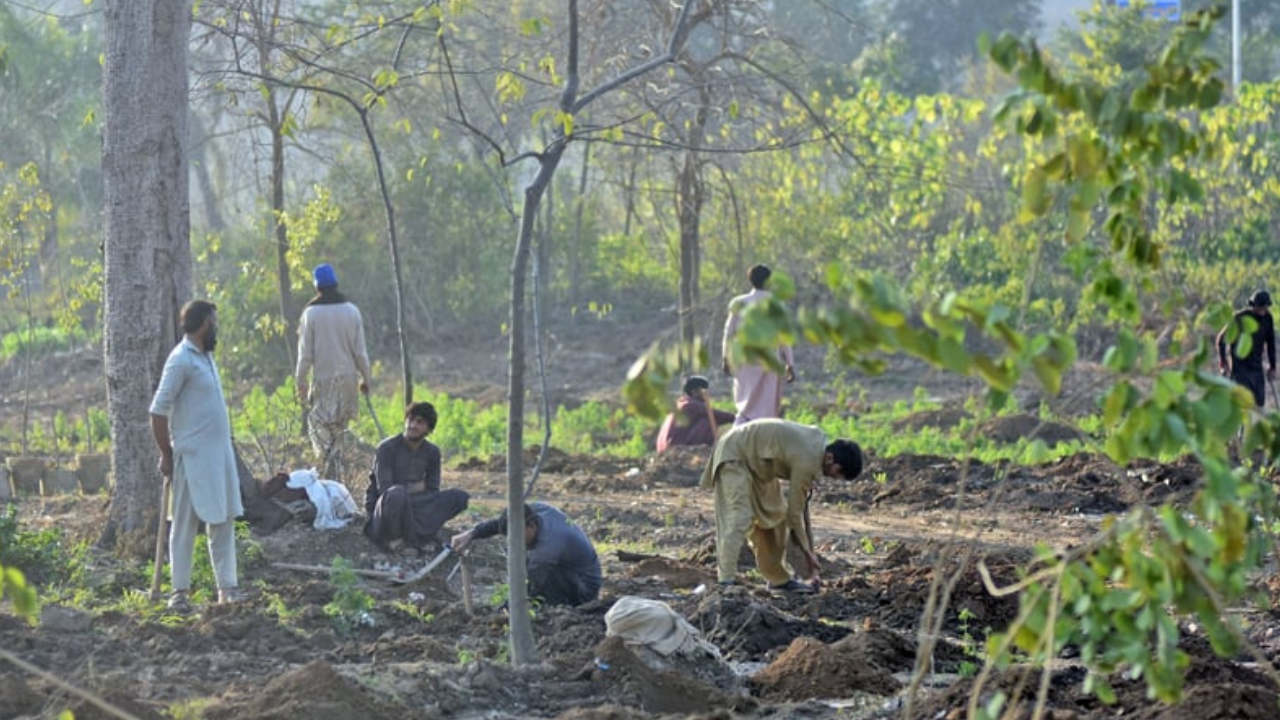
Large-scale tree cutting across the federal capital, including Shakarparian, H-8 and Chak Shahzad, has triggered public anger, political debate and judicial intervention over transparency, process and intent while authorities defend the move as a health-driven campaign against paper mulberry.
As per the details, residents first raised alarms after noticing stretches of cleared land along Shakarparian Road, where rows of mature trees were chopped down, revealing exposed soil and ongoing digging.
While signboards promised “Greener and Healthier Islamabad” and “Indigenous Tree Plantation” under the Capital Development Authority’s (CDA) Environment Wing, commuters questioned why trees had already been removed.
The controversy reached the Parliament, where lawmakers from both government and opposition raised objections. Pakistan Peoples Party’s (PPP) Shazia Marri termed the cutting of trees in Shakarparian “very serious” while Muttahida Qaumi Movement’s (MQM-P) Dr Farooq Sattar questioned the removal of old trees due to construction.
PTI leader Ali Mohammad Khan said removing wild mulberry trees due to pollination was understandable but asked why “trees 40 to 50 years old were cut down”.
Responding in the National Assembly, Minister of State for Interior Talal Chaudhry rejected criticism, stating that only allergy-causing paper mulberry trees had been removed.
“Facts established that only specific categories of trees were removed, primarily paper mulberry,” he said, adding that trees were removed under development plans, infrastructure requirements or the removal of hazardous species.
یہ جعفر خان جمالی روڈ ہے۔ دو ماہ پہلے، یہ روڈ سرسبز درختوں سے بھرا ہوا تھا ۔ آج یہ گنجا اور گرد آلود ہے۔ سی ڈی اے نے یہ پارک پانچ سال پہلے H-8/4 سکولز زون کے 5000 سے زائد بچوں کے لیے بنایا تھا۔ یہ محفوظ سبز علاقہ تھا جو ایکسپریس وے اور جعفر خان جمالی روڈ کے درمیان واقع تھا۔ آج… pic.twitter.com/mthhI9a3n9
— Zahid Gishkori (@ZahidGishkori) January 12, 2026
Chaudhry claimed all projects followed due process, including public hearings and a review by the Environmental Protection Agency (EPA).
He said more than 40,000 mature trees had already been planted, with another 60,000 to be planted by March, and asserted that Islamabad was now “greener than before”.
Climate Change Minister Dr Musadik Malik also defended the drive, citing scientific assessments.
“Pollen from paper mulberry affects 30 to 37 percent of Islamabad’s population,” he said during a field visit to Shakarparian, adding that the species was removed following a scientific identification process.
He directed CDA to plant three trees for every one removed and said penalties for environmental violations would be increased.
Meanwhile, a WWF-Pakistan report highlighted vegetation loss along the H-8 Islamabad Expressway, Margalla Enclave Link Road and Shakarparian, citing gaps in transparency, planning and monitoring.
Climate policy advocate Dr Zainab Naeem said the issue was not removal but mismanagement, calling it climate misgovernance. Water expert Dr Hassan Abbas warned that large-scale tree cutting would affect groundwater recharge and temperature regulation.
The Islamabad High Court (IHC) has for now barred the CDA from further tree cutting and sought detailed reports from relevant authorities by the next hearing scheduled for February 2.