Author: AFP

  • German woman to pay 600 euros as fine for using pro-Palestinian slogan

    German woman to pay 600 euros as fine for using pro-Palestinian slogan

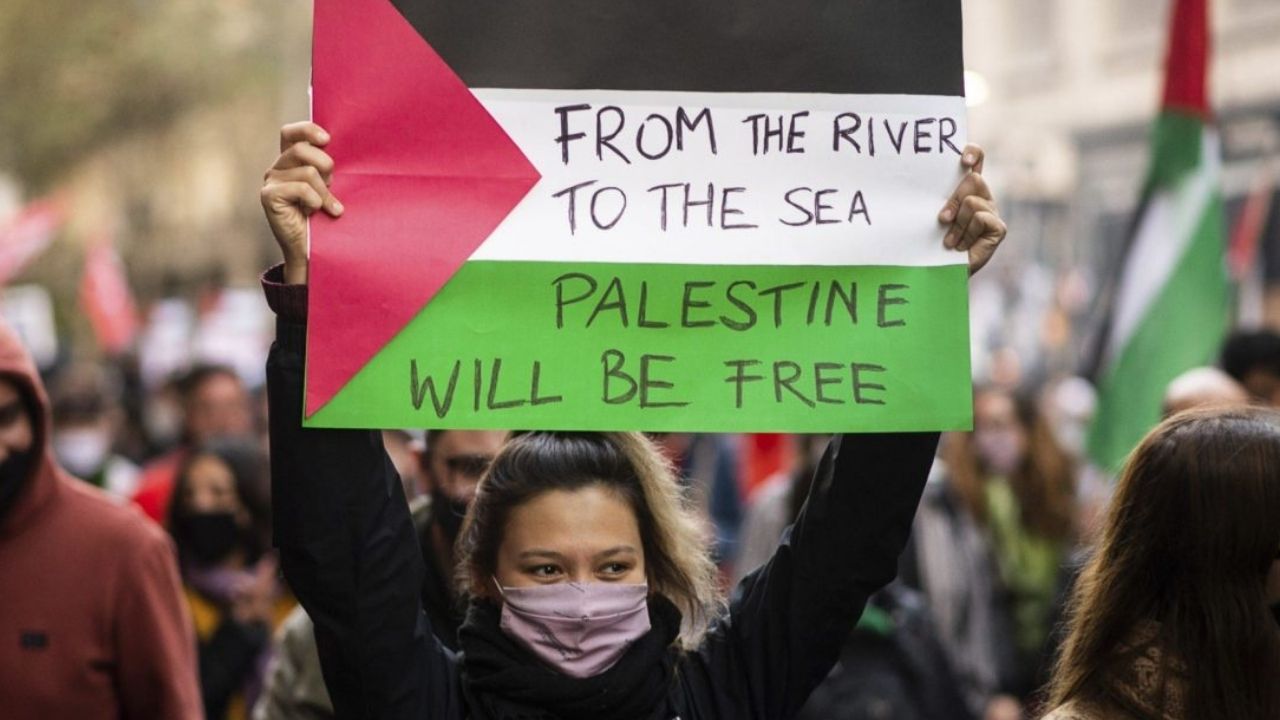
    BERLIN: A Berlin court on Tuesday fined a woman €600 euros (1, 82, 159 rupees) for using the phrase “from the river to the sea, Palestine will be free” at a protest, in a ruling slammed as a “dark day for freedom of expression” by her lawyer.

    The 22-year-old, named only as Ava M, was found guilty of using the slogan at a banned gathering in Berlin’s Neukoelln district on October 11, according to a court spokeswoman.

    The court concluded that the woman’s use of the phrase so soon after the October 7 raid in Israel meant it “could only be understood as a denial of Israel’s right to exist and an endorsement of the attack”, the spokeswoman said.

    “From the river to the sea, Palestine will be free” is seen by some as a call for the destruction of Israel, though others say it simply appeals to equality for Palestinians and Israelis.

    German Interior Minister Nancy Faeser outlawed the phrase in November as part of a ban on the activities of Hamas.

    However, the ban is legally controversial, and courts in different parts of Germany have handed down different rulings on cases involving the phrase, with many finding it to be permissible.

    Lawyer Alexander Gorski, who represented the woman in Berlin, said it was “a dark day for freedom of expression”.

    “My client only wanted to express her hope for a future of democratic coexistence for all people in the region,” he said, adding that his client would appeal the decision.

  • Western ambassadors to skip Nagasaki memorial after Japan exclude Israel

    Western ambassadors to skip Nagasaki memorial after Japan exclude Israel

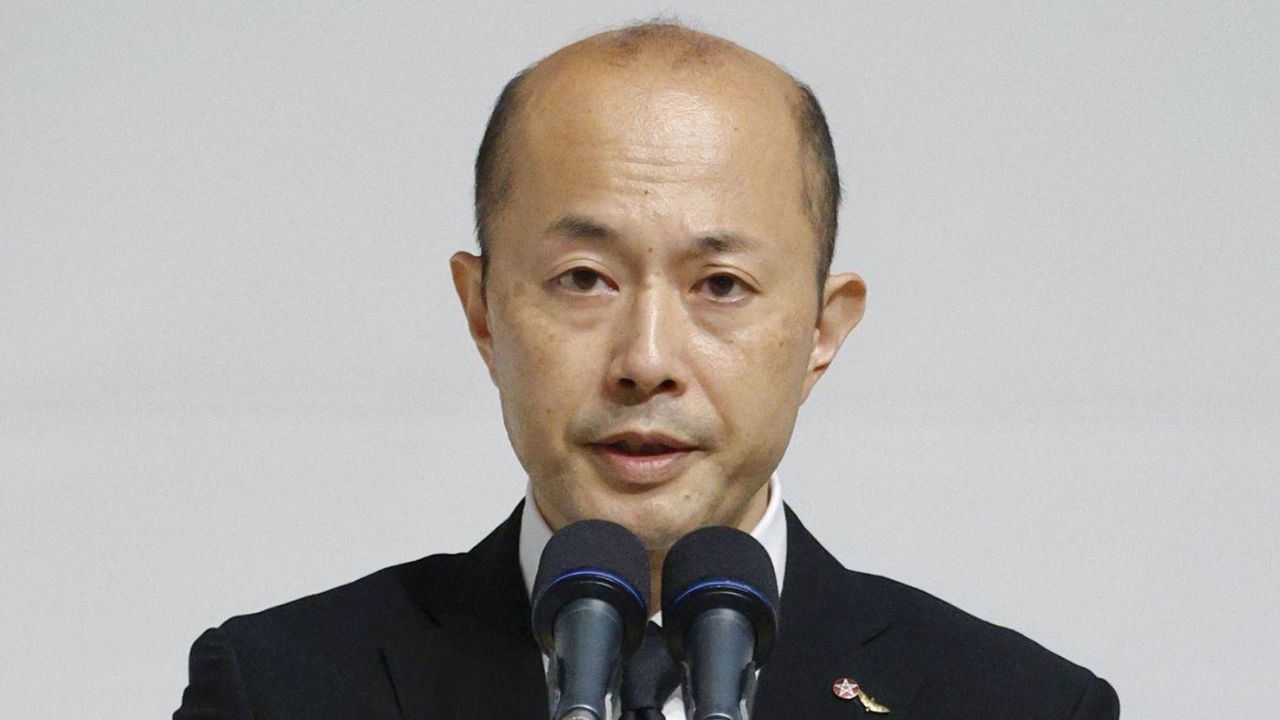
    Ambassadors from Western countries including the United States will skip a ceremony marking the 79th anniversary of the bombing of Nagasaki after Israel was snubbed, officials said Wednesday.

    Nagasaki’s mayor last week said that Israel’s ambassador Gilad Cohen was not invited to Friday’s event in the southern Japanese city because of the risk of possible protests over the Gaza conflict.

    The US and British embassies said on Tuesday that their ambassadors would not take part as a result, and that their countries would be represented by lower-ranking diplomats.

    Media reports said that Australia, Italy, Canada and the European Union, who together with the US, Britain and Germany signed a strongly worded joint letter to Nagasaki’s mayor last month, would follow suit.

    US ambassador Rahm Emanuel will not attend “after the mayor of Nagasaki politicised the event by not inviting the Israeli ambassador”, an embassy spokesperson told AFP.

    Instead Emanuel, 64, who was ex-president Barack Obama’s chief of staff, will go to a separate event at a temple in Tokyo, the spokesperson said.

    The British embassy said that ambassador Julia Longbottom would also not be in Nagasaki, saying that not inviting Israel “creates an unfortunate and misleading equivalency with Russia and Belarus — the only other countries not invited to this year’s ceremony.”

    A spokesperson for the French embassy said that its number two would attend, telling AFP that the “decision not to invite the representative of Israel is regrettable and questionable”.

    Nagasaki mayor Shiro Suzuki had said last week that the decision not to invite Cohen was “not politically motivated” but based on a desire to “hold the ceremony in a peaceful and sombre atmosphere”.

    In June Suzuki said Nagasaki had sent a letter to the Israeli embassy calling for an “immediate ceasefire” in Gaza.

    Cohen, who was invited to and attended a memorial ceremony on Tuesday in Hiroshima, last week had said the Nagasaki decision “sends a wrong message to the world”.

    “As a close friend and like-minded nation of Japan, Israel has attended this ceremony for many years to honor the victims and their families,” he wrote on social media platform X.

    On Monday Cohen told US broadcaster CNN that the security concerns were “invented” and that he was “really surprised by (Suzuki) hijacking this ceremony for his political motivations.”

    In their letter to Suzuki seen by AFP, the six Western envoys had warned that if Israel was excluded “it would become difficult for us to have high-level participation at this event.”

    Government spokesman Yoshimasa Hayashi on Wednesday declined to comment, saying invitations were “a decision for the organiser, Nagasaki City.”

    A Nagasaki official in charge of the ceremony said it was “obviously better to have high-level individuals, like ambassadors themselves, taking part”.

    “What is important is that representatives of the countries will attend the ceremony,” he told AFP.

    hih-mac-stu/kaf/mca

    © Agence France-Presse

  • Bangladesh Nobel winner Yunus to lead interim govt

    Bangladesh Nobel winner Yunus to lead interim govt

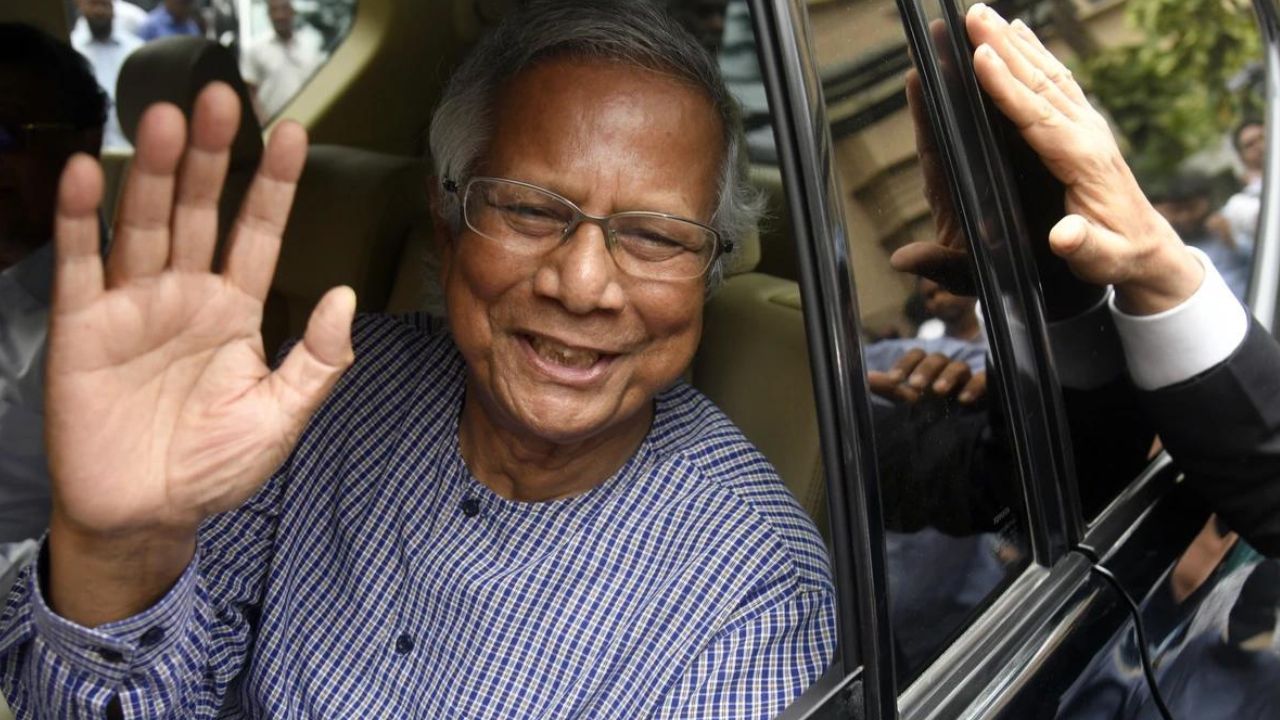
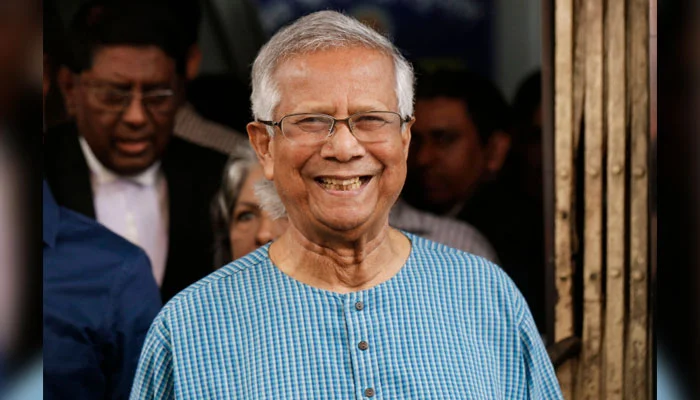
    The appointment came quickly after student leaders called on the 84-year-old Yunus — credited with lifting millions out of poverty in the South Asian country — to lead.

    The decision was made in a meeting with President Mohammed Shahabuddin, the heads of the army, navy and air force, and student leaders.

    “(They) decided to form an interim government with Professor Dr Muhammad Yunus as its chief,” Shahabuddin’s office said in a statement.

    “The president has asked the people to help ride out the crisis. Quick formation of an interim government is necessary to overcome the crisis.”

    Yunus will have the title of chief advisor, according to Haid Islam, one of the leaders of Students Against Discrimination who participated in the meeting.

    Shahabuddin agreed that the interim government “will be formed within the shortest time” possible, Islam told reporters.

    Islam described the meeting as “fruitful”.

    However, there were few other details about the planned government, including the role of the military.

    Yunus, who is currently in Europe, told AFP on Tuesday he was willing to lead the interim government.

    “If action is needed in Bangladesh, for my country and for the courage of my people, then I will take it,” he said in a statement, also calling for free elections.

    Muhammad Yunus: Bangladesh’s ‘banker to the poor’

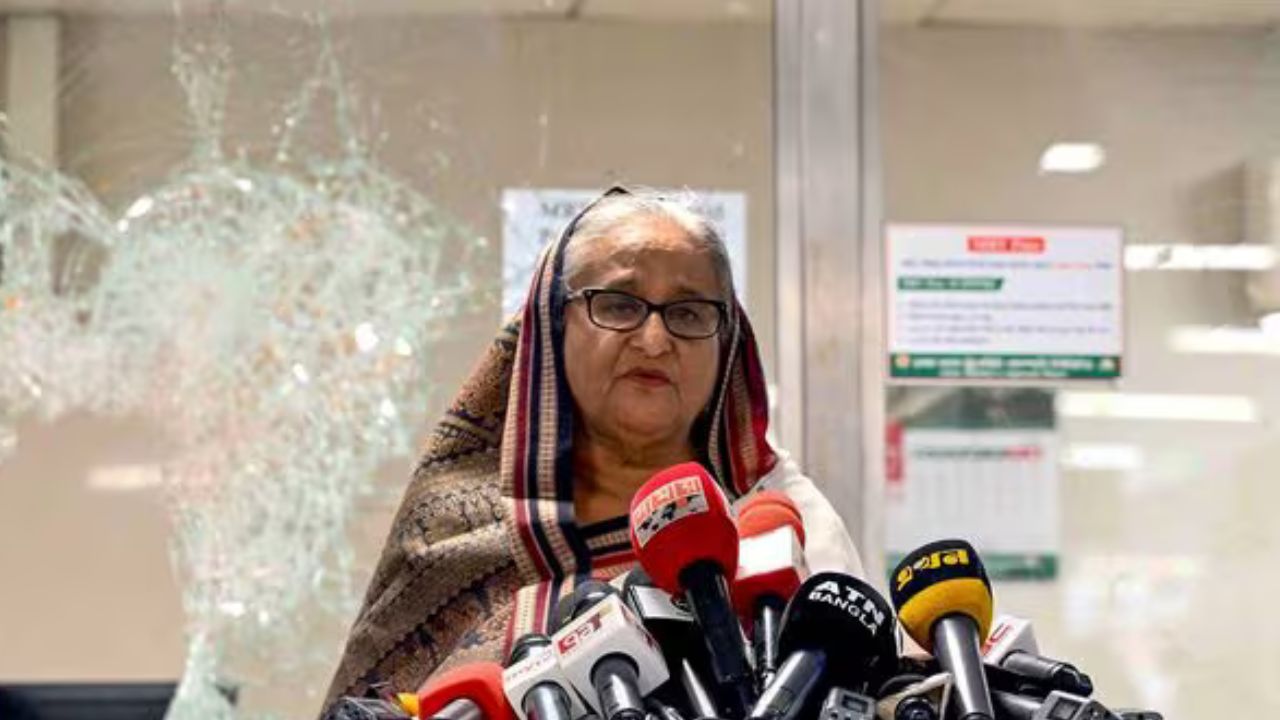
    Nobel-winning microfinance pioneer Muhammad Yunus has been asked by Bangladeshi protest leaders to helm an interim government to replace ousted premier Sheikh Hasina, who had hounded him in speeches and through the courts.

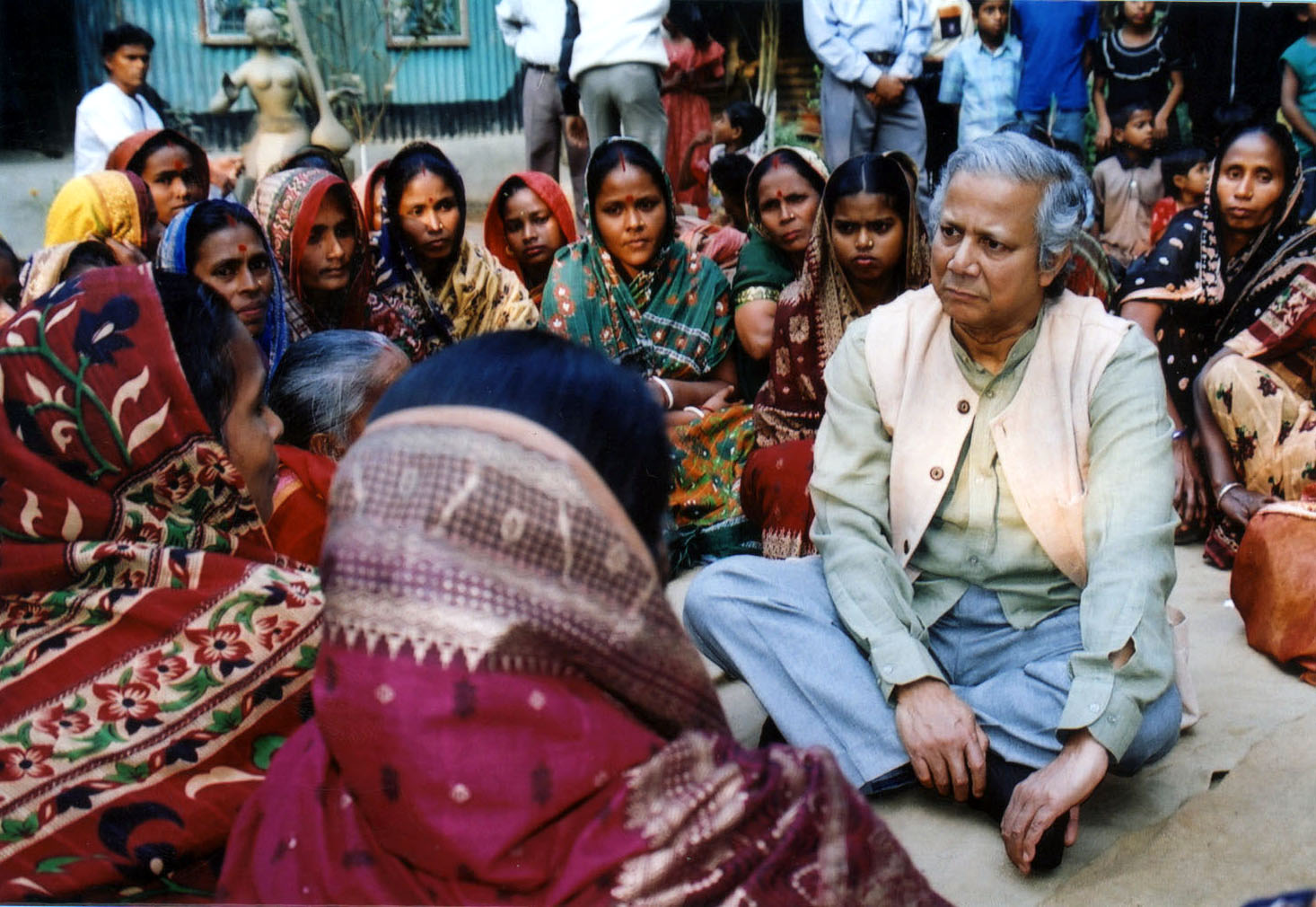
    The 84-year-old, known as the “banker to the poorest of the poor”, was awarded the Peace Prize in 2006 for his work loaning small cash sums to rural women, allowing them to invest in farm tools or business equipment and boost their earnings.

    Grameen Bank, the microfinance lender he founded, was lauded for helping unleash breakneck economic growth in Bangladesh. Since then, scores of developing countries have copied its work.

    “Human beings are not born to suffer the misery of hunger and poverty,” Yunus said during his Nobel lecture, daring his audience to imagine a world where deprivation was confined to history museums.

    But his public profile in Bangladesh earned him the hostility of Hasina, who once accused him of “sucking blood” from the poor.

    In 2007, Yunus announced plans to set up his own “Citizen Power” party to end Bangladesh´s confrontational political culture, which has been punctuated by instability and periods of military rule.

    He abandoned those ambitions within months, but the enmity aroused by his challenge to the ruling elite has persisted.

    Yunus was hit with more than 100 criminal cases and a smear campaign by a state-led Islamic agency that accused him of promoting homosexuality.

    The government unceremoniously forced him out of Grameen Bank in 2011 — a decision fought by Yunus but upheld by Bangladesh´s top court.

    In January he and three colleagues from one of the companies he founded were sentenced to jail terms of six months — but immediately bailed pending appeal — by a Dhaka labour court which found they had illegally failed to create a workers´ welfare fund.

    All four had denied the charges and, with courts accused of rubber-stamping decisions by Hasina´s government, the case was criticised as politically motivated by watchdogs including Amnesty International.

    Yunus was born into a well-to-do family — his father was a successful goldsmith — in the coastal city of Chittagong in 1940.

    He credits his mother, who offered help to anyone in need who knocked on their door, as his biggest influence.

    Yunus won a Fulbright scholarship to study in the United States and returned soon after Bangladesh won its independence from Pakistan in 1971 war. When he returned, he was chosen to head Chittagong University´s economics department, but the young country was struggling through a severe famine and he felt compelled to take practical action.

    “Poverty was all around me, and I could not turn away from it,” he said in 2006.

    “I found it difficult to teach elegant theories of economics in the university classroom… I wanted to do something immediate to help people around me.”

    After years of experimenting with ways to provide credit for people too poor to qualify for traditional bank loans, he founded Grameen Bank in 1983.

    The institution now has more than nine million clients on its books, according to its most recent annual report (2020), and more than 97 percent of its borrowers are women.

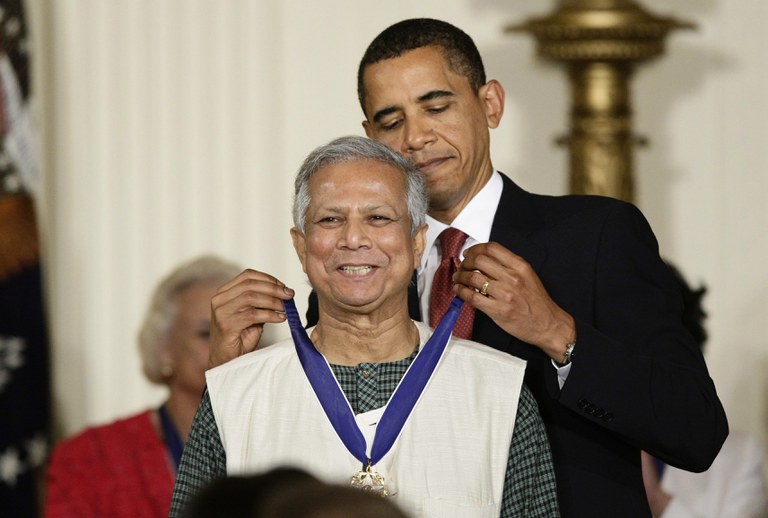
    Yunus has won numerous high honours for his life´s work, including the US Presidential Medal of Freedom, which Barack Obama awarded him.

  • Military in control of Bangladesh after Hasina flees

    Military in control of Bangladesh after Hasina flees

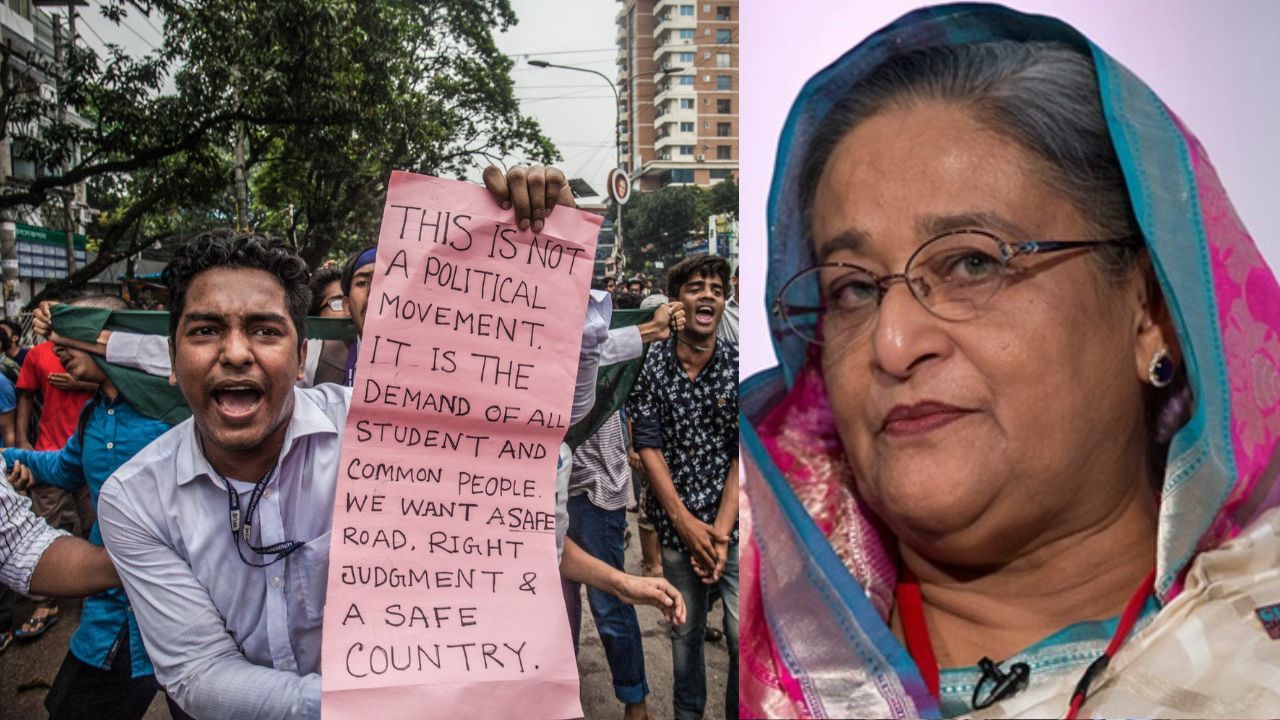
    Bangladesh’s military was in control of the country on Tuesday after mass protests forced longtime ruler Sheikh Hasina to resign and flee.

    Hasina, 76, had been in power since 2009 but was accused of rigging elections in January and then watched millions of people take to the streets over the past month demanding she step down.

    Hundreds of people died as security forces sought to quell the unrest, but the protests grew, and Hasina finally fled Bangladesh aboard a helicopter on Monday as the military turned against her.

    Army chief General Waker-Uz-Zaman announced Monday afternoon on state television that Hasina had resigned and the military would form a caretaker government.

    “The country has suffered a lot, the economy has been hit, many people have been killed — it is time to stop the violence,” said Waker, shortly after jubilant crowds stormed and looted Hasina’s official residence.

    Millions of Bangladeshis flooded the streets of Dhaka after Waker’s announcement.

    “I feel so happy that our country has been liberated,” said Sazid Ahnaf, 21, comparing the events to the independence war that split the nation from Pakistan more than five decades ago.

    “We have been freed from a dictatorship. It’s a Bengal uprising, what we saw in 1971, and now seeing in 2024.”

    But there were also scenes of chaos and anger, with police reporting at least 66 people killed on Monday as mobs launched revenge attacks on Hasina’s allies.

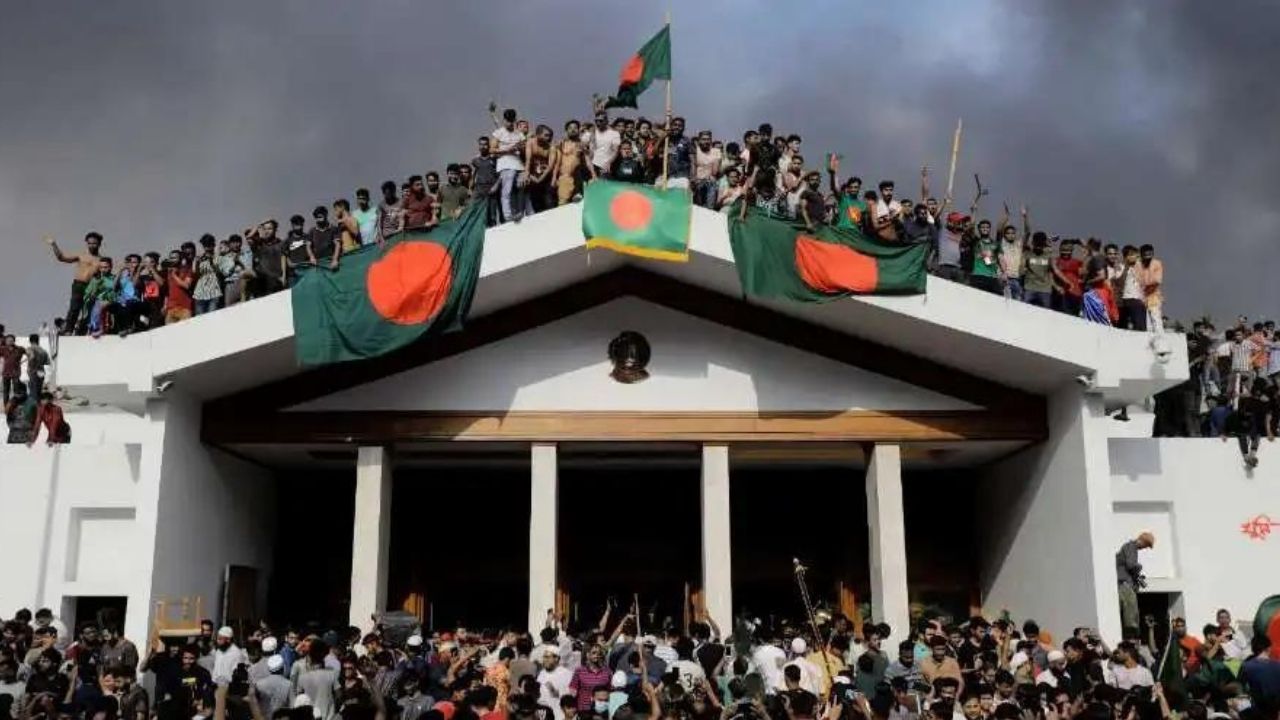
    Protesters stormed parliament and torched TV stations, while some smashed statues of Hasina’s father, Sheikh Mujibur Rahman, the country’s independence hero.

    Others set a museum dedicated to the former leader on fire, flames licking at portraits in destruction barely thinkable just hours before, when Hasina had the loyalty of the security forces under her autocratic grip.

    “The time has come to make them accountable for torture,” said protester Kaza Ahmed. “Sheikh Hasina is responsible for murder.”

    Offices of Hasina’s Awami League across the country were torched and looted, eyewitnesses told AFP.

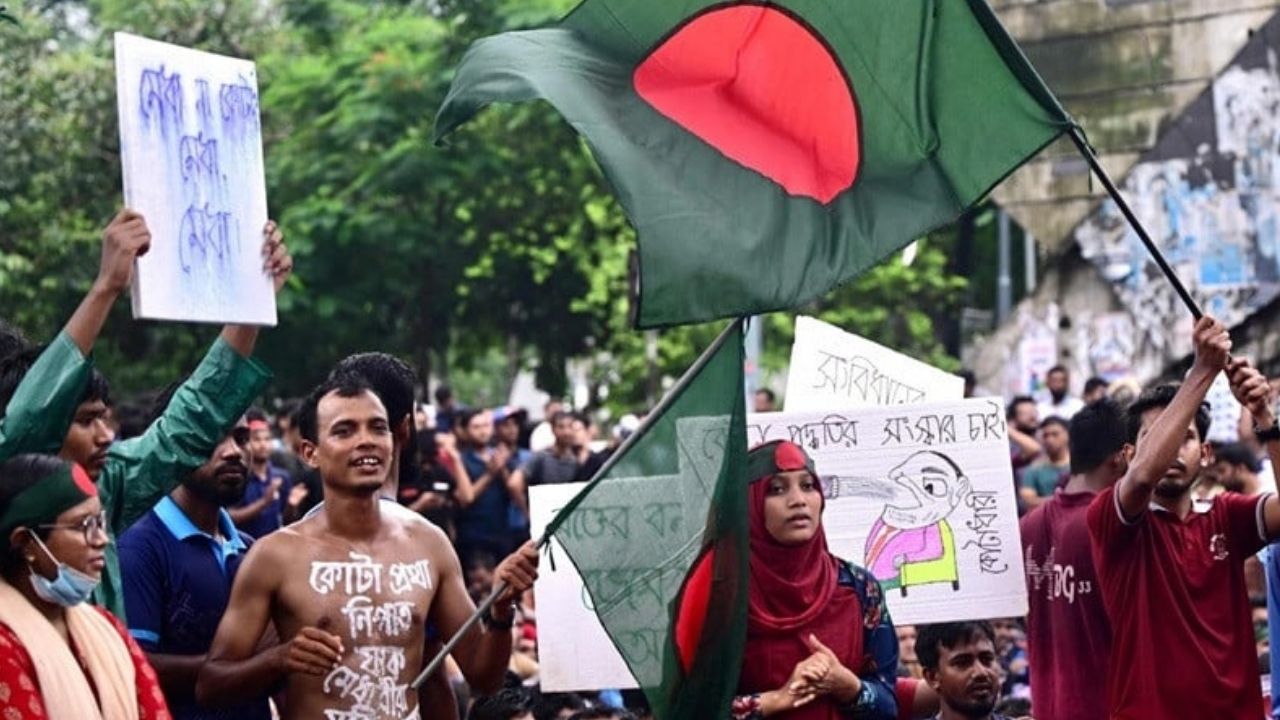
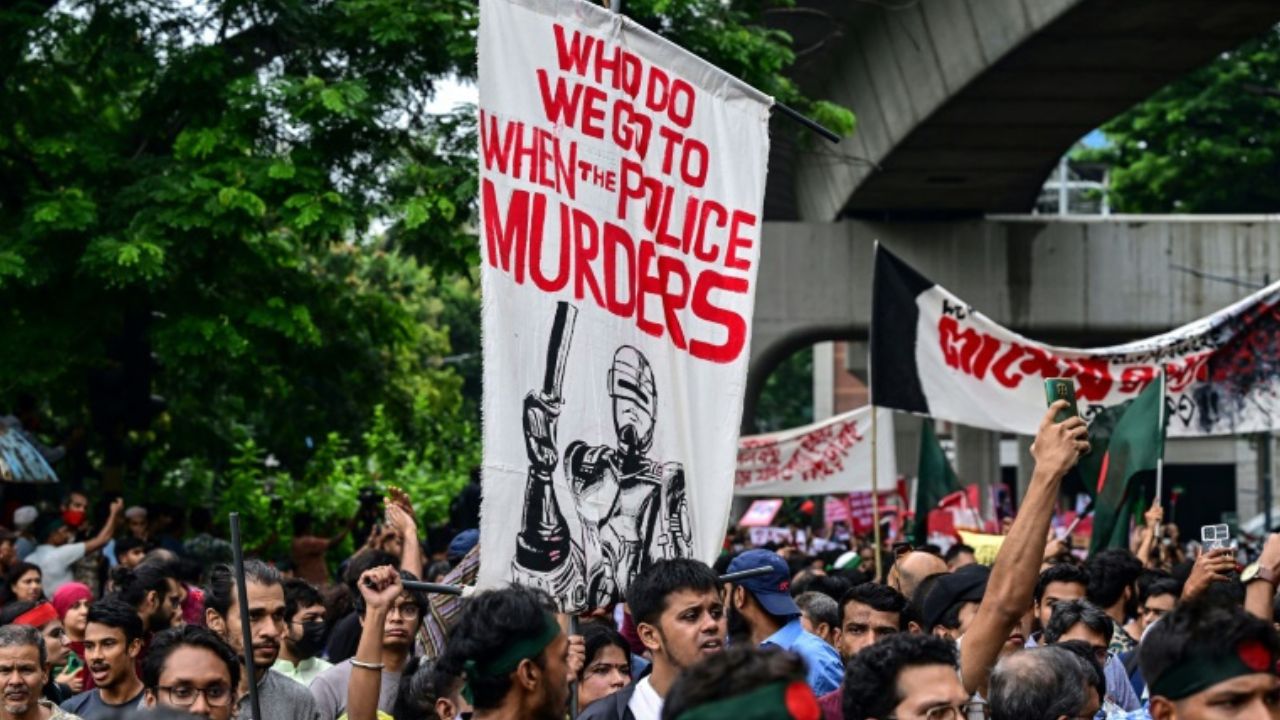
    The unrest began last month in the form of protests against civil service job quotas and then escalated into wider calls for Hasina to stand down.

    Her government was accused by rights groups of misusing state institutions to entrench its hold on power and stamp out dissent, including through the extrajudicial killing of opposition activists.

    At least 366 people died in the unrest that began in early July, according to an AFP tally based on police, government officials and doctors at hospitals.

    Student protest leaders, ahead of an expected meeting with the army chief, said Tuesday that they wanted Nobel laureate and microfinance pioneer Muhammad Yunus, 84, to lead the government.

    “In Dr. Yunus, we trust,” Asif Mahmud, a key leader of the Students Against Discrimination (SAD) group, wrote on Facebook.

    Waker said a curfew would be lifted on Tuesday morning, with the military set to lead an interim government.

    Bangladeshi President Mohammed Shahabuddin late Monday ordered the release of prisoners from the protests, as well as former prime minister and key opposition leader Khaleda Zia, 78.

    Zia, who is in poor health, was jailed by her arch-rival Hasina for graft in 2018.

    The president and army chief also met late Monday, alongside key opposition leaders, with the president’s press team saying it had been “decided to form an interim government immediately.”

    It was not immediately clear if Waker would lead it.

    Hasina’s fate was also uncertain. She fled the country by helicopter, a source close to the ousted leader told AFP.

    Media in neighboring India reported Hasina had landed at a military air base near New Delhi.

    A top-level source said she wanted to “transit” on to London, but calls by the British government for a UN-led investigation into “unprecedented levels of violence” put that into doubt.

    There were widespread calls by protesters to ensure Hasina’s close allies remained in the country.

    Bangladesh’s military said they had shut Dhaka’s international airport on Monday evening, without giving a reason.

    Bangladesh has a long history of coups.

    The military declared an emergency in January 2007 after widespread political unrest and installed a military-backed caretaker government for two years.

    Michael Kugelman, director of the South Asia Institute at the Washington-based Wilson Center, warned that Hasina’s departure “would leave a major vacuum” and that the country was in “uncharted territory.”

    “The coming days are critical,” he said.

    UN Secretary-General Antonio Guterres stressed the importance of a “peaceful, orderly and democratic transition,” his spokesman said. European Union foreign policy chief Josep Borrell echoed that call.

    Former colonial ruler Britain and the United States meanwhile urged “calm.”

  • Protesters storm Bangladesh PM’s palace after she flees

    Protesters storm Bangladesh PM’s palace after she flees

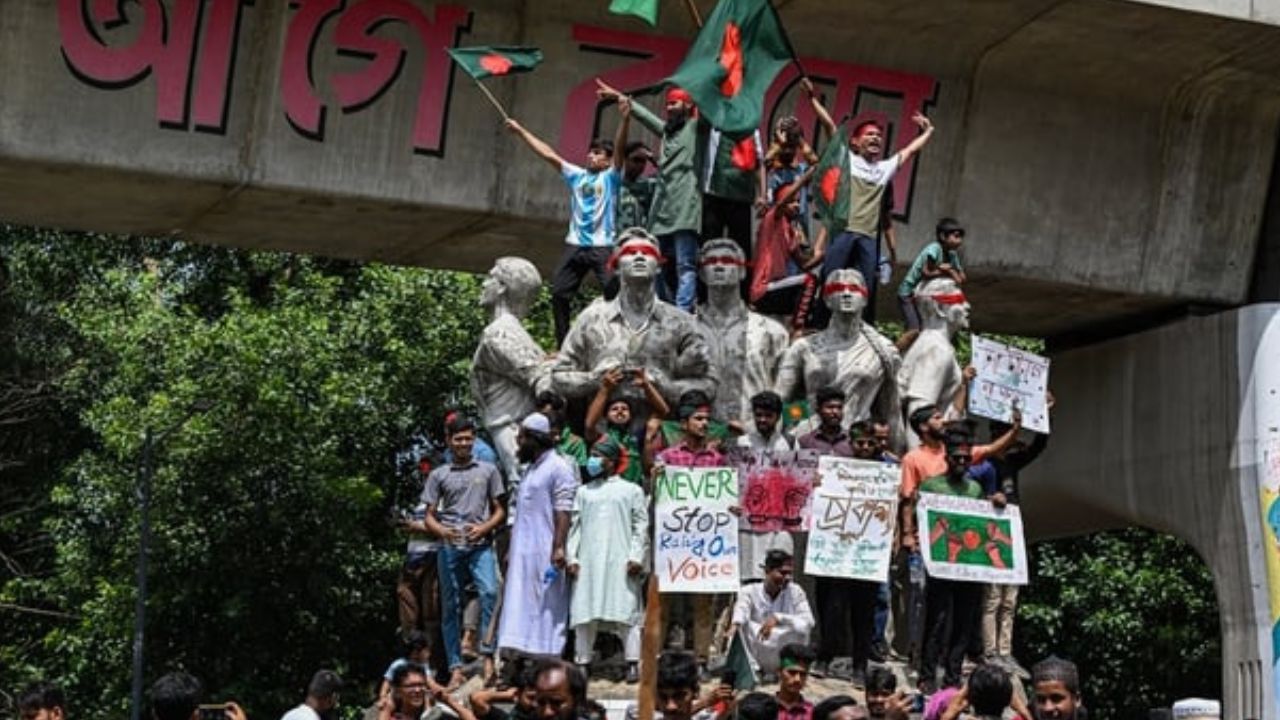
    Cheering protesters stormed Bangladeshi Prime Minister Sheikh Hasina’s palace on Monday after she fled, the culmination of more than a month of deadly anti-government protests.

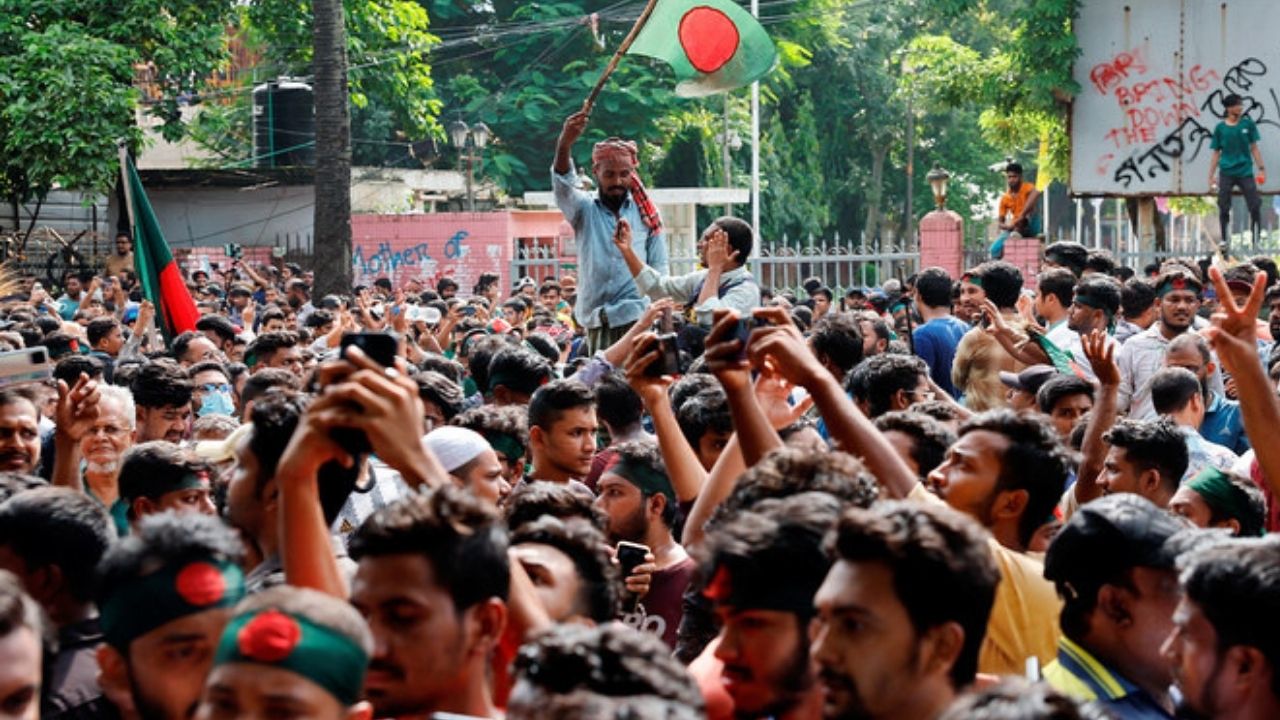
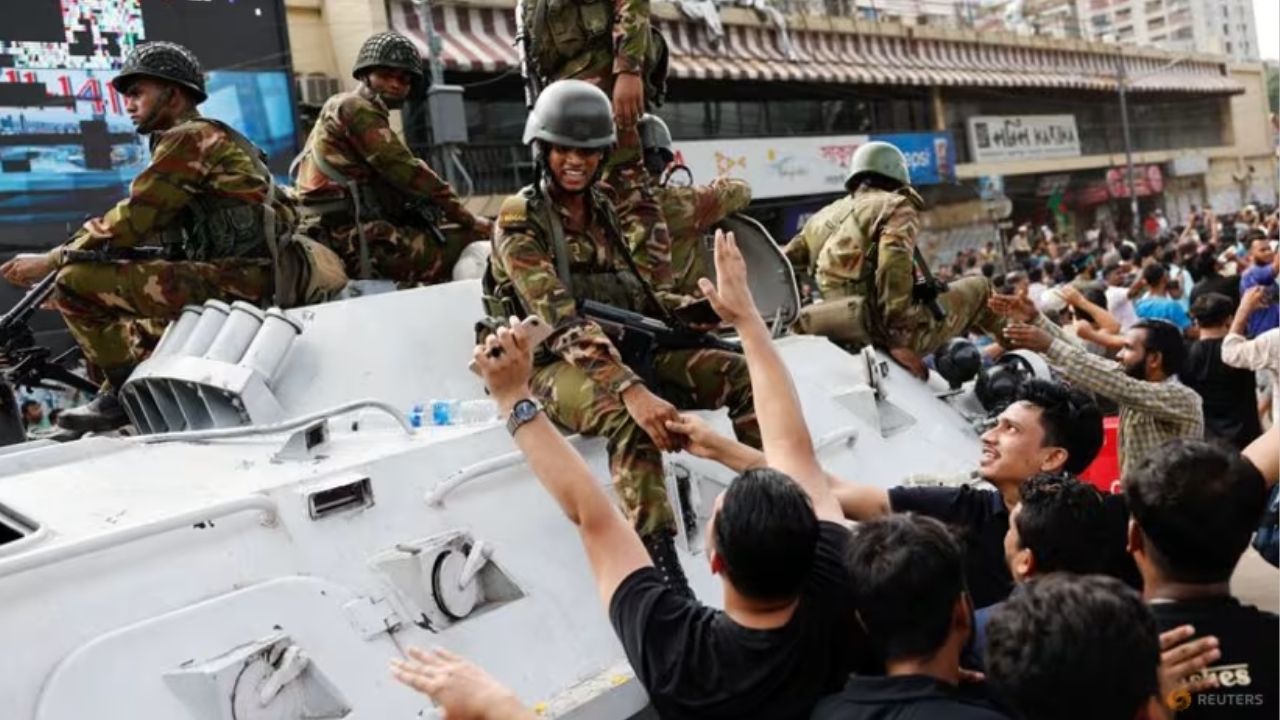
    Jubilant looking crowds waved flags, some dancing on top of a tank in the streets of Dhaka on Monday morning, before hundreds broke through the gates of Hasina’s official residence.

    Bangladesh’s Channel 24 broadcast images of crowds running into the compound, waving to the camera as they celebrated.

    A source close to Hasina, 76, had earlier told AFP she had left her palace for a “safer place”.

    Bangladesh’s army chief Waker-Uz-Zaman would address the nation on Monday afternoon, a military spokesman told AFP without giving further details.

    Before the protesters had stormed the compound, Hasina’s son urged the country’s security forces to block any takeover from her 15-year rule.

    “Your duty is to keep our people safe and our country safe and to uphold the constitution,” her son, US-based Sajeeb Wazed Joy, said in a post on Facebook.

    “It means don’t allow any unelected government to come in power for one minute, it is your duty.”

    Security forces had supported Hasina’s government throughout the unrest, which began last month against civil service job quotas and then escalated into wider calls for her to stand down.

    But the protesters defied curfews and deadly force.

    At least 94 people were killed on Sunday, including 14 police officers, in the deadliest day of the unrest.

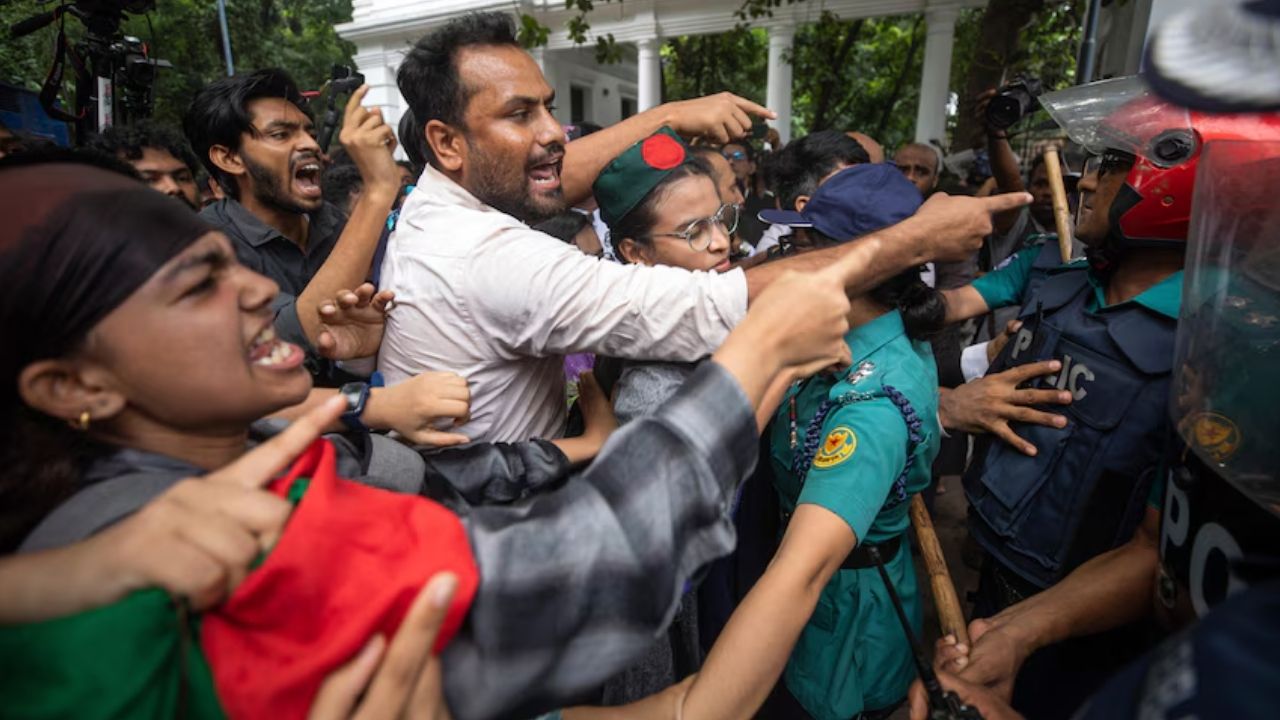
    Protesters and government supporters countrywide battled each other with sticks and knives, and security forces opened fire.

    The day’s violence took the total number of people killed since protests began in early July to at least 300, according to an AFP tally based on police, government officials and doctors at hospitals.

    Waker told officers on Saturday that the military “always stood by the people”, according to an official statement.

    The military declared an emergency in January 2007 after widespread political unrest and installed a military-backed caretaker government for two years.

    ‘Final protest’

    Hasina has ruled Bangladesh since 2009 and won her fourth consecutive election in January after a vote without genuine opposition.

    Her government is accused by rights groups of misusing state institutions to entrench its hold on power and stamp out dissent, including through the extrajudicial killing of opposition activists.

    Demonstrations began over the reintroduction of a quota scheme that reserved more than half of all government jobs for certain groups.

    The protests escalated despite the scheme having been scaled back by Bangladesh’s top court.

    Soldiers and police with armoured vehicles in Dhaka had barricaded routes to Hasina’s office with barbed wire on Monday morning, but vast crowds flooded the streets, tearing down barriers.

    The Business Standard newspaper estimated as many as 400,000 protesters were on the streets but it was impossible to verify the figure.

    “The time has come for the final protest,” said Asif Mahmud, one of the key leaders in the nationwide civil disobedience campaign.

    In several cases, soldiers and police did not intervene to stem Sunday’s protests, unlike during the past month of rallies that repeatedly ended in deadly crackdowns.

    “Let’s be clear: The walls are closing in on Hasina: She’s rapidly losing support and legitimacy,” Michael Kugelman, director of the South Asia Institute at the Washington-based Wilson Center, told AFP.

    “The protests have taken on immense momentum, fuelled by raw anger but also by the confidence that comes with knowing that so much of the nation is behind them,” he said.

    In a hugely symbolic rebuke of Hasina, a respected former army chief demanded the government “immediately” withdraw troops and allow protests.

    “Those who are responsible for pushing people of this country to a state of such an extreme misery will have to be brought to justice,” ex-army chief General Ikbal Karim Bhuiyan told reporters Sunday.

    The anti-government movement had attracted people from across society in the South Asian nation of about 170 million people, including film stars, musicians and singers.

  • Sheikh Hasina leaves Bangladesh, martial law likely

    Sheikh Hasina leaves Bangladesh, martial law likely

    Bangladeshi Prime Minister Sheikh Hasina fled her palace on Monday, a source told AFP, as masses of protesters demanding her resignation roamed the streets of Dhaka. The army chief was set to address the nation.


    Jubilant-looking crowds waved flags, peacefully celebrating, including some dancing on top of a tank, as a source close to the embattled leader said she had left her palace in the capital for a “safer place”.


    Hasina’s son urged the country’s security forces to block any takeover from her rule, while a senior advisor told AFP that her resignation was a “possibility” after being questioned about it.


    “She wanted to record a speech, but she could not get an opportunity to do that,” the source close to Hasina told AFP.


    Bangladesh’s army chief, Waker-Uz-Zaman, will address the nation on Monday afternoon, a military spokesman told AFP without giving further details.


    Waker told officers on Saturday that the military “always stood by the people”, according to an official statement.


    The military declared an emergency in January 2007 afer widespread political unrest and installed a military-backed caretaker government for two years.

    ‘Uphold the constitution’


    Rallies that began last month against civil service job quotas have escalated into some of the worst unrest of Hasina’s 15-year rule and shifed into wider calls for the 76-year-old to leave.


    “Your duty is to keep our people safe and our country safe and to uphold the constitution,” her son, US-based Sajeeb Wazed Joy, said in a post on Facebook.


    “It means don’t allow any unelected government to come in power for one minute, it is your duty.”


    But protesters on Monday defied security forces enforcing a curfew, marching on the capital’s streets afer the deadliest day of unrest since demonstrations erupted last month.


    Internet access was tightly restricted on Monday, ofices were closed and more than 3,500 factories servicing Bangladesh’s economically vital garment industry were shut.


    Soldiers and police with armoured vehicles in Dhaka had barricaded routes to Hasina’s office with barbed wire, AFP reporters said, but vast crowds flooded the streets, tearing down barriers.


    The Business Standard newspaper estimated as many as 400,000 protesters were on the streets but it was impossible to verify the figure.
    “The time has come for the final protest,” said Asif Mahmud, one of the key leaders in the nationwide civil disobedience campaign.

    ‘Shocking violence’


    At least 94 people were killed on Sunday, including 14 police officers.


    Protesters and government supporters countrywide battled each other with sticks and knives, and security forces opened fire.

    The day’s violence took the total number of people killed since protests began in early July to at least 300, according to an AFP tally based on police, government oficials and doctors at hospitals.


    “The shocking violence in Bangladesh must stop,” United Nations rights chief Volker Turk said in a statement.


    “This is an unprecedented popular uprising by all measures,” said Ali Riaz, an Illinois State University politics professor and expert on Bangladesh.
    “Also, the ferocity of the state actors and regime loyalists is unmatched in history.”


    Protesters in Dhaka on Sunday were seen climbing a statue of Hasina’s father, Sheikh Mujibur Rahman, the country’s independence leader, and smashing it with hammers, according to videos on social media verified by AFP.

    ‘Walls are closing in’


    In several cases, soldiers and police did not intervene to stem Sunday’s protests, unlike during the past month of rallies that repeatedly ended in deadly crackdowns.


    “Let’s be clear: The walls are closing in on Hasina. She’s rapidly losing support and legitimacy,” Michael Kugelman, director of the South Asia Institute at the Washington-based Wilson Center, told AFP.


    “The protests have taken on immense momentum, fuelled by raw anger but also by the confidence that comes with knowing that so much of the nation is behind them,” he said.


    In a hugely symbolic rebuke of Hasina, a respected former army chief demanded the government “immediately” withdraw troops and allow protests.


    “Those who are responsible for pushing people of this country to a state of such extreme misery will have to be brought to justice,” ex-army chief General Ikbal Karim Bhuiyan told reporters Sunday.


    The anti-government movement has attracted people from across society in the South Asian nation of about 170 million people, including film stars, musicians and singers.


    Hasina has ruled Bangladesh since 2009 and won her fourth consecutive election in January afer a vote without genuine opposition.


    Her government is accused by rights groups of misusing state institutions to entrench its hold on power and stamp out dissent, including through the extrajudicial killing of opposition activists.


    Demonstrations began over the reintroduction of a quota scheme that reserved more than half of all government jobs for specific groups.


    The protests have escalated despite the scheme having been scaled back by Bangladesh’s top court.
  • Shah Rukh Khan to be honoured at Locarno Film Festival

    Shah Rukh Khan to be honoured at Locarno Film Festival

    Switzerland’s Locarno Film Festival opens on Wednesday with Shah Rukh Khan, Jane Campion, Alfonso Cuaron and Irene Jacob set to be honoured with special awards.

    Founded in 1946, Locarno is one of the world’s longest-running annual film festivals and focuses on auteur cinema.

    Held on the shores of Lake Maggiore, in the Italian-speaking Ticino region of southern Switzerland, films are screened in Locarno’s central square — a feature of Swiss national life depicted on the country’s 20-franc banknotes.

    The open-air Piazza Grande holds up to 8,000 moviegoers, and films are shown on one of the largest screens in the world.

    Bollywood superstar Khan, 58, will on Saturday be given the Pardo alla Carriera award for people whose artistic contributions have redefined cinema.

    “The wealth and breadth of his contribution to Indian cinema is unprecedented,” said the festival’s artistic director Giona A. Nazzaro.

    “Khan is a king who has never lost touch with the audience that crowned him. This brave and daring artist has always been willing to challenge himself.”

    The 77th festival, which runs until August 17, features 225 films, including 104 world premieres and 15 debut movies.

    Locarno’s top prize is the Golden Leopard. Previous winning directors include Roberto Rossellini, John Ford, Stanley Kubrick, Milos Forman, Mike Leigh and Jim Jarmusch.

    Seventeen films — all world or international premieres — are vying for the award, including movies from Lithuania, France, Austria, Italy and South Korea.

    The Golden Leopard comes with a prize fund of 75,000 Swiss francs ($87,400), shared between the director and the producer.

    Switzerland’s largest film event will feature a retrospective dedicated to the 100th anniversary of Columbia Pictures.

    – ‘Tortured, fascinating characters’ –

    New Zealand’s Campion will be recognised with the Leopard of Honour, given to outstanding personalities of world cinema.

    She was the first woman to be nominated twice for the best director Oscar: first for “The Piano” (1993) and then for “The Power of the Dog” (2021), which secured her the Academy Award.

    “Her work, peopled with tortured, fascinating characters and marked by an astonishing skill in grappling with the more disturbing side of the human condition, represents one of the undisputed pinnacles of contemporary filmmaking,” Nazzaro said.

    Previous recipients include Ennio Morricone, Jean-Luc Godard, Bernardo Bertolucci, Paul Verhoeven, Terry Gilliam and Werner Herzog.

    Mexican filmmaker Cuaron, who won the best director Oscars for “Gravity” (2013) and “Roma” (2018), will receive the lifetime achievement award.

    “Cuaron has reinvented himself as an artist with each new film,” said Nazzaro.

    French-Swiss actress Jacob, who starred in “The Double Life of Veronique” (1991) and “Three Colours: Red” (1994), will receive the Leopard Club Award, given for film work touching the collective imagination.

    Stacey Sher — the US film producer behind “Pulp Fiction”, “Get Shorty”, “Gattaca”, “Erin Brockovich”, “Django Unchained” and “The Hateful Eight” — will receive the Raimondo Rezzonico Award for major achievements in international movie production.

    Nearly 150,000 people attended last year’s festival.

  • 91 killed as Dhaka turns into battleground

    91 killed as Dhaka turns into battleground

    Hundreds of thousands of Bangladeshi protesters demanding Prime Minister Sheikh Hasina resign, clashed with government supporters on Sunday, with dozens killed in one of the deadliest days since demonstrations began.

    Rallies that began last month against civil service job quotas have escalated into some of the worst unrest of Hasina’s 15-year rule and shifted into wider calls for the 76-year-old to step down.

    At least 91 people were killed on Sunday alone, including 14 police officers, with the rival sides battling with sticks and knives and security forces firing rifles, taking the total killed since protests began in July to at least 261.

    Police said protesters att­a­cked their officers, inclu­ding storming a station in the town of Enayetpur.

    “The terrorists attacked the police station and killed 11 policemen,” said Bijoy Basak, a deputy inspector general.

    AFP journalists repo­rted hearing sustained crackles of gunfire after dark on Sunday, with protesters defying a nationwide curfew.

    Mobile internet was tightly restricted.

    ‘Final protest’

    In several cases, soldiers and police did not intervene to stem the protests, unlike the past month of rallies that repeatedly ended in deadly crackdowns.

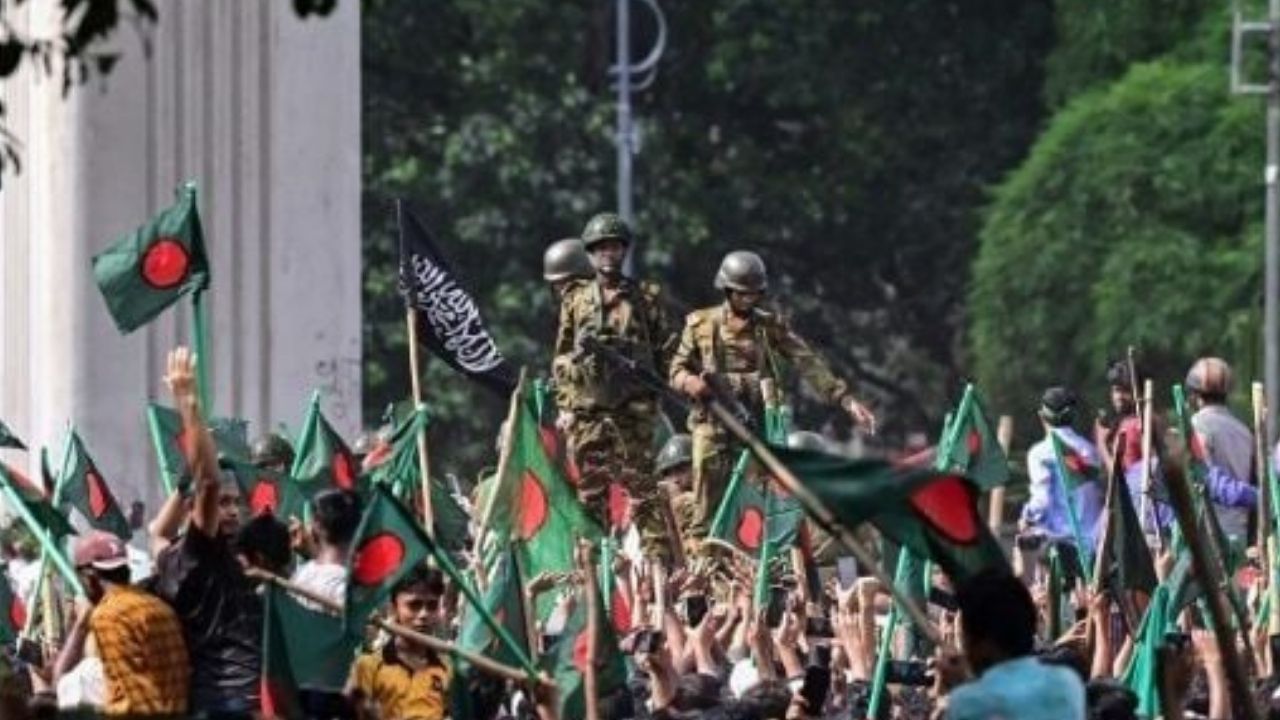
    Demonstrators in the capital Dhaka, surrounded by a tightly packed and cheering crowd, waved a Bangladeshi flag on top of an armoured car as soldiers watched.

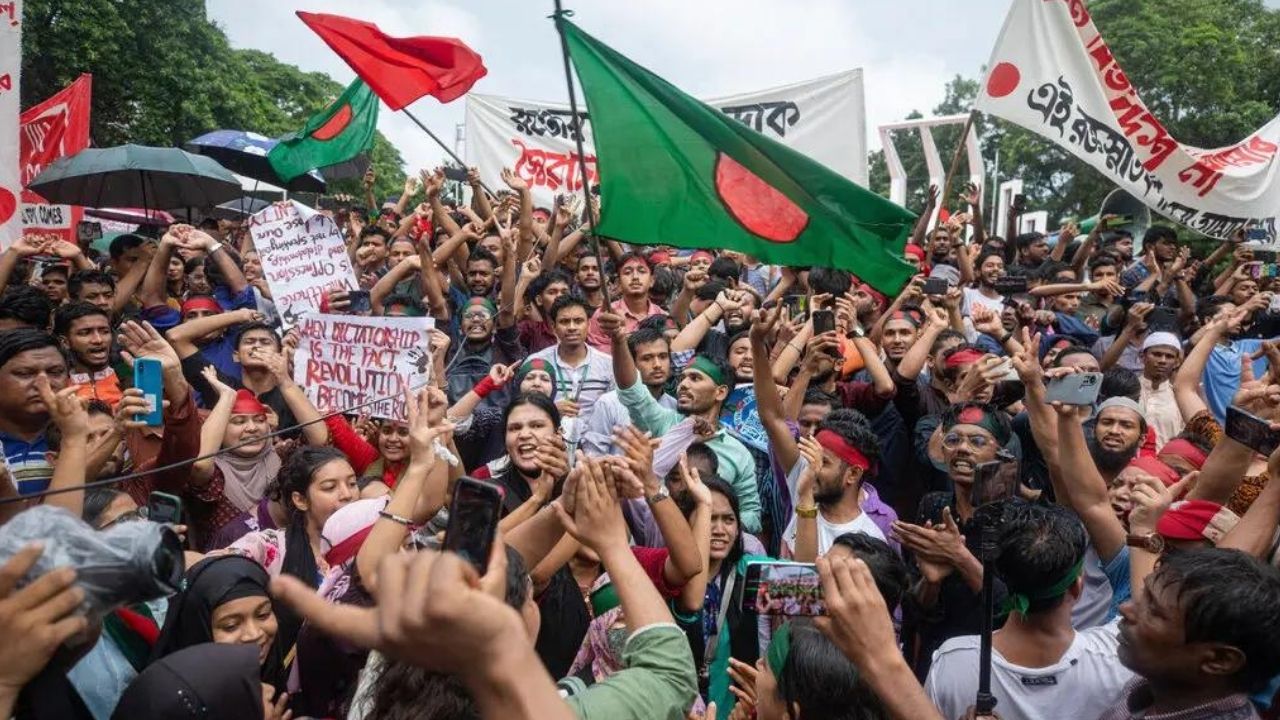
    Asif Mahmud, one of the main leaders in the civil disobedience campaign, called on supporters to march on Dhaka on Monday. “Prepare bamboo sticks and liberate Bangladesh,” he wrote on Facebook on Sunday. “The time has come for the final protest,” he said.

    Brought to justice

    Vast crowds of protesters packed into Dhaka’s central Shahbagh Square on Sunday, with street battles in multiple sites.

    “There were clashes between students and the ruling party men,” police inspector Al Helal said, adding two young men were killed in Dhaka’s Munshiganj district.

    “One of the dead was hacked in his head and another had gunshot injuries.”

    Another policeman, who asked not to be identified, said “the whole city has turned into a battleground”.

    Two people were killed in the city of Kishioreganj, where protesters torched a ruling party office, police said.

    Some former military officers have joined the student movement and ex-army chief Gen Ikbal Karim Bhuiyan turned his Facebook profile picture red in a show of support.

    “We call on the incumbent government to withdraw the armed forces from the street immediately,” Bhuiyan told reporters on Sunday alongside other ex-officers, condemning “egregious killings, torture, disappearances and mass arrests”.

    “Those who are responsible for pushing people of this country to a state of such an extreme misery will have to be brought to justice,” he said.

    No longer about job quotas

    Current army chief Waker-uz-Zaman told officers at the military headquarters in Dhaka on Saturday the “Bangladesh Army is the symbol of trust of the people”.

    “It always stood by the people and will do so for the sake of people and in any need of the state,” he said, according to a statement, which did not say explicitly whether the army backed the protests.

    The demonstrations attracted people from all strata of Bangladeshi society. Rap songs calling for people’s support have spread widely on social media.

    “It is no longer about job quotas,” said Sakhawat, a young female protester who gave only one name, and called Hasina a “killer”.

    A group of 47 manufacturers in the economically vital garment sector said they stood in “solidarity” with the protesters.

    Obaidul Quader, general secretary of the ruling Awami League, has called on party activists to gather “in every district” nationwide to show their support for the government.

    The unrest began in July over the reintroduction of the quota scheme, which reserved more than half of all government jobs for certain groups. It has since been scaled back by the country’s top court.

  • ‘I want to inspire’: Algeria’s woman boxer fighting prejudices

    ‘I want to inspire’: Algeria’s woman boxer fighting prejudices

    Born in a poor village some 300 kilometres from Algiers, boxer Imane Khelif had to overcome obstacles in a conservative country where women are considered unfit for the sport.

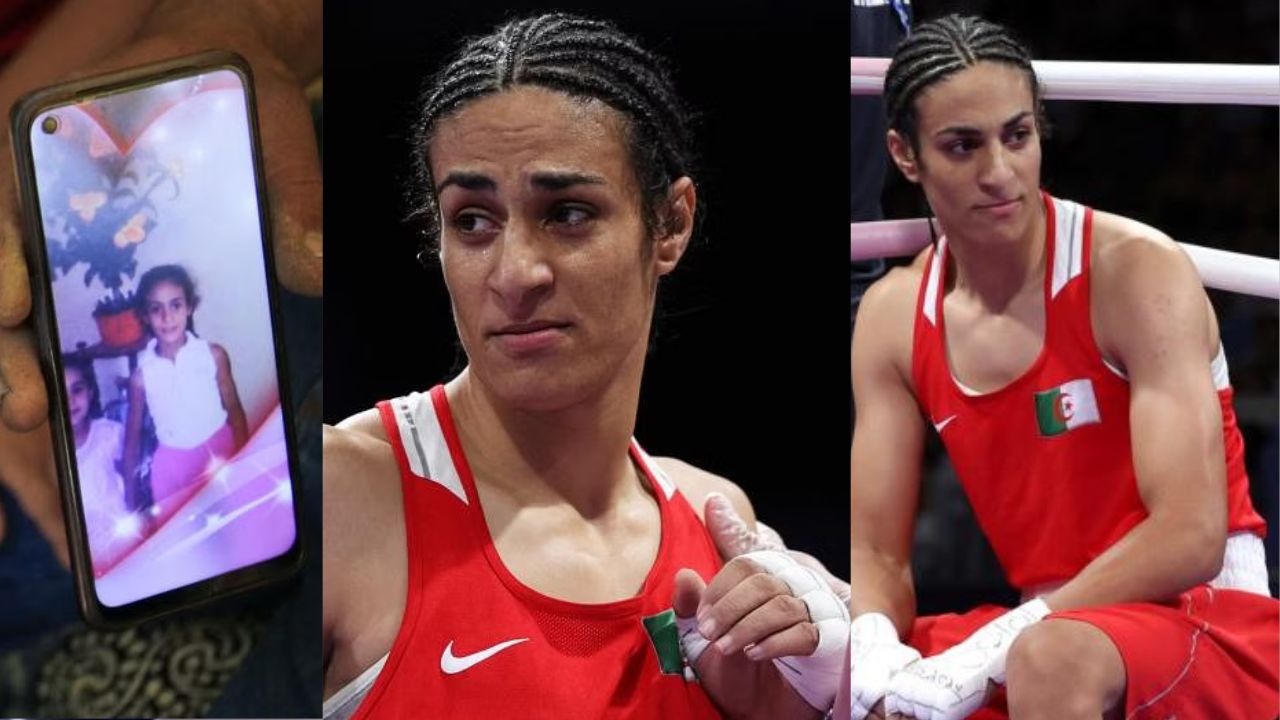
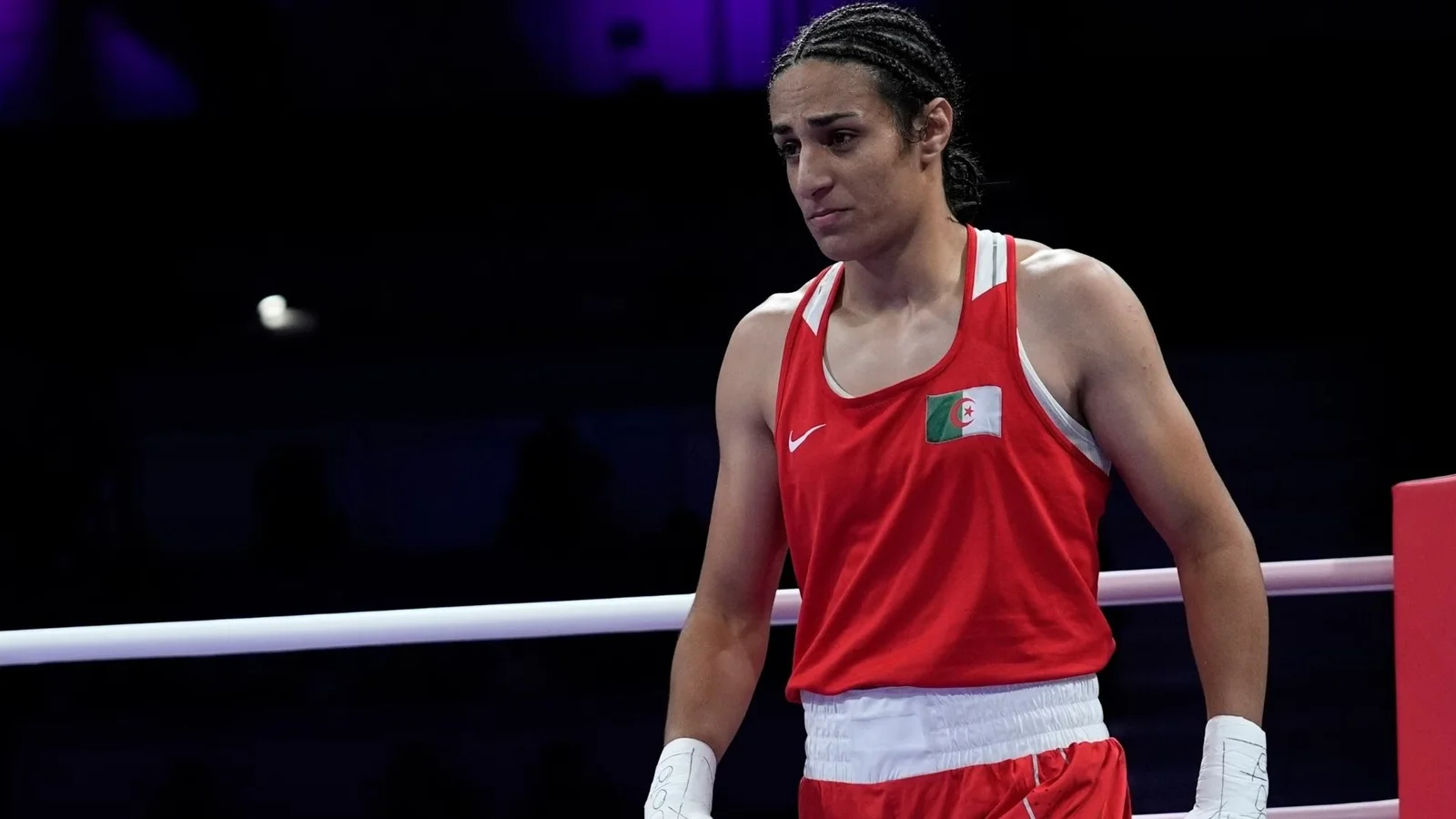
    With braided hair and a powerful 1.79 metre (5 foot 9 inch) physique, the 25-year-old is the object of a Paris Olympic Games gender controversy.

    With smiles and a soft voice, Imane told her story on television channel Canal Algerie one month before the start of the games.

    “Our village was around 10 kilometres from the centre (of Tiaret, 280 kilometres southwest of Algiers). I moved from the village to the city. From the city to the capital. From the capital to abroad,” she said.

    From a family of limited means, she spoke of the difficulty of her life in “a village of conservative people” in Tiaret’s semi-desert surroundings.

    “I came from a conservative family. Boxing is not a widely-practised sport by women, especially in Algeria. It was difficult.”

    Already a strong athlete, she played football with the boys in her village of Biban Mesbah — but beating boys in matches brought on fights where she fought back with punches.

    These fights lead her to boxing.

    In an interview with UNICEF, she said she used to sell scrap metal and her mother sold homemade couscous to pay for bus tickets to Tiaret.

    Imane’s father at first did not approve of her decision to pursue boxing, but he eventually became one of her biggest fans.

    The 49-year-old unemployed welder told AFP that his daughter is “an example of the Algerian woman, a heroine of Algeria”.

    He hailed “her strong will to work and to train”, in an interview with AFP on Friday.

    In 2022, Imane told the Algerian news agency APS that she had considered giving up boxing “because my family did not accept the idea, and because of how society looked at me, considering that I was doing something wrong.”

    But “all these barriers made me even stronger and were an extra motivation to achieve my dreams.”

    She also expressed her determination in an interview on the UNICEF website, where she said her “dream is to win a gold medal”.

    “If I win, mothers and fathers will be able to see how far their children can go,” she said. “I want to inspire girls and children in Algeria.”

    Imane’s international career took off with her participation in the lightweight category in the 2020 summer Olympic Games in Tokyo — postponed to 2021 — where she won fifth place after losing in the quarter finals to Ireland’s Kellie Harlington.

    “Everything changed for the better, especially as my country’s flag flew and its hymn played in many countries throughout the world”, she explained.

    In 2023, she made it to the semi-finals of the women’s amateur boxing world championships in New Delhi, India.

    However, she was disqualified following unspecified gender eligibility testing by the International Boxing Association, which is not recognised by the International Olympic Committee (IOC).

    After her match against Italian opponent Angela Carini this week in the Paris Games — whom she beat in less than a minute — Imane was targeted by online harassment and racism, where far-right publications insinuated that she was “a man fighting women”.

    Her father has dismissed aspersions about her gender, saying she is “a strong and courageous girl.”

    And the IOC has supported her participation, amid the furore over Khelif and another woman boxer also disqualified from last year’s world championships.

    “All of the competitors respect the eligibility rules for the competitions,” said Mark Adams, IOC spokesman, adding that it had “established that these are women.”

    Imane’s coach, Mohamed Chaoua, said the “controversies give her the strength to move forward”.

  • Bangladesh students call for nationwide civil disobedience; seek Hasina’s resignation

    Bangladesh students call for nationwide civil disobedience; seek Hasina’s resignation

    Student leaders rallied Bangladeshis on Saturday for a nationwide civil disobedience campaign as Prime Minister Sheikh Hasina’s government weathered a worsening backlash over a deadly police crackdown on protesters.

    Rallies against civil service job quotas sparked days of mayhem last month that killed more than 200 people in some of the worst unrest of Hasina’s 15-year tenure.

    Troop deployments briefly restored order, but crowds hit the streets in huge numbers after Friday prayers in the Muslim-majority nation, heeding a call by student leaders to press the government for more concessions.

    Students Against Discrimination, the group responsible for organising the initial protests, urged their compatriots to launch an all-out non-cooperation movement from Sunday.

    “This includes non-payment of taxes and utility bills, strikes by government workers and a halt to overseas remittance payments through banks,” the group’s Asif Mahmud told AFP.

    Mahmud’s fellow student leaders also said another round of nationwide rallies would be staged on Saturday.

    “Please don’t stay at home. Join your nearest protest march,” Mahmud wrote on Facebook.

    Students are demanding a public apology from Hasina for last month’s violence and the dismissal of several of her ministers.

    Read more: 195 killed, 4000 arrested amid police crackdown in Bangladesh

    They have also insisted that the government reopens schools and universities around the country, all of which were shuttered at the height of the unrest.

    Crowds on the street have gone further, chanting demands for Hasina to leave office.

    Hasina, 76, has ruled Bangladesh since 2009 and won her fourth consecutive election in January after a vote without genuine opposition.

    Her government is accused by rights groups of misusing state institutions to entrench its hold on power and stamp out dissent, including the extrajudicial killing of opposition activists.

    Demonstrations began in early July over the reintroduction of a quota scheme — since scaled back by Bangladesh’s top court — that reserved more than half of all government jobs for certain groups.

    With around 18 million young Bangladeshis out of work, according to government figures, the move upset graduates facing an acute employment crisis.

    The protests had remained largely peaceful until attacks on demonstrators by police and pro-government student groups.

    Hasina’s government eventually imposed a nationwide curfew, deployed troops and shut down the nation’s mobile internet network for 11 days to restore order.

    Foreign governments condemned the clampdown, with European Union foreign policy chief Josep Borrell this week calling for an international probe into the “excessive and lethal force against protesters”.

    Home Minister Asaduzzaman Khan told reporters last weekend that security forces had operated with restraint but were “forced to open fire” to defend government buildings.

    At least 32 children were among those killed last month, the UN said Friday.