Author: AFP

  • First official image published of UK’s Princess Kate after surgery

    First official image published of UK’s Princess Kate after surgery

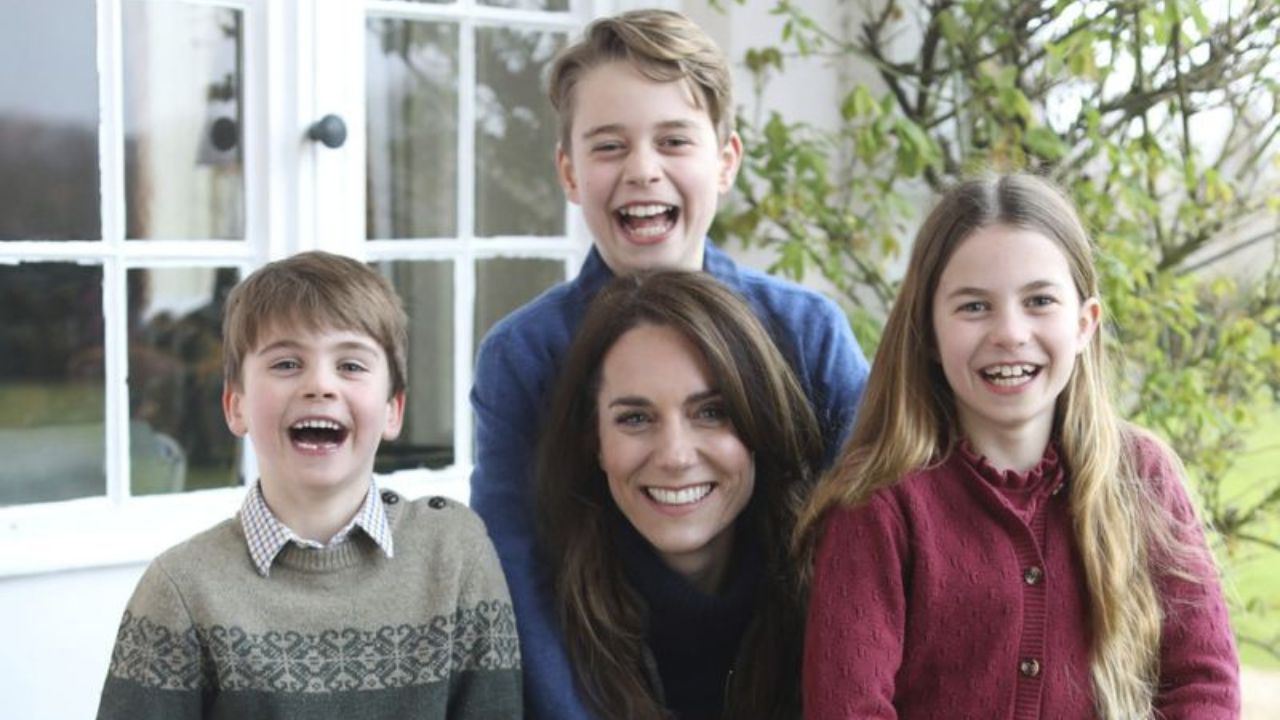
    Kensington Palace released the first official photo of Princess Kate on social media on Sunday, nearly two months after her abdominal surgery, during which she has stayed out of the public eye.

    The 42-year-old princess, whose husband Prince William is heir to the British throne, has been recovering mainly at their home in Windsor, west of London, since leaving hospital on January 29.

    The photo shows the Princess of Wales sitting on a garden chair, dressed in jeans, a sweater and a dark jacket, smiling, surrounded by her three laughing children, George, Charlotte and Louis.

    “Thank you for your kind wishes and continued support over the last two months,” read a message accompanying the photo on X.

    “Wishing everyone a Happy Mother’s Day,” said the message, which was signed “C” for Catherine.

    In a statement the palace clarified that the photo was taken “in Windsor earlier this week” by Kate’s husband, Prince William.

    The family photograph is the first official image of Kate released by the royal family since her hospitalisation at the London Clinic on January 16 for an abdominal surgery.

    The future queen was last pictured in public during a Christmas Day walk in Sandringham, eastern England.

    Photos published by TMZ earlier in March showed Kate wearing sunglasses while being driven in a car, with the celebrity news site saying they were taken Monday near Windsor Castle.

    UK media outlets including the Daily Mail and The Sun have chosen not to publish the photos.

    The sighting came after a flurry of conspiracy theories on social media over the famously hard-working and dutiful princess’s absence from the spotlight.

    The speculation came despite Kensington Palace clearly saying at the time of her surgery that she would be “unlikely to return to public duties until after Easter”.

    It also said the surgery was not related to cancer.

    Kate’s hospitalisation came almost simultaneously with the announcement that William’s father, King Charles, had been admitted for surgery for a benign prostate condition and subsequently diagnosed with an unrelated cancer.

    Charles, 75, visited his daughter-in-law’s bedside after being admitted himself on January 26.

    The king withdrew from public duties during his treatment, though he attended church services and held his weekly audience with the prime minister.

    – Camilla steps in –

    Charles’s wife Queen Camilla, 76, has been the most visible senior royal, stepping in to cover many of her husband’s public duties during his treatment.

    She is now on a break until March 11, when she is expected to join William and other senior royals at the annual Commonwealth Day service at Westminster Abbey.

    She is reported to be on holiday this week, effectively meaning all four of the most senior royals are out of action.

    The princess is one of the most popular members of the royal family.

    She and William have taken on more royal duties since his younger brother Prince Harry and his wife Meghan left for the United States in 2020, and the king’s brother Prince Andrew stepped back because of his friendship with the convicted sex offender Jeffrey Epstein.
  • Aid boat readied as Israeli attacks in Gaza rage before Ramadan

    Aid boat readied as Israeli attacks in Gaza rage before Ramadan

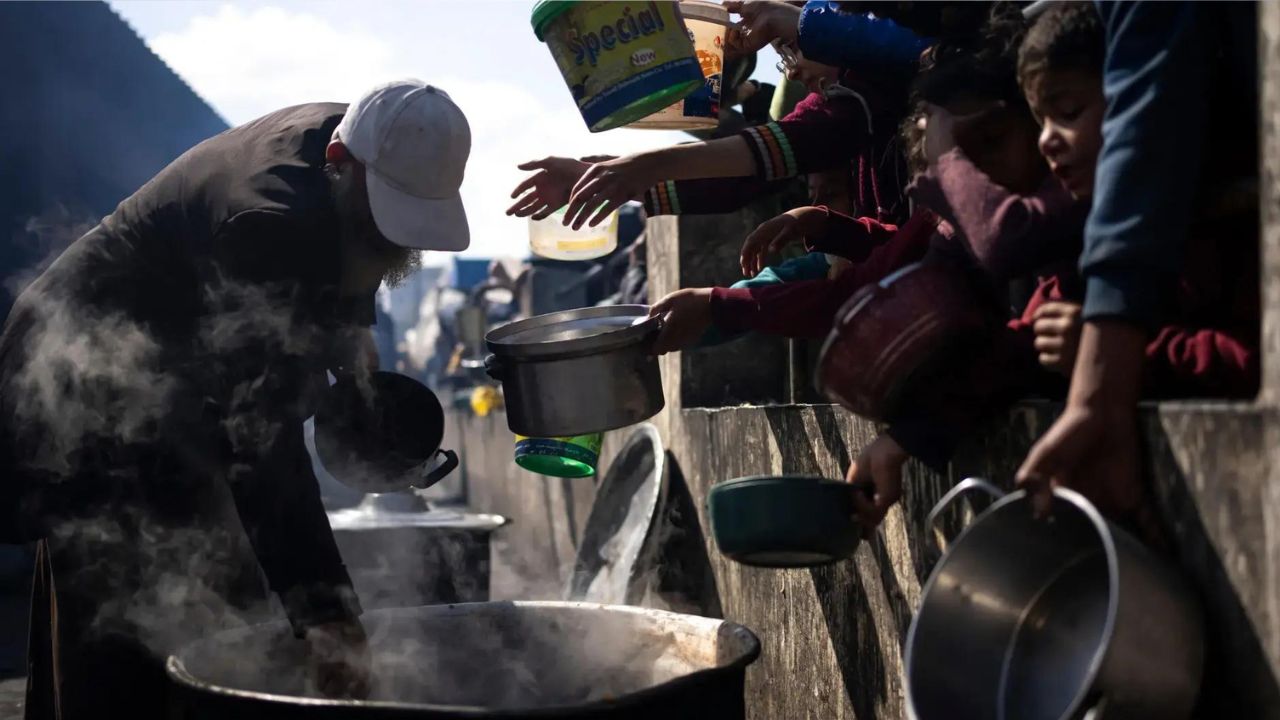
    Palestinian Territories – A boat laden with food for Palestinians in Gaza was “ready” to set sail from Cyprus, an NGO said Saturday, as Israeli military operations in Gaza raged.

    The sea route aims to counter aid access restrictions, which humanitarians and foreign governments have blamed on Israel, more than five months into the genocide which has left Gaza’s 2.4 million people struggling to survive.

    Hopes were fading fast for a pause in the fighting before Ramadan, which could begin as early as Sunday depending on the lunar calendar, as Israel accused Hamas of seeking to “inflame” the region during the Muslim fasting month.

    The United Nations has repeatedly warned of looming famine, particularly in north Gaza where no overland border crossings are open.

    In Rafah, in Gaza’s far south, “we can barely get water,” said displaced Palestinian woman Nasreen Abu Yussef.

    Roughly 1.5 million Palestinians have sought refuge in the city, where Atallah al-Satel said he wanted an end to the genocide.

    “We are just exhausted citizens,” said Satel, who had fled to Rafah from Khan Yunis.

    Spanish charity Open Arms said its boat, which docked three weeks ago in Cyprus’s Larnaca port, was “ready” to embark but awaits final authorisation.

    It would be the first shipment along a maritime corridor from Cyprus — the closest European Union country to Gaza — that the EU Commission hopes will open on Sunday.

    Open Arms spokeswoman Laura Lanuza told AFP that Israeli authorities were inspecting the cargo of “200 tonnes of basic foodstuffs, rice and flour, cans of tuna”.

    US charity World Central Kitchen, which has partnered with Open Arms, has teams in the besieged Gaza Strip who were “constructing a dock” to unload the shipment, Lanuza said.

    With ground access limited, countries have also turned to airdropping aid, although a parachute malfunction turned one delivery deadly on Friday.

    The health ministry in Gaza said three more children had died from malnutrition and dehydration, with the total number of such deaths now 23.

    ‘Only part of the solution’

    Another 82 people were killed in strikes over the previous day, the ministry said, bringing the number of deaths in Israel’s bombardment and ground offensive of Gaza to 30,960, mostly women and children.

    Israel’s campaign to destroy Hamas began after the movement’s October 7 attack on Israel resulted in about 1,160 deaths, mostly civilians, according to Israeli official figures.

    The UN’s World Food Programme has warned that the volume of aid that can be delivered by sea will do little if anything to stave off famine in Gaza.

    European Commission chief Ursula von der Leyen, in Larnaca on Friday, said a “pilot operation” would be launched in partnership with World Central Kitchen, supported by aid from the United Arab Emirates.

    A US effort for a “temporary pier” to receive aid off Gaza, which the Pentagon said would take up to 60 days to establish, builds upon the maritime corridor proposed by Cyprus, senior US officials said.

    Humanitarian workers and UN officials say easing the entry of trucks to Gaza would be more effective than aid airdrops or maritime shipments.

    The US military said it airdropped more than 41,000 meals into Gaza on Saturday, and Canada has said it too will join aerial aid delivery missions.

    But a steady flow of relief into Gaza was “only part of the solution”, said International Committee of the Red Cross chief Mirjana Spoljaric.

    The warring sides must do more to “safeguard civilian life and human dignity”, she said, decrying the “unacceptable” civilian death toll.

    ‘Tough’ truce talks

    After a week of talks with mediators in Cairo failed to produce a breakthrough, Hamas’s armed wing said it would not agree to a hostage-prisoner exchange unless Israeli forces withdraw.

    Israel has rejected such a demand.

    On Saturday, Prime Minister Benjamin Netanyahu’s office said Mossad spy agency chief David Barnea had met CIA director William Burns on Friday “as part of the ceaseless efforts to advance another hostage release deal”.

    US President Joe Biden acknowledged it would now be “tough” to secure a new truce deal in time for Ramadan.

    Saturday’s Israeli statement accused Hamas of “entrenching its positions like someone who is not interested in a deal and is striving to inflame the region during Ramadan”.

    Israeli military spokesman Daniel Hagari said Israel was preparing for “all possible operational scenarios” during the Muslim holy month.

    On the ground in southern Gaza, the Israeli army said fighting persisted in the area of Khan Yunis and Hamas authorities reported more than 30 air strikes overnight.

    Hamas chief Ismail Haniyeh called for the speedy distribution of aid to Gazans and for the full opening of border crossings “to end the siege of our people”.

    The war’s effects have been felt across the region, including off Yemen where Iran-backed Huthi rebels, who say they are acting in solidarity with Gazans, have repeatedly targeted ships plying the vital Red Sea trade route.

    US and allied forces shot down 28 one-way attack drones fired towards the Red Sea and Gulf of Aden on Saturday, the US military said, after one of the largest such rebel strikes.

    bur-srm/kir/ami

    © Agence France-Presse

  • Cambodia earns new world record for largest ‘Bridal Carry’

    Cambodia earns new world record for largest ‘Bridal Carry’

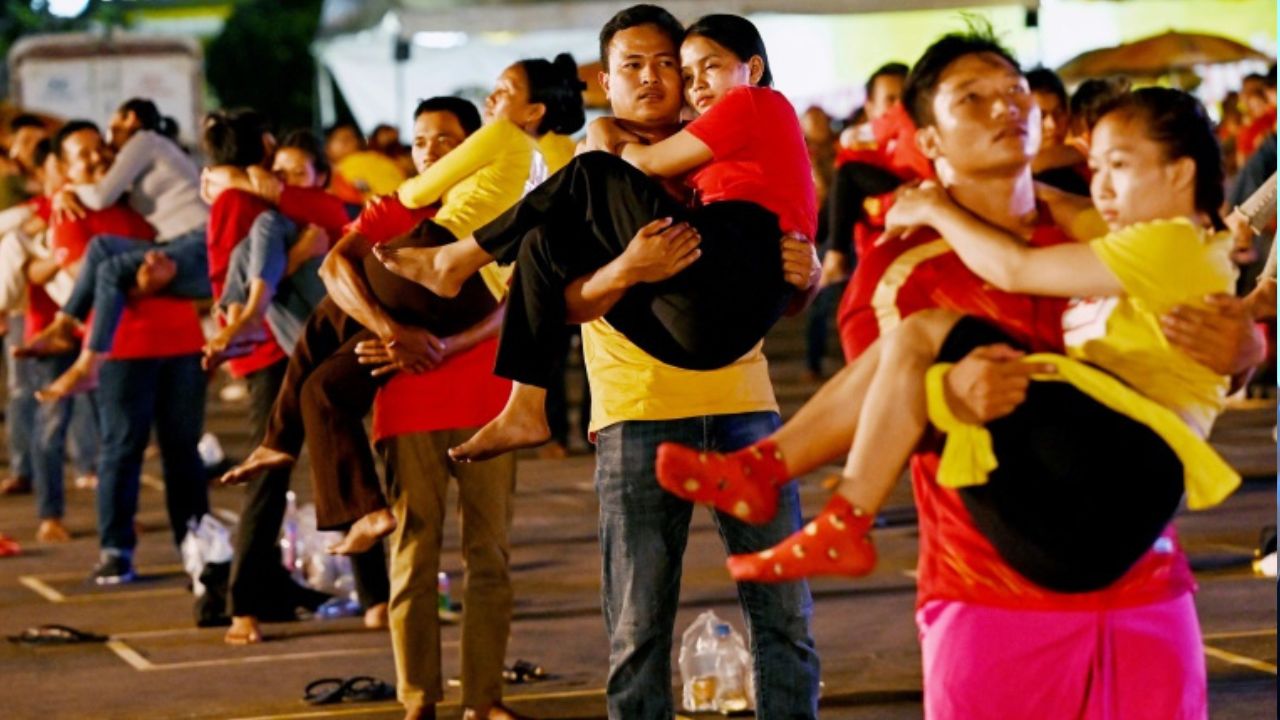
    Hundreds of Cambodians braved sticky tropical heat to set an unusual new world record: for the most people performing a “bridal carry” at the same time.

    Late on Friday, 245 men hoisted their partners – wives, girlfriends, sisters, or mothers – with one arm under the legs and one behind the back and held the position for a minute to set the mark, certified by Guinness World Records representatives.

    “I am so happy, it is my first time to participate in such an event to break a world record for Cambodia,” Sam Khan, 25, told AFP before carrying his wife.

    The event drew participants young and old.

    “I am so excited,” 50-year-old mother Heng Pov told AFP while being carried by her son.

    After setting the record, many of the participants carried on with the hold as part of a competition to win a new car.

    The “bridal carry” is so named for the way a groom in some cultures carries his bride over the threshold of their new home.

    This article was produced by AFP. For more information go to AFP.com.
    © Agence France-Presse

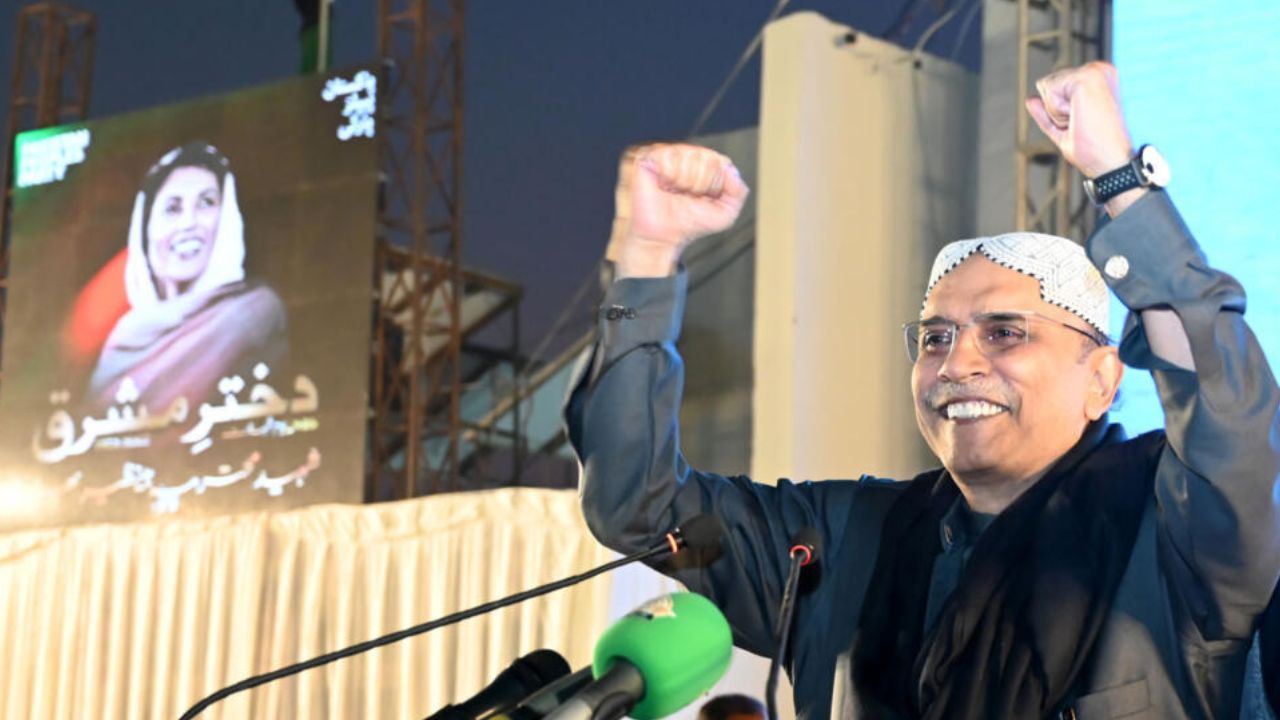
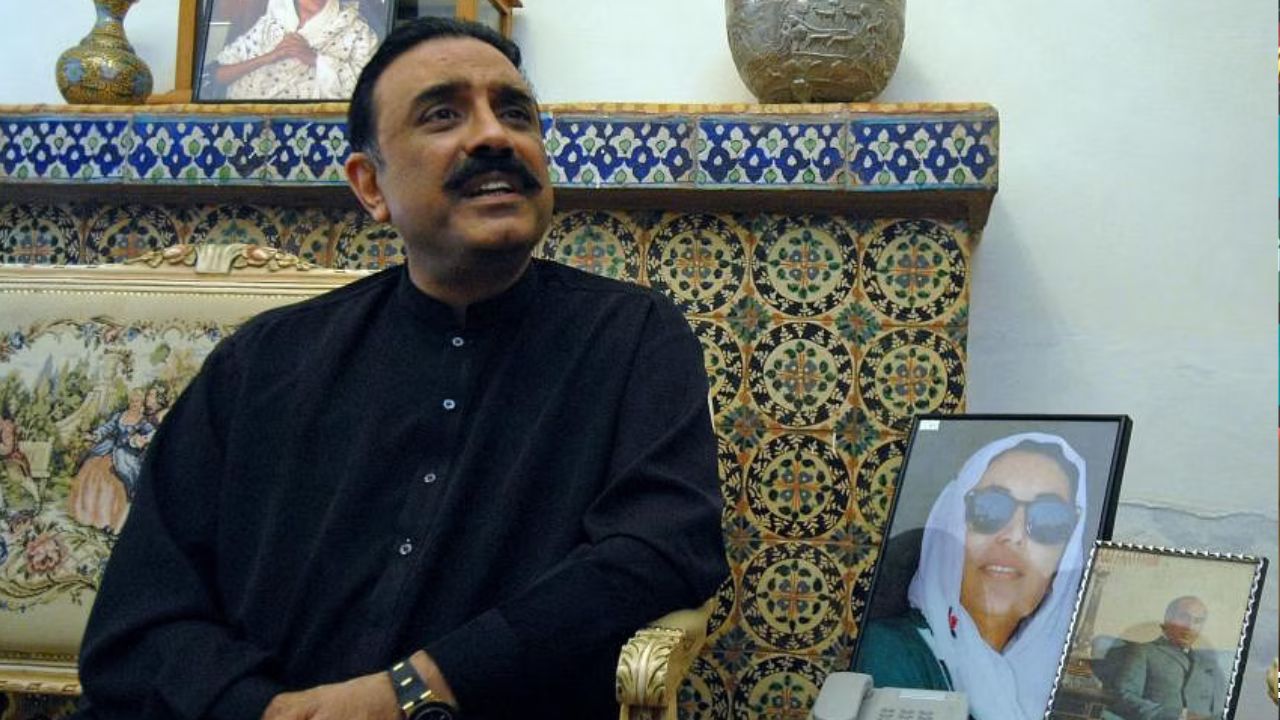
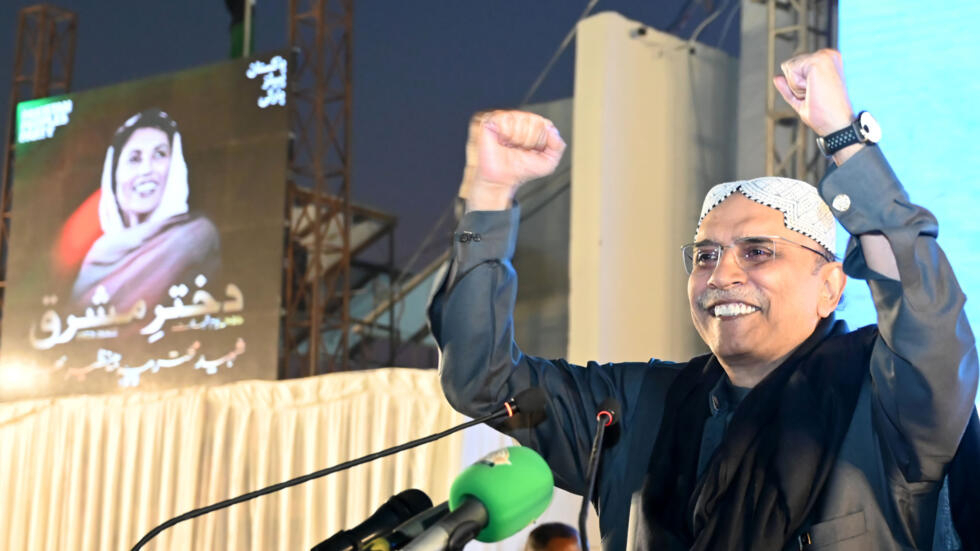
  • Asif Ali Zardari: ‘Artful dodger’ returns as Pakistan president

    Asif Ali Zardari: ‘Artful dodger’ returns as Pakistan president

    Asif Ali Zardari, the widower of Pakistan’s slain first female premier Benazir Bhutto who has had a life storied equally by tragedy and farce, is set to become president for a second time on Saturday.

    Initially a background character as Bhutto’s consort, Zardari was stained by a bevy of corruption and other allegations, including absurd kidnapping plots and taking kickbacks lavished on hoards of jewellery.

    Despite a reputation as “Mr. Ten Percent” — the alleged cut he took for rubber-stamping contracts — a sympathy vote propelled him to office when his wife was assassinated in a 2007 bomb and gun attack.

    Between 2008 and 2013, he ushered in constitutional reforms rolling back presidential powers, and the 68-year-old’s second term will see him steer a largely ceremonial office.

    He has spent more than 11 years in jail, a long time even by the standards of Pakistani politicians, with a wheeler-dealer’s talent for bouncing back after scandals.

    Back in 2009, the New York Times said he had a knack for “artful dodging” — “maneuvering himself out of the tight spots he gets himself into”.

    Newly sworn-in lawmakers were set to vote him in under the terms of a coalition deal brokered after February 8 elections marred by rigging claims.

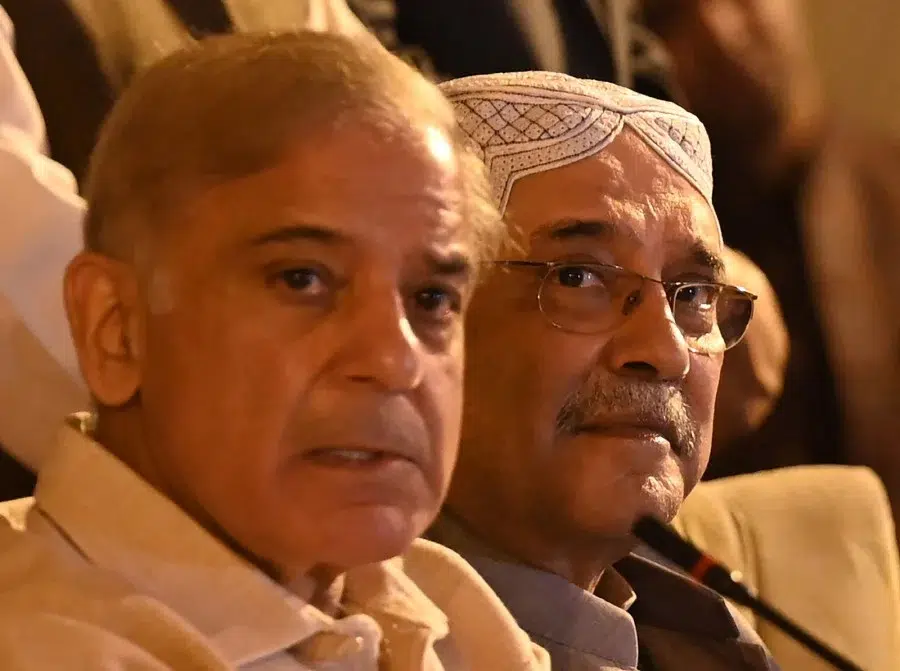
    Under that deal, Zardari’s Pakistan Peoples Party (PPP) will take the presidency, while its historic rivals the Pakistan Muslim League-Nawaz (PML-N) party secured the prime minister’s position for Shehbaz Sharif, who was officially sworn in on Monday.

    Zardari was born in 1955 into a land-owning family from the southern province of Sindh.

    “As a child, I was spoilt by my parents as an only son,” he said in a 2000 interview with the Guardian newspaper. “They indulged my every whim.”

    He expressed only limited political ambitions as a young man — losing a 1983 local government election.

    It was his 1987 arranged marriage with PPP leader Benazir Bhutto that earned him a spot in the political limelight.

    Their union — brokered by Bhutto’s mother — was considered an unlikely pairing for a leader-in-waiting from one of Pakistan’s major political dynasties.

    Bhutto was an Oxford and Harvard graduate driven by the desire to oust then-president Mohammad Zia-ul-Haq, who forced her father from the prime minister’s office and had him executed.

    Zardari was a university dropout with a reputation for brawling, partying and romancing women at a private disco in his family home.

    On the eve of their wedding, Bhutto’s team issued a formal statement denying he was “a playboy who plays polo by day and frequents discos at night”.

    Their nuptial celebrations were dubbed the “people’s wedding” — doubling as a political rally in the megacity of Karachi, where a crowd of 100,000 fervently chanted PPP slogans.

    Initially, Zardari pledged to keep out of politics.

    Bhutto served as prime minister from 1988 to 1990 — the first woman to head a democratic government in a Muslim country — and again from 1993 to 1996.

    PPP insiders regarded Zardari as a liability, considering him likely to embarrass her leadership.

    Their fears were perhaps well-founded. In 1990, he was embroiled in accusations of an absurd plot to extort a businessman by tying a bomb to his leg.

    He was jailed for three years on extortion and kidnapping charges but was elected to the national assembly from behind bars.

    In Bhutto’s second term, he served as investment minister.

    A bombshell New York Times investigation detailed how he tried to engineer vast kickbacks on military contracts over this period while lavishing huge sums on jewellery.

    After Bhutto’s government fell in 1996, Zardari was back behind bars within half an hour.

    In December 2007, Bhutto was assassinated while on the campaign trail for a third term in office.

    Her killing shook the nation to its core, a wave of sympathy carrying the PPP to victory in 2008. The party nominated Zardari as president.

    In 2010, he was widely criticised for continuing a European holiday when the nation was devastated by floods that killed almost 1,800 and affected 21 million.

    He was also head of state when US commandos trespassed onto Pakistani soil for the 2011 assassination of Osama Bin Laden, an episode that humiliated many compatriots.

    He did, however, usher in constitutional reforms rolling back the sweeping powers of the presidency and bolstering parliamentary democracy that had been undermined by three decades of military rule since 1947.

    In 2013, Zardari became the first Pakistani president to complete his full term.

    He was jailed once again over money laundering charges in 2019 but was released months later.

    Zardari and Benazir had three children, including Bilawal Bhutto Zardari, the current chairman of the PPP.

    This article was produced by AFP. © Agence France-Presse

  • Pakistan’s women ‘Rowdy Riders’ take on traffic and tradition

    Pakistan’s women ‘Rowdy Riders’ take on traffic and tradition

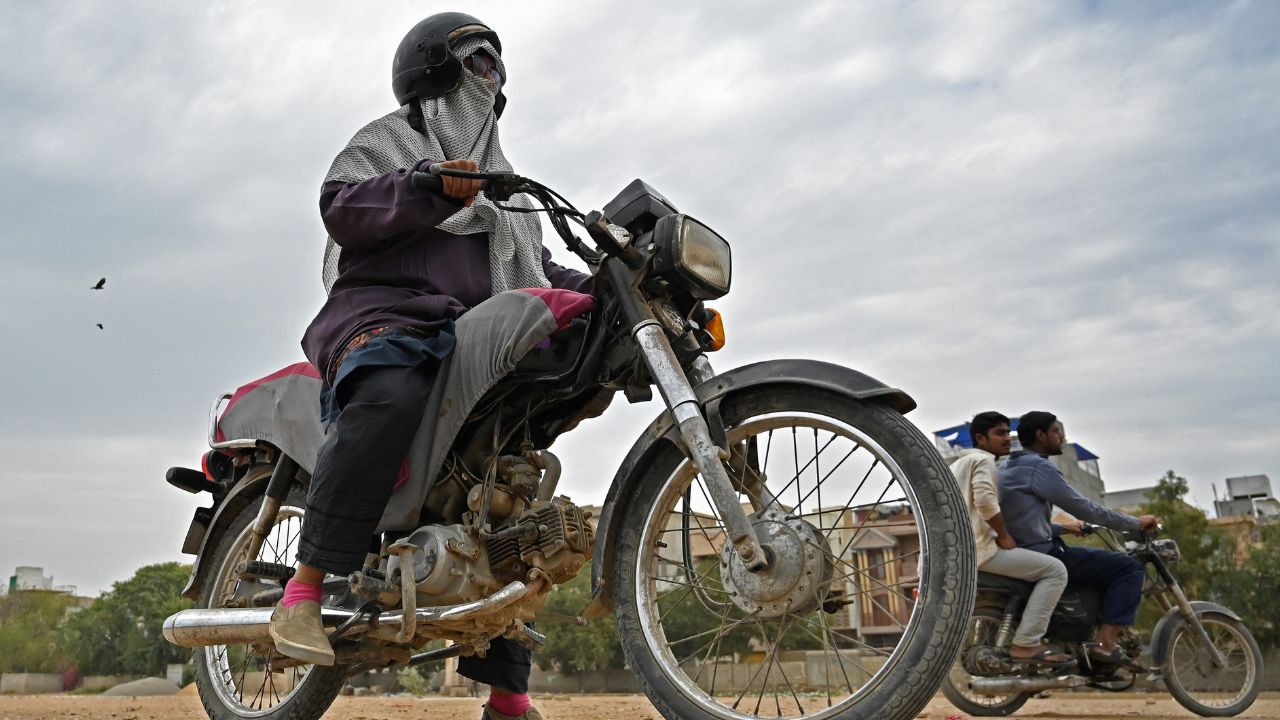
    Karachi (AFP) – Revving round a dusty oval in the heart of Pakistan’s largest city, women on motorbikes practise looping a row of safety cones, their helmets securing colourful headscarves in place.

    It is a rare sight in the culturally conservative country, where women are typically relegated to the back seats of cars or to riding side-saddle on motorbikes, ferried by a male relative.

    “Change is under way,” says Zainab Safdar, demonstrating how to mount a two-wheeler while cloaked in a pink body-covering abaya.

    The 40-year-old is an instructor for the “Rowdy Riders”, a women-only group teaching novices in Karachi everything from the basics of balancing on a bicycle to high-octane gear changing and negotiating traffic.

    Since being founded in 2017 by a handful of pioneering riders, the self-described “Rowdies” have swollen in number to more than 1,500 housewives, students and professionals.

    “In the past, there were misconceptions about girls riding bikes,” Safdar said, referring to doubts about their abilities.

    “Fortunately, with greater awareness, these notions have been dispelled.”

    Women’s participation in the workforce is impacted by the limited availability of public transport services that ensure their safety.

    In the sprawling megacity, granting women the skill and confidence to join legions of male bikers in the helter-skelter of congestion unlocks a new tier of freedom.

    Most of the riders hail from Karachi’s middle class, but rigid gender norms often still hold sway.

    University lecturer Shafaq Zaman said “it took a while to get permission” from her family to start classes to master a pedal bike two months ago.

    Among the few dozen bikers assembled under the mid-afternoon sun, she looks on with her seven-year-old daughter Aleesha as a convoy of women open up their engines and rip past in a haze of dust.

    “I am so inspired that now I have my own dream for me, that I want to ride on a heavy bike. I want to ride the whole of Pakistan,” 30-year-old Zaman said.

    Her story is not unusual. In Pakistan, very young boys are often seen steering motorbikes, but many of the “Rowdies” did not learn to ride a bicycle until well into adulthood.

    “There should be a bike in every house, and usually there is, but it’s rotting because men do not use it and women don’t know how to,” said Sana Kamran, sitting confidently astride a 110cc Suzuki.

    “If women can manage household responsibilities and earn a living, why can’t they ride a bike for their convenience?” the 41-year-old asked.

    Motorbikes are ubiquitous across Pakistan — most commonly red Honda models or cheaper Chinese reproductions, considered capable of mastering any terrain.

    The quest to conquer a bike has seen 26-year-old Farwa Zaidi suffer multiple bone fractures — but the injuries are a badge of honour she wears as proudly as the “Rowdy Riders” crest on her jacket.

    “Here I am, standing strong,” she said alongside her 70cc electric scooter.

    At four feet and six inches (137 centimetres) tall, Zaidi said her small stature made it difficult to claim a spot on crammed city buses.

    Learning to ride gave her a new sense of possibility.

    “Once we master cycling, it instils a new-found confidence in our ability to conquer other challenges,” she says.

  • India confirms citizen fighting with Russian army dead

    India confirms citizen fighting with Russian army dead

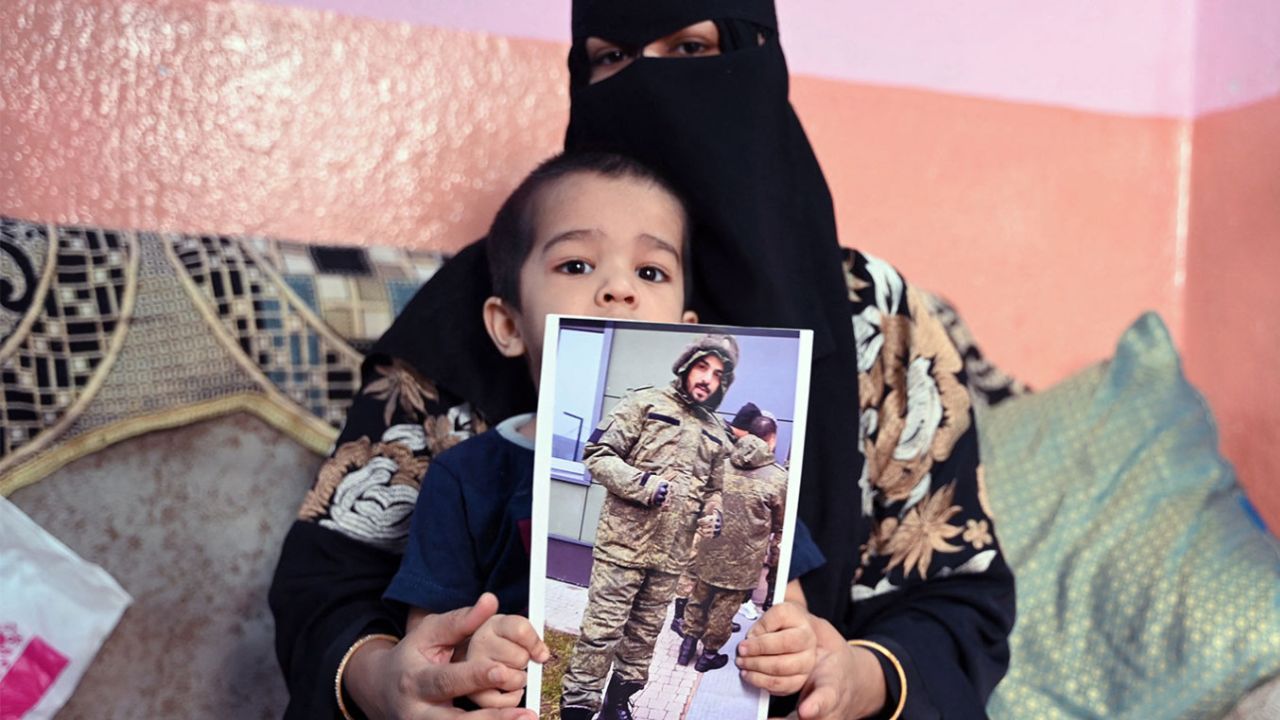
    India’s embassy in Moscow has confirmed the death of a citizen recruited by the Russian army, days after a relative said he had been sent to fight in Ukraine.

    Two years after Russia’s invasion began, tens of thousands of its soldiers have been killed in Ukraine and Moscow is on a global quest for more combatants. The foreign ministry in New Delhi said last month that it was working to secure discharges for around 20 Indian nationals “stuck” in the Russian army.

    The embassy did not state the circumstances behind Mohammed Asfan’s death but said it was in touch with his family and Russian authorities. “Mission will make efforts to send his mortal remains to India,” the embassy wrote on X, formerly Twitter.

    Asfan’s brother Mohammed Imran said in February that his sibling had been missing for nearly two months. Asfan had last called from the southern Russian city of Rostov-on-Don to say that he had been deployed to the frontlines, Imran had said.

    He said that another Indian soldier who managed to escape told his family that 30-year-old Asfan had been wounded by a bullet. Asfan is the first death confirmed by Indian authorities among its citizens serving with the Russian army and the second confirmed overall.

    A 23-year-old man from Gujarat state was killed in a Ukrainian airstrike while working as a “security helper”, local media reported last month, citing relatives and another Indian soldier at the frontlines.

    Several Indian recruits said last month that they were lured into joining up by promises of high salaries and a Russian passport before being shipped to the frontlines.

    The soldiers said they had been promised non-combatant roles but were trained to use Kalashnikov assault rifles and other weapons before being sent to Ukraine.

  • Gaza Government Says Israel Returned 47 Exhumed Bodies

    Gaza Government Says Israel Returned 47 Exhumed Bodies

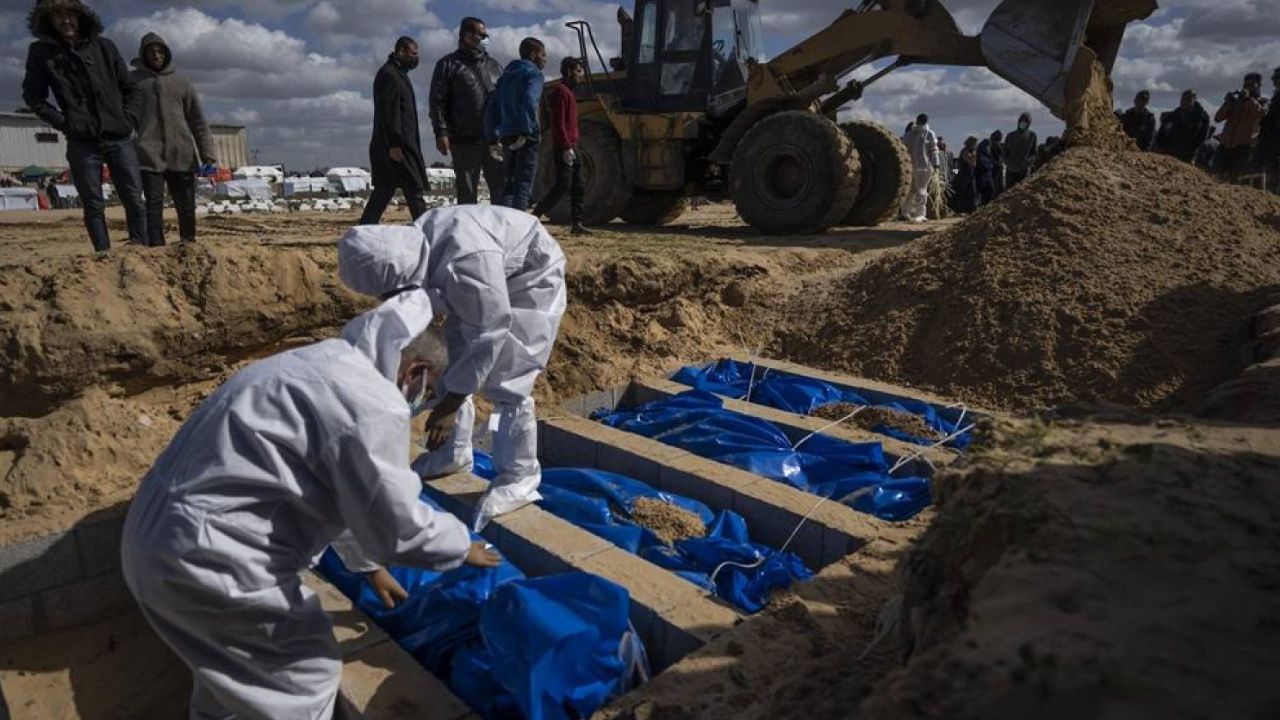
    Gaza’s government media office said Thursday that Israel had returned dozens of bodies that had been exhumed from graves in the besieged territory in recent weeks.

    Israeli forces have on several occasions taken bodies from Gaza to Israel for examinations as they look for hostages seized during Hamas’s October 7 attack.

    AFP journalists have previously witnessed the reburial of bodies which Gaza officials said had been exhumed by Israeli forces in November, December and January.

    The 47 new bodies sent back by Israel on Thursday “have been transferred to Al-Najjar Hospital” in Rafah, in southern Gaza, the besieged territory’s crossings and borders authority said in a statement.

    A separate statement from the government media office said they would be “buried in a recently established mass grave” near Rafah.

    “The bodies were seized and transferred to Israel under the pretext of examination and verification” to ensure they were not those of hostages held in Gaza, the government statement said.

    Since the start of the war, Israeli officials have exhumed “hundreds” of bodies from graves at hospitals in the Gaza Strip, it said.

    The Israeli army told AFP it was looking into reports about the latest group of returned bodies.

    Hamas took around 250 Israeli and foreign hostages during the October 7 attack, dozens of whom were released during a week-long truce in November. Israel believes 99 of them remain alive in Gaza and that 31 have died.

    The attack resulted in the deaths of around 1,160 people, mostly civilians, according to an AFP tally of official figures.

    Israel’s genocide in Gaza after October 7 has resulted in the deaths of at least 30,800 people in Gaza, the majority of them women and children, according to the territory’s health ministry.

    Prime Minister Benjamin Netanyahu’s government is under immense domestic pressure to secure the return of hostages as part of any new truce deal with Hamas.

    That pressure intensified after soldiers killed three hostages in December, mistakenly perceiving them as a threat.

  • Man vaccinated for Covid 217 times reports no Side effects: scientists

    A German man who deliberately got vaccinated for Covid-19 a whopping 217 times did not report any side effects from his many jabs, according to researchers studying possibly the “most vaccinated person in history”.

    The immune system of the 62-year-old man from the central German city of Magdeburg — who has not been named — is still firing on all cylinders, the researchers said in The Lancet Infectious Diseases journal.

    They said the man voluntarily received so many shots against all medical advice, and warned against jumping to far-reaching conclusions from this single case.

    The man first came to the attention of the German-led researchers due to news reports in 2022, when he had only received 90 jabs.

    Media reports at the time said the man was suspected of getting so many doses to collect the completed vaccination cards, which could then be forged and sold to people who did not want to be vaccinated.

    A public prosecutor in Magdeburg opened an investigation into allegations of fraud over the case but no criminal charges were filed, according to the scientific paper published earlier this week.

    The prosecutor collected evidence of 130 vaccinations over nine months, it added.

    But the man claims to have received 217 vaccine doses of eight different Covid vaccines — including all mRNA versions — over 29 months.

    Kilian Schober, a virologist at Germany’s University of Erlangen-Nuremberg and study co-author, said in a statement that when they contacted the man, he was “very interested” in undergoing a range of tests to examine the effect of so many vaccinations.

    The case allowed the researchers an extremely rare chance to study what is known as “hyper-vaccination”.

    Some scientists have theorised that after being hit by so many vaccinations, a body’s immune cells would become less effective as they became accustomed to the antigens.

    But that was not the case for the German man, the researchers found.

    In fact, he had “considerably higher concentrations” of immune cells and antibodies for the Covid virus than a control group of three people who received the recommended three vaccinations, the study said.

    His body also showed no sign of fatigue from all those vaccinations — his 217th jab still boosted his number of antibodies against Covid, the researchers found.

    The man reported that he never had any vaccine-related side effects from any of the 217 jabs. He also never tested positive for Covid and showed no signs of past infection, the researchers said.

    But they warned against taking away any wider lessons from the man’s experience.

    “It should go without saying that we do not endorse hypervaccination,” Schober wrote on X, formerly Twitter.

    Caitjan Gainty, an expert in the history of vaccines at King’s College London not involved in the study, told AFP she had “never come across a historical discussion of someone who received more vaccinations than this”.

    It is “relatively unlikely” that anyone has ever had more vaccinations than the man, she added.

    Spyros Lytras, a virologist at the University of Tokyo, said it was a “comically large number of vaccinations”.

    “Whether this is the most vaccinated person in history, I cannot know, but they are certainly the most vaccinated person reported to date” by some margin, he told AFP.

    “And I doubt that we’re going to see another such report any time soon.”

  • Jeff Bezos takes back richest person spot after dethroning Elon Musk

    Jeff Bezos takes back richest person spot after dethroning Elon Musk

    LOS ANGELES: Amazon founder Jeff Bezos took back his spot as the world’s richest man on Monday, dethroning Elon Musk on the Bloomberg Billionaires Index. Bezos’ net worth stands at $200 billion, according to the tracker, surpassing the Tesla chief’s $198 billion.

    Musk, who also heads X (formerly Twitter) and SpaceX, has seen his riches fall by more than $30 billion as Tesla’s share price has dropped 25% in recent months.

    Adding to Musk’s woes, a court in January approved the annulment of his enormous Tesla compensation agreement, worth $55.8 billion and originally struck in 2018.

    Bezos, who no longer runs Amazon, has meanwhile benefited from the e-commerce giant’s rising stock price. Even after recently selling off $8.5 billion in stocks he remains the company’s largest shareholder.

    The French CEO of the luxury group LVMH, Bernard Arnault, remains in third place in the rankings of the world’s richest people, worth $197 billion.

    Have something to add to the story? Share it in the comments below. 

  • European Conservatives want asylum-seekers transferred to third countries

    European Conservatives want asylum-seekers transferred to third countries

    The main conservative group in the European Union parliament will call for asylum-seekers to be moved to “safe third countries” to assess their claims in its  manifesto to be approved Wednesday for elections in June.

    The programme of the European People’s Party — which will formally back European Commission president Ursula von der Leyen as its candidate for a second term — picks up controversial proposals by several conservative parties across Europe.

    Britain, no longer an EU member, has notably embarked on plans to send undocumented migrants to Rwanda. Italy has a deal with Albania to set up centres to process migrants rescued in the Mediterranean.

    Asylum applications in EU countries surged to over one million last year, a seven-year high, with Syrians and Afghans remaining at the top of the list, as the EU works through an overhaul of its rules on asylum-seekers.

    Rules approved in December aim to share hosting responsibilities across the 27-country bloc and to speed up deportations of irregular migrants deemed ineligible to stay.

    In its manifesto, which is expected to be adopted at a congress in Bucharest, the EPP called for a “fundamental change in European asylum law”.

    “We want to implement the concept of safe third countries,” the manifesto reads.

    Under the proposal, those applying for asylum in the EU could be transferred to a third country, and if their claim is deemed valid will receive protection there.

    “A comprehensive contractual agreement will be established with the safe third country,” the manifesto details.

    Some of them could be admitted into the EU “through annual humanitarian quotas of vulnerable individuals,” allowing “us to address both security and integration requirements in the selection process”, it adds.

    Germany’s opposition Christian Democrats (CDU) — von der Leyen’s party — in its draft manifesto presented in December has also proposed sending asylum seekers to third countries.

    The move aims to bring down the numbers of migrants arriving in the EU, CDU official Jens Spahn told German media then.

    He mentioned Africa’s Rwanda and Ghana and Europe’s Georgia and Moldova as possible third countries.

    Britain has started negotiations with Rwanda to send migrants to Rwanda but there have been court objections.

    The scheme has been widely criticised as undercutting basic rights principles, with EU home affairs commissioner Ylva Johansson also expressing some reservations.

    In a different case, Italy signed a controversial deal with Albania — which is not part of the European Union — in November under which asylum seekers rescued at sea would be held in two migrant centres in Albania.

    The EPP meets Wednesday and Thursday in Bucharest and is to choose von der Leyen as their lead candidate for European Commission president.

    The EU elections are scheduled to take place from June 6-9.