Author: Guest Author

  • The energy map in 2026: OPEC+ and the Custodial crude paradox

    The energy map in 2026: OPEC+ and the Custodial crude paradox

    Oil markets are no longer defined by simple shifts in supply and demand. While physical balances still matter, price formation is increasingly shaped by who controls access to barrels, under what conditions, and for how long. What once moved gradually on inventories and consumption trends now reacts abruptly to geopolitical permissions, sovereign decisions, and headline risk.


    This shift has been building for years, but it has become more visible as OPEC+ combines disciplined supply management with a market environment dominated by geopolitical uncertainty. Prices are held in check not by abundance, but by restraint, until a disruption, or the threat of one, forces a rapid repricing. The result is an oil market suspended between engineered stability and sudden volatility.


    From market share wars to market access control

    But that’s not the first time OPEC has pivoted. In late 2014, the organization repeatedly raised output amid a US shale oil boom to regain market share lost to US producers. The strategy coincided with slowing Chinese demand and triggered a sharp price collapse, with crude losing more than a third of its value in a single quarter.

    The context today is more nuanced. Major players like the US and Russia are engaged in a game of market control that transcends volume alone. Sanctioned regimes, exemptions, shadow fleets, and strategic stockpiling are now the norm. 

    Against this backdrop, rising tensions in the Middle East, the ongoing conflict in Ukraine, and the US administration’s shifting stance on Venezuelan oil have added significant friction to global supply chains. A new element has emerged in this power play: Custodial crude.

    As crude stockpiles return to the center of energy trade, the defining question is: How can OPEC+ stabilize oil prices when supply is governed by sovereignty, exemptions, and conditional permissions? Whoever controls the marginal barrel now defines the market direction.

    The role of custodial crude in the uncertainty equation

    Custodial crude refers to physical oil and refined products held in third-party inventories where ownership or transfer rights are subject to friction. In 2026, this category has come back into focus as geopolitical tensions dominate the debate.

    In normal markets, inventories act as a buffer. When production surpasses consumption, crude and by-products like diesel are stored in pipelines or floating storage. When consumption exceeds demand, these inventories supplement supply. This relationship typically links inventory levels directly to price expectations.

    However, market risk now distorts this link. Geopolitical conflict, sanctions, or major political events—such as recent policy shifts regarding the Venezuelan administration—can damage or freeze custodial transfer points (e.g., pipelines to tanks, tanks to vessels). In such situations, uncertainty dominates, decoupling price from physical availability.

    Another factor driving volatility is measurement risk. Any discrepancies during custody transfers in politically sensitive regions can cause commercial friction, loss, and ultimately, market distrust. Inventory management is crucial for cost stability; while custodial crude provides a physical buffer, the efficiency of holding it is instrumental in the “theory of storage” that underpins futures markets.

    Can OPEC+ still “discipline” the oil market?

    Eight core OPEC+ nations, led by Saudi Arabia and Russia, have maintained production cuts through the first quarter of 2026. This reinforces the stance taken in late 2025 to halt output increases due to seasonally weaker demand.


    Meanwhile, the IEA projects global oil supply to expand by 2.5 million bpd (barrels per day) this year. While OPEC+ strives for discipline, the “human element” of the market remains the most volatile factor. As Quoc Dat Tong, financial markets strategist at Exness, notes, “In an environment so volatile, best practices or any pricing discipline that OPEC+ can or could impose is maintaining price stability, yet the risk remains as geopolitical uncertainty and inflationary pressures loom.” 


    Venezuela, the market’s biggest uncertainty variable

    Nowhere is the definition of “custodial risk” clearer than in Venezuela. Following the seismic political shift in January—and the subsequent installation of an interim administration working with Washington—the market’s focus has moved from regime change to recovery reality.


    The US Treasury’s rapid issuance of General Licenses 48 through 50 in February effectively reopened the door for Western majors like Chevron, Eni, and Repsol to re-engage. On paper, the sanctions wall has fallen. Venezuela boasts the world’s largest proven reserves—over 300 billion barrels along the Orinoco Belt.


    While headlines suggest a flood of new oil, the physical reality is a “rusted pipe” problem. Years of underinvestment have left the custodial transfer points—pipelines, upgraders, and export terminals—in critical disrepair.


    Presently, production hovers near 1 million barrels per day, a fraction of its historical peak. The “sentiment” has shifted: traders are no longer pricing in a political blockade, but an infrastructure bottleneck. The market now understands that while the legal permission to export exists, the physical capacity to move those barrels will take massive capital injection to restore.


    For the remainder of 2026, Venezuela serves as a psychological cap on long-term prices rather than a short-term flood. The barrels are accessible in theory, but until the custodial chain is repaired, they remain trapped in the ground.

    Why risk premiums appear and fade quickly

    The Venezuela dynamic is a microcosm of broader market behavior. Tensions involving Russia, Iran, or South America prompt traders to add a “risk premium” to the spot price. This is the cost of uncertainty. The defining feature of the 2026 market, however, is the speed at which these premiums vanish.


    Because short-term supply and demand are relatively inelastic—you cannot drill a new well or switch a power plant to nuclear in a week—small disruptions in perceived access result in outsized price spikes. But the inverse is also true: when the threat fails to materialize (or in Venezuela’s case, when the “flood” of new oil proves to be a trickle), the premium collapses just as quickly.


    This leaves slow-moving capital trapped. The market doesn’t glide between these states; it gaps.

    Pay attention to curve signals, spreads, and inventories

    Market signals warn of a potential contango structure developing as we head toward mid-year, where future prices trade higher than spot prices—a classic sign of oversupply. With WTI futures currently trading below the breakeven point for many shale wells, US production may face a slowdown. Industry leaders like Vitol and TotalEnergies have signaled that current price levels could trim US shale output by up to 300,000 bpd this year, eventually tightening the balance.


    Against this backdrop, the backwardation that defined 2023–2024 is fading. Monitoring inventory data and curve structure is now the only way to navigate this shifting landscape.

    DISCLAIMER: The views, opinions and market analysis are those of the author and do not constitute financial, investment or legal advice. The Current assumes no liability for any investment decisions made based on the projections or geopolitical interpretations contained herein.

  • From newcomer to top 8 in just 17 months: OMODA & JAECOO’s breakthrough moment in the UK

    From newcomer to top 8 in just 17 months: OMODA & JAECOO’s breakthrough moment in the UK

    In one of the world’s most demanding automotive markets, OMODA & JAECOO has achieved a milestone few new brands manage—let alone in record time.

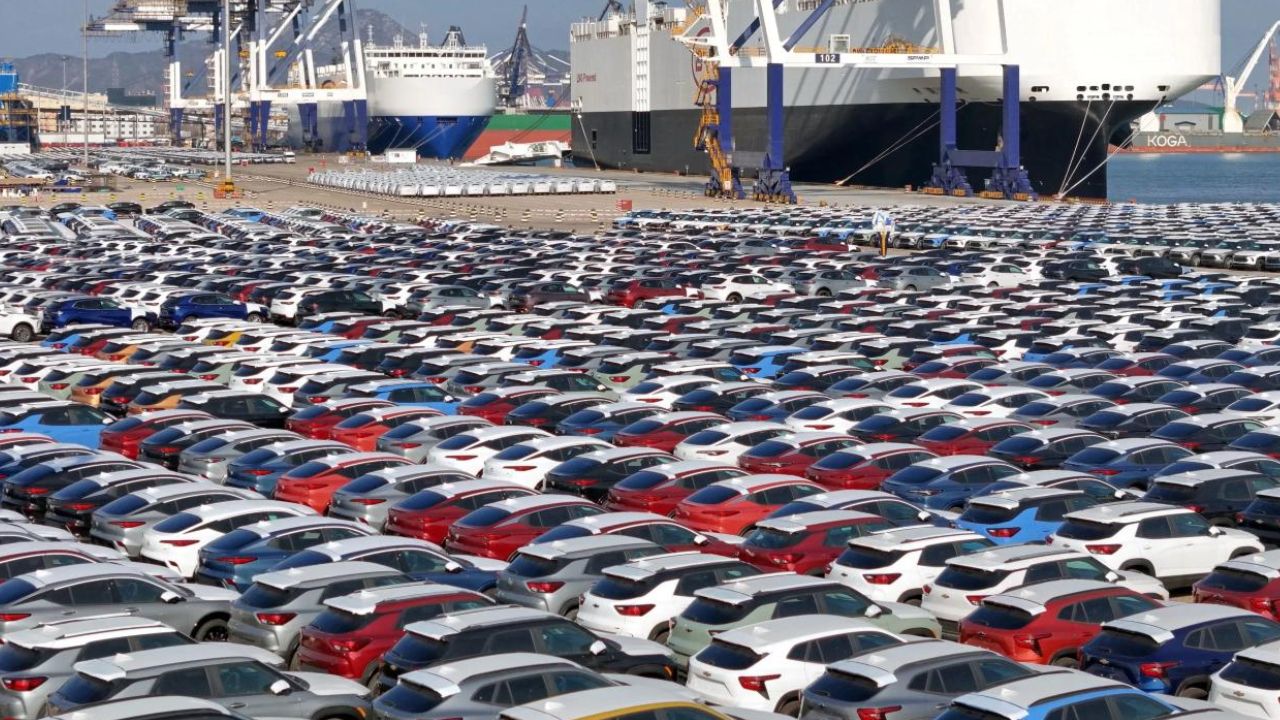
    In January 2026, the brand delivered a standout performance in the United Kingdom, with the JAECOO 7 recording 3,842 unit sales in a single month, securing second place in overall UK vehicle sales. The model outpaced long-established names such as the Ford Puma, Nissan Qashqai, Volkswagen Tiguan, and newer challengers including the BYD Seal U, a rare achievement in a market dominated by decades-old automotive players.

    Across its portfolio, OMODA & JAECOO registered 6,550 total monthly sales, placing the brand 8th overall in the UK’s monthly brand rankings, closely behind premium stalwarts like Mercedes-Benz. It also emerged as the top-selling Chinese automotive brand in the UK, surpassing MG and BYD, while outperforming several Japanese and South Korean manufacturers.

    A Record-Breaking Rise in One of the World’s Toughest Markets

    Since its UK debut in September 2024, OMODA & JAECOO has shown exceptional momentum. In just 17 months, the brand progressed from market entry to mainstream contender, one of the fastest ascents in UK automotive history.

    By September 2025, monthly sales crossed the 10,000-unit mark, followed by another milestone in October, when OMODA & JAECOO overtook MG to become the leading Chinese brand in the UK for the first time. Full-year 2025 sales reached 48,087 units, delivering a 2.38% market share ahead of several globally recognised names including Tesla and MINI.

    According to industry publication Car Dealer, this achievement places OMODA & JAECOO in rare company: brands like Kia and MG took decades to reach similar penetration levels in the UK, while OMODA & JAECOO accomplished it in under a year.

    Built for Global Standards

    Behind this performance lies a clear, differentiated strategy. OMODA is shaping its identity as “The World’s Leading Crossover Brand,” blending progressive design with smart technology. JAECOO, rooted in classic off-road heritage, follows the philosophy “From Classic Beyond Classic,” with a strong focus on advanced hybrid solutions and all-terrain capability.

    Their success in a market known for strict regulations, informed buyers, and intense competition reflects a brand built not for shortcuts but for global standards.


    In an era where consumers increasingly look beyond badges to real-world performance, the UK has become a proving ground. OMODA & JAECOO’s rapid rise there is not just a sales story, it is a clear signal of trust earned in one of the automotive world’s most discerning environments.

  • From margins to meaning: Green Entertainment and the power of narrative on the global stage

    From margins to meaning: Green Entertainment and the power of narrative on the global stage

    Some conversations shape policy. Others shape perception. And then there are those rare moments where culture quietly enters spaces of power and begins to question what the world has learned to see and what it has chosen to ignore.

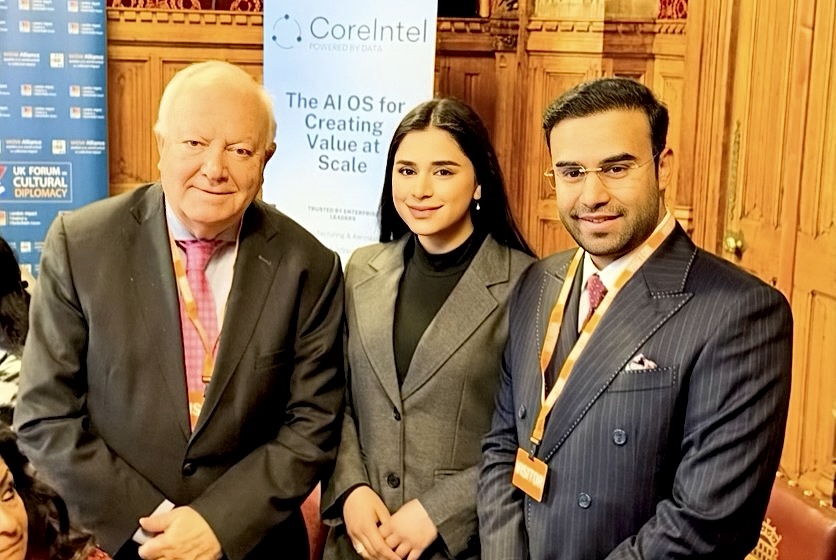
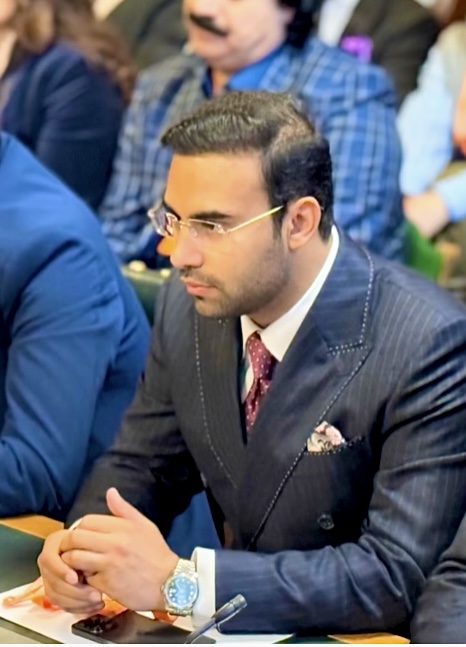
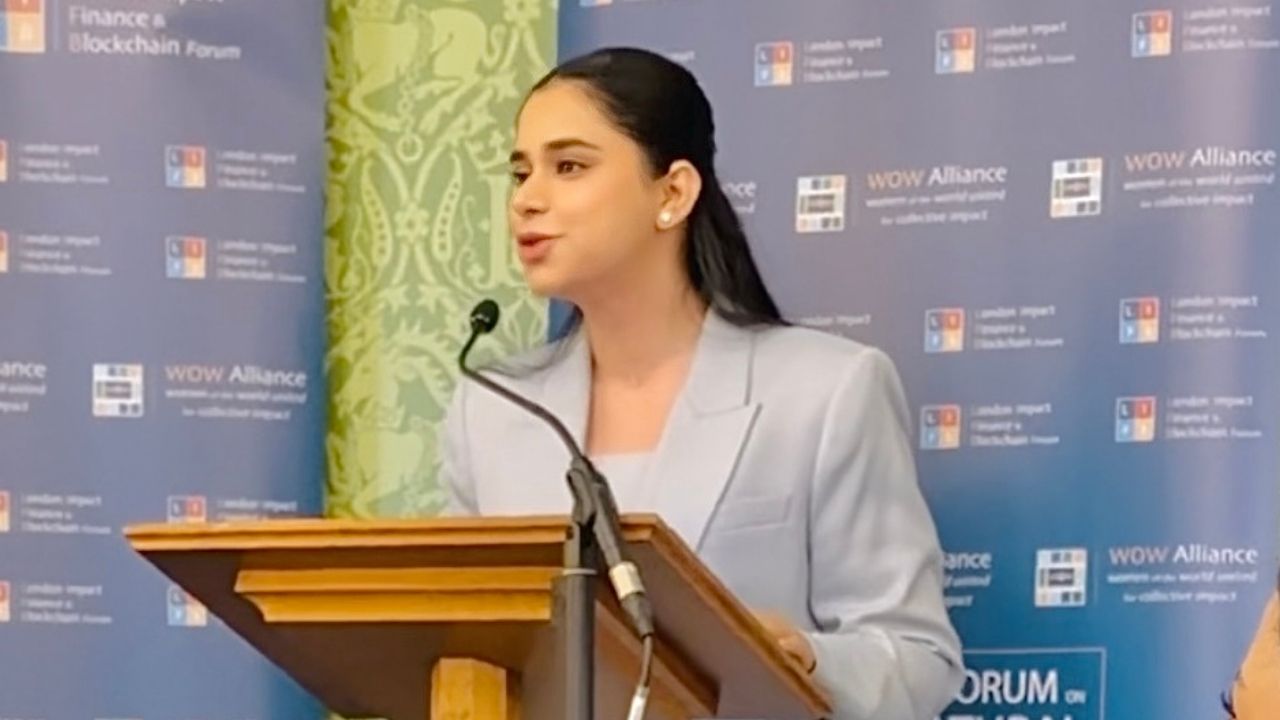
    At the UK Forum on Cultural Diplomacy 2026, held at the Palace of Westminster in London, such a moment unfolded as Pakistani media found its voice within a global dialogue on cooperation, representation and leadership. Among parliamentarians, diplomats and cultural leaders, Green Entertainment’s participation marked more than institutional presence; it marked an intervention into how stories from South Asia, particularly those about women are framed and understood.

    Green Entertainment’s Chief Executive Fasih Ur Rehman and Executive Director Tehreem Chaudhary

    with Mr. Miguel Angel Moratinos, Under-Secretary-General, High Representative for the UN

    Representing the channel were CEO Fasih ur Rehman and Executive Director Tehreem Chaudhary, whose address placed media at the centre of cultural responsibility. Speaking as a Pakistani woman, a Muslim, and a media professional, Tehreem Chaudhary challenged the notion that storytelling merely reflects society. Instead, she argued, it shapes what societies accept, legitimise, and inspire.

    “Media does not simply mirror reality,” she noted during her address, “it shapes what is accepted, respected and imagined as possible.”

    Rather than relying on familiar tropes, Green Entertainment’s creative approach has leaned toward narrative restraint and social texture. Its dramas such as Working Women, Standup Girl, 22 Qadam, Jindo, Nauroz, and the widely discussed Pamaal have explored women not in isolation, but in relation to systems; family, work, power and consequence. The emphasis is less on idealized empowerment and more on believable choice: women who negotiate authority, confront limitations and exercise agency within recognizable realities. This narrative approach has allowed the channel’s work to resonate across audiences without flattening complexity.

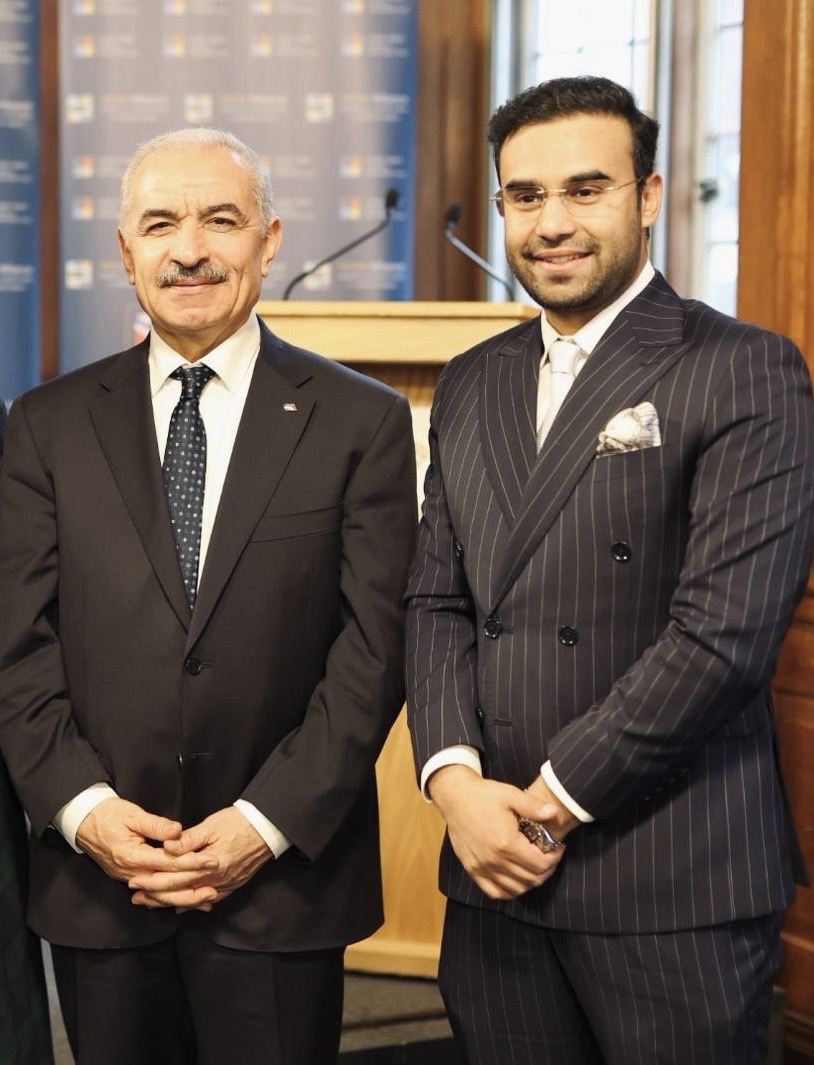
    Green Entertainment’s Chief Executive Fasih Ur Rehman with former Palestinian Prime Minister Mohammad Shtayyeh.

    Tehreem Chaudhary also reflected on the broader cultural and historical context of women’s leadership. She cited examples from Muslim history, including Fatima al-Fihriya, who established the world’s oldest university, and Hazrat Khadija (R.A), the wife of Prophet Muhammad (peace be upon him), a respected businesswoman and leader. She also referenced Benazir Bhutto, Pakistan’s first female Prime Minister, as a source of inspiration for women leaders today. She highlighted how women from Muslim and South Asian societies are frequently discussed in global conversations without being directly included, resulting in narratives that often feel removed from lived realities. She underlined that Pakistani society, like many others, is complex, where tradition and progress coexist, and faith and ambition are not in conflict. Women’s leadership is already present, and their presence reflects competence, credibility and sustained authority.

    (Fasih Ur Rehman, CEO Green Entertainment at the UK Forum on Cultural Diplomacy 2026)

    For Green Entertainment, participation in the forum reflected a broader creative philosophy: that television is not just content, but culture. And culture, when represented with honesty and depth, travels beyond borders more powerfully than rhetoric.

    As conversations around representation and influence continue globally, Green Entertainment’s presence at Westminster underscored a quiet shift. Pakistani stories are no longer asking for space, they are claiming it, on their own terms.

  • ‘Discipline, not spectacle’: Marriyum Aurangzeb’s transformation secret

    ‘Discipline, not spectacle’: Marriyum Aurangzeb’s transformation secret

    By Hareem Shahid

    Punjab Chief Minister (CM) Maryam Nawaz’s son Junaid Safdar got married over the weekend and it is all anyone can talk about.

    From desi glam to a high-profile guest list, the wedding events spanning three days had it all; however, one thing that caught everyone’s attention was the transformation of senior Punjab minister Marriyum Aurangzeb, sparking conversations across social media.

    Her visible change sparked widespread conversations online, many of which unfortunately veered into speculation and trolling. This reaction reflects a troubling trend in society where personal health journeys are reduced to gossip rather than understood in their proper context.

    Weight fluctuations are common. Changes in routine, stress, professional demands and family responsibilities often lead to periods of weight gain or loss. For many, marriage and career pressures bring lifestyle adjustments that affect health. But what matters is not the fluctuation itself but the decision to reclaim fitness and prioritise well-being.

    The minister’s transformation does not seem like the product of fad diets or overnight fixes. Minor changes visible in her pictures from over the past couple of months reflect consistent effort based on balanced nutrition, portion control, regular exercise or mindful habits, underscoring that meaningful change is gradual, requiring discipline and patience rather than quick solutions.

    This was also highlighted by veteran actor Bushra Ansari. “I know Marriyum closely as a person. Her weight loss journey speaks of commitment, strength and consistency. Well done, Marriyum, you look beautiful, MashaAllah,” she wrote in a social media post, sharing a picture of the minister from one of the wedding events.

    Countering false claims about her transformation, colleagues also expressed support for the minister.

    “For the past few days, a social media debate has been going on regarding Marriyum Aurangzeb’s weight-loss journey. Some people gained motivation by seeing her, and some felt jealous. But the facts are very simple… such a transformation usually does not seem possible,” wrote Badar Shahbaz, media coordinator to the prime minister.

    Badar also drew parallels between the minister’s transformation and rather frequent ones of showbiz personalities. He went on to cite the example of Bollywood star Aamir Khan, who made headlines for rapidly gaining and losing weight for his 2016 movie Dangal.

    “No one said that he must have undergone any surgery because he was not a political personality… anti-PML-N trolls considered it necessary to show their ‘expertise’,” he wrote, adding that the minister had proven that where there is will, nothing is impossible.

    An old friend of the minister also shared pictures from back when the two were students. “Quaid-e-Azam University farewell, 2002,” wrote the friend, namely Hina Hasan, in response to those perceiving her journey as a dramatic shift from obesity to leanness, as the pictures showed that Aurangzeb had successfully been working towards restoring her former self.

    True transformation is not about returning to a past version of yourself but about building a healthier present. Fitness is measured in stamina, energy and resilience, not simply in dress size, and Aurangzeb’s story seems to highlight that health is holistic, encompassing both physical and mental strength.

    Health progress is rarely linear. Plateaus, setbacks and moments of discouragement are part of the process. What makes her journey inspiring is her persistence in continuing despite obstacles. This determination is what resonates with countless individuals who struggle with similar challenges.

    Reducing years of effort to memes or negative commentary ignores the reality of health journeys. Everybody responds differently to lifestyle changes, and public figures face amplified scrutiny. Social media often trivialises discipline and perseverance, turning personal victories into targets for mockery. Such trolling is unjustified and diminishes the value of hard work.

    The minister’s transformation is a reminder that health is not about chasing perfection or pleasing critics. It is about reclaiming control, building resilience and committing to long-term well-being. Her journey stands as an example of what determination can achieve, inspiring those who face their own struggles with weight management.

    In a society quick to judge appearances, her story challenges assumptions and offers a powerful lesson: transformation is not a spectacle, but self-discipline. Rather than ridicule, it deserves recognition as a testament to persistence and the pursuit of health.

    The author is a fitness coach and trainer, passionate about sustainable health transformations.

  • Pakistan’s auto industry hits a snag: Will policy choices drive growth or decline?

    Pakistan’s auto industry hits a snag: Will policy choices drive growth or decline?

    By Khawar Azhar

    Pakistan’s automobile industry is standing at one of the most decisive moments in its 40-year history. What began in the 1980s with Pak Suzuki’s basic 800cc CKD assemblies gradually evolved into a full-fledged manufacturing ecosystem — one that supports millions of livelihoods and billions of dollars in investment. But today, that same ecosystem finds itself under pressure from a policy direction that increasingly appears to favour imports over local production.


    The New Challenge: Rising Used-Car Imports

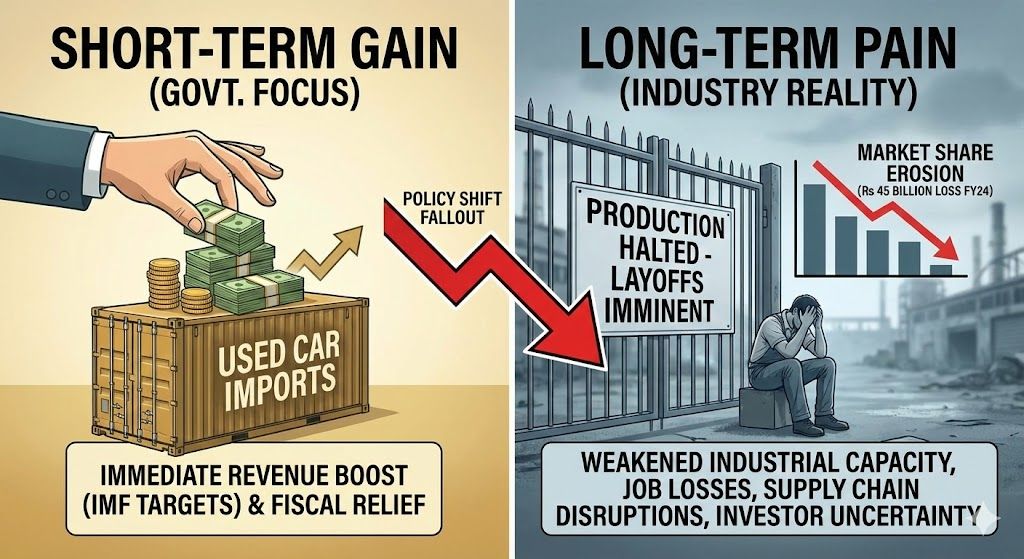
    The biggest threat to the industry right now comes from the liberalisation of used-car imports. With the government under pressure to meet IMF targets and stabilise external accounts, the policy priority has shifted from strengthening industrial output to managing the balance of payments. As a result, trade and tariff structures are being realigned in ways that may unintentionally open the floodgates for used vehicles.

    A 40% regulatory duty has already been introduced, but industry experts argue that gaps, cascading effects, and inconsistent enforcement could still allow imported used cars to flood the market — undermining locally produced vehicles in the process.

    A Sector That Touches Millions

    What makes this situation so concerning is the sheer size of the auto sector’s footprint in Pakistan’s economy. Around 2.5 million jobs are linked directly or indirectly to automobile production. Nearly 1,200 factories — from small-scale vendors to major component manufacturers — supply parts for locally assembled vehicles.

    The industry contributes roughly PKR 700 billion in taxes, almost 6% of the government’s annual revenue. And localisation efforts save close to USD 1.5 billion every year through import substitution.

    These aren’t just numbers — they represent families, factories, and entire communities that depend on the continuity of local car production.

    What Happens If Local Manufacturing Shrinks?

    If used-car imports rise unchecked, fewer vehicles will roll out of domestic assembly plants — and the first to suffer will be local parts vendors. Order volumes would shrink, leading to job losses and production downtime. Tax revenues would fall. And once the supply chain contracts, restarting it becomes extremely difficult.

    This pattern isn’t unique to Pakistan. Even Germany, home to global auto giants, is now working aggressively to protect local manufacturers from Chinese EV competition. The global lesson is clear: strategic industries must be strengthened, not abandoned.

    Short-Term Gains vs Long-Term Loss

    Used cars do offer short-term relief for consumers looking for cheaper options. But Pakistan must decide whether short-term affordability is worth long-term industrial decline. If policy leans too heavily toward imports, automakers may eventually abandon assembly altogether — choosing instead to become importers themselves.

    That would turn Pakistan back into a trading economy, not a producing one.

    A Better Path Forward

    A stable, forward-thinking policy framework could create room for both competition and industrial growth. A tariff differential of at least 40% between imported CBUs and locally assembled CKDs would give manufacturers the breathing space needed to survive and invest.

    New EV players should be allowed in — but only with binding localisation requirements. They must begin local assembly within three years and gradually contribute to exports thereafter.

    On the import side, Pakistan must enforce strict international standards:

    – Pre-shipment inspection
    – Road-worthiness certification
    – Emissions compliance
    – Crash-test verification
    – Guaranteed spare parts availability for at least 10 years


    Depreciation-based duties must be rationalised, and carbon/NEV levies should increase as imported vehicles age.

    Reforms Are Needed — But So Is Stability

    Protecting the industry doesn’t mean protecting inefficiency. Local automakers must improve safety standards, update models more regularly, and compete on merit. But they also need a predictable policy environment to do so.

    A Make-or-Break Moment

    Pakistan now faces a defining choice:

    – Remain an assembly-and-import market, or
    – Transform into a competitive manufacturing and export base.

    The industry is ready for reform. The real question is whether policy will enable that reform — or unintentionally dismantle the foundation that took decades to build.

    If policymakers choose wisely, the auto industry can still be one of Pakistan’s strongest growth engines. If they don’t, the loss of industrial capacity could be permanent — and once gone, it will be extremely difficult to rebuild.

    The author is a communications expert and writes on the issues of public interest. His X handle is @khawar69 and he can be reached at khawarazhar@gmail.com.