Author: News Desk

  • Pakistan navigates economic turbulence in 2023: A year of challenges and resilience 

    Pakistan navigates economic turbulence in 2023: A year of challenges and resilience 

    2023 posed significant challenges for Pakistan’s economy, characterised by a sharp slowdown, escalating inflation, and a near-default situation. However, amidst the turbulence, glimpses of progress emerged, suggesting a potential path towards recovery. 

    To meet International Monetary Fund (IMF) conditions, the government undertook stringent fiscal reforms, such as raising taxes and cutting subsidies. Despite being unpopular, these measures were deemed necessary to control the budget deficit and rein in inflation. 

    The latter part of the year witnessed positive indicators. Inflation, though still elevated, began to exhibit a downward trend. The agricultural sector experienced a robust comeback, particularly in cotton and rice production, while large-scale manufacturing showed a modest improvement. 

    Despite these positive developments, Pakistan’s economic recovery remains precarious. The global economic slowdown and geopolitical tensions continue to pose external challenges. Internal factors, such as political uncertainty and ongoing security issues, further contribute to the risks. 

    Throughout 2023, Pakistan consistently made headlines, grappling with economic crises, food shortages, mass protests, political arrests, and election-related upheavals. Here’s a recap of the key events in Pakistan during the year: 

    In 2023, Pakistan faced new lows, with the Pakistani rupee hitting an all-time low, surpassing the PKR 300 mark against the US dollar in August. Foreign reserves with the State Bank of Pakistan (SBP) dwindled to a concerning $3.1 billion in January 2023. 

    The country struggled to secure funding from the IMF, leading the SBP to raise interest rates by 300 basis points to 20 per cent, the highest since October 1996. Additional taxes were introduced, accompanied by increases in gas and electricity prices. Despite occasional reductions, petrol prices remained above Rs250 per litre. 

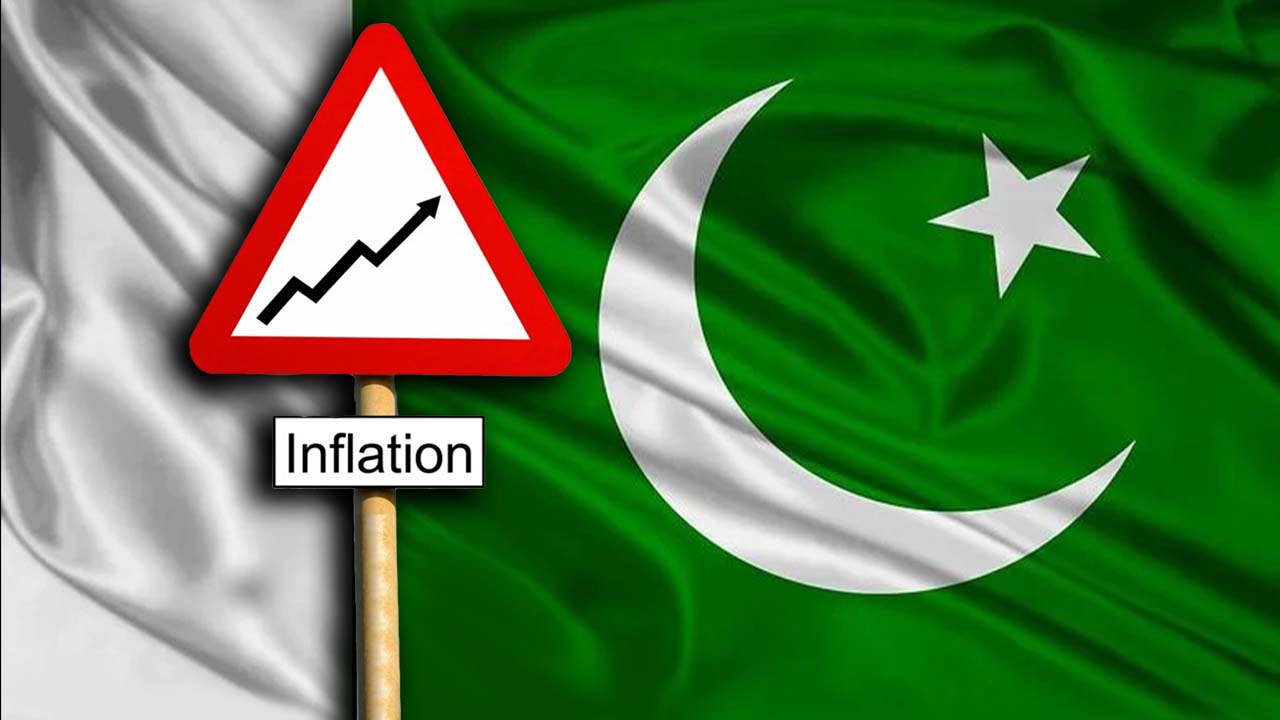
    The Consumer Price Index (CPI) reached an unprecedented 38.0 per cent YoY in May 2023, as per the CEIC database. Although it moderated to 26.9 per cent YoY in October, essential items like milk and onions became prohibitively expensive. 

    To combat inflation, Pakistan launched a free flour scheme, particularly in Punjab, under the Ramzan package. However, a tragic stampede in Karachi in April-March resulted in over 10 casualties at a free food distribution centre. 

    In a significant development, Pakistan secured a staff-level agreement with the IMF for a $3 billion, nine-month standby arrangement (SBA). The IMF executive board is set to convene on January 11, 2024, to consider final approval for the next $700 million tranche. 

    Summing up 2023 for Pakistan, the year was marked by elevated bank credit costs, volatile energy supplies, import restrictions, political instability, and weakened law and order. While some sectors, such as sugar, fertilisers, cement, and IT services, performed relatively well, others, like textiles, automotive, and pharmaceuticals, faced considerable distress. 

    Entrepreneurs faced unprecedented challenges, with a myriad of crises affecting the business landscape. Experts described the first six months as particularly challenging, citing uncertainty, a balance of payments crisis, and a shortage of foreign exchange. 

    The latter half of the year saw some alignment of factors, but challenges persisted, including inflation, unemployment, and continued monetary policy tightening. Despite these, there was improvement in donor relationships, credit rollovers, and foreign exchange inflows. 

    The automotive industry faced an extremely challenging year with import restrictions and demand suppression contracting the market. Despite absorbing the impact, optimism prevails for long-term gains from the envisioned economic restructuring. 

    For sustainable economic growth, Pakistan must commit to fiscal prudence, structural reforms, and export diversification. Investments in human capital, especially in education and healthcare, are crucial for long-term success. 

    In the backdrop of Pakistan’s economic challenges, its relations with neighbouring countries, particularly Afghanistan and India, continue to play a pivotal role in shaping the economic landscape.

    Islamabad’s interactions with Kabul and New Delhi remain tense, adding another layer of complexity to the existing economic challenges.

    Pakistan faces persistent challenges in its relationship with Afghanistan, characterized by sporadic skirmishes along the Afghanistan-Pakistan border.

    These clashes, involving Pakistani and Taliban forces, result in temporary cross-border closures and gunfire exchanges.

    In September 2023, a key closure led to an estimated $1 million loss over one week. Diplomatic efforts to curb cross-border attacks and pressure the Taliban demonstrate the evolving nature of these regional ties.

    Furthermore, Pakistan’s implementation of the Illegal Foreigners Repatriation Plan in late 2023 triggered widespread public unrest, particularly impacting nearly 2 million undocumented Afghan refugees.

    The policy raised concerns about its implications for cross-border trade and travel, leading to protest campaigns along the Chaman-Spin Boldak border.

    Unlike the Russia-Ukraine war, the ongoing Israel-Palestine conflict has had a limited economic impact on Pakistan. The main consequence is an increased cost, which, fortunately, has remained around six per cent thus far.

    Officials in the planning ministry and the State Bank closely monitor Middle East developments, formulating strategies to mitigate potential adverse impacts on the economy.

    While the likelihood of an Arab oil embargo is low, vigilance is crucial, especially for a country with a fragile economy. Contingency plans should be in place to address various possible scenarios, considering the potential for disruptions in global markets and supply chains.

    Global conflicts and economic stability

    Conflicts worldwide, including the Russia-Ukraine war, have demonstrated the potential for disruptions in fuel and food prices. Middle East nations, as key global oil suppliers, significantly influence Pakistan’s economy.

    The intensifying Middle East conflict poses challenges, impacting oil prices, currency fragility, and potential cost escalations in goods and services.

    Given Pakistan’s historical ties with Western countries, including FDI, the conflict raises concerns about the stability of the economy. The textile industry emphasises the necessity for early elections and a stable elected government to effectively address challenges arising from the conflict.

    Business organisations, such as the Federation of Pakistan Chamber of Commerce and Industry (FPCCI), view the situation as evolving and refrain from taking a stance at this point.

    The president of Pakistan’s textile industry advocates for early elections and a stable government to address challenges effectively.

    Economists highlight Pakistan’s susceptibility to oil price fluctuations and the potential impact of the Gulf crisis on remittance inflows.

    While some businesses anticipate no major shift in consumer preferences regarding Western brands, concerns linger about negative sentiments affecting certain brands. Calls to boycott Western brands may arise, although consistent follow-through remains uncertain.

    In the midst of these regional and global challenges, Pakistan’s economic resilience is being tested. Successful navigation through these complexities requires strategic planning, continued reforms, and a steadfast commitment to stability and prosperity.

  • Video of Usman Khawaja’s elder daughter hugging King Babar breaking the internet

    Video of Usman Khawaja’s elder daughter hugging King Babar breaking the internet

    Australia and Pakistan taking on each other in the Boxing Day Test at the iconic Melbourne Cricket Ground on Tuesday, players from both sides spread Christmas cheer during their training sessions.

    In a heartwarming gesture, Pakistani players celebrated Christmas on Monday by visiting the Australian nets at the MCG and offering gifts to the Australian players and their families as both sides prepare for the second Test.

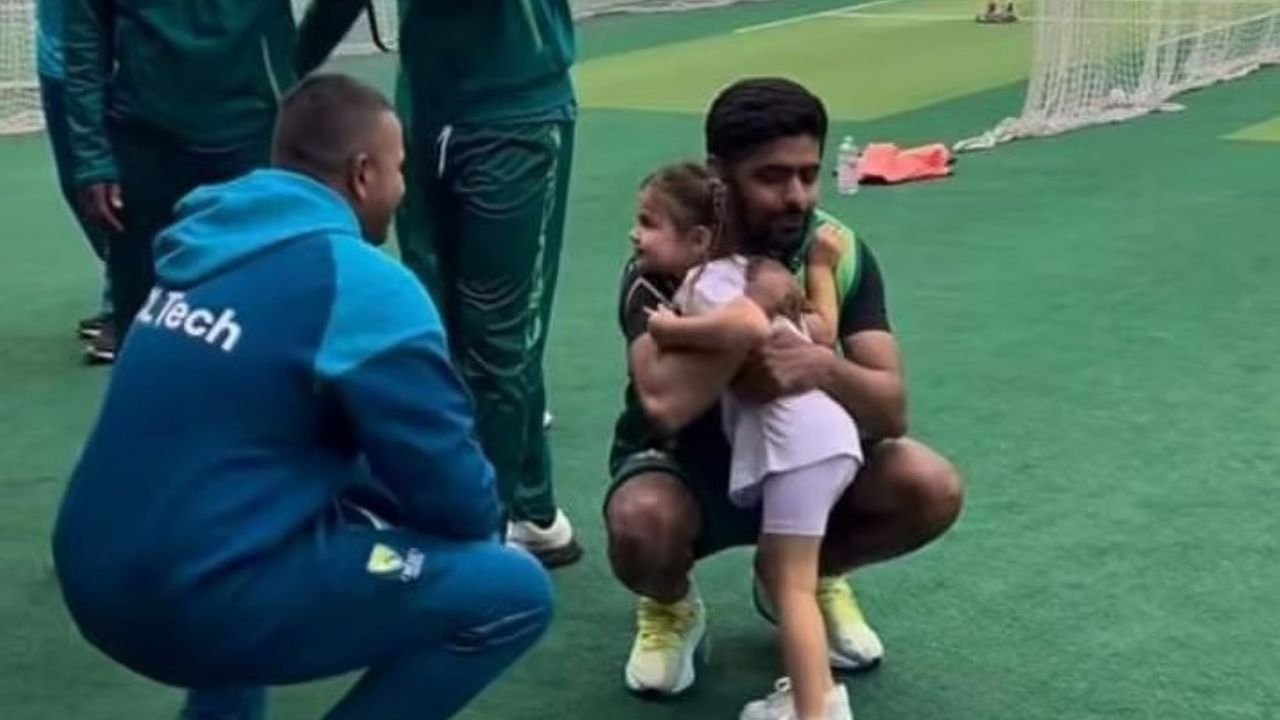
    Pakistani cricketers were seen carrying gifts of cactus and candy to the children of the Australian players. Amid Christmas celebrations between the players of the two teams, the video has gone viral on social media, in which Usman Khawaja’s elder daughter is seen hugging former Pakistan captain Babar Azam in the nets.

    Usman Khawaja is at loggerheads with the International Cricket Council (ICC) after the rejection of the request to show the sign of peace on the bat to the Australian batsman to show solidarity with the victims of Gaza for the Boxing Day Test against Pakistan in Melbourne.

  • Social media users criticize Kim Kardashian over Christmas gift wrapping choice

    Social media users criticize Kim Kardashian over Christmas gift wrapping choice

    In a recent Instagram post, reality TV star Kim Kardashian, 43, ignited a controversy surrounding her Christmas gift-wrapping choices.

    Kardashian showcased her gifts wrapped in cotton jersey fabric T-shirts from her brand SKIMS, highlighting their potential for reuse.

    Kim Kardashian posted, “Wrapping gifts in our family is always such a fun family tradition to see what each family member did and their vibe for the year. Each represents us so well! I did all-white SKIMS cotton jersey t-shirt fabric. I’m excited to reuse it and make other things.”

    However, social media users were quick to point out the striking similarity between the packaging style and Muslim funeral shrouds.

    The controversy gained momentum when users pointed out the striking resemblance between Kardashian’s wrapped gifts and the traditional Muslim practice of wrapping dead bodies in white cloth.

    This practice is a significant aspect of Muslim burial rites, and users were quick to express their disapproval of Kardashian seemingly mimicking this solemn tradition for festive gift wrapping in light of the aggression Palestinians are undergoing.

    Palestinians mourn relatives killed in the Israeli bombardment of Gaza in front of the morgue in Deir al Balah on October 31. Fatima Shbair/AP

    A social media user said on X (former Twitter) “first the zombie football jerseys to mock little palestinian injured kids and now wrapping her christmas gifts in a a white cloth to mock dead palestinians. @KimKardashian has constantly proven that she’s inhumane. this is not a mere coincidence. Cancel her.”

    https://twitter.com/e_crimina1/status/1738437969277792563?s=20

    Another user said, “Kim Kardashian hosting a Coke sponsored Christmas party. You can’t convince me this sh*t isn’t deliberate. You’re a billionaire, maybe pay for your own parties. Ones that aren’t funding a ge-no-cide.”

    https://twitter.com/ZunairaInam/status/1739216258372182463?s=20

    This is not the first time Kardashian has faced criticism for her choices related to the Israeli-Palestinian conflict. Previously, she had attracted negative attention for her children’s Halloween costumes resembling injured Gaza children.

    In addition to cultural insensitivity, critics also highlighted the perceived incongruity of Kardashian’s sustainability efforts, contrasting her eco-friendly gift wrapping with her frequent use of private jets and the resulting environmental impact.

    It’s worth noting that Kardashian publicly expressed her support for Israel in the aftermath of the October 7 attack, issuing a statement that has not been revisited since.

    This controversy echoes recent incidents involving fashion brands such as Zara and Marks and Spencer, where insensitivity to the Israeli-Palestinian conflict sparked public outrage.

    Zara faced backlash for a campaign featuring a model draped in fabric resembling shrouded bodies, while Marks and Spencer drew criticism for an advertisement depicting the burning of Palestinian flag-colored papers.

  • Bilawal pledges to eliminate 17 federal ministries if PPP voted into power

    Bilawal pledges to eliminate 17 federal ministries if PPP voted into power

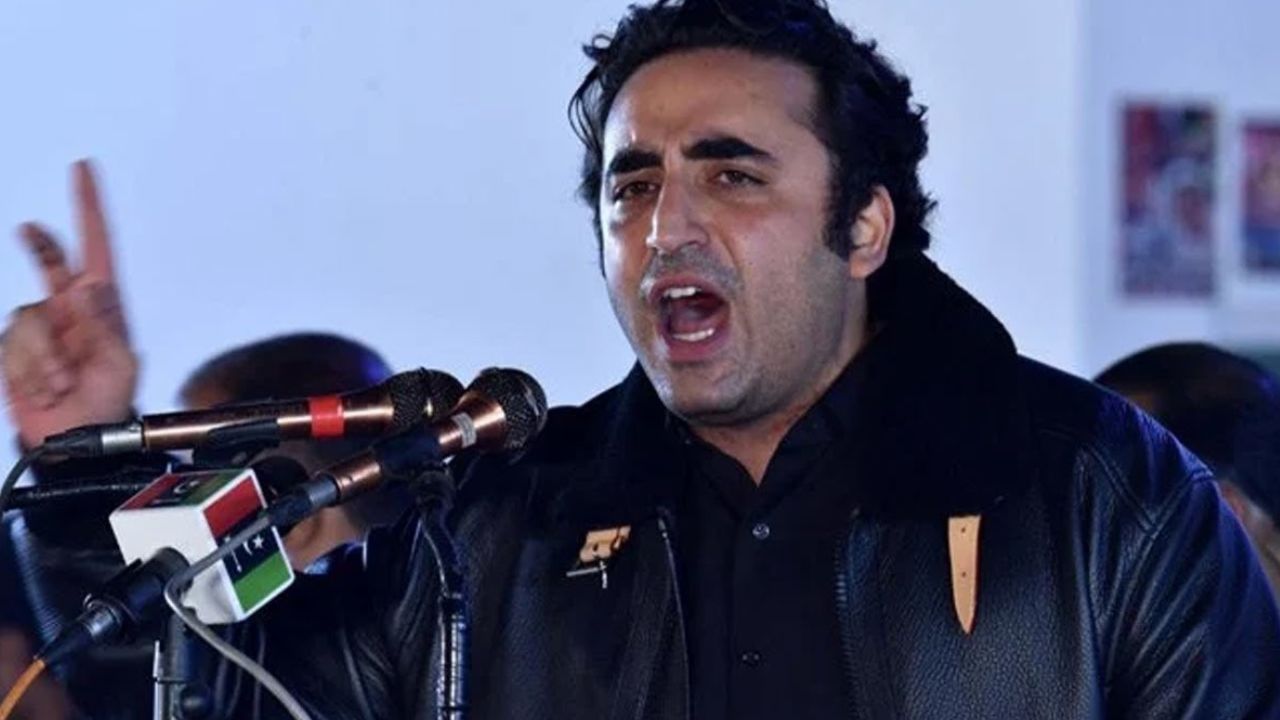
    Bilawal Bhutto-Zardari, Chairman of the Pakistan People’s Party (PPP), pledged on Monday to eliminate 17 federal ministries if his party secures victory in the general elections. This measure aims to save taxpayers a sum of “Rs300 billion.”

    Addressing a public gathering in Nawabshah, Bilawal said the 17 federal ministries should have been devolved to provinces after the 18th Constitutional Amendment, Geo News reported.

    The leader of the PPP stated that an amount of Rs300 billion was allocated for the ministries, and the government provided a subsidy of Rs1,500 billion to the ‘elite’ individuals in different sectors, such as energy and fertilizers.

    Bilawal said his party would end the subsidy for elites to provide funds to labourers and farmers through cards, he said.

    On April 8, 2010, the 18th Constitutional Amendment was enacted, leading to the decentralization of numerous federal ministries and the transfer of powers to provinces.

    Referring to the youth as the future of the nation, the PPP chief said old politicians are a thing of the past.
    Bilawal said the country’s issues could be resolved by burying the politics of “hatred and division”.

  • Mitchell Starc surprised to see low speed of Pakistani fast bowlers

    Mitchell Starc surprised to see low speed of Pakistani fast bowlers

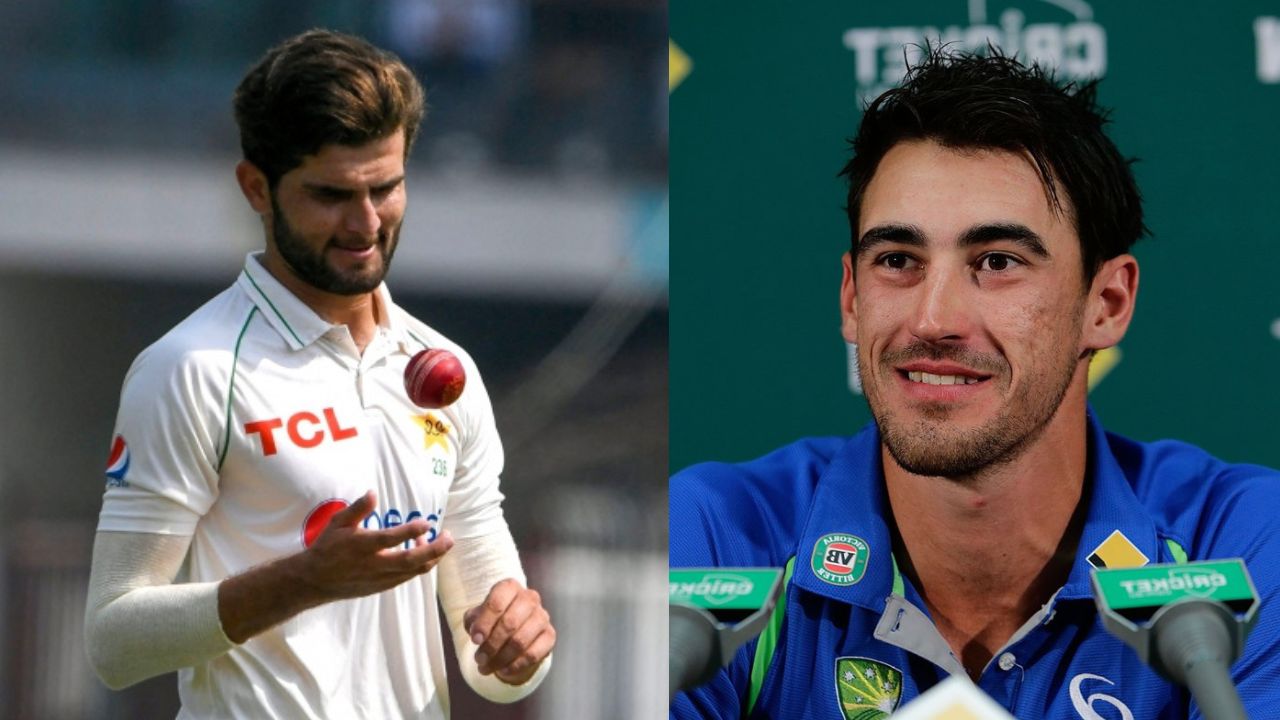
    Kangaroo’s left-arm pacer Mitchell Starc has been surprised to see the low pace attack of the Pakistan cricket team during the first test match in Perth.

    In the first Test match the speed of the Pakistani pacers was not the same as the Pakistani bowlers who have toured Australia in the past. This attracted the attention of not only the fans but also the Australian camp.

    Australian fast bowler Mitchell Starc expressed surprise at the low speed of Pakistan bowlers and said, “Everyone was expecting 150 km per hour from Pakistani bowlers. I think everyone is quite surprised at the low speed of the Pakistani bowlers because usually many Pakistani bowlers bowl at a speed of 150 km per hour.”

    Stressing the importance of pace in the game, Starc said, “I don’t think pace is everything but it definitely makes a difference and can help a bowler.”

    It should be noted that due to the absence of Naseem Shah due to injury and Haris Rauf not participating in the series, there is a shortage of bowlers who bowl at a fast speed of 150 kph in the Pakistani team.

    Shaheen Shah Afridi also seems to be struggling to bowl at his usual pace after recovering from his knee injury.

  • Yasir Arafat likely to appointed as high-performance coach of national T20 team

    Yasir Arafat likely to appointed as high-performance coach of national T20 team

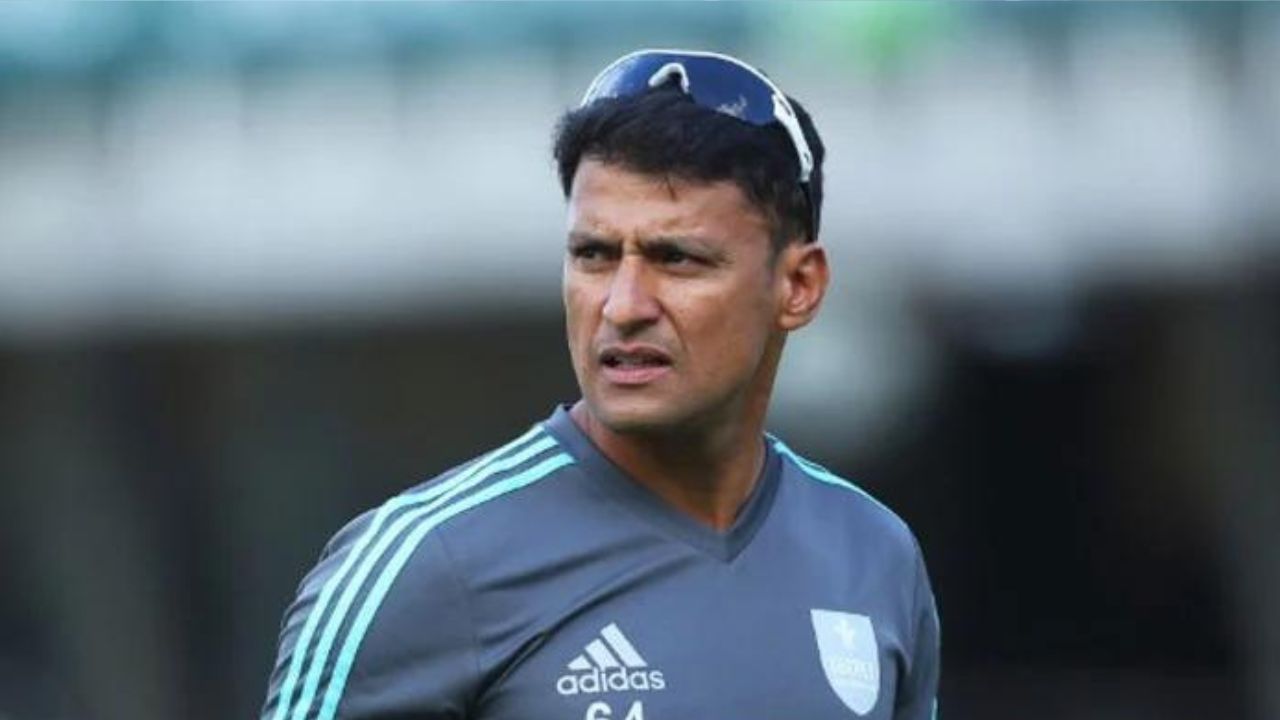
    The Pakistan Cricket Board (PCB) has decided to appoint former Test all-rounder Yasir Arafat as the high-performance coach of the Pakistan T20 team.

    Former cricketer Yasir Arafat will be appointed in place of Australian coach Simon Helmot after the Test series against Australia.

    According to Geo sources, Yasir Arafat has been appointed on the recommendation of director Mohammad Hafeez, who was initially appointed as the bowling coach of Pakistan U-19 in South Africa.

    Yasir Arafat has reached Islamabad from London and will go to Auckland with the T20 team on January 3. Yasir Arafat has played club cricket in New Zealand.

  • Alia Bhatt and Ranbir Kapoor’s daughter Raha makes first public appearance

    Alia Bhatt and Ranbir Kapoor’s daughter Raha makes first public appearance

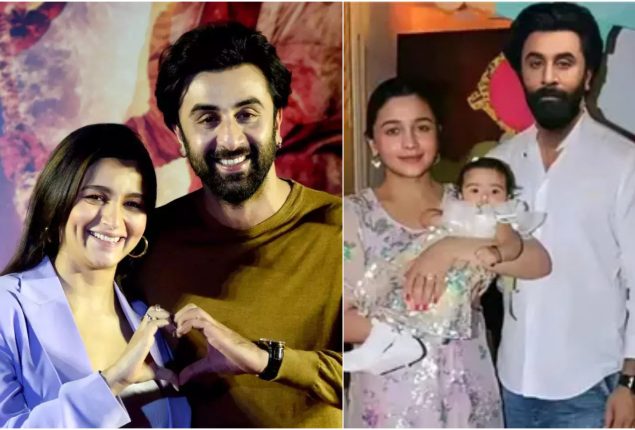
    Bollywood stars Ranbir Kapoor and Alia Bhatt have introduced their daughter, Raha to the world for the first time. The heartwarming reveal happened at the Kapoor family’s annual Christmas lunch in Juhu, Mumbai. Little Raha, with her blue eyes, made her first appearance in the arms of her dad, Ranbir Kapoor. She even sweetly touched her dad’s face during the photo session.

    Raha was born on November 6, 2022. Until now, Ranbir and Alia hadn’t shared any pictures of her or allowed the paparazzi to take photos. At HTLS 2023, Alia talked about why she and Ranbir Kapoor kept Raha away from the media spotlight.
    “I don’t want it to seem like I am hiding my daughter. I am proud of her. If the cameras were not rolling right now, I would put a giant image of her on the screen. I love her. I am proud of our baby. But we are new parents. We don’t know how we feel about her face splashed out all over the internet, she’s barely a year old.”

    The family of three happily posed together for the cameras, Raha being the star of the show in a cute pink and white dress featuring a Rudolph the Red-Nosed Reindeer design, along with festive red velvet shoes. The paparazzi couldn’t contain their excitement as they cheered for the celebrity trio.

    Ranbir Kapoor kept it cool in black pants, a matching tee, and a jacket. Alia Bhatt looked lovely in a black dress adorned with red flowers and a Christmas-themed headband. The photographers showered warm Christmas wishes on baby Raha as Ranbir guided her to greet them.

  • 2023 terror stats: Suicide attacks highest since 2014

    In a report issued by the Pakistan Institute for Conflict and Security Studies (PICSS), it has been revealed that the country has experienced a surge in suicide attacks, reaching the highest level since 2014.

    According to the data released by PICSS, reported by Geo, 29 attacks have been reported in the year 2023, claiming 329 lives. 582 individuals were injured in these attacks. This marks the highest death toll since 2013 when 683 people lost their lives in 47 suicide bombings. 623 militant attacks in 2023, as compared to 380 such attacks in 2022. Among total attacks in 2023, 29 were suicide attacks; whereas in 2022, 15 were suicide attacks.

    Compared to the previous year, 2022, the report shows a tragic 93% increase in the number of suicide attacks, a 226% rise in resultant deaths, and a 101% surge in the number of injured individuals.

    In a comparative analysis of the regions, Khyber Pakhtunkhwa bore the brunt of these attacks, reporting 23 instances that resulted in 254 fatalities and 512 injuries. Within KP, newly merged districts (NMD) experienced 13 suicide attacks, leading to 85 deaths and 206 injuries. Balochistan faced five attacks, causing 67 deaths and 52 injuries, while Sindh witnessed one suicide attack resulting in eight deaths and 18 injuries.


    There was a stark increase in the attacks against military forces, with civilians constituting the second-largest victim category. A visual representation in the form of pie charts illustrates that 48% of deaths (157) and 58% of injuries (340) were inflicted upon security personnel. The number of civilian casualties was close to these statistics with 130 deaths and 242 injured.

    Taking notes from the historical trajectory, PICSS’s militancy database indicates a notable decline in suicide attacks from 30 in 2014 to a mere three in 2019. Contrary to the earlier statement, there was no significant surge in 2020 and 2021, as both years witnessed only four attacks each.

    The year 2022 witnessed a sudden and significant surge, recording 15 attacks resulting in 101 deaths and 290 injuries. This worrisome trend persisted into 2023, reaching a new high with 29 reported suicide attacks.

  • PCB organized a Christmas dinner at Gaddafi Stadium

    Pakistan Cricket Board (PCB) has organized a Christmas dinner at Gaddafi Stadium in Lahore.

    The PCB officials and Christian employees including Chairman Management Committee Zaka Ashraf attended this Christmas dinner.

    Addressing the guests on this occasion, Chairman PCB Management Committee Zaka Ashraf said, “I extend my heartfelt greetings to all the people celebrating Christmas in Pakistan and around the world, we are happy that you are a part of the Pakistan Cricket Board”.

  • Which women are on the priority list of political parties?

    Which women are on the priority list of political parties?

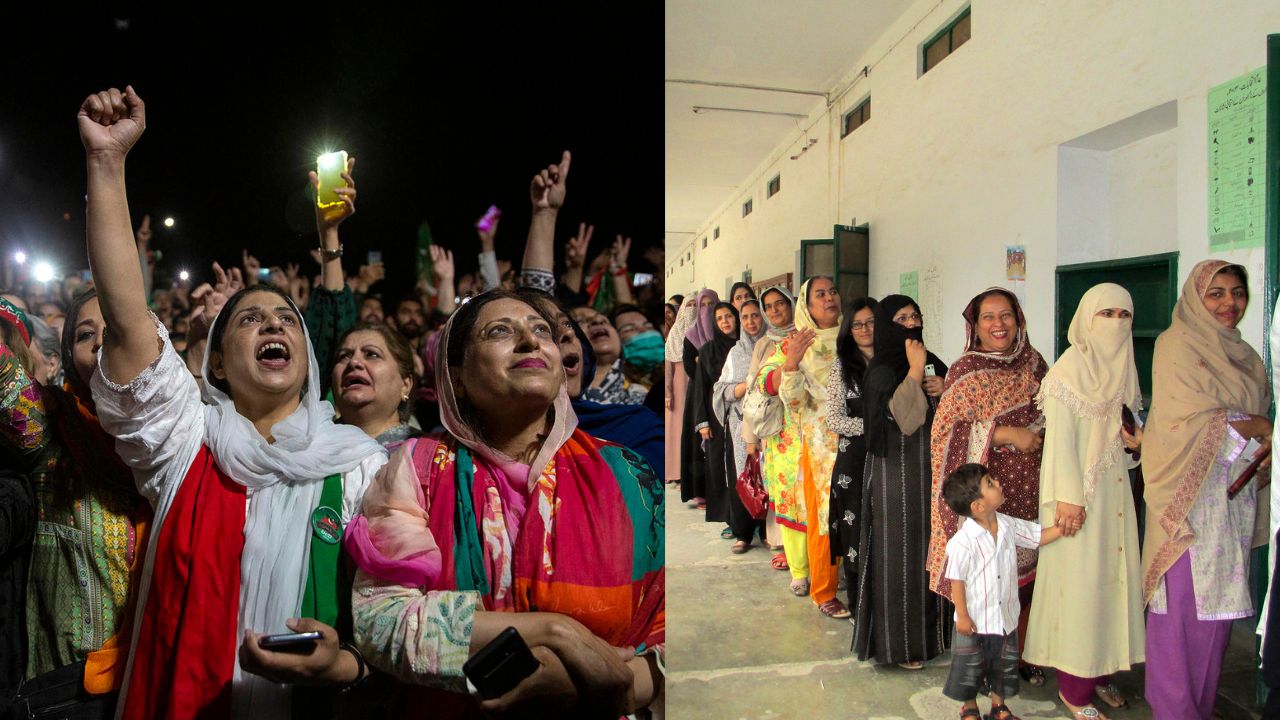
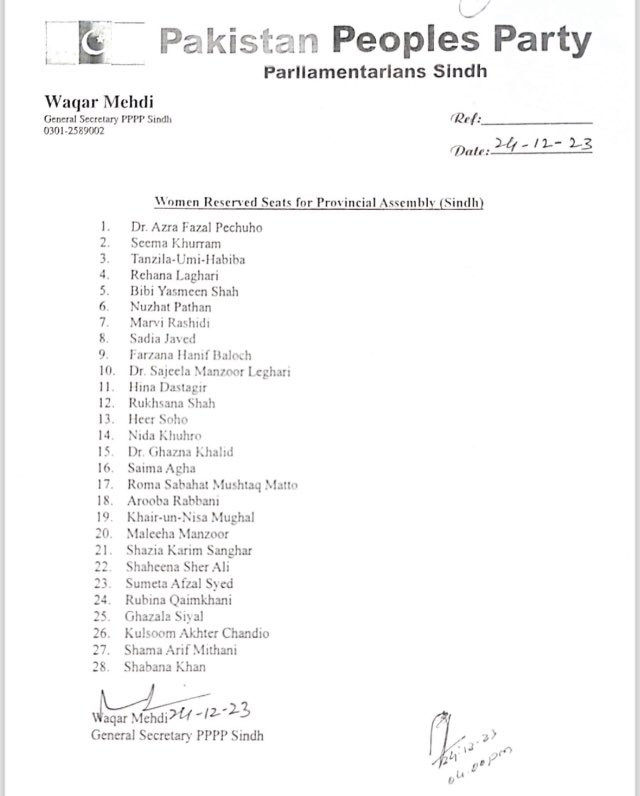
    Political parties have submitted their priority list to the Election Commission of Pakistan for reserved seats for women.

    According to details, major political parties Pakistan Muslim League Nawaz (PML-N), Pakistan People’s Party (PPP), Pakistan People’s Party (PPP), Istehkam-e-Pakistan Party (IPP), Pakistan Muslim League Quaid (PML-Q) and others issued the priority list of the women candidates.

    The Pakistan People’s Party (PPP) leads with Hina Rabbani Khar topping the list for National Assembly seats from Punjab, followed by Samina Khalid Ghurki, Natasha Doultana, Neelam Jabbar, Shagufta Chaudhary, and Syeda Samina Raza.

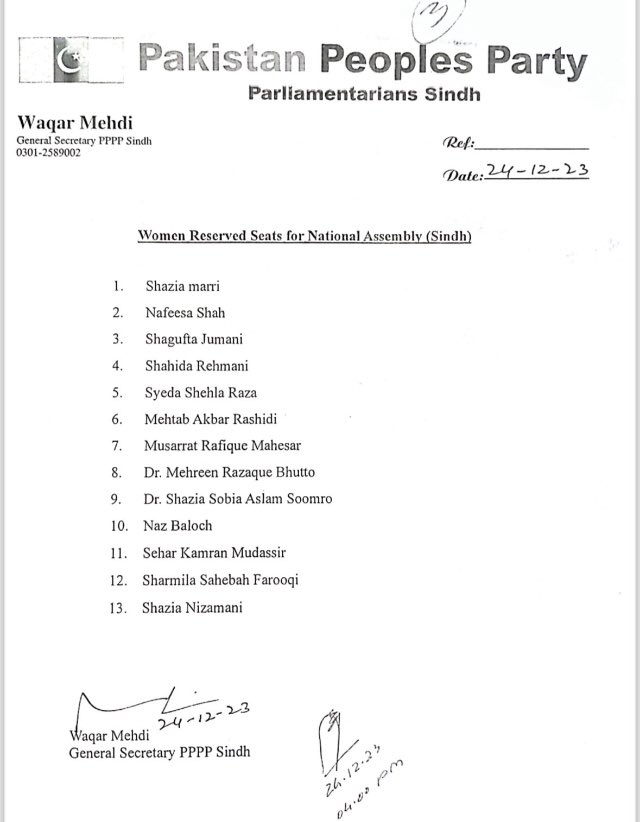
    Shazia Marri was placed on the first number in the list for the National Assembly’s (NA) reserved seats for women.

    Other candidates include Dr Nafisa Shah, Shagufta Jumani, Shehla Raza, Mehtab Akbar Rashidi, Musarrat Rafiq, Shazia Soomro, Naz Baloch, Seher Kamran, Sharmila Farooqi, Shazia Abid, Rehana Baloch, Neelum Jabbar, Nargis Faiz, Nayab Gohar and Shazia Nizamani.

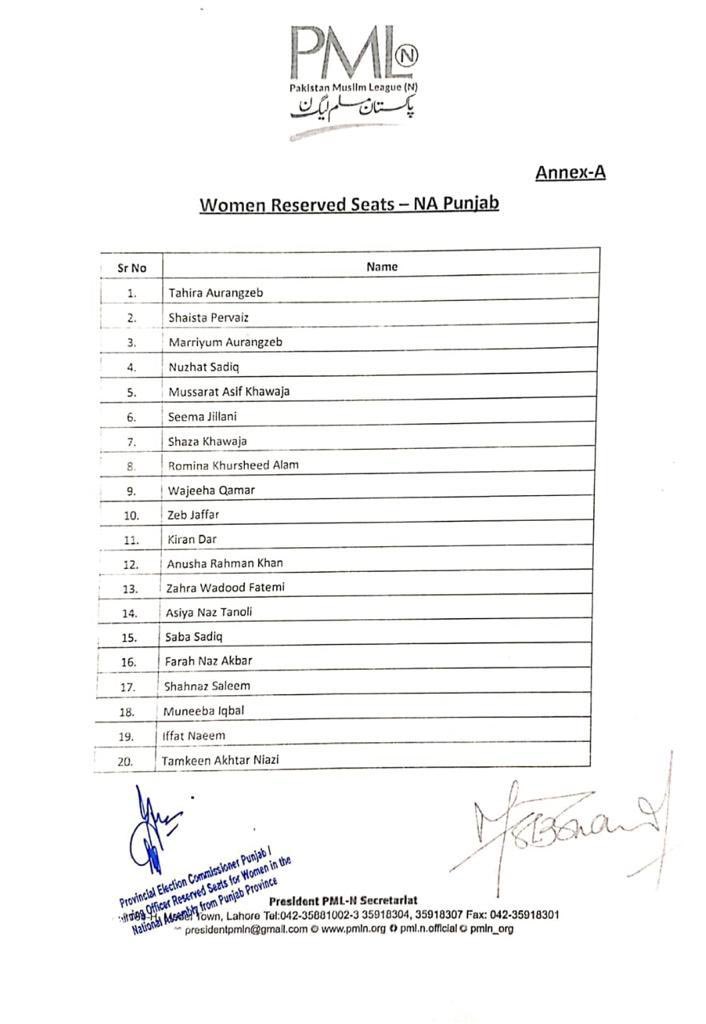
    The PML-N has nominated candidates such as Tahira Aurangzeb, Shaista Parvez, Marriyum Aurangzeb, Nuzhat Sadiq, Musarrat Asif Khawaja, Seema Jilani, Shiza Khawaja, Romina Khurshid Alam, Wajiha Qamar, and Zeb Jafar.

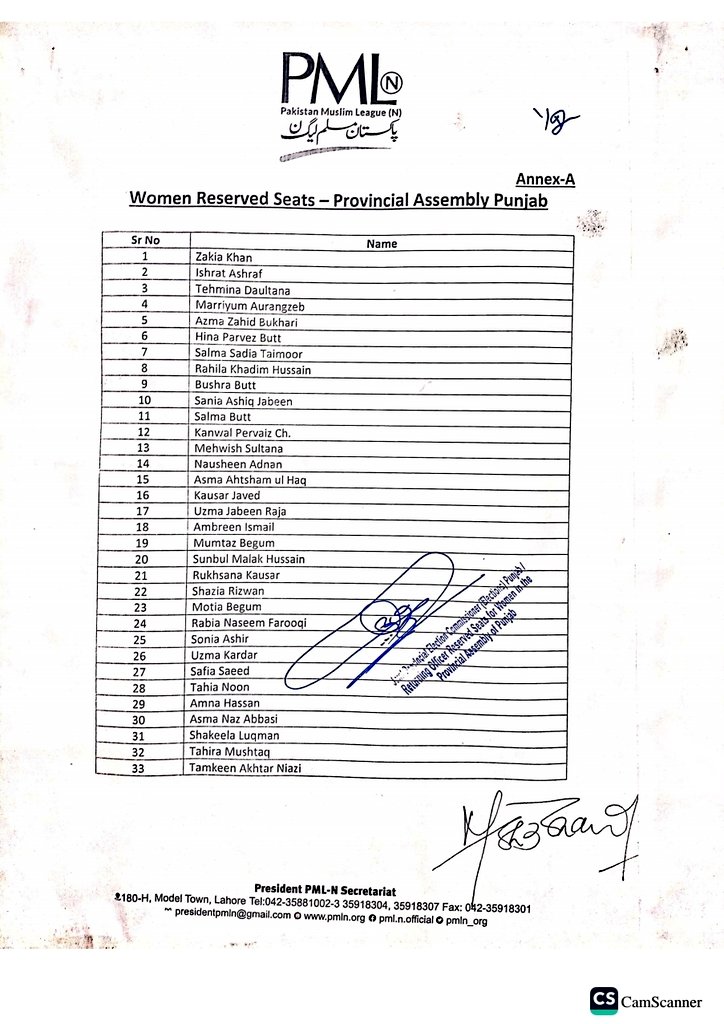
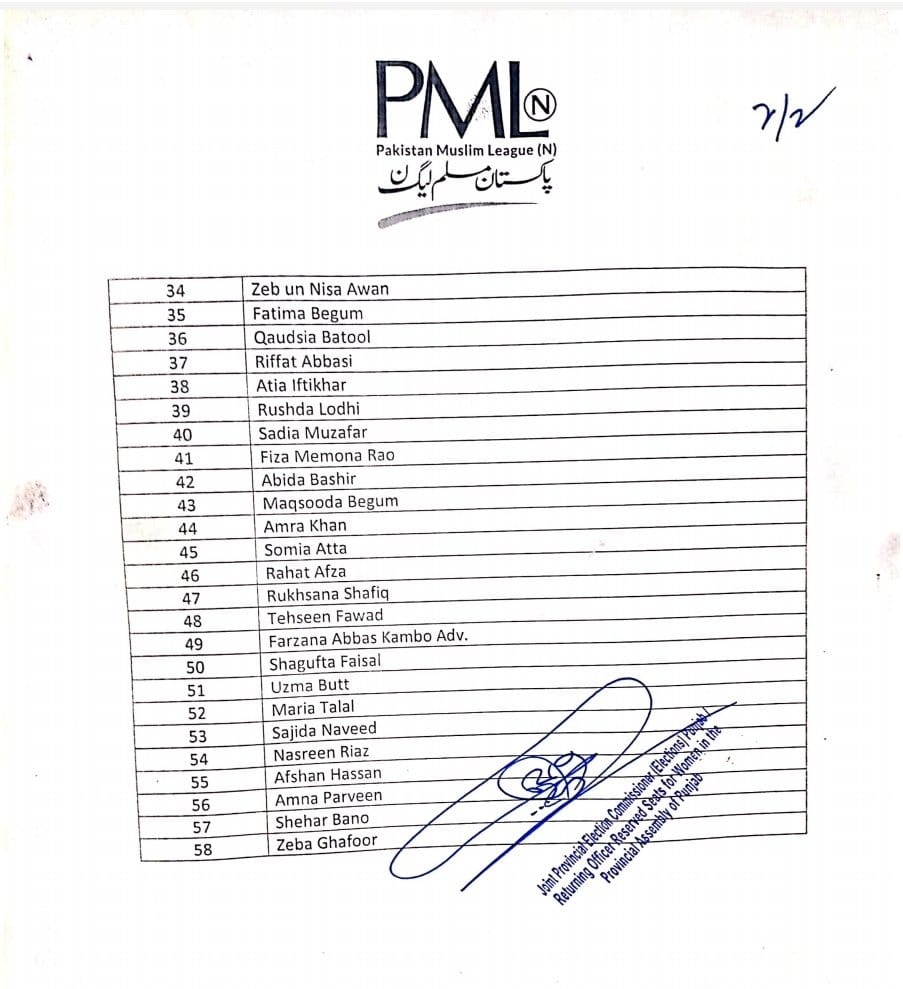
    The PML-N issued the priority list of 58 women candidates from Punjab.

    The candidates include Kiran Dar, Anusha Rehman, Tahira Wudood, Afia Naz, Saba Sadiq, Farah Naz, Shehnaz Salim, Muneeba Iqbal, Iffat Naeem, Zakia Khan, Ishrat Ashraf, Tehmina Daultana, Uzma Bukhari, Hina Parvez Butt, Saima Saadia, Rahila Khadim, Uzma Kardar and Tamkeen Akhtar.

    The Istehkam-e-Pakistan Party (IPP) presented Munazza Hasan, Firdous Ashiq Awan, and Asia Azeem in the list.
    Meanwhile, the PTI’s priority list was withheld by the ECP as the party’s election symbol was revoked after intra-party elections were declared null and void.

    Tehreek-e-Labaik Pakistan (TLP) suggested 23 women candidates for the Punjab Assembly in its priority list. IPP issued the list of 14 women candidates and Jamaat-e-Islami (JI) recommended 21 women candidates.