Author: News Desk

  • Over 7.5 million WhatsApp accounts banned in India in one month 

    Over 7.5 million WhatsApp accounts banned in India in one month 

    In compliance with the Information Technology (Intermediary Guidelines and Digital Media Ethics Code) Rules, 2021, WhatsApp has released its monthly report detailing actions taken in response to user grievances and violations of Indian laws or WhatsApp’s Terms of Service. The report covers the period from October 1, 2023, to October 31, 2023. 

    The report from Meta’s instant messaging platform details the abuse detection mechanisms operating at various stages of an account’s lifecycle and emphasises the company’s focus on prevention. In the specified period, WhatsApp banned a total of 7,548,000 accounts in India, with 1,919,000 of these accounts being proactively banned before any user reports. 

       
    As per the instant messaging platform, the section on user grievances provides insights into the types of complaints received and the corresponding actions taken. 

       
    Reportedly, WhatsApp received a total of 9,063 reports during the reporting period. The majority of the reports were related to “Ban appeal” (4,771), while others covered topics such as “Account support,” “Other support,” “Product support,” and “Safety.” Out of the total reports, 12 accounts were actioned, with bans or account restorations based on the nature of the complaint. 

    Additionally, the report outlines the orders received from the Grievance Appellate Committee (GAC), indicating that WhatsApp received five orders during the same period, complying with all of them. 

    To recall, from September 1, 2023, to September 30, 2023, a total of 7,111,000 WhatsApp accounts were banned. Among these, 2,571,000 accounts were proactively banned prior to receiving any user reports, as mentioned in the WhatsApp report. 

    In the month of September, as per the report, the platform received six orders from the Grievance Appellate Committee, all of which were duly adhered to. 

       
    Moreover, WhatsApp mentioned receiving 10,442 user reports in various categories during September, including account support (1,031), ban appeal (7,396), other support (1,518), product support (370), and safety (127). 
  • JUI-F claims that Maulana Fazlur Rehman will be the president of Pakistan

    JUI-F claims that Maulana Fazlur Rehman will be the president of Pakistan

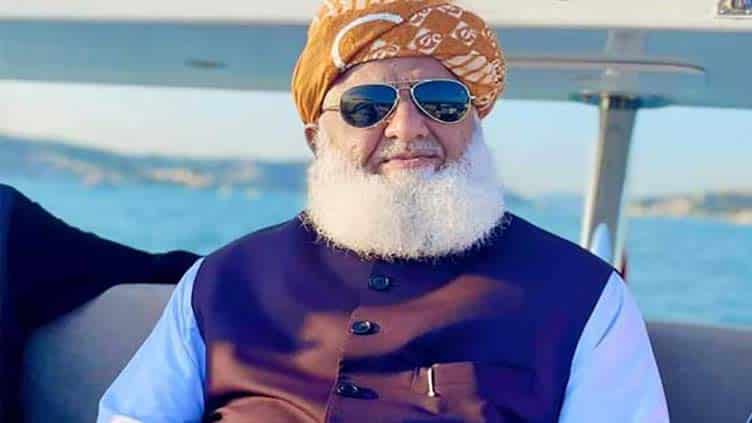
    Jamiat Ulema-e-Islam (JUI-F) claimed on Sunday that party chief Maulana Fazlur Rehman will become the president of Pakistan whether the Pakistan Muslim League-Nawaz (PML-N) or Pakistan People’s Party (PPP) win the upcoming elections on February 8 next year.

    Currently, Dr. Arif Alvi is the head of the state under Article 44 of the Constitution, which allows the president to work in the absence of provincial and national assemblies, which were dissolved early this year in January and August, respectively.

    Alvi is the fourth head of state to complete his full term. The previous three presidents who completed their five-year terms were the fifth president Fazal Ilahi Chaudhry (1973–1988), the 11th president Asif Ali Zardari (2008–2013), and the 12th president Mamnoon Hussain (2013–2018).

    In an interview, JUI-F leader Hafiz Hamdullah said that if Fazlur Rehman can be the head of Pakistan Democratic Movement (PDM), then he can also be the president of the country as well.

    Hafiz Hamdullah also criticised PML-N and PPP for “keeping an eye” on Balochistan.  

    “Father-son and father-daughter duos keep an eye on Balochistan’s [politics], let’s see what results it bears [in future],” he said.

  • Pakistan set to host US officials for crucial bilateral talks 

    Pakistan set to host US officials for crucial bilateral talks 

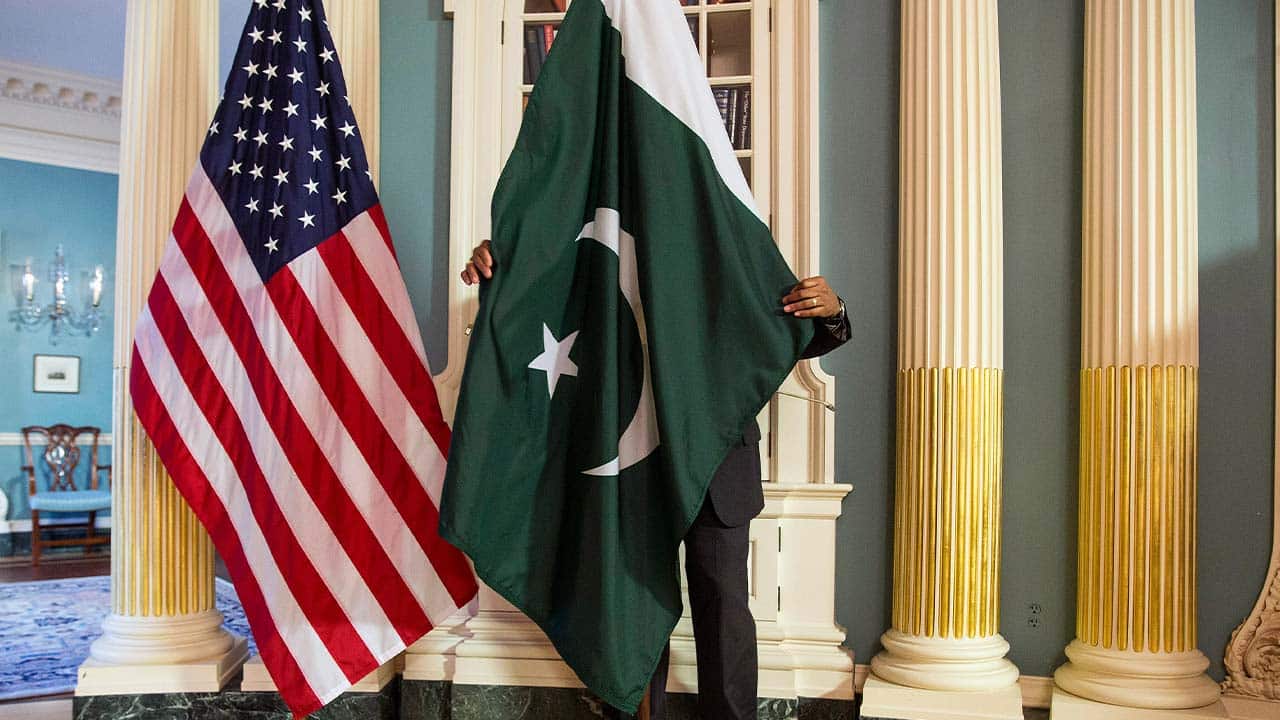
    In a confirmation made by the foreign office spokesperson on Sunday, Pakistan is set to host successive visits by senior US officials, marking a continuation of bilateral consultations between the two nations.  

    According to Mumtaz Zahra Baloch, the foreign office spokesperson, Pakistan and the United States are actively engaged in discussions on a spectrum of issues, prompting the need for reciprocal visits to facilitate and further these consultations. 

    Scheduled to commence on December 4, Assistant Secretary of State for the Bureau of Population, Refugees, and Migration, Julieta Valls Noyes, is expected to visit Pakistan until December 6.  

    Following her visit, the Special Representative for Afghanistan, Thomas West, is slated to be in Islamabad from December 7 to 9. Subsequently, Principal Deputy Assistant Secretary for Pakistan, Elizabeth Horst, is scheduled to visit from December 9 to 12. 

    The spokesperson for the foreign office emphasised that these visits are integral to the ongoing negotiations between Pakistan and the US, with a primary focus on addressing issues pertaining to Afghanistan. Notably, the discussions are not confined solely to matters related to Afghanistan but encompass a broader spectrum of bilateral concerns. 

    According to the US State Department, Julieta Valls Noyes will engage with senior government officials as well as representatives from non-governmental organisations and international partners.  

    The purpose of her visit is outlined as discussions on “shared efforts to protect vulnerable individuals and accelerate safe, efficient relocation and resettlement of Afghan refugees in the US immigration pipeline.” 

    These diplomatic engagements underscore the commitment of both nations to maintain an open dialogue and collaborate on multifaceted challenges, with a particular emphasis on the evolving situation in Afghanistan. 

  • China to assist Pakistan in improving crop growth through advanced farming

    China to assist Pakistan in improving crop growth through advanced farming

    Liu Jianming, Deputy Party Secretary and Deputy Political Commissar of the Xinjiang Production and Construction Corps, announced that China is set to extend support to Pakistan by providing top-quality, disease-resistant, high-yield hybrid seeds for cotton, canola, and wheat crops. 

    The objective is to achieve robust crop production while simultaneously addressing the escalating demands of the textile industry and earning essential foreign exchange. During his visit to the head office of Guard Agricultural Research and Services, he emphasised, “We aim for enhanced crop production through modern mechanised agricultural farming,” according to a news release. 

    Furthermore, Liu affirmed that China will collaborate with Pakistan in the production of cotton hybrid seeds, encompassing sunflower, maize, sesame, and other varieties. He also mentioned that China would share its successful experience with “Water Saving Technology.” 

    Expressing appreciation for the research activities of Guard Agriculture Research, Liu stated that all nine members of the delegation were keenly interested and extended an invitation to visit China for one-on-one interactions with stakeholders. 

    Liu asserted, “Together, we can leverage the power of innovation to address the challenges confronting the agricultural sector in Pakistan,” underscoring China’s readiness to provide technical expertise, research collaboration, and necessary resources for the development of cutting-edge hybrid seeds. 

    Highlighting the significance of the agriculture sector, he mentioned that China is eager to support Pakistan in hybrid seeds, with the shared goal of enhancing crop productivity and contributing to sustainable agricultural practices. Deputy Consul General Cao Ke was also present during the occasion. 

    According to APP, earlier in the event, Shahzad Ali Malik, CEO of Guard Agri, extended a warm welcome to the visiting delegation. He informed them, “We are pioneers in developing the first-ever Guard Hitech hybrid rice seed, which not only doubled production but also significantly increased farmers’ profitability in Pakistan.” 

    Malik mentioned that Guard Agri has been actively engaged in research since 1999 in collaboration with the Longping Chinese Company. He added that their rice is exported to 41 countries across Asia, Europe, the Middle East, and North America. The CEO emphasised ongoing research in rice, wheat, cotton, maize, oilseed, and vegetables in various stations across Punjab and Sindh provinces. 

    “Pakistan aims to enhance the production of all crops through modern technology and Chinese expertise,” Malik stated, expressing gratitude to the Chinese delegation for visiting Pioneer Company. He accepted their invitation to visit Xinjiang Province for further cooperation and collaboration in the agriculture sector. 

    Subsequently, Liu and Shahzad exchanged souvenirs to mark the occasion. 

  • Pakistan and Saudi Arabia reach consensus on long-awaited GCC free trade agreement

    Pakistan and Saudi Arabia reach consensus on long-awaited GCC free trade agreement

    Pakistan’s Commerce and Industries Minister, Dr Gohar Ejaz, led an official delegation to Saudi Arabia. The delegation included secretaries from the Ministry of Commerce, the Board of Investment (BOI), and officials from the Attorney General’s Office. 

    They engaged in discussions with the GCC Chief Negotiator to finalise the investment-related aspects of the Gulf Cooperation Council (GCC) Free Trade Agreement (FTA). Technical teams delved into details such as investment protection and facilitation. 

    Dr Ejaz expressed optimism about strengthening economic ties and highlighted the significance of the investment chapter. 

    The GCC FTA is anticipated to enhance trade, investment, and job opportunities between Pakistan and the GCC. 

    Both parties are considering a joint business forum to further promote economic collaboration, and Dr Ejaz expressed gratitude for the warm hospitality extended by the GCC.

  • Pakistan’s trade deficit shrinks by over 30% in November

    Pakistan’s trade deficit shrinks by over 30% in November

    In the initial five months of the fiscal year 2024, Pakistan’s trade performance has witnessed notable enhancements, marking a positive stride towards economic stability, as articulated by Dr Gohar Ejaz, the Federal Minister for Commerce and Industries, in a communication on X (formerly Twitter).

    The minister conveyed his unwavering confidence in Pakistan’s trajectory towards economic recovery, emphasising the commitment to diligent efforts aimed at job creation, economic growth, and the overall betterment of citizens’ lives.

    It is noteworthy that Pakistan’s exports experienced a year-on-year increase of 1.93 per cent, reaching $12.17 billion in the aforementioned five-month period, while imports exhibited a substantial decrease of 17.32 per cent to $21.55 billion.

    Consequently, the trade deficit contracted to $9.38 billion, registering a noteworthy decline of 33.59 per cent compared to the corresponding period in the preceding year.

    Zooming in on November’s performance, Pakistan’s exports demonstrated a robust year-on-year growth of 7.66 per cent, totaling $2.57 billion, whereas imports saw a decline of 13.47 per cent to $4.46 billion.

    This translated into a trade deficit of $1.89 billion for November, marking a notable reduction of 31.72 per cent compared to November 2022.

  • World Health Organization’s annual report highlights growing threat of malaria due to climate change

    World Health Organization’s annual report highlights growing threat of malaria due to climate change

    World Health Organization (WHO) has released an annual malaria report which includes, for the first time, a dedicated chapter focused on the intersection of the disease with climate change. “We are at the crossroads of opportunities and challenges,” says the report.


    As described in the report, climate change is one of many threats to the global response to malaria. Millions of people continue to miss out on the services they need to prevent, detect, and treat the disease. Conflict and humanitarian crises, resource constraints and biological challenges such as drug and insecticide resistance also continue to hamper progress.


    The COVID-19 pandemic significantly disrupted malaria services, leading to a surge in both incidence and mortality rates, exacerbating already stalled progress against the disease. The world is in danger of losing the fight against malaria, as cases of the disease rose by around 5 million year-on-year in 2022, exceeding global targets to contain it, a new World Health Organization (WHO) report.


    Pandemic-related disruptions and extreme weather events linked to climate change have hindered the fight against malaria in recent years.
    Cases surged in areas where weather was most extreme.


    Floods in Pakistan last year, for example, led to a five-fold increase in malaria cases in the country, the report showed.
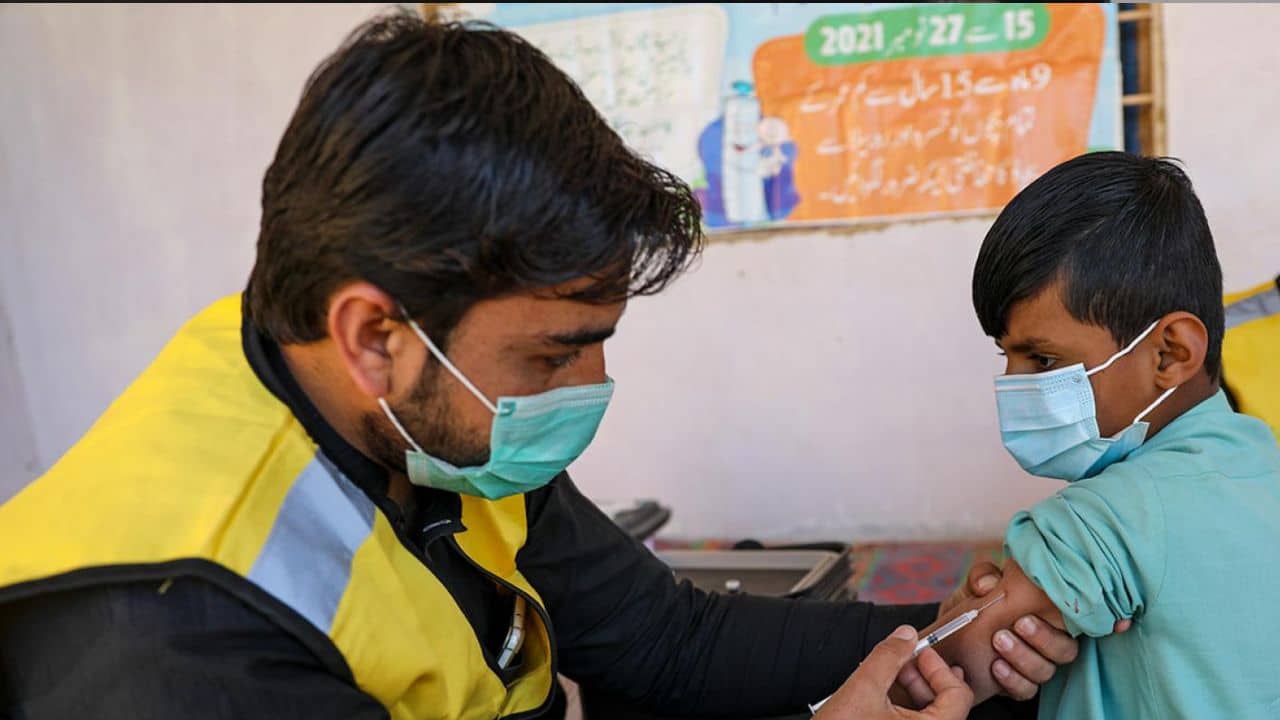
    Two new malaria vaccines, both of which are due to be available next year, provide some hope.


    But the report also showed a significant funding gap in the response. While $4.1 billion was invested in the global effort to tackle malaria in 2022, roughly $7.8 billion was needed, it said.


    Globally there were an additional five million malaria cases in 2022 over the previous year and five countries bore the brunt of these increases. Pakistan saw the largest increase, with about 2.6 million cases in 2022 compared to 500 000 in 2021.

  • When will ECP issue schedule of general elections in Pakistan?

    When will ECP issue schedule of general elections in Pakistan?

    The Election Commission of Pakistan (ECP) revealed on Friday that the eagerly awaited schedule for the general polls will be issued 54 days before the February 8 elections, as per Geo News.

    The Chief Election Commissioner (CEC), Sikandar Sultan Raja, said during an informal discussion with journalists that the election body is diligently working on completing all prerequisites for the upcoming polls.

    In June, the Pakistan Democratic Movement (PDM) government amended Section 57 of the Elections Act, empowering the ECP to set the general election date while defining a timeline of procedures from the announcement of the schedule to the polling day.

    CEC Sikandar Sultan Raja assured that the election schedule, appointment of returning officers (ROs), and district returning officers (DROs) will be announced promptly. He mentioned that updated constituency lists had already been released, and the ECP was proactively handling election-related responsibilities ahead of schedule.

    Despite concerns and speculations in political circles about potential delays in the already postponed polls, the ECP recently issued the final list of delimitation of constituencies for national and provincial assemblies, dismissing reports of possible delays.

    According to the notification issued by the ECP, the National Assembly (NA) has a total of 266 seats; 60 seats are reserved for women and 10 for religious minorities.

    Balochistan has a total of 20 NA seats, including 16 general and four reserved seats for women; Khyber Pakhtunkhwa has 45 general NA seats and 10 reserved seats for women; Sindh has a total of 75 NA seats, of which 61 are general and the remaining 14 are reserved for women.

    On the other hand, considering population, Punjab is a big province, and it has 141 NA seats, of which 32 are reserved for women. The federal capital has three general NA seats, with no reserved seat for women.

    Article 106 pertains to the constituencies of the four provincial legislatures. According to this article, Balochistan comprises 51 general seats, with 11 reserved for women and three for non-Muslims, making a total of 65 seats.

    In the case of Khyber Pakhtunkhwa, there are 115 general seats, along with 26 reserved for women and four for non-Muslims, bringing the total number of seats in the legislature to 145.

  • ‘Fine line between enforced disappearances and self-disappearance’, says Sarfraz Bugti

    ‘Fine line between enforced disappearances and self-disappearance’, says Sarfraz Bugti

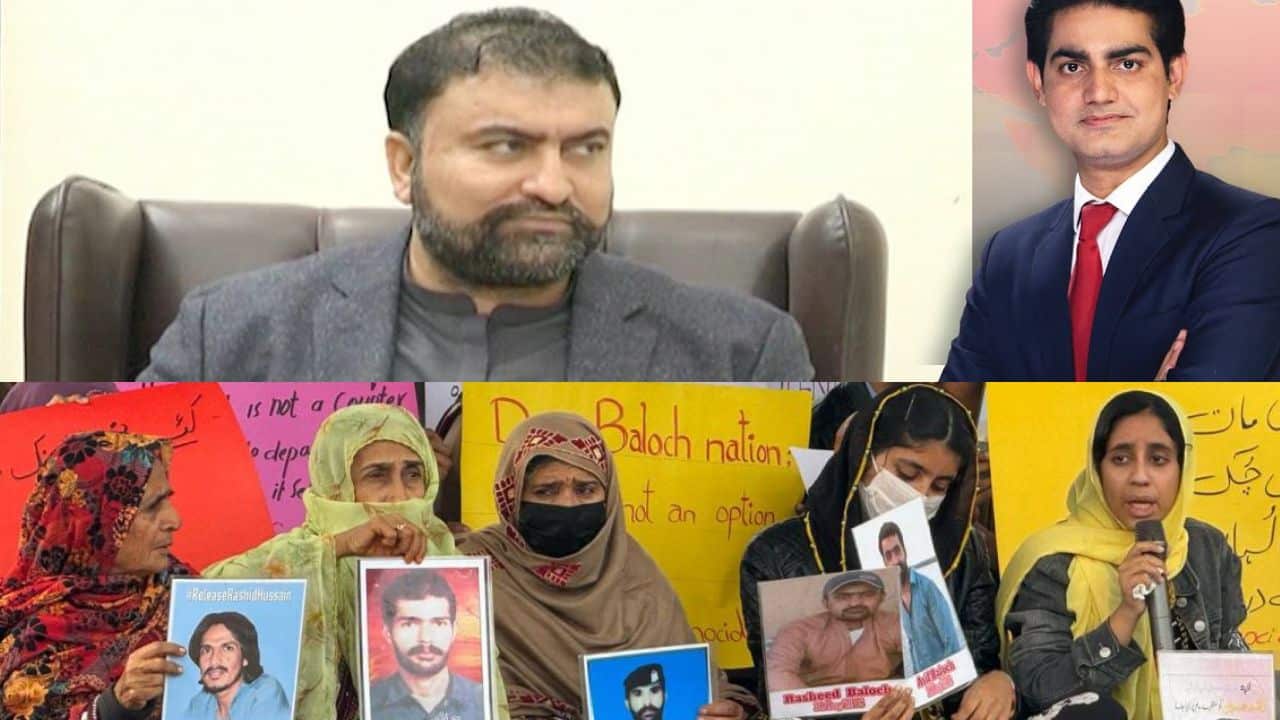
    Caretaker Interior Minister Sarfraz Bugti, while addressing the issue of missing persons in Pakistan, stated that the assemblies in the country represent “legitimate voices” for separatists expressing their perspectives.

    During an interview with DawnNewsTV program Doosra Rukh, Bugti delved into the complexities of missing persons cases, shedding light on the challenges faced in resolving them.

    Bugti’s comments come against the backdrop of an ongoing missing persons case being heard by the Islamabad High Court.

    On November 29, the court issued a warning that a case might be filed against the caretaker prime minister and others if they did not facilitate the reunion of missing Baloch students with their families.

    He also emphasized the delicate nature of the missing person issue, stating, “We have a commission on this matter, and it has resolved around 85 per cent of cases.”

    The commission was established in 2011 to trace missing persons and fix responsibility on the individuals or organizations responsible for it.

    In the interview aired on Friday, Minister Bugti pointed out the fine line between “enforced disappearances and self-disappearance”, highlighting that the commission had encountered cases with surprising details.

    “There were cases wherein people left their homes after a domestic dispute, and it transpired weeks later that they had left home themselves.”

    He also noted instances where individuals lost their lives in “encounters” with security forces.

    Minister added, “Then there are cases in which suspects are absconders required by a court, and their families submit pleas claiming their family member as missing to avoid court [action].”

    He remarked that such cases had been reported and documented.

  • ‘Dangerous and irresponsible’: Ushna Shah calls out Maria B for misusing Palestine activism

    ‘Dangerous and irresponsible’: Ushna Shah calls out Maria B for misusing Palestine activism

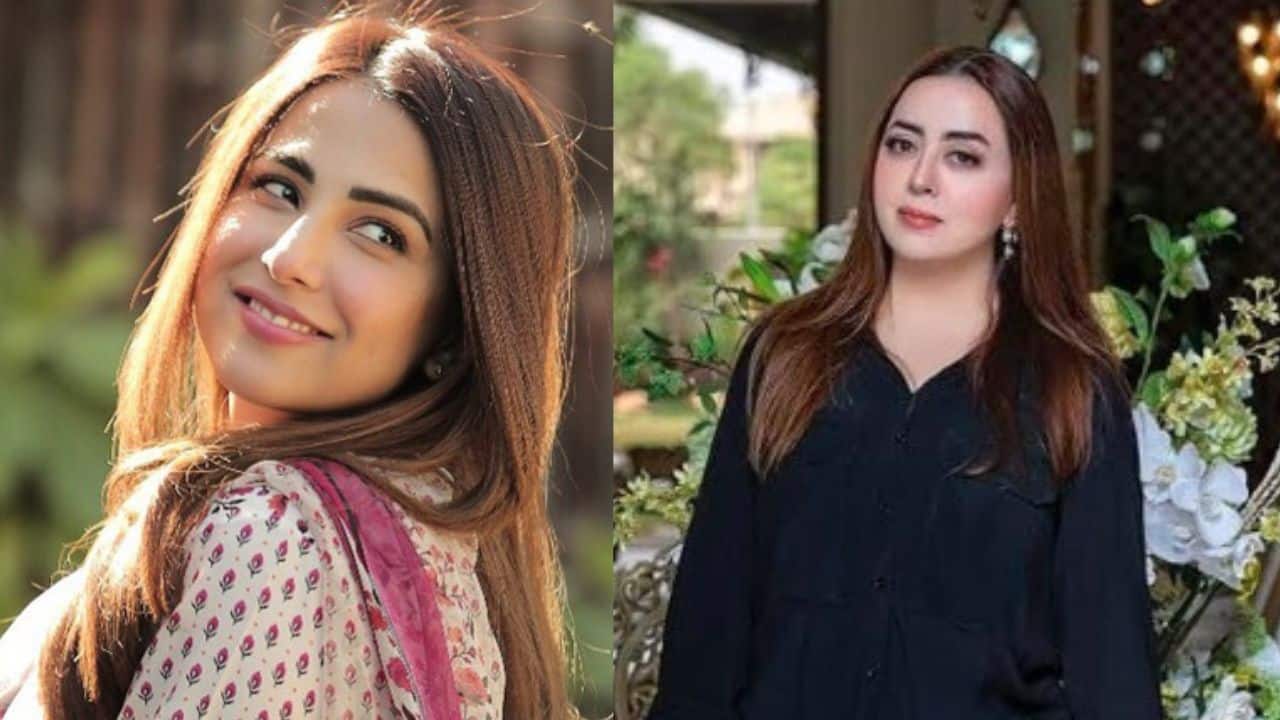
    Actress Ushna Shah took to her X (formerly Twitter) account to call out controversial fashion designer Maria B for misusing her tweets and photos from the Palestine march in Karachi to malign the transgender movement.

    “Maria B’s collaboration with questionable low grade bloggers and use of my tweets and photos from the Palestine March — where I was incidentally standing with a transgender rights activist — for her agenda is dangerous and irresponsible. She’s misusing edited content to stir controversy, exploiting trending topics like Palestine in a way that’s beneath even her.”

    “I am not aligned with her extreme right-wing or any extreme left-wing views,” continued the ‘Habs’ actress. “I have a diverse social circle, like most actresses working in showbiz, and I don’t subscribe to any political agenda. I value all life, from minorities to even animals. I urge Maria to realize the harm and potential risks to my safety her actions cause. In layman’s terms: please keep my name out of your mouth & don’t drag me in a war that has nothing to do with me.”

    “I am not pushing any agenda except the liberation of Palestine, do not use me to push yours.” Ushna wrote. “I’m sorry I rejected coming to your march, but this was a sick retaliation which has endangered me. Me not wanting to associate with Maria and her march doesn’t make me an LGBTQ activist. It has nothing to do with that. She has made me uncomfortable since her stunt with the covid patient working in her home, I see her as an irresponsible person who weaponises religion to push her brand & her recent stunt proves just that. Using the photo from a *Palestine* march in which an activist Shahzadi came next to me for a while & posing it as an LGBTQ March is again highly irresponsible of her, not to mention spreading lies online to endanger someone is illegal.”

    In the next tweet Ushna wrote: “To the fundamentalists threatening me: I’ve written this in Urdu. Simple words “meri dosti SAB ACTRESSES ki tarah SAB sey hei, meinay Palestine ke ilawa koi agenda push nahi kiya, Jo sawal mujhse karney hein woh sab actresses sey karein. LogoN ko mazhab Matt istemal karney dein sales banaaney ke liye. Mere Falasteen make stance ke baad haath sey endorsements jaa rahi hein, matlab high paying multinational waqfay, Jo ke aap sab ko patah hei mujhe bohot miliey thee alhamdulilah, Aur yeh logue Falasteen ko Aur mujhe istemaal kar rahey hein ratings ke liye”. I am at Umrah, let me get back to it without fearing propaganda. Jo masla mera hei hee nahi uss mein mujhe mutt ghaseetein. Aur meri avaaz falasteen ke haq mein Jo uthee hei ussey chup Matt karwayein.”

    Ushna Shah ended the thread by writing: “Maria, I am not new to cheap made up controversies by bloggers but a woman in your position should know better than to use me and to use this genocide. You are old enough to be my mother. Since you decided to address me online and open me up to threats, even though you have my number, I’ve decided to do the same. What you have done is dangerous, irresponsible & illegal, and if I had time to visit FIR offices, I would.”

    Maria B has yet to comment on Ushna Shah’s statement.