Heart surgeries, including the insertion of stents, on health cards at private hospitals in Punjab have been put on hold indefinitely until it is established who is deserving and in need.
A notice stating that private institutions in the province will not provide care to heart patients with health cards has been issued.
The Punjab government has suggested charging 30% of the cost of therapy for all cardiac patients.
Cardiovascular services listed on the health card won’t be made available until Punjab’s deserving residents are identified.
The warning clarified that any private hospital providing care for cardiac conditions after July 1 would not be compensated.
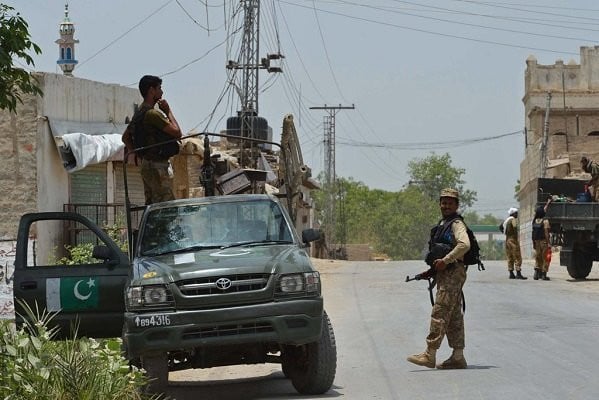
Security forces have killed six terrorists in two separate operations in Khyber Pakhtunkhwa’s Tank and North Waziristan districts, the Inter-Services Public Relations (ISPR) has said on Friday.
According to ISPR, an exchange of fire broke out between Pakistani troops and the terrorists late on Thursday night, June 29, in the Manzai region of Tank.
“Own troops effectively engaged the terrorists’ location. Resultantly, three were sent to hell,” stated ISPR in a statement.
In another encounter between troops and terrorists in the general area of Razmak, North Waziristan District, three more terrorists were killed.
As per the ISPR, the militants were actively involved in terrorist activities against security forces and killing innocent citizens.
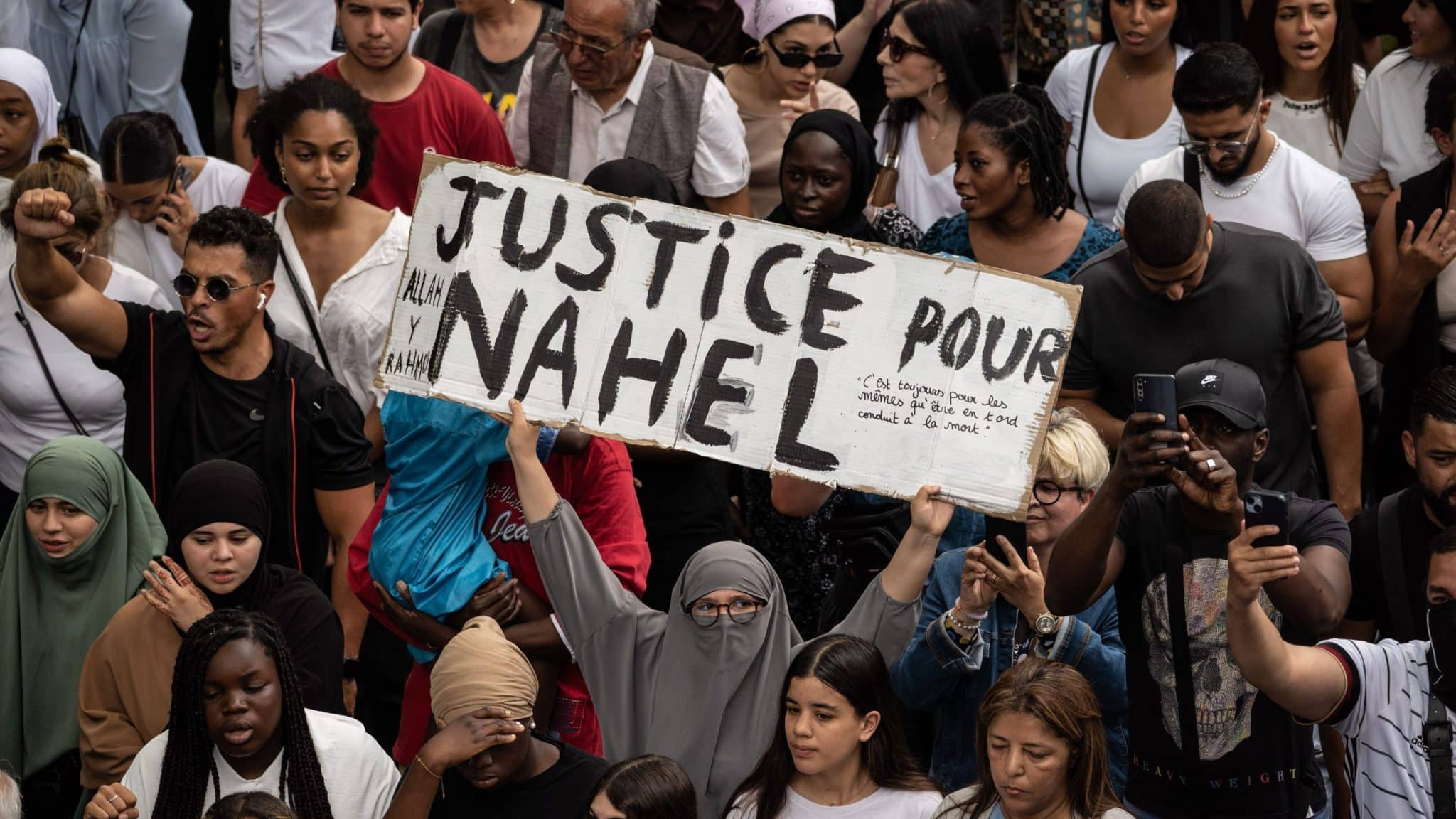
Protests have erupted in France after police shot dead Nahel M, a 17-year-old boy of Algerian descent, on Tuesday for allegedly driving his car towards police.
Police said that the teenager was driving his car towards them, but footage emerged on social media on Wednesday contradicting their narrative. A video clip showed a police officer pointing his weapon through the window and appearing to fire at point-blank range, with a voice saying “You are going to get a bullet in the head.”
The protests started on Wednesday soon after the video of the incident started circulating on social media.
French government’s stance:
French President Emmanuel Macron said on Wednesday the shooting was “inexplicable” and “unforgivable”.
“Nothing can justify the death of a young person,” said Macron, adding that the incident had “moved the entire nation”.
However, the Macron government is rejecting accusations of racism among police. “Any accusation of racism or systemic discrimination in the police force in France is totally unfounded,” the foreign ministry said.
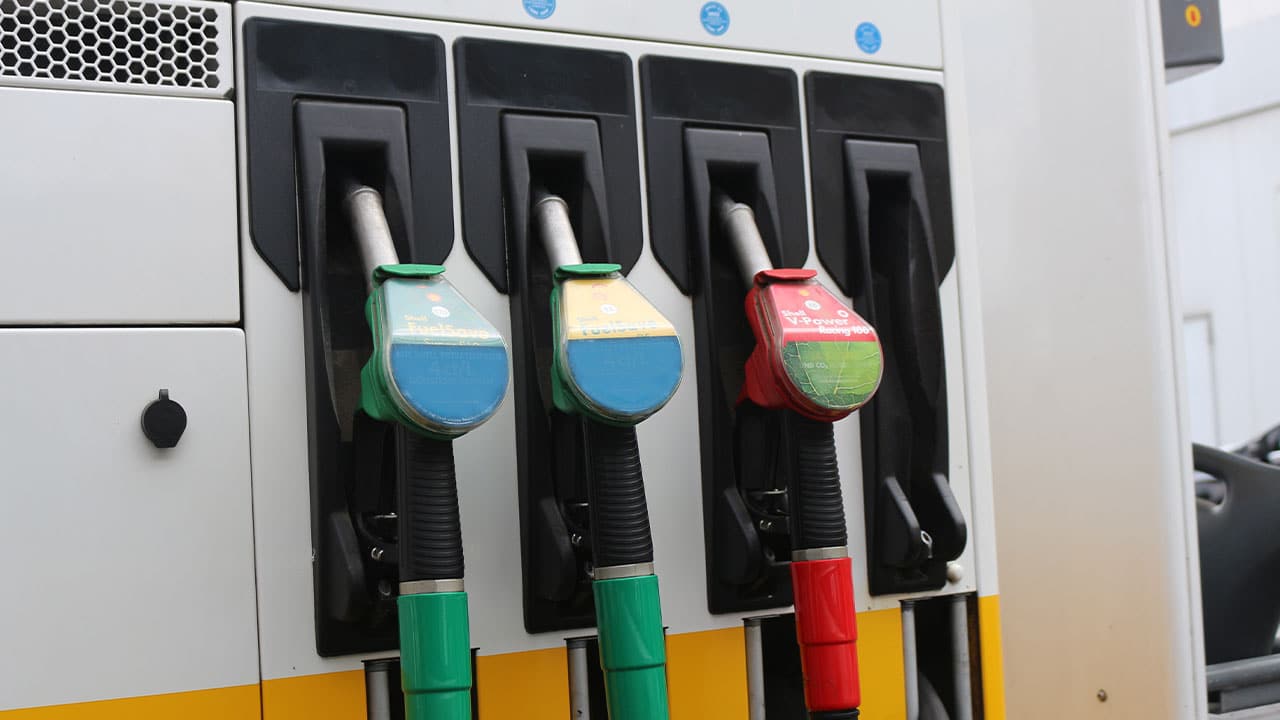
The Finance Minister, Ishaq Dar, announced that the price of petrol will remain unchanged while the price of diesel will see an increase of Rs7.50 per litre for the next fortnight.
During a late-night press conference, Minister Dar clarified that there would be no adjustments made to the price of petrol, but the price of diesel would experience a rise of Rs7.50 per litre. The revised price for diesel will take effect from 12:00 am on July 1.
As per the government’s announcement, the existing price of petrol, as of June 30, 2023, will be maintained at Rs262 per litre. There will be no change in the petrol price.
On the other hand, the existing price of diesel, also as of June 30, 2023, stands at Rs253 per litre. However, starting from July 1, 2023, the new price for diesel will be Rs260.50 per litre, reflecting an increase of Rs7.50 per litre.
It is worth noting that earlier reports had indicated a potential increase of Rs5 in the Petroleum Development Levy (PDL) for both petrol and diesel, scheduled to be implemented on July 1.
The government had been considering raising the petroleum levy from Rs50 to Rs55 per litre for both fuels. The adjustment in the PDL is set to commence at the start of the next fiscal year.
To enable this change, the government has sought the authority to amend the Petroleum Products (Petroleum Levy) Ordinance, 1961 (XXV of 1961), specifically in the Fifth Schedule, column (1), through the Finance Act 2023-24. This amendment grants the government the power to adjust the petroleum levy as required.
In the world of technology, where devices seem to shrink in size while packing in more features, one YouTuber has taken a different approach. Matthew Beem, a popular content creator, recently made headlines by constructing the world’s largest functional iPhone. This colossal device measures a staggering 8 feet, surpassing Apple’s iPhone 14 Pro Max and the previous record holder, YouTuber ZHC’s 6-foot-long creation from 2020.
Beem’s video documenting the construction of this technological marvel quickly went viral, captivating viewers with its impressive scale and functional capabilities. The video showcased the meticulous process of building the giant iPhone from scratch. From selecting the materials to connecting the components, Beem demonstrated his craftsmanship and passion for technology.
What sets this mammoth iPhone apart is not only its size but also its functionality. Despite its massive dimensions, the device operates just like a standard iPhone. The touchscreen, a television display, is seamlessly integrated with a Mac mini, enabling smooth navigation and interaction. Additionally, Beem ensured that essential features, such as the lock button, volume controls, and a music button, were incorporated into the design.
While the giant iPhone presents a remarkable feat of engineering, its sheer size poses a challenge in terms of portability. In the video, Beem humorously showcases how he carried the colossal device using a cart, highlighting the impracticality of its size for everyday use. Nevertheless, the creation stands as a testament to Beem’s ingenuity and dedication to pushing technological boundaries.
To demonstrate the functionality of his creation, Beem took the enormous iPhone to the bustling streets of New York City. Surrounded by curious onlookers, he captured photos, recorded videos, engaged in gaming sessions, and even effortlessly made payments through Apple Pay. In an impressive display of its capabilities, Beem initiated a FaceTime call with one of his viewers from India, further captivating his audience and showcasing the true potential of this larger-than-life iPhone.
In an interview, Matthew Beem shared his motivation for undertaking such a monumental project. “I love technology and have a history of making some of the largest builds on YouTube, so I decided to put my skills to the test and build the world’s largest working iPhone! I have never built anything like this before, so this was extremely difficult,” Beem expressed. To add an extra touch of excitement, he revealed, “To top things off, we drove this to New York City to get people’s reactions in Times Square and surprise the top tech reviewer on the planet, Marques Brownlee (MKBHD)!”
Matthew Beem’s colossal iPhone not only breaks records but also exemplifies the relentless spirit of innovation that drives creators in the digital age. While its practicality may be questionable, its significance lies in pushing the boundaries of what is possible. As technology continues to evolve at a rapid pace, it is content creators like Beem who inspire others to think big and imagine the unimaginable.
With the creation of the world’s largest working iPhone, Matthew Beem has firmly established himself as a visionary in the world of technology. As viewers eagerly await his next awe-inspiring project, one can’t help but wonder what other incredible feats he will achieve and what new possibilities lie ahead in the realm of technological innovation.
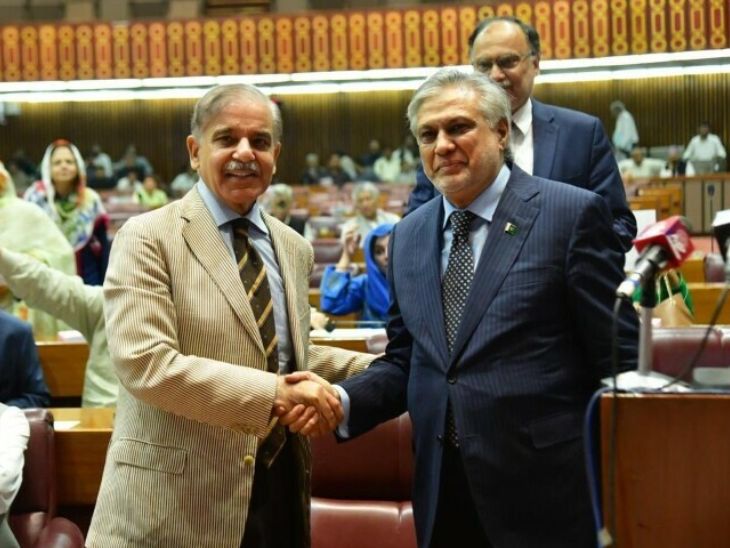
Prime Minister (PM) Shehbaz Sharif has appreciated efforts of Finance Minister Ishaq Dar and his team at the Ministry of Finance to secure a deal with The International Monetary Fund (IMF).
“Alhamdulillah, I am pleased to announce that Pakistan has reached a Staff-Level Agreement with the IMF on a nine-month US$3 billion Stand-By Arrangement,” the pm wrote in a tweet posted on Friday after news of the deal being finalised came through.
Talking about the economic implications of the staff-level agreement between Pakistan and IMF, Sharif wrote, “This arrangement will help strengthen Pakistan’s foreign exchange reserves, enable Pakistan to achieve economic stability, and put the country on the path of sustainable economic growth, Insha’Allah.”
“I would like to appreciate the efforts and hard work of Finance Minister @MIshaqDar50 and his team at the Ministry of Finance for achieving this outcome. I would also like to thank MD IMF @KGeorgieva and her team at the IMF for their cooperation and collaboration, especially during the course of last week.”
Alhamdulillah, I am pleased to announce that Pakistan has reached a Staff-Level Agreement with the IMF on a nine-month US$3 billion Stand-By Arrangement. This Arrangement will help strengthen Pakistan’s foreign exchange reserves, enable Pakistan to achieve economic stability, and…
Pakistan and the International Monetary Fund (IMF) have achieved a significant milestone with the announcement of a staff-level agreement (SLA) on a $3 billion stand-by arrangement (SBA).
Nathan Porter, the IMF’s Mission Chief to Pakistan, expressed his satisfaction, stating that the IMF team has reached a staff-level agreement with the Pakistani authorities on a nine-month Stand-by Arrangement (SBA) in the amount of SDR2,250 million (about $3 billion or 111 per cent of Pakistan’s IMF quota).
The Pakistani economy has been facing multiple challenges since the completion of the seventh and eighth reviews under the 2019 Extended Fund Facility (EFF) in August 2022. The country has experienced external shocks, including devastating floods in 2022 that affected millions of Pakistanis, as well as a surge in international commodity prices due to the conflict in Ukraine involving Russia.
These shocks, combined with certain policy missteps such as constraints on the foreign exchange market, have resulted in a stagnant economic growth rate. Furthermore, inflation, particularly for essential items, has risen significantly.
Despite the authorities’ efforts to reduce imports and the trade deficit, foreign reserves have declined to alarmingly low levels. The power sector is also facing liquidity issues, with mounting arrears (circular debt) and frequent load shedding.
The newly established stand-by arrangement (SBA) will serve as a critical support mechanism for the Pakistani government in stabilising the economy and mitigating the impact of recent external shocks. It aims to maintain macroeconomic stability while providing a framework for financial assistance from both multilateral and bilateral partners.
The $3 billion funding for a duration of nine months has exceeded expectations and will contribute to restoring investor confidence. The uncertainty surrounding the upcoming change in government after June 2023 has been alleviated to a considerable extent. The agreement also opens avenues for social and development spending by improving domestic revenue generation and ensuring careful execution of expenditures to address the needs of the Pakistani people.
The successful implementation of steadfast policies is paramount for Pakistan to overcome its current challenges. This includes demonstrating greater fiscal discipline, adopting a market-determined exchange rate to absorb external pressures, and making further progress on reforms, particularly in the energy sector, to enhance climate resilience and improve the business climate.
Given the formidable obstacles faced by Pakistan, the newly established stand-by arrangement (SBA) serves as both a policy anchor and a platform for financial support from multilateral and bilateral partners in the foreseeable future.
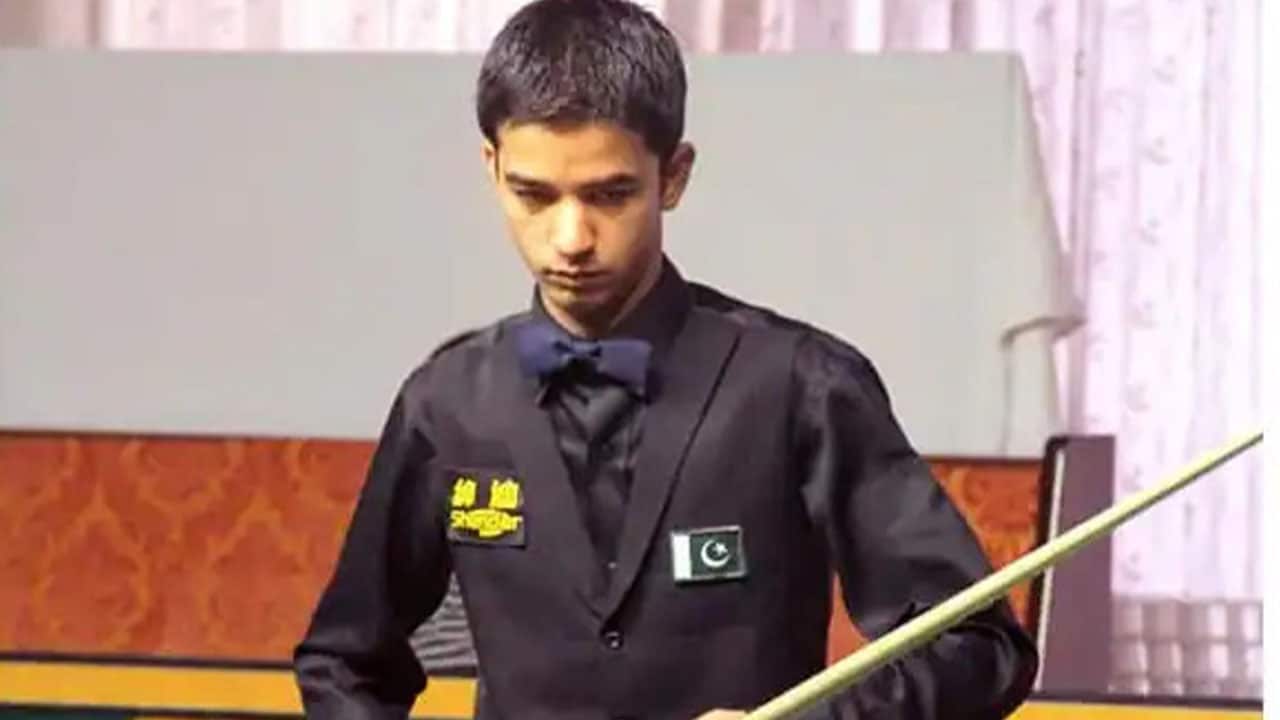
Renowned snooker player Mohammad Majid Ali, a silver medalist in the Asian U21 championship, sadly took his own life on Thursday, the first day of Eid-ul-Azha. Family sources have confirmed that Majid had been battling with depression for several years.
Alamgir Sheikh, Chairman of the Pakistan Billiards and Snooker Association (PBSA), conveyed the distressing news to fellow players and members of the sports organization via a text message. This unfortunate event marks the second loss within a month for the Pakistani snooker community, as they had recently mourned the passing of Mohammad Bilal.
The circumstances surrounding Majid’s death are both shocking and distressing. Majid’s brother, Umar, has confirmed that it was indeed a case of suicide. Majid tragically ended his life making use of a wood-cutting machine in his hometown of Samundri, near Faisalabad.
Umar further confirmed that Majid had been enduring depression for the past few years, although the specific reasons remain unknown. Financial difficulties were ruled out as a contributing factor.
Expressing his deep shock, the PBSA Chairman, in an interview with Geo, highlighted Majid’s exceptional talent, acknowledging that although his ranking had recently declined, he had always exhibited immense potential. He expressed profound sorrow at the loss of such a promising talent within the Pakistani snooker community.
“We are profoundly saddened by the news of his passing. This is an immense loss for the Pakistani snooker community,” he concluded.
The International Monetary Fund (IMF) and Pakistan have reached a staff-level agreement on a stand-by arrangement worth $3 billion, announced the lender. This decision has been eagerly anticipated by Pakistan, a South Asian nation that is on the verge of default.
The approval of the IMF board, expected in July, is required to finalise the deal. After an eight-month delay, this agreement brings some relief to Pakistan, which is currently grappling with a severe balance of payments crisis and dwindling foreign exchange reserves.
The funding of $3 billion, which will be disbursed over a period of nine months, surpasses initial expectations. Pakistan had been awaiting the release of the remaining $2.5 billion from a $6.5 billion bailout package that was initially agreed upon in 2019, and which expired on Friday. As a result, the country’s stock and currency markets remained closed on that day.
According to IMF official Nathan Porter, the new stand-by arrangement builds upon the 2019 programme. Porter acknowledged the significant challenges faced by Pakistan’s economy in recent times, including devastating floods last year and rising commodity prices following the war in Ukraine.
He stated, “Despite the authorities’ efforts to reduce imports and the trade deficit, reserves have declined to very low levels. Liquidity conditions in the power sector also remain acute.” Porter further emphasised that the new arrangement would serve as a policy anchor and a framework for financial assistance from both multilateral and bilateral partners in the foreseeable future.
Porter also highlighted the acute liquidity conditions in the power sector, characterised by mounting arrears and frequent power outages. Reforming the energy sector, which has accumulated a debt of nearly 3.6 trillion Pakistani rupees ($12.58 billion), has been a pivotal aspect of the discussions between Pakistan and the IMF.
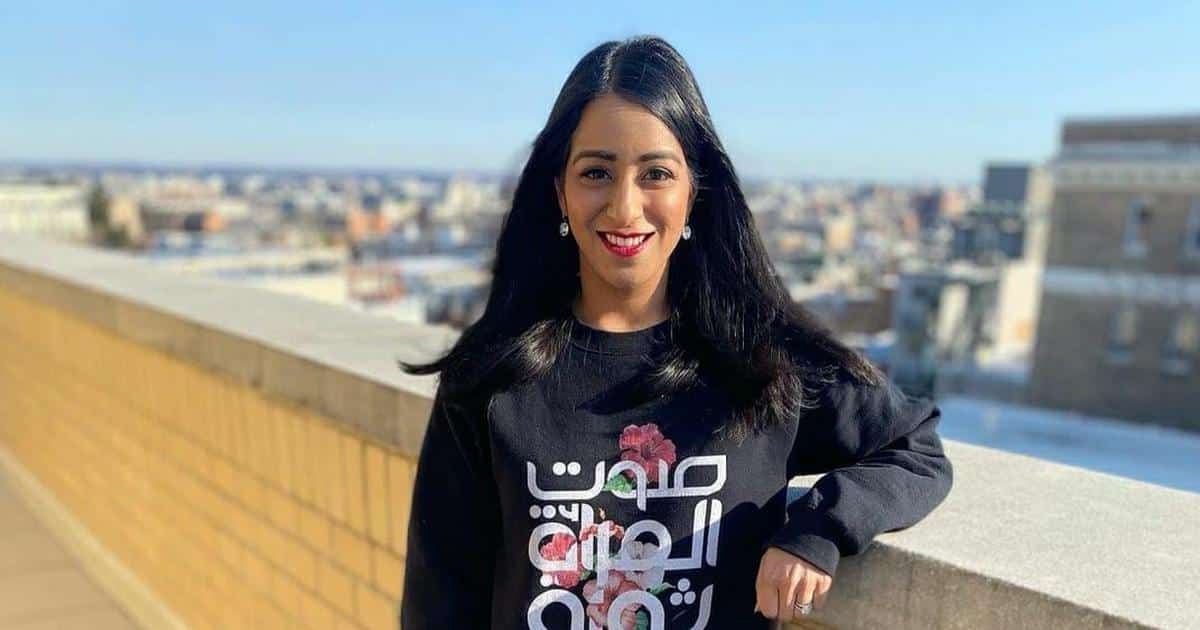
The White House strongly condemned the online harassment of a Muslim female reporter who asked Indian Prime Minister Narendra Modi about the rights of religious minorities during his joint press conference with US President Joe Biden on Tuesday.
National Security Officer of the White House, John F. Kirby, said this kind of behaviour against any journalist is unacceptable.
Sabrina Siddique, associated with Wall Street Journal, asked the Indian Premier, “What steps are you and your government willing to take to improve the rights of Muslims and other minorities in your country and uphold free speech?” Modi answered, “In India’s democratic values, there is absolutely no discrimination, neither based on caste, creed, age, nor any kind of geographic location”.
Sabrina Siddique later said that she is facing online harassment after asking the question. She also mentioned that she is a Muslim, which is why she has been targeted.