Author: News Desk

  • Keti Bandar: the recession of an ancient life along the Indus Delta

    Keti Bandar: the recession of an ancient life along the Indus Delta

    When Cyclone Biparjoy was hurtling towards the Sindhi coastline, many heard the name ‘Keti Bandar’ repeatedly on television, as well as talk of the existential threat the port-town faced due to the tropical storm. Many only recognised Keti Bandar as the part of coastal Sindh that Biparjoy was initially predicted to make landfall on. 

    Yet Keti Bandar is the remnant of a practically ancient community that has long suffered the systematic destruction of the Indus delta. What many don’t realise is that, before Biparjoy even began stirring in the Indian Ocean, Keti Bandar had sank under the Arabian sea and reemerged three times.

    This is the story of a community that is fighting against a disappearing delta. A community that still stands after being swallowed by the sea. A community that may not survive another submergence. 

    The lords of the sea

    The residents of Keti Bandar are part of the Mohana tribe, descendants of the first inhabitants of the Indus valley. The remains of the original Mohana settlement can still be seen at the archeological site of Mohenjo-daro, which once stood on the banks of the Indus before the mighty river changed its course.

    The Mohana refer to themselves as ‘Mir Bhar’, an Arabian word which means ‘kings of the sea’. They are historically a boat and river folk, engaged in the business of fishing and transport along the sea and river. The Mir Bhar are one of the oldest castes that have existed in Sindh. It is one of the few cultures dating back to the ancient Indus Valley Civilization that has remained continuous in the region. 

    Much of lower Sindh lay beneath the Arabian Sea 3000 years ago. Part of a rivers’ natural process is the deposit of silt. A river is as much mud as it is water, a fact that is often forgotten. Over time, the Indus deposited so much silt that the sea water receded, creating the mud flats that comprise much of lower Sindh. The mudflats that house communities such as Keti Bandar.
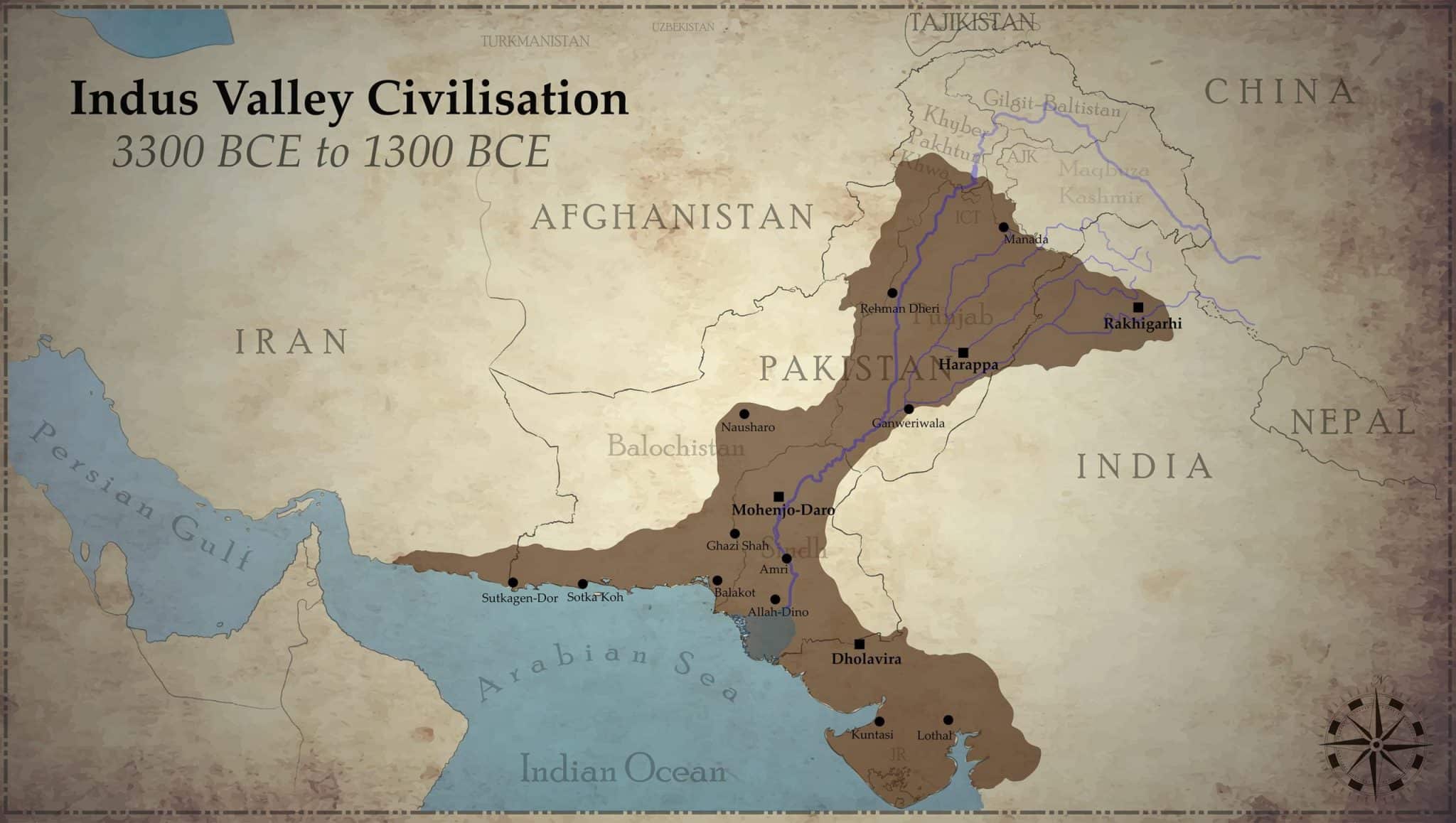
    Keti Bandar exists solely because of its connection to the river. There are so many subtribes of the Mohana fishermen community that live across lower Sindh, which shows the crucial part the Indus played in its creation and livelihood. 

    It was a thriving port once – in fact, the inhabitants of Keti Bandar were once far more affluent than those of Karachi. Rich fishermen and farmers that cultivated red rice would lend money to aspiring businessmen in the bustling city. The fresh river water of the delta allowed the Mir Bhar to live well and prosper.

    Keti Bandar sank three times due to hurricanes and sea advances: once in 1857, then in 1877, and the last known submergence was in 1910. When Cyclone Biparjoy came around, the sea swallowed many homes along Keti Bandar again, but the water receded fairly quickly as the storm moved along its course.

    Yet the persisting Mohanas were damned long before Cyclone Biparjoy, long before the current throes of climate change. The deposit of silt, that was so instrumental to the creation and preservation of Keti Bandar, was halted when the Kotri Barrage was finished in 1955. 

    The Gradual Death of the Delta

    The construction of the Kotri Barrage began during the British Raj in 1932. Environmental activist Zulfikar Ali Bhutto Jr. reflected on his visit to Keti Bandar in 2015. He shared how Kotri Barrage (also known as the Ghulam Muhammad Barrage), as well as other barrage systems built by The World Bank and IMF post partition, were the ‘final nail in the coffin’ on what we knew once as the mighty Indus delta. 

    “It’s as though Keti Bandar has suffered 15 – 16 years of dehydration,” Zulfikar said. Indeed, there can be no development with no fresh water. The excessive damming and redirecting of the Indus has drastically decreased the water flow from the river to the mudflats of lower Sindh. As a result of resource degradation, the Indus delta has seen a mass exodus. 

    According to a study by Altaf Memom published in 2005, an estimated 90, 000 had been displaced and about 120 villages depopulated. One can only imagine the state of things now: the lack of fresh water and the encroaching Arabian Sea has rendered Keti Bandar practically unlivable. And yet, the community persists. While we are hearing the term ‘climate refugees’ now more than ever – especially considering the devastation of the 2022 floods – Pakistan has technically had climate refugees since the 50s.

    Due to the various irrigation systems along the Indus, 43% of land in Northern Sindh has been left saline. Because of this, the entire delta system has seen catastrophic changes. The locals of Keti Bandar primarily complain of ‘kaala paani’: no fresh water. Without fresh water, there can be no development. And with the now obstructed deposition of silt, Keti Bandar and other coastal regions that lie atop mud flats are facing the existential threat of being swallowed by the sea. 

    When asked about the recent floods and their potential benefit to the arid region, Zulfikar said, “Even if there is a good summer monsoon, so much of it is still drained out. Whatever’s left behind after crossing through Sukkur Barrage is just seepage and not enough silt.”

    The Decline of Keti Bandar

    The Mohanas, once one of the oldest and wealthiest tribes of Sindh, has now become one of the poorest. The entire province of Sindh is part of the Indus delta, and because of it shrinking, the locals of Keti Bandar have gone from living in the abundance of the rich river to living in sheer poverty. 

    As lords of the sea, Keti Bandar’s community is mostly comprised of fishermen. They rely solely on fishing for sustenance. However, this stream of income is not only threatened by extreme weather events such as Cyclone Biparjoy. The fishermen of Keti Bandar have been ruined by loans with astronomical interest rates, endowed on them by Middlemen that orchestrate business between the fishermen of Keti Bandar and the fish markets of Karachi.

    They buy the catch at low prices, and sell them to traders in Karachi and other cities for a 200-500 percent profit. Since the poor fishermen owe them money, they have no choice but to sell their catch to these people, otherwise risking the seizure of their boats and fishing nets.

    The locals are very cognizant of the decline of wealth and prosperity in Keti Bandar. Some of the oldest members of the community were still alive when Keti Bandar’s municipality was loaning to the growing metropolis of Karachi. Since its steady decline, the government has made empty promises to provide for the community, but to no avail. 

    On a visit to Keti Bandar in 2011, Moin Khwaja shared the frustration of a local fisherman: “The government is literally pushing us into the sea. Loan sharks visit us every single day while the politicians come to us once in five years to beg for our votes”.

    While the climate crisis worsens, communities such as the Mohanas along Keti Bandar have already been facing the brunt of drastic environmental changes and lack of governmental support. One can only imagine the magnitude of the threat they face now, as extreme weather events such as Biparjoy will only increase in frequency. 

    Special thanks to Zulfikar Ali Bhutto Jr. for giving The Current his insights regarding the environmental degradation of the Indus Delta and Keti Bandar.

    Altaf A. Memon (May 14–19, 2005). “Devastation of the Indus River Delta”. World Water & Environmental Resources Congress 2005. Anchorage, Alaska: American Society of Civil Engineers. World Wildlife Fund.
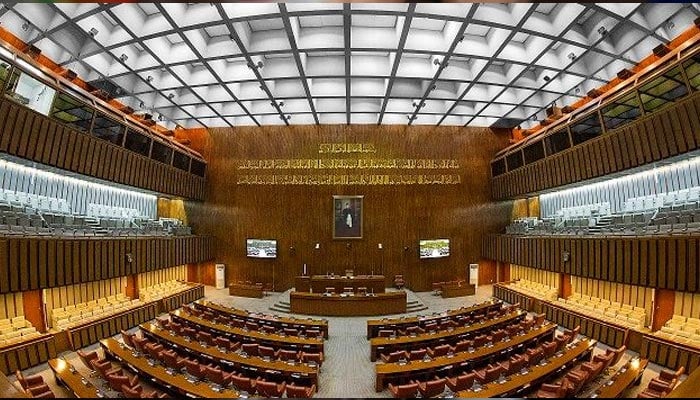

  • Here are all the perks that past, present and future chairman Senate might be getting soon

    Here are all the perks that past, present and future chairman Senate might be getting soon

    On last Friday, the Senate unanimously passed a private member bill that gives many privileges to present and retired Chairmen of the Upper House, The News has reported.

    According to sources, the National Assembly has also approved the bill and it will now be sent to the President for his approval.

    When the bill will be enforced, current chairman and ex-chairman Senate will be possibly getting the following perks and privileges:


    -Every chairman of the Senate after completing his tenure (post-retirement) will 12 employees for life, along with six permanent guards and VVIP security wherever he goes.
    -He can request an airplane for himself and his family for domestic and international travel.


    -He will get additional benefits, not mentioned in the bill, or whatever he desires from the finance committee, which he handpicks.


    -Every person who has held the office of Chairman for a full term of three years, shall be entitled for life to full security detail, that is to say, six sentries at the declared residence, four personnel of police, anti-terrorism force, rangers, frontier corps or frontier constabulary in one squad vehicle, for which the federal government in Islamabad, or a provincial government in the respective province, shall make the required arrangements.


    -The Finance Committee of the Senate may grant the chairman and the person who has held such office for a full term of three years, such additional privileges as it may deem fit


    -The chairman of the Senate will be entitled to the protocol of deputy head of state or vice president. For his foreign travel, he shall also be entitled to requisition at the cost of government an airplane belonging to the federal, provincial government, armed forces, any flying club or any chartered air service provider.

    -The chairman shall be allowed to take with him one member of his family when travelling by a commercial airplane or four members of his family when travelling by a requisitioned airplane.


    -Free telephone facility at residence, official residence, free furnishing at the cost of public money, free official vehicles for self and family, free petrol, sumptuary allowance, allowance on taking up and laying down the office, equipment allowance, TA/DA are in addition to the salary of the chairman.

  • ‘Abh Shakira nahi chalay gi’: Attock fruit vendor singing Waka Waka goes viral

    ‘Abh Shakira nahi chalay gi’: Attock fruit vendor singing Waka Waka goes viral

    Mangoverse of Madness?

    A fruit vendor from Attock, Pakistan has become the new darling of Indian publications for his extraordinary singing skills and his knack for bringing a hilarious twist to Shakira’s popular song ‘Waka Waka’.

    A video of the man was posted by a meme account with the name Hamza Choudhary, amassing more than 400,000 likes, with fans writing down all sorts of hilarious captions.

    “Shakira crying in the corner”, one user wrote.

    It’s lovely to witness

  • Punjab increases govt employees’ pay by 30%, pensioners above 80 to receive 20% raise

    Punjab increases govt employees’ pay by 30%, pensioners above 80 to receive 20% raise

    In a significant development, the interim Punjab cabinet, headed by caretaker Chief Minister Mohsin Naqvi, has approved the provincial budget for the initial four months of the fiscal year 2023-24. The cabinet meeting, held on Monday, saw the endorsement of several key measures aimed at providing relief to the people and promoting various sectors of the economy.

    One of the major highlights of the budget is a 30 per cent increase in salaries for government employees, which will be implemented as an ad hoc relief. This decision is expected to bring significant relief to public servants who have been facing the brunt of rising costs of living. Additionally, pensioners above the age of 80 will receive a 20 per cent increase in their pensions, acknowledging their valuable contributions to society.

    The Punjab cabinet has also taken a bold step to stimulate business growth in the information technology and education sectors. By withdrawing all duties and taxes, the provincial government aims to create a favorable environment for these industries, fostering innovation and progress. An allocation of Rs70 billion has been set aside to provide relief to the people over the course of the first four months of the fiscal year.

    Addressing concerns related to the construction sector, the cabinet rejected a recommendation to increase stamp duty by up to 3 per cent. Instead, it approved fixing the stamp duty ratio at 1 per cent, thereby promoting the growth of the construction industry and encouraging investment in the sector.

    Recognizing the importance of agriculture, the cabinet allocated over Rs47 billion to support and enhance the sector. This move demonstrates the government’s commitment to bolstering the agricultural industry, which plays a crucial role in the province’s economy and livelihoods of the rural population.

    Furthermore, the interim setup has pledged to complete 50 per cent of ongoing development projects within the first four months of the new fiscal year. This ambitious target showcases the government’s determination to prioritise infrastructure development and provide better facilities for the citizens.

    The cabinet’s focus on critical sectors also extends to education and healthcare. An increase of up to 31 per cent in the budget allocation for education and health has been approved for the initial four months of the fiscal year. This decision reflects the government’s commitment to improving access to quality education and healthcare services across Punjab.

    The cabinet’s proactive approach toward promoting technological advancements is evident through the approval to establish an information technology park within the Lahore Knowledge Park. This venture aims to create a hub for technology-driven innovation and attract investment to the region.

    In a noteworthy move, the cabinet also approved the establishment of an endowment fund worth Rs1 billion for journalists. This step recognises the vital role played by journalists in society and aims to support and encourage their professional growth.

    Chief Minister Mohsin Naqvi emphasised that the Punjab budget does not impose any new taxes on the people, providing further relief to the general public. He commended the chief secretary, Planning and Development Board chairman, Punjab finance secretary, and their teams for their diligent efforts in presenting a people-friendly budget.

    The cabinet meeting was attended by provincial ministers, advisors, and secretaries of relevant departments, signaling a collaborative approach to decision-making and ensuring the inclusivity of various stakeholders.

    With the interim Punjab cabinet’s approval of this budget, the province is poised to embark on a path of economic growth, development, and improved quality of life for its citizens.

  • Beijing: US Secretary of State & Chinese officials hold ‘candid and constructive’ talks

    Beijing: US Secretary of State & Chinese officials hold ‘candid and constructive’ talks

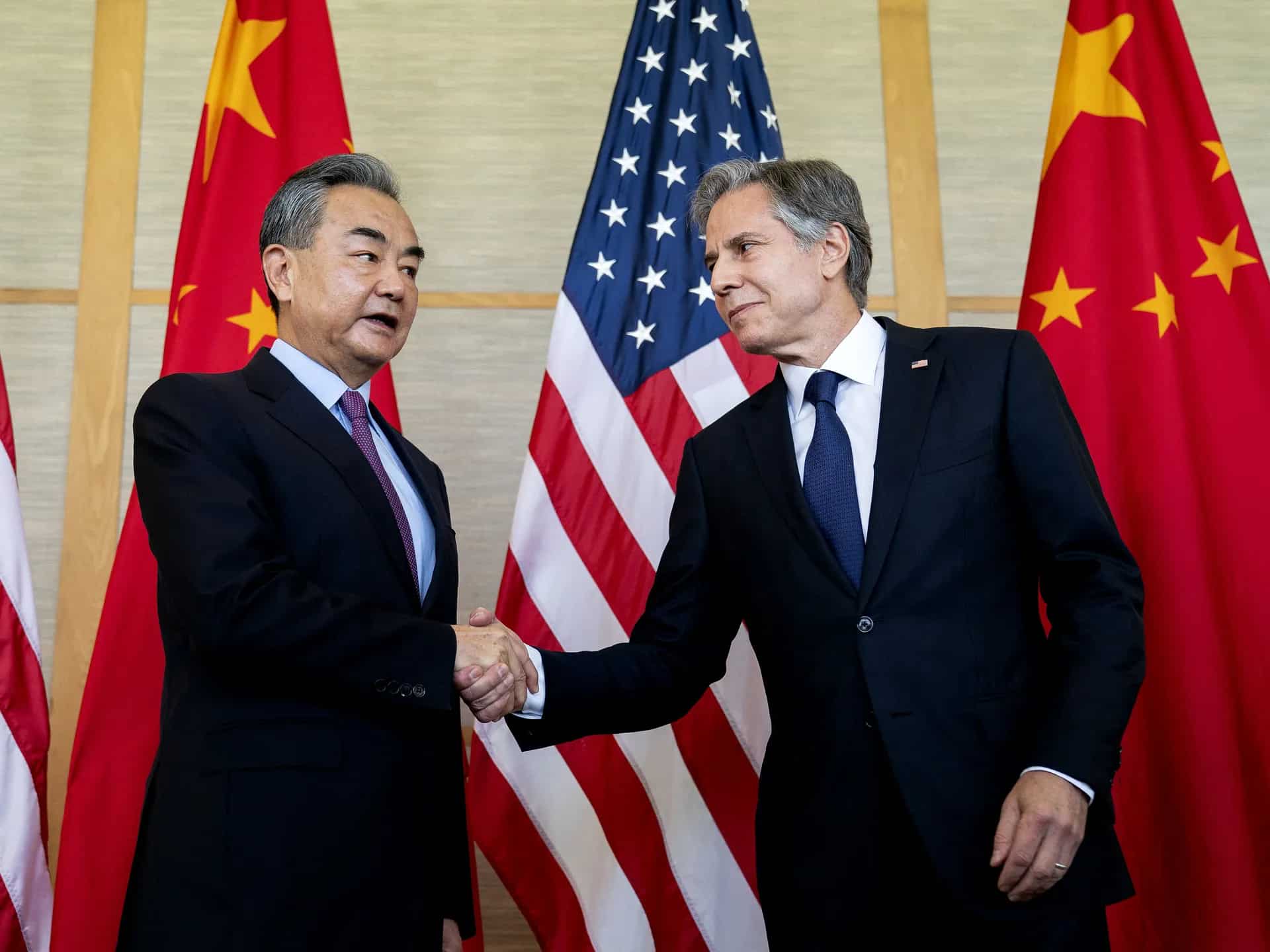
    US Secretary of State Anthony Blinken met with Chinese officials during a rare trip to Beijing, as relations between the two superpowers continue to deteriorate. Blinken is the first man of his post to meet Chinese leader, Xi Jinping, since 2018. Both Blinken and Chinese Foreign Minister Qin Gang described the talks, held on Sunday, as “candid and constructive”.  

    Representatives of the two states ‘seemed to agree on little beyond keeping the conversation [of diplomacy] going’ as reported by Reuters. They did not appear to make concrete progress on disputes that include Taiwan, trade, human rights and fentanyl. 

    According to the State Department, Blinken stressed the “need to reduce the risk of misperception and miscalculation,” thereby underscoring the importance of open communication channels to manage their competition.

    Describing the US-China relationship as being at its lowest point since diplomatic relations began, China’s top diplomat Wang Yi said the root cause was the United States’ incorrect perception of China.

    “We must take a responsible attitude toward the people, history and the world, and reverse the downward spiral of US-China relations,” Wang was reported to have said during the meeting, as released in a statement by China’s foreign ministry. 

    Xi Jinping hails ‘progress’

    On Monday, Blinken met with Chinese leader Xi Jinping. Their meeting could be instrumental in facilitating a summit between Xi and U.S. President Joe Biden later this year.

    The visit reflects attempts from both states in ensuring disputes between the economic superpowers do not develop into outright conflict. 

    Xi praised the talks as “progress” between the two superpowers. Biden said he hoped to meet the Chinese leader again after their lengthy meeting in November, during the G20 summit in Bali, Indonesia. 

    “I’m hoping that, over the next several months, I’ll be meeting with Xi again and talking about legitimate differences we have but also how there’s areas we can get along,” Biden said, as reported by The Guardian.  

    It is likely that the two leaders will be in attendance at the next G20 summit, which is to be held in New Delhi in September. Xi is also invited to travel to San Francisco in November, to attend the Asia-Pacific Economic Cooperation forum.

  • ‘Demand for peace in this country is a crime’: Twitter reacts to Ali Wazir getting arrested once again

    ‘Demand for peace in this country is a crime’: Twitter reacts to Ali Wazir getting arrested once again

    Pashtun Tahafuz Movement (PTM) leader and Member of National Assembly (MNA) from Waziristan, Ali Wazir, has been rearrested months after his release from Karachi Central Jail.

    Lawmaker Mohsin Dawar has said that there is still no confirmation on what charges the legislator was arrested.

    Ali Wazir was behind bars for almost 2 years, releasing from Central Jail Karachi on February 14, 2023. He was taken into custody in Peshawar in December 2020 after a sedition case was registered against him in Sohrab Goth police station.

    However, Ali Wazir had faced more arrests in the same case as multiple FIRs are registered against him in KPK and Karachi.

    Social media users are condemning the arrest.

    Have a look at twitter reactions:

  • IMF meetings schedule excludes Pakistan till June 29 amidst pending 9th review

    IMF meetings schedule excludes Pakistan till June 29 amidst pending 9th review

    In a setback for Pakistan, the International Monetary Fund (IMF) Executive Board has excluded the country from its upcoming meetings, raising concerns about the completion of the 9th review under the Extended Fund Facility (EFF) programme. The IMF’s executive board calendar reveals that Pakistan is not on the agenda for the scheduled meetings until June 29, leaving little time to restart the $6.7 billion bailout programme before the end of the current financial year on June 30, 2023.

    Pakistan is currently facing challenges in securing fresh loans to bridge its $6 billion refinancing gap. Despite the impending expiration of the current programme, the Finance Ministry is still striving to reach an agreement with the IMF. However, the lender has raised concerns about Pakistan’s budget for the fiscal year 2023-24, particularly regarding non-tax revenue and the need to broaden the tax base.

    Last week, the IMF questioned the credibility of Pakistan’s budgetary numbers, which has cast a shadow of doubt over the country’s ability to meet the conditions for the bailout programme. In response, the Ministry of Finance issued a press statement on Friday, attempting to address these concerns. However, the statement failed to dissipate the doubts surrounding Pakistan’s economic situation.

    The IMF and Pakistan may now consider combining the pending ninth review with the tenth review in the new fiscal year. Such a move would likely require Pakistan to implement more stringent tax collection measures in exchange for a larger bailout package.

    The delay in completing the 9th review and the exclusion of Pakistan from the upcoming IMF Executive Board meetings have intensified the challenges faced by the country’s economy. As the June 30 deadline approaches, the Pakistani government and the IMF will need to work diligently to resolve their differences and pave the way for the resumption of the bailout programme.

    Pakistan’s ability to secure the IMF’s support is crucial for stabilising its economy, attracting foreign investments, and addressing the refinancing gap. The outcome of the negotiations and the subsequent decisions taken by both parties will have far-reaching implications for Pakistan’s financial stability and economic growth in the coming months.

  • Alcoholic man murders father over property dispute in India

    Yesterday, in Rajsthan’s Ajmer in India, a man, Mukesh, had reportedly murdered his father while he was drunk, during an argument that escalated over property division. According to the mother, the heated conversation began earlier in the day but had seemingly settled which is when she chose to depart the house. However, India Today reports that when the mother returned, she found her dead husband’s body and immediately reported to the police.


    Baldev Ram, in charge of the Ansagar Police Station, revealed to the media that the authorities had taken swift action to arrest Mukesh, and were keeping him under custody as the investigation continues. The body of the deceased has been sent for a post-mortem examination.

  • ‘Dissapointing’: Netflix’s The Archies trailer has divided Twitter

    ‘Dissapointing’: Netflix’s The Archies trailer has divided Twitter

    Yesterday, Netflix debuted the trailer of the Zoya Akhtar venture ‘The Archies’ which is adapted from the popular comic series Archie, with Shah Rukh Khan’s daughter Suhana Khan, Khushi Kapoor and Agastya Nanda making their debut.

    Although the trailer has already received praise from King Khan, who gushed about seeing his daughter’s debut on screen, not a lot of fans agree with him.

    The internet is divided with some slamming Zoya Akhtar for white washing Indian history and choosing to make a film with actors who have nepotism connections, and others actually looking forward to Zoya’s take on the beloved comic.

    Some users were criticising the film, comparing Zoya Akhtar to Karan Johar for picking people with no talent instead of actors who were struggling to find roles in the industry today.

    Others had to draw out how unrealistic the portrayal of the 60s was in the film, pointing out that India in this era had a completely different style and aesthetic than what the film was portraying.

    https://twitter.com/minifizzz/status/1670361015094239232?s=20
    https://twitter.com/lovelycatt35/status/1670528212018020352?s=20

    Some slammed the film for being completely white washed and not being adapted as an Indian interpretation.

    A few fans were enthusiastic for another film by Zoya Akhtar, and said they were set to watch the film

  • Greece migrant boat disaster; Pakistani survivors claim vessel was deliberately sunk

    Greece migrant boat disaster; Pakistani survivors claim vessel was deliberately sunk

    According to video accounts of Pakistani survivors, Greek authorities deliberately sunk the vessel and provided no rescue efforts. 

    In the video, survivors can be heard saying: “They have done this [on purpose]. They have sunk it themselves.” The other added, “We did not sink for five days, so why would we sink now?”

    They recounted that the ship’s engine had broken down, leaving them still for almost a week. “We did not drown even though our engine had [completely] shut down. [the boat] sunk because of the one-maund-rope they threw into the boat.”

    In an investigation conducted by the BBC, many discrepancies were found in the statements released by the Greek authorities. For one, the coastguard claims that in the hours before the boat capsized, it was on a “steady course to Italy and not in need of rescue.” 

    However, analysis of the movement of other ships in the area suggests that the migrant boat was not moving for at least seven hours before the disaster. This corroborates eyewitness accounts of Pakistani survivors.

    The UN has called for an investigation into Greece’s handling of the disaster. Greek authorities have not yet responded to the BBC’s findings. 

    FIA arrests 10 alleged traffickers

    Calamity struck a migrant boat that capsized off the south-eastern coast of Greece last week on Wednesday, leaving hundreds of Pakistani migrants dead. On Sunday, Prime Minister Shehbaz Sharif announced a high-level investigation to trace the human traffickers behind the incident. So far 10 alleged traffickers have been arrested in connection to the tragedy.

    The Federal Investigation Agency (FIA) arrested the suspected human traffickers from Azad Jammu and Kashmir, and another one from Karachi airport who was attempting to flee abroad, Geo News has reported.

    The 10 suspected traffickers are “presently under investigation for their involvement in facilitating the entire process” according to Chaudary Shaukat, an official from Pakistan-administered Kashmir.

    Condemned Pakistanis

    Last week in the early hours of Wednesday morning, a migrant boat capsized off the Southern Peloponnese while on its course to Italy from the Libyan town of Tobruk. The Guardian reported most of the victims were men from Pakistan and Afghanistan. More sinister details have since emerged from witness accounts.

    According to witnesses, the Pakistanis onboard were ‘forced below deck’ where they had far less chance of surviving a capsize. The Observer also reported that crew members were maltreating the Pakistanis below deck when they would appear in search of fresh water or tried to escape.

    The number of Pakistani lives lost is estimated to be around 298. 135 of them are reported to be from the Kashmir region. Greek authorities have yet to release a confirmation on Pakistan’s death toll.

    Mismanagement and alleged cover-up

    Many questions have been raised since witness accounts spread across global news, specifically about the role of Greek authorities in the tragedy.

    On Friday, two days after the accident, a spokesperson of the Greek government claimed that their assistance had been refused by the migrant boat after they threw a rope to the vessel to “stabilize and check if it needed help.” This contradicted the coastguard’s earlier statements that it had kept a ‘discreet distance’ from the boat.

    According to a witness interviewed by CNN, Greek authorities were seen towing the vessel with ropes, but since the ropes were tied in the “wrong places”, the boat capsized.

    The witness, Tarek Aldroobi, had three relatives on board. He told CNN, “Their boat was in good condition and the Greek navy tried towing them to the beach but the ropes were tied in the wrong places,” Aldroobi said. “When the Greek navy tried pulling them it caused the boat to capsize.”

    Nikos Alexiou, a spokesman for the coastguard, defended their response. He said their patrol boat only used a small rope to stabilize itself while it was close to the migrant boat, and that they were unable to tow it.

    In an interview with CNN, Alexiou explained: “Regretfully there was movement of people, a shift in weight probably caused by panic and the boat capsized. As soon as we got there, we started our rescue operation to collect those who were in the water.”

    In a report by The Guardian, Maurice Stierl, from the Institute for Migration Research and Intercultural Studies at Osnabrück University in Germany, responded to the coastguard’s defense: “What caused the sudden shift in weight? Was there a panic on board? Did something happen during the attempt to provide them with something? Or was it towed? And due to this towing, did the boat go down?”

    According to Stierl, EU countries ‘weaponise time’ by delaying rescue as long as they can. “They have managed to build in delays into European engagement at sea. They’re actively sort of hiding, in fact, from migrant boats, so that they are not drawn into rescue operations. We can see how a strategy is being created, that slows down –actively and consciously slows down – rescue efforts,” Stierl explains.

    Questions arose over whether the Greek coastguard should have intervened earlier, as government officials confirmed patrol boats and cargo ships had been shadowing the migrant vessel since Tuesday afternoon.