Author: News Desk

  • IMF receives assurance of $1 billion from UAE to support Pakistan’s economy

    IMF receives assurance of $1 billion from UAE to support Pakistan’s economy

    In a significant development towards reviving the stalled bailout programme, the authorities in the United Arab Emirates (UAE) have pledged to provide $1 billion in bilateral support to Pakistan, according to Finance Minister Ishaq Dar.

    Dar tweeted, “UAE authorities have confirmed to the IMF for their bilateral support of $1 billion to Pakistan.” He also stated that the State Bank of Pakistan is currently in the process of completing the necessary documentation to receive the deposit from the UAE authorities.

    Pakistan was required to provide assurance that its balance of payments deficit is fully financed for the remaining period of the IMF programme, which has been stalled since November last year. Last month, the IMF’s Director of Strategic Communications, Julie Kozack, emphasised that “timely financial assistance from external partners will be critical to support the authorities’ policy efforts and ensure the successful completion of the review [with Pakistan].” She added, “Ensuring that there is sufficient financing to support the authorities is the paramount priority. A Staff Level Agreement (SLA) will follow once the few remaining points are closed.”

    Earlier this month, Saudi Arabia also pledged to provide a $2 billion loan to Pakistan, according to Pakistan’s Minister of State for Finance Aisha Ghaus Pasha. The country’s economic situation has been further exacerbated by months of political and economic turmoil, crippling floods last year and record inflation. Pakistan has been grappling with a debt crisis and foreign exchange reserves have fallen to less than four weeks of imports.

    In an effort to ease the situation, China has agreed to refinance $2 billion, of which $1.7 billion has already been credited to Pakistan’s central bank. China also rolled over a $2 billion loan last month, providing relief during Pakistan’s acute balance of payments crisis. However, talks with the IMF for a delayed $1.1 billion loan tranche, part of the bailout agreed in 2019, have been ongoing.

  • After federal govt, Punjab also gives five days off for Eid

    After federal govt, Punjab also gives five days off for Eid

    The Punjab government on Friday announced that holidays will extend from April 21 to 25 on account of Eid ul Fitr.

    On Thursday, the federal government had also announced a five-day holiday for Eid.

    The Central Ruet-e-Hilal Committee is set to meet on April 20 for sighting of the Eid ul Fitr crescent moon, a statement from the religious affairs ministry said on Tuesday.

    This year, the holy month of Ramazan started on March 23.

  • Justice Mussarat Hilali unanimously recommended to be appointed as PHC chief justice

    Justice Mussarat Hilali unanimously recommended to be appointed as PHC chief justice

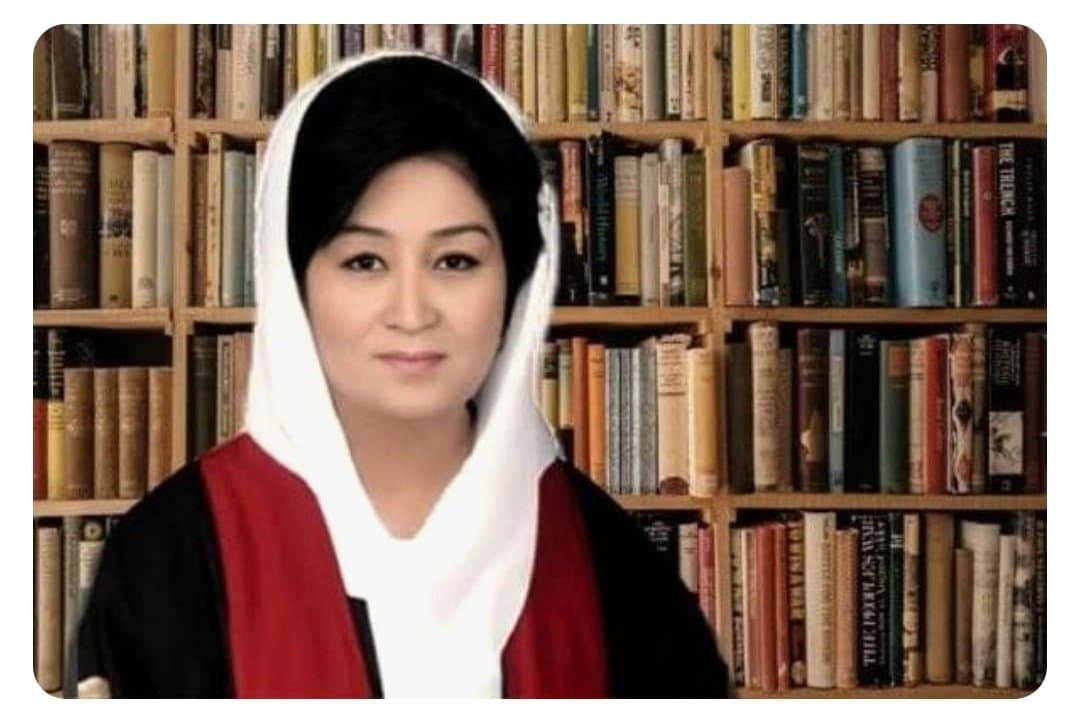
    The Judicial Commission of Pakistan (JCP) has unanimously recommended the name of Justice Mussarat Hilali for appointment as the Chief Justice of the Peshawar High Court (PHC).

    JCP has sent its recommendation to the parliamentary committee for approval. The commission unanimously recommended the appointment of Justice Hilali during a meeting with Chief Justice Umar Ata Bandial.

    Upon the retirement of PHC Chief Justice Qaiser Rashid Khan, on March 30, the most senior judge of the court, Justice Noorul Amin Khan was appointed as the acting CJ. But his stint lasted only a day.

    After Justice Khan’s retirement on March 31, a day after he took over as the acting CJ, Justice Hilali was appointed as the first woman acting chief justice of the PHC.

    Born in Peshawar on August 08, 1961, Justice Hilali received a degree in law from Khyber Law College, Peshawar University and enrolled as an Advocate of District Courts in 1983, as an Advocate of the High Court in 1988 and as an Advocate of the Supreme Court of Pakistan in 2006.

    She was also the first female Additional Advocate General of Khyber Pakhtunkhwa from November 2001 to March 2004.

    She was elevated to the bench as an additional judge on March 26, 2013, and confirmed as a permanent judge of the Peshawar High Court on March 13, 2014.

  • Pakistan’s sustainable policy framework crucial to avoid default risk, says IMF

    Pakistan’s sustainable policy framework crucial to avoid default risk, says IMF

    Whilst serving as Finance Minister, Ishaq Dar has repeatedly assured the public that Pakistan has not defaulted and will not do so in the future. Kristalina Georgieva, Managing Director of the International Monetary Fund (IMF), has endorsed Dar’s views and stated that Pakistan has not yet reached the level of default.

    Speaking at a news conference during the spring meeting of Breton Wood Institutions at the Fund’s headquarters in Washington, Georgieva said that the Fund was seeking confirmation from international partners to meet Pakistan’s financing gap requirements. Responding to a question about Pakistan’s looming default risk, she stated that the country had not yet reached that level, but required a sustainable policy framework to avert such risks.

    Georgieva emphasized that the lender has been working closely with the authorities in Pakistan, within the context of the current programme, to ensure that the country has the policy framework in place to prevent reaching the point of unsustainable debt. Pakistan has less than a month’s worth of foreign exchange reserves and is awaiting a $1.1 billion bailout package from the IMF that has been delayed since November due to issues related to fiscal policy adjustments.

    Georgieva expressed hope that, with the goodwill of all parties involved and the implementation of what has already been agreed upon by the Pakistan authorities, the current programme can be completed successfully. Islamabad is required to provide assurance that its balance of payments deficit is fully financed for the fiscal year ending in June in order to unlock the next tranche of IMF funding.

    During the IMF-World Bank spring meetings, Dar attended via Zoom from Islamabad with IMF Deputy Managing Director Antoinette Moniso Sayeh. Sources report that Sayeh stated that Pakistan has yet to meet its external financing gap of $6 billion, of which $3 billion would need to be financed before striking a staff-level agreement.

    At this point, the State Bank of Pakistan’s Jameel Ahmed, who is presently in Washington, reportedly told participants that the United Arab Emirates (UAE) had shared a draft agreement for the provision of an additional $1 billion deposit to meet the requirement for signing the staff-level agreement. A top official expressed hope that the UAE deposit would be confirmed shortly and suggested that it may be confirmed as early as next week.

    Regarding the cross-fuel subsidy, the IMF was informed that it was only an idea floated by a relevant ministry and would be implemented only after an agreement on the salient features of the scheme. The Pakistani authorities agreed with the IMF that the scheme appeared good on paper but its transparent implementation would be challenging.

  • Sorry, there will be no new currency notes for you this Eid

    Sorry, there will be no new currency notes for you this Eid

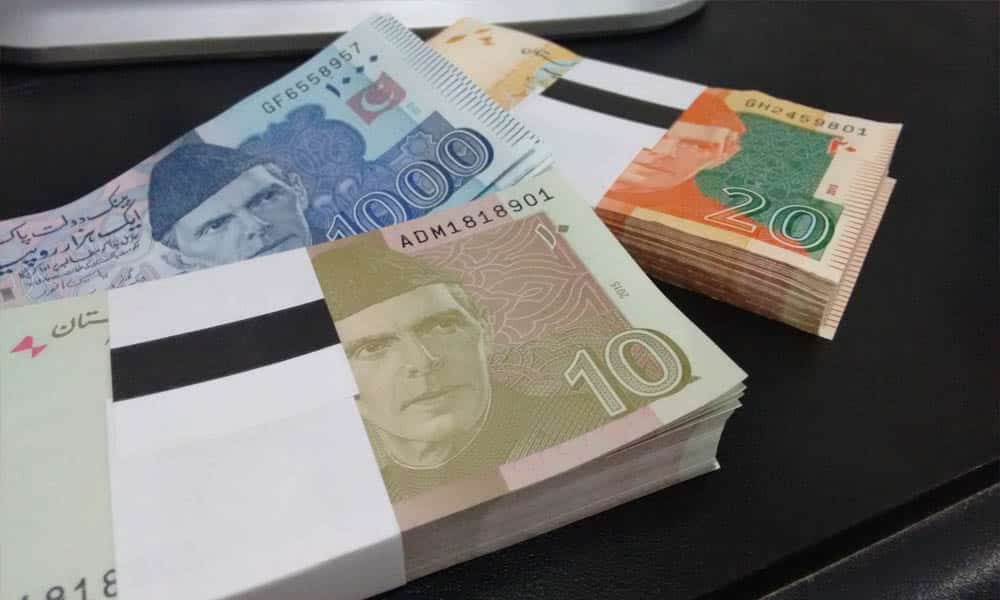
    We will sadly have to spend our Eid this year without getting any crispy brand-new rupee note as Eidi.

    The State Bank of Pakistan (SBP) on Thursday decided against issuing fresh currency notes on the eve of Eid-ul-Fitr.

    SBP spokesperson has confirmed that the bank will not issue new notes as the supply-demand gap was on the rise fueled by people’s possession of the notes. 

    Eid-ul-Fitr is expected to fall on April 22 this year. The federal government has announced that Eid holidays which will run from April 21 to April 25, thus making Friday, Saturday, Sunday, Monday and Tuesday gazetted holidays.

  • Imran Khan asked to pay Rs36 lac luxury house tax

    Punjab Excise and Taxation Department sent a notice on Thursday to Pakistan Tehreek-e-Insaf (PTI) Chairman Imran Khan, asking him to pay luxury tax on his Zaman Park residence in Lahore.

    The notice said, “The Government of Punjab has levied Luxury House Tax on houses with land areas of two kanals.”

    He was asked to clear arrears under luxury tax amounting to Rs3.6 million.

    The notice was addressed to his late mother Shaukat Khanum.

    Furthermore, the department has warned that if the dues are not cleared within a week, the Election Commission of Pakistan (ECP) will be approached in this regard.

    The notice has been sent as the date for Punjab elections, May 14, looms nearer.

  • ‘I was called dark and fat when I started working in the industry’: Kajol

    Bollywood actress Kajol has a long list of hits to her credit, including ‘Kabhi Khushi Kabhi Gham’ (2001), ‘Dilwale Dulhania Le Jayenge’ (1995) and ‘Baazigar’ (1993).

    However, in an interview with ‘Humans of Bombay’ the actress talked about the struggles she faced when she started out in the film industry. Kajol, who is the daughter of yesteryears heroine Tanuja, said that she struggled to find good roles because of inappropriate comments about her skin and weight.

    “‘She is dark, she is fat and she wears specs all the time.’ These were some of the judgments that were passed when I first started working in the industry,” the ‘Dilwale’ actress recalled.

    However, Kajol, known for her feisty sense of humor and outspoken personality, revealed that she didn’t let the negativity hold her back and kept fighting hard for success.

    “I couldn’t care less. I knew I was smart, cool and better than everyone out there who had any negative thing to say about me. So, I kept continuing to be myself and never let it show. Sooner or later, when they couldn’t pull me down, the world simply embraced me for who I was.”

    Kajol had previously starred in the critically acclaimed documentary ‘The Romantics’ where she had spoken about starting as Simran in the critically acclaimed Dilwale Dulhania Le Jaien Ge (DDLJ), and revealed that initially she had found her character to be boring and couldn’t relate to her at all.

  • Pak Suzuki extends shutdown of motorcycle plant due to lack of raw materials

    The Pak Suzuki Motor Company (PSMC) has confirmed that it will keep its motorcycle plant closed until April 28 due to ongoing import restrictions that have impacted the auto sector, resulting in low inventory levels. A notice to the Pakistan Stock Exchange (PSX) stated that “the management of the company has decided to extend the shutdown period of its motorcycle plant till April 28, 2023.”

    The company had already shut down its motorcycle plant from April 4 to April 15 due to a lack of raw materials, while the automobile plant was shut from April 7 to April 14. PSMC assembles, manufactures, and markets Suzuki cars, pickups, vans, 4x4s, motorcycles and spare parts. The Suzuki brand originates from Japan.

    Pakistan’s auto sector is facing several crises, with other listed companies such as Indus Motor Company Limited and Honda Atlas Cars halting production in recent months due to economic difficulties. Honda Atlas Cars Pakistan extended the shutdown of its plant by another 15 days. Similarly, other automakers, including Indus Motor Company Limited, have announced temporary production shutdowns. According to the Pakistan Automotive Manufacturers Association (PAMA), Pakistan’s auto industry reported a 66 per cent decline in car sales in March 2023 compared to March 2022.

    JS Research analyst Wasil Zaman has predicted a cumulative volume decline of over 50 per cent year-on-year in fiscal year 2023, extending to the first half of fiscal year 2024. Zaman stated that “with foreign exchange reserves at critically low levels leaving little room for improvement on the supply side for auto manufacturers.”

  • BPL Team owner Nafisa Kamal eager to buy new franchise in PSL

    BPL Team owner Nafisa Kamal eager to buy new franchise in PSL

    Nafisa Kamal, owner of the four times Bangladesh Premier League (BPL) champions Comilla Victorians has shown interest in buying a franchise in Pakistan Super League (PSL).


    Bangladeshi journalist Fahim Rahman has reported that Nafisa is one of the individuals who are keen to acquire a franchise in the Pakistani league.

    Earlier this year in February, Pakistan Cricket Board (PCB) Management Committee Chairman, Najam Sethi, had revealed that the PCB regime under Ramiz Raja and Ehsan Mani had reached an agreement with the current six franchises, which made it improbable that any new teams will be added to the PSL in the next two seasons.

    “There is immense pressure to increase the number of teams in PSL, but unfortunately Ehsan Mani and Ramiz Raja made an agreement with the franchises that only six teams will play in the next two years. However, it was an eight-team project.

    We have to convince the franchises to include two more teams. No one will lose anything, and if a franchise suffers a loss, the PCB will take responsibility,” Sethi said.

    “But there is a high demand to include two more teams, and it will be more successful with many people showing interest to be part of it. Let me tell you, even if there were 10 teams now, all of them would be sold due to the high demand,” he added.

    However, Sethi also recognized the valid concerns of the existing franchises, about potential revenue loss and market saturation.

    “There are a lot of concerns from the franchises regarding their revenues and whether the market can take it or not. And for this, we have to hold a discussion because without them we can’t move forward,” Sethi said.

    “They have to be part of the consultation process. But what I will say is this: so many people are interested to buy these two teams, and if new teams are coming in the PSL, then it will be a win-win situation for all,” he added.

  • Pakistan moves closer to finalising oil deal with Russia as team arrives in Karachi

    Pakistan has taken a step forward in its efforts to secure a loan deal with Russia, as a delegation has arrived in Karachi to finalise a crude oil deal with Pakistan State Oil (PSO). However, the Energy Ministry has not yet revealed the payment method or the discount rate for the crude oil prices, keeping it confidential for now.

    Technical teams from the Operational Services Centre held talks with the PSO team last month, but progress was not made on the constitution of a Special Purpose Vehicle responsible for importing crude and making payments. The Russian delegation is now in Pakistan to finalise the government-to-government agreement, including the mode of payment. Pakistan wants to pay in rupee, while Russia is asking for payment in China’s Yuan or Ruble. Once the deal is done, Pakistan will place an order with Russia for crude oil purchase.

    According to sources, the Russian ship will arrive in mid-May, and the current Brent price in the international market is $85.16 per barrel, while Russian oil is available at $47-48 per barrel. The State Bank of Pakistan (SBP) is asking local banks to open letters of credit for importing Russian oil, but they are hesitant to do so mainly because of the G7 countries’ regulations of following the price cap of $60 per barrel or below it and making payments under Society for Worldwide Interbank Financial Telecommunications (SWIFT) arrangement.

    PSO has never imported crude oil before, and refineries have been importing crude under long-term agreements from ADNOC and Saudi Aramco. However, in the case of Russian crude, refineries will not be involved in the import, but it will be an SPV with representatives from PSO and PSC. Pakistan may get Russian crude price with a discount close to $50 per barrel, $10 per barrel below the cap price imposed by G7 countries on Russian oil in the wake of the war on Ukraine.

    One of the top officials in the coalition government suggests that the decision to import Russian crude under the government-to-government agreement at a 30 per cent discount may not provide the required relief as shipping and refining costs will erode the maximum discount. Additionally, Pakistan refineries will only be able to extract 10 per cent MS out of Ural crude and 50 per cent furnace oil.

    The government needs to conduct a commercial analysis to determine if importing Russian oil will benefit Pakistan’s economy and to what extent. Industrial sources suggest that the government should evaluate the economic benefits of importing Russian oil carefully.