Author: News Desk

  • In spirit of Aurat March, watch these five dramas that champion powerful women

    In spirit of Aurat March, watch these five dramas that champion powerful women

    Azadi Mubarak, saheliyon.
    Today is Aurat March, the day when women march in the streets to champion social, economic and political issues for females across Pakistan. It’s an important day to celebrate the struggles of the feminist movement that called for equal rights for women everywhere in Pakistan.


    However, the struggles of women weren’t just present on the roads but have been recorded and displayed on our television screens for decades. Pakistani films and dramas are powerful tools to spread awareness on social issues, and have consistently given voice to the demands of women for years. Thanks to powerful women working in the entertainment industry like Bee Gul, Sania Saeed and Haseena Moin, there are several dramas that have spoken about feminist issues and also championed powerful women. So to set up your feminist-themed movie night, here are some dramas you should definitely give a watch!

    1 Dobara

    Pakistani dramas OST

    Penned by Sarwat Nazir and starring the multi-talented Hadiqa Kiana, the drama explores the life of a middle-aged woman who gets a second chance at life after the death of her husband. Forced into marriage when she was only 16 years old, Mehru Nisa decides to take a stand and do everything she was restricted from such as taking tennis classes, jogging in the park and even dancing at her son’s wedding, despite the backlash she faces from her in-laws. This drama was lauded by fans for centering around the life of a middle-aged woman at a time when they are pushed to be relevant only as mothers or grandmothers.

    2 Kitni Girhain Baqi Hain
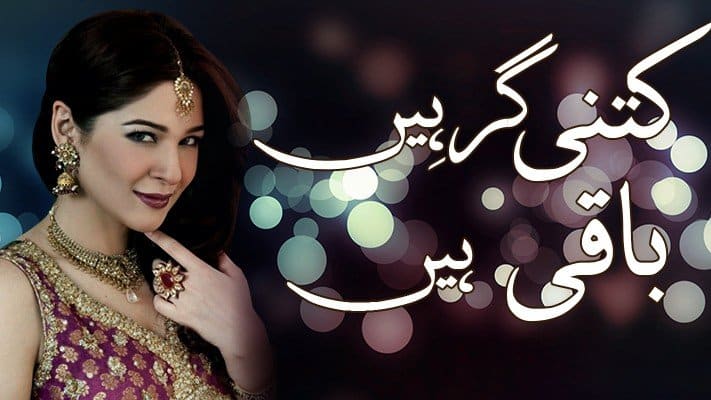
    Bee Gul has been celebrated by Pakistani women for championing the issues women face in her dramas, being upfront about bringing stories told by women to the screen and dismantling misogyny. The anthology series which debuted on Hum TV was a collection of short stories about women and the struggles they faced in Pakistani society, discussing issues like sexual assault, relationships and even homosexuality, which had gotten earned it a notice from PEMRA.

    3 Kuch Ankahi
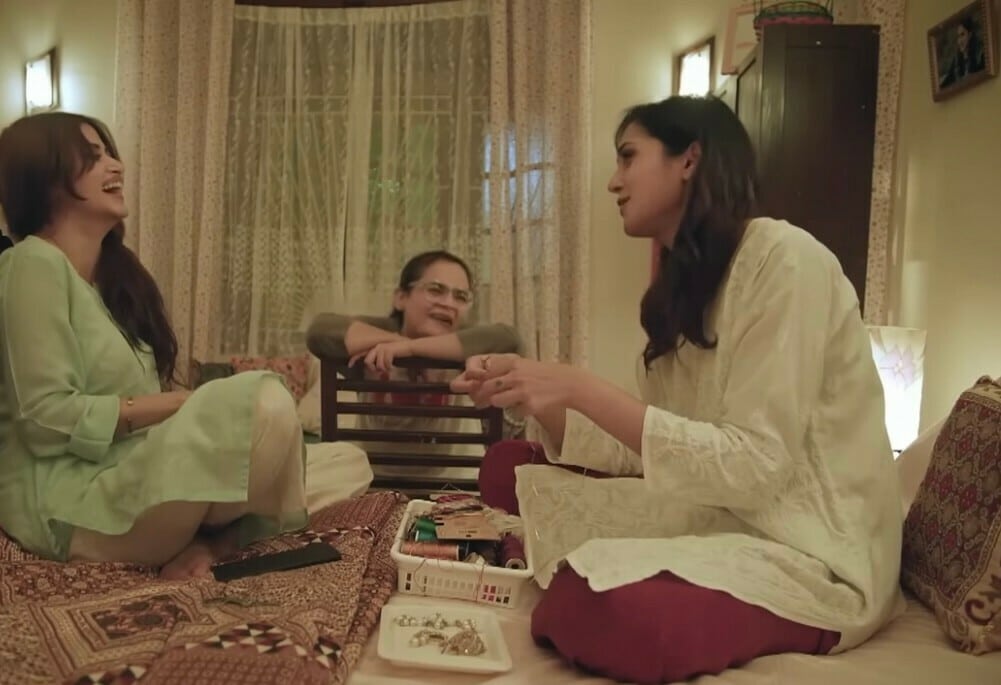
    The powerful drama has been dominating conversations since its release because of how it completely changed how women’s stories are told in the entertainment industry. Focusing on a family living in Karachi, the series doesn’t shy away from discussing issues like forced marriages, child sexual assault, property rights of women and even body shaming.

    4 Sar-e-Rah

    Sar-e-Rah

    Another drama that has been lauded by women for championing female friendships and showcasing how powerful women can become once they learn to be independent and make their own living. The limited series follows the life of Rabia, who decides to become the breadwinner of the family after her father suffers from a heart attack, and persists through despite being criticized by her family. With her journey, she comes across women from different backgrounds who face issues like infertility, social media trolling or harassment at the workplace, but Sar-e-Rah demonstrates how women can overcome anything with the help of another powerful woman.

    5 Tanhaiyaan
    Haseena Moin will always be remembered in history as a champion for women-centered stories. She did it fearlessly in the era of dictatorship of General Zia. Her drama ‘Tanhaiyaan’ is still celebrated as one of the finest feminist dramas that championed original, independent women on screen who didn’t just obsess around the men in their lives. It explores the lives of two sisters Sanya and Zara, who move in with their aunt after the death of their parents, and lose their house due to their father’s debt.
  • Five times when female politicians told the patriarchy to sit down and shut up

    Five times when female politicians told the patriarchy to sit down and shut up

    The time when patriarchal societies used to dictate to women is long gone. In the past, we witnessed how difficult it was for women to rule in a man’s world because of casual sexism. However, now things have changed. Women know how to stand up for themselves.

    In honour of International Women’s Day, let’s rewind to the times when women leaders told the patriarchy to sit down and shut up.

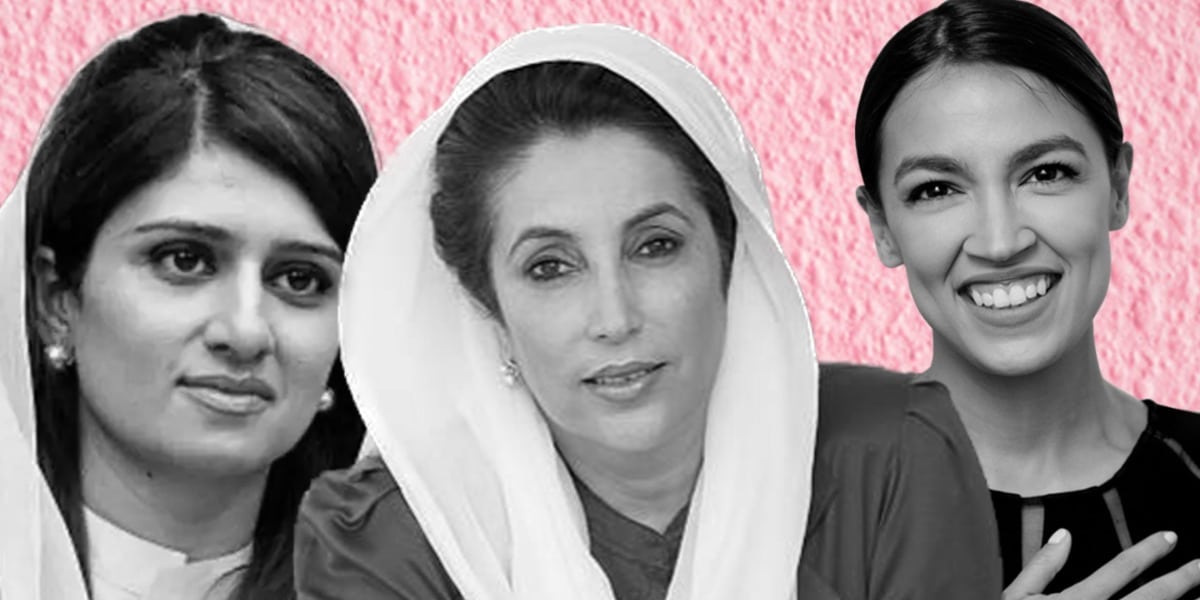
    1- First Muslim World Female Prime Minister Benazir Bhutto

    At the top of the list, we have former Pakistani Prime Minister Benazir Bhutto, who became the very first woman to hold the position in the Muslim world. At 35, she was also one of the youngest chief executives in the world. As prime minister, she was often referred to as the “Iron Lady of Pakistan” for her uncompromising approach to negotiating with unions. During her first tenure, she was removed by then-President Ghulam Ishaq Khan but was elected again by her people. She won the hearts of many with her courageous and empowering speeches at a time when politics were male-dominated and no one would have thought that Pakistan would elect a woman to lead the country.

    2- Sherry Rehman at her wittiest best

    If you want a guide or need tips on how to deal with the misogyny that exists even in Pakistan’s Senate, you need to watch Pakistan’s Federal Minister for Climate Change, Senator Sherry Rehman.

    Last year, Senate Chairman Sadiq Sanjrani called Rehman the “Senate’s dadi (grandmother)”. To this, casual sexism, she responded by saying: “I would advise you to only ask specific questions so that Sherry Rehman, who is the dadi of this House, can give you the right answers.”

    3- Take notes from Jacinda Ardern

    In December, New Zealand PM Jacinda Ardern shut down a male journalist for asking a misogynist question when she was hosting Finnish Prime Minister Sanna Marin.

    The journalist asked, “A lot of people will be wondering: ‘Are you two meeting just because you’re similar in age and have got a lot of common stuff there — when you got into politics and stuff — or can Kiwis actually expect to see more deals between our two countries down the line?”

    Ardern interrupted the question to say that she wondered “Whether or not anyone ever asked Barack Obama and John Key if they met because they were of similar age.”

    Well, this is how you deal with misogyny!

    4- Alexandria Ocasio-Cortez fires back

    Now, we bring you US Congress Member Alexandria Ocasio-Cortez excoriating her Republican colleague, Rep. Ted Yoho of Florida, after he verbally attacked her on the steps of the Capitol and used a sexist slur overheard by a reporter, calling her a “fucking bitch,” then issued a non-apology from the House floor. Later, on the floor, Alexandria said: “My mother got to see Mr. Yoho’s disrespect on the floor of this House towards me on television and I am here because I have to show my parents that I am their daughter and that they did not raise me to accept abuse from men.”

      5- Hina Rabbani’s bold move

      Last year in November, Minister of State for Foreign Affairs Hina Rabbani Khar went to meet the Taliban government in Afghanistan which is famously notorious for its mistreatment of women and its denial of women’s rights. The arrival of a woman to hold talks with the government proved to be such a powerful move. Netizens couldn’t help but root for Khar, deeming it a boss move to have a woman represent Pakistan, especially before a government as stuck in the stone age as the Taliban.

    • Pakistan has averted default, Army Chief assures businessmen of economic prosperity

      Pakistan has averted default, Army Chief assures businessmen of economic prosperity

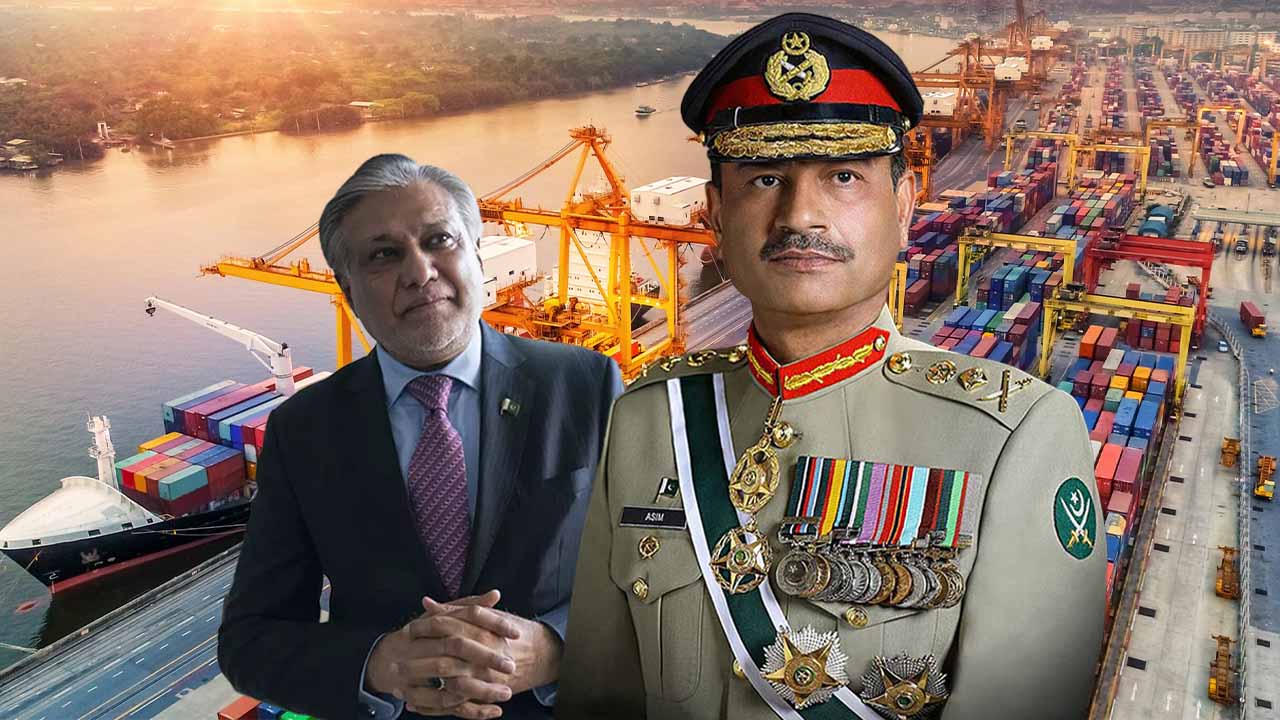
      The Chief of Army Staff (COAS), General Asim Munir, held a meeting on Monday night with the top businessmen in the country, in the presence of Finance Minister Ishaq Dar. While no official statement has been issued about the meeting, sources suggest that the army chief expressed optimism and confidence that the current economic difficulties would be overcome. He assured the businessmen that Pakistan has overcome the possibility of default, and urged them to remain firm and confident.

      The businessmen raised concerns about political polarization and chaos, and urged the military to ensure that this did not deepen further. They asked the army chief why politicians were not being brought together to meet the country’s challenges.

      The army chief emphasized that difficult times are a natural part of a nation’s progress, and reassured the businessmen that the worst is behind them. He referred to Islamic teachings to reinforce his message of resilience and strength.

      One participant, who requested anonymity, said that the businessmen had requested the meeting with the army chief. The meeting was deemed successful by the participants, and it was revealed that all prior conditions of the IMF had been met.

      The businessmen were told that agreements with friendly countries to provide dollars for the country’s foreign exchange reserves should be documented, and commitments had been secured for investments in agriculture, mining, and IT, with advanced equity expected from these countries.

      Sources further said the business community also expressed hope that army won’t allow unrest in the country. 

    • PTI rally, Aurat March in limbo after Section 144 imposed in Lahore

      PTI rally, Aurat March in limbo after Section 144 imposed in Lahore

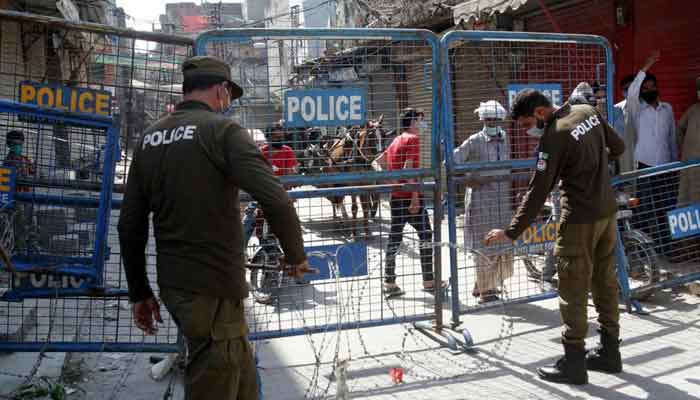
      Ahead of a Pakistan Tehreek-e-Insaf (PTI) rally and the Aurat March scheduled to take place on Wednesday, the caretaker government of Punjab has imposed Section 144 in Lahore.

      In a notice released by the Home Department, it was said that rallies and protests are taking place on a daily basis in the provincial capital, disrupting traffic and posing security threats.

      The notice, issued by Additional Chief Secretary (Home) Shakeel Ahmed, also said that terrorist activities in such gatherings have led to the martyrdom of civilians and policemen alike.

      “Hence, in the context of the prevailing overall security situation in the wake of the recent wave of terrorism and latest threat alerts, it has been necessary to impose Section 144 of Cr.P.C, 1898 on holding of all kinds of assemblies, gatherings, sits-in, rallies, processions, demonstrations, jalsas, dharnas, protests and such like other activities across the district Lahore to avert any untoward incident,” the notification read.

      PTI was scheduled to begin it’s election campaign with a rally led by Imran Khan passing through various spots in the city before culminating at Data Darbar.

      Meanwhile, Aurat March was scheduled to begin from NADRA office near Shimla Pahari.

    • ‘Siyaasatdaan khud masaail hal karein’:COAS ‘rejected’ Khan’s request for meeting

      Despite Pakistan Tehreek-e-Insaf (PTI) leaders continuous claim that thier Chairperson Imran Khan is not seeking a meeting with Chief of Army Staff (COAS) General Asim Munir, anchorperson Shahzeb Khanzada reported that the former prime minister had indeed sent a message to the army chief.

      Speaking on Geo News programme ‘Aaj Shahzeb Khanzada Kay Saath’, the host said that General Asim, in a meeting with the top 10 businessmen of the country, said that PTI chief Imran Khan sent him a message seeking a meeting.

      Khanzada further said that Gen Asim replied that it was not his job as army chief to meet politicians.

      “General Asim asserted that the army would neither interfere in politics nor would play any role in it,” said Khanzada. The army chief maintained that he would not interfere in political matters and the political leadership itself should resolve its issues.

      Speaking in the programme, senior anchorperson Hamid Mir said President Arif Alvi had tried to arrange a meeting between Gen Asim and Imran Khan.

      The army chief told the president that he wants to stay away from politics, Mir added.

    • Economic situation forces Honda Atlas Pakistan to suspend production for more than 20 days

      Economic situation forces Honda Atlas Pakistan to suspend production for more than 20 days

      Honda Atlas Cars Pakistan Limited (HACPL), one of the leading car manufacturers in Pakistan, has announced the temporary closure of its plant from March 09, 2023, to March 31, 2023.

      In a notice sent to the Pakistan Stock Exchange (PSX), the company cited disruptions in its supply chain caused by the current economic situation in Pakistan.

      The government’s strict measures, such as restricting the opening of LCs for the import of completely knocked down (CKD) kits and raw materials, and halting foreign payments, have significantly impacted the company’s production capabilities.

      The shutdown is expected to affect Honda car production in the region and potentially impact the company’s financial performance.

      The closure of HCAR’s plant is also likely to have a ripple effect on the automotive industry in the region, highlighting the challenges faced by businesses in Pakistan due to the current economic situation.

    • Bazi lay gaya Khan: 61 per cent Pakistanis positively rate PTI chief

      Bazi lay gaya Khan: 61 per cent Pakistanis positively rate PTI chief

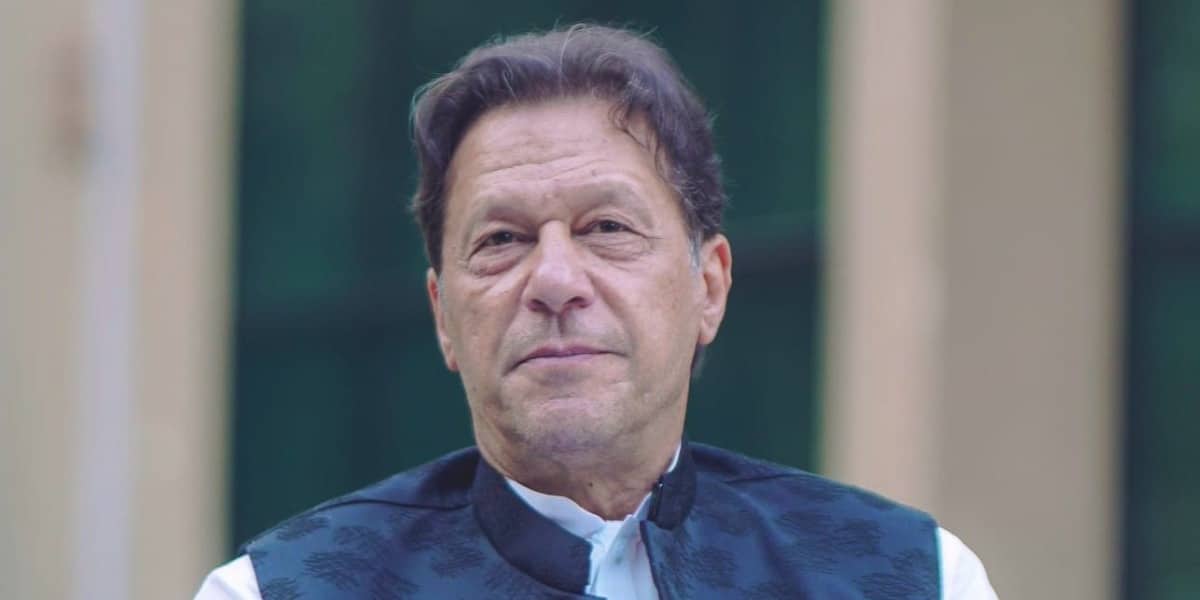
      Pakistan Tehreek-e-Insaf (PTI) Chairman Imran Khan is “positively rated” among 61 per cent of Pakistanis, whereas only 36 per cent have a “good opinion” about Pakistan Muslim League-Nawaz (PML-N) supremo Nawaz Sharif.

       According to a survey titled Public Pulse Report published by Gallup Pakistan, around 2,000 respondents participated in providing data for the survery.

      According to the report, Khan received a positive rating from 61 per cent of the population while 37 per cent rated him negatively.

      Prime Minister (PM) Shehbaz Sharif was rated negatively by 65 per cent of Pakistanis while 32 per cent gave him a positive rating. However, people from Punjab rated him better as compared to other provinces.

      As for Foreign Minister Bilawal Bhutto-Zardari, 36 per cent rated the Pakistan People’s Party (PPP) chairman positively while 57 per cent gave him a negative rating. Of all the provinces, he got most positive ratings from Sindh.

      PML-N Senior Vice President Maryam Nawaz, however, was rated negatively by 61 per cent while 34 per cent gave her a positive rating.

      Former president Asif Ali Zardari was rated negatively by 67 per cent while 27 per cent rated him positively.

    • Divorced women fear imprisonment under Taliban regime

      The Taliban regime in Afghanistan has modified divorce laws, now requiring both parties, husband and wife, to be present in court in order to get a divorce.

      Under the previous Afghan government, women were granted the right to get ‘one-sided divorces’ in order to help them escape abusive marriages, according to The Washington Post.


      Women could testify about suffering abuse at the hands of their husband, even if he had refused to make an appearance in court.


      The Post clarified that the Taliban had not commented on ‘one-sided divorces’ being nulled or whether a woman can be married after gaining a divorce in such a manner. However, Taliban spokesperson Zabihullah Mujahid has said that both parties must appear before a judge to request a divorce under the Taliban’s interpretation of Islamic law.

      Under the Taliban regime, it has become more difficult for women to seek refuge after escaping an abusive marriage. A psychologist told The Post that local aid groups providing counselling and relief to abused women have been shut down. She also elaborated that under the new law, it has become more difficult to prove domestic violence.


      “Under the new law, women need to first go to the police station and provide multiple witnesses to prove abuse or if their husband is addicted to drugs,” she said.


      Women face more problems to find legal counseling as the Taliban have banned women from working as lawyers and judges. A lawyer speaking to the Post revealed that more women will find it harder to leave their abusive marriages if they cannot find proper legal representation to help them escape domestic violence:


      “The Taliban have created the perfect situation for men seeking revenge. The courts have lost their effectiveness and instead we see on the news women receiving [public] lashings for adultery.”

      Previously the Taliban regime caused international outcry after enforcing a policies that restricted women’s movement. Women were banned from attending high school and college, couldn’t travel anywhere without a male guardian and were restricted from attending parks, fairs or gyms.

      The United Nations received a report on the state of human rights in Afghanistan, which had criticized the Taliban regime for pursuing a policy ‘tantamount to gender apartheid’.

    • Pakistan’s oil industry on the brink of collapse, calls for urgent government intervention

      Pakistan’s oil industry on the brink of collapse, calls for urgent government intervention

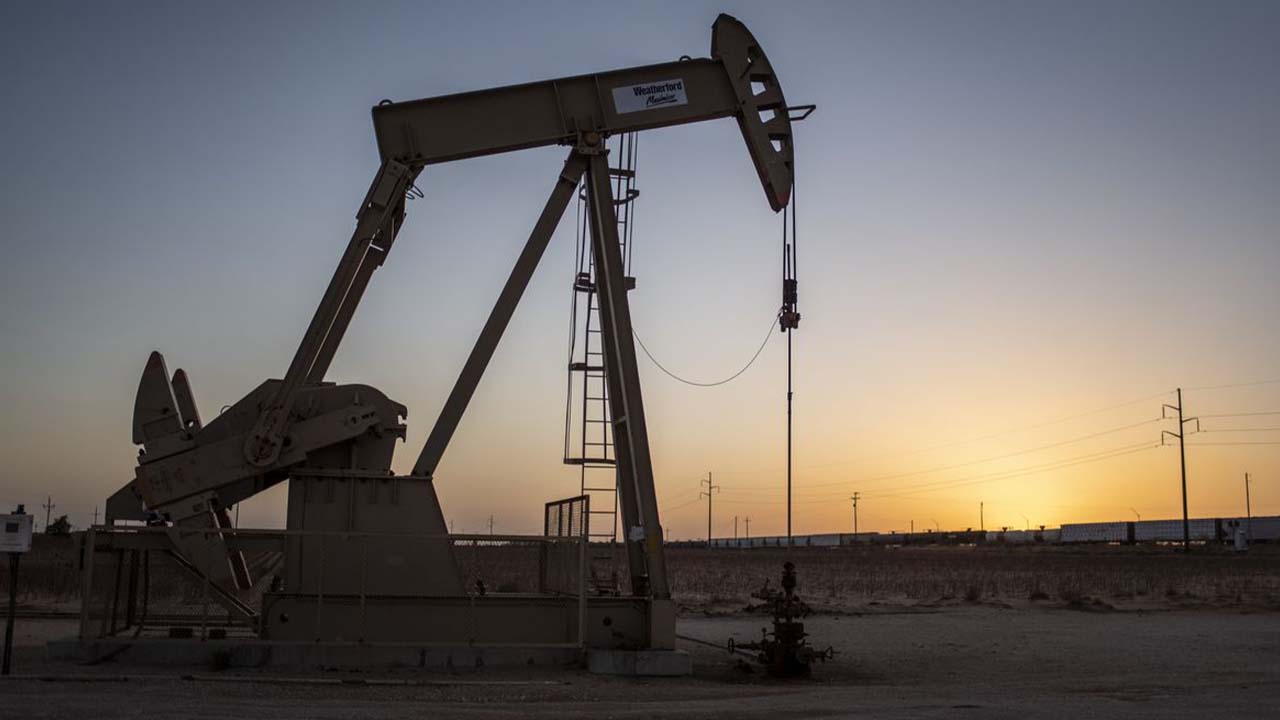
      According to recent reports, the oil industry in the country is facing serious challenges in obtaining crude oil and petroleum products due to foreign exchange constraints and current product pricing. These challenges have been exacerbated by the recent depreciation of the currency and an increase in the central bank’s policy rate.

      The Oil Companies Advisory Council (OCAC), which comprises over three dozen major oil marketing companies (OMCs) and refineries, has expressed concern to the government about the possibility of a major disruption to the already fragile supply chain.

      In a communication to the ministers for finance and energy, the governor of the State Bank of Pakistan (SBP), and the chairman of the Oil and Gas Regulatory Authority (Ogra), the OCAC has urged for urgent engagement to address the “severe impact of the recent depreciation of the rupee.”

      The association has also requested the development and immediate implementation of a transparent mechanism for the recovery of foreign exchange losses in product pricing. If immediate revision of prices based on the current exchange rate is not feasible, the government should at least put a system in place immediately.

      The recent steep depreciation has rendered the existing letter of credit (LC) lines inadequate for the industry, which could lead to import disruption of crude and refined products. The industry has also expressed concern about the cost of opening confirmed LCs, which has gone up many times and adversely impacted profitability.

      Moreover, maintaining the 20 days’ mandatory stock cover as per OMCs license requirement at the current rupee-dollar parity and after the recent increase in the SBP policy rates has resulted in borrowing costs of more than 50 per cent of regulated margins. Additional working capital burdens can raise significant concerns around OMCs’ ability to sustain operations.

      The association has reported that its members have been doubly hit due to the erosion of equity from foreign exchange losses and a reduction in working capital lines due to an increase in the rupee-dollar parity coupled with a rise in international oil prices, particularly high-speed diesel. The OMCs have already reported about Rs35 billion cumulative losses in POL pricing in recent months.

      The international price of petrol has increased by 3 per cent ($2.8 per barrel) to $94.84 per barrel between Jan 1, 2022, and March 2, while HSD prices surged by $15.48 or 18 per cent to $103.53 per barrel. During the same period, the rupee depreciated by over 61 per cent or Rs108.38 against the US dollar. This means that oil prices and exchange rate changes require an increase in the oil industry’s needs by 90 per cent than LC limits in local currency compared with last year to produce the same quantity of HSD.

      Therefore, the oil industry has called upon the government to ensure that the banking sector enhances limits for oil companies and refineries, enabling them to manage the impact of increased oil prices and rupee depreciation that are critical for the survival of the sector and the integrity of the POL supply chain.

      According to Dawn, the OCAC has warned that the industry is on the brink of collapse, as fuel shortages in certain areas earlier this year highlight the fragile condition of the industry. Urgent government intervention is necessary to ensure uninterrupted supplies.

    • ‘Zero chance of survival’: World’s most premature twins celebrate first birthday

      ‘Zero chance of survival’: World’s most premature twins celebrate first birthday

      A Canadian girl and boy, born over four months premature, celebrated their first birthday with a Guinness World Records (GWR) nod as the world’s most premature twins. The chances of the twins surviving were quite low.

      When Shakina Rajendram went into labour after just 21 weeks and five days – over four months early – she was told that she would lose the pregnancy and nothing could be done to save her twins.

      Her babies were “not viable,” doctors said. “Zero per cent chance of survival.”

      Adiah and Adrial Nadarajah were born on March 4, 2022 at the gestational age of 22 weeks, or 126 days early — breaking by one day the previous record set in 2018 by American twins.

      Most hospitals do not attempt to save babies born before 24-26 weeks.

      But these two are alive and kicking.

      A photo of the twins sitting on a couch next to their GWR framed certificate shows Adiah looking surprised with her mouth wide open, while her brother Adrial appears pensive.