Author: News Desk

  • Faisal Vawda disqualified for one term after apologising to SC

    Faisal Vawda disqualified for one term after apologising to SC

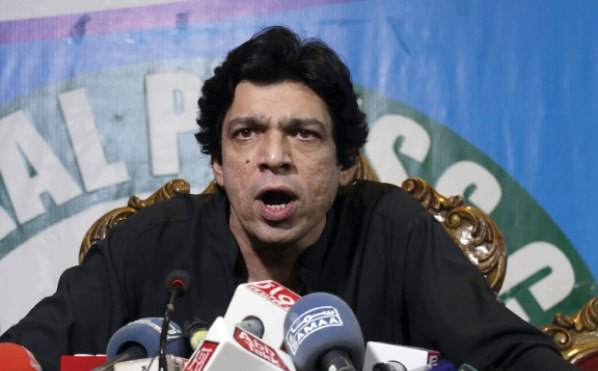
    The Supreme Court (SC) of Pakistan on Friday barred former Pakistan Tehreek-e-Insaf (PTI) leader Faisal Vawda from contesting in any poll before the next general elections.

    The apex court disqualified Vawda under Article 63(1)(c) of the Constitution, under which a legislator loses membership of parliament for one term only. As such, he will remain disqualified till 2023 and is eligible to contest the next general or Senate elections.

    Vawda apologised to the court unconditionally and accepted that he misstated about his dual nationality.

    In his apology letter after the hearing, the ex-federal minister admitted that he was not eligible for contesting in elections after admitting that he had submitted a fake affidavit.

    The Chief Justice of Pakistan (CJP), Umar Ata Bandial, admonished Vawda for misleading everyone for the last three years. He asked the former lawmaker to apologise before the court and resign from his Senate seat.

    “If you apologise before the court with good intentions, then your disqualification will be limited to five years. In case you do not resign, then the court will proceed under Article 62(1)(f).”

    At this, the former PTI leader said that he apologises unconditionally and that he “did not” intend to submit a false affidavit. Vawda also said that he would accept any punishment that the court doles out.

    A day earlier, the court told Vawda to confess that he submitted a forged affidavit or else he will be disqualified for life.

    Vawda had challenged his disqualification in the Supreme Court after ECP barred him from holding public office in a dual nationality case.

    ECP disqualified Vawda as a Member of the National Assembly (MNA) and ordered him to withdraw the notification appointing him as senator for concealing his dual nationality.

    Supreme Court says Vawda will be disqualified for lifetime if he doesn’t confess to forgery

    The Supreme Court of Pakistan has on Thursday given former Pakistan Tehreek-e-Insaf (PTI) leader and ex-senator, Faisal Vawda, an option that could soften his disqualification sentence.

    The top court heard the petition against Vawda’s lifetime disqualification from running or holding public office for concealment of his dual nationality.

    “If Vawda confesses to submitting a forged citizenship affidavit then he will be disqualified for one term; however, if the politician does not, then it will be for a lifetime,” the court said.

    A three-member bench headed by the Chief Justice of Pakistan (CJP) Umar Ata Bandial heard the petition. The court also ordered Vawda to bring forth a certificate proving his renunciation of US citizenship in the next hearing.

    “Vawda should admit his mistake and be disqualified under 63(1) C, otherwise the court shall proceed with the case under 62(1) F,” the Chief Justice said before warning that there was enough material before the court to disqualify Vawda “for life”.
  • PM Shehbaz Sharif leaves for Turkiye on two-day official visit

    PM Shehbaz Sharif leaves for Turkiye on two-day official visit

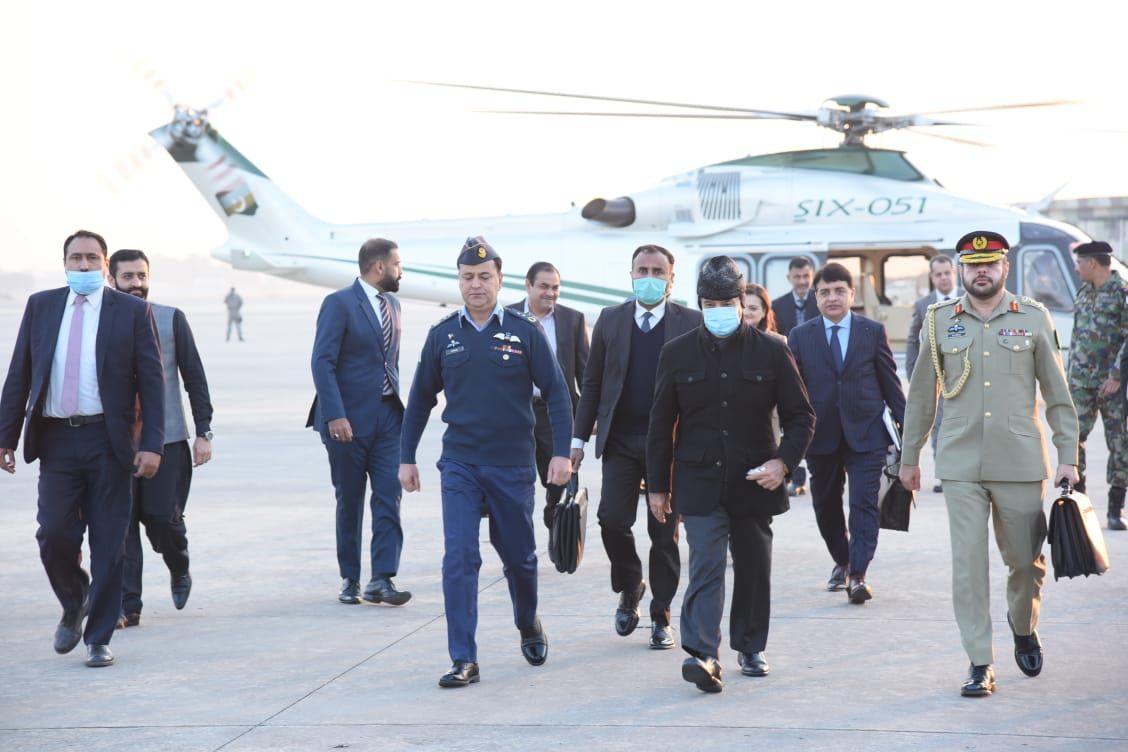
    Prime Minister (PM) Shehbaz Sharif has left for Turkiye on Friday morning for a two-day official visit.

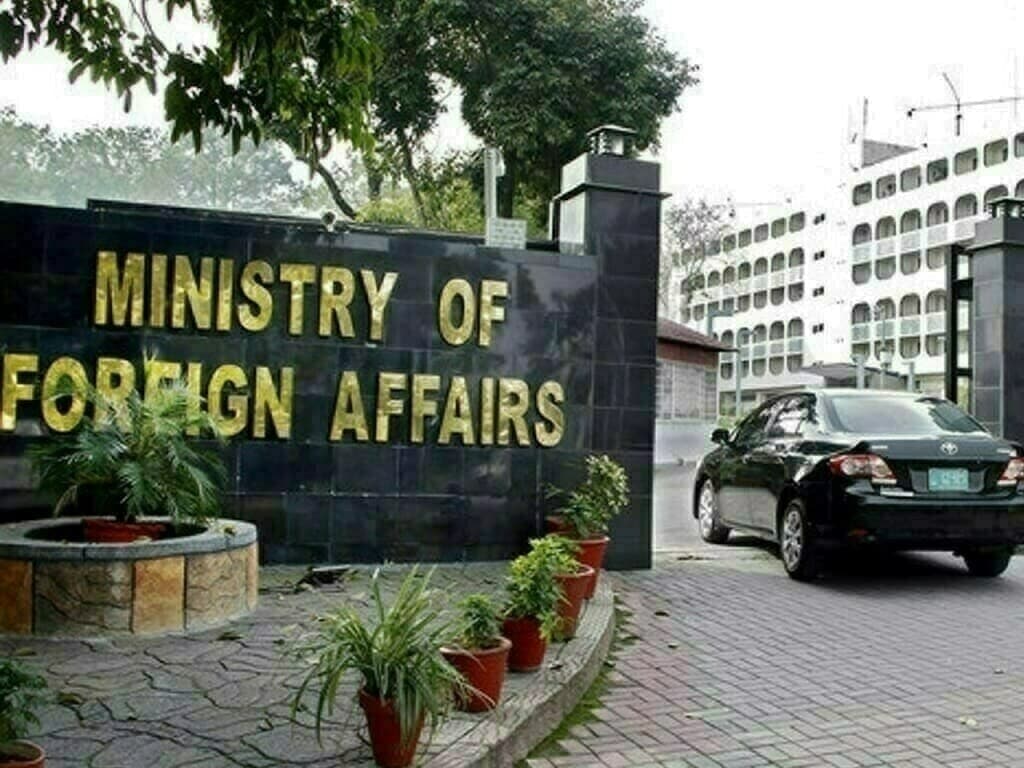
    According to a Foreign Office (FO) statement, the Premier will “jointly inaugurate the third of the four Milgem Corvette ships for the Pakistan Navy, PNS Khaibar, at the Istanbul Shipyard”.

    Prior to his departure, the premier tweeted that the inauguration of the third Milgem Corvette ship represented the deepening defence cooperation between the Turkiye and Pakistan.

    “High-level exchanges are a defining feature of our partnership,” he stated. “Our bilateral ties have entered a new era of strategic partnership under the leadership of President Erdogan.”

    The PM went on to say that the two countries were on a course to “unpack the full untapped potential of the relationship”, adding that high-level exchanges were a “defining feature” of the partnership between the two countries.

  • Islamabad police announces traffic diversion plan ahead of PTI long march

    Islamabad police announces traffic diversion plan ahead of PTI long march

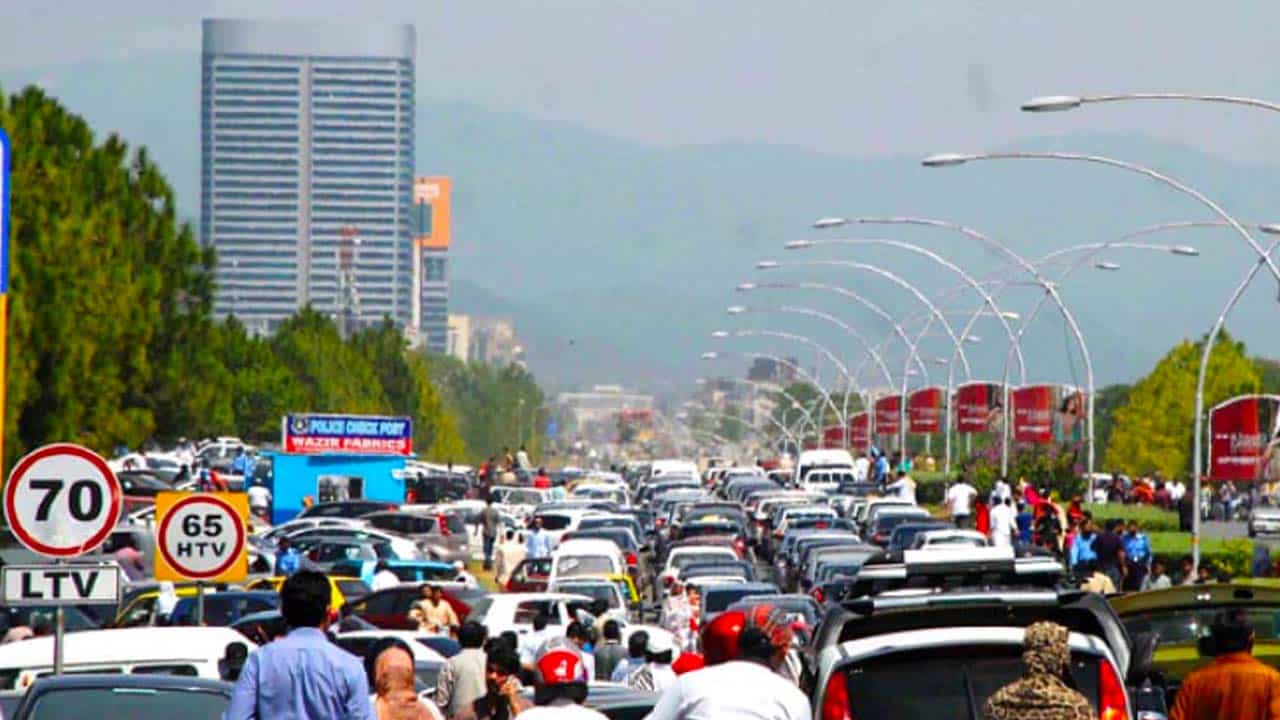
    The Islamabad Capital Territory (ICT) Police released an alternative traffic plan on Friday ahead of the Pakistan Tehreek-e-Insaf (PTI) long march in Rawalpindi on Saturday.

    The traffic on both sides of Murree Road has been diverted at Faizabad, according to ICT police.

    Therefore, it is possible to access Rawalpindi from Islamabad through the old airport road and stadium road.

    In addition, both Express Chowk and NADRA Chowk are entirely blocked off from accessing the Red Zone. As an alternative route, Margalla Road, Ayub Chowk, and Serena Chowk can be used.

    Islamabad’s other routes are all accessible to traffic.

    Residents are urged to dial the helpline number 15 in case of any emergency.

    Every kind of public gathering in the federal capital, including those in and near the Red Zone, is now subject to Section 144. However, the permit to hold the rally is only given if the proposed routes are followed.

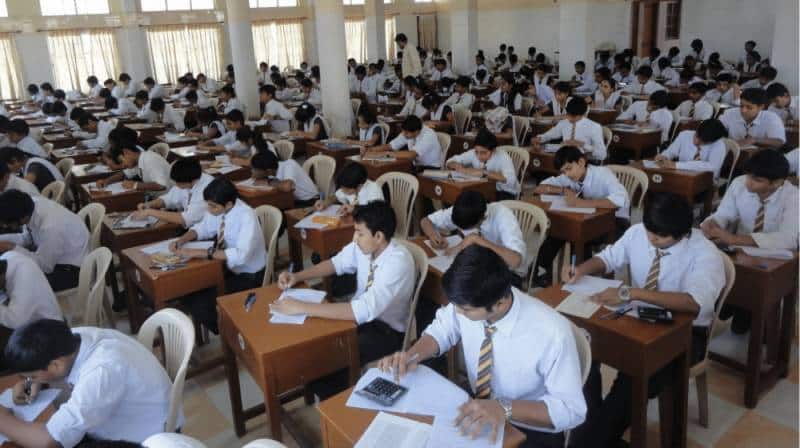
  • Passing marks for matric, inter to be increased to 40 in desperately needed upgrade

    Passing marks for matric, inter to be increased to 40 in desperately needed upgrade

    The nationwide committee of chairmen of the educational boards IBCC) on Thursday approved the implementation of the new “10-point grading system” at the matric and inter levels across the country, Express Tribune has reported.


    IBCC Secretary Ghulam Ali Malah while talking to the media outlet said, “Existing grading system at the inter [grade XII] and matric [grade X] levels is being abolished and replaced by a 10-point system across the country by 2025.”


    The term “F” or “Fail” would be replaced with a new term “U” meaning unsatisfactory, Malah said. He added that students getting marks between 96 per cent and 100 per cent will get an A-plus, where as an A-minus will be given for 91 per cent to 95 per cent marks.
    Other grades format will include “A” or “Remarkable” for 85-90 per cent marks; “B++” or “Excellent” for 80-85 per cent marks; “B+” or “Very Good” for 75-80 per cent marks; “B” or “Good” for 70-75per cent marks; “C” or “Fair” for 60-70 per cent marks; “D” or “Satisfactory” for 50-60% marks; “E” or “Sufficient” for 40-50 per cent marks.


    The meeting also decided that matric and intermediate examination will be held in April and May.

  • What is new army chief Asim Munir like? This is what Twitter has to say

    What is new army chief Asim Munir like? This is what Twitter has to say

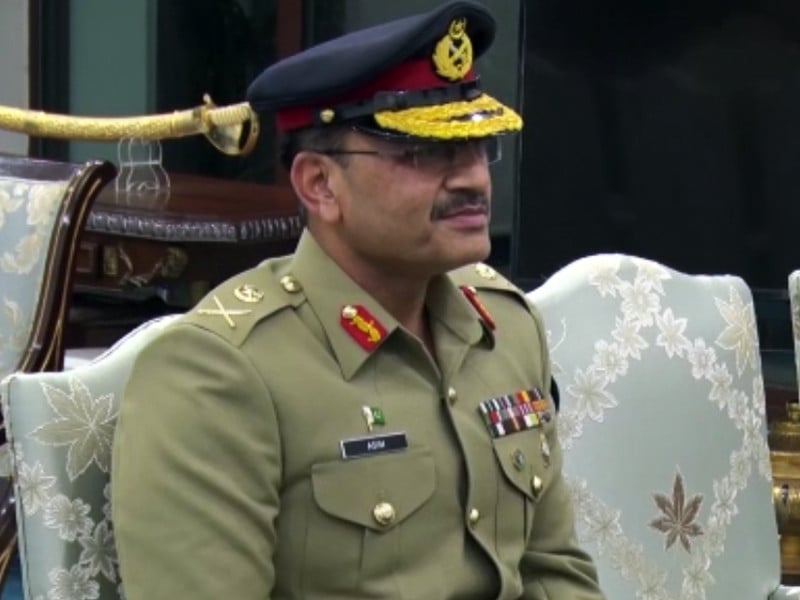
    Lieutenant General (Lt Gen) Asim Munir has been officially appointed as the new Chief of the Army Staff (COAS) of Pakistan after President Dr Arif Alvi signed the summary on Thursday evening.

    Following the development, the new army chief separately met Prime Minister (PM) Shehbaz Sharif and President Alvi.

    Lt- Gen Munir entered the service via the Officers Training School (OTS) programme in Mangla, and was commissioned into the Frontier Force Regiment. He has been a close aide of the incumbent COAS General Qamar Javed Bajwa ever since he commanded troops in the Force Command Northern Areas as a brigadier under him.

    He was later appointed Director General Military Intelligence in early 2017, and in October next year was made the ISI chief. However, he was replaced soon by Lt- Gen Faiz Hameed within eight months, reportedly on the insistence of the then Prime Minister, Imran Khan. He was posted as Gujranwala Corps commander for two years, before being moved to the GHQ as Quartermaster General.

    Well, this is the information that we know so far but Twitterati has some interesting details as well.

  • Imran Khan can now travel after plaster is removed from his leg

    Imran Khan can now travel after plaster is removed from his leg

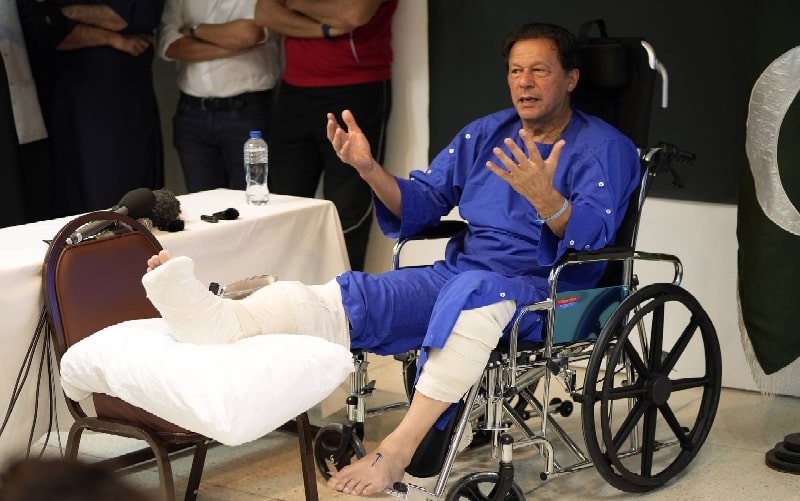
    Chairman of Pakistan Tehreek-e-Insaf (PTI), Imran Khan, has been given the green signal to travel by his medical team ahead of the Rawalpindi rally scheduled for November 26.

    Khan’s physician, Dr Khalid Niazi, has said that the plaster on Khan’s fractured leg has been removed while the wounds on the upper part of Khan’s lower right limb have almost healed. However, the wounds on the lower part of the leg will take another week to heal completely.

    He added that Khan can now wash his leg and put weight on it as well. The doctors also allowed Khan to travel but with the caveat that he needs to be careful.

    The doctors told the media that they have removed one leg band from the former premier’s injured leg while leaving the other one loose.

    In an address, Imran Khan said he would go to Rawalpindi on November 26 and reveal a new plan for his Haqeeqi Long March movement.

    On November 3, Imran Khan survived an assassination attempt on day seven of PTI’s ‘Haqeeqi Long March’ as his container moved through Punjab’s Wazirabad.

  • Who will be the new COAS and CJCSC?

    Who will be the new COAS and CJCSC?

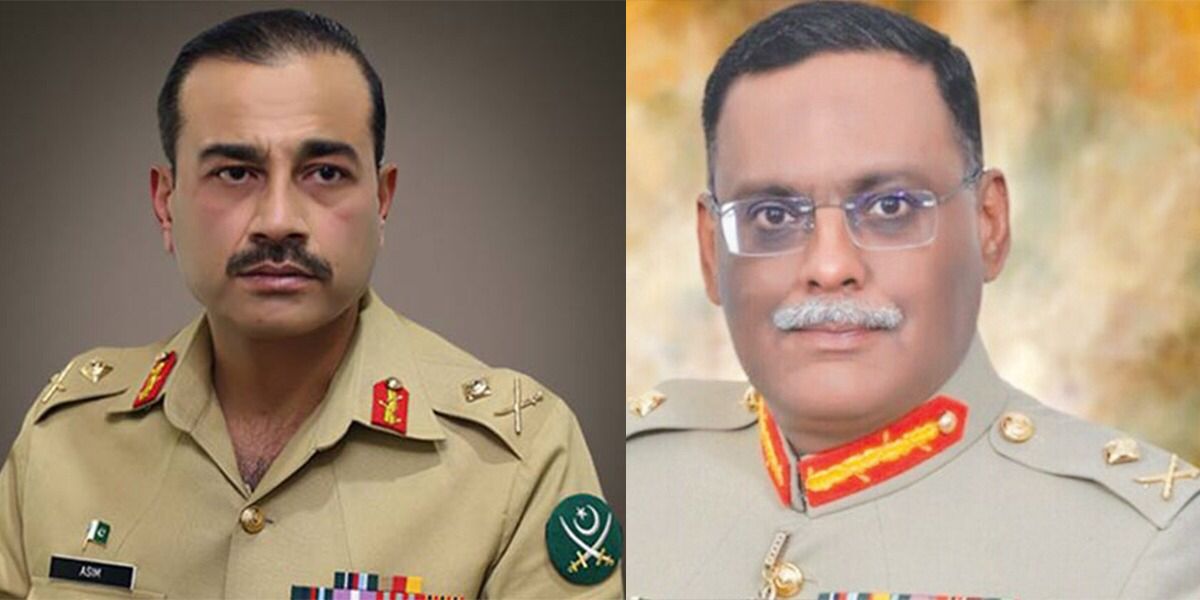
    Lieutenant General (Lt Gen) Asim Munir has been promoted to now become the new chief of the Pakistan Army by Prime Minister (PM) Shehbaz Sharif. A summary in this regard has been sent to the President. This has been confirmed by Information Minister Marriyum Aurangzeb in a tweet.

    Who is Asim Munir?

    PM Shehbaz Sharif has picked Lieutenant General (Lt Gen) Asim Munir to succeed outgoing army chief Gen Qamar Javed Bajwa. Lt-Gen Munir is the senior-most among the names given in the summary. He was promoted to the rank of a three-star general in September 2018.

    Lt- Gen Munir entered the service via the Officers Training School (OTS) programme in Mangla, and was commissioned into the Frontier Force Regiment. He has been a close aide of the incumbent COAS ever since he commanded troops in the Force Command Northern Areas as a brigadier under Gen Bajwa.

    He was later appointed Director General Military Intelligence in early 2017, and in October next year was made the ISI chief. However, he was replaced soon by Lt Gen Faiz Hameed within eight months, reportedly on the insistence of the then PM, Imran Khan. He was posted as Gujranwala Corps commander for two years, before being moved to the GHQ as Quartermaster General.

    Who is Sahir Shamshad Mirza?

    The following is a bio of the new Chairman Joint Chiefs of Staff, the second important role in the armed forces. While General Mirza’s bio is impressive, what was striking is that he was raised an orphan and has managed to reach the top. When he joined the army, he wrote ‘8 Sindh’ in the ‘Next of Kin’ option. It was the name of his Unit.

    The premier has picked Lieutenant General (Lt-Gen) Sahir Shamshad Mirza to be the next Chairman Joint Chiefs of Staff Committee (CJCSC). Lt-Gen Mirza came to fame as the director general military operations during Gen Raheel Sharif’s tenure. In that role, he was part of Sharif’s core team at the General Headquarters, which supervised the military operation against the banned Tehreek-i-Taliban Pakistan and other militants in North Waziristan. Moreover, Lt-Gen Mirza was closely involved in the intra-Afghan talks involving Pakistan, China, Afghanistan and the United States.

    He was also a member of the committee on reforms for Gilgit-Baltistan. He was appointed chief of general staff, effectively making him the second-most powerful person in the army after the chief of army staff. In that role, he was closely engaged in crucial decision-making related to national security and foreign affairs. He also joined former foreign minister Shah Mehmood Qureshi in strategic talks with Chinese Foreign Minister Wang Yi in 2021.

    In October 2021, he was posted as corps commander Rawalpindi to enable him to acquire operational experience and become eligible to be considered for top posts. The Joint Chiefs of Staff Committee is an inter-services forum that works for coordination among the three armed forces. The CJCSC also serves as the principal military adviser to the prime minister and the National Command Authority.

    General Asim Munir has been ‘retained’ under the Army Act?

    The Federal Government has retained Lieutenant General Asim Munir under the Army Act. Earlier, government decided to appoint Lt Gen Munir as new Chief of Army Staff (COAS).

    Gen Munir was scheduled to retire on November 27. He had submitted his retirement application to the defence ministry. However, the defence ministry did not accept the request for retirement and decided to retain Gen Munir.

    Meeting between Dr Alvi and Khan

    President of Pakistan, Dr Arif Alvi, has reached Zaman Park in Lahore to meet Pakistan Tehreek-e-Insaf (PTI) Chairman Imran Khan to consult him over the two key military appointments that were announced today.

    In an interview earlier this week, when asked about the appointment, Imran Khan said that he was maintaining contact with the President on this matter.

    President House will give an official handout around 7pm on army chief appointment

    PTI’s Fawad Chaudhry has said that the President House will give an official handout between 6:30 and 7pm about Dr Arif Alvi’s meeting with his party Chairman Imran Khan.

    A few hours ago, Alvi reached Lahore to meet Khan and to consult him over the two key military appointments.

    Earlier, the federal government announced that Prime Minister Shehbaz Sharif has appointed Lieutenant General Asim Munir as Pakistan’s next Chief of Army Staff and Lieutenant General Sahir Shamshad Mirza as Chairman of the Joint Chiefs of Staff Committee (CJCSC), with an official summary of both appointments sent to President Alvi for his signature.

    President Arif Alvi signs summary for the appointment of COAS and CJCSC: report

    President Dr Arif Alvi has signed the summary to appoint Lt Gen Asim Munir as the new army chief and Lt Gen Sahir Shamshad Mirza to be the next Chairman Joint Chiefs of Staff Committee (CJCSC). It is being reported that President Alvi and Prime Minister Shehbaz Sharif will be holding meetings with both new appointees shortly.

  • Pakistanis pay about Rs800,000 more for a Suzuki Alto than Indians

    Pakistanis pay about Rs800,000 more for a Suzuki Alto than Indians

    Shockingly, the base variant of the Suzuki Alto costs PKR 922,000 (INR 339,000) in India, whereas Pak Suzuki Motor Company, Pakistan’s Suzuki vehicle manufacturer, offers the older model of the Suzuki Alto for a starting price of Rs1.7 million.

    The 0.8-liter petrol engine in the Indian Alto 800 produces 48 PS and 69 Nm and is connected to a five-speed manual transmission. When using CNG, the output drops to 41 ps and 60 nm. The vehicle’s quoted mileage is 31.59 km/kg for CNG and 22.05 km per litre for petrol.

    On the other hand, Pakistani Alto is powered by a 3-cylinder 658 cc R06A petrol engine mated to either a 5-speed manual or auto gear shift (AGS) transmission. The variant we are talking about is the manual base variant. The hatchback offers a maximum output power of 39hp at 6500 rpm and a torque of 56 Nm at 4000 rpm. With a compression ratio of 10:1, it comes with a multi-point injection system. The Suzuki Alto offers seating for four adults and a fuel capacity of 27 litres.

    When comparing the Indian Alto to the Pak Suzuki-produced Alto, the Indian Alto appears to have greater power because it has a larger engine, more torque, and costs less.

    It is worth noting that despite its hefty price tag Suzuki Alto is also Pakistan’s most-selling car currently as it is the only mini hatchback sold below Rs2 million from a prominent automaker.

  • Pakistan calls for ‘Global Action Plan’ against Islamophobia

    Pakistan calls for ‘Global Action Plan’ against Islamophobia

    Minister of State for Foreign Affairs, Hina Rabbani Khar, talked about the importance of “continued and robust inter-religious, inter-civilisational and inter-faith dialogue as a catalyst to promote peaceful co-existence, mutual understanding, and harmony,” while addressing the ninth Global Forum of the United Nations Alliance of Civilizations (UNAOC).

    UNAOC was hosted by the Kingdom of Morocco in the city of Fez on November 22-23, 2022. Khar expressed Pakistan’s viewpoint and concerns over the global problem of religious intolerance, discrimination, Islamophobia.

    She also brought the delegates’ attention to the state-driven prejudice, animosity, and phobia against Muslims and Islam, as well as the resulting environment of impunity for such atrocious acts.


    “Given its pervasive and widely documented impacts, it is time for the international community and the United Nations to formulate an action plan to meaningfully address the insidious phenomenon of Islamophobia and anti-Muslim hatred,” she said.
    The UN Alliance of Civilizations was established in 2005 as a result of the tensions that developed between the Muslim world and the West in the wake of 9/11. Promoting tolerance for different cultures, customs, and religious beliefs is one of its main goals.

  • Exports from Pakistan witness 35.7% increase in first four months of FY23

    According to data from the Pakistan Bureau of Statistics (PBS), exports from Pakistan increased by 35.77 per cent in rupee terms during the first four months of the current fiscal year (2022-23) compared to the same time previous year.

    According to Geo, exports from July through October (2022-23) were Rs2,131,776 million, up from Rs1,570,136 in the corresponding period the previous year. This represents a growth of 35.77 per cent.

    In comparison to October 2021, when exports were Rs423,063 million, the country’s exports rose by 24.29 per cent to Rs525,831 million in October 2022.

    When compared to the exports of Rs563,714 million reported in September 2022, the exports climbed by 6.72 per cent in October 2022 on a monthly basis.

    The main commodities of exports during October 2022 were:

    Knitwear (Rs86,400 million), readymade garments (Rs60,778 million), bedwear (Rs47,895 million), cotton cloth (Rs37,407 million), rice other than basmati (Rs20,344 million), towels (Rs17,553 million), made-up articles, excluding towels & Bedwear (Rs12,758 million), fish products (Rs12,057 million), rice Basmati (Rs11,375 million) and cotton yarn (Rs10,819 million).

    On the other side, imports increased by 12.87 per cent from July through October 2022 to a total of Rs4,701,648 million, compared to Rs4,165,590 million during the same time previous year.

    Imports totaled Rs1,039,036 million in October 2022 compared to Rs1,232,299 million in September 2022 and Rs1,093,545 million in October 2021, a drop of 15.68 per cent over September 2021 and 4.98 per cent over October 2021.

    The major imports during October 2022 were:

     Petroleum products (Rs100,436 million), petroleum crude (Rs82,124 million), natural gas, liquified (Rs65,485 million), palm oil (Rs59,739 million), plastic materials (Rs47,301 million), iron & steel (Rs38,517 million), raw cotton (Rs29,943 million), iron & steel scrap (Rs26,037 million), electrical machinery & apparatus (Rs24,058 million) and medicinal products (Rs23,234 million).