Author: News Desk

  • This Pakistani couple’s inspiring success story will make your day

    This Pakistani couple’s inspiring success story will make your day

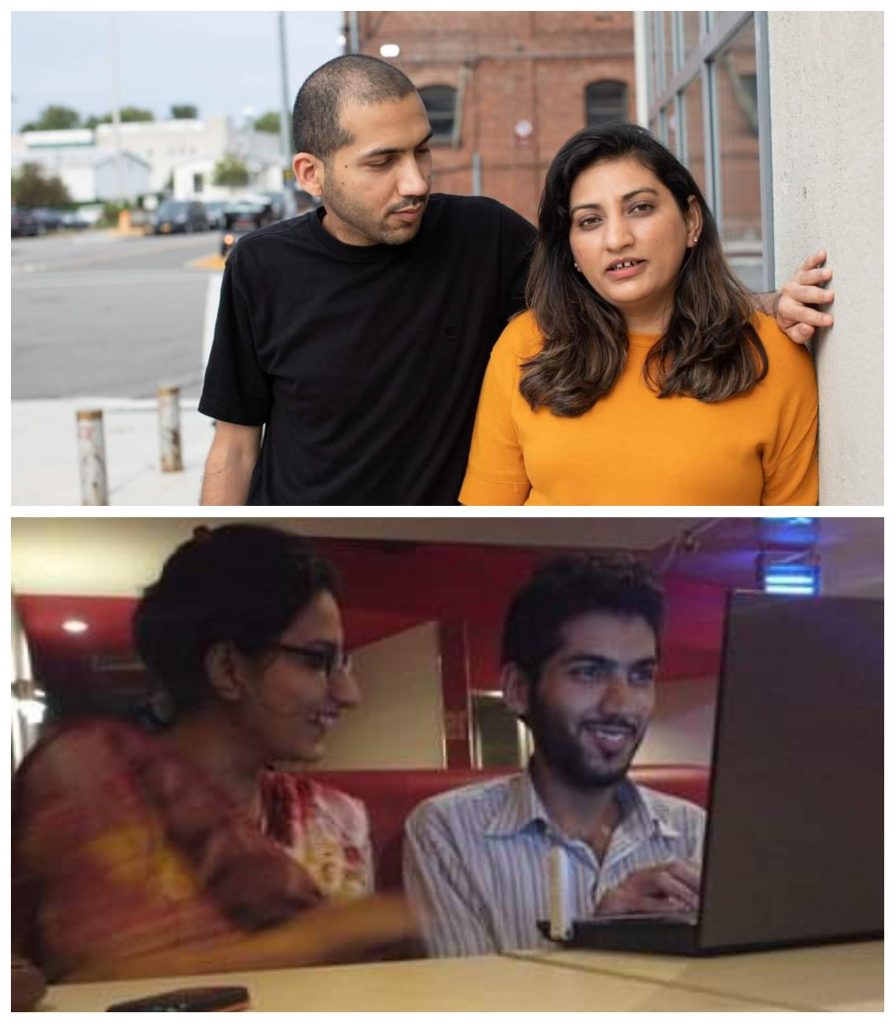
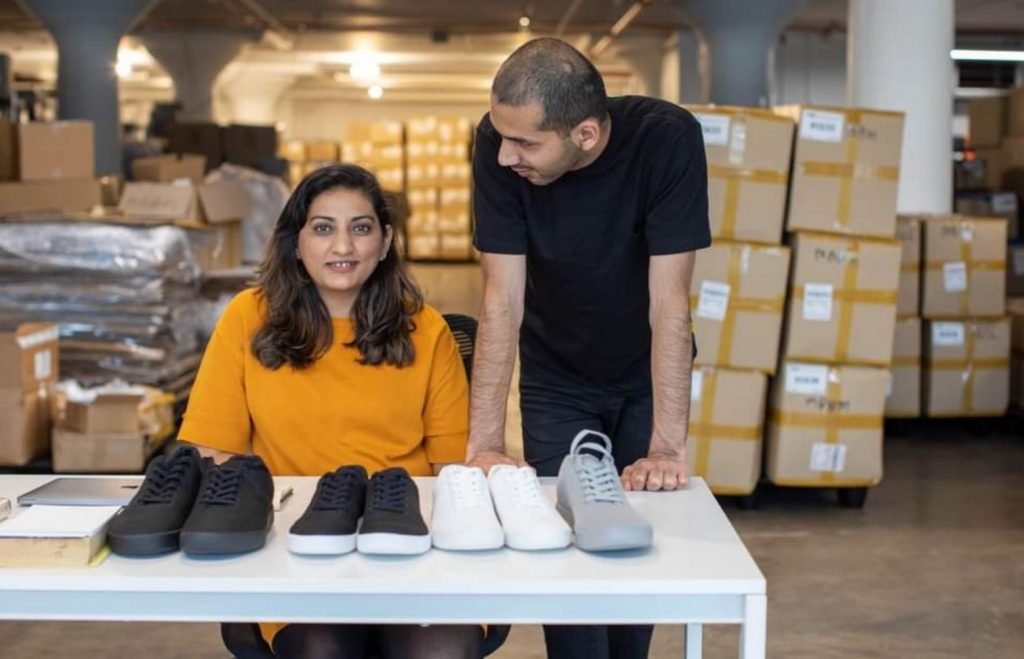
    “Just two kids from a small town in Pakistan, who escaped their conservative families” is how Sidra Qasim describes herself and her husband, Waqas Ali, the power couple behind Atoms – a New York-based footwear brand known for its quarter sizes and comfortable sneakers.

    However, their road to success was not an easy one. In an interview with Brandon Stanton of Humans of New York, Sidra opened up about their journey and how they set up their footwear brand.

    Read more – Khan Academy receives $5 million from Elon Musk

    “It’s the same story taught to every Pakistani girl. We are raised from a young age to believe that our purpose in life is to find and keep a husband,” said Sidra in the first of her 11-part interview. But even as a child, Sidra had bigger dreams, and she held on to them even as her family pressurized her to get married right out of school. 

    Sidra, who belongs to the small town of Okara, first met Waqas at her aunt’s house. He was one of her aunt’s students.

    “We’d discuss life, and society, and human emotions. It became the only chance I had to exchange my ideas with anyone. And Waqas took my opinions seriously,” she shared.

    After school, Sidra enrolled in a college and became one of the only 15 female students there. It was after she successfully produced a play to help with flood relief efforts that Waqas asked her to join him in Lahore – where he had moved to study further – and become his business partner. 

    “It finally felt as though my talents were being recognised, and the next day I asked for my parent’s permission. But they refused,” said Sidra.

    The refusal came as a blow to Sidra, who describes lying listlessly on the couch for weeks – to the point where it scared her father. Eventually, they agreed to let her move to Lahore, where she began working with Waqas on a company called ‘Social Media Art’ which aimed to help brands establish a social media presence.

    As their company struggled, Waqas and Sidra grew closer.

    “We never discussed the status of our relationship, but both of us could feel a closeness. We were bonded by our journey. Both of us were defying our parents,” she said. “But after a year of rejection, we had begun to lose hope.”
    A ray of hope came from unlikely quarters when Sidra and Waqas met with a group of craftsmen in the local village council of Okara.

    “They were making leather shoes on the floor of a two-room workshop,” she added. 

    Sidra returned to the workshop again and again for a week and, in the end, the craftsmen agreed to collaborate with them.

    While Waqas worked on the website, Sidra ensured that the shoes they produced met the “highest quality standards”.

    “We called our collection ‘Hometown Shoes.’ And after we launched our website, the first order came in right away,” said Sidra, adding that though they made a loss on the order due to the high shipping cost to France, the couple did not give up hope.

    “After a year we were selling about 50 shoes per month. We were happy to have any business at all, but it wasn’t nearly enough to survive,” said Sidra. They started a highly successful Kickstarter campaign and raised $1,07,000 in 2014 by selling over 600 pairs of shoes.
    After that, Sidra and Waqas got married in a small ceremony – and immediately began to work on their application for the Y-combinator accelerator program in San Francisco. “The admissions process was more selective than Harvard, and they’d helped launch companies like Airbnb and Dropbox,” Sidra added. 

    Although she describes their interview as a “disaster”, they did get through and moved to the US.

    Their time at Y-combinator was one of making mistakes and learning from them. “We were the only company in our group who didn’t raise money. And to make matters even worse, it had been a formal event,” said Sidra, describing Demo Day which is sort of a final exam for participants of the program. “Many of our classmates had dressed up. But none of them were wearing the shoes we had sold them.”

    Doing more market research helped them understand that most people wanted shoes they could wear every day, and so Sidra and Waqas shifted their focus from formal footwear to casual.

    “We researched the highest quality materials, and we put all of our findings into a document called ‘Ideal, Everyday Shoe.’ Then we gave all our notes to a talented designer. Together we built a prototype, and we called them ‘Atoms,’ because we’d gone to the atomic level in search of quality.”

    It took them several months to manufacture their first collection after extensive customer feedback and market research. “By the time we were ready to launch, 45,000 people had signed up for our mailing list. On the first day of sales, our website crashed,” Sidra continued.
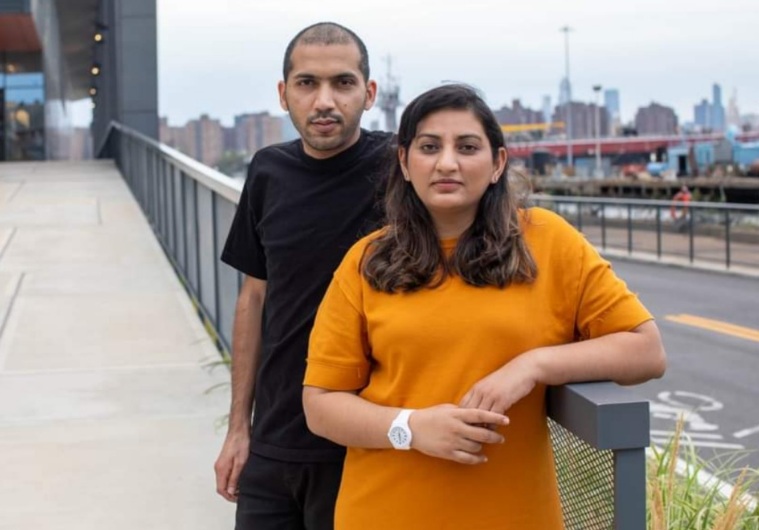
    Their company expanded to 25 employees, but they also had to go through a round of layoffs. At the beginning of the pandemic, to stay afloat in the face of dwindling funds and investors unwilling to put in more money, Atoms expanded to making masks. 

    “One year later we’ve sold 500,000 of them and donated 500,000 more. Our shoe business has continued to grow, and once again investors are calling on the phone,” Sidra told Humans Of New York.

    She concluded the interview by talking about the change that her business has helped brought about. She has been able to help her family back in Pakistan financially. “But more importantly I’ve provided an example,” says Sidra.

    One of her younger sisters is now working as a fitness coach, the other is selling sanitary pads. But the biggest transformation, she said, has been in her mother – a school headmistress who now tells her students to be financially independent and learn technology.

    “She’s telling them all the things that I needed to hear as a little girl. The road was so lonely for me, and maybe I still carry some unconscious resentment,” said Sidra.

    “But my mother has apologised for not supporting me more. And consciously I have forgiven her.”

    Sidra and Waqas started Atoms armed with ambition, curiosity, and a passion for making shoes. Despite coming from modest, traditionally conservative upbringings, that drive took them from Okara, Pakistan, to the closest big city—Lahore, to Silicon Valley, and then to Brooklyn, where Atoms is currently based.
  • VIDEO: Lawyers interrupt PM Imran during speech

    VIDEO: Lawyers interrupt PM Imran during speech

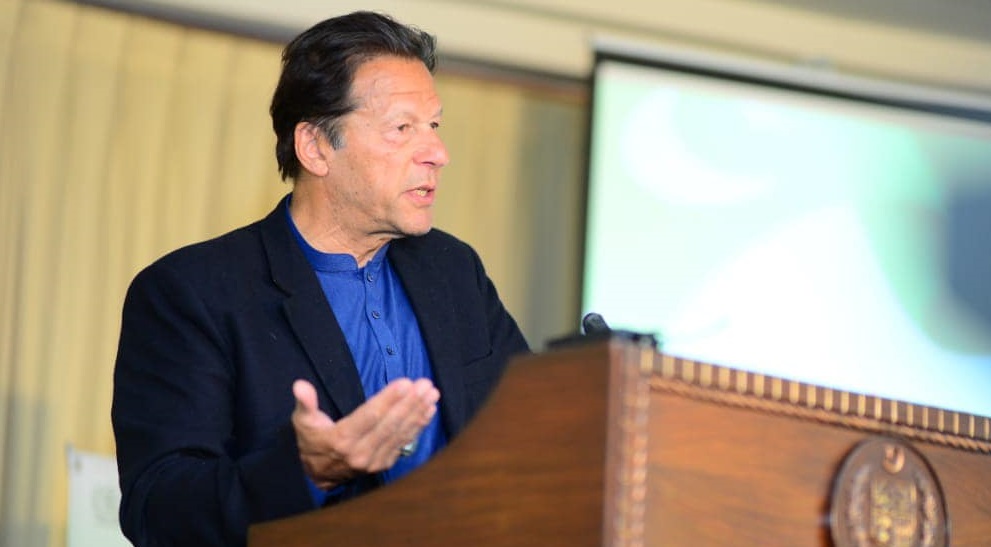
    Prime Minister Imran Khan was interrupted twice while he was addressing a ceremony in Sahiwal on Friday.

    During a cheque-distribution ceremony under the Ehsaas programme in Sahiwal, a lawyer interrupted the premier and asked for permission to make a request.

    He subsequently asked the PM for the formation of a high court bench in Sahiwal so that they don’t have to go to Multan or Lahore for cases in the high court.

    His request was followed by another lawyer asking the PM for permission to ask “three-four questions”. However, the PM shot down his request, saying he would have allowed him to speak had he decided to ask just one question. The lawyer could be heard saying just “two questions” but to no avail.

    The PM went on to say that he doesn’t have time for “three-four questions”. The PM said that his government was planning to industrialise Pakistan so that youth can find jobs.

    Imran said Sahiwal would be provided best facilities in the fields of health, education, road infrastructure and social welfare, adding that Punjab had immense potential for development in agriculture and livestock sectors.

    “The Ehsaas programme is meant to provide a safety net to the lower-income households,” the premier said. He maintained that his PTI-led government under the welfare programme is aiming to provide universal health care.

  • ‘An unparalleled humanitarian’: Bilquis Edhi declared ‘Person of the Decade’

    Bilquis Eidi has been selected as the Person of the Decade by an international web based organisation ‘Impact Hallmarks’.

    As per details, the finalists were shortlisted out of over 1.6 million notables with diverse backgrounds and from over 190 countries. According to the organisation’s website, the finalists were then presented to the global audience to pick out the person of their choice by voting.

    In a statement, the organisation said: “As per the domino effect verdict, concerning the IH international opinion poll outcomes, Stephen Soldz, an upright ethicist and moralist from the US, Ms Bilquis Edhi, an unparalleled noted humanitarian from Pakistan and Prof Yanghee Lee, the fabled unsurpassed human rights rapporteur of the UN, have evidently stretched and segmented the top of the decade’s impact hallmarks and the opinion poll’s top ‘tri-archy’ as well.”

    Bilquis Bano Edhi is a professional nurse, who heads the Bilquis Edhi Foundation. She has spent more than six decades of her life serving humanity in need. Her charity has saved over 42,000 unwanted babies so far by placing ‘jhoolas’ [cradles] at the Edhi Homes and centres across the country.

    Called the Mother of Pakistan, Bilquis Edhi has already been given various national and foreign awards including Hilal-e-Imtiaz, the Lenin Peace Prize, Mother Teresa Memorial International Award for Social Justice (2015), and the Ramon Magsaysay Award for Public Service, she received along with her husband Abdul Sattar Edhi in 1986.

    Besides the three topmost ‘Persons of the Decade’, the verdict announcement called seven other persons “true patrons of change, the flag-bearers of righteousness and the domino effect architects of the Top-10 of the impact hierarchy of the decade,” which includes Prof. Aurangzeb Hafi from Pakistan.

  • Mention ‘sewing machines’ of PM’s sister, Marriyum spotted telling PML-N lawmaker

    Pakistan Muslim League-Nawaz (PML-N) leader Marriyum Aurangzeb is facing criticism from the ruling Pakistan Tehreek-e-Insaf (PTI) spokesperson for goading PML-N leader Afzal Khokhar into targeting PM Imran Khan’s sister, Aleema Khan, during his speech on the floor of the National Assembly.

    PM’s focal person on digital media, Dr Arslan Khalid shared a video on his Twitter wherein Marriyum, who was also overheard in the Khokhar’s mic, can be seen asking Khokhar to mention Aleema Khan over her alleged corrupt practices.

    “I did not use government funds to gift sewing machines to my sisters,” he said referring to Imran Khan. His remarks were cheered on by the PML-N lawmakers. However, the PTI said that it was unfair of Marriyum to target the sisters of PM Imran who aren’t even a part of politics.

    Khokhar also tabled a privilege motion. During the session, while talking about the operation to demolish his Lahore residence, the Khokhar Palace, the PML-N leader told the House that the administration had stormed his place late at night and destroyed furniture among other things.

    “This type of attitude of Punjab authorities will not be tolerated,” he said.

    The same session saw PML-N’s Ahsan Iqbal getting a dressing down by the NA speaker. “Please mind your tone. You have been a minister, and you call yourself ‘professor’… is this the way to talk?” Asad Qaiser chided Iqbal who kept talking back at the speaker.

    CORRUPTION ALLEGATIONS AGAINST ALEEMA:

    In 2019, Aleema was accused of concealing her offshore assets in the United Arab Emirates and New Jersey.

    Aleema Khan maintained that her foreign assets had nothing to do with the charity funding. Aleema said she had made her fortune through inherited property and sewing machines.

    “My textile export business has represented international buyers and assisted Pakistani textile mills in business development, procuring orders which have averaged over Rs2 billion worth of exports yearly from Pakistan and contributed to the economy,” The News had reported at the time.

    Chief Justice Mian Saqib Nisar had taken suo motu notice of Aleema’s property in Dubai on November 28. Subsequently, Aleema was asked to pay Rs29.4 million in taxes and fines — a move dubbed as NRO by the opposition.

  • UAE decides to grant citizenship to ‘talented and innovative’ people

    The United Arab Emirates (UAE) has adopted amendments that would allow Gulf state to grant citizenship to investors and other professionals, including scientists, doctors, engineers, artists, authors and their families, the government said on Saturday.

    “The UAE cabinet, local Emiri courts and executive councils will nominate those eligible for the citizenship under clear criteria set for each category,” Dubai’s ruler and UAE Vice President Sheikh Mohammed bin Rashid Al Maktoum tweeted.

    “The law allows receivers of the UAE passport to keep their existing citizenship,” Sheikh Mohammed added.

    It was unclear if new passport holders would benefit from the public welfare system. The UAE spends billions of dollars each year on free education, healthcare, housing loans and grants for its estimated 1.4 million citizens.

    Foreigners in the UAE usually have renewable visas valid for only a few years tied to employment. The government in recent has made its visa policy more flexible, offering longer residencies for certain types of investors, students and professionals.

    Last year, the government extended its “golden” visa system — that grants 10-year residency in the Gulf state — to certain professionals, specialised degree-holders and others.

  • PM reveals he was offered money ahead of Senate election

    PM reveals he was offered money ahead of Senate election

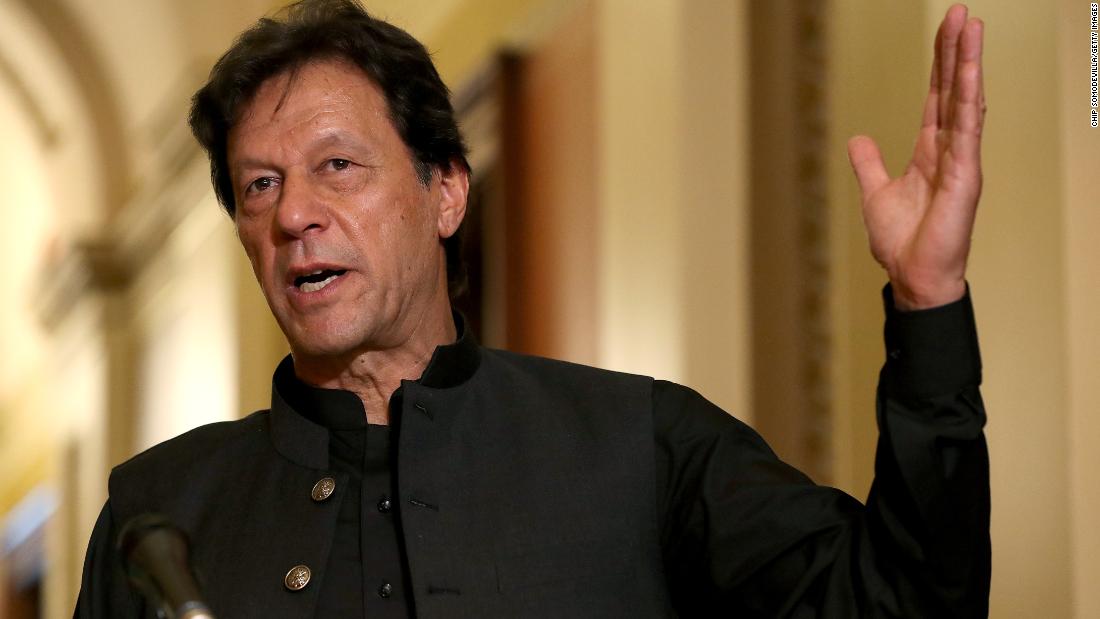
    Defending his party’s move to hold the upcoming election of the upper house of the parliament through open ballot, Prime Minister (PM) Imran Khan has spoken of bribes paid to buy loyalties, revealing that he himself had been offered some.

    “Money goes to the very top,” the premier said while speaking to media on Friday.

    According to Dawn, PM Imran claimed that 20 members of the Khyber Pakhtunkhwa (KP) Assembly belonging to the Pakistan Tehreek-e-Insaf (PTI) were paid Rs50 million each during the last Senate poll to vote in favour of certain candidates.

    Saying that the parties opposing the amendment aimed at curbing corruption would stand exposed, he added the PTI had expelled the 20 members after they were found guilty of horse-trading by an investigation committee.

    “We also know who is raising money to buy loyalties this time,” he said, without naming anyone.

    He termed the practice “betrayal” with Pakistan because the Senate had a particular “status and role” since it represented the provinces in the federation.

    The premier said it reflected poorly on the kind of people who came to the Senate through money and questioned the ability of such lawmakers to represent their respective provinces. “Apart from that, what kind of democracy is this where legislators sell their vote by taking money?” he asked.

    Acknowledging that his government did not have a two-thirds majority in the lower house, the premier said the ruling party would still try to present the amendment for open ballot in the Senate elections to curb horse-trading.

  • ‘Please don’t be that fool that runs after numbers,’ says Ayeza after hitting 8 million Instagram followers

    ‘Please don’t be that fool that runs after numbers,’ says Ayeza after hitting 8 million Instagram followers

    Ayeza Khan has dethroned Aiman Khan to become the most followed Pakistani celebrity on Instagram with 8 million followers. Aiman has 7.9 million followers on the social media application while Mahira Khan follows closely behind with 7 million followers.

    “Thank you guys so much for the love and respect! It is exciting to have such a huge number of followers here,” said Ayeza celebrating the milestone.

    Read more – The Current Ranking: Pakistani celebs and their followers on Instagram

    The actor then went to talk about her journey as an actor and how she focused on her work and not on increasing her Instagram followers.

    “I must say that the only reason I am able to celebrate this today is that I know how hard I worked to achieve whatever I have on this day,” said Ayeza. “I never focused my work and life towards getting a bigger number of followers. It never works in the long run. My mother has always taught me that it’s important to work hard and build your legacy and be patient. When you have those all the good stuff comes without you knowing.”

    Ayeza further talked about the disproportionate relationship between the numbers of followers and influence one can have.

    “Growing number of followers doesn’t guarantee a long term success if you’re hollow from the inside. There is a reason why someone with a few thousand followers on Instagram can have more influence on people than someone with tons of millions of followers,” said Ayeza, adding: “Please don’t be that fool that runs after numbers.”

    The actor continued: “For me, I never worked towards growing my Instagram numbers. Instead, I have always focused all my energy into my work, my acting and modelling especially, and the fan following grew itself.”

    “I’m thankful to all of you guys because it feels great to have so many people recognise your talent and work, rather than blindly taping that follow button and not even knowing what I actually do,” she concluded.

    Last week, Maya Ali and Hira Mani both crossed five million followers on Instagram.

  • Kid, who was spotted driving SUV, says he went out to get ice cream

    Kid, who was spotted driving SUV, says he went out to get ice cream

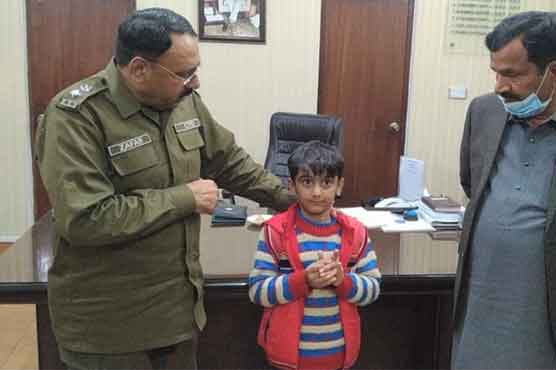
    The boy whose video driving a Land Cruiser in Multan went viral earlier this week says that he took the vehicle out for a ride because he felt like having ice cream.

    When asked by a reporter, the kid said he drove to several places to get the ice cream but couldn’t find any, so he decided to head back home. According to the kid, this was not the first time that he drove this vehicle.

    “My father didn’t scold me,” said the kid in response to a question. He only said that “I shouldn’t drive [at this age] again”.

    The kid’s father said he was sleeping when his son took the key of the vehicle from his bedside. “When I woke up and couldn’t find the key, I took my driver and went out to look for the kid,” he said, adding that the kid was returning home when “we came across him”.

    He also said that he went to the police voluntarily.

    On Friday, the father of the kid was fined Rs 1,000 for negligence. He has also submitted an affidavit to the police stating that the incident occurred due to his negligence and will not happen again. The man and his son were allowed to go home after submitting surety bonds.

  • Twitter unhappy with PTI minister for badmouthing former PM’s late father

    Federal Minister for Maritime Affairs Ali Haider Zaidi has drawn the ire of hundreds of social media users for badmouthing the late father of former prime minister (PM) and Pakistan Muslim League-Nawaz (PML-N) leader Shahid Khaqan Abbasi.

    Khaqan Abbasi, who was an air commodore in the Pakistan Air Force (PAF) until his removal by former premier Zulfikar Ali Bhutto, served as the federal minister for production in ex-PM Muhammad Khan Junejo’s cabinet. He died on April 10, 1988, after his car was hit by a missile in the Ojhri Camp disaster.

    “Huge secrets lie behind these huge businesses,” Federal Minister Zaidi wrote as he tweeted a 1991 report against the late Abbasi.

    His tweet, however, did not sit very well with a majority of Twitter users who said:

    While some are also supporting the minister’s statement, what do you think of the tweet? Let The Current know in the comments…

  • Tan France opens up on being a queer Muslim South Asian

    Tan France opens up on being a queer Muslim South Asian

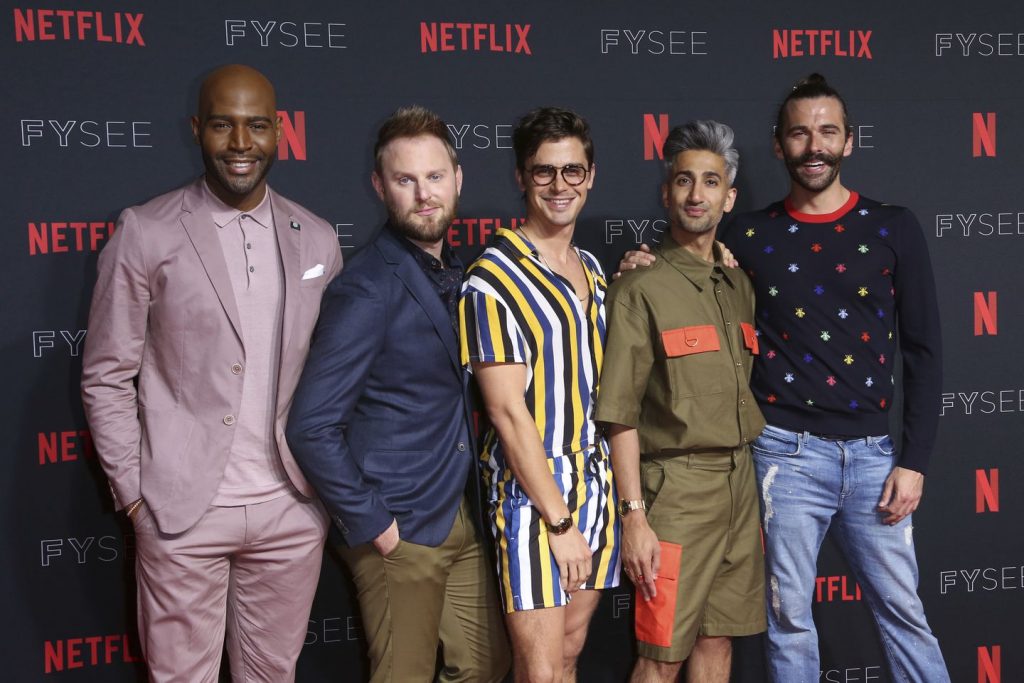
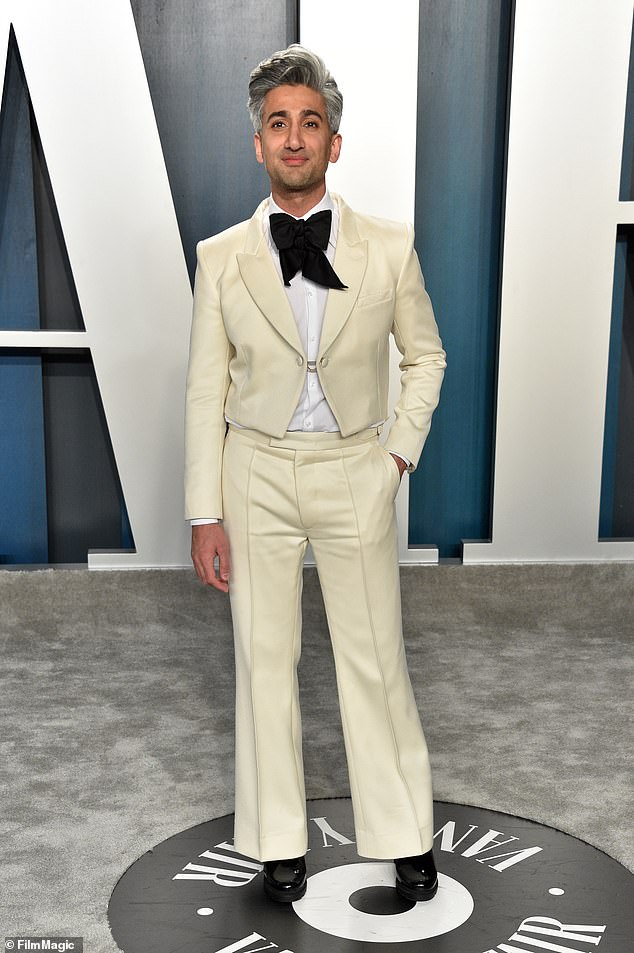
    British-Pakistani-American fashion designer famed for Netflix’s makeover series Queer Eye, Tan France in a recent interview with a local media publication opened up about being a queer Pakistani-Muslim and shed light on his love for his home country.

    Talking about taking the burden of representation, France said: “I think the pressure on me is a little different – I am the only member of the LGBTQ community, who is also South Asian and very open about the fact that I am Muslim also. And so, I’m a few things in America – I’m an immigrant, I’m Muslim, I’m South Asian and I’m gay – and there hasn’t been anybody like that on TV in the US before, or entertainment in general, so the pressure is really really great. It’s the hardest part of this job without a doubt.”

    He continued: “I’m sure you can imagine when you are somebody who is a little different, a lot of Pakistanis don’t appreciate that. There still are a lot of small-minded Pakistani people in and outside of Pakistan, who say ‘we don’t have gay people in our community’, and that’s the most difficult part when there’s nobody else to help you balance it out. When there’s only one person to focus your anger on, you are responsible to make sure you are the ‘perfect’ version of that. That pressure is a lot.”

    “The first year of Queer Eye was very difficult, though I’m very grateful for its success. Being on such a massive international show may be lovely for my white castmates because they just get to enjoy the joy of being famous and successful and wealthy and all those things,” said the reality show star further.

    “Whereas for me the bigger the show got, the more pressure I got from my own community, to be perfect, to not bring shame onto the community. To not embarrass Pakistan. And that’s not easy, and it doesn’t get any easier,” said Tan, adding that the pressure on his has become less now “because I’ve stopped giving a sh*t, quite honestly, what ‘Uncle Bilal’ thinks of me – but – the bigger my star gets, the more pressure is put on me.”

    Later, responding to another question, France said: “The amount of DMs I get through the likes of Instagram, both good and bad where the Pakistani community is saying we don’t have gay people here. Well, that is ridiculous. The other community, the gay community, and the ally community say we need people that show that we exist, that we are not alone, we are not monsters and we deserve love and kindness. The fact that I get those DMs so regularly, makes it clear that things aren’t where they need to be in Pakistan.”

    “That’s why people like me are so important in entertainment. If I had people like me on TV, I wouldn’t have felt like a freak, I wouldn’t have felt alone as a child. I think it comes from the top, so laws need to be changed from the top”, said France.

    Meanwhile, recalling memories from the last time he visited Pakistan, Tan said: “My favourite memory is my last trip, about 14 years ago when I went to Rawalpindi to design my sister-in-law’s wedding lehenga. My brother was getting married, and our family was to provide the clothes so I was a designer, and I said I want to design it, but I want to go to Pakistan to make it.”

    “So, I went with my mom, and we stayed in Rawalpindi with my brother’s wife’s family who also came with us (I’m really close with my sister-in-law) and I had probably one of the best vacations of my life. I helped cook every day and my sister-in-law’s mom, who has never been to England–found it so strange that this boy from England wanted to make gobhi and bhindi every morning with her -and I would teach her to make it my way! She was just so confused that this boy was cooking!”

    “It was one of my favourite trips, I loved it so much! The rest of the time I would do whatever I wanted. I could go and explore, I went to a zoo, a theme park in Islamabad, it felt like the most fun trip there,” he shared.