Author: News Desk
-
VIDEO: Asad Umar sets dance floor on fire on son’s wedding
Minister for Planning and Development Asad Umar sets the floor on fire on his son’s wedding. -
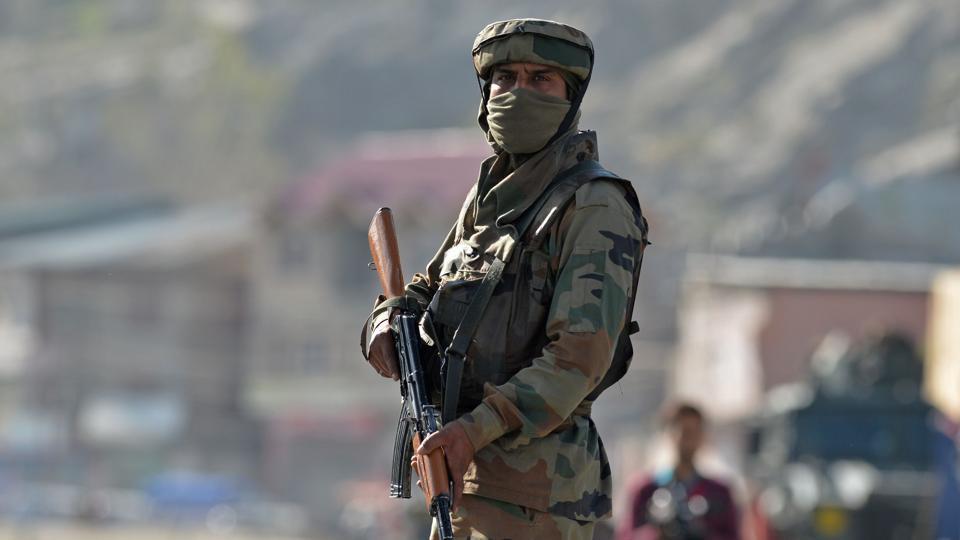
India decides to pull out troops from occupied Kashmir
The Indian government has decided to pull out over 7,000 para-military troops from occupied Kashmir on account of the improvement in law and order situation there and also because the troops were on short-term deployment, Times of India reported.
According to reports, of the nearly 7,200 troops being called back from the disputed region, 2,400 are from the Central Reserve Police Force (CRPF) and 1,200 each from Border Security Force (BSF) SSB, CISF and ITBP. They were all deployed in the state in view of the government’s decision to abrogate Article 370.
The development in August had paved way for ethnic cleansing of Muslims in Kashmir, drawing strong reactions from the international community, especially Pakistan, as Kashmiris faced isolation amid curfew.
As widespread protests continued across the valley, Indian occupying forces had converted it into a garrison by deploying hundreds of thousands of troops and paramilitary personnel in every street, line and by-lane to stop people from staging demonstrations.
WHAT IS ARTICLE 370?
Article 370 was the basis of Jammu and Kashmir’s accession to the Indian union at a time when former princely states had the choice to join either Pakistan or India after their independence from the British rule in 1947.
The article, which came into effect in 1949, exempts Jammu and Kashmir state from the Indian Constitution.
It allows IoK to make its own laws in all matters except finance, defence, foreign affairs and communications. The article established a separate constitution, a separate flag and denied property rights in the region to the outsiders.
That means the residents of the state live under different laws from the rest of the country in matters such as property ownership and citizenship.
WHAT IS ARTICLE 35A?
Article 35A is a branch of Article 370, which was introduced through a presidential order in 1954 to continue the old provisions of the territory regulations.
The article permits the local legislature in IoK to define permanent residents of the region. It forbids outsiders from permanently settling, buying land, holding local government jobs or winning education scholarships in the region.
While Article 35A has remained unchanged, some aspects of Article 370 have been diluted over the decades.
WHY WERE THEY ABOLISHED?
The ruling Bharatiya Janata Party (BJP) and its right-wing allies have challenged Article 35A which it calls discriminatory. Earlier this year, a senior BJP leader had hinted that the government was planning to form exclusive Hindu settlements in the region.
With the special status repealed, people from the rest of India would have the right to acquire property in IoK and settle there permanently.
Kashmiris fear the move would lead to a demographic transformation of the region from majority-Muslim to majority-Hindu, paving way for Prime Minister (PM) Narendra Modi’s hardliner BJP in the disputed territory.
-
Wrong spellings trend on Twitter after govt also wishes Merry ‘Chrismas’
With Christians across the globe celebrating Christmas on Wednesday, a hashtag wherein the holiday was misspelled, started trending on Twitter.
Funnily enough, the official handle of Government of Pakistan also tweeted using the hashtag.
While the origin of the spellings has not yet been determined, here’s how ‘Chrismas’ is being wished over the micro-blogging website, all across the globe.
MERRY CHRISTMAS FROM THE CURRENT!
-
Quiz: Which Nawaz Sharif are you?
With former prime minister (PM) Nawaz Sharif celebrating his 70th birthday today, here’s a quiz for you to find out which of his avatars is you.
[forminator_quiz id=”42801″]
-
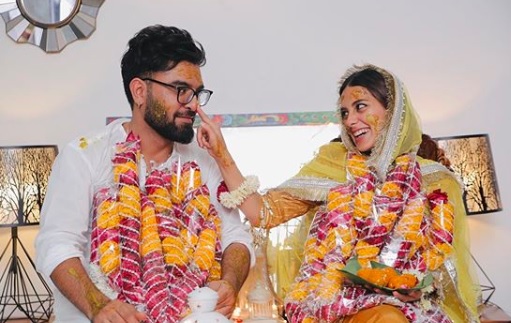
Iqra, Yasir’s wedding festivities kick off with a mayun
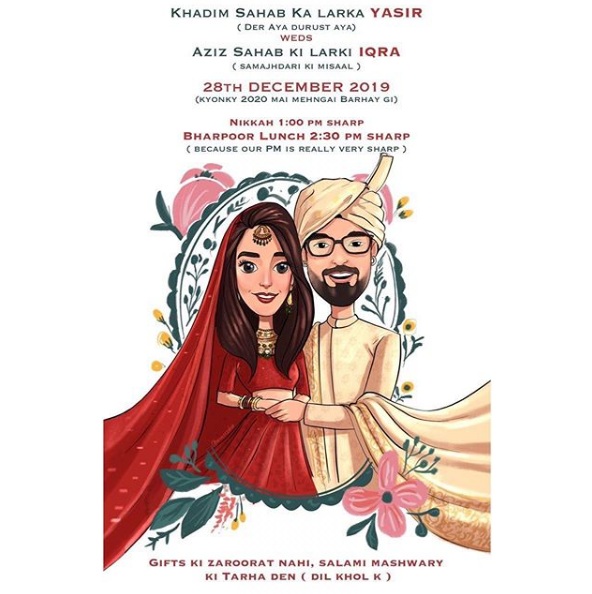
After a whirlwind romance and a very public surprise engagement, Iqra Aziz and Yasir Hussain are all ready to tie the knot on December 28.
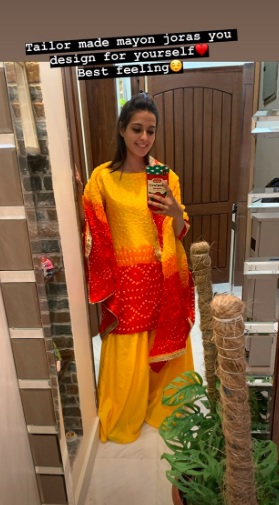
The couple kickstarted their wedding festivities with a bright, yellow mayun.
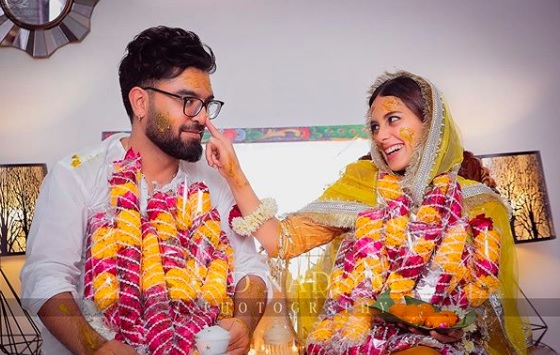
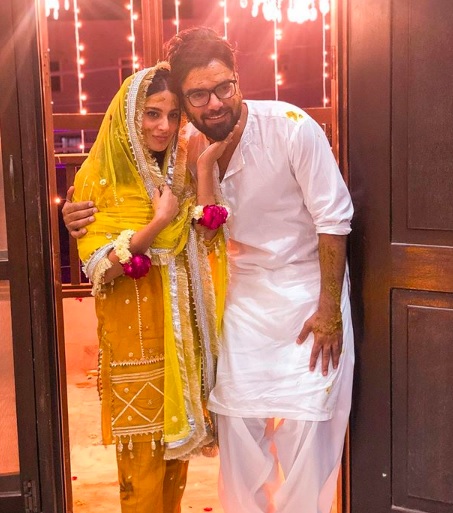
Pictures from the event were full of love as the couple looked into each other’s eyes.
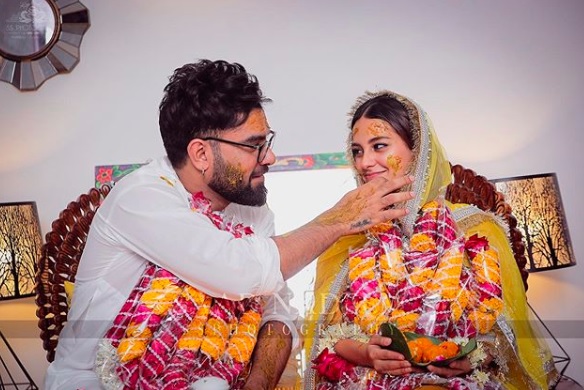

The couple glowed with happiness.
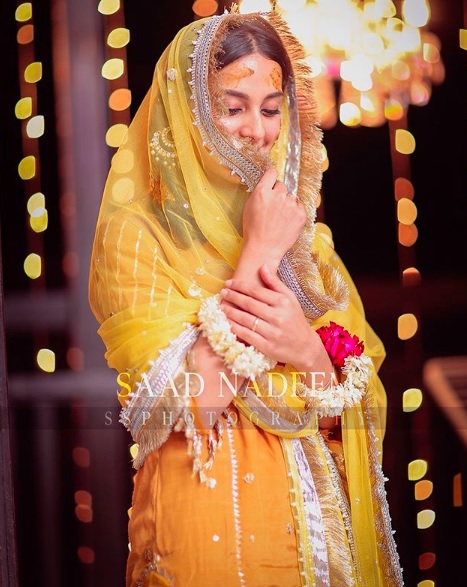

Iqra wore a tailor-made jora which she designed herself.
Iqra with her sister.

The two even posed with Yasir’s dog Mogambo.

The mayun wrapped up with a movie night featuring the classic Kabhi Khushi Kabhie Gham.
Photos courtesy: SS Photography – By Saba Sahar
-
Second marriage? Avail a discount
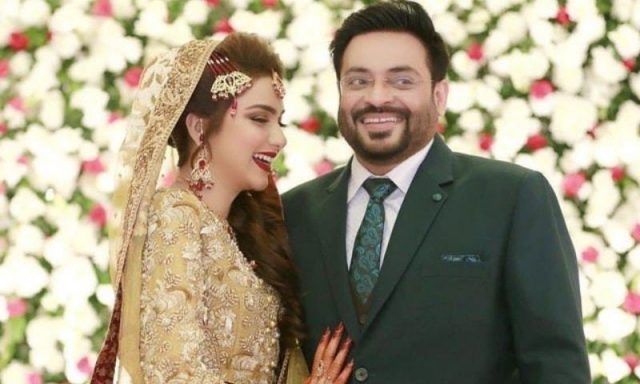
If you want to get a discount at a wedding hall in Bahawalpur, you have to get married again! On your second, third or fourth marriage, a wedding hall in Bahawalpur offers special packages to men. The only caveat is that the first wife has to make the booking.
According to Samaa News, the owner of Al-Farooq Marriage Hall said that they offer 50 percent discount to men getting married for the second time, 75 percent to men getting married the third time and if men get married for the fourth time, they can get the hall for free at their valima. Talk about incentives!
“Many people have told them that they can’t afford second weddings, so I thought of giving them an offer and making their lives a little simpler,” he told SAMAA TV. “We are in the business of bringing people together, we don’t want relationships to fall apart.”
-
How Netflix revolutionalised the way we watch TV
In the not-so-distant past, TV viewers were forced to wait a week for the next installment of their favorite shows, parceled out by networks in half-hour or hour-long increments.
To understand how we got here, look at Netflix (NFLX.O).
At the start of the decade, binge watching involved VHS tapes, DVD box sets or long nights glued to a DVR. TV cable hits included Homeland and The Wire – hour-long dramas with complicated plot lines that needed to be watched sequentially.
Watching Saturday Night Live on a Sunday became normal, and viewers started to lose track of the broadcast schedule.
In November 2010, Hulu, which debuted in 2008 as an ad-supported streaming video site, launched its subscription service, including full seasons of certain shows.
Around the same time that the broadcast TV schedule was losing its hold on viewers, Netflix was beginning to invest in original content.
In 2011, it struck a deal for its first original show, the political thriller House of Cards. It released all 13 episodes of the show’s first season on Feb. 1, 2013. That July it followed with the entire first season of Orange is the New Black.
Viewers were hooked, and the cultural shift accelerated. “Binge-watch” was a runner-up to “selfie” for the Oxford Dictionary’s 2013 word of the year.
Netflix championed this new kind of consumption, commissioning a survey to determine how many people binge-watch, and why.
“Our viewing data shows that the majority of streamers would actually prefer to have a whole season of a show available to watch at their own pace,” said Netflix Chief Content Officer Ted Sarandos at the time.
While some say the decade technically ends a year from now, the end of this year will be marked by many as the conclusion of the second decade of the 21st century. And as the new decade begins, the trend may start to reverse.
AT&T’s (T.N) forthcoming HBO Max streaming service will debut one new episode of its original series per week. Walt Disney Co’s (DIS.N) Disney+ is releasing episodes weekly for new series including the Star Wars-related The Mandalorian. Apple (AAPL.O) released three episodes at the same time for dramas The Morning Show and See – and is doing so for most other Apple series – followed by one episode per week.
Media companies are hoping a longer release schedule will generate buzz and create more of a shared experience among viewers.
Just like the old days.
-

Mehwish Hayat wants Michelle Obama to be next US president
Mehwish Hayat wants the ex-first lady of United States Michelle Obama to become the next president of the country.
Taking to Twitter, the actor praised the former first lady for efficiently running Obama Foundation and expressed her admiration for her.
Michelle recently visited schools in Vietnam and Malaysia where she praised the efforts of women there to promote girl’s education.
In October, Mehwish was appointed a Goodwill Ambassador for girls’ rights by the Ministry of Human Rights.
-

Indian media mistakenly names Atif Aslam’s son as ‘Alhumdulilah’, apologises later
Atif Aslam took to social media to announce the arrival of his baby boy with the caption ‘Ladies and gentlemen our new arrival Alhamdulilah. Both mother and baby are fine. Keep us in your prayers and don’t forget to say Mashallah’.
Atif was thankful to God so he wrote Alhumdulilah. But someone who works in an Indian tabloid surely did not know what the term means.
And soon people started trolling the post.
However, the writer accepted the mistake and also corrected it.
Desi Martini also posted an apology for the mistake.
-
Feroza Aziz is back with another hidden message
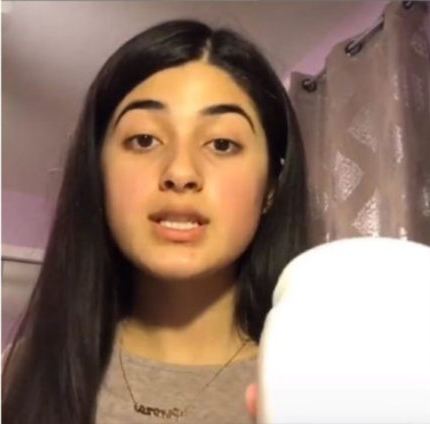
A video by a beauty vlogger went viral on TikTok. Video of Afghan-American TikToker, Feroza Aziz has a hidden message about the Indian Citizenship Amendment Act (CAA 2109). The video starts with a skincare routine and then Feroza starts talking about Indian CAA that violates human rights.
According to the Indian government, CAA 2019 is supposed to grant citizenship to religious minorities that have taken refuge in India till 2014. Except for the Citizenship Amendment Bill (CAB 2019) makes it a point to exclude Muslims. The law requires Indian Muslims to prove their origins in India otherwise they will lose their citizenship.
This 17-year old TikToker made a video with the hidden message about China’s treatment of Xinjiang Uighur Muslims before.