Author: News Desk

  • Islamabad police drag rape suspect to victim for apology… but people aren’t happy

    Islamabad police drag rape suspect to victim for apology… but people aren’t happy

    Swift justice, but at what cost? 

    Islamabad Police have shared a video on their official account on Friday, showing them apprehending a man responsible for raping and robbing of a foreign woman within 51 hours of the crime. 

    They were successful in recovering the stolen items and identifying the suspect. 

    The police force was commended for their swift  professionalism.

    However, the police’s next move sparked widespread controversy.  

    The Islamabad Police’s official X (formerly Twitter) account uploaded the video of the survivor, visibly distressed and repeatedly shouting a Quranic verse at the rapist. “Allah (Alone) is Sufficient for us, and He is the Best Disposer of affairs (for us),” she keeps on saying while crying. 

    Her face is blurred but her tense body and angry gestures are visible. The rapist’s face is blurred too but for a brief moment he can be seen gesturing to her for forgiveness. 

    Although many people were grateful for the arrest, social media users had mixed opinions and were mostly critical of the police for sharing the video. Some people applauded the move and demanded that the suspect faces severe consequences.

    “He should be made an example so no one dares to do this again,” one post read.

    Some users expressed anger at the lack of safety for women in such circumstances, noting the motorway rape incident when the victim kept phoning the police but no help arrived, while another user said, “Such people should be shot publicly.” 

    The police’s choice to publish the video was also condemned by many. “What sort of law enforcement is this?” 


    One person questioned if it was appropriate for the police to post such material on social media.

    Others pointed out that sharing such videos on social media only tarnished the country’s reputation, with one tweet stating, “One shameless man has made the entire country look bad.”

    “Such videos should not be posted on social media, it’s disgraceful,” said another person. The choice to release the survivor’s footage sparked significant ethical questions regarding privacy, dignity, and how trauma should be handled in public, even if the police were praised for their prompt arrest. 

    Although justice was served, there were significant concerns regarding the institutions’ duty to safeguard the victim and her dignity while her traumatic experience was made public.

  • Pak-India clashes: Every Indian media lie debunked

    Pak-India clashes: Every Indian media lie debunked

    Indian mainstream media sensationalised headlines during breaking news coverage last night, claiming to have shot down Pakistani missiles in Indian Illegally Occupied Jammu and Kashmir (IIOJK).

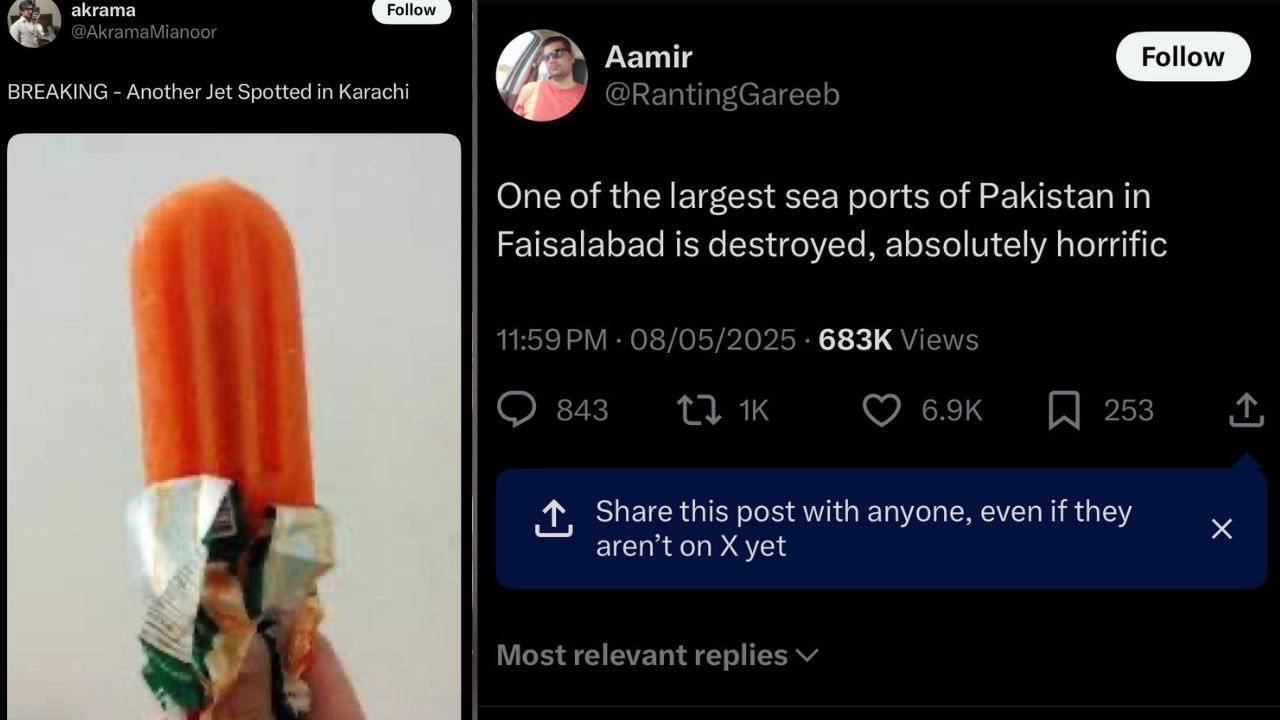
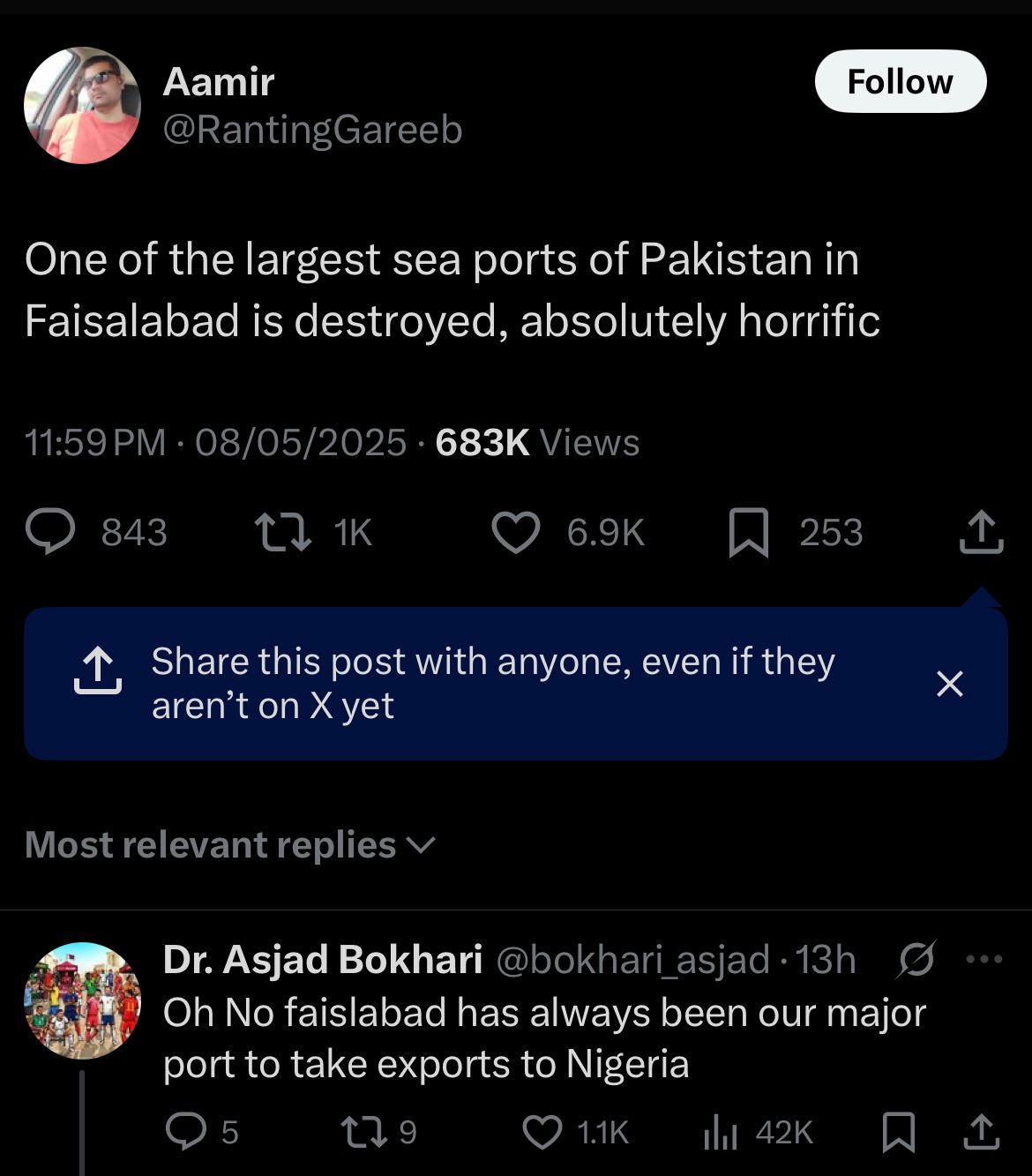
    Several major news channels aired unverified reports, including alleged strikes in Sialkot, an attack on Karachi Port, and even the occupation of Pakistan’s federal capital.

    India Today: “India targets Lahore, Navy attacks Karachi”

    DNA India: “India attacks Pakistani capital Islamabad”

    Zee News: “Pakistan capital Islamabad occupied”

    Aaj Tak: “Karachi port destroyed”

    ABP News: “Pakistan Army Chief Asim Munir arrested”

    The media frenzy in India followed its accusations that Pakistan had attacked three military bases with drones and missiles on Thursday night, a deceptive claim that Federal Information Minister Attaullah Tarar categorically denied.

    Some outlets went even further, falsely claiming that India had shot down at least two Pakistan Air Force (PAF) fighter jets, including an F-16 and a JF-17 Thunder.

    In a statement last night, May 8, Tarar confirmed that the PAF is fully operational, alert, and ready. He clarified that Pakistan had not carried out any aggressive action across the international border.

    In a separate press release on Thursday night, Pakistan’s Foreign Office (FO) also rejected the Indian media’s baseless allegations of attacks on Pathankot, Jaisalmer, and Srinagar.

    “We urge the international community to take serious note of this dangerous behaviour and to counsel India toward restraint and responsibility,” the FO said.

    He clarified that Pakistan remains vigilant and firmly committed to peace, but it will not be deterred by attempts to provoke, intimidate, or mislead and reserves the right to respond to acts of aggression. He added that allegations made by India are rejected in the strongest possible terms.

  • Pakistan strikes back at India with memes, again

    Pakistan strikes back at India with memes, again

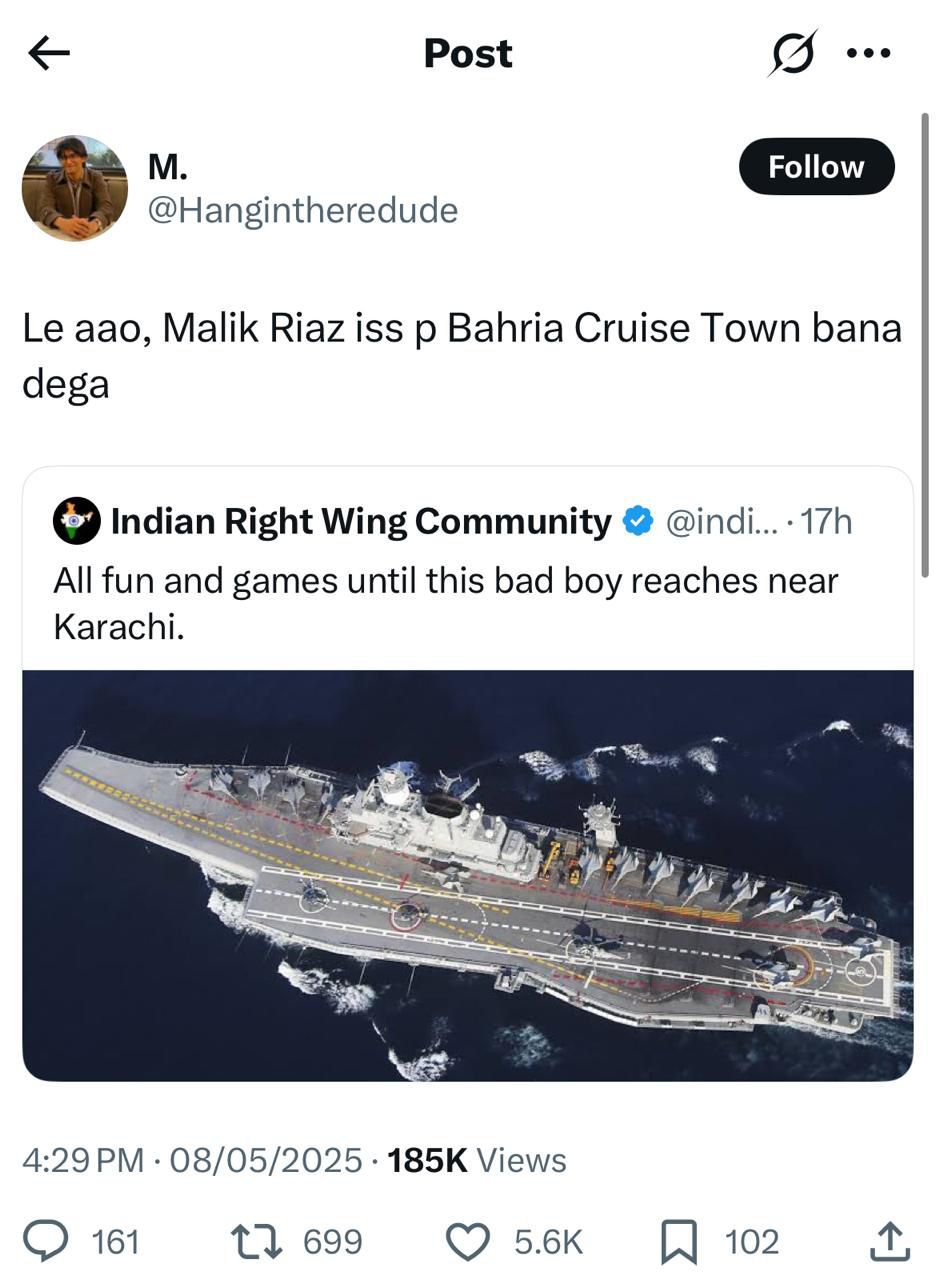
    Indian social media users are actively using platforms like Instagram and X to spread false information amid rising cross-border tensions between Pakistan and India. Many posts falsely claim that the Indian military has invaded Pakistan and taken control of various regions, including major cities such as Lahore and Karachi. These baseless statements have triggered a digital storm and sparked a meme war that is now dominating social media.

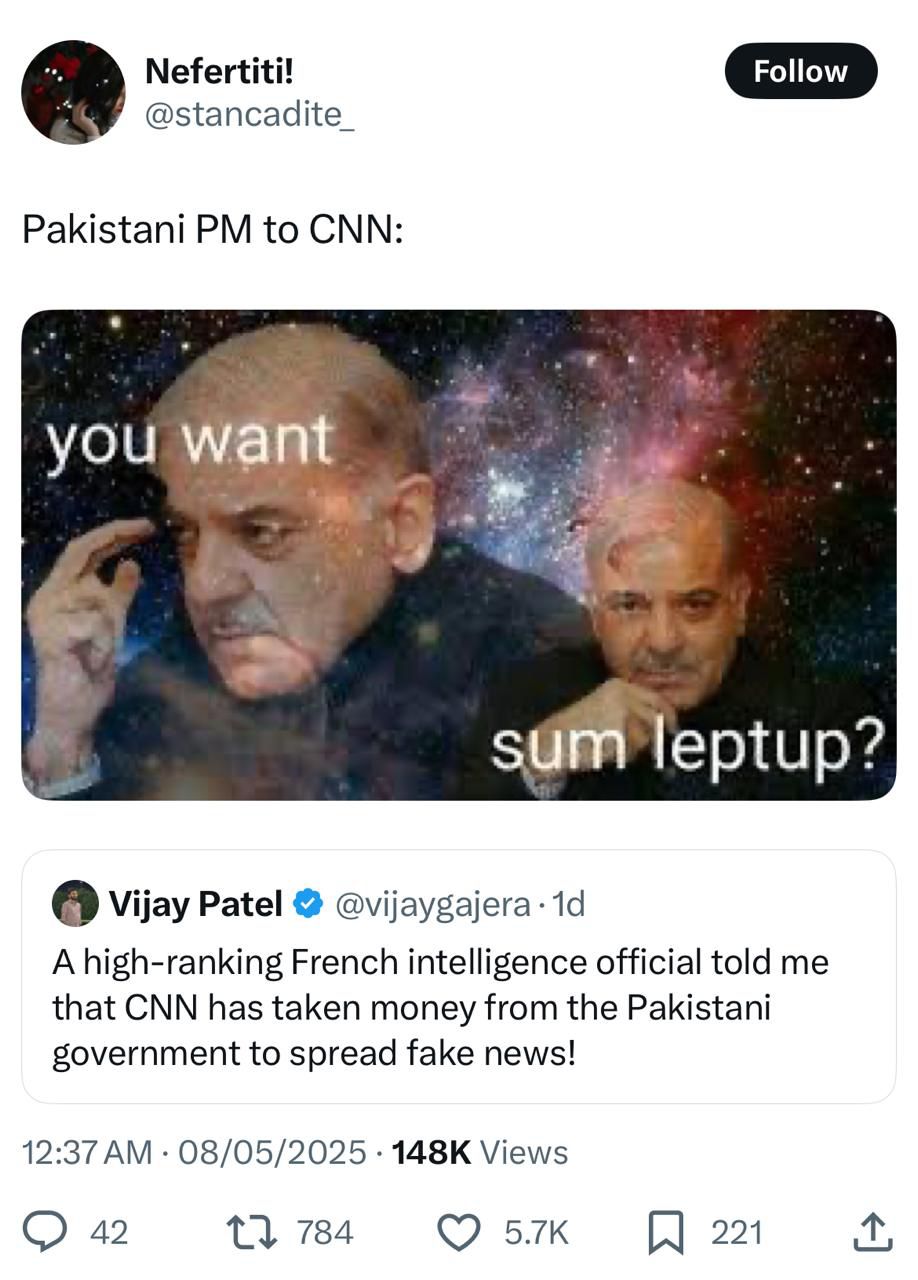
    While the situation on the ground remains serious, the online space has become a battleground of viral content, misinformation, and exaggerated narratives. Pakistani users have responded with sharp wit and sarcasm, using memes as a form of resistance and satire.

    Here are some of our favourite ones:

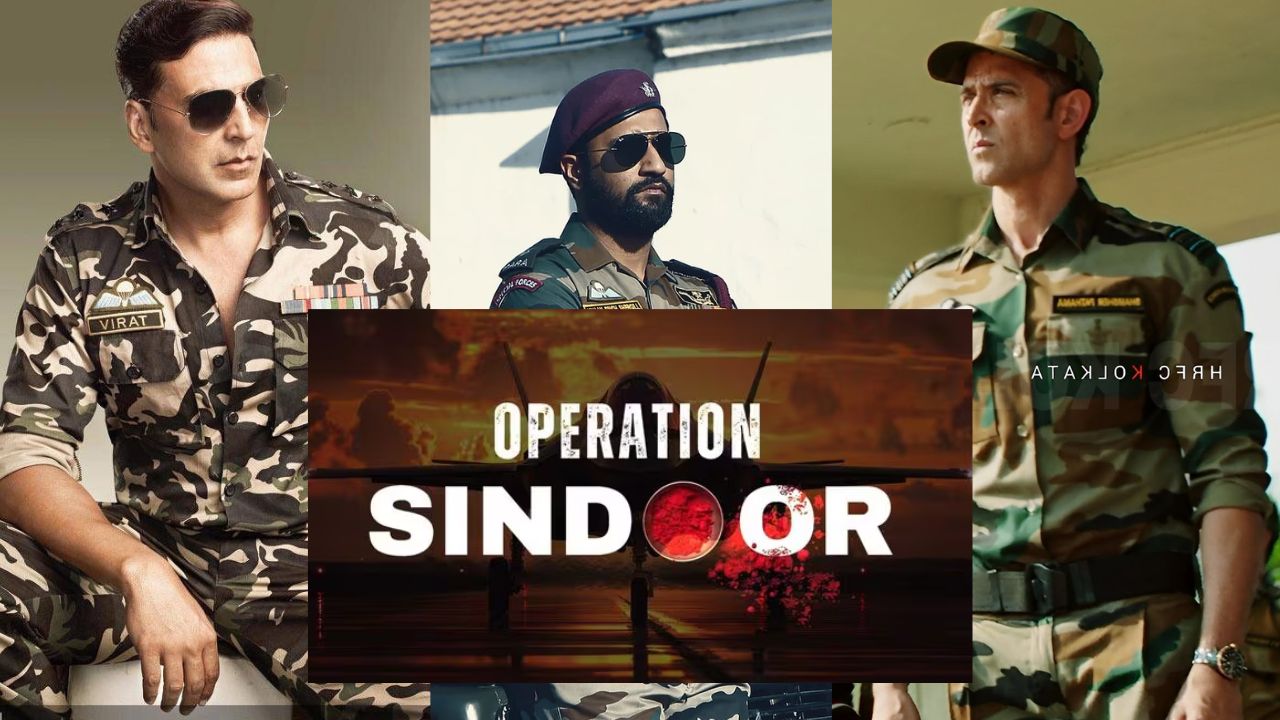
  • Bollywood filmmakers rush to trademark ‘Operation Sindoor’

    Bollywood filmmakers rush to trademark ‘Operation Sindoor’

    As tensions rise between Pakistan and India following India’s ‘Operation Sindoor’, Bollywood seems more focused on securing film titles than confronting the reality on the ground.

    In the early hours of Wednesday (May 7), India launched airstrikes across several areas in Pakistan, including Kotli, Bahawalpur, Muridke, Bagh, and Muzaffarabad. At least 30 civilians were reportedly martyred, with over 40 others injured.

    In retaliation, the Pakistan Air Force shot down six Indian aircraft, including three Rafale jets. This marked the first time in history that a Rafale jet was brought down in combat.

    A day later, on Thursday, Pakistan also shot down more than 30 Indian drones in various regions of the country.

    Meanwhile, Indian media reports suggest that filmmakers are scrambling to trademark the term ‘Operation Sindoor’, a phrase now widely used in the Indian narrative around the recent Pahalgam incident.

    At least five trademark applications have reportedly been filed so far, with the aim of turning the operation into a movie or web series.

    On May 7, Reliance Industries became the first to file a trademark application under Class 41, which includes media, education, and entertainment services. However, the company withdrew the application a day later, stating it was “inadvertently submitted by a junior employee without authorisation.”

    “Reliance Industries has no intention of trademarking Operation Sindoor,” the company clarified in an official statement.

    Despite this withdrawal, the rush had already begun. Industry insiders reveal that multiple production houses and individuals have since filed to register titles linked to Operation Sindoor and the Pahalgam incident.

    The Indian Motion Picture Producers Association (IMPPA) and the Indian Film and Television Producers Council (IFTPC) have reportedly received over 35 title applications in total, covering both films and web series.

    IFTPC’s Suresh Amin confirmed, “We’ve received around 10 to 12 title applications related to the mission. Most of the interest is coming from major Bollywood studios.”

    This quick move by the film industry has raised eyebrows, especially as the facts behind the Pahalgam incident remain unclear. Pakistan has already called for an impartial international investigation, but instead of waiting for verified details, Indian filmmakers appear more eager to dramatize the narrative.

  • US Vice-President says India-Pakistan conflict ‘none of our business’

    US Vice-President says India-Pakistan conflict ‘none of our business’

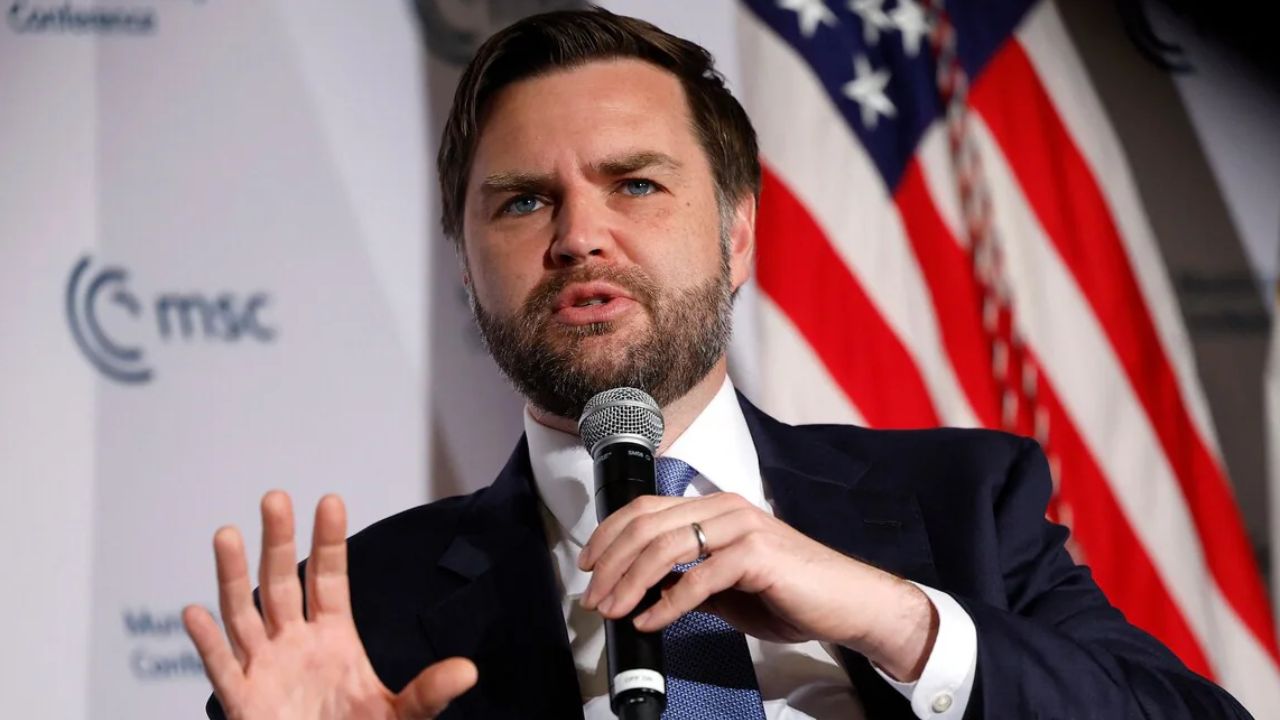
    US Vice-President JD Vance has stated that Washington will not get involved in the growing conflict between India and Pakistan, saying that it is “fundamentally none of our business”,  advocating for diplomatic de-escalation instead.

    “What we can do is try to encourage these folks to de-escalate a little bit, but we’re not going to get involved in the middle of a war that’s fundamentally none of our business and has nothing to do with America’s ability to control it,” Vance said frankly in an interview with an international news agency, emphasizing on the US’s inability to force either nuclear-armed nation to disarm or cease military operations.


    His remarks coincide with increasing tensions between the two nations. According to reports, 31 civilians were killed by Indian missile attacks on Pakistan on Wednesday. New Delhi said the strikes were directed at “terrorist infrastructure.” Pakistan denied that any such groups were present in the attacked areas.


    The United States hopes for a resolution that prevents a wider regional dispute, Vance, who has been actively involved in foreign affairs under the Trump administration, noted.

     In reference to a recent militant incident in Kashmir, he stated, “We hope that India responds to the terrorist attack in a way that doesn’t lead to a broader regional conflict.”


    “And we hope, frankly, that Pakistan, to the extent that they’re responsible, cooperates with India to make sure that the terrorists sometimes operating in their territory are hunted down and dealt with.”

  • Global militaries to study India-Pakistan fighter jet dogfight

    Global militaries to study India-Pakistan fighter jet dogfight

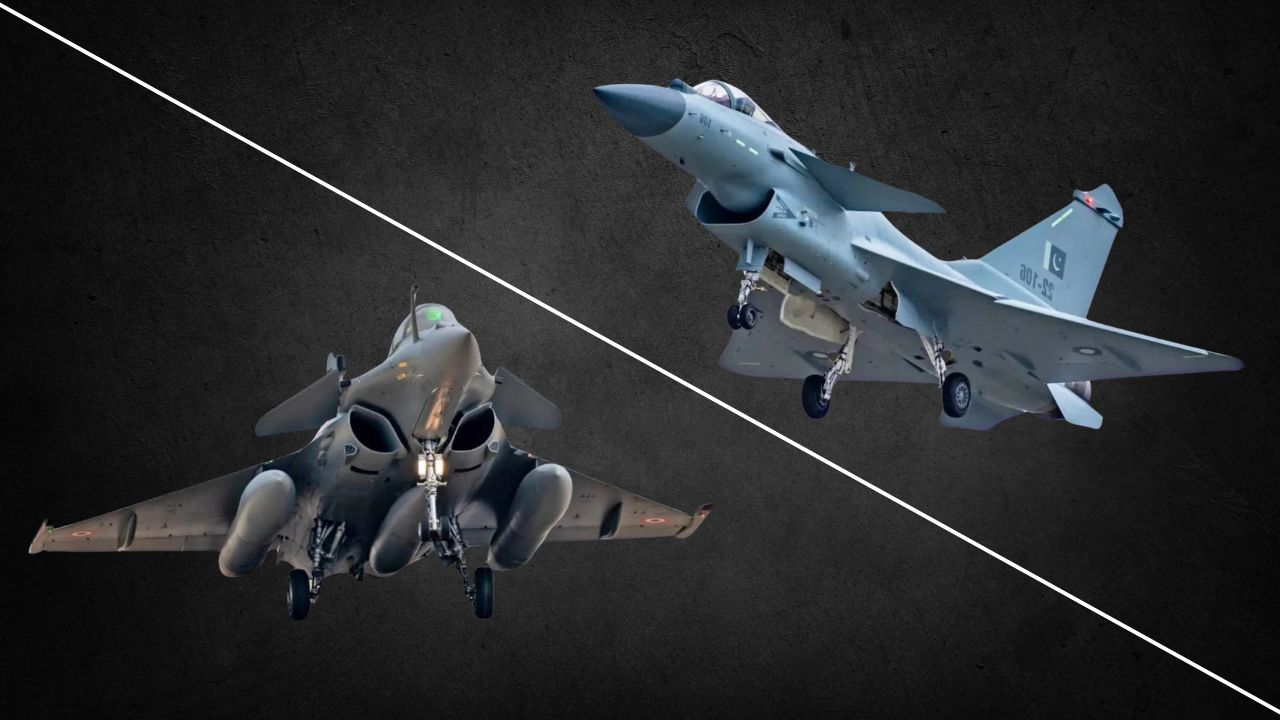
    A dogfight between Chinese-made Pakistani jets and French-made Indian Rafale fighters will be closely scrutinized by militaries seeking insights that could offer an edge in future conflicts, Reuters has reported.

    The aerial clash is a rare opportunity for militaries to study the performance of pilots, fighter jets and air-to-air missiles in active combat, and use that knowledge to prepare their own air forces for battle.

    Experts claim the live use of advanced weapons would be analyzed across the world, including in China and the United States (US), which are both preparing for a potential conflict over Taiwan or in the wider Indo-Pacific region.

    “Air warfare communities in China, the U.S. and a number of European countries will be extremely interested to try and get as much ground truth as they can on tactics, techniques, procedures, what kit was used, what worked and what didn’t,” said Douglas Barrie, senior fellow for military aerospace at the International Institute for Strategic Studies.

    “The PL-15 is a big problem. It is something that the U.S. military pays a lot of attention to,” a defense industry executive said.

    A top Chinese-made Pakistani fighter plane shot down at least two Indian military aircraft on Wednesday, Reuters has reported, citing two U.S. officials.

    In a press briefing on Wednesday, Director General Inter Services Public Relations (DG ISPR) Lieutenant General Ahmed Sharif Chaudhry said that Pakistan shot down five Indian jets, including three Rafales, one Su-30 and one Mig-29. 

    There was high confidence that Pakistan had used the Chinese-made J-10 aircraft to launch air-to-air missiles against Indian fighter jets, bringing down at least two, Reuters said while citing one U.S. official, who spoke on condition of anonymity.

    Another official said that at least one Indian jet that was shot down was a French-made Rafale fighter aircraft.

    Citing US officials, Reuters reported that Pakistan’s F-16 aircraft, made by Lockheed Martin, were not used in the shootdown.

    The Rafale and the model of the J-10 used by Pakistan are both considered generation 4.5 fighter jets, placing them at the leading edge of combat aircraft.

    Earlier, a senior French intelligence official confirmed to CNN that one Indian Air Force (IAF) Rafale fighter jet was shot down by Pakistan, marking what could be the first known combat loss of the French-made aircraft.

    French authorities are now investigating whether additional Rafale aircraft were also brought down during the overnight military exchange. “We are aware of the loss of one Rafale and are examining reports suggesting more could have been downed,” CNN quoted a French official as saying.

    India’s most reputable English newspaper, The Hindu, had earlier in its post on X (formerly Twitter) confirmed that three Indian fighter jets were shot down by the PAF. However, it shortly removed the post from its social site, saying that it had not received official confirmation from the Indian government. 

    Meanwhile, BBC Verify reported on Thursday night that it authenticated three videos, purportedly showing the wreckage of a French-manufactured Rafale fighter, which is used by the IAF.

    “In one clip, geolocated by BBC Verify to a field near the city of Bathinda in India’s Punjab state, troops can be seen collecting debris from the crashed jet,” it said.

    The outlet further reported that it has also located two further clips from the same location filmed at night. “One shows debris in the field, while another shows a projectile catching fire in the sky and then fire in an open field,” it added.

    The outlet quoted a former British Army Officer, Justin Crump, who runs the risk intelligence company Sibylline, as saying, “The wreckage appears to be a French air-to-air missile of a type used on both Mirage 2000 and Rafale fighter jets.”

    “Another image circulating on social media shows a tail fin with ‘BS001’ and ‘Rafale’ inscribed on it. Google reverse image searches don’t show any old versions of the image,” the outlet concluded.

  • IPL suspended as Pak-India tensions continue to mount

    IPL suspended as Pak-India tensions continue to mount

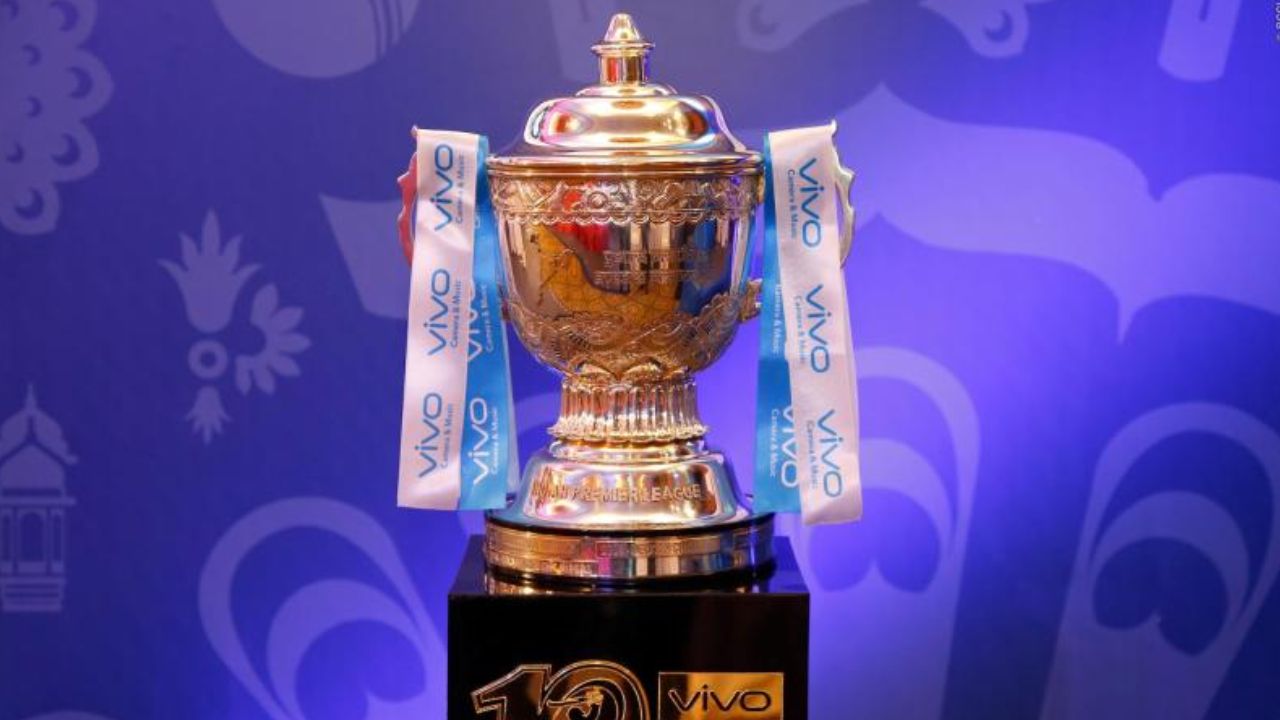
    The Indian Premier League (IPL) has been suspended indefinitely amid rising military tensions between Pakistan and India. The decision comes after Pakistan’s retaliatory actions in response to Indian strikes.

    According to Indian media, the Board of Control for Cricket in India (BCCI) and IPL management held an emergency meeting. After careful deliberation, the board opted to suspend the tournament until further notice. More details on the suspension are expected to be released soon.

    Just a day earlier, an IPL match in Dharamshala was abruptly halted. The stadium lights were switched off, and several foreign players reportedly began looking for flights to return home, reflecting growing concerns over safety amid the conflict.

    The situation intensified following Indian airstrikes on Pakistan, which were met with a strong military response from the Pakistan Army. Pakistan’s civil and military leadership has reiterated that the country reserves the right to respond to any aggression in line with international law.

    Federal Information Minister Attaullah Tarar stated, “We will respond to India, and we will do it soon. The world will remember our reply.”

    Meanwhile, Defence Minister Khawaja Asif said that Pakistan’s response to India’s drone attacks is inevitable and will be decisive.

    The future of the IPL remains uncertain as tensions in the region continue to rise, with both countries on high alert.

    On the other hand, the Pakistan Cricket Board (PCB) has already shifted the remaining Pakistan Super League (PSL) matches to Dubai. There is now speculation that the IPL may also move its remaining fixtures to South Africa if the situation worsens.

  • ‘We never clapped on someone dying’; Zara Noor Abbas condemns Indian strikes

    ‘We never clapped on someone dying’; Zara Noor Abbas condemns Indian strikes

    Pakistani actress Zara Noor Abbas has spoken out about the wave of messages from Indian social media users following India’s recent missile strikes on Pakistan.

    In an Instagram video, Zara expressed her disappointment over messages celebrating the death of a child in Pakistan. She noted that Pakistanis had condemned the Pahalgam attack in India, stating, “Everyone from our country condemned it over and over again.”

    She questioned the ethics of celebrating civilian deaths, saying, “We never cheered for someone dying. You all are doing that.”

    Zara stressed that terrorism is a universal issue, remarking, “A terrorist is a terrorist, Muslim, Hindu, Bengali, Israeli. Anyone who kills in the name of religion is wrong.”

    She also criticised misinformation being spread by Indian media, including false reports claiming that Karachi Port had been destroyed.

    She urged an end to the glorification of war, highlighting its human toll: “At the end of the day, it’s a soldier’s mother, wife or child who suffers. No one else.”

    Her remarks follow India’s “Operation Sindoor,” launched on May 7, which targeted nine sites in Pakistan. India claimed the strikes were aimed at “terrorist infrastructure” in response to the April 22 attack in Indian Illegally Occupied Jammu and Kashmir that killed 26 tourists. India, however, has failed to provide any evidence to prove its claims against Pakistan.

    Pakistan condemned the strikes as an “act of war.”

    Zara’s video has drawn widespread attention, with many Pakistanis expressing support for her message.

    Indian users also left comments denouncing the violence and showing solidarity, including: “We don’t support this violence,” and “We condemn what India has done.”

  • ‘We’re united and stronger than ever’; Pakistani stars slam Indian war hysteria

    ‘We’re united and stronger than ever’; Pakistani stars slam Indian war hysteria

    Leading Pakistani actors Humayun Saeed, Fahad Mustafa and Nabeel Zafar have taken a bold stand against India’s recent war-driven narrative, following a false flag operation in the Pahalgam district of occupied Kashmir.

    Over the past two days, tensions have escalated as India launched attacks targeting Pakistan, sparking reactions from across the entertainment industry. Celebrities are using their platforms to express solidarity with the homeland and call out Indian aggression.

    In a private TV show appearance, Humayun Saeed and Fahad Mustafa voiced strong criticism of the Indian government’s actions.

    “This is a shameful act. India deliberately starts wars for political gain,” said Humayun. “Our innocent people were martyred this is unacceptable. I salute our army and stand with our martyrs. We are more united and stronger than ever before.”

    Humayun later shared a powerful post on Instagram condemning India’s war tactics and bloodshed.

    Fahad Mustafa echoed similar sentiments:


    “If we don’t unite now, then when? I can’t stop thinking about what Indian Muslims must be going through when mosques are attacked overnight. This is cowardice. People on both sides want peace, but the Indian government is obsessed with war.”

    He also criticized Indian celebrities for spreading hatred:

    “Their actors speak against us, but we’ve never taken that path. I believe Indian Muslims must be questioning their own identity today.”


    Both actors agreed that Pakistan stands united in the face of any threat. “This unity is our real strength.”

    Meanwhile, actor and producer Nabeel Zafar also spoke out during a podcast, delivering a powerful message to Indian war hawks:

    “When war happens, humanity dies. Innocent people on both sides suffer. India needs to learn from Europe war is never the solution.”

    Nabeel questioned India’s pattern of violence:

    “Why do these attacks always happen near election time? The Indian people should start asking real questions.”

    He warned India not to misjudge Pakistan’s strength:

    “If war breaks out, every one of Pakistan’s 250 million people will become a soldier. We know how to defend our homeland.”

    He also emphasized Pakistan’s willingness for peace:


    “We offered a neutral investigation into the Pahalgam incident. That showed we had nothing to hide but instead of accepting the truth, India is beating war drums.”

  • Prevost becomes first US pope as Leo XIV

    Prevost becomes first US pope as Leo XIV

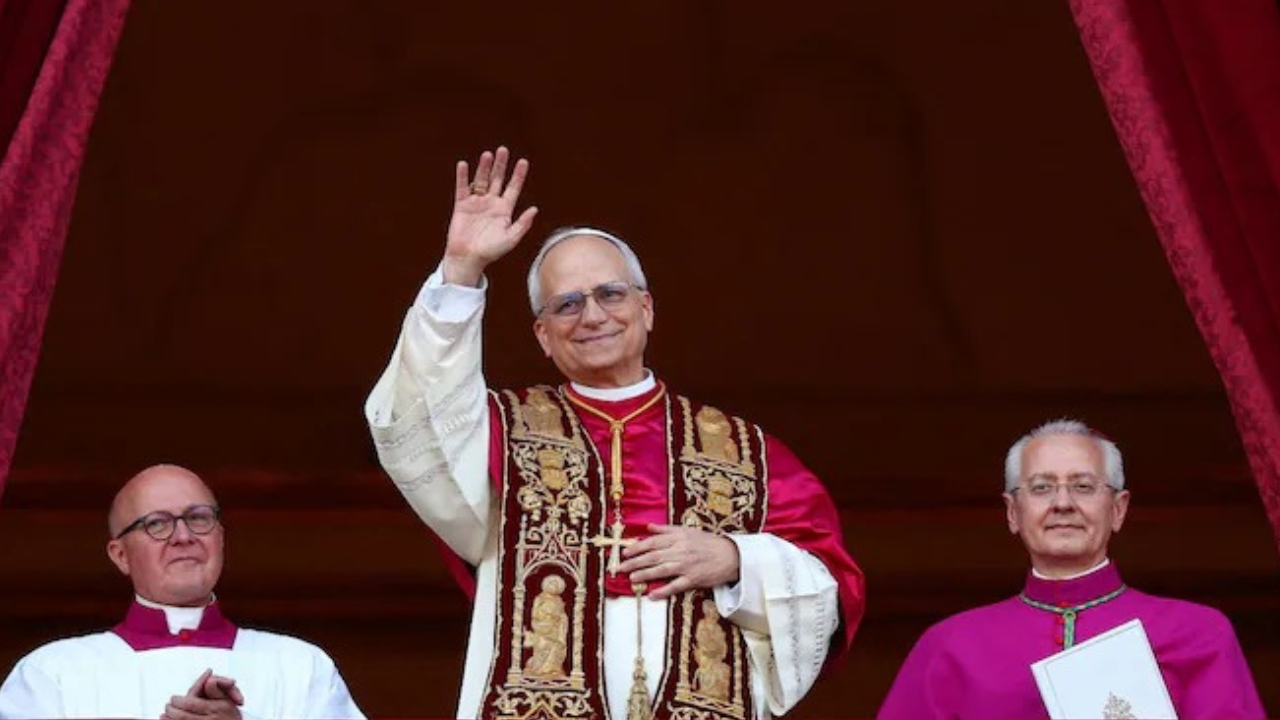
    Robert Francis Prevost became the first pope from the United States on Thursday, picking the papal name Leo XIV after cardinals from around the world elected him leader of the world’s 1.4 billion Catholics.

    Tens of thousands of people packed in St Peter’s Square cheered as Prevost appeared on the balcony of St Peter’s Basilica, waving with both hands, smiling and bowing.

    “Peace by with you,” he told the crowds.

    White smoke from the Sistine Chapel had billowed into the sky on the cardinals’ second day of voting to announce his election in a secret conclave, while the bells of St Peter’s Basilica and churches across Rome rang out.

    Crowds of people rushed towards the square to watch the balcony of the basilica, which has been fitted out with red curtains for the first address to the world by the 267th pope.

    The new pontiff, who succeeds Argentine reformer Pope Francis, was introduced in Latin with his chosen papal name.

    “It’s an amazing feeling,” said an elated Joseph Brian, a 39-year-old chef from Belfast in Northern Ireland, who came with his mother to Rome for the spectacle.

    “I’m not an overly religious person but, being here with all these people just blew me away,” he told AFP as people around him jumped up and down in excitement.

    There were euphoric scenes as one priest sat on someone’s shoulders waving a Brazilian flag and another lifted a heavy crucifix into the air in jubilation.


    – ‘Habemus Papam’ –

    “Habemus papam, woooo!” howled Bruna Hodara, 41, from Brazil, echoing the words to be spoken on the balcony as the new pope is introduced.

    She, like others, recorded the historic moment on her phone, as others waved flags and cried out “Viva Il Papa!” — “Long live the pope!” in Italian.

    “It’s a once in a lifetime opportunity to be here to see the pope. It’s really special… I’m excited!” said Florian Fried, a 15-year-old from Munich, in Germany.

    Pope Francis died last month aged 88 after a 12-year papacy during which he sought to forge a more compassionate Church — but drew anger from many conservatives with his progressive approach.

    The new pope now faces a momentous task: as well as asserting his moral voice on a conflict-torn global stage, he must try to unite a divided Church and tackle burning issues such as the the continued fall-out from the sexual abuse scandal.

    Some 133 “Princes of the Church” from five continents — the largest and most international conclave ever — began voting on Wednesday afternoon.

    Sworn to secrecy, on pain of excommunication, their only means of communicating their progress to the outside world was by sending up smoke through the chimney of the Sistine Chapel.

    On Wednesday evening and then again on Thursday lunchtime, the smoke was black, eliciting disappointed sighs from the tens of thousands watching.

    But on Thursday afternoon just after 6:00 pm (1600 GMT) the smoke emitted was white, confirming that the Catholic Church has a new spiritual leader.

    It was unknown how many ballots it took to elect the new pope, but it followed recent history in wrapping up in less than two days.

    In 2005, Benedict XVI, a German theologian, was elected in four ballots and Francis, in 2013, was elected in five ballots.

    While the details of the election will forever remain secret, the new pope had to secure at least two-thirds of votes to be elected.

    By tradition, he now enters the Room of Tears — where freshly-elected popes give free rein to their emotions — to don a papal cassock for the first time, before returning to the Sistine Chapel so the cardinals can pledge their obedience.

    He will then appear on the balcony along with a senior cardinal, who will announce to the waiting crowds “Habemus Papam” (“We have a pope”).

    The pope will then give a short speech and impart his first “Urbi et Orbi” (“To the City and the World”) blessing.


    – Pastor or diplomat –

    The election has come at a time of great geopolitical uncertainty, which was seen as a key voting issue, along with the rifts within the Church.

    Francis was a compassionate reformer who prioritised migrants and the environment, but he angered traditionalists who wanted a defender of doctrine rather than a headline-maker.

    Some 80 percent of the cardinal electors were appointed by Francis. Hailing from 70 countries around the world, it was the most international conclave ever.

    That was no guarantee, however, that the cardinals would pick someone in his vein.

    The question was whether to choose a pastor or diplomat, a liberal or conservative, someone versed in the Curia — the Church’s governing body — or a relative outsider from areas of the world where Catholic faith is thriving.

    Before the cardinals were locked into the Sistine Chapel Wednesday, their dean Giovanni Battista Re urged them to choose someone able to protect the Church’s unity.

    The next pope must also be able to lead “at this difficult and complex turning point in history”, amid raging conflicts around the world and the rise of ultra-nationalist parties.

    The Church has also had difficulty in adapting to the modern world, with declining priest numbers and increasingly empty pews in the West.

    The papal inauguration usually takes place less than a week after the election with a mass celebrated before political and religious leaders from around the world.

    The new pope will likely do a tour of St Peter’s Square in his popemobile for the first time, before delivering a homily outlining his priorities.