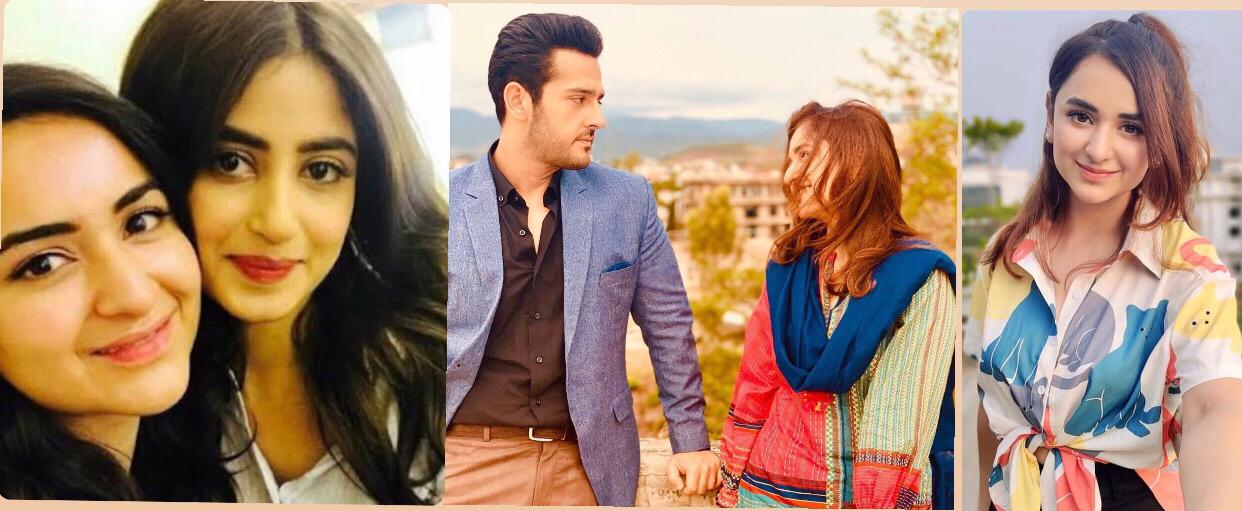
Riding high on the success of his last venture, Dushman E Jaan, director Amin Iqbal has managed to pull off a casting coup by getting on-board a stellar cast in his upcoming biggie. Powerhouse performers Sajal and Yumna are the leading ladies of this ambitious project, penned by the veteran writer, Qaisera Hayat of Alif Allah Aur Insaan fame. It features debutant Azaan as the leading hero, along with Adnan Samad Khan of Ehd-e-Wafa fame.
Yumna Zaidi has shared an exclusive first look of her character along with Azaan’s character from the much awaited drama.
Bollywood actor Dilip Kumar, who died last week, was many things to many people. He was a Bollywood legend, a screen hero, a public figure who spoke out for minority communities, a good and thoughtful human being, a great thespian. But while many fans will look at the entirety of his work during a career spanning over a half-century, my most cherished memories of it are from his early films – particularly Andaz.
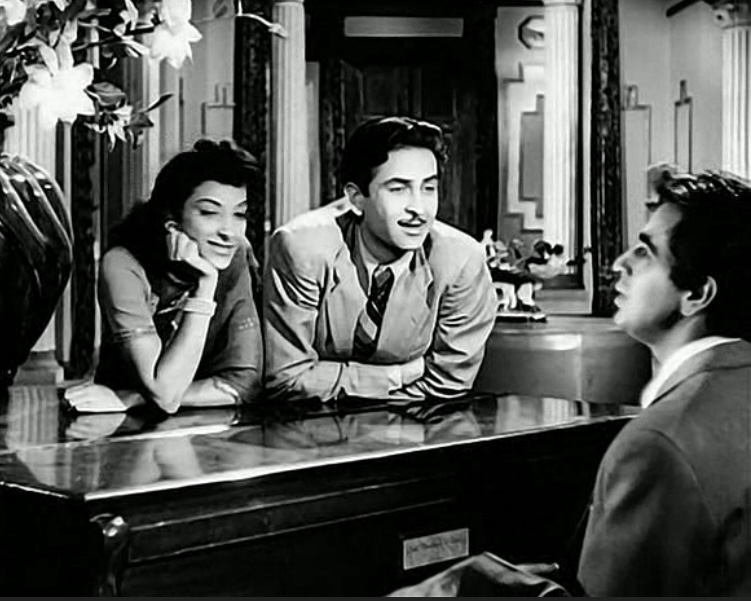
My favourite image of Dilip Kumar will always remain of him seated at the piano singing in Mehboob Khan’s 1949 filmAndaz. As he mouthed the songs (sung by the maestro Mukesh), his soulful eyes would surely have had many swooning: first as he ‘sang’ the optimistic ‘Hum aaj kahin dil kho baithay’ after he has fallen in love with the girl he thinks reciprocates his feelings and then, later, the tragic ‘Tootay naa dil toote na’ when he is heartbroken after the realisation that she regards him merely as a friend and is engaged to somebody else.
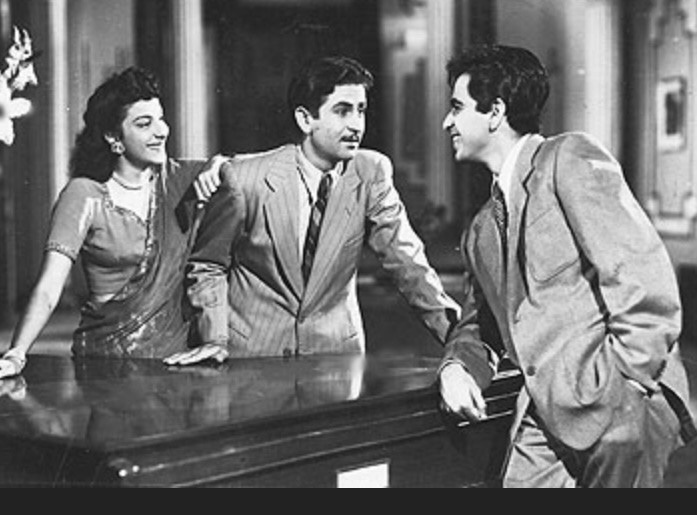
Andaz was an interesting film in that, despite a highly melodramatic and preachy ending, it addressed important post-colonial questions of identity and tradition in a newly independent nation. The love triangle – played by Dilip Kumar, Nargis and Raj Kapoor – comes about largely because of Dilip (Dilip Kumar) misconstruing Neena’s (Nargis) friendly behaviour as romantic love. The film seems to regard this as a result of modernity and westernised behaviour and the social message is spelt out clearly in the pedantic monologue delivered by Rajan (Raj Kapoor) at the end of the film. But despite this rather oppressive message and the film’s completely tragic ending, I remember Andaz fondly both for its songs and for being the vehicle to unite three such fabulous actors on the screen (this was the only film Dilip Kumar and Raj Kapoor did together).
Andaz also fuelled my interest in searching out more of Dilip Kumar’s films from this early period and so I landed on his Daagh (Amiya Chakravarty’s 1952 film)in which again the beautiful songs (sung by Talat Mahmood) did much to complement the tragic nuances of Dilip Kumar’s expressions. Another old film I sought out eagerly was Jugnu as it starred Dilip Kumar opposite our own Nur Jehan. Well, that was certainly disappointing: Jugnu was made in 1947, so I had assumed both young actors would look amazing on-screen and would make a great romantic screen couple. However, in Shaukat Hussain Rizvi’s film, there is absolutely no screen chemistry between the pair and while Dilip Kumar does look quite beautiful, Nur Jehan looks almost old enough to be his mother. Even the youthful two long braids hairstyle and a lineup of very plain (and oppressed looking) female extras as her ‘sahelis’ does nothing to make her look stunning.
In K Asif’s epic Mughal e Azam, Dilip Kumar played Shahzada Salim, the prince whose love for the courtesan Anarkali is thwarted by his father, the Mughal emperor Akbar. Here Dilip Kumar appeared puffier and played a far less endearing personality than in previous tragedies: his Prince Salim was a slimy sort of a character and fairly dislikeable. The on-screen chemistry with Madhu Bhala may have been sizzling and the film’s songs and cinematography memorable but this on-screen Dilip was not one I wanted to remember.
So, I have to say I never really followed Dilip Kumar’s later films as I preferred to stay stuck with the image of him singing ‘Tootay naa dil’ and ‘Ai mere dil kahin aur chal’, etc, but I did follow news of him. His connection to my city, Karachi, was that he was a cousin or kinsman of the well-known orthopaedic surgeon Dr Rahim. His connection to Pakistan was that Peshawar was his ancestral city and he was much loved by many on this side of the border. But when he was awarded the Nishan-e-Imtiaz by Pakistan in 1998, a furious backlash followed in an outcry, which was led by the RSS (Rashtriya Swayamsevak Sangh) and the BJP (Bharatiya Janata Party). The actor seems to have handled this with great dignity but he stated quite clearly in subsequent interviews that he believed he was being targeted because of being a Muslim and a member of a minority community. And it was possibly this episode that led him to a stint in politics as a Congress party member of the legislative assembly. To his credit, he refused to succumb to the pressure generated by right-wing hysteria and he refused to return the award.
They are all gone now, those stylish leading men from the early post-partition era of Bollywood cinema. We remember Dev Anand and Raj Kapoor and Kishore Kumar and so many of their contemporaries in many different and completely personal ways. I choose to remember Dilip Kumar always through those black and white images of him in Andaz: so young and beautiful and moving with such easy grace, mesmerising us with his nuanced and sensitive facial expressions.
‘Toote naa dil tootay naa
Saath humara chootay naa’
Thank you for the memories, Dilip Kumar aka Yusuf sahib
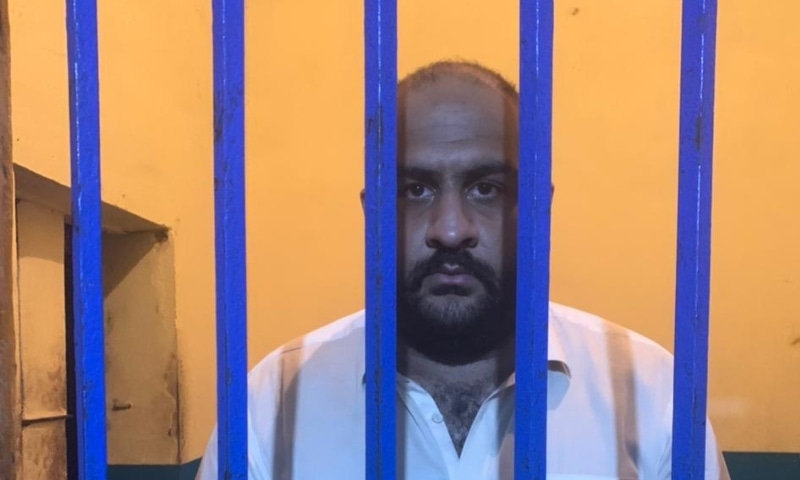
A harrowing video recently went viral on social media in which a man, Usman Mirza, was seen harassing and assaulting a young couple. He had a few male accomplices with him, and he was also armed. Mirza beat up the couple, stripped them, and subjected them to sexual assault. Pakistani women on social media came out in support of the young couple and also voiced how unsafe and insecure they feel in a society full of misogyny and violence.
Following an uproar on social media, the police arrested Usman Mirza and his accomplices. The police also reached out to the couple to record their statement. According to media reports, the couple recorded their statements separately under Section 161 of the Criminal Code. The incident took place last year in November and the couple was blackmailed by the culprit; they ended up paying more than a million rupees to Mirza. This was clearly not an isolated incident as more videos have been found from the mobile phones of the arrested men. It shows that this gang of criminals has been indulging in such nefarious activities for quite some time now.
Prime Minister Imran Khan has taken notice of the case. The Islamabad police chief briefed PM Khan on the case yesterday. Thankfully, the police have so far been extremely responsible and have not indulged in any victim-blaming, unlike the Motorway gang rape case where CCPO Lahore’s comments about the rape survivor were atrocious, to say the least. SSP (Investigations) Atta-ur-Rehman appeared on a few TV talk shows and actually talked about why such incidents are not reported by victims and survivors due to social taboos. Unfortunately, we still have people in our society who think the victims are somehow at fault instead of holding the culprits solely responsible for their crime. Just last month, PM Khan made a controversial statement in an interview where he said that if women wear very few clothes, it will have an impact on the men unless they are robots. And today, in a now-deleted tweet, Pakistan Muslim League-Nawaz (PML-N) lawmaker Hina Butt said that while beasts Usman Mirza should be condemned but is it not necessary that we teach our boys and girls why they become targets of such beasts. “Our youth should also introspect their own behaviour.”
One wonders why the young couple should introspect when they were the victims and not the perpetrators of a despicable crime. In fact, those who are busy blaming and shaming innocent victims should be introspecting instead. Such attitudes do not just make victims and survivors more insecure but are extremely triggering for those who have faced sexual harassment, assault, and rape. Why is it that ‘honour’ is always linked to a woman in our society? Why is it that instead of empowering women, even empowered women end up blaming the victims of abuse? Why is it that everything depends on how a woman was dressed or where she was or who she was with or at what time she went out? Why? We need to uproot this deeply embedded misogyny from our minds. We need to make our women feel secure. We need to make our laws stronger and implement them so that these survivors have trust in the justice system and also in our society so that they do report such harrowing incidents instead of staying quiet due to expected backlash. When we start pointing fingers at the victim, we end up empowering the criminals, the perpetrators of violent crimes. Stop this trend. Enough is enough.
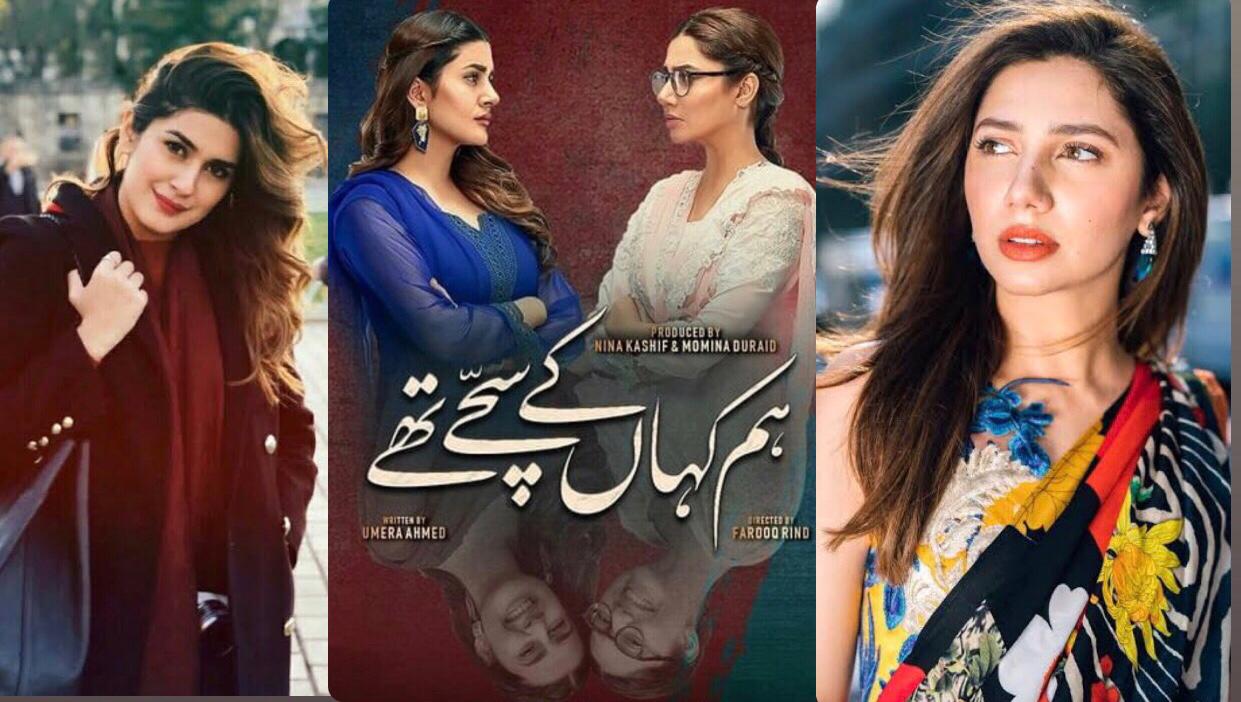
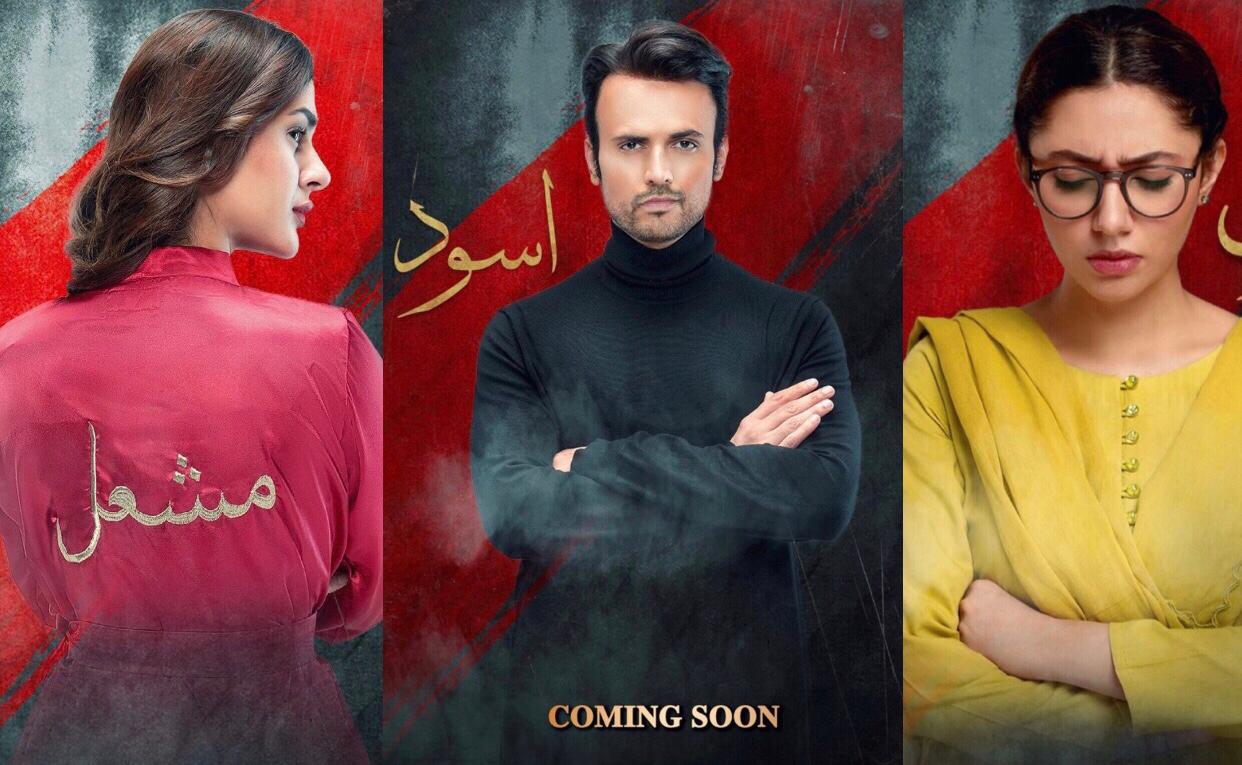
Based on Umera Ahmed’s novel, the much awaited drama features Mahira Khan Usman Mukhtar and Kubra Khan as Mehreen, Aswad and Mashal respectively. The serial is directed by Pyar Ke Sadqay fame Farooq Rind.
Going by the latest poster of the drama it promises a change of dynamics between the characters of Mehreen and Mahsal. The poster gives a ‘friends turn foes’ vibes.
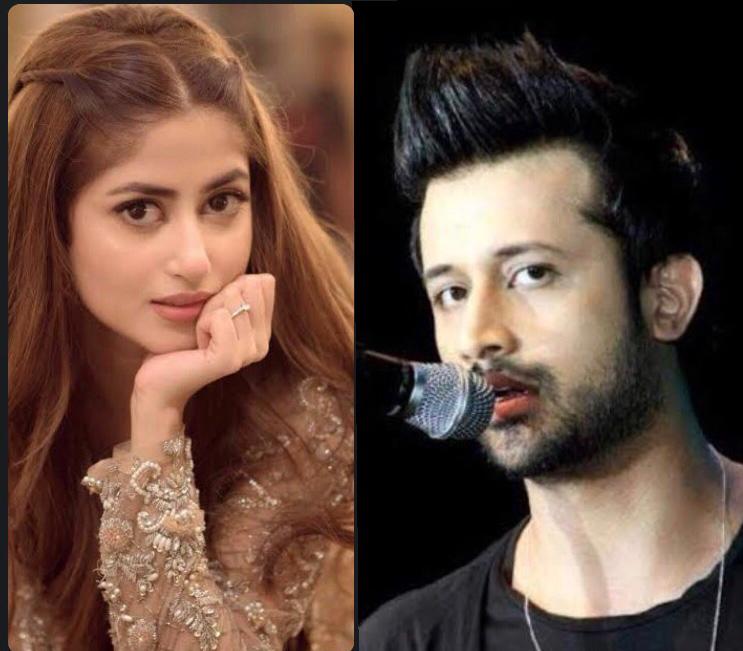
The first feature poster of Rafta Rafta featuring Atif Aslam and Sajal Aly has been released and the leading duo is promising great chemistry,
Set against the picturesque backdrop of the night sky in Skardu, the image shows Atif and Sajal sitting close to each other on a camping trip, hinting at oodles of romance and chemistry. While Atif has previously worked with some incredible artists, this is the first time the Mom actress is sharing the screen with him.
Released under the label of Tarish Music, Rafta Rafta is directed by Hassam Baloch, jointly produced by Tarun Chaudhary and Omar Ahmed while the music and lyrics are done by Raj Ranjodh. The song will be released soon across digital platform.
Hum Kahan Ke Sachay Thay‘s character posters have been released, based on Umera Ahmed’s novel, it features Mahira Khan Usman Mukhtar and Kubra Khan as Mehreen, Aswad and Mashal respectively. The drama is directed by Pyar Ke Sadqay fame Farooq Rind.
The three leads of the show revealed their first looks from the project on Instagram.
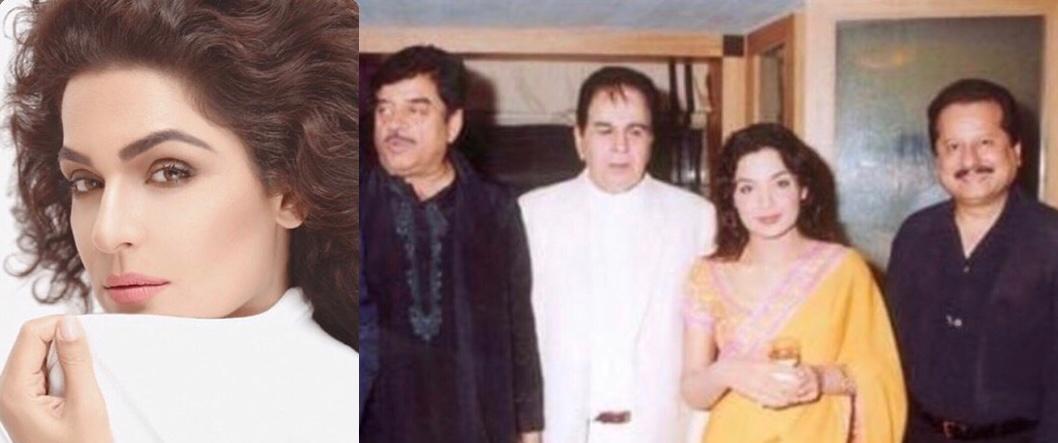
Meera has shared her fond memories with Legendary late actor, Dilip Kumar who passed away earlier today. The Baaji actress met him and his wife Saira Banu in a ceremony where actor Shatrugan Sinha was also present.
The Inteha actress took to Instagram to post her throwback pictures. She captioned the post as, “The end of an era. Thank you for inspiring generations of artists with your performances. Your legacy will live on forever. Rest in peace Dilip Saab”.
Imran Abbas and Saba Qamar are collaborating for the first time in this Saqib Khan directorial. After giving stellar performances in Baaghi and Cheekh, Saba Qamar took a break from television and shot for two feature films which will release post the pandemic woes.
Written by Sara Qayyum, it also features Chupke Chupke fame, Sidra Niazi and Asad Siddiqui in significant roles. In his latest interview with Dawn, Imran said, “The subject is very nice and unusual, different from what is happening these days.”
The Thora sa haq actor shared the first look on his Instagram handle, the play will showcase different eras of entertainment industry.
Farooq Rind’s directorial Hum Kahan Kay Sachay Thay is currently on floors in Karachi. The much awaited drama stars Mahira Khan, Usman Mukhtar and Kubra Khan in lead roles, along with an interesting supporting cast. Zainab Qayyum plays a pivotal role in the series and she shared an exclusive sneak peek from the sets.
The drama is based on Umera Ahmed’s novel of the same name and is being produced by Momina Duraid.
Positioned at top of the points table after five wins in six matches, Lahore Qalandars seemed strong frontrunners to clinch the elusive PSL trophy. At one stage, it even appeared that the sixth time might finally be the charm for them. Even Aqib Javed, Qalandars’ head coach, went a step further and billed Qalandars as the favourites to win the tournament in an interview with Cricket Pakistan.
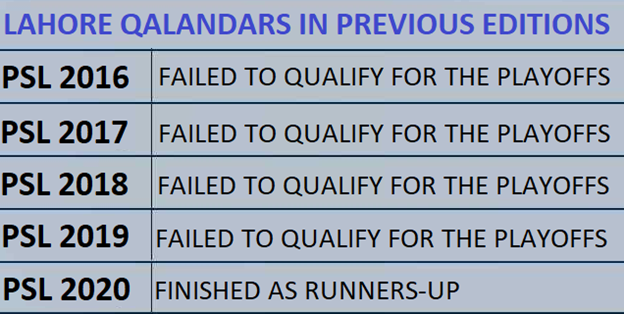
Much to the chagrin of their fans, Qalandars squandered the impressive start and it all went downhill for them from there onwards. In the next four matches, they suffered four losses, which saw them getting stormed out of the playoffs for the fifth time in six editions.
This column attempts to shed light on and assess what went wrong for Qalandars this time around
1. Misfiring top order
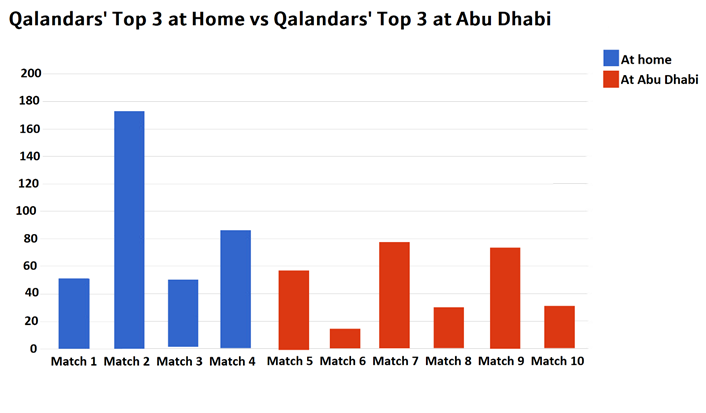
Irrespective of whether a team is batting first or second, the top order holds the onus to provide a solid foundation. While Qalandars’ top 3 batsmen fared decently during the home games, they could not get going in the Abu Dhabi leg of the tournament. Before the tournament had to be moved from Pakistan to Abu Dhabi, Qalandars had played four games where their top 3 batsmen scored a total of 356 runs averaging 89 runs per game. In the Abu Dhabi leg of the tournament, Qalandars’ top 3 could muster a meager 289 across six innings averaging just over 48 runs per game.
2. Decisions at the toss
It cannot be denied that toss plays a crucial role in the outcome of a match. In the Pakistan leg of the tournament, Qalandars registered three wins in four games with all of the wins coming when Qalandars opted to bowl first after winning the toss. In the match against Multan Sultans where they batted first, they ended up losing by seven wickets, which indicates that chasing is not their strong suit. However, with the change in conditions from Pakistan to Abu Dhabi, Qalandars’ batsmen found even chasing par scores an uphill task. In the three consecutive losses against Islamabad United, Quetta Gladiators, and Karachi Kings, Lahore Qalandars batted second. Inexplicably, in their last league game against Multan Sultans where a win would have ensured Qalandars a spot in the playoffs, skipper Sohail Akhtar opted to chase again. The move backfired again as Qalandars were bundled out for 89 in reply to Sultan’s 169.
3. Shoddy death bowling
While Shaheen and Faulkner regularly provided good starts with the new ball, Qalandar’s death bowling was not up to the mark in the Abu Dhabi leg of the tournament. In overs 16-20 in losses against Islamabad, Quetta, Karachi, and Multan, Qalandars conceded 36 (9 runs per over), 38 (9.5 runs per over), 44 (11 runs per over), and 38 (9.5 runs per over) respectively. While it is their batting that is the main headache, Qalandars need to make sure that their bowlers continue their good impact from the powerplay and middle overs into the death overs heading into the next edition. Every cloud goes the saying, has a silver lining. Similarly, despite not being able to advance into the playoffs, Qalandars can take some positives particularly from the individual performances of the quartet of Rashid Khan, Tim David, James Faulkner, and Shaheen Afridi who gave a good account of themselves. Not being able to make it into the playoffs for five times in six editions despite having eminent T20 players in the ranks cries out for sweeping changes on multiple fronts and Qalandars need to ensure that they make these sweeping changes in their system before the seventh edition kicks off if they want the seventh time to be a charm for them.