Category: Data Stories

  • Coronavirus: Pakistan’s secret to ‘flattening the curve’

    According to a report published by The Washington Post on July 19, “Pakistan has flattened its coronavirus curve” as the past several days have seen fewer than 1,500 cases and 40 deaths on an average.

    So far, 5,677 people have succumbed to COVID-19 in Pakistan, which is 2.1% of the total infected population while almost 79% (210,468) patients have recovered.

    The initial estimate of the World Health Organization (WHO) was that the infection fatality rate (IFR) for COVID-19 would be 3.4%, which means that for every hundred cases at three or four people would lose their lives. But as per the Centre for Disease Control and Prevention, the IFR has turned out to be much lower — at a mere 0.65%

    READ: Did COVID-19 peak in Pakistan in June?

    Pakistan’s total number of deaths from COVID-19 in June was 2,835. Since the second week of June, an average of 80 to 100 people had been dying on a daily basis and the same trend continued till June 30. The highest single-day death toll was 153 on June 19.

    So far in July, the highest number of deaths was recorded on the fourth day while the daily death toll within the first week stood at around 80. The trend came down to 60 to 70 deaths a day in the second week and the latest trend suggests up to 30 or 40 COVID-19 fatalities a day.

    Punjab Health Minister Dr Yasmin Rashid says that due to the strict quarantine policy of the provincial government, the virus has not spread as expected. She also says most fatalities are of those who are older than 60 years of age or are suffering from certain other diseases.

    READ: Is coronavirus ending in Pakistan?

    The rate of COVID-19 infections and deaths seems to have dropped significantly in Pakistan but it is an open secret that the number of cases and deaths is also being grossly misreported.

    “I am aware of a few cases in which patients with COVID-19 symptoms were never taken to hospitals and in case of death were laid to rest at large funeral gatherings,” said Love for Data Chief Executive Officer (CEO) Syed Tajamul Hussain. He added that the country hadn’t had a mortality census in a while and it was highly likely that cases were being under-reported amid limited testing capacity.
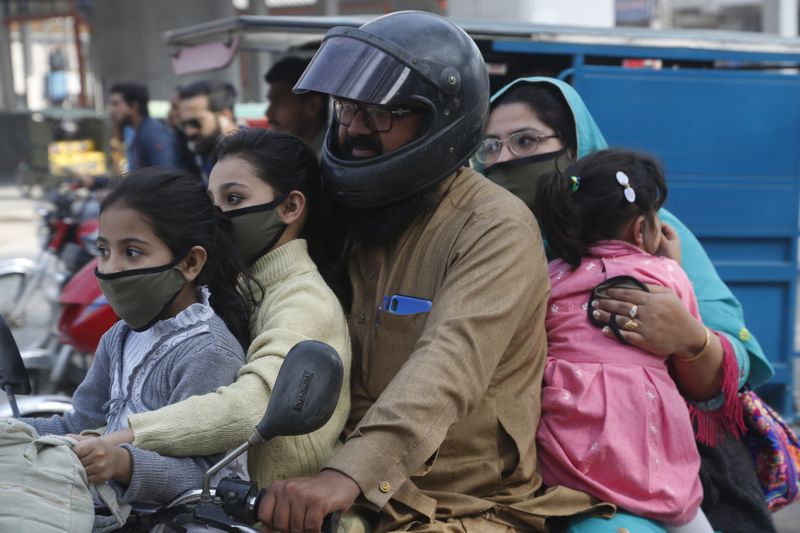
  • Is coronavirus ending in Pakistan?

    Is coronavirus ending in Pakistan?

    The first three weeks of June saw not only a rapid spread of the new coronavirus but deaths attributed to the COVID-19 also stood at around a daily average of 100.

    While the country, since the last week of June, has witnessed a significant decrease in the number of coronavirus infections amid conflicting claims regarding what has led to the drop, Pakistan has an optimistic recovery rate as 67.5% of people who had contracted the virus have so far recovered.

    While it is still unclear if the virus has already peaked in Pakistan or not, testing, active cases and the recovery rate are the major factors proving helpful in estimating not only the spread of the virus but also the pandemic situation.

    So far, July hasn’t been as bad as last month as government statistics from the first two weeks show there has been an increase in COVID-19 recoveries while the number of new cases has also dropped significantly.

    While the reason behind the sudden drop still remains unclear as government boasts of its successful strategy and experts attribute the decline to Pakistanis’ better immunity due to exposure to various vaccinations, it cannot be denied that the drop has been led to also because of lower testing as compared to the month of June.

    People are realising that they would recover if they have mild symptoms and only need to isolate themselves without actually heading out to get tested, surveys suggest.

    Special Assistant to Prime Minister (SAPM) on Heath Dr Zafar Mirza has also confirmed that not many people are voluntarily showing up to get tested anymore. “We are unable to conduct as many tests as we were earlier, despite having a daily capacity 60,000. Pakistan has set up more than 125 labs for COVID-19 testing but we need human resources to run those labs as the testing capacity needs to continuously be enhanced.”

    Meanwhile, a majority of people are also making use of telehealth services by consulting their doctors over the phone or contacting the government’s coronavirus helpline (1166). According to a doctor working at a COVID-19 helpline centre, she alone receives around 40 calls a day for medical advice.

  • IN DATA: ‘Pakistan’s economy has crashed 13 times in 60 years,’ says Economist Atif Mian

    In an article in the New York Times, Economist Atif Mian discusses what has led to the persisting economic crisis, and what can save Pakistan’s economy.

    SWIPE RIGHT: Atif Mian’s key points

    His key points include the facts that Pakistan’s volume of exports has not risen since 2005 and the government is running on borrowed money right now, but people are ready for a change. He states that Pakistan elected Imran Khan because they want a change in their daily life.

    Delving a little deeper into what Mian mentioned and the links that he provided in his article, the following infographics show the state of Pakistan’s economy.

    World Bank rankings on Pakistan ease of doing business.

    Pakistan, since 2005, has remained an increasingly difficult place to invest in. The ranking in 2020 is 108, which means that ease of doing business has gotten better as compared to 2015 — when it stood at 138. The best time to invest in Pakistan was 2005, when the ranking was even better — at 65. The lower the World Bank’s ranking, the easier the time is to invest in Pakistan.

    The level of investment by private and public sectors during the 1980s and up until 2015

    The graphic above shows that the best time for public and private investment in Pakistan in relation to the Gross Domestic Product (GDP) — any country’s total value of goods produced and services. The best time to invest in Pakistan was in the early 1990s and has been declining ever since.

    Foreign Investment in Pakistan, India and Bangladesh during the years

    The chart above shows that Pakistan had the highest amount of foreign investment in 2004, but it has been declining ever since (with a minimal boost in 2008).

    https://public.flourish.studio/visualisation/1079785/
    Pakistan has performed the least compared to other countries in Asia

    As compared to other countries in Asia, Pakistan’s investment status is the lowest, especially in recent times.