After a hectic election campaign, prominent leaders of the Pakistan Muslim League-Nawaz (PML-N) find themselves in an a quandary, as they gear up for the upcoming general elections.
Despite urging voters to support the party’s ‘sher’ electoral symbol, key figures within the PML-N will be unable to cast their votes for the animal on the National Assembly seat. Instead, they might vote for another animal.
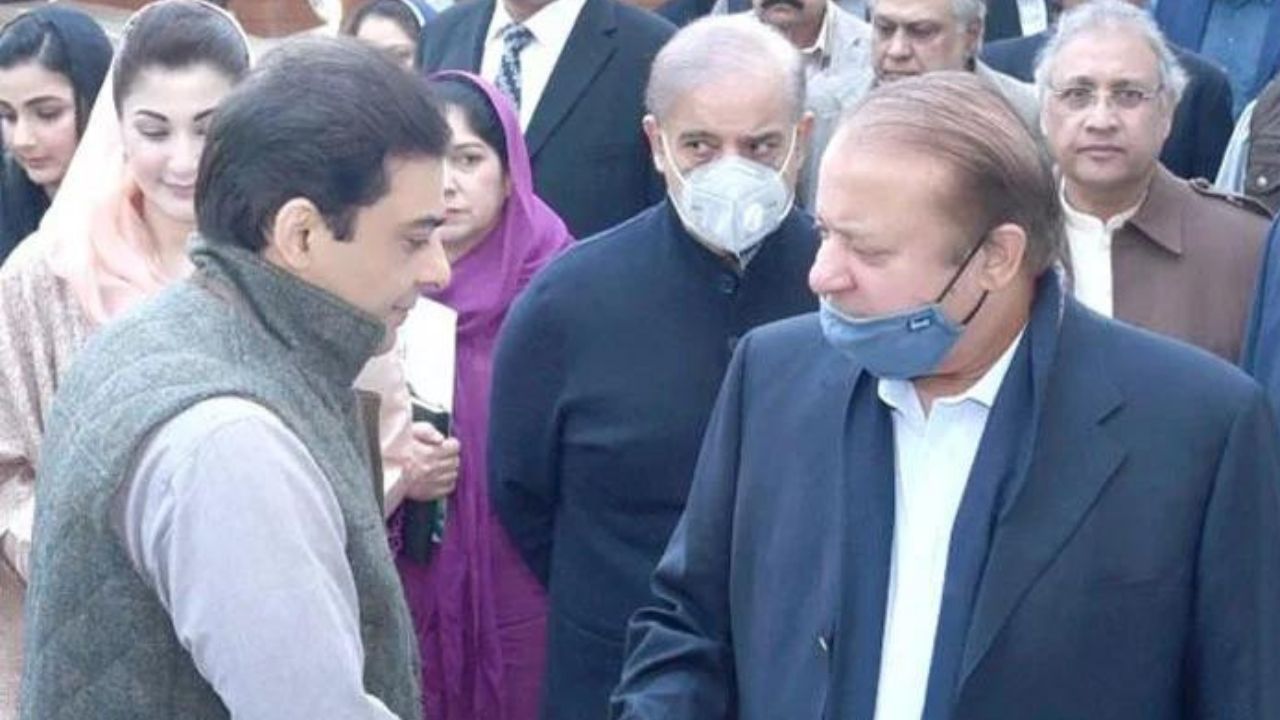
Nawaz Sharif, Shehbaz Sharif and Hamza Shehbaz, all integral figures within the PML-N, are registered to vote in NA-128, where the party has entered into a seat adjustment agreement with the Istehkam-e-Pakistan (IPP) party.
Interestingly, in NA-128, the PML-N has decided not to field a candidate for the National Assembly seat, instead throwing their support behind IPP leader Aun Chaudhry, whose symbol is an eagle.
However, despite this alliance, the three PML-N leaders will still exercise their voting rights for PML-N candidate,Umar Sohail in PP-161.
The PML-N’s election strategy spans across the country, with the party contesting 212 NA constituencies on February 8, while leaving 51 NA seats open for rivals or allies.
Notable among their candidates are Nawaz Sharif, who will be contesting in NA-15 (Mansehra) and NA-130 (Lahore), Maryam Nawaz in NA-119 (Lahore), and Hamza Shehbaz in NA-118 (Lahore). Shehbaz Sharif is set to participate in the elections from NA-123 (Lahore) and NA-132(Kasur).
However, there are several constituencies where the PML-N has chosen not to field candidates, including NA-4 (Swat-III), NA-19 (Swabi-I), and NA-117 (Lahore-I), among others, as part of their strategic alliances and considerations for bolstering their position in the province.
The constituencies where the PML-N has not fielded its candidates are: NA-4 (Swat-III), NA-19 (Swabi-I), NA-20 (Swabi-II), NA-21 (Mardan-I), NA-22 (Mardan-III), NA-44 (Dera Ismail Khan-I), NA-45 (Dera Ismail Khan-II), NA-48 (Islamabad-III), NA-54 (Islamabad-III), NA-64 (Gujrat-III), NA-88 (Khushab-II), NA-92 (Bhakkar-II), NA-117 (Lahore-I), NA-128 (Lahore-XII), NA-143 (Sahiwal-III), NA-149 (Multan-II).
Moreover, the candidates are also not contesting on NA-165, NA-185, NA-190 to NA-204, NA-206 to NA-210, NA-212, NA-214, NA-215, NA-217, NA-218, NA-221, NA-223, NA-224, NA-228, NA-239, NA-245, NA-264 and NA-266.
The former ruling party, in its bid to strengthen its position in the province ahead of the upcoming elections, had entered a seat adjustment agreement with Jahangir Tareen’s IPP.
The Election Commission of Pakistan (ECP) has rejected the application of independent candidate Salman Akram Raja to declare his party, Pakistan Tehreek-e-Insaf (PTI) on Form 33, reports Geo.
ECP passed a reserved decision on Salman Akram Raja’s request to declare his party on Form 33.
Election Commission Deputy Director Law Saima Janjua announced the verdict.
The Commission has said in its decision that Salman Akram Raja has been given the symbol of an independent candidate, but the party he belongs to cannot be given one.
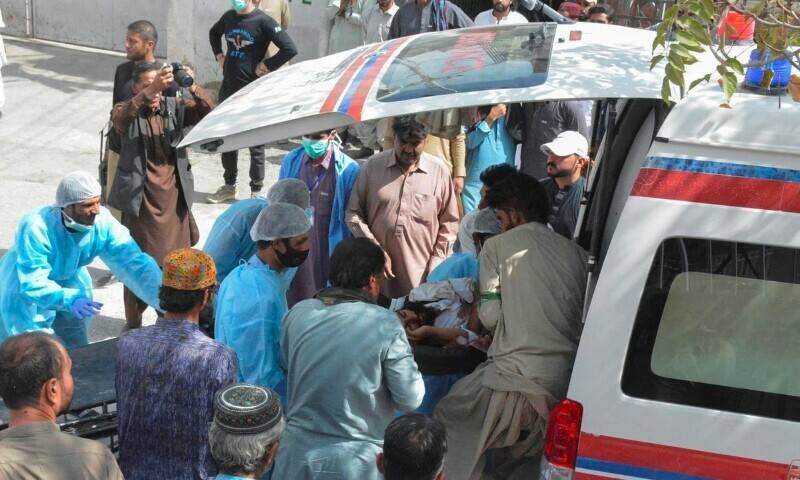
At least 28 people have been killed and 40 injured in two separate blasts in Balochistan on Wednesday afternoon, just a few short hours before polling starts on election day.
The first attack claimed at least 15 people’s lives while over 30 were injured after an explosion took place outside an independent candidate’s office in Balochistan’s Pishin. The second blast took place outside a Jamiat Ulema-e-Islam Fazl (JUI-F) office in the Killa Saifullah district. The Pishin blast happened outside the political office of independent candidate Asfand Yar Khan Kakar in the Khanozai area.
Injured people have been shifted to the Tehsil Hospital Khanozai, while the bodies have also been transferred, the hospital’s MS Dr Habib told Geo News.
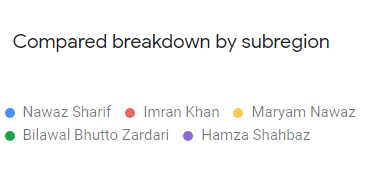
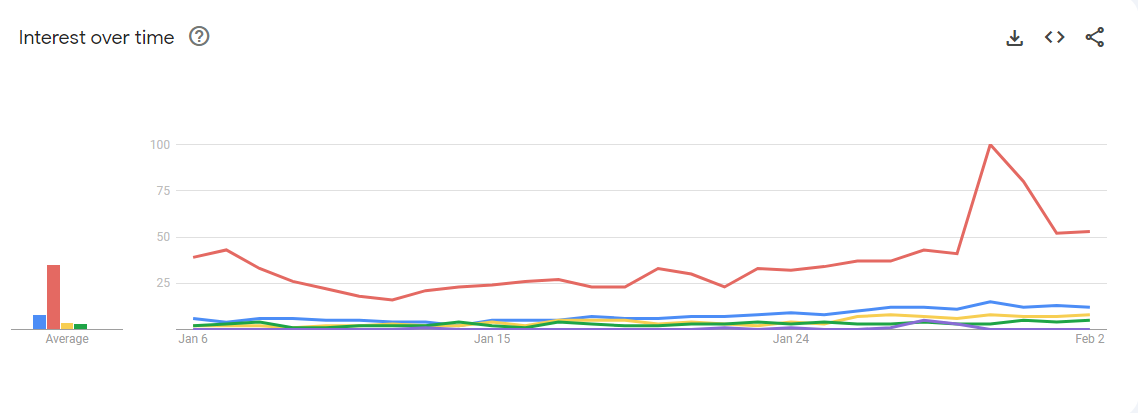
Google Trends offer an insight into the popularity and curiosity political leaders enjoy among the masses. As the elections are drawing near, we took a peak into the data Google Trends have recorded over the last 30 days.
The highest and ever-increasing line graph is Imran Khan’s. The highest peak was shown on January 30 with Khan hitting the record 100 score whereas his contemporaries, Nawaz stood on 15, Maryam Nawaz at eight, Bilawal-Bhutto Zardari at three, and Hamza Shehbaz being the lowest: less than one.
However, it is important to note that Imran’s progressively increasing arc starts dropping successively in the days after Jan 30.
On the other hand, except for Hamza Shehbaz, the other three is slowly on an upward trend.
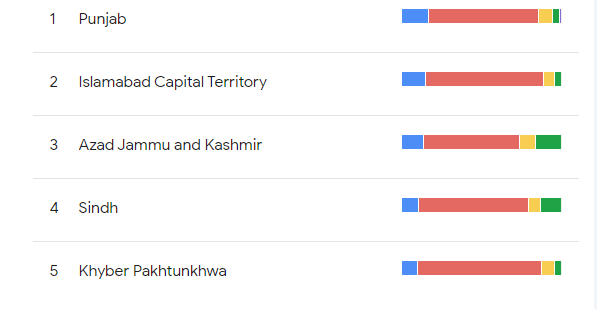
Breakdown of regions
PTI founder and jailed leader Imran Khan is most popular all over Pakistan according to Google Trends.
Punjab
In Punjab, the most popular choices for Chief Ministership, Hamza Shehbaz, and Maryam Nawaz contrary to popular perception, are not being searched so much. After Khan winning with more than 69 percent of searches, Nawaz Sharif is at 17 percent while Maryam is at nine percent. It appears that people in Punjab are comparatively more interested in Bilawal than Hamza who has 1 percent searches from all over the province.
However, it is important to note that out of all the provinces, Punjab has shown more interest in PML-N leader Nawaz Sharif. Sindh has shown the most interest after Punjab, which is 11 percent, 10 percent in Khyber Pakhtunkhwa, nine percent in Balochistan, and seven percent in former FATA.
Sindh
After Imran Khan (69 percent) former Foreign Minister and Chairman of Pakistan People’s Party, Bilawal Bhutto Zardari is unsurprisingly most popular in Sindh with 13 percent of Google searches. Second in line is Punjab and third is Balochistan. After him is Nawaz (11 percent) followed by Maryam (7 percent).
Balochistan
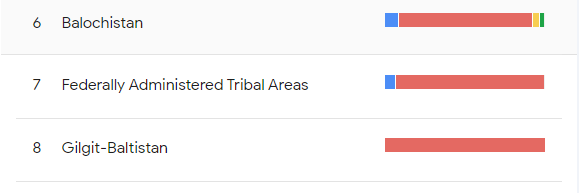
Imran Khan leading the slot here with 84 percent followed by Nawaz (9 percent), Maryam (4 percent), and Biawal Bhutto (3 percent). Hamza does not invoke public curiosity even the slightest.
Gilgit Baltistan
Imran Khan has a 100 percent popularity rate in Gilgit Baltistan, where it seems no other party leader stands a chance, implying that there were minor searches of them in GB.
Former FATA
Interestingly, in the former federally administered tribal areas, only Imran Khan and Nawaz Sharif were searched for, Khan at 93 per cent of searches and Nawaz at seven percent.
Though Google search and Google trends are not the ultimate parameter of a party leader’s popularity, they certainly are proof of what netizens are most interested in and the social media footing of a politician.
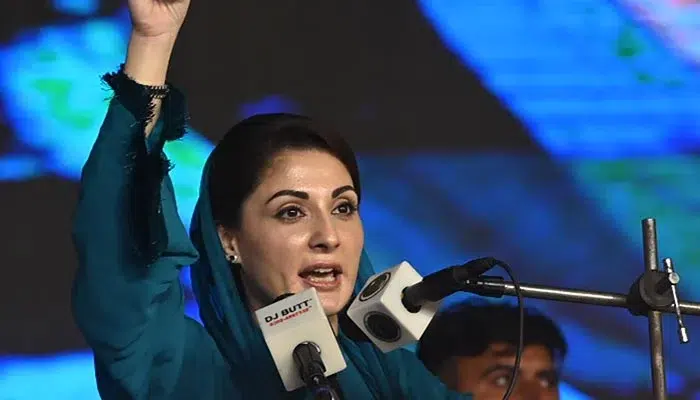
Pakistan Muslim League-Nawaz (PML-N) chief organizer Maryam Nawaz has urged Pakistan Tehreek-e-Insaf (PTI) supporters to stop indulging in what she described as politics of hate. “Today I want to say that I am ready to forget all the oppression against us,” Maryam said. “I promise today and invite everyone to put an end to all this once and for all,” she said at a rally in Kasur. “I want a Pakistan where the government concentrates on serving people instead of avenging the past,” she said.
In the last part of this series on election politics in Sindh, we will look into three districts – Thatta, Jamshoro, and Dadu districts of the Hyderabad division, where four National Assembly (NA) and nine provincial assembly (PA) seats are at stake. On NA 223 Thatta, 12 candidates are contesting the polls. Sadiq Ali Memon of PPP, Imtiaz Ahmed of JI, Junaid Siddiqi of MQM-P, Rasool Bux Jakhro of – and Syed Jameel Ahmed Shah Bukhari of PTI are the main contenders. Looking at the 2018 results, it looks like the PPP candidate has a clear lead over his opponents. Riaz Hussain Shah Shirazi of PPP, Muhammad Farooque of PTI, Abdullah Adam Gandro of JI, Muhammad Arshad Memon of JUI-F, Mahar Ali Shah of QMM are noticeable among the 12 candidates on PS 75 Thatta-I. Going through past results, it seems the PPP candidate is poised to win this seat. Eights candidates are contesting on PS 76 Thatta-II. Altaf Hussain Kachi of TLP, Saeed-Ur-Rehman of JUI-F, Ali Hassan Zardari of PPP, Muhammad Ali Khan of JI, and Muhammad Umer Nahyo of Khadmeen-e-Sindh are the main competitors in this constituency. The PPP candidate can easily win this seat.
On the single NA seat – NA 226 – of district Jamshoro, the PPP has awarded ticket to Malik Asad Sikander while Munir Hyder Shah, Ubedullha Jamro, Abdul Hakeem Chandio are running on GDA, TLP and PTI tickets respectively. The GDA candidate will try to put up a fight. However, past results show that the PPP candidate will likely stand victorious. Former chief minister of Sindh, Syed Murad Ali Shah, is contesting to retain his seat on PS 77 Jamshoro-I.
A total of 15 candidates are in the field against the PPP candidate. GDA’s Roshan Buriro, TLP’s Manzoor Ahmed Halepoto and PTI’s Muhammad Farooq are prominent among them. In 2018, Murad Shah beat Jalal Mehmood Shah of SUP, and this time again, he is the frontrunner. Dr. Sikandar Shoro gave a tough fight to PPP’s Malk Asad Sikandar on then PS 82 Jamshoro as an independent candidate; however, later he joined the PPP and is contesting election on PS 78 Jamshoro-II against Badaruddin of TLP, Syed Munir Hyder Shah of GDA, Sadaf Raza Warraich of PML-N and nine other candidates. The main contestants on this seat are PPP’s Sikandar Shoro and GDA’s Munir Shah. Razia of JUI-F, Malik Sikander Khan of PPP, Meer Ahmed of GDA, Muhammad Tayyab Khan of Pakistan Rah-e-Haq Party, Peer Murtaza Ali Shah Jillani of PTI and independent candidate Malik Changez Khan are vying for PS 79 Jamshoro-III. A close contest is expected between PPP candidate Malik Sikander and independent candidate Malik Changez.
There are two NA seats in Dadu district. On NA 227 Dadu-I, former CM Sindh Liaquat Jatoi is contesting on a GDA ticket after parting ways with PTI. His rivals, among others, are PPP’s Irfan Ali Leghari, JUI-F’s Hajan Khan Leghari, MQM-P’s Zulfiqar Ali and PTI’s Shahana Nawab. PPP’s Irfan Leghari defeated Liaquat Jatoi by getting 95,891 votes while Jatoi got 82,658 in 2018. Incumbency and anger among voters due to the 2022 floods may jeopardise the PPP candidate’s chances of a victory. Rafique Ahmed Jamali of PPP and Karim Ali Jatoi of GDA are again in the field on NA 228 Dadu-II along with 13 other candidates, which include Abdul Majeed Chahwan of MQM-P, Zafar Ali of JI, Rashid Ali of TLP and Abu Bakar of JUI-F. PPP’s Jamali beat Jatoi in 2018 by securing 81,215 votes against Jatoi’s 63,032 while independent candidate Jan Muhammad Panhwar got 19,906 votes. In this constituency, the incumbency factor may go against the PPP candidate.
On PS 80 Dadu-I, GDA’s Karim Ali Jatoi, PPP’s Abdul Aziz Junejo, MQM-P’s Shahid Hussain Shah, JUI-F’s Taj Muhammad, TLP’s Bashir Sodhar, PTI’s Asghar Ali Sodhar and JI’s Mir Murtaza are prominent among 12 candidates.
PPP’s absence from the ground during the 2022 floods may favour GDA candidate. Fayaz Butt of PPP, Liaquat Ali Jatoi of GDA, Abdullah of JI, Parveen of TLP, Talib Hussain Panhwar of MQM-P, Muhammad Masood Panhwar of JUI-F and Majeed Khoso of PTI are noticeable among 19 candidates on PS 81 Dadu-II. Although PPP won this seat in 2018, this time the previous ruling party may feel the heat due to its bad handling of the 2022 floods in the area.
Pir Mujeeb-ul-Haq of PPP is vying on PS 82 Dadu-III against Ashique Ali Zounr of GDA, Shahid Solangi of MQM-P, Zameer Ahmed of JI, Karim Bux Siddiqui of IPP, Zulfiqar Mallah of PTI and 16 other candidates. The GDA candidate will put up a resistance but the PPP candidate has a bit of an upper hand. On PS 83 Dadu-IV, 20 candidates are running for victory, which include Pir Syed Salih Shah Jilani of PPP, Imdad Ali Leghari of GDA, Bandah Ali Leghari (independent) and Anwar Ali Panhwar of PTI. Syed Ghulam Shah Jillani of PPP won this seat in 2018 and after his death, his son Salih Shah Jillani won in the by-elections. Local internal rivalries in the PPP and incumbency factor due to the 2022 floods can cause damage to the PPP candidate here.
Caretaker federal minister, Gohar Ijaz, said on Tuesday in a press conference that the election is a matter of Pakistan’s honour, adding that the caretaker government is fulfilling its responsibility of holding elections ‘with honesty’.
He also said that the law and order situation is now better in Sindh. He further mentioned that the police and civil armed forces have the ability to overcome any adverse law and order situation.
Ijaz also mentioned that there are no issues between election candidates in Balochistan, and all political parties in the province are in communication with each other.
He also said that Pakistan is threatened by forces that want to destabilise the country. However, the country’s security system can protect Pakistan from those forces.
Murtaza Solangi, the Caretaker Information Minister, has stated that the government has not given any instructions yet to suspend mobile or internet services on February 8.
Solangi also stated that the local administration can take any decision as a result of any adverse law and order situation in the area. Pakistan Telecommunication Authority (PTA) can give directions to internet provider to suspend the internet in a specific area.
He encouraged the public to use their democratic right to vote, as “it shows their patriotism and their love for democratic continuity in the country.”
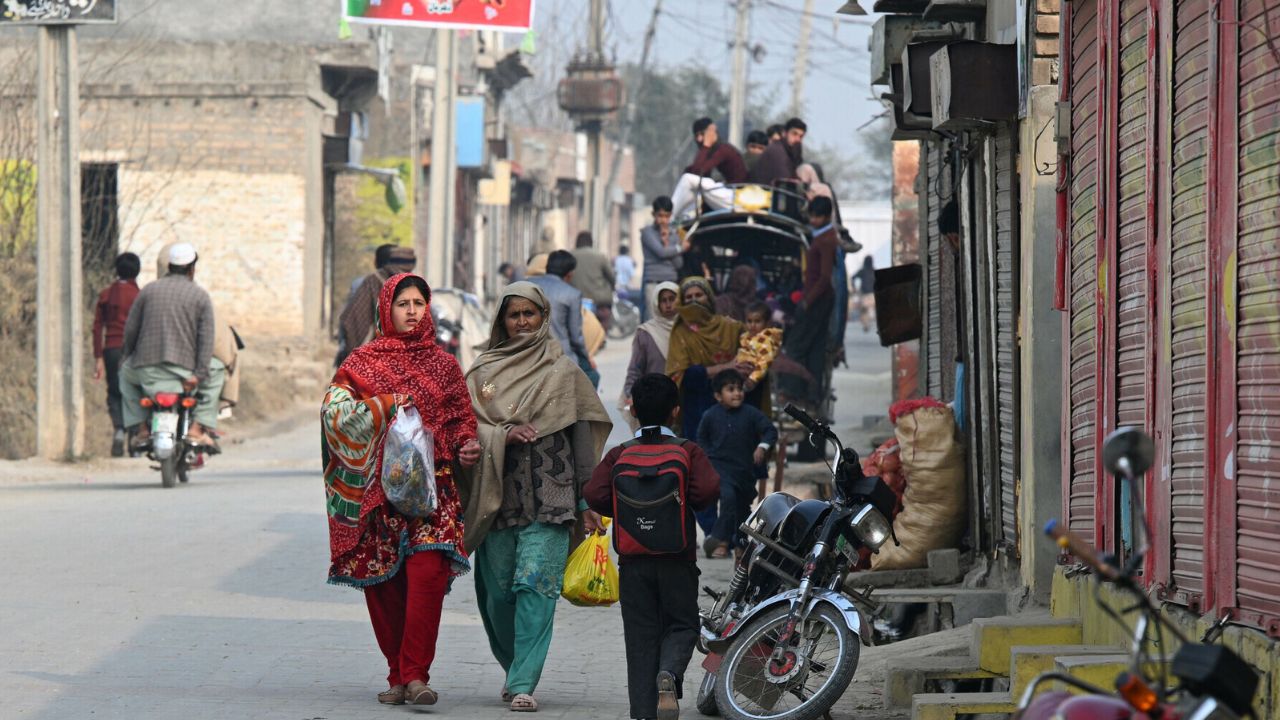
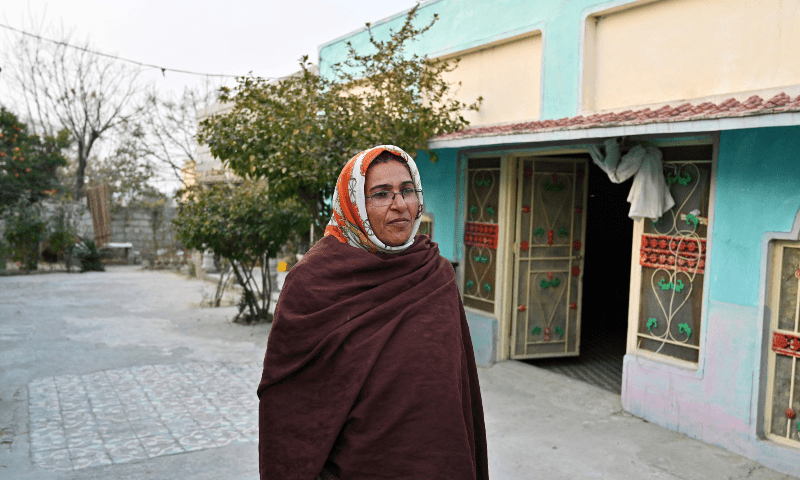
Perched on her traditional charpai bed, Naeem Kausir says she would like to vote in Pakistan’s upcoming election — if only the men in her family would let her.
Like all the women in her town, the 60-year-old former headmistress and her seven daughters — six already university-educated — are forbidden from voting by their male elders.
“Whether by her husband, father, son or brother, a woman is forced. She lacks the autonomy to make decisions independently,” said Kausir, covered in a veil in the courtyard of her home.
“These men lack the courage to grant women their rights,” the widow told AFP.
Although voting is a constitutional right for all adults in Pakistan, some rural areas in the socially conservative country are still ruled by a patriarchal system of male village elders who wield significant influence in their communities.
In the village of Dhurnal in Punjab, spread across crop fields and home to several thousand people, men profess myriad reasons for the ban of more than 50 years.
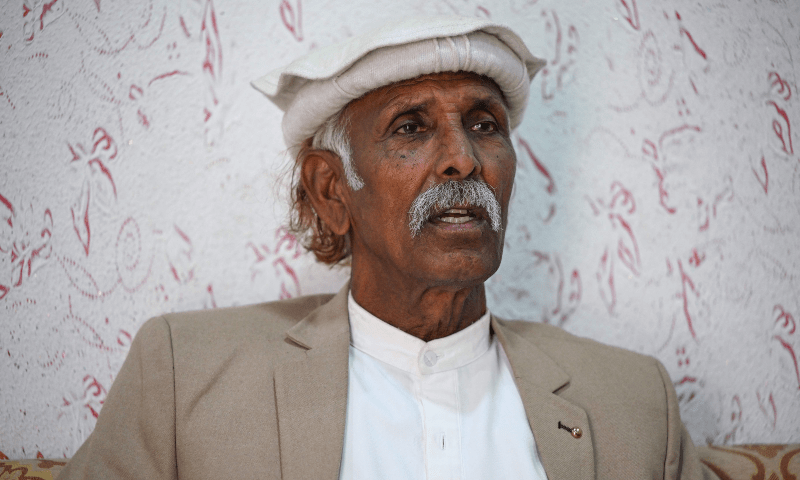
“Several years ago, during a period of low literacy rates, a council chairman decreed that if men went out to vote, and women followed suit, who would manage the household and childcare responsibilities?” said Malik Muhammad, a member of the village council.
In this photograph taken on January 29, 2024, Malik Muhammad, a member of the village council, speaks during an interview with AFP in Dhurnal of Punjab. — AFP
In this photograph taken on January 29, 2024, Malik Muhammad, a member of the village council, speaks during an interview with AFP in Dhurnal of Punjab. — AFP
“This disruption, just for one vote, was deemed unnecessary,” he concluded.
Muhammad Aslam, a shopkeeper, claims it is to protect women from “local hostilities” about politics, including a distant occasion that few seem to remember in the village when an argument broke out at a polling station.
Others told AFP it was simply down to “tradition”.
The Election Commission of Pakistan (ECP) has stressed that it has the authority to declare the process null and void in any constituency where women are barred from participating.
In reality, progress has been slow outside of cities and in areas that operate under tribal norms, with millions of women still missing from the electoral rolls.
The elders in Dhurnal rely on neighbouring villages to fill a government-imposed quota which maintains that 10 percent of votes cast in every constituency must be by women.
Those who are allowed to vote are often pressured to pick a candidate of a male relative’s choice.
In the mountainous region of Kohistan in Khyber Pakhtunkhwa province home to almost 800,000 people, religious clerics last month decreed it un-Islamic for women to take part in electoral campaigns.
Fatima Butt, a legal expert and a women’s rights activist, said women are allowed to vote in Islam, but that religion is often exploited or misunderstood in Pakistan.
“Regardless of their level of education or financial stability, women in Pakistan can only make decisions with the ‘support’ of the men around them,” she said.
Pakistan famously elected the world’s first Muslim woman leader in 1988 — Benazir Bhutto, who introduced policies that boosted education and access to money for women, and fought against religious extremism after military dictator Zia ul-Haq had introduced a new era of Islamisation that rolled back women’s rights.
However, more than 30 years later, only 355 women are competing for national assembly seats in Thursday’s election, compared to 6,094 men, the election commission has said.
Pakistan reserves 60 of the 342 National Assembly seats for women and 10 for religious minorities in the Muslim-majority country, but political parties rarely allow women to contest outside of this quota.
Those who do stand often do so only with the backing of male relatives who are already established in local politics.
“I have never seen any independent candidates contesting elections on their own,” Zara Butt added.
Forty-year-old Robina Kausir, a healthcare worker, said a growing number of women in Dhurnal want to exercise their right to vote but they fear backlash from the community if they do — particularly the looming threat of divorce, a matter of great shame in Pakistani culture.
In this photograph taken on Jan 29, 2024, Robina Kausir, a healthcare worker, looks on during an interview with AFP in Dhurnal of Punjab. — AFP
She credits part of the shift to access to information as a result of the rising use of smartphones and social media.
“These men instil fear in their women — many threaten their wives,” she told AFP.
Robina, backed by her husband, is one of the few prepared to take the risk.
When cricketing legend Imran Khan swept to power in the 2018 election, Robina arranged for a minibus to take women to the local polling station.
Only a handful joined her, but she still marked it as a success and will do the same on Thursday’s election.
“I was abused but I do not care, I will keep fighting for everyone’s right to vote,” Robina said.
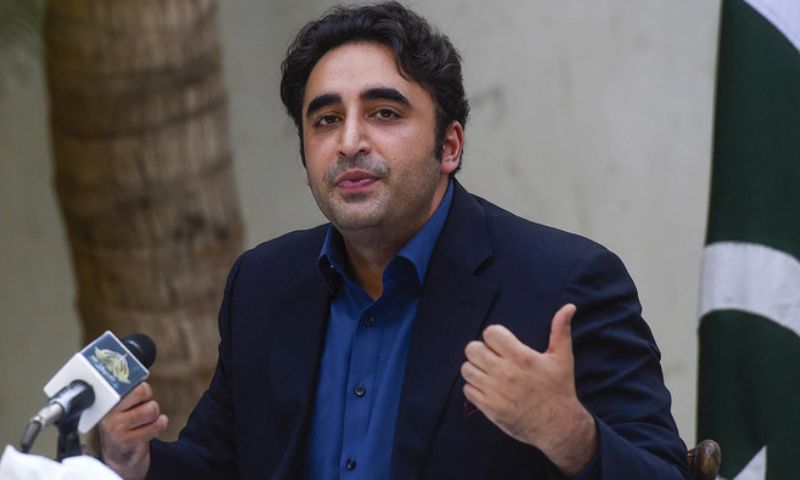
Former foreign minister Bilawal Bhutto Zardari has promised to change the map of Karachi if he comes into power after winning the upcoming general elections set to take place on February 8.
The Pakistan People’s Party (PPP) chairman promised to ensure Karachi receives its fair share of rights by securing representation in both the provincial and national assemblies.
“Other parties are contesting polls for their benefits, but the PPP will work for Karachi and protect its mandate,” he said.
Bilawal Bhutto also stated that everyone other than PPP is engaged in the politics of hatred and revenge.