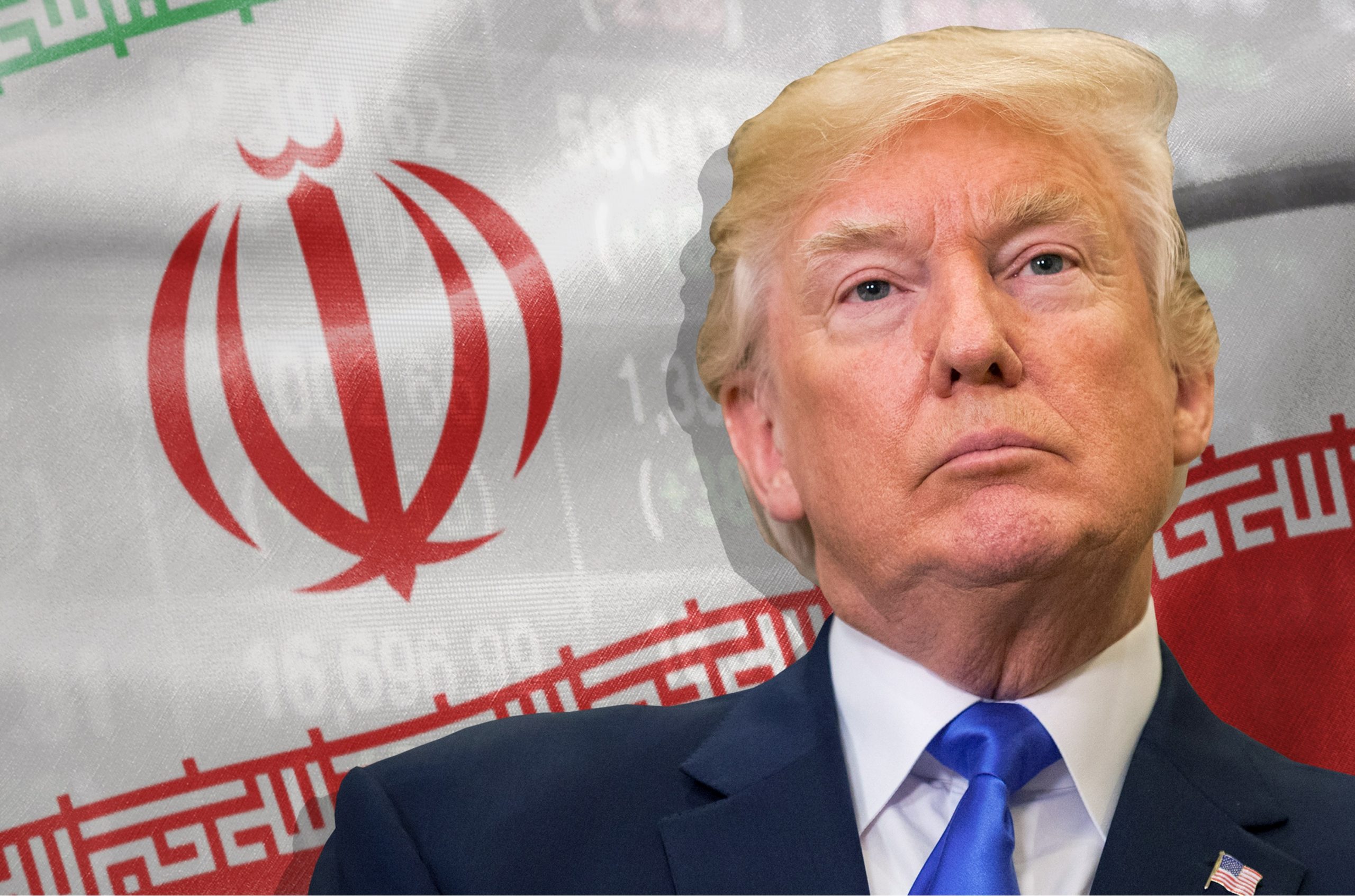
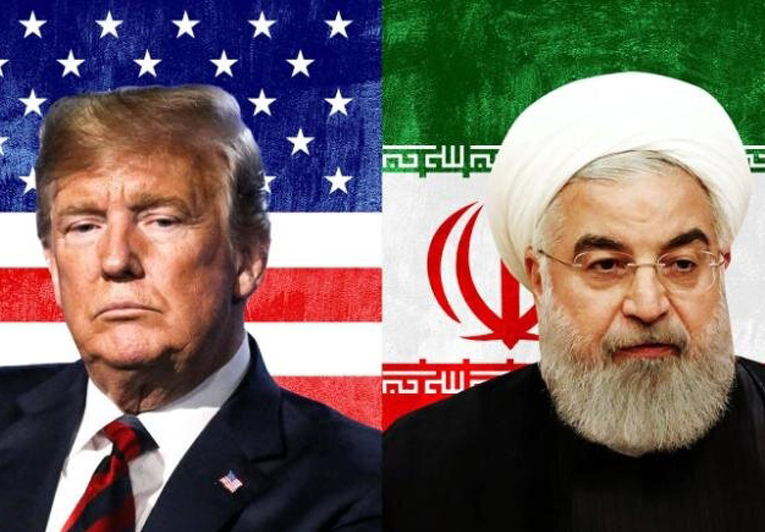
An $80 million bounty has been placed on United States (US) President Donald Trump’s head in the wake of General Qasem Soleimani’s assassination and the dramatic escalation that followed, a foreign media outlet has reported.
During the televised funeral of the top Iranian military leader, official state broadcasters said one US dollar would be tabled for every Iranian in the country, with the cash going to whoever killed the US president.
“Iran has 80 million inhabitants. Based on the Iranian population, we want to raise $80 million which is a reward for those who get close to the head of President Trump,” it was announced, according to en24.
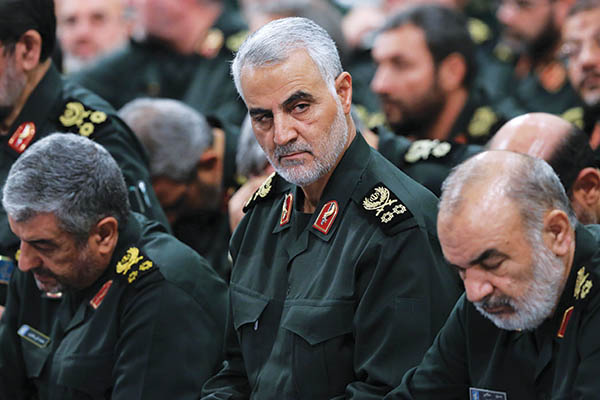
Commander of Islamic Revolutionary Guard Corps’ Quds Force, Soleimani was killed in a US airstrike last week. The attack took long-running hostilities between Washington and Tehran into uncharted territory and raised the spectre of wider conflict in the Middle East.
While Trump has threatened “major retaliation” if Iran avenges the killing, Iran has announced it was further reducing compliance with a tattered international nuclear accord, ending limitations on numbers of centrifuges used to enrich uranium.
Tensions between the United States (US) and Iran have escalated to an all-time high after top Iranian commander Qassem Soleimani was killed on Friday in a US strike on Baghdad’s international airport.
The development has been confirmed by both Tehran and Washington, and the Pentagon has said that President Donald Trump “ordered Soleimani’s killing”, after a pro-Iran mob this week laid siege to the US embassy.
Following Soleimani’s death, Trump tweeted an image of the US flag without any further explanation.
The pre-dawn developments mark the most major escalation yet in a feared proxy war between Iran and the US on Iraqi soil.
Here’s everything you need to know about the dramatic escalation:
WHO WAS QASSEM SOLEIMANI?
Head of Iran’s Islamic Revolutionary Guard Corps’ (IRGC) Quds Force Soleimani acquired celebrity status at home and abroad as leader of the foreign arm of the Revolutionary Guards and for his key role in fighting in Syria and Iraq.
He was instrumental in the spread of Iranian influence in the Middle East, which the US and Tehran’s regional foes Saudi Arabia and Israel have struggled to keep in check, Al Jazeera reported.
Soleimani survived several assassination attempts against him by Western, Israeli and Arab agencies over the past 20 years.
Under Soleimani’s leadership, the IRGC vastly expanded its capabilities, becoming a significant influence in intelligence, financial, and political spheres beyond Iran’s borders.
WHY WAS HE KILLED?
It all started on Sunday with US military airstrikes in Iraq and Syria that killed 25 fighters and left militias vowing revenge.
SUNDAY (DEC 29)
According to a report, the US military carried out airstrikes on five sites in Iraq and Syria against the Iranian-backed Kataeb Hezbollah militia, calling it retaliation for last week’s killing of an American contractor in a rocket attack on an Iraqi military base that it blamed on the group.
At least 25 fighters were killed and dozens wounded. The targeted group, which is a separate force from the Lebanese militant group Hezbollah, operates under the umbrella of the state-sanctioned militias known collectively as the Popular Mobilization Forces, or PMF. Abu Mahdi al-Muhandis, the deputy commander of the PMF and a founder of Kataeb Hezbollah, was also killed in the strikes Thursday that killed Soleimani in Baghdad.
The two were scheduled to meet and were leaving Soleimani’s plane at the airport when Friday’s attack occurred.
MONDAY (DEC 30)
The Iranian-backed Iraqi militia vowed to retaliate while a spokesperson for Kataeb Hezbollah denied the group was behind last week’s rocket attacks, including the one that killed the American contractor, saying Washington was using them as a pretext to attack his group.
“These forces must leave,” he said of American troops in Iraq, calling Sunday’s attack a “crime” and a “massacre”.
The Iraqi government said it would reconsider its relationship with the US-led coalition — the first time it has said it will do so since an agreement was struck to keep some US troops in the country. It called the attack a “flagrant violation’’ of its sovereignty.
TUESDAY (DEC 31)
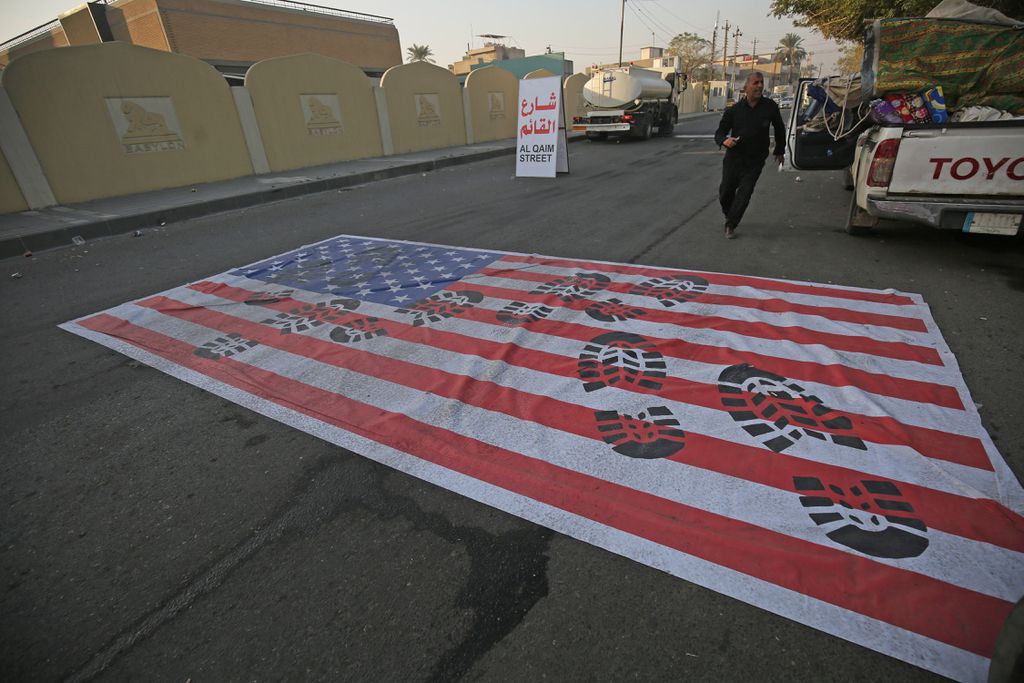
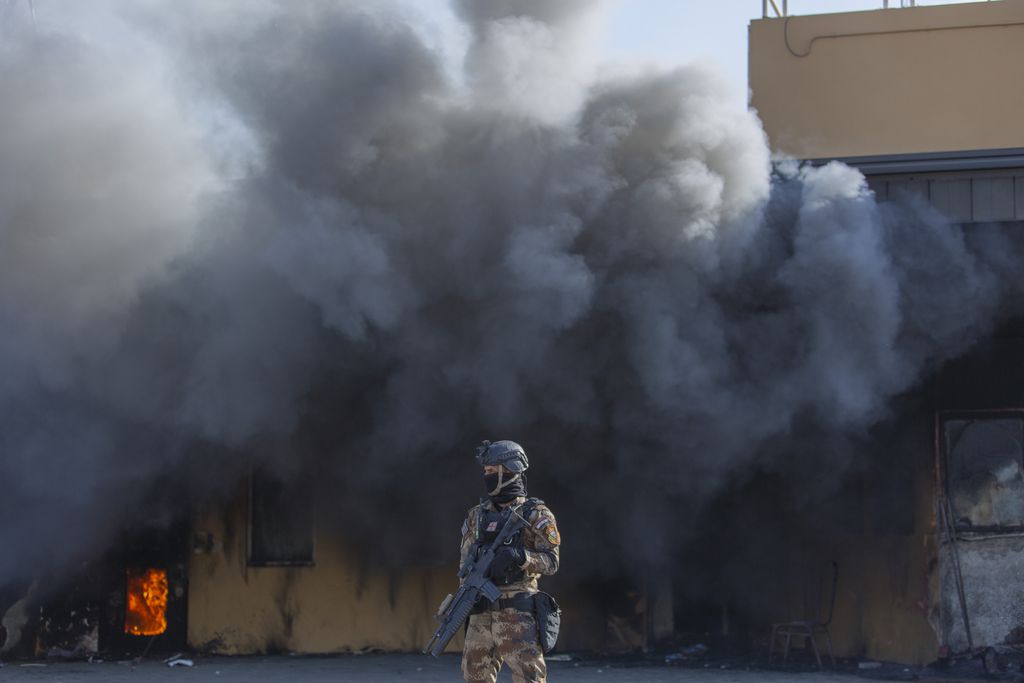
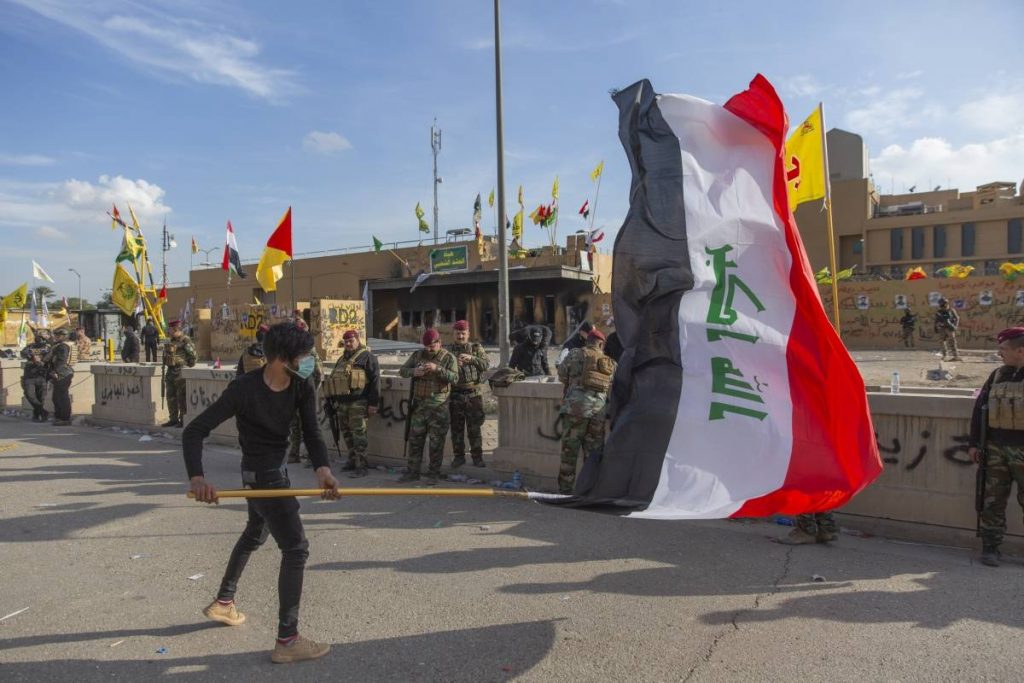
Hundreds of Iraqi militiamen and their supporters broke into the American Embassy compound in Baghdad, smashing a main door and setting fire to a reception area.
The marchers, many of them in militia uniforms, shouted “Death to America” and “Death to Israel” outside the compound, hurling water and stones over its walls. The group set up a tent camp overnight in front of the embassy and sprayed graffiti on its walls.
Some commanders of militia factions loyal to Iran joined the protesters outside the embassy in a strikingly bold move. Among them was Qais al-Khizali, the head of one of the most powerful Iranian-backed group in Iraq, who is on a US terror list, and Hadi al-Amiri, the head of the PMF, the umbrella group for the Iran-backed militias.
President Trump blamed Iran for the breach of the embassy compound in Baghdad and called on Iraq to protect the embassy.
Iran killed an American contractor, wounding many. We strongly responded, and always will. Now Iran is orchestrating an attack on the U.S. Embassy in Iraq. They will be held fully responsible. In addition, we expect Iraq to use its forces to protect the Embassy, and so notified!
There were no reports of casualties. The State Department said all American personnel were safe and that there were no plans to evacuate the embassy. Following the storming of the compound, Defence Secretary Mark Esper ordered roughly 750 additional American troops to deploy to the region, with another 3,000 placed on standby.
The political influence of the PMF has risen in recent years, and their allies dominate the parliament and the government. That has made them the target of the anti-government protesters, who set up a sprawling protest camp in central Baghdad, and who for weeks have been trying to enter the Green Zone. Iraqi security forces have beaten them back with tear gas and live ammunition, killing hundreds.
The militiamen and their supporters, however, were able to quickly enter the Green Zone on Tuesday and mass in front of the embassy, with little if any resistance from authorities. Iraqi security forces made no effort to stop the protesters as they marched to the heavily fortified Green Zone after a funeral for those killed in the airstrikes.
WEDNESDAY (JAN 1)
The Iran-backed militiamen withdrew from the American Embassy compound after two days of clashes with American security forces.
US Marines had fired tear gas in response to stones thrown by protesters but no one was reported killed and the tent camp dispersed after the PMF called on its supporters to depart, suggesting their message had “been received.”
“We rubbed America’s nose in the dirt,” said Fadhil al-Gezzi, a militia supporter.
Embassy workers and diplomats were ultimately holed up for more than 24 hours during the situation at the embassy. Ambassador Matt Tueller, the American ambassador to Iraq, was traveling at the time of the attack but State Department officials told The Hill that he would return to the embassy amid the tensions.
FRIDAY (JAN 3)
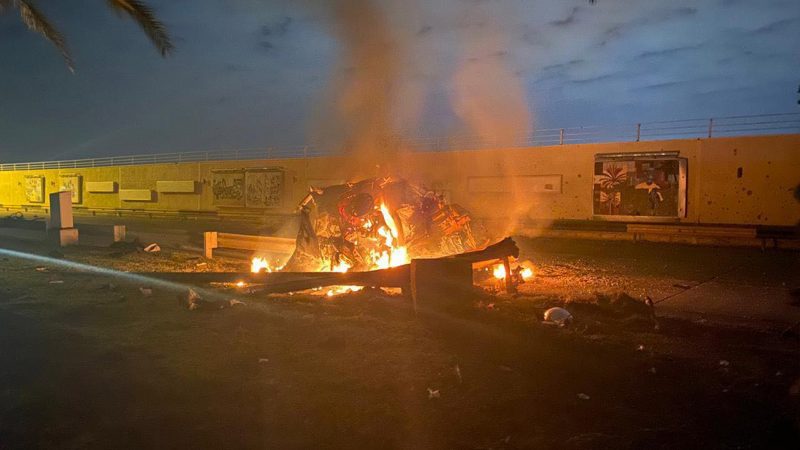
General Qassem Soleimani, Abu Mahdi al-Muhandis, and five others were killed in the early-morning airstrike at Baghdad International Airport, Iraqi officials said.
A senior Iraqi security official said the airstrike, conducted by an American drone, took place on an access road near the cargo area of the airport after Soleimani left his plane to be greeted by al-Muhandis and others. The official said the plane had arrived from either Lebanon or Syria.
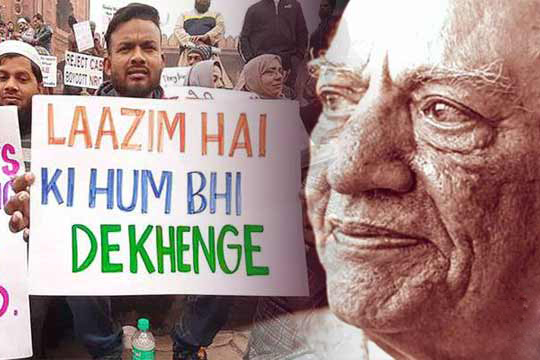
A university in Indian state of Uttar Pradesh has set up a panel to investigate if Pakistani Marxist, poet, and author Faiz Ahmed Faiz’s iconic poem “Hum Dekhenge”is “anti-Hindu”, Scroll.in reported.
According to reports, Indian Institute of Technology (IIT) in Kanpur has set up the panel after the poem was recited by students on campus on December 17 during a solidarity march held for their counterparts at Delhi’s Jamia Milia University.
A police crackdown on the Jamia Milia Islamia campus on December 15 triggered nationwide protests as part of the campaign against passing of the Citizenship Amendment Act (CAA), the ongoing National Population Register (NPR) update exercise and the proposed pan-India National Register of Citizenship (NRC).
During one such protest, about 300 students of the institute were not allowed to go out of the campus as large gatherings under Section 144 of the Code of Criminal Procedure were banned, the institute’s deputy director, Manindra Agarwal, was quoted as saying.
A complaint was filed by temporary faculty member Vashimant Sharma and 16 others against the poem. “The written complaint filed by them with the IIT director states that the poem had some wordings that could hurt the sentiments of Hindus,” Agarwal said.
“A committee of six members was established, headed by me, to investigate the matter. Some students have been questioned, while the others will be questioned after they return to the institution after the holidays.”
The probe committee will investigate three areas – whether the students defied prohibitory orders, the social media posts they shared ahead of the solidarity march and if the poem of Faiz Ahmad Faiz is “anti-Hindu”.
‘HUM DEKHEINGE’:
The popular revolutionary poem was written by Faiz in 1979 when he was in Honolulu for a writers’ conference.The poem was included in Faiz’s seventh poetry book titled “Mere Dil Mere Musafir” in 1981 and is known for its rendition by singer Iqbal Bano.
The poem’s beginning deals with conventional themes such as injustice and oppression, then gives way to more overtly religious symbolism. Faiz writes that the idols will be lifted from the Kabah and goes on to describe a revolutionary inversion of power, where the pure-hearted, who were outlawed, or cast out, will be honoured.
The crowns (of those in power) will be thrown up in the air (alluding to a celebration) and their thrones will be cast low. The final stanza of the poem is the most religious in tone, declaring that the only name (essentially on people’s lips) will that be of Allah and a great revolutionary cry of “I am Truth” will go up and people of faith will rule again.
In recent times, the poem has become an anthem for rights activitsts taking to streets across the Indian subcontinent.
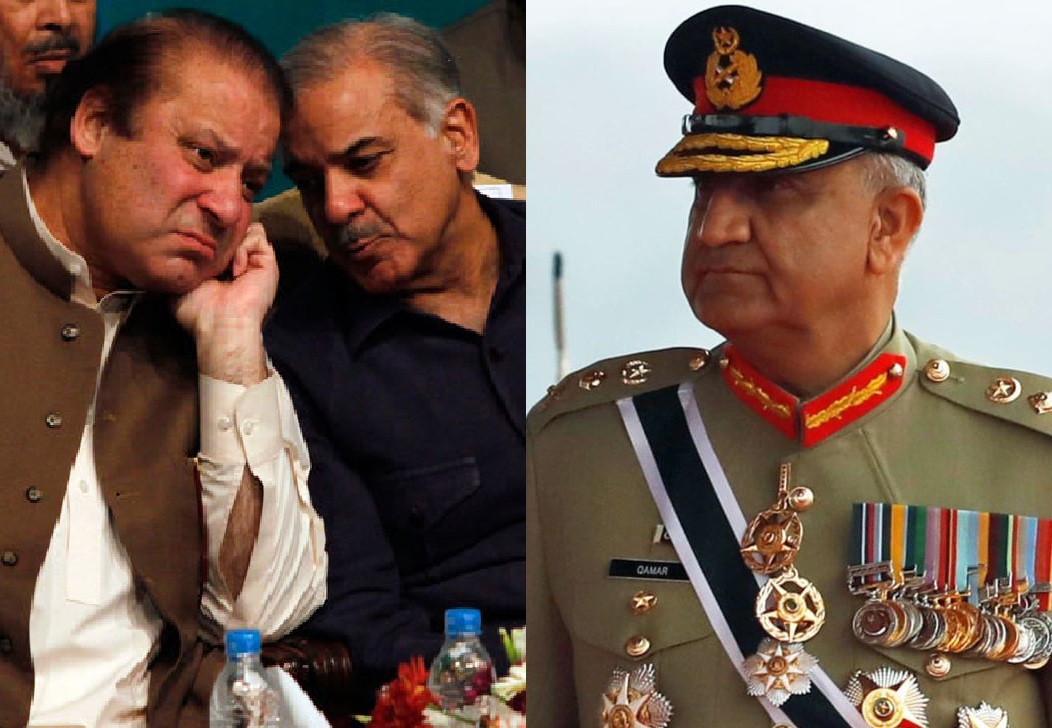
Contrary to earlier claims, the Pakistan Muslim League-Nawaz (PML-N) has reportedly decided to unconditionally back the amendments made to the Army Act by the Pakistan Tehreek-e-Insaf (PTI) government to facilitate the extension service of Chief of Army Staff (COAS) General Qamar Javed Bajwa.
According to Geo News, the decision was made after a meeting of PML-N parliamentary members received a message from the party leadership on Thursday, advising the party to fully back the amendment bill when it is tabled in the parliament by the government.
“The PML-N leadership reportedly does not want the position of COAS to become controversial, and has thus decided to support the PTI government in a bid to amend the Army Act under the directions of a verdict of the Supreme Court (SC) in this regard,” the report said.
A day earlier, the federal cabinet had in an emergency meeting accorded its approval to amendments to the Army Act under which the premier will be empowered to extend the tenure of all services chiefs.
The bill pertaining to the amendment will be tabled in the National Assembly on Friday and the amendment has been prepared as per the guidelines enumerated in the SC’s verdict.
The top court had in November 2019 told the government to legislate on an extension in the COAS’s services within six months, allowing Gen Bajwa to stay in office until then, after briefly suspending the notification of the extension in his tenure.
With the government going into action to ensure an extension for the army chief but lacking the numbers in the parliament for necessary legislation, the PML-N had earlier warned the PTI, saying it would not be easy if the hostile attitude of the Imran Khan-led government towards the opposition continued.
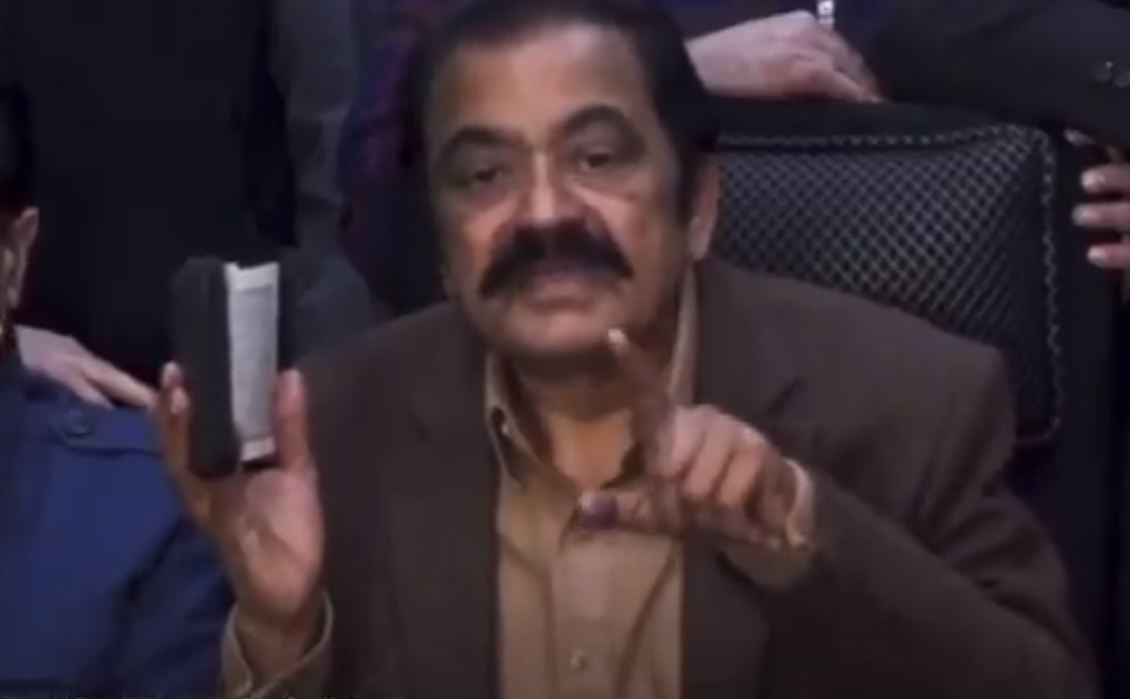
Pakistan Muslim League-Nawaz (PML-N) lawmaker Rana Sanaullah, who was granted bail in the narcotics case against him earlier this week, has sworn his innocence over the Holy Quran, cursing the ones who lodged the “false case against him”.
According to The News, demanding a judicial inquiry into the drug smuggling allegations against him, Sanaullah on Thursday told a private media outlet that his vehicle was stopped at Ravi Toll Plaza and his gunman was made to leave the vehicle.
“My vehicle was taken to the ANF [Anti-Narcotics Force] headquarters and no conversation took place during that time,” he said.
“I asked, what is the matter? I was told that ‘it’s an order from high-ups’,” Sanaullah said. “The next day, I was produced before a court and the court was informed that I was found in possession of drugs.”
Meanwhile, addressing a press conference in Faisalabad, hours after his release from prison, on Thursday he said, “Almighty Allah is my witness, I have never used heroin.”
He questioned where the drugs seized from his vehicle were. He said a false and baseless case was lodged against him. “May I suffer the wrath of God, if I ever favoured a drug smuggler,” he added.
The PML-N leader also cursed the ones who lodged a false case against him. He also said he would repeat the same statements in the National Assembly, holding a copy of the Holy Quran in his hands. “You can’t stop us through such cheap tactics, [I] will not back off. It has become a tradition that a person tells lies and then says he has to return to Almighty Allah,” he said.
WATCH VIDEO:
قرآن ہاتھ میں اُٹھا کر کہتا ہوں کہ میرا ہیروئن سمیت کسی منشیات فروش یا کاروبار سے تعلق ہو تو اللہ مجھ پر اپنا قہر نازل کرے ۔ رانا ثناء اللہ pic.twitter.com/hfEydu2ktk
The PML-N leader said even the prime minister knew the case against him was fake. “All this is being done to subdue the opposition. Before my arrest I was 100 per cent with my party but today be with the 1000 per cent,” he added.
Sanaullah demanded the chief justice of Pakistan (CJP) and the government order a judicial inquiry into the allegations of drug smuggling against him.
Referring to the trauma that he suffered due to incarceration, he demanded relevant authorities take action against the injustice he was meted out.
He said that the ANF had secured 15kg heroin from a godown and produced false witnesses to back up their claims against him. “If it was such a large network, why weren’t others [involved in drug trafficking] arrested?” he asked.
On his arrival at Faisalabad after release on bail, the party workers warmly welcomed him. The workers raised slogans in favour of him and expressed happiness on his presence. “I am also thankful to party leaders for supporting me in a difficult time,” Sanaullah said.
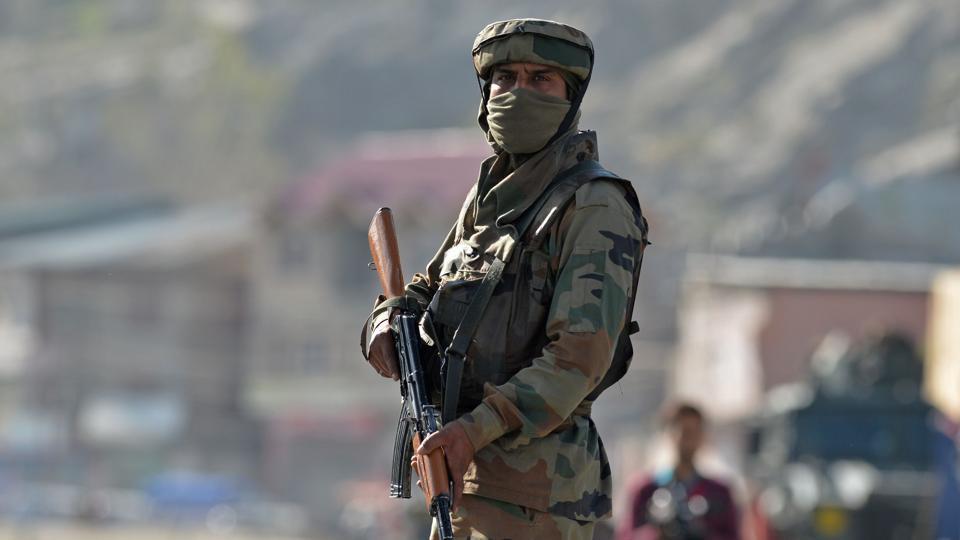
The Indian government has decided to pull out over 7,000 para-military troops from occupied Kashmir on account of the improvement in law and order situation there and also because the troops were on short-term deployment, Times of India reported.
According to reports, of the nearly 7,200 troops being called back from the disputed region, 2,400 are from the Central Reserve Police Force (CRPF) and 1,200 each from Border Security Force (BSF) SSB, CISF and ITBP. They were all deployed in the state in view of the government’s decision to abrogate Article 370.
The development in August had paved way for ethnic cleansing of Muslims in Kashmir, drawing strong reactions from the international community, especially Pakistan, as Kashmiris faced isolation amid curfew.
As widespread protests continued across the valley, Indian occupying forces had converted it into a garrison by deploying hundreds of thousands of troops and paramilitary personnel in every street, line and by-lane to stop people from staging demonstrations.
WHAT IS ARTICLE 370?
Article 370 was the basis of Jammu and Kashmir’s accession to the Indian union at a time when former princely states had the choice to join either Pakistan or India after their independence from the British rule in 1947.
The article, which came into effect in 1949, exempts Jammu and Kashmir state from the Indian Constitution.
It allows IoK to make its own laws in all matters except finance, defence, foreign affairs and communications. The article established a separate constitution, a separate flag and denied property rights in the region to the outsiders.
That means the residents of the state live under different laws from the rest of the country in matters such as property ownership and citizenship.
WHAT IS ARTICLE 35A?
Article 35A is a branch of Article 370, which was introduced through a presidential order in 1954 to continue the old provisions of the territory regulations.
The article permits the local legislature in IoK to define permanent residents of the region. It forbids outsiders from permanently settling, buying land, holding local government jobs or winning education scholarships in the region.
While Article 35A has remained unchanged, some aspects of Article 370 have been diluted over the decades.
WHY WERE THEY ABOLISHED?
The ruling Bharatiya Janata Party (BJP) and its right-wing allies have challenged Article 35A which it calls discriminatory. Earlier this year, a senior BJP leader had hinted that the government was planning to form exclusive Hindu settlements in the region.
With the special status repealed, people from the rest of India would have the right to acquire property in IoK and settle there permanently.
Kashmiris fear the move would lead to a demographic transformation of the region from majority-Muslim to majority-Hindu, paving way for Prime Minister (PM) Narendra Modi’s hardliner BJP in the disputed territory.
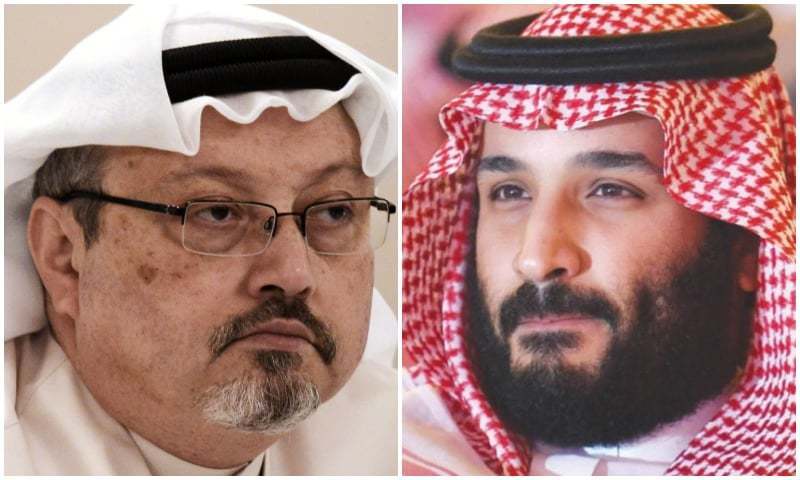
A court in Saudi Arabia has sentenced five people to death for the murder of journalist Jamal Khashoggi last year, the public prosecutor has said.
Khashoggi, a prominent critic of the Saudi government, was killed inside the kingdom’s consulate in the Turkish city of Istanbul by a team of Saudi agents.
The Saudi public prosecutor said it was the result of a “rogue operation” and put 11 unnamed individuals on trial; Saud al-Qahtani, a former high-profile Saudi royal adviser, was investigated but not charged and was released.
The murder of Khashoggi, a Washington Post columnist, triggered Saudi Arabia’s biggest diplomatic crisis since the 9/11 attacks as world leaders and business executives sought to distance themselves from Riyadh.
The CIA concluded that the country’s crown prince, Mohammed bin Salman, ordered Khashoggi’s assassination. The crown prince denies involvement, but told US TV last month that he took “full responsibility as a leader in Saudi Arabia”.
The prosecutor said three more people in the case had been sentenced to jail terms totalling 24 years.