The spokesperson for The Illegal Foreigners Repatriation Plan and caretaker Interior Minister, Sarfraz Bugti, held a discussion with Afghan High Commissioner Ahmed Shakaib, deciding that children and women will be exempted from scanning by NADRA. Only male adults will be scanned for verification.
“The interior ministry issued directions that females and children below the age of 14 will not be scanned for entry by NADRA. Only male adults would be scanned during the voluntary repatriation,” reported Dawn. Only a “head count” of women and children will be done for record purposes.
The decision was made keeping in context the heavy influx of Afghan citizens on the borders as the deadline for leaving has passed and deportation has started. A huge number of people are also coming in for voluntary repatriation and it was feared that the situation could spiral out of control. This directive could smoothen the process a bit.
Authorities are asked to be gentle as any aggression will lead to consequences. A special helpline number has been set up by the ministry and every complaint will be catered to on an emergency basis. The Afghan Embassy has also been asked to send a representative who can work closely with the Interior Ministry.
وزیراعظم پاکستان @anwaar_kakar کی خصوصی ہدایت پر غیر قانونی طور پر پاکستان میں مقیم غیرملکیوں کے انخلاء کے حوالے سے وزارت داخلہ نے خصوصی ہیلپ لائن قائم کی ہے، جس کے نمبر 051111367226 اور 0519211685 ہیں۔ pic.twitter.com/NPjcuLFU1m
So far, 165,000 Afghan immigrants have left for Afghanistan during voluntary repatriation. On Thursday, a total of 19,344 undocumented immigrants left via Torkham.
Officials at the border crossing in Angoor Adda in KP’s South Waziristan district said that 294 Afghan immigrants, including 129 children, voluntarily left for Afghanistan on Thursday.
Out of 572 refugees taken into custody, 200 were sent back as they produced valid documents while 384 were sent to Chaman for deportation. 1,176 Afghans volunteered to reach Chaman on their own.
The crackdown in Punjab will start today as per the officials.
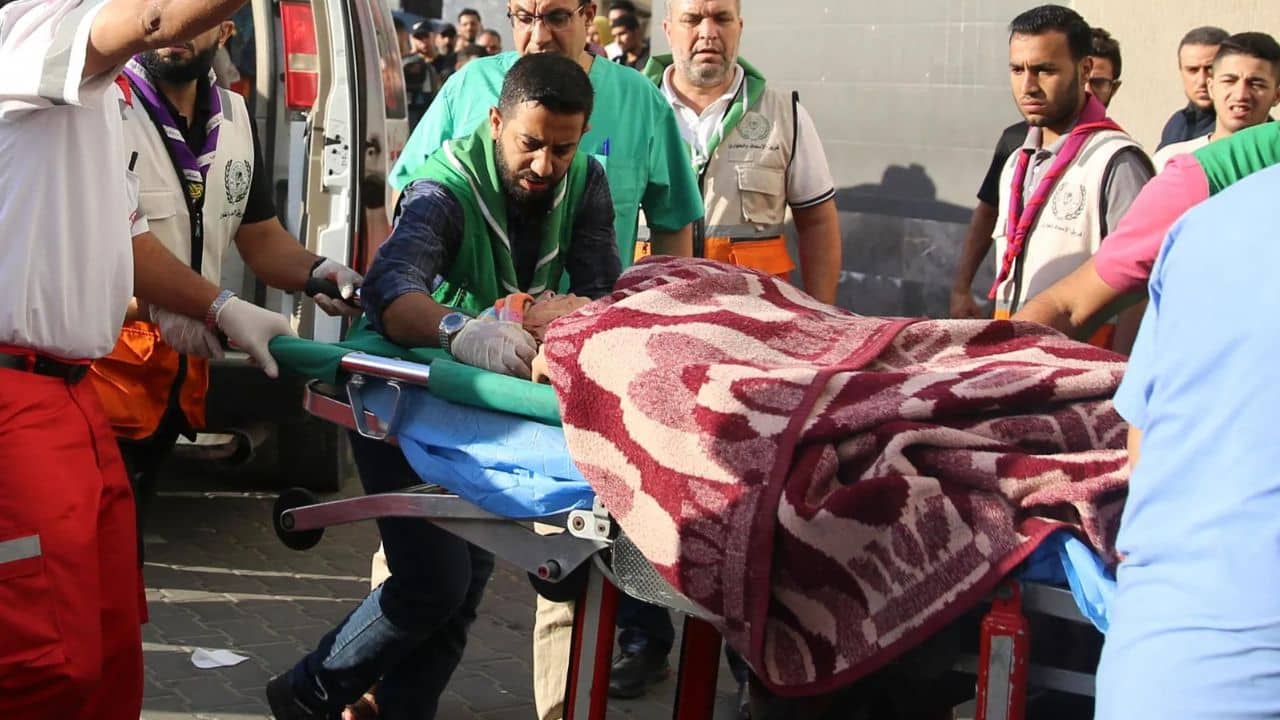
Dr Tanya Haj-Hassan, a paediatric intensive care doctor for Doctors Without Borders and a co-founder of the GazaMedicVoices social platform, reflects in an interview on the on-going struggle of doctors in Gaza who are working under dearth of basic medical supplies.
“I refuse to let my imagination go to the places where reality has taken us in these last three weeks.” she said.
“Everyday I feel like things can’t get worse, and then they seem to get worse.”
Dr. Tanya asserted Gaza doctors are “World class experts in the field of medicine and in the field of mass casualties” but she goes on to remark that having to carry out medical procedures without pain control or anaesthesia “makes it sound very barbaric.”
With “hands tied” and being “stripped of every tool” used in modern medicine — from anaesthesia to ventilators and monitors — it is an unfathomable place to be in, she described.
“I can’t fathom being in the position that they are in,” she stated, highlighting that the doctors in Gaza are working every day despite the trauma they are seeing, despite fear for their family’s well being, despite fear for their own life, and constantly being threatened to be bombed in the health facility because they “refuse to leave” their patients and evacuate.
“I’ve never been in that position and I don’t know many people that have been in that position to be honest. The conditions that we’re seeing in the Gaza strip right now are unthinkable.” she added, calling it “unprecedented in modern times”.
She further highlighted in her interview that the children there are coming in with 70-90 per cent of their bodies burned, stressing that doctors would normally and “obviously” give them immediate pain control. And a regular change of dressing would be carried out under sterile conditions; and if the burns are extensive, they are put to sleep for the process because it is so “exquisitely painful”.
But in Gaza, pain relief is not an option.
Dr. Tanya also quoted the doctors currently serving in Gaza who, to describe their situation, used words like “inhumane”, “intolerable”, “unbearable”.
“They are crying out to the outside world and many of them are giving up. They’re saying the world has come together to eliminate us,” she reiterated.
Others say, “They are deaf and blind to our suffering. All we have is God.”
“They're saying the world has come together to eliminate us. The world is deaf to our suffering.”
Doctors in Gaza are struggling as they are “essentially in solitary confinement in a concentration camp with no access to medicines”, says Dr Tanya Haj-Hassan.@JPonpoliticspic.twitter.com/mywyasFABX
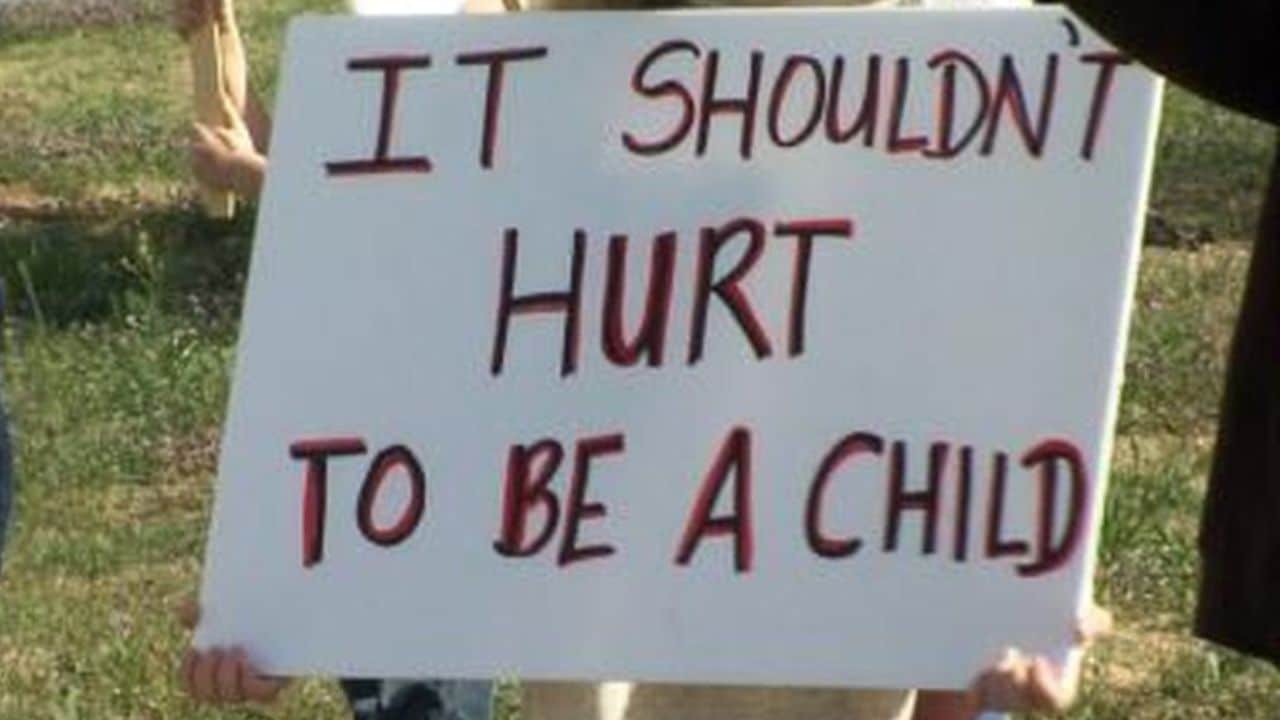
A man from Saudabad, Karachi has been arrested for killing his eight-year-old son. The father, Amir, has confessed in front of the police that he was enraged as the boy refused to call him “papa”.
Amaan’s body was found in Bhains Colony a few days after the father’s complaint of the boy being lost. However, the investigation revealed that the boy was tortured, killed, and dumped by his own father.
Amaan had come to visit his biological father, as he stayed with his adoptive parents. He was adopted by Amir’s friend and had come to meet his mother, a few days before his death. Amir forced the child to call him ‘papa’, to which the child refused.
In a fit of rage, Amir then assaulted the child, killing him.
Punjab Police is launching a unique initiative for pets. ASP Sheharbano Naqvi, along with the IG Punjab Dr Usman Anwar, is bringing a one-of-a-kind Pet Park to Lahore.
ASP Sheharbano recently made headlines for her compassion towards sniffer dogs of the police department who are now adopted after retirement instead of being euthanized, due to her efforts.
In a recent post on Instagram, the Police department announced the establishment of a pet park with a caption that stated, “This is going to to be the most amazing place for you and your fur babies which will very soon be complete and it’s like a gift for all animal lovers. A place where you can not only play around with your fur babies, walk them, make them interact with other animals but also have food and snacks that you can order for yourself and your pets.”
It further explained that the park is being established in collaboration with JFK Animal Rescue and Shelter. Top architects are going to design it and it will have all the facilities one can think of.
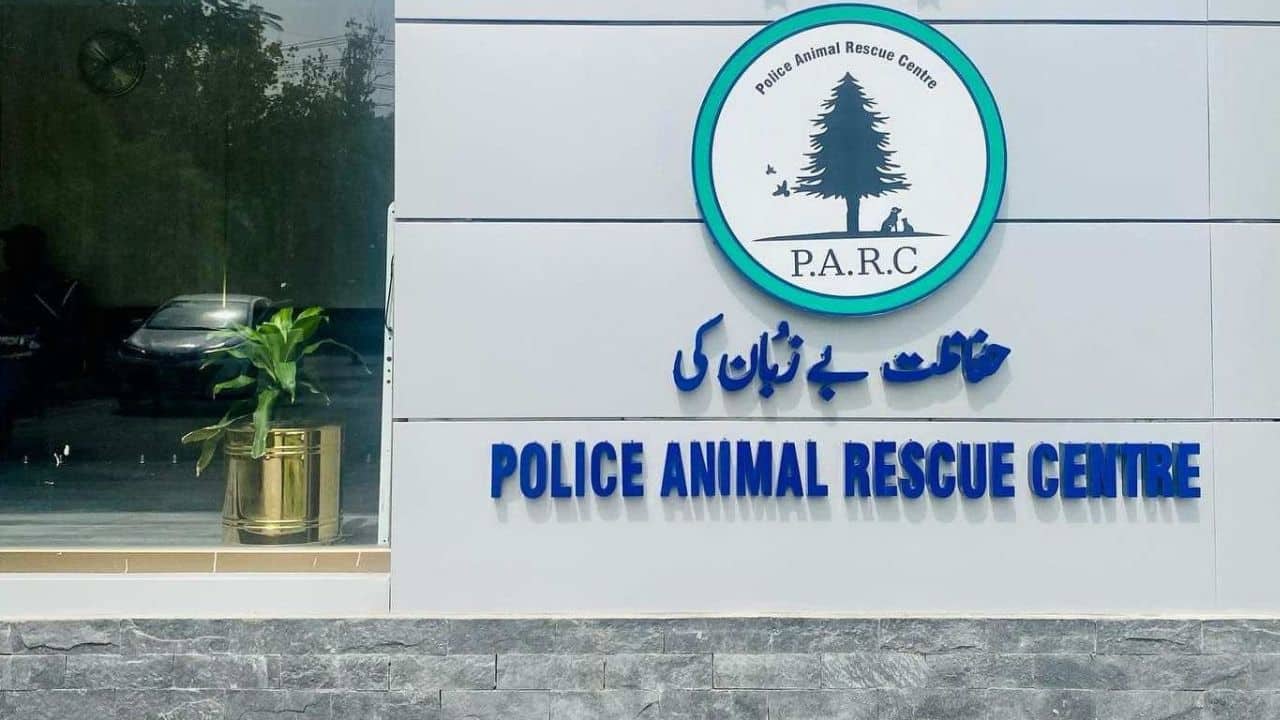
This is the latest in a series of efforts to rescue animals after the launch of a helpline and the establishment of the Police Animal Rescue Centre(P.A.R.C). The tagline was Hifazat Bezuban Ki (Protection of the Voiceless).
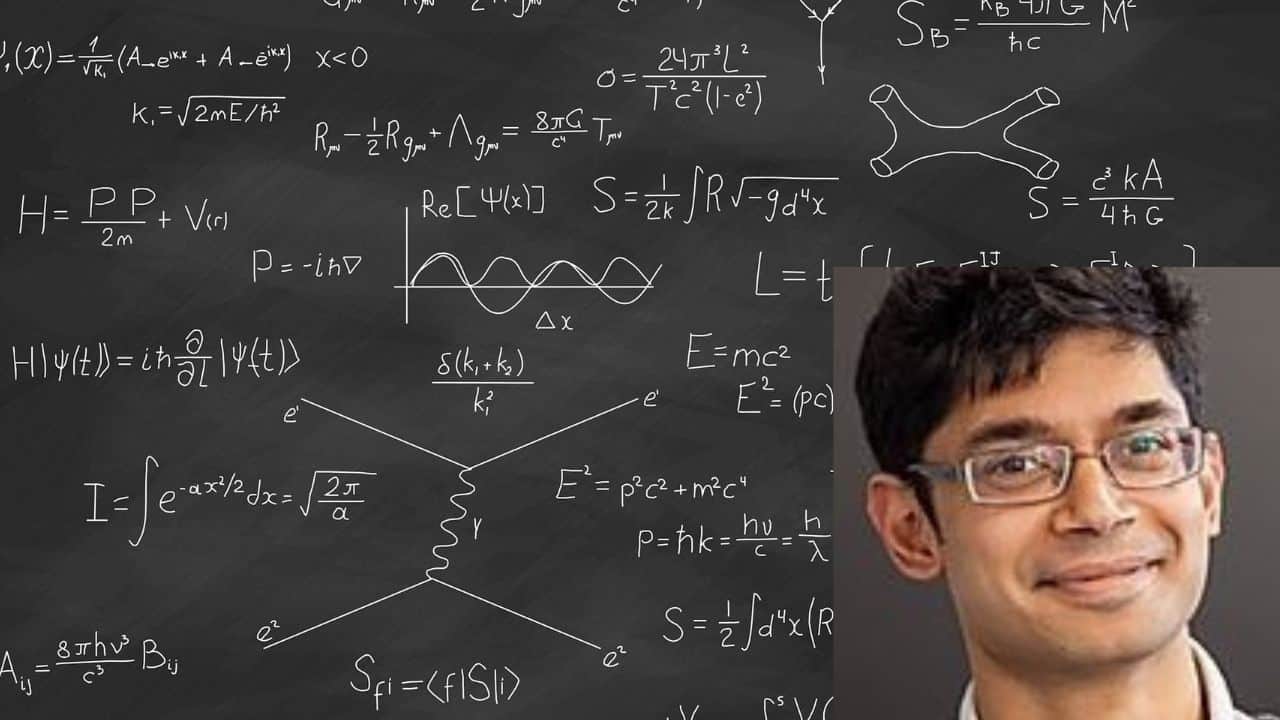
Physicist Nabil Iqbal, a professor at Durham University, posted a thread on X (Twitter) detailing his experience of teaching in a physics school co-organized by him in the West Bank. He shared that students from Gaza, both undergrads and from the University of Gaza, would send in applications but were never granted travel permits from Israel.
For several years I co-organized a physics school in the West Bank of Palestine. We always had many applications to the school from physics students in Gaza, undergrads from the Islamic U. of Gaza and Al-Azhar U.
He reminisces about the time they would conduct Zoom meetings with the physics enthusiasts and check their assignments on the phone. They would also wonder about the time they will get to talk ‘physics’ in person.
So dedicated professors in IUG would arrange a room where all of their students could gather and watch together the lectures happening over Zoom.
(This was pre-pandemic, when this idea felt deservedly abnormal). 4/N
Iqbal recently got connected to one of his students in Gaza. She told him that if this is the end, she wants us to remember that she is a physics student and that she wanted to teach others to be as inspired by science as she is.
I was recently in touch with one of them. Just before the war started she was asking me typically academic questions about references etc. etc.
The topic of our correspondence has since shifted.
For its November issue, Vogue Arabia paid tribute to the journalists and doctors of Gaza who are fighting to save countless lives during Israeli air strikes. Since the war began on October 7, close to 9000 Palestinians have been killed by Israel, including 3000 children.
“Dedicated to the brave doctors, nurses, and reporters in Gaza,” the statement read. “The issue pays homage to their heroic commitment as they implement vital work amid inhuman conditions. The cover also features traditional hand-embroidery from different regions of Palestine, in an ode to its culture and a further appeal for humanity.”
The statement further said the current crisis in Gaza can be called one of the biggest disasters in history “and a failure shared by all.” It urged audiences to raise their voices “putting pressure on governments and international organizations to find a peaceful solution to stop the violence. This should be a global effort, regardless of our ethnicity or religion.”
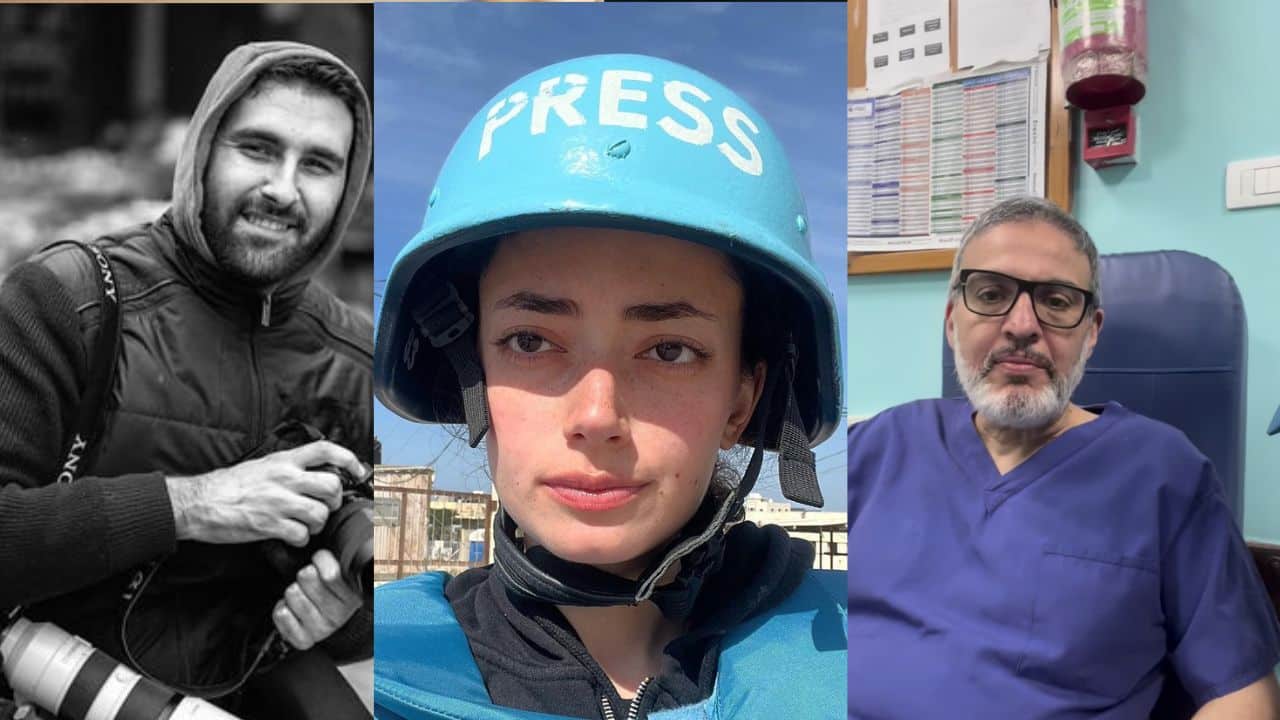
The people honoured in the cover are photographer Motaz Azaiza, journalist Plestia Alaqad, Youmna El-Qunsol, Doctors Ghassan Abu-Sittah and Mohammed Al Ghoula.
Explaining the significance of the fabric, the publication elaborated on how this design emerged in Palestine as well as the significance it holds within the culture.
“The fabric seen on the issue is covered in an embroidery also known as tatreez, which originated in Palestine 3,000 years ago, and has since carried a deep meaning in the region,” the article explained. “It is also popular in other Levantine countries like Jordan, with each nation presenting some changes in the embroidery pattern. Over centuries, the skill has been passed on by women as an inter-generational practice and used as a means to tell the story of Palestine and its people. Each nuance in color and pattern denotes everything, from the region the wearer is from, to personal milestones including social and marital status. In 2021, the United Nations cultural agency (Unesco) also added tatreez to its Intangible Cultural Heritage List.”
Palestinian designer Zaid Farouki was consulted for Vogue Arabia’s cover. He acted as a cultural advisor and used different motifs from cities across Palestine to be represented on the cover.
The tatreez was popularised when public figures like Queen Rania of Jordan wore the fabric on several occasions. In 2018, Michigan Democrat Rashida Tlaib, the first American legislator of Palestinian origin, made history as the first Palestinian and one of the two Muslim women elected to the Congress. She was seen wearing the traditional tatreez which was embroided by her mother.
The federal caretaker government has just approved a hefty pay rise of 45 percent for top bureaucrats in management positions. These are distinct from career diplomats and are the ones typically drawn from the private sector because of their expertise in a relevant field.
In a notification released by the Ministry of Finance, the increase would apply to all MP-I, MP-II, and MP-III positions, including basic salaries, house rents, and utilities as approved by the caretaker prime minister.
The ministry said the monthly remuneration of officers on the MP-I scale used to begin from Rs554,600, including basic salaries, house rent, and utilities with a terminal amount of Rs699,250 per month. The minimum and maximum remunerations would now be Rs804,180 and Rs1,013,920 per month, respectively. The officers in this grade would also be drawing Rs95,910 per month for transport monetisation allowance, taking the revised monthly package to between Rs900,090 and Rs1,109,830.
Likewise, the minimum and maximum monthly package of MP-II scales was Rs255,750 and Rs413,600 per month. This will now range from Rs370,850 to Rs599,740. The monthly monetisation allowance for this scale will be Rs77,430. The officers in the MP-III grade used to get Rs165,855 to Rs233,750 per month. The amount has now been revised to Rs240,460 and Rs338,960, apart from a monetisation allowance of Rs65,060. The rumenarations were last viewed in July 2017 and the current rise is effective from October 1.
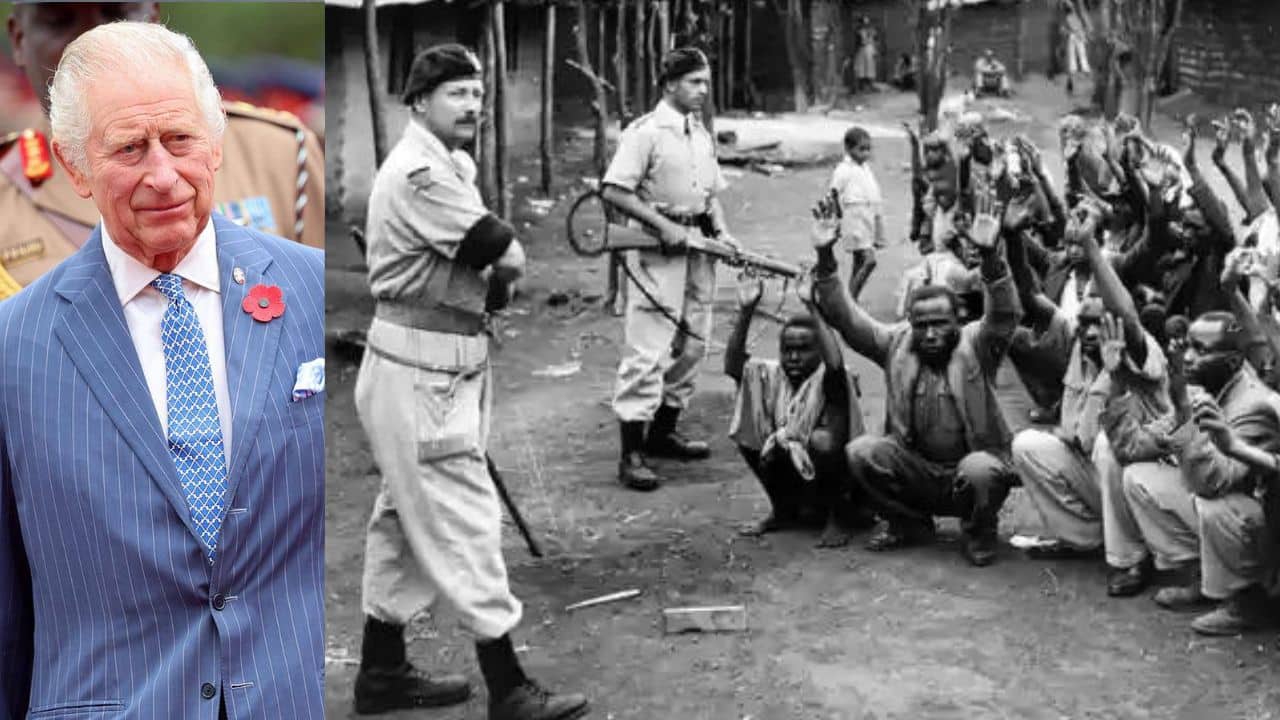
It was highly anticipated that King Charles will issue a strong apology for the harrowing atrocities of colonialism in the region during his visit to Kenya. Local rights groups were pressing for reparations but instead came a strongly-worded regret. “The wrongdoings of the past are a cause of the greatest sorrow and the deepest regret,” Charles said during a state banquet.
The British King acknowledged the painful struggle of Kenyans as he said, “There were abhorrent and unjustifiable acts of violence committed against Kenyans as they waged… a painful struggle for independence and sovereignty and for that, there can be no excuse.”
The crimes committed by the British colonial forces date back to the time when Kenyans were forced out of their tea lands as the British took over. Their lands are still producing more than 50 percent of tea for the British. Not just that, in the Mau Mau uprising during 1952-1960 a total of 90,000 people were brutally killed and 1,60,000 were detained.
Exactly a decade ago, UK Government announced payments of almost 20 million pounds to more than 5,000 people in what is known as a “a process of reconciliation”. This visit was paramount as Kenya is celebrating its 60th independence anniversary. “It matters greatly to me that I should deepen my own understanding of these wrongs, and that I meet some of those whose lives and communities were so grievously affected,” the King remarked.
While some are greatly disappointed at the lack of a formal apology speculated to be delivered ahead of the visit, President William Ruto has appreciated the courage of the British monarch for shedding light on “uncomfortable truths that reside in the darker regions of our shared experience”.
British royalty speaks publicly on the advice of the cabinet and Rishi Sunak has already rejected the call for an apology.
The government of Pakistan launched a crackdown against illegal foreigners on October 3 while a deadline of November 1 was announced for the immigrants to voluntarily leave the country or face deportation. The program has been given the name of IFRP-The Illegal Foreigners Repatriation Plan.
The interim federal Minister for Interior, Sarfraz Bugti, categorically announced that that there will be, “No compromise” after the deadline.
Stats reveal that 90,000 Afghans have left the country and a number of families are driving back home via Torkham and Chaman borders to avoid the hassle of the deadline.
Breakdown of the Afghan Population in Pakistan
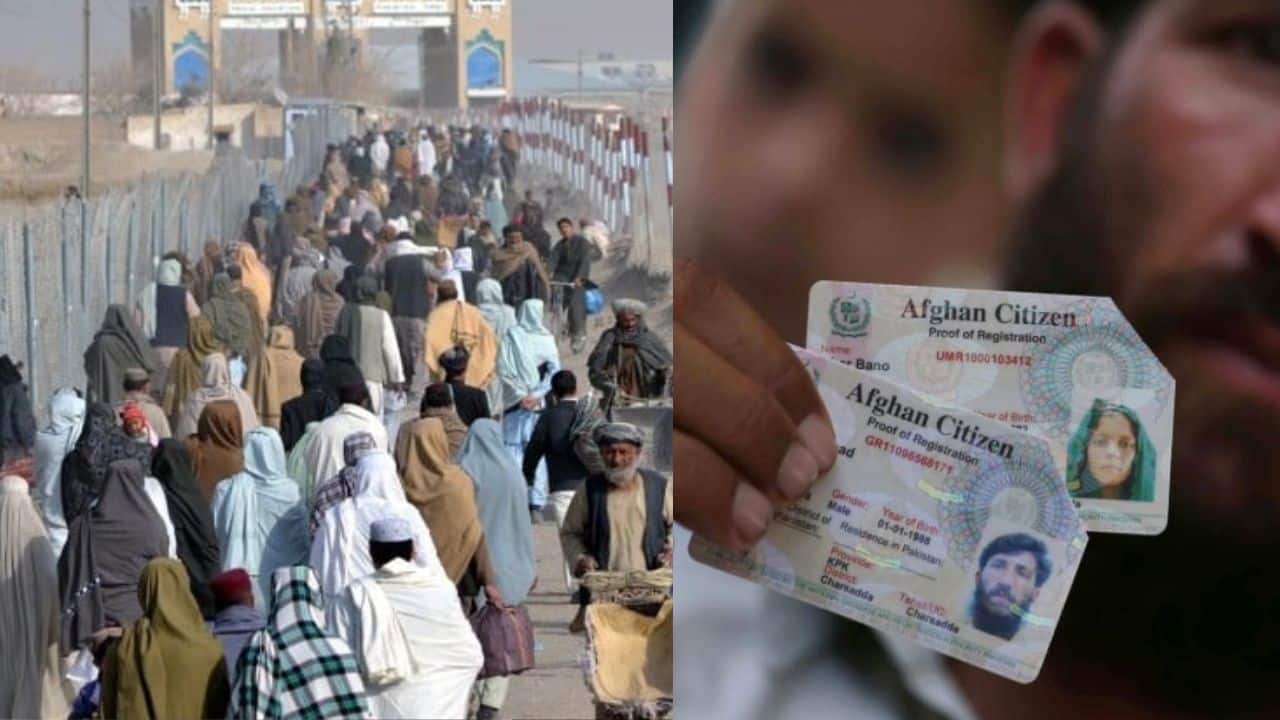
The government has recognized that a total of three million Afghans are residing all over the country out of which 1.7 million are unregistered and undocumented. The rest are the ones who have Proof of Registration with UNHCR or hold Afghan Citizen Card. As per UNHCR, the population of Afghan refugees has grown to 3.7 million while only 1.3 million are officially registered. There was a particular rise in the influx of the population after the exodus of American and NATO forces from Afghanistan. Breaking down the figures, it’s observed that as of June 2023, Khyber-Pakhtunkhwa hosts 52.6 percent (735,800) of Pakistan’s undocumented Afghan population, Balochistan accounts for 24.1 percent (321,677), Punjab has 14.3 percent (191,053), Sindh houses 5.5 percent (73,789), Islamabad accommodates 3.1 percent (41,520), and Azad Jammu and Kashmir hosts 0.3 percent (4,352).
Government’s Repatriation plan
After November 1, raids will be conducted to bring all to “holding centres” and carry out the deportation plan. The government’s deportation plan as laid out by the caretaker Interior Minister is divided into three phases. The plan was laid out in detail in an interview with journalist Shehzad Iqbal on Geo TV. He clearly mentioned that this plan is for “all the Afghans” present in Pakistan and goes on to explain the varying types of them.
In phase one, refugees without any evidence of authorisation or travel documents will be brought to the deportation centres and will be sent to the borders to go back to Afghanistan.
The second phase includes the immigrants who have infiltrated the system of citizenship via illegal means. In the words of the interim minister, they have “breached” the system of NADRA.
The last phase includes the repatriation of the ones who hold documents or are registered with UNHCR. The Government will track them down eventually as “geo-mapping” is completed, claimed the Minister. Meanwhile, they can fully avail the opportunity of open borders to leave peacefully. The holding centers will serve as a temporary home for those to be deported by the Government in a matter of days. Centers are reportedly established in all the provinces and state machinery has been activated to get the task done in time.
Government’s Crackdown
Even though the Government is pledging to take action after November 1, there are multiple reports of raids being made in different cities before the deadline. For instance, one raid in Islamabad Marriot made it to the headlines as the Government arrested UK, asylum seekers. They have been waiting for two years in Pakistan withheld by the UK government in hopes of immigrating to UK, since the Taliban’s takeover. British High Commission has sped up the process after the raid.
Stance of the Pakistan’s government
The motives of the Pakistani government are clear. “In the 24 blasts that took place in the year 2023, 14 were carried out by Afgan nationals,” claimed the Interior Minister. He also claims Afghan nationals are involved in the rising crime ratio of the country. The government strongly denies allegations that the move is reactionary.
Status of Afghans in Pakistan’s society and economy
Afghan nationals residing in the country have a significant contribution to the economy. Most of them started out with small jobs involving physical labour but are now well-established. One such account is narrated by the spokesman of Anjuman-e-Tajiran Balochistan Haji Allah Dad Tareen who sees Pakistan as his home country as younger generations have been born and raised here and they made a living from scratch. “We did not have much economic stability in Quetta before the Afghan Civil War when the people came here, they had lands, agriculture, livestock back at home which were all sold and they invested their money in Pakistan to make a living. This is how the past forty years passed and their young generation belongs to Pakistan, completely. They were born here, they’ve grown up and got educated and completely assimilated in the society just like other locals have,” he said. It is one of many examples. According to Humayun Khan, an economic expert, the PTI Government under Imran Khan offered citizenship to these Afghan Nationals because they realized that if these Afghans went back, this would cause a “revenue drain” on Pakistan’s economy.
Reception of the Repatriation Program
The decision has invited mixed reactions from civil society, activists, journalists, politicians, and netizens from different walks of life.
Afghan government’s spokesman Zabiullah Mujahid called the decision “unacceptable”.
He also denounced the involvement of Afghans in the terrorist attacks in Pakistan. This indicates an impending rift between the two states.
In an interview for the Human Rights Commission of Pakistan, Hina Jillani, with journalist Rabia Mehmood, called the decision “Irrational, unreasonable, unauthorized and unlawful.”
Hina Jilani, chair @HRCP87 emphasised in @NewWaveGlobal_ discussion that Pak interim govt has no mandate to set policy on expulsion of Afghan refugees/asylumseekers a decision which is irrational, unreasonable, unauthorised & unlawful by Pk state. pic.twitter.com/HdlNTpD0Q8
Women’s Democratic Front exposed that the government is deporting the ones holding registration cards and is not allowing them to take their cattle and cash along with them.
The news that even the registered card holding refugees are being deported and are not being allowed to take their belongings especially cattle & cash is unjust and cruel. This further dispossesses an already marginalised people.
— Women Democratic Front ناری جمھوری محاذ (@wdf_pk) October 30, 2023
Moniza Kakar, a human rights lawyer vocal about the pleas of Afghan refugees, along with Aurat March Karachi, organized a peaceful protest to call out the government on the forceful deportation of the Afghan Refugees.
Participated in a protest organized by #AuratMarch against Pakistan’s unjust mass deportation of Afghan refugees. It was heartening to see a diverse group of civil society members from Karachi come together to raise their voices against this unjust policy. #RefugeeRightspic.twitter.com/4FsY8AAJhi
Shafiq Ahmed, an advocate on Twitter, highlighted the issue of forceful expulsion of a huge population to a land they have fled from.
A refugee shall not be deported to a State where his life or liberty would be threatend for reasons of race , colour, religion, political belief or membership of a particular social group.#RefugeesRights#AfghanRefugees#StopDeportingAfghanRefugees
In Geo TV’s show Report Card, journalist Mazhar Abbas questioned the capacity of NADRA to have complete information about all the illegal aliens countering the claims of Caretaker Interior Minister Bugti to have done complete geo-mapping.
Renowned Journalist Azaz Syed is critical of the decision and called it “emotional” in its spirit because many such attempts have been done before by UNHCR but it has turned out that they take the money and come back making use of the porous border.
پاکستان میں افغان مہاجرین کی وطن وآپسی پر بے جا جذباتی پن کا مظاہرہ کیا جارہا ہے۔ کاش ہم ہوش کے ناخن لیں۔ کینیڈا میں سلمی ا زاہد نامی پاکستانی نے 15 سال میں وہاں محنت کرکے اپنا مقام بنایا اور پارلیمینٹ کی رکن بنیں ہم اپنے ہم وطنوں کے لیے بیرون ممالک میں حقوق مانگتے ہیں مگر… pic.twitter.com/HHRRYDirr9
Irshad Bhatti, congratulated the Government and military leadership on this historic decision.
The government, however, has kept the decision intact and maintained that they are ready for the fallout if any because such hard decisions come with all the positives and negatives.
Hyderabad chapter of Aurat March refused to protest against the repatriation plan while the march was criticised by civil rights activist including Anis Haroon, retired Justice Majida Razvi and many others stating, “How long Sindh would bear the burden of illegal immigrants when it owns 37 percent of the rural population [that] lives below the poverty line?”
Bugti wants the move to be perceived as Pakistan’s change of image from a soft state to a “hardened” one. He asserted that Pakistani government is determined to send these foreigners to their homelands in a step-wise manner.