Category: Lifestyle

  • Opposites don’t attract in Russia as politics makes its mark on dating

    Opposites don’t attract in Russia as politics makes its mark on dating

    Sitting at a cafe in Moscow, Yulia swiped through a carousel of men on her phone’s dating app, trying to guess if the people in the pictures shared her views.

    “I started to include the artists that I listen to in the bio. It’s kind of a hint at my thinking,” the 21-year-old freelance photographer said, choosing her language carefully.

    Since Russia launched its full-scale military operation in Ukraine in February 2022, thousands of people have been denounced, fined or thrown in jail for expressing opposition to the conflict.

    According to opinion polls, only a minority of young people living in Russia disapprove of the offensive.

    A June poll by the independent Levada centre suggested 30 percent of 18-24 year-olds disapprove, compared with 59 percent who approve.

    For young, liberal Russians who want to avoid hooking up with hardline pro-army patriots, dating has become a minefield.

    “After 2022, I stopped giving links to any publications that I read,” Yulia said of her online dating profile.

    Gone were any articles expressing tolerance towards LGBTQ people or opposition to the Ukraine conflict — opinions that can land you in jail.

    Instead, she listed her favourite musicians as Zemfira and Monetochka, singers who have criticised Russia’s offensive in Ukraine and have been declared “foreign agents” by Moscow.

    ‘Very classy’

    The dating scene can also be tricky to navigate for those who back the offensive.

    Several groups on social media organise “patriotic meetings” for supporters of the Kremlin and military to search for potential matches offline.

    Arseny Blavatsky, a 24-year-old PR manager and self-confessed admirer of President Vladimir Putin, said he was looking for “an ideologically close partner”.

    “Since February 2022, nobody can be apolitical,” he told AFP at a speed-dating event held in a Moscow restaurant, his fourth so far.

    For Arseny, avoiding ideological conflict in a relationship is a must.

    He recalled his frustration after meeting one girl whom he called “very classy” but politically incompatible.

    “I was getting on very well with this one girl, everything was cool. On the same wavelength, the same language,” he said.

    But after Russian opposition leader Alexei Navalny died in prison in February, she became extremely upset — to his dismay.

    “She was in absolute hysterics. I told her that changed nothing between us. And she says, ‘Well, that’s it, we can’t go on’. I mean, that’s a bit rubbish, isn’t it?” he told AFP.

    After meeting a dozen girls at the speed-dating event, Arseny chose two to follow up with.

    Arseny said he doesn’t know if it’s going to work out this time.

    ‘Unexpected joy’

    To avoid encountering such differences, other young people have found partners within political movements.

    Katya Anikievich and Matvei Klestov, both 21, met in January while campaigning for Boris Nadezhdin, an opposition politician who wanted to challenge Putin in March’s presidential election.

    “Thousands of people, often my age, spoke freely. It was an unexpected joy,” Matvei said of the campaign.

    In the end, the authorities blocked Nadezhdin from running.

    But life changed for Katya and Matvei.

    Hand in hand, they have gone on to support jailed anti-offensive activists in court and taken part in gatherings to write letters to prisoners.

    “Katya shares my opinions, it makes me want to go on living,” Matvei said.

    ‘I’ll follow him’

    Maria Smoktiy and Mikhail Galyashkin also found love through politics.

    They met at a demonstration organised by the “Other Russia” party, an offshoot of the far-left National Bolshevik movement founded by the late activist and writer Eduard Limonov.

    The party backs Russia’s military operation in Ukraine. But its politics is generally more hardline than that of the government, which has sometimes brought it into conflict with the authorities.

    Maria, 18, said she gave up her Arabic studies to deliver aid to parts of eastern Ukraine controlled by Russia with the 24-year-old Mikhail, whom she called “an accomplished adventurer”.

    “When some turbulent historical events happen, you immediately realise who’s on your side and who’s on the other side,” she said, speaking to AFP in the kitchen of their small Moscow flat.

    The couple have travelled a lot in Russia and organised unauthorised demonstrations that have often landed Mikhail in prison for a few days.

    “Setting up barricades, having a family, I want to do everything with him,” Maria said, stroking a bust of Lenin on the table with one hand.

    “I’ll follow him all the way to Siberia,” she added.

    “Maria is a diamond like no other in the world,” Mikhail replied, unabashedly proud.

    But for some in Moscow, the adage that opposites attract still applies.

    Lev, a 28-year-old salesman at a patriotic bookshop in Moscow, and Yevgenia, а 20-year-old English teacher, say they found love even though they are ideologically opposed.

    A “stubborn conservative” by his own admission, Lev said he was about to marry a “liberal open to the West”.

    “She contradicts me and I often take her side,” he confessed, surprised.

  • CAA dues leave over 35 planes at Karachi Airport in ruin

    CAA dues leave over 35 planes at Karachi Airport in ruin

    More than 35 planes at Karachi Airport have become junk for years now, with birds laying eggs in them.

    The defunct planes have deteriorated amid a dispute over customs and CAA dues. Among the grounded planes are an Airbus 310 and two jumbo 747s, many of which have been damaged.

    Some planes belong to PIA, among other airlines, and could not be removed because of the ongoing issue.

    Reports stated that some parts of the parts have gone missing but the spokesperson clarified that these reports are not true, reports Aaj.tv.

  • How many Pakistanis use Facebook and Instagram?

    How many Pakistanis use Facebook and Instagram?

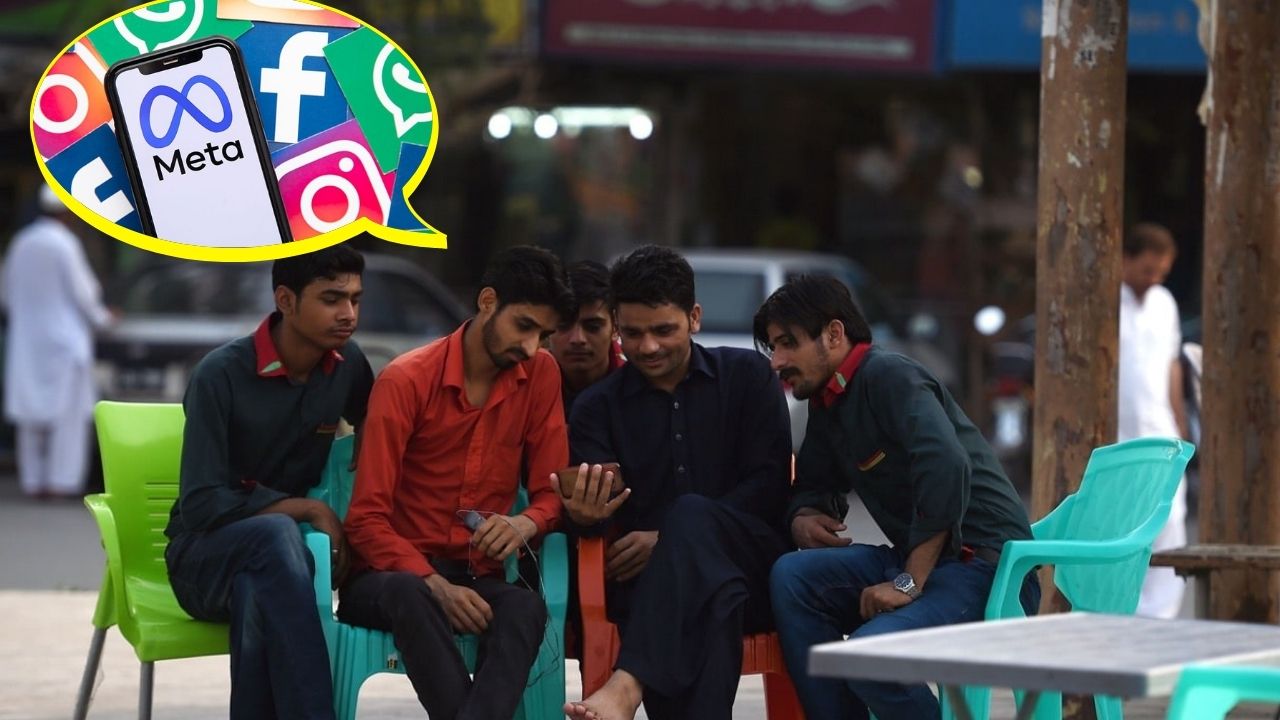
    Gallup Pakistan has released a new survey regarding using Meta apps in Pakistan.

    The survey included more than 700 people and was conducted from June 28 to July 10.


    Gallup revealed that 60 percent of Pakistanis are avoiding social networking apps like Facebook, Instagram, and TikTok, saying that they don’t have an account.

    However, 40 percent reported having an account on the apps and using them heavily.

    62 percent of Pakistani youth under the age of 30 are using these apps ardently, while only 30 percent of Pakistanis above the age of 30 are active, according to the survey.

    Pakistani men are ahead of women in using social media apps as the survey tells that 45 percent of men and 35 percent of women say they use Facebook, Instagram and TikTok.

    22 percent of Pakistanis said they have made friends online through apps, while 76 percent said they had not made any online friends.

  • Continuous violation of Indus Basin Treaty by India

    Continuous violation of Indus Basin Treaty by India

    India has continuously violated the Indus Basin Agreement as sources report that the Indus Water Commissioners meeting has been delayed since the last two years.

    Under the Indus Basin Agreement, a meeting of the India-Pakistan Indus Water Commissioners is required once a year.

    Pakistan’s Indus Water Commissioner, Mehr Ali Shah, has reportedly repeatedly requested a meeting with her Indian counterpart, but no response has been given.

    Sources say that the last meeting of the Indus Water Commissioners took place in New Delhi on May 30 and 31, 2022.

    The agreement also stipulates that the Indus Water Commissioners should meet alternately in Pakistan and India. The purpose of these meetings is to address bilateral concerns through mutual cooperation.

    The meetings should also include discussions on flood data, river flow, and controversial Indian projects affecting the rivers flowing into Pakistan.

  • Sindh government will start testing for drugs in schools

    Sindh government will start testing for drugs in schools

    Sindh Information Minister Sharjeel Memon has announced that children in educational institutions will undergo drug tests, with positive results reported only to their parents.

    Memon highlighted that President Asif Ali Zardari, upon taking office, had directed officials to combat drug abuse, reflecting his concern over the rising trend of drug abuse.

    At the inaugural meeting of the high-powered anti-narcotics committee, Memon stated that if a child tests positive, only the parents will be informed, and the child will then be questioned about the source of the drugs, including suppliers, dealers, and their accomplices.

    The primary focus will be on making arrests.

  • Islamabad’s Monal restaurant to be closed permanently

    Islamabad’s Monal restaurant to be closed permanently

    Islamabad’s Monal restaurant, built illegally in the Margalla Hills National Park, has announced in a statement posted on social media that it will end its operations on September 11 in light of the Supreme Court’s orders.

    “It’s time to say goodbye. As per Honorable SCP directions, we are closing on 11/09/2024. Dear Valued Customers, thank you for your trust and for giving us a chance to serve you to the best of our abilities, for giving us recognition, appreciation, and a place in your heart,” the official statement read.

    The post sheds light on the restaurant’s controversial journey: “Since 2006, it has been an absolute pleasure for the Monal family to serve and showcase a positive image of Pakistan and its beautiful people.”

    “This journey was full of success stories and emotions for the team affiliated with us, but now it’s time to say goodbye. Here’s to a difficult farewell,” it concluded.

    Supreme Court dismisses military’s claim on Margalla National Park commercial activity is an area of Khyber Pakhtunkhwa.
    Chief Justice of Pakistan (CJP) Qazi Faez Isa, along with a three-judge panel of the Supreme Court, had taken up an appeal against the Jan 11, 2022, judgement of the Islamabad High Court (IHC) regarding sealing and taking over Monal’s possession.

    The top court, however, rejected the appeal against the IHC order in which the Capital Development Authority (CDA) and the Islamabad Wildlife Management Board were ordered to seal the Monal premises to ensure the conservation of endangered and wildlife species in the region.

  • Dengue cases rise amid monsoon rains in Lahore

    Dengue cases rise amid monsoon rains in Lahore

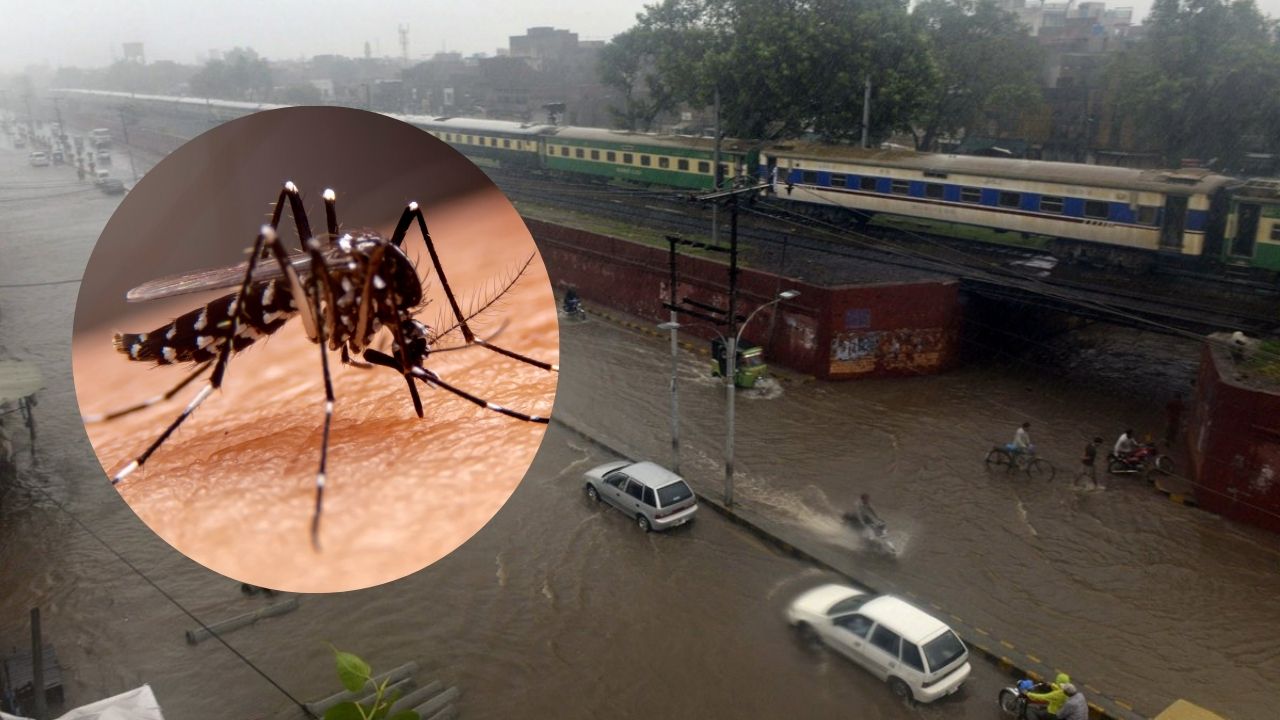
    Authorities have destroyed dengue larvae found in 1,555 locations in Lahore during the past 24 hours.

    According to reports, monsoon rains and changing weather have accelerated the spread of dengue. During this period, dengue larvae were discovered at over 1,500 sites, leading to 1,460 notices being issued.

    Samaa News reports that according to the Deputy Commissioner of Lahore, Rafia Haider, 95 cases have been filed for violations of SOPs.

    Authorities have issued notices to 47,539 individuals and registered 2,360 cases for serious SOP violations so far this year.

  • Landlord in Sindh cuts donkey’s leg for entering his stable

    Landlord in Sindh cuts donkey’s leg for entering his stable

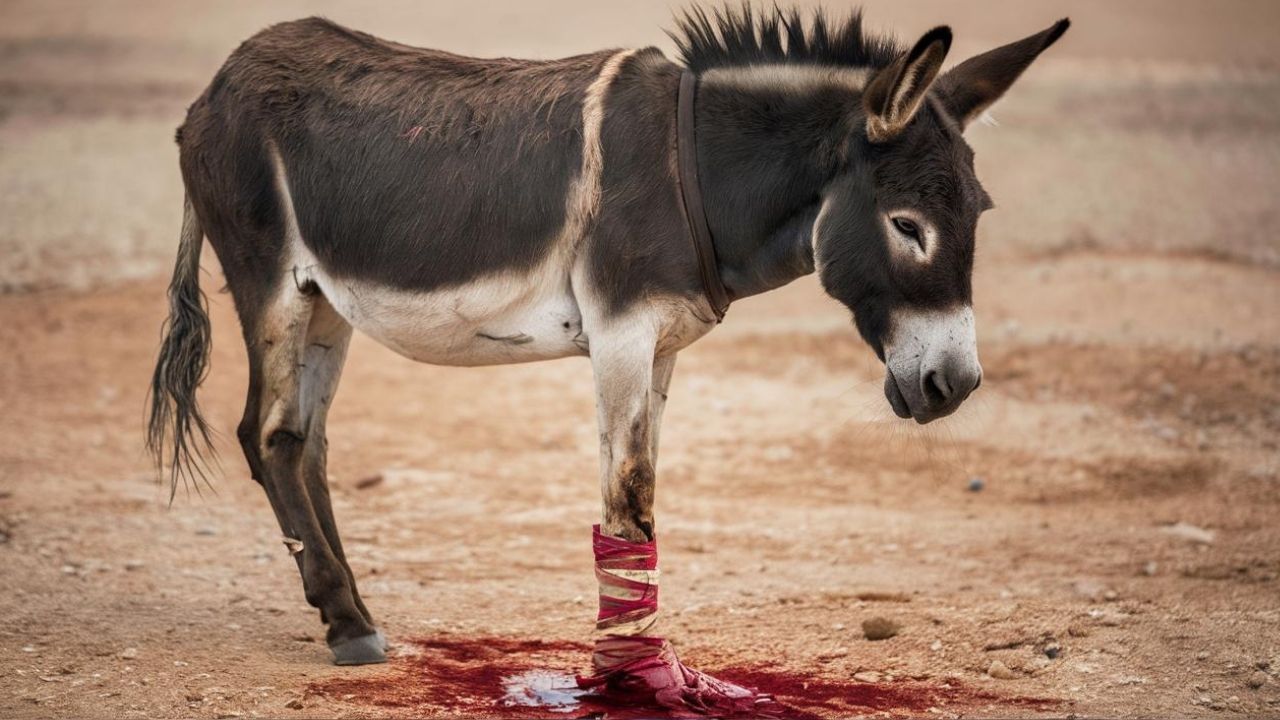
    A landlord in Sindh has cut off the leg of a donkey that entered his stable.

    The incident took place in Batra village of Mehar Tehsil in Sindh.

    The donkey’s owner says his son earns money by driving a donkey cart. The owner said, “Last night, my donkey went to the landlord’s shed, after which he and his son got angry and cut off the leg of the donkey.”


    Geo News reported that the donkey owner had registered a complaint with the Rajhastan police station against the influential landlord, but so far, the police have not taken any action. They have also left the donkey with the police.

    However, the police believe that the donkey’s owner has only reported the case and has not registered an FIR. Further action will be taken after the case is registered and the investigation is carried out.

  • American flight makes emergency landing after lice spotted in woman’s hair

    American flight makes emergency landing after lice spotted in woman’s hair

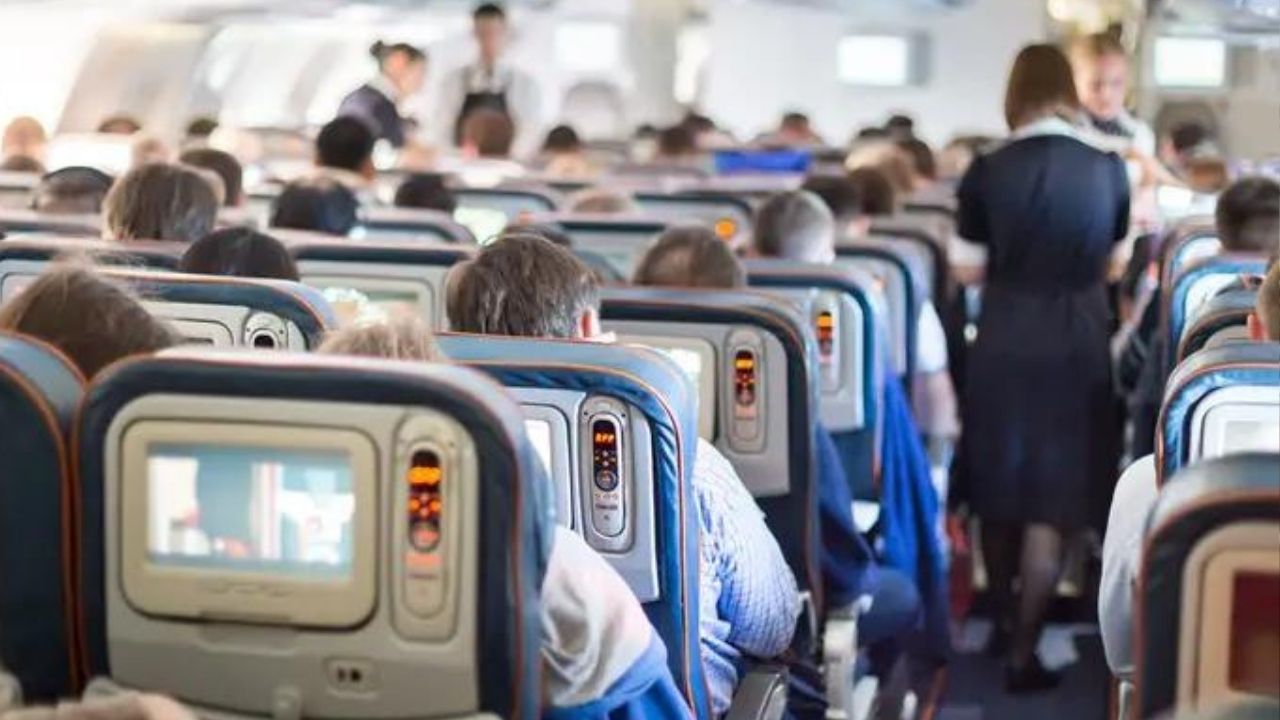
    A flight in America made an emergency landing after passengers spotted lice in a woman’s hair.

    The flight, scheduled to fly from Los Angeles to New York, was rerouted to Phoenix.

    A TikTok user on board, the flight, said in a video that passengers were left confused as American Airlines did not inform them of what caused the diversion.


    Ethan Judelson’s video reached over 1.2 million views. As soon as the plane landed, he described seeing a woman causing a commotion as she rushed through the aisle towards the front. While he was confused, no other passenger paid attention to it.


    “It just seemed like one of those people who, as soon as the seatbelt sign goes off, gets up and tries to be the first to their bag,” he told People magazine, recalling the incident. “So the girl next to me … we were both like, ‘Why is she so rushed to get off? We’re all getting off together; calm down.”


    The TikToker mentioned that two women gave him “cryptic” answers when asked about what happened to them.


    After the plane made the emergency landing, Mr Judelson overheard hushed conversations among fellow passengers. According to eyewitnesses, two passengers had spotted lice crawling out of a woman’s hair, prompting them to alert the flight attendants.


    “Apparently, those two girls saw bugs crawling out of the woman’s hair and alerted the flight attendant,” Mr Judelson said in the TikTok video.

    The airline later issued a statement confirming that the flight was diverted due to a medical emergency.

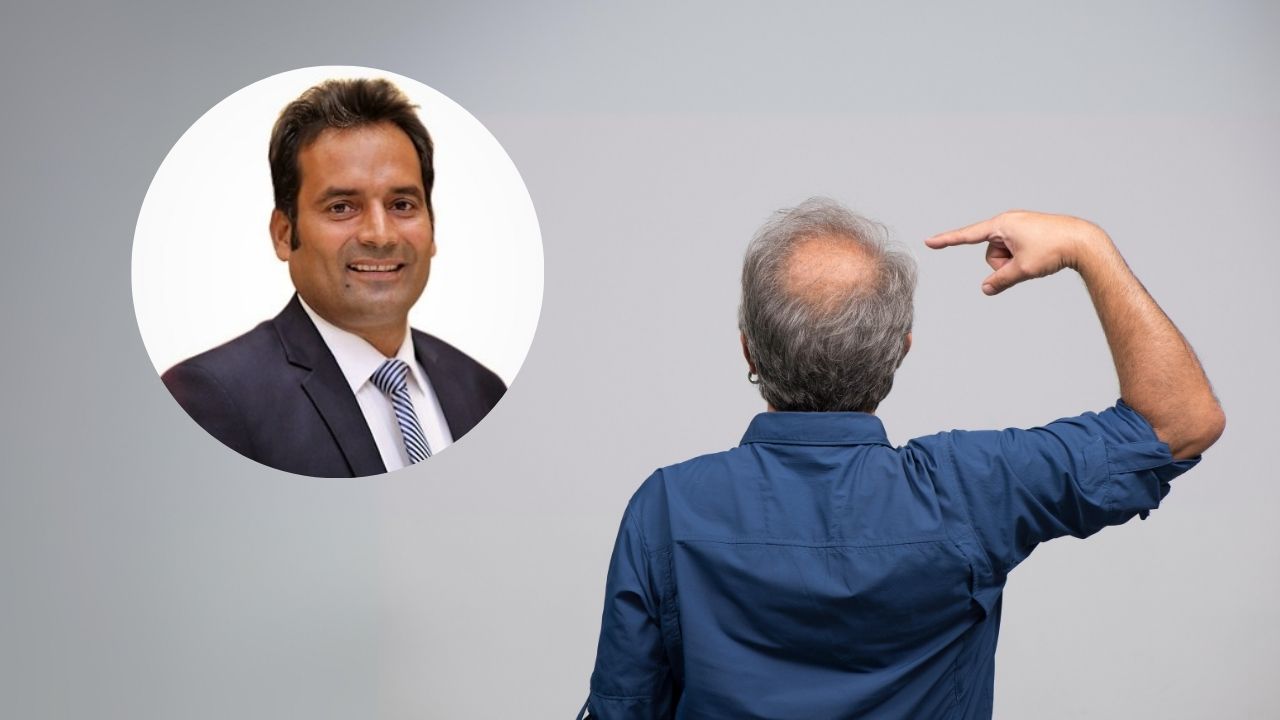
  • Exclusive: Pakistani scientist on the verge of curing baldness

    Exclusive: Pakistani scientist on the verge of curing baldness

    Unexpected discoveries have long been a catalyst for scientific research, leading to major breakthroughs in fields ranging from medicine to technology.

    Now, in an unexpected development, scientists have discovered a crucial piece of the puzzle: hereditary baldness, also known as androgenic alopecia.

    Dr. Muhammad Yar, a tenured associate professor at COMSATS University Islamabad and a biomaterial researcher, and Sheila MacNeil, an Emeritus Professor of Tissue Engineering at the University of Sheffield in the UK, are the two minds behind this latest development.

    Years ago, Dr. Muhammad Yar was working on the development of biomaterials for advanced wound care i.e. dressings (medical gels) which can help faster healing of chronic wounds, and agents which can support new blood vessels formation known as angiogenesis.

    So, in 2014, during a visit to the University of Sheffield, Dr. Muhammad Yar discussed the angiogenic potential of 2-deoxy-D-ribose with Professor Sheila MacNeil.

    Following their discussion, they decided to test the compound together.

    From chickens to rats

    Initially, when the dressing gel, containing 2-deoxyribose, was tested on chicken fertilised eggs, a lot of new increased blood vessels were seen growing towards tested material.

    “We were really happy and then we went towards patent filing. A company was interested in its commercialization as wound care drafting for diabetic and burn patients,” he recalls.

    The deoxyribose gel was then tested on full-thickness wounds, where it successfully promoted healing. It was, however, also observed that longer and thicker hair grew along the edges of the wounds.

    “We thought that 2-deoxy-D-ribose is doing something else as well. Apart from helping in faster regeneration, it’s helping in faster growth of hair as well,” he says.

    And that is how, after working on the development of wound healing, they dived into the possible baldness treatment.

    They tested the deoxyribose gel on mice with testosterone-driven hair loss and applied a small amount of the gel to their bare areas.

    In weeks time, the fur grew back thicker and longer, showing results comparable to minoxidil, the well-known hair loss treatment sold as Rogaine, which doesn’t actually prevent hair loss and often results in minimal regrowth in some cases.

    “This is working really nicely,” Dr. Muhammad Yar updates on the latest developments.

    Happy news for bald people?

    With ‘impressive results’ in mice, the scientists believe there’s a good chance that 2-deoxyribose will be tested on humans next.

    Dr. Muhammad Yar confirms that while testing on humans is the goal, it will first require further lab work to understand the mechanism of action of 2-deoxyribose and to obtain approvals from regulatory bodies.

    “We are expecting around a year and a half to two years’ time before we test this on humans.”

    If deoxyribose gel proves effective on humans, it could treat alopecia and support hair regrowth after chemotherapy.

    Why does Pakistan lag behind?

    When asked why it’s rare to hear about Pakistani scientists working on groundbreaking research, Dr. Muhammad Yar believes that the key is in translational research.

    “We have to develop something in the lab and put this in the market. This is very, very important for economic uplift in Pakistan as well as for the universities.”

    He also asserts the need for business training programs for faculty and students at Universities.

    “The research which academics are doing at the universities is really important. There is a space in the market evaluation and business knowledge among faculty and students that could help translate these technologies from the lab to the clinic,” he points out.