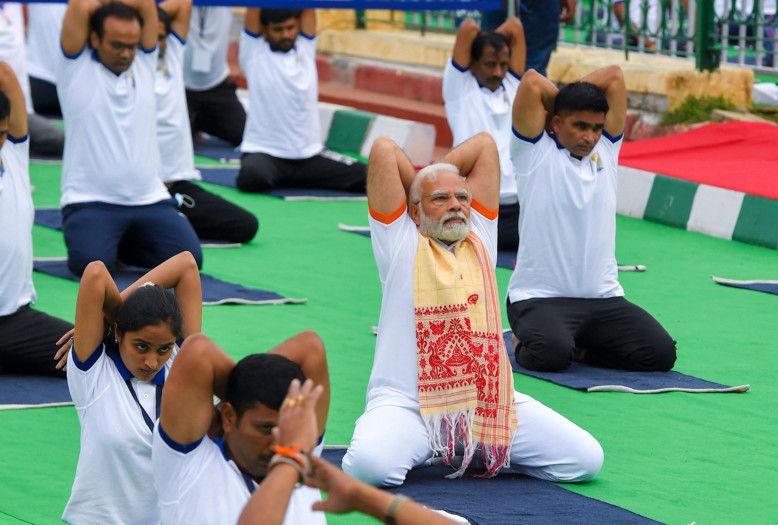
In celebration of the ninth annual observance of International Day of Yoga, Indian prime minister Narendra Modi will be leading a yoga session on the north lawn of the UN headquarters in New York on Wednesday morning.
Modi, a practicing Hindu, often presents himself as devoutly religious. Considering yoga has its origins in ancient Hindu religious practices, the exercise seems a fitting ode to both his faith and culture.
But there are other, more important concerns surrounding his crucial visit to Washington.
Congresswoman boycotts speech
Earlier today, United States’ Congresswoman Ilhan Omar published a tweet ahead of Indian prime minister Narendra Modi’s speech to Congress. She stated she will not be attending the address, holding a briefing with human rights groups instead to discuss ‘Modi’s record of repression and violence.’
I WILL be holding a briefing with human rights groups to discuss Modi’s record of repression and violence.
She accused his government of repression of religious minorities, emboldening Hindu nationalist groups, and targeting journalists/human rights advocates ‘with impunity’.
At the beginning of June, top lawmakers in the U.S. had invited Modi to address Congress on the 22nd of June, during his visit to Washington, DC. Addressing Congress is a rare opportunity that is granted only to the country’s closest allies.
Biden asked to raise concerns
A letter was sent to U.S. President Joe Biden on the eve of Modi’s visit to Washington, asking him to raise concerns around democratic norms and human rights in India with its prime minister.
A total of 75 American Senators and Representatives have signed the letter. The U.S. lawmakers that drafted it said they were concerned about religious intolerance, press freedoms, internet access and the targeting of civil society groups.
They cited “a series of independent, credible reports” reflecting “troubling signs” in India, as reported by Reuters.
“We do not endorse any particular Indian leader or political party — that is the decision of the people of India — but we do stand in support of the important principles that should be a core part of American foreign policy,” said the letter.
A strategic ceremony
According to BBC, the discussions between the two states not only have potential to infuse new energy into India-U.S. relations, but also have an impact on the global order.
As China’s influence continues to grow in the Indo-Pacific, the U.S. needs India’s influence more than ever, viewing it as a counterbalance to China’s. While India is reluctant to claim this tag, China is one of the main catalysts driving India-U.S. relations.
Human rights advocates worry that geopolitics might overshadow humanitarian issues. U.S. rights groups have planned protests against Modi’s state visit to Washington, citing India’s deteriorating human rights record, as reported by Reuters.
صدر مملکت ڈاکٹر عارف علوی نے زچگی اور پدریت کی چھٹی کے بل، 2023ء کی توثیق کر دی۔ pic.twitter.com/HMDeY2CujV
— The President of Pakistan (@PresOfPakistan) June 20, 2023
Under the Bill, women employees of both public and private departments under the federal government’s administrative control will be entitled to avail maternity leave with full pay three times during service.
The times have been stipulated thus: 180 days for the first time, 120 days for the second, and 90 days for the third.
Working men now also have the right to spend their first month as a father on paternity leave with full pay. However, male employees will only be entitled to a leave of 30 days three times during their employment period.
If a company is found in violation of the Bill, there is a risk of imprisonment of up to six months or a fine of up to 100, 000 rupees, or both.
The bill was passed by Pakistan’s parliament last month, and had been in the works for several years after being initially moved by Pakistan Peoples Party (PPP) Senator Quratulain Marri in 2018.
The President gave his assent to the bill under Article 75 of the Constitution, which states that bills sent to the president are formally enacted as laws after his approval.
The Higher Education Commission (HEC) has banned Holi celebrations in educational institutes throughout the country, citing a deviation from the sociocultural values and Islamic identity of Pakistan. The notification regarding the ban was issued by HEC on Tuesday.
According to the notification, students are prohibited from observing the festival to uphold sociocultural values.
“While there is no denying the fact that cultural, ethnic, and religious diversity leads towards an inclusive and tolerant society, that profoundly respects all faiths and creeds; albeit it needs to be done so in a measured manner without going overboard. The students need to be apprised to be aware of the self-serving vested interests who use them for their own ends far from the altruistic critical thinking paradigm.”
The decision comes a few days after Holi celebrations were held on June 12 by students at Quaid-i-Azam University. The notification, while referring to the event, said that “it has caused concern and has disadvantageously affected the country’s image.
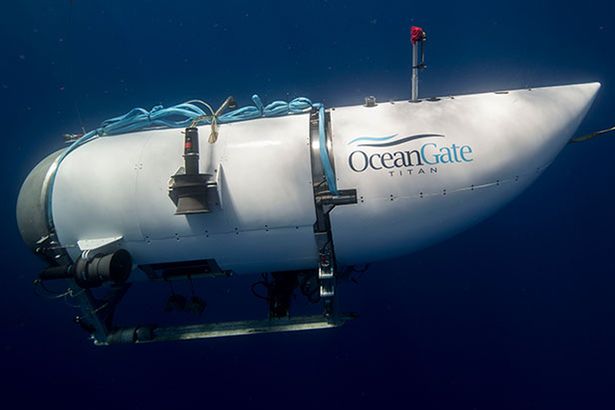
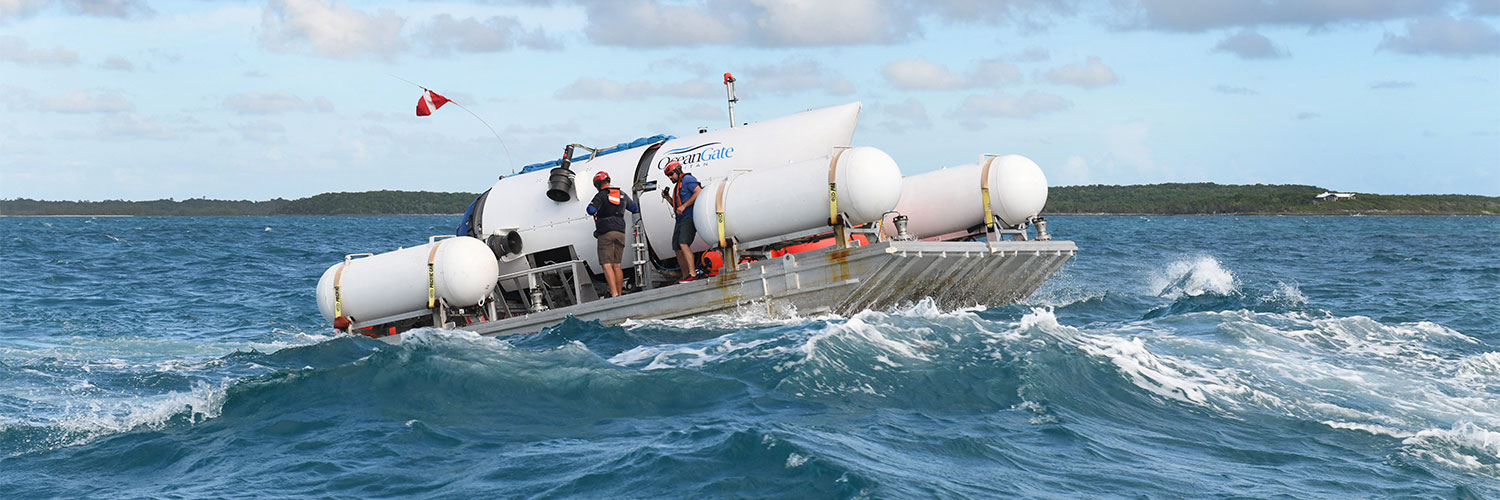
The OceanGate Titan submersible dominating global headlines lost connection and went missing an hour and forty minutes into its expedition on Sunday.
U.S. and Canadian navies, marine authorities and commercial deep-sea companies began a frantic search beneath the North Atlantic Ocean.
It was confirmed through a statement by the Dawood family that Pakistani businessman Shahzada Dawood and his son, Sulaiman, were onboard the vessel.
But who are the Dawoods?
The Dawoods are a prominent business family primarily based in Karachi. Shahzada’s grandfather, Seth Ahmed Dawood, migrated to Karachi from Bombay when the subcontinent was partitioned in 1947.
He and his brothers started Dawood Corporation Ltd. In the following decades, Dawood founded several businesses and chaired companies in a plethora of industries including cotton, textiles, paper, consumer goods, oil, logistics, insurance, jute, chemicals, motorbikes, home appliances, electronics, and fertiliser industries in East and West Pakistan.
Seth Ahmed Dawood was a major figure in the industrialisation of Karachi. Pakistan’s former president Ayub Khan would often consult Dawood on trade and industry affairs.
Seth Ahmed Dawood with former president of Pakistan, Ayub Khan
When Bangladesh achieved independence in 1971, Dawood lost his factories in Dhaka and Chittagong. Back home in Pakistan, the nationalisation process initiated by the government led to him losing his most profitable industrial projects. One of these projects, Dawood Petroleum Limited, became an official part of PSO (Pakistan State Oil) in 1974.
In spite of the massive losses, Dawood continued to develop projects on a relatively smaller scale. The fertiliser business founded by the family in 1965 eventually grew to become one of the biggest companies in the country today: Engro Corporation.
Engro operates through four divisions: Food & Agriculture, Energy & Related Infrastructure, Petrochemicals, and Telecommunication Infrastructure. Shahzada, who is lost somewhere at the bottom of the North Atlantic with his son, is currently the acting vice-chairman of the company.
Pakistan’s philanthropists
The family also set up a not-for-profit foundation called The Dawood Foundation. It has financially assisted Pakistanis affected by the 2005 earthquake and the catastrophic 2010 floods.
During the COVID-19 pandemic outbreak in Pakistan, Shahzada’s father Hussain Dawood, pledged one billion rupees on behalf of Engro Corporation and Dawood Hercules Group, another company predominantly owned by the family.
Moreover, the foundation has funded a variety of formal and informal education projects, the most notable ones including Dawood University of Engineering & Technology, Karachi School of Business and the Mariam Dawood School of Visual Arts and Design at Beaconhouse National University.
In a frantic search for the missing OceanGate Titan submarine, a Canadian maritime surveillance aircraft is reported by Al-Jazeera to have detected ‘banging sounds in the area every 30 minutes.’
On Sunday, the submersible went missing in the North Atlantic Ocean 100 minutes into its voyage to see the wreck of the Titanic. Pakistani businessman Shahzada Dawood and his son Sulaiman Dawood are onboard the vessel.
The United States Coast Guard said that one of the Canadian aircrafts involved in the search for the deep-sea vessel has detected “underwater noises in the search area”.
Additionally, the data from the P-3 aircraft has been shared with our U.S. Navy experts for further analysis which will be considered in future search plans. 2/2 #Titanic
Remotely operated vehicles (ROVs) were then relocated “in an attempt to explore the origin of the noises”, the coastguard said on Wednesday, Al-Jazeera reports.
So far, the ROVs have “yielded negative results”, said the coastguard in a tweet. Still, they are continuing their search.
Rolling Stone magazine, citing internal US government communications, was the first to report the news of what was described as “banging sounds in the area every 30 minutes”.
The magazine cited an internal email sent to U.S. Department of Homeland Security officials. “Four hours later additional sonar was deployed and banging was still heard,” the magazine reported.
The oxygen supply on OceanGate’s Titan will run out by Thursday morning, according to officials.
A foreseeable tragedy?
The former director of marine operations for OceanGate, David Lochridge, had previously raised safety concerns about Titan before being fired from his position.
Lochridge’s concerns about the safety of the missing submersible are still contained in a response he filed to the lawsuit that OceanGate brought against him for breaching a non-disclosure agreement.
Lochridge wrote an engineering report in 2018 that said the craft under development needed more testing and that passengers might be endangered when it reached “extreme depths”.
According to his claim, he learned the vessel was built to withstand a certified pressure of 1,300 meters, although OceanGate planned to take passengers to 4,000 meters, CBS news reports.
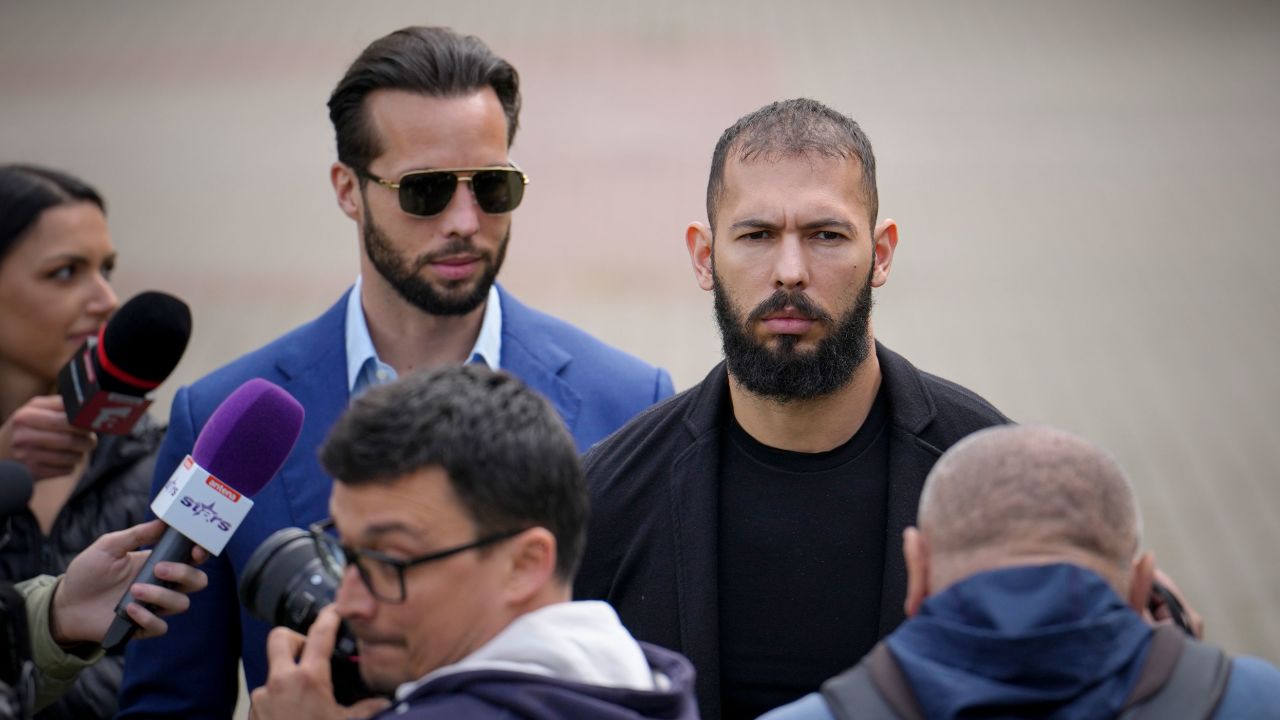
Andrew Tate, along with his brother Tristan and two Romanian associates, are facing criminal charges of rape, human trafficking, and leading an organised crime group for the sexual exploitation of women.
According to the indictment presented to a Bucharest court, the four defendants are accused of forming an organized criminal group in 2021 with the aim of engaging in human trafficking in Romania, as well as the U.S. and the U.K.
The indictment names seven alleged victims who state they were deceived by the Tate brothers on false promises of love and marriage.
All the defendants have denied the allegations. The Tate brothers were initially arrested at their Bucharest home in December and were later granted house arrest in March by a Romanian judge.
The judge now has a 60-day period to review case files before sending it to trial. There are also ongoing investigations into other alleged crimes such as money laundering and trafficking of minors, which may result in separate indictments.
Assets belonging to the accused, including properties, cars, and over $300 million in cryptocurrency, have been seized. However, the trial is not expected to begin immediately and is likely to last several years.
Andrew Tate, a British-American former kickboxer, gained notoriety in 2016 when he was expelled from the British TV show Big Brother due to a video showing him apparently assaulting a woman. Despite a temporary ban from Twitter for controversial comments blaming women for sexual assault, he later had his account reinstated.
Andrew Tate has amassed a substantial following among young men, due to his flagrant display of hyper-masculinity and a luxurious lifestyle.
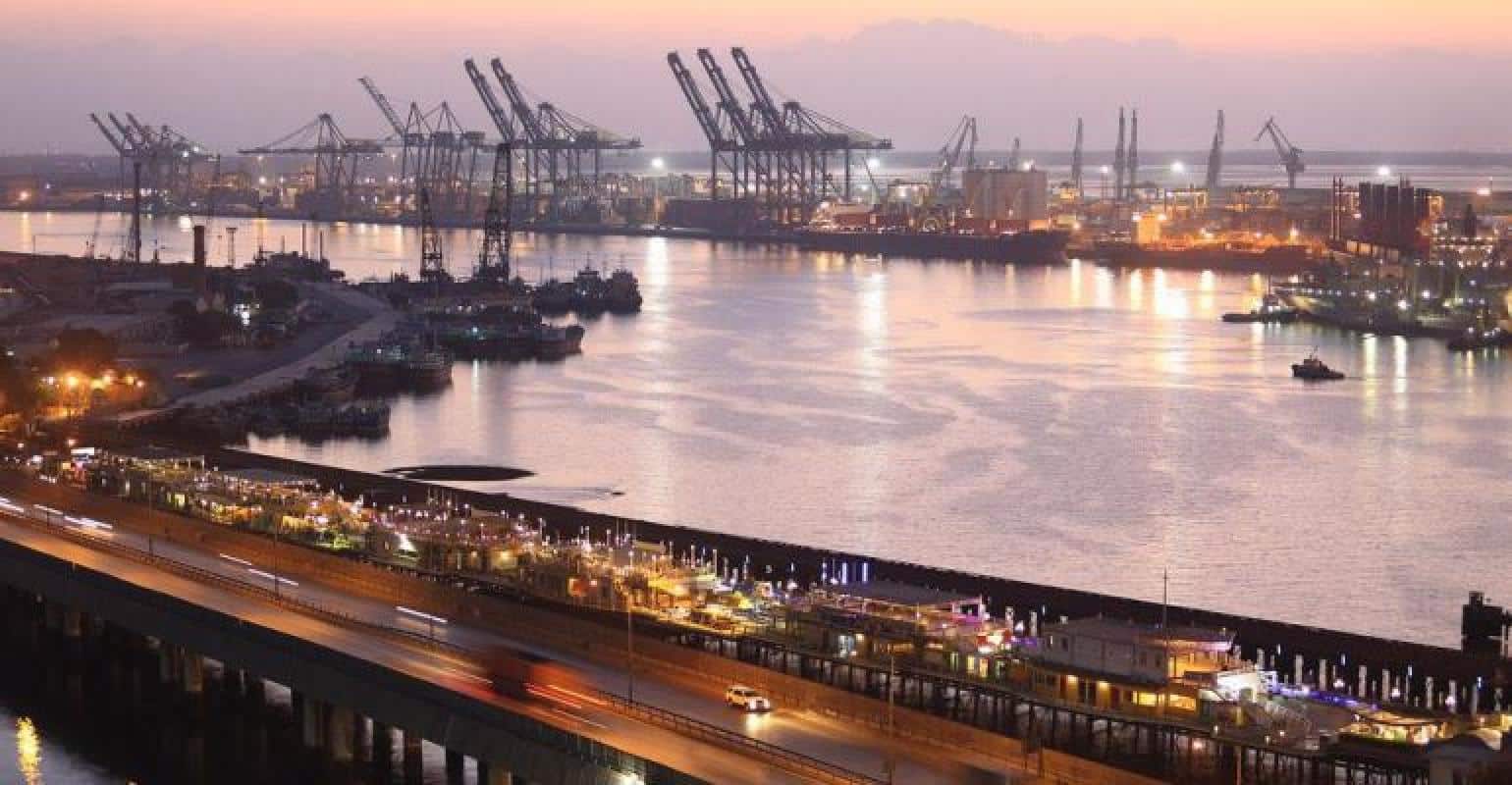
In a last-ditch attempt to raise much needed foreign exchange, Pakistan’s government is planning to finalise a deal to hand over Karachi’s port terminals to the United Arab Emirates (UAE).
This move may constitute the first intergovernmental transaction under the Intergovernmental Commercial Transactions Act, a law which was enacted last year in 2022. This law is aimed at selling state assets on a fast-track basis to raise funds.
Last year, Pakistan’s coalition government created the effective-immediately bill to raise emergency funds.
Finance Minister Ishaq Dar chaired the meeting of the Cabinet Committee on Inter-Governmental Commercial Transactions on Monday. A decision was made to set up a committee that would negotiate a commercial agreement between the Karachi Port Trust (KPT) and the UAE government, as reported by The Express Tribune.
The negotiation committee constituted to finalise a framework agreement will be headed by the Minister for Maritime Affairs, Faisal Sabzwari. Committee members include the additional secretaries of Finance and Foreign Affairs, the special assistant to PM Jehanzeb Khan, the Chairman of the Karachi Port Terminal (KPT), and the general managers of the KPT.
The UAE government had shown interest in acquiring the Karachi port terminals that were under the administrative control of Pakistan International Containers Terminals (PICT) last year. However, for now, PICT will maintain operational control over the ports.
The Ministry of Maritime Affairs (MoMa) released the following statement, as reported by Dawn: “KPT was of the view that they couldn’t operate the terminal due to lack of time and resources and interface with the clients/shipping lines and the timeframe for bidding had lapsed and the events have created an unforeseeable situation where the time limits laid down for open or other methods of procurement cannot be met.”
The MoMA said and went on to report that “the (KPT) has, therefore, recommended that in the given circumstance only PICT is in a position to provide management services to keep the terminal operational”.
According to The Express Tribune, sources indicate that the government needs to be extra careful when finalising a deal with the UAE, considering it is the first transaction of its kind and the outgoing operator is posing some challenges.
Pakistan’s IMF loan of $6.5 billion was signed in 2019 and is set to terminate on June 30. Its termination date drawing closer has sent panic through the Pakistani government. Already suffering one of the worst economic crises Pakistan has faced, the threat of the country defaulting looms ominously near.
Prime Minister Shehbaz Sharif held a meeting with the ambassadors the United States, the United Kingdom, France, Germany, the European Union, Japan, China, Saudi Arabia, Qatar and the United Arab Emirates. Sharif wants to rouse support for the revival of Pakistan’s stalled deal with the IMF.
The prime minister stressed that the government was keen to get at least the $ 1.2 billion IMF loan tranche out of the remaining $2.6 billion, which is attached with the completion of the pending 9th review of the program, according to sources at The Week.
The federal government has approved a three-day holiday on account of Eid ul Azha from June 29 to July 1st. The holidays are as follows: • June 29 and 30, 2023 (Thursday and Friday) for the offices observing five days working in a week. • June 29 to July 1, 2023 (Thursday, Friday and Saturday) for the offices observing 6 days working in a week.”
The Central Ruet-e-Hilal Committee announced the sighting of Zill Hajj moon a day earlier on Monday, meaning that Eid ul Azha will be celebrated on June 29 across the country. Maulana Abdul Khabir Azad, Chairman of Ruet-e-Hilal Committee has confirmed the moon sighting. Representatives of the ministry of religious affairs were also part of the meeting and the decision was announced after taking input from zonal committees of Ruet-e-Hilal.
Pakistani businessman Shahzada Dawood and his son Sulaiman Dawood are currently onboard a missing OceanGate tourist submersible vessel that was carrying five people to see the wreck of the Titanic at the bottom of the North Atlantic Ocean.
The Dawood family has released the following statement:
“As of now, contact has been lost with their submersible craft and there is limited information available. A rescue effort that is being jointly led by multiple government agencies and deep-sea companies is underway to reestablish contact with the submersible and bring them back safely,” read the statement.
“We are very grateful for the concern being shown by our colleagues and friends and would like to request everyone to pray for their safety while granting the family privacy at this time. The family is well looked after and are praying to Allah for the safe return of their family members,” it added.
Shahzada Dawood is a trustee of the SETI Institute in California and vice chairman of Dawood Hercules Corporation, part of the Dawood Group.
The OceanGate Titan craft submerged Sunday morning, and its support vessel lost contact with it about an hour and 45 minutes later, The Independent has said.
OceanGate Expeditions is a company that offers eight-day missions to see the Titanic debris at a cost of $250,000 per person. The organisation confirmed its submarine was lost at sea with crew members on board, and that it is exploring all options to rescue the five people onboard. The company’s chief executive is also believed to be on the craft.
Officials confirmed government agencies, the US and Canadian navies and commercial deep-sea firms are helping in the rescue operation, as reported by the BBC.
The craft they were on board dives with a four day emergency supply of oxygen. Addressing a news conference, Rear Adm John Mauger of the US Coast Guard said there is somewhere between 70 and the full 96 hours of oxygen available at this point
British billionaire explorer Hamish Harding and renowned French diver Paul-Henri Nargeolet are also among the passengers onboard.
When Cyclone Biparjoy was hurtling towards the Sindhi coastline, many heard the name ‘Keti Bandar’ repeatedly on television, as well as talk of the existential threat the port-town faced due to the tropical storm. Many only recognised Keti Bandar as the part of coastal Sindh that Biparjoy was initially predicted to make landfall on.
Yet Keti Bandar is the remnant of a practically ancient community that has long suffered the systematic destruction of the Indus delta. What many don’t realise is that, before Biparjoy even began stirring in the Indian Ocean, Keti Bandar had sank under the Arabian sea and reemerged three times.
This is the story of a community that is fighting against a disappearing delta. A community that still stands after being swallowed by the sea. A community that may not survive another submergence.
The lords of the sea
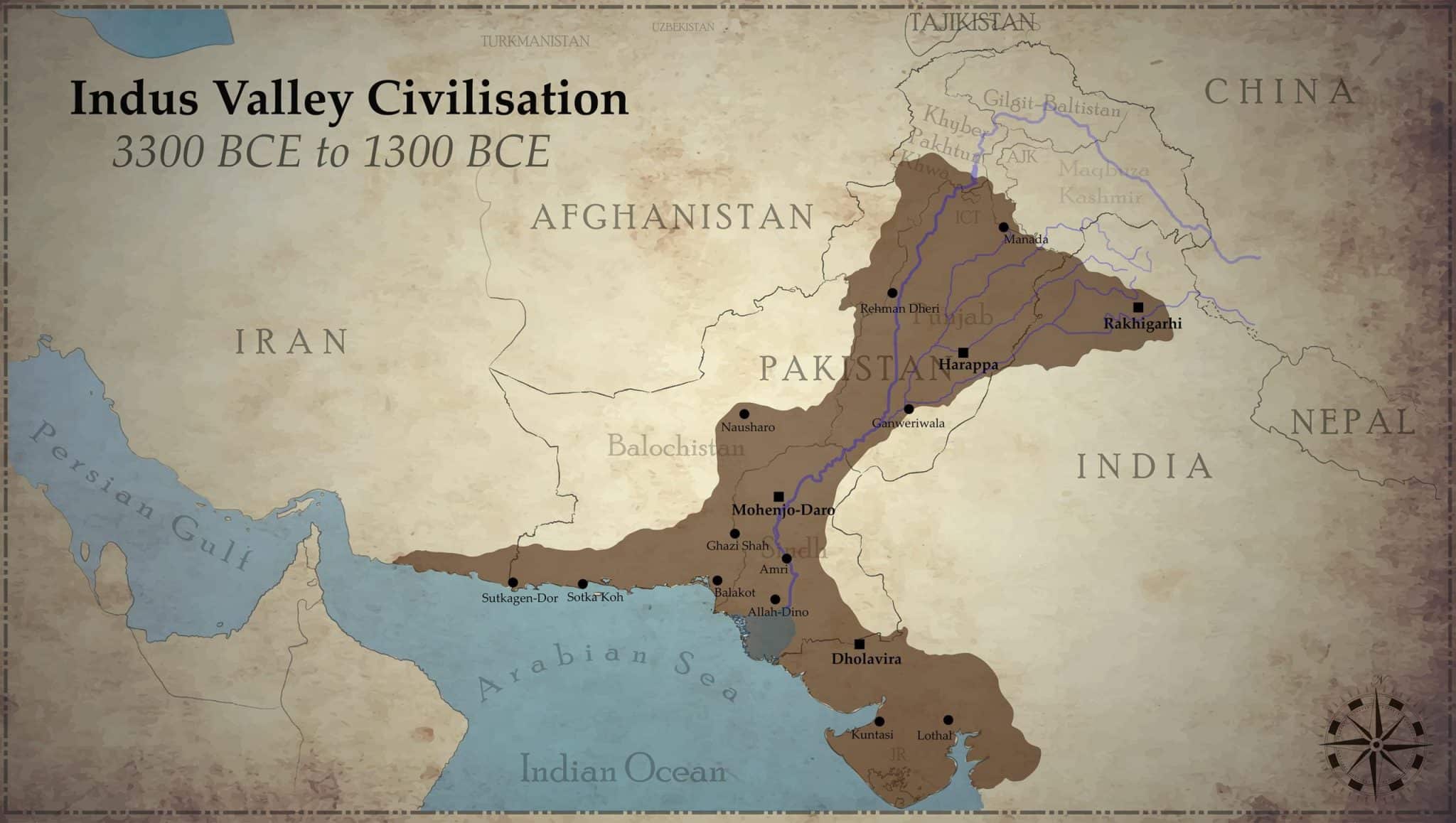
The residents of Keti Bandar are part of the Mohana tribe, descendants of the first inhabitants of the Indus valley. The remains of the original Mohana settlement can still be seen at the archeological site of Mohenjo-daro, which once stood on the banks of the Indus before the mighty river changed its course.
The Mohana refer to themselves as ‘Mir Bhar’, an Arabian word which means ‘kings of the sea’. They are historically a boat and river folk, engaged in the business of fishing and transport along the sea and river. The Mir Bhar are one of the oldest castes that have existed in Sindh. It is one of the few cultures dating back to the ancient Indus Valley Civilization that has remained continuous in the region.
Much of lower Sindh lay beneath the Arabian Sea 3000 years ago. Part of a rivers’ natural process is the deposit of silt. A river is as much mud as it is water, a fact that is often forgotten. Over time, the Indus deposited so much silt that the sea water receded, creating the mud flats that comprise much of lower Sindh. The mudflats that house communities such as Keti Bandar.
Keti Bandar exists solely because of its connection to the river. There are so many subtribes of the Mohana fishermen community that live across lower Sindh, which shows the crucial part the Indus played in its creation and livelihood.
It was a thriving port once – in fact, the inhabitants of Keti Bandar were once far more affluent than those of Karachi. Rich fishermen and farmers that cultivated red rice would lend money to aspiring businessmen in the bustling city. The fresh river water of the delta allowed the Mir Bhar to live well and prosper.
Keti Bandar sank three times due to hurricanes and sea advances: once in 1857, then in 1877, and the last known submergence was in 1910. When Cyclone Biparjoy came around, the sea swallowed many homes along Keti Bandar again, but the water receded fairly quickly as the storm moved along its course.
Yet the persisting Mohanas were damned long before Cyclone Biparjoy, long before the current throes of climate change. The deposit of silt, that was so instrumental to the creation and preservation of Keti Bandar, was halted when the Kotri Barrage was finished in 1955.
The Gradual Death of the Delta
The construction of the Kotri Barrage began during the British Raj in 1932. Environmental activist Zulfikar Ali Bhutto Jr. reflected on his visit to Keti Bandar in 2015. He shared how Kotri Barrage (also known as the Ghulam Muhammad Barrage), as well as other barrage systems built by The World Bank and IMF post partition, were the ‘final nail in the coffin’ on what we knew once as the mighty Indus delta.
“It’s as though Keti Bandar has suffered 15 – 16 years of dehydration,” Zulfikar said. Indeed, there can be no development with no fresh water. The excessive damming and redirecting of the Indus has drastically decreased the water flow from the river to the mudflats of lower Sindh. As a result of resource degradation, the Indus delta has seen a mass exodus.
According to a study by Altaf Memom published in 2005, an estimated 90, 000 had been displaced and about 120 villages depopulated. One can only imagine the state of things now: the lack of fresh water and the encroaching Arabian Sea has rendered Keti Bandar practically unlivable. And yet, the community persists. While we are hearing the term ‘climate refugees’ now more than ever – especially considering the devastation of the 2022 floods – Pakistan has technically had climate refugees since the 50s.
Due to the various irrigation systems along the Indus, 43% of land in Northern Sindh has been left saline. Because of this, the entire delta system has seen catastrophic changes. The locals of Keti Bandar primarily complain of ‘kaala paani’: no fresh water. Without fresh water, there can be no development. And with the now obstructed deposition of silt, Keti Bandar and other coastal regions that lie atop mud flats are facing the existential threat of being swallowed by the sea.
When asked about the recent floods and their potential benefit to the arid region, Zulfikar said, “Even if there is a good summer monsoon, so much of it is still drained out. Whatever’s left behind after crossing through Sukkur Barrage is just seepage and not enough silt.”
The Decline of Keti Bandar
The Mohanas, once one of the oldest and wealthiest tribes of Sindh, has now become one of the poorest. The entire province of Sindh is part of the Indus delta, and because of it shrinking, the locals of Keti Bandar have gone from living in the abundance of the rich river to living in sheer poverty.
As lords of the sea, Keti Bandar’s community is mostly comprised of fishermen. They rely solely on fishing for sustenance. However, this stream of income is not only threatened by extreme weather events such as Cyclone Biparjoy. The fishermen of Keti Bandar have been ruined by loans with astronomical interest rates, endowed on them by Middlemen that orchestrate business between the fishermen of Keti Bandar and the fish markets of Karachi.
They buy the catch at low prices, and sell them to traders in Karachi and other cities for a 200-500 percent profit. Since the poor fishermen owe them money, they have no choice but to sell their catch to these people, otherwise risking the seizure of their boats and fishing nets.
The locals are very cognizant of the decline of wealth and prosperity in Keti Bandar. Some of the oldest members of the community were still alive when Keti Bandar’s municipality was loaning to the growing metropolis of Karachi. Since its steady decline, the government has made empty promises to provide for the community, but to no avail.
On a visit to Keti Bandar in 2011, Moin Khwaja shared the frustration of a local fisherman: “The government is literally pushing us into the sea. Loan sharks visit us every single day while the politicians come to us once in five years to beg for our votes”.
While the climate crisis worsens, communities such as the Mohanas along Keti Bandar have already been facing the brunt of drastic environmental changes and lack of governmental support. One can only imagine the magnitude of the threat they face now, as extreme weather events such as Biparjoy will only increase in frequency.
Special thanks to Zulfikar Ali Bhutto Jr. for giving The Current his insights regarding the environmental degradation of the Indus Delta and Keti Bandar.
Altaf A. Memon (May 14–19, 2005). “Devastation of the Indus River Delta”. World Water & Environmental Resources Congress 2005. Anchorage, Alaska: American Society of Civil Engineers. World Wildlife Fund.