Category: Lifestyle

  • Ban against corporal punishment enforced in Islamabad

    On Thursday, the federal government of Pakistan introduced rules to enforce the ‘Prohibition of Corporal Punishment Act, 2021’ throughout the capital city and territories, banning corporal punishment in public and private schools.

    According to Dawn, the law was passed three years ago, however the rules were updated a couple of months ago and the act was finally launched on Thursday.

    According to the act, teachers who are found guilty of inflicting violence on students will be punished through major penalities like compulsory retirement, dismissal from service or demotion to a lower post. Minor penalties include withholding promotion for a specific period or increment or financial advancement in accordance with the rules or orders pertaining to the service or post.

    The law states:

    “The child has the right to be shown respect for his personality and individuality and shall not be made subject to corporal punishment or any other humiliating or degrading treatment.”

    Speaking at the launch at the Islamabad Model College for Girls in F-10/2, the Minister of Federal Education Rana Tanveer Hussain praised the act as a shift towards fostering a culture of non-violence and empowering the rights of children:

    “Let us work together to implement these rules effectively and create an environment where every child feels safe and nurtured.”

    Convener of the Parliamentary Caucus on Child Rights and Parliamentary Secretary Law and Justice, Mehnaz Akber Aziz, who was also present at the ceremony, discussed the significance of the rules towards improving the lives of children:

    “The launch of the Prohibition of Corporal Punishment Rules is a testament to our commitment to ensuring children’s well-being and upholding their rights. These rules will provide clear guidelines and enforce strict measures to eradicate corporal punishment from educational institutions and child-related settings throughout Islamabad. I hope this will also incentivise the currently 2.4 million out-of-school children to head to schools.”

    United Nations International Children’s Fund (UNICEF) Representative Abdullah A. Fadil spoke on why corporal punishment must be outlawed in Pakistan:

    “Corporal punishment can inflict immediate pain and suffering, and sadly may also cause irrevocable damage that can last a lifetime. We need to act now and put all our weight behind this act so that all children in Pakistan are able to learn and grow in a safe environment and are protected in a society which respects and upholds their rights and dignity.”
  • Delhi University to remove chapter about Alama Iqbal from political science textbooks

    A chapter about Allama Iqbal in a book recommended for Political Science syllabus has been removed by Delhi University, after a discussion at the Academic Council meeting.

    According to Indian news organization ANI, the Vice Chancellor, Yogesh Singh, said that those who laid the foundation to break India should not be taught to students:

    “Iqbal wrote songs supporting the ‘Muslim League’ and the ‘Pakistan Movement’. Iqbal was the first to raise the idea of the partition of India and the establishment of Pakistan and said that instead of teaching about such people, we should study our national heroes.”

    The right-wing student movement Akhil Bharatiya Vidyarthi Parishad has welcomed the motion, saying Iqbal was a ‘fanatic theological scholar’ who was responsible for the partition of India.

    “Delhi University academic council decided to scrap fanatic theological scholar Mohd Iqbal from DU’s political science syllabus. It was previously included in BA’s sixth-semester paper titled ‘Modern Indian political thought. Mohammad Iqbal is called the ‘philosophical father of Pakistan’. He was the key player in establishing Jinnah as a leader in Muslim League. Mohammad Iqbal is as responsible for India’s partition as Mohammad Ali Jinnah is.”

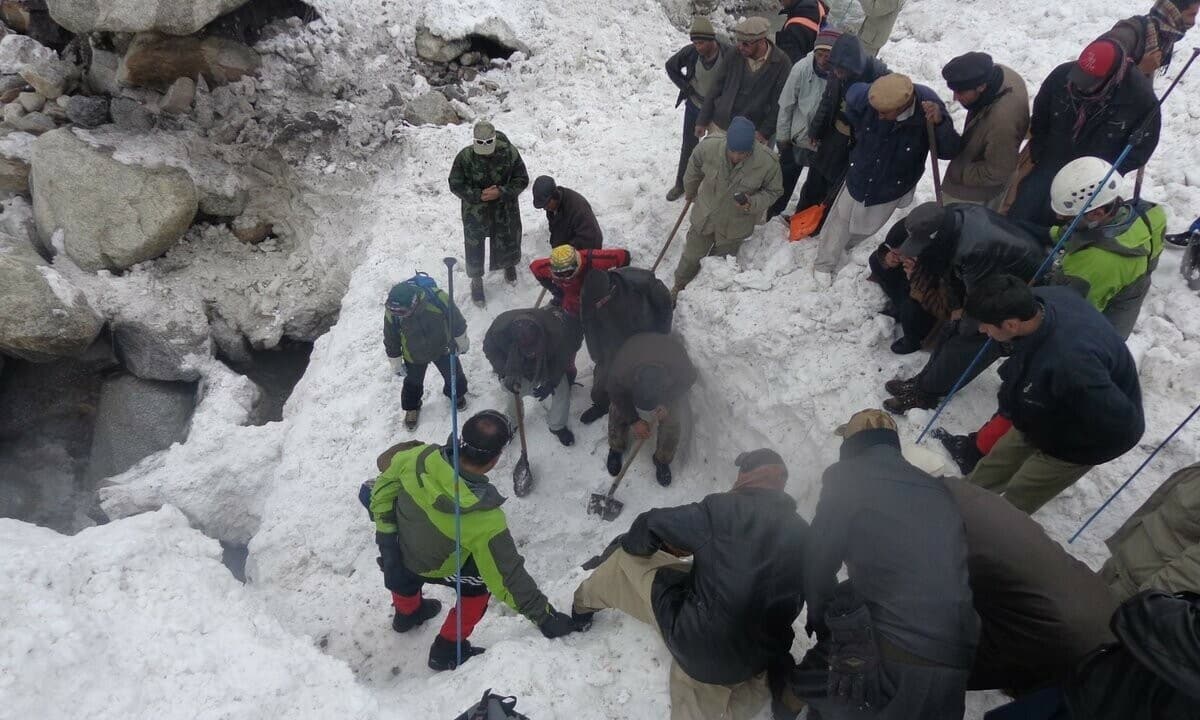
  • At least 9 killed after avalanche hits Gilgit Baltistan’s Astore region

    At least 9 killed after avalanche hits Gilgit Baltistan’s Astore region

    At least 9 people were killed and 26 were injured in an avalanche in the Astore district of Gilgit Baltistan on Saturday.

    The accident occurred in the Shounter Top area of the district.

    Local police have confirmed the death toll while also expressing concerns that the number of victims could rise as rescue operations go on. Many individuals are still believed to be buried under the debris.

    Locals gathered to provide support and aid to those affected by the disaster.

    Chief Minister of Gilgit Baltistan Khalid Khurshid Khan expressed sorrow over the fatalities and has ordered complete rescue operations.

  • Indian food inspector drains dam to find fallen phone

    Rajesh Vishwas, a member of the Indian government, was suspended after he gave an order to empty a water reservoir in order to retrieve his phone, BBC reported on Saturday.

    The food inspector was taking a photo when his phone, which was valued at roughly $1,200, fell into the Kherkatta Dam in Chhattisgarh.
    Millions of gallons of water had to be pumped out of the dam. The process of draining the dam took three days.


    Vishwas has said in a video statement that after local divers failed to find it, he paid for a diesel pump to be brought in.

    The process was halted after an official from the water resource department arrived following a complaint.

    “He has been suspended until an inquiry. Water is an essential resource and it cannot be wasted like this,” Kanker district official Priyanka Shukla told an Indian newspaper.

    However, Vishwas insisted that he had not abused his authority and that the water had been drained because it was “

  • Coca-Cola, with an alliance of Beverage Manufacturers in Pakistan, appeal to the Government for a fair and broad-based tax regime and an immediate withdrawal of unprecedented Federal Excise Duty

    Coca-Cola, with an alliance of Beverage Manufacturers in Pakistan, appeal to the Government for a fair and broad-based tax regime and an immediate withdrawal of unprecedented Federal Excise Duty

    Pakistan’s aerated beverage industry is grappling with a significant decline in volume, estimated at 35% to 40%, following the introduction of a 7% Federal Excise Duty (FED) in the February 2023 mini-budget. This latest tax increase has pushed the total FED on the industry to an unsustainable 20%, marking a staggering 50% surge from the previous rate of 13%. The repercussions are reverberating throughout the manufacturing chain, with an expected loss of thousands of jobs. If these regulatory challenges persist, businesses may be compelled to consider shutting down their operations, resulting in a further blow to government revenues, estimated at an annual loss of PKR 6-8 billion in FED collection.

    The beverage industry in Pakistan is already burdened with one of the highest tax rates globally, with a 20% FED that surpasses the average levy imposed on the food and beverage sector. Despite these challenges, the aerated beverage industry has stepped up as a key investor, contributing an estimated $200 million to bolster the country’s foreign exchange reserves during a time of Forex shortage. However, the recent tax measures have hindered the government’s revenue collections from this industry, leaving a negative impact.

    According to the Half-Year Report for 2022-2023 published by the State Bank Board of Directors, several sectors, including the beverage industry, have experienced negative growth. From the first half of the fiscal year 2022 to the same period in 2023, the beverage industry alone has contracted from 5% to a significant negative growth rate of -8.3%.

    The adverse economic consequences resulting from these measures have garnered attention from trade bodies such as the Pakistan Business Council, American Business Council, and various Chambers of Commerce. These associations recently presented their recommendations to Senator Saleem Mandviwalla, Chairman and Convener of the Senate Committee on Finance and Revenue. In a consultative session held on May 23, 2023, Coca-Cola, representing the industry, voiced concerns regarding the discriminatory nature of the tax applied in February 2023. The tax does not consider per-capita sugar consumption, resulting in an unfair burden on the beverage industry, which only accounts for approximately 6% of the country’s sugar consumption.

    The beverage sector, which operates transparently and in compliance with regulations, now urges the government to reassess its taxation policy. Specifically, the industry is calling for the immediate withdrawal of the 7% tax introduced in the mini-budget, as it was initially presented as a temporary, stop-gap measure. The industry maintains that a fair and broad-based tax regime would not only alleviate the burden on the beverage industry but also contribute to Pakistan’s economic stability and foster growth.

    The appeals made by Coca-Cola and other beverage manufacturers underscore the urgent need for a comprehensive review of the taxation policy affecting the industry. Striking a balance between tax obligations and recognizing the substantial investments made by these companies is vital to creating a conducive business environment and ensuring the long-term sustainability of Pakistan’s beverage sector.

  • Jhang father kills daughter in the name of honour

    Jhang father kills daughter in the name of honour

    Trigger warning: Murder

    A father has allegedly killed his daughter in the name of honour by setting her on fire in Jhang, Punjab.
    As per the details, the father took help of his other children to kill Masooma Bibi.

    The girl was shifted to hospital in critical condition, where she breathed her last after giving a statement.

    The deceased accused her siblings and father of orchestrating the heinous act.

    Police have registered the case and have arrested six suspects, including the father.


  • Parents arrested for starving 10-year-old son

    A couple in Georgia have been arrested for starving their ten-year-old son.


    Tyler and Krista Schindley were taken into custody and are being held in jail after a judge denied them bail.


    Their 10-year-old son was found searching for food in their neighbourhood, leading to his parents’ arrest.


    They boy weighed just 36 pounds.
    “We aren’t releasing any photos of this child for obvious reasons, but I will tell you, the photos are absolutely horrible, and anybody with a human heart who looks at them should be shaken to their core,” District Attorney Marie Broder said.

    She added: “It is my true belief that had he not gotten out of the home, this case would be a very different one.”

    According to an arrest affidavit, the couple purposefully denied the youngster food and allegedly kept him sequestered in his bedroom without access to lighting, toilet paper or human contact.

  • Parents arrested for starving 10-year-old son

    A couple in Georgia have been arrested for starving their ten-year-old son.


    Tyler and Krista Schindley were taken into custody and are being held in jail after a judge denied them bail.


    Their 10-year-old son was found searching for food in their neighbourhood, leading to his parents’ arrest.


    They boy weighed just 36 pounds.


    “We aren’t releasing any photos of this child for obvious reasons, but I will tell you, the photos are absolutely horrible, and anybody with a human heart who looks at them should be shaken to their core,” District Attorney Marie Broder said.

    She added: “It is my true belief that had he not gotten out of the home, this case would be a very different one.”

    According to an arrest affidavit, the couple purposefully denied the youngster food and allegedly kept him sequestered in his bedroom without access to lighting, toilet paper or human contact.

  • Sindh becomes the first province to introduce teaching license policy

    In a historical move, Sindh has become the first province to introduce a teaching license policy for instructors from the public and private sector.

    Under this policy, two teacher training insitutes will be established under the Sindh Teacher’s Education Development Authority (STEDA) and a board will be set up to oversee teacher trainings as well as provide professional licenses.

    With this initiative, anyone who wishes to join with a Bachelor’s in Education (BEd.) can give the exam, after which they will be provided with a license to teach students from one of the three categories: elementary (Grades 1-8), primary (Grades 1-5) and secondary (Grades 6-12).

    The Sindh government has also taken a step to attract more people towards the teaching sector by opening up 700 new vacancies for elementary school teachers for BPS-16 across the province, which will be offered to those with a BEd and a teaching license obtained by passing the exam.

    Speaking on the success of the policy, the Provincial Minister of Sindh for Education, Culture, Tourism and Antiquites, Syed Sardar Ali Shah said:

    “Conceptualising and bringing the teaching license policy to life has not been easy. However, I am grateful to Aga Khan University’s Institute for Educational Development (AKU-IED), Sindh Teachers Education Development Authority (STEDA), Durbeen and all other partners who have worked tirelessly to make this policy a possibility. The success of the next generation of teachers and students ultimately depends on its smooth implementation.”

    He also added that Sindh was the only province in Pakistan to pass the landmark bill which shall improve the teaching profession and attract mroe bright minds to the field:

     “Sindh is the only province that has approved a teaching license policy, which represents a proactive approach to recognising the value and importance of effective teaching. With the policy in place, the Sindh Government has laid the foundation for a more robust and professional teaching workforce, which will have a positive and lasting impact on the educational landscape in the province.”

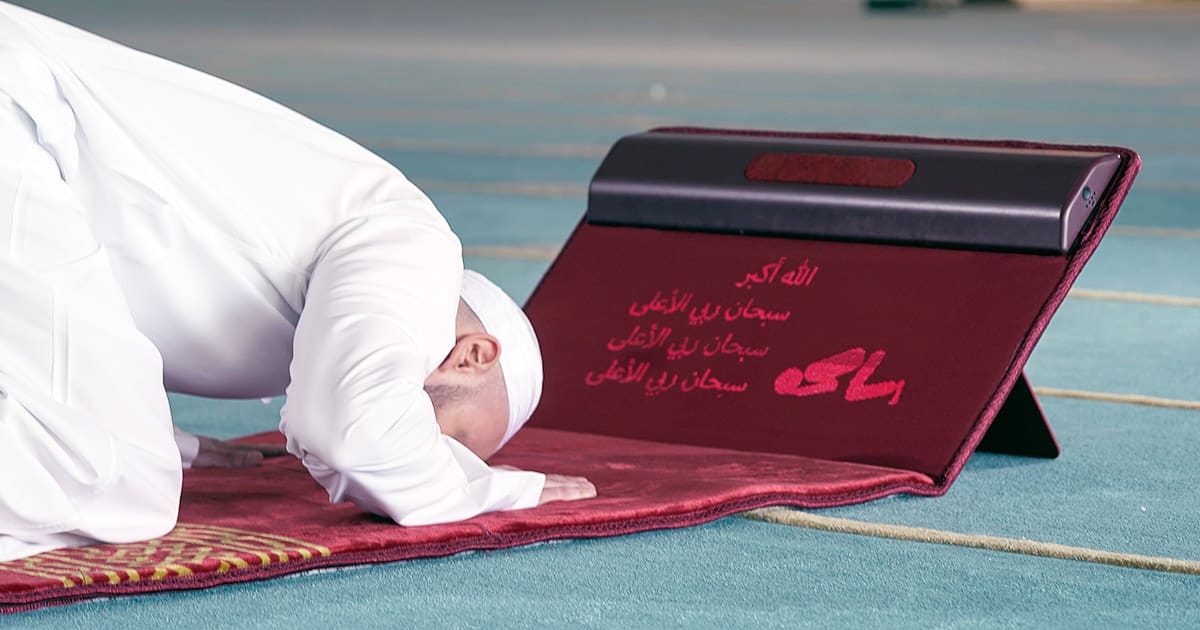
  • Man wins gold prize in Geneva for developing smart prayer mat

    Man wins gold prize in Geneva for developing smart prayer mat

    For developing a smart prayer mat, a Qatari innovator was awarded with the gold prize at the International Exhibition of Inventions in Geneva.
    Abdulrahman Saleh Khamis received recognition for his ground-breaking creation, intended to teach new Muslims and kids how to pray properly.


    The smart rug was developed after intensive research, with Khamis using cutting-edge technology to develop the mat.

    As per the product’s website, the smart prayer has the following features:

    Guided Prayer Training


    Sajdah guides you through daily and non-daily prayers in a step-by-step learning experience.


    Quran Reading


    Sajdah’s LED screen helps you read & memorize the Holy Quran while practicing your prayers.


    Smart & Connected


    Use the Sajdah app to control the pace of your prayer guides, including chapter transition speed, font size, and much more.


    Multi-Lingual


    Prayer guides and Quran verses displayed in Arabic, English, and Latin. Updates will include more languages.