Category: Lifestyle

  • Most infectious XBB.1.5 Covid subvariant detected in Pakistan through genome sequencing: AKU

    Most infectious XBB.1.5 Covid subvariant detected in Pakistan through genome sequencing: AKU

    The most contagious COVID subvariant, XBB.1.5, has been found in Pakistan through genome sequencing, according to the Aga Khan University Hospital (AKUH), The News has reported.


    “Yes, we have found the XBB.1.5 sub-variant of Omicron variant of SARS-CoV-2 (Coronavirus) through genome sequencing of the virus from an infected patient”, The News has stated while quoting an expert associated with AKU.


    A very small number of COVID-19 cases were reported from the country, the expert, who asked to remain anonymous, claimed. The expert also believed that the majority of those infected with the new sub-variant of the Coronavirus were not getting themselves tested despite having upper respiratory tract infections.


    Infectious diseases expert Dr Rana Jawad Asghar while talking to The News said that genome sequencing of only 0.5 per cent of COVID-19 positive cases was being carried out in Pakistan, which is a relatively small and adhoc proportion when compared to the rest of the globe.

  • A small library thrives in a Pakistani town known for guns, drugs and bombs

    A small library thrives in a Pakistani town known for guns, drugs and bombs

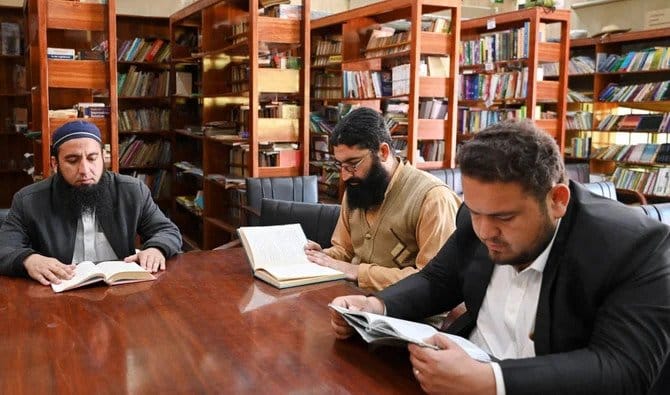
    In the town Dara Adamkhel, guns and drugs are common but now Raj Mohammad, an academic and poet, has set up a small library which has over 500 members, AFP reports.


    Dara Adamkhel is the main town in the Kohat District of Khyber Pakhtunkhwa, known as the center of illegal arms trade where markets and stalls are stockpiled with pistols, automatic rifles, as well as various types of bullets.


    The library is only a short walk away from the markets where books like Virginia Woolf’s “Mrs Dalloway”, as well as the YA “Twilight Saga” series are available for readers.


    Raj Mohammad was at first pessmistic about the idea of starting a library, as he tells AFP that in a town notorious for gun violence, a library would have no place.
    “Initially we were discouraged. People asked, ‘What is the use of books in a place like Darra Adamkhel? Who would ever read here?’


    We now have more than 500 members,” he said.


    Khyber Pakhtunkhwa has the lowest literacy rate among all of the provinces in Pakistan, which was reportedly 55 percent in 2020. A study compiled by Huma Zia Faran and Zohair Zaidi on the growing rates of children dropping out of school in 2021 found that in Khyber Pakhtunkhwa, 60 per cent children had dropped out of school.

    However, 33 year old volunteer librarian Shafiullah Afridi told AFP that more of the younger generation are interested in reading rather than engaging in the guns and drug business.

    “Especially among the younger generation who are now interested in education instead of weapons.”

    “When people see young people in their neighborhood becoming doctors and engineers, others also start sending their children to school,” he told the news outlet.

    Despite the noise from gun testing and bombs raging outside, the librarians have ensured that they offer a quiet and peaceful environment within the library, enforcing a strict “no guns policy” as their members browse through the 4000 books in English, Urdu and Pashto. Along with popular fiction titles, the library has books on the history of Pakistan, guides for sitting the civil service exam and also selections on Islamic teachings.

    “You could say we planted the library on a pile of weapons”, said Mohammad.

    The story was originally covered by The New York Times in 2019.

  • Huge surge in malaria, TB in Pakistan after floods

    Huge surge in malaria, TB in Pakistan after floods

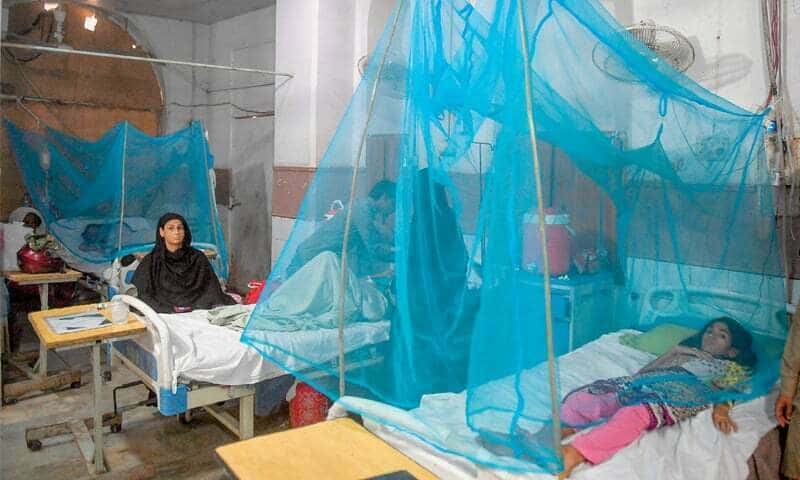
    The devastating floods of 2022 have caused a significant increase in the number of cases of malaria and tuberculosis in Pakistan among the poorest people of the nation.
    The executive director of the largest health fund in the world revealed the report on Monday at the World Economic Forum (WEF) annual conference in Davos, Switzerland.


    According to Peter Sands, executive director of the Global Fund to Fight AIDS, Tuberculosis and Malaria, climate change is increasing the number of the mosquito borne infections. He also said that there has been a rise in malaria infections, following the recent floods in Pakistan and storms in Mozambique in 2021.


    Poorer communities are more vulnerable as a result of the rise in extreme weather occurrences and the stagnant water that persist after such events.

    He said that mosquito habitats were shifting as a result of climate change. A change in the low temperatures that historically rendered the region unsustainable for mosquitoes has led to malaria becoming more prevalent in the highlands of Africa, particularly in Kenya and Ethiopia.


    In some of the world’s poorest countries, Sands oversees the largest global fund, which provides aid in the fight against tuberculosis, malaria, and HIV/AIDS.

    He said that mosquito habitats were shifting as a result of climate change. A change in the low temperatures that historically rendered the region unsustainable for mosquitoes has led to malaria becoming more prevalent in the highlands of Africa, particularly in Kenya and Ethiopia.
    In some of the world’s poorest countries, Sands oversees the largest global fund, which provides aid in the fight against tuberculosis, malaria, and HIV/AIDS.

  • UN rights experts urge Pakistani authorities to end forced child marriage

    UN rights experts urge Pakistani authorities to end forced child marriage

    On Monday the United Nations’ rights experts condemned an increase in forced marriages, conversions, and kidnappings of girls from Pakistan’s religious minority and urged the government to immediately put an end to such practices.


    “The group of around a dozen independent United Nations rights experts includes the UN special rapporteurs on the sale and sexual exploitation of children, contemporary forms of slavery, violence against women, and minority issues,” the statement read.

    “We are deeply troubled to hear that girls as young as 13 are being kidnapped from their families, trafficked to locations far from their homes, made to marry men sometimes twice their age, and coerced to convert to Islam,” the experts said. They pointed out that abductors often “force their victims to sign documents which falsely attest to their being of legal age for marriage as well as marrying and converting of free will”.

    The experts demanded that the Pakistani government act right away to stop and fully examine these activities.

  • Islamabad Police destroys over 4,000 pressure horns to reduce noise pollution in the capital

    Islamabad Police destroys over 4,000 pressure horns to reduce noise pollution in the capital

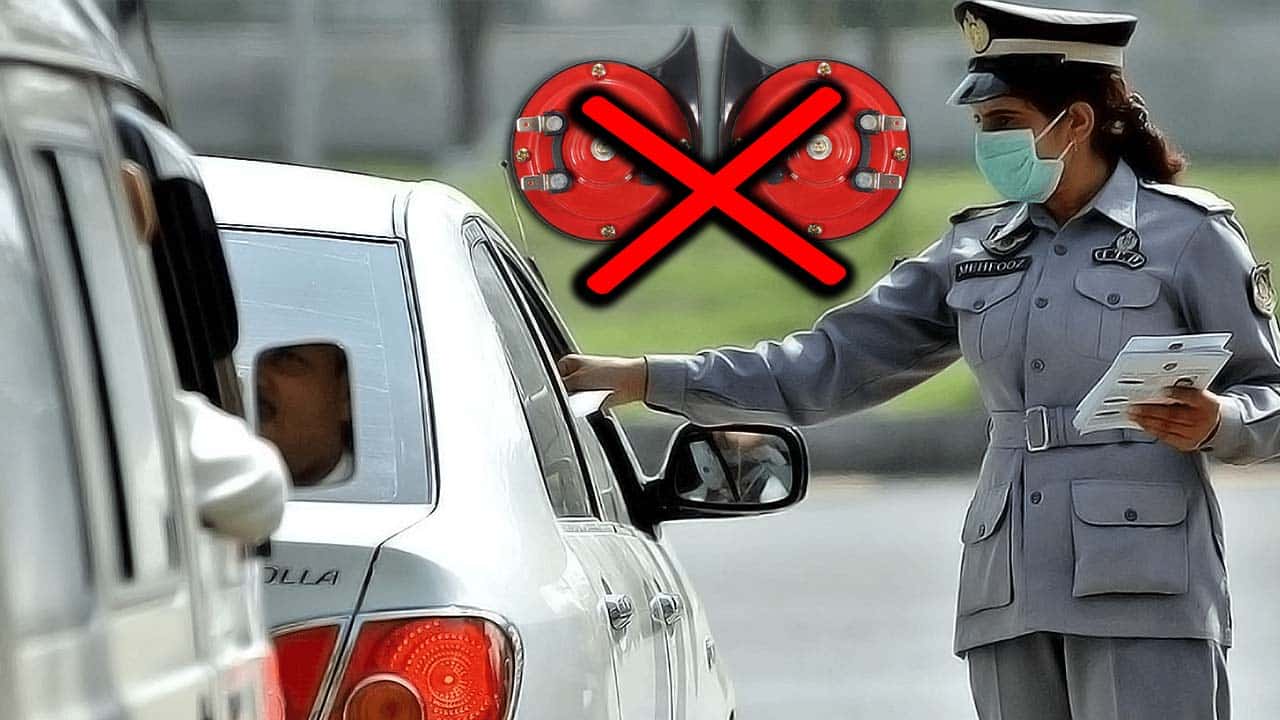
    More than 4,000 pressure horns and fancy license plates were destroyed by the Islamabad Capital Police in an attempt to reduce noise pollution and guarantee public safety.

    The destruction process at the Traffic Police Office Faizabad was observed by Chief Traffic Officer (CTO) Dr Syed Mustafa Tanveer, Superintendent (SP) Traffic Ch Abid Hussain, and other top police officers.

    On the advice of Inspector General Police (IGP) Islamabad Dr Akbar Nasir Khan, actions are being taken to guarantee a secure driving environment and a controlled traffic structure in the capital. The traffic police are working to make the capital noise-free, according to CTO Tanveer.

    To address the smog-causing issues and expedite the conversion of the brick kilns to modern technology, Commissioner Rawalpindi Division Saqib Manan has instructed the relevant authorities to take strong action against SOP violators.

    More than Rs21.1 million fine imposed on smoke-emitting vehicles

    During the previous month in the Rawalpindi area, 3,559 smoke-emitting vehicles were issued challan slips, and fines totaling more than Rs2.1 million were imposed on the violators. In addition, an industrial facility that had broken environmental laws had been sealed and fined Rs100,000.

    According to The News, drivers were urged to adopt all necessary precautions when driving in the fog by District Emergency Officer (DEO) Rawalpindi. He recommended the populace stay home during times of dense fog.

    He further advised that the drivers must keep the fog lights on and drive slowly while maintaining a safe following distance during fog.

  • Earthquake of magnitude 6.0 strikes Indonesia’s Sumatra

    Earthquake of magnitude 6.0 strikes Indonesia’s Sumatra

    A 6.0-magnitude earthquake hit off the coast of Indonesia’s Sumatra island early Monday, the US Geological Survey has reported.


    The seismic activity occurred around 6:30 am local time (2330 GMT). There were no immediate reports of casualties or major damage. In addition, no tsunami alert was issued.


    “The earthquake caused people to panic. It was felt between 3-10 seconds in four districts in Aceh and North Sumatra province,” Abdul Muhari, a spokesman for the BNPB disaster mitigation agency, said in a statement.


    Earlier on 10 January, a powerful deep-sea earthquake of 7.6 magnitude had damaged village buildings in a lightly populated island chain in eastern Indonesia and was widely felt in northern Australia.

  • Pakistan to immunise 44 million children against polio in 2023

    Up to 44 million children would be immunised across Pakistan as a result of anti-polio campaigns in 2023, ARY has reported.

    The federal government has created a schedule for the campaign through to 2023.

    Six campaigns will be carried out nationwide to eradicate the polio virus in the future year 2023, with the first one scheduled to begin in January.
    The rest of the immunisation efforts will be held in March, May, July, October, and December.


    Pakistan and Afghanistan are the only two countries in the world where polio has not yet been eradicated. To formally eradicate the disease, a nation must be polio-free for three consecutive years. Nigeria was declared free from wild polio in August 2020.

  • Sri Lanka to reduce army by a third as financial crunch tightens

    Sri Lanka to reduce army by a third as financial crunch tightens

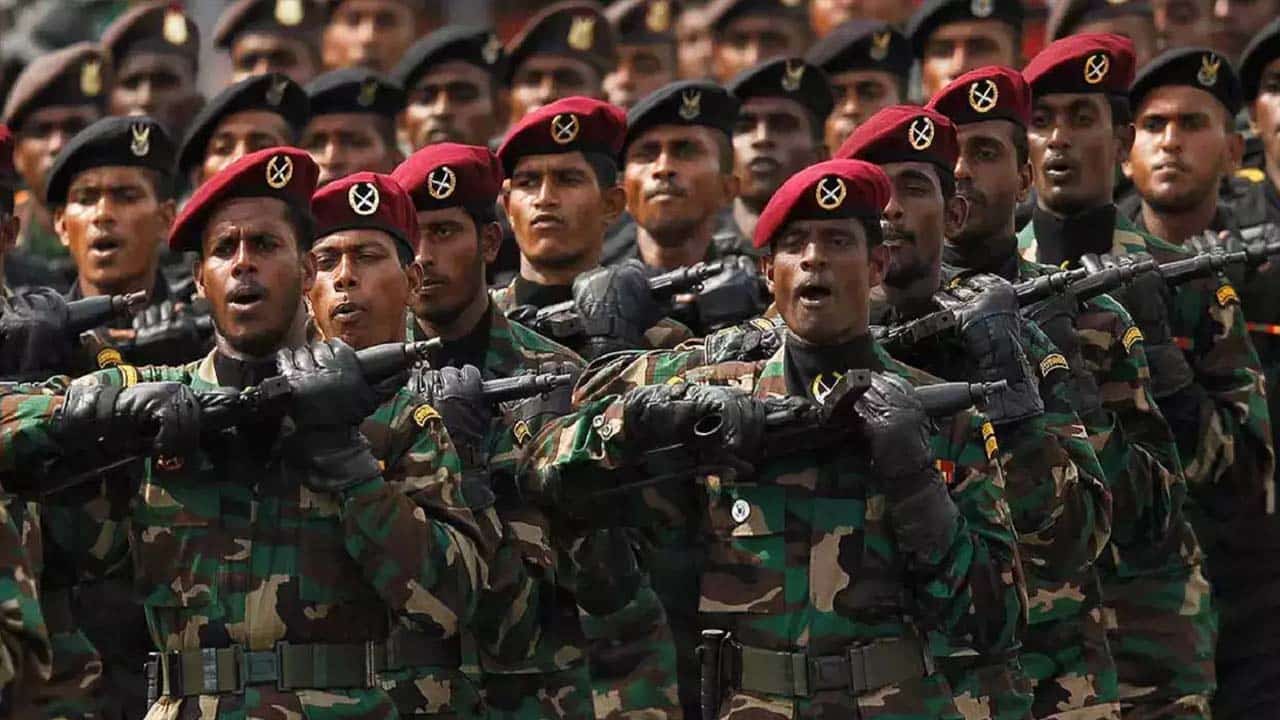
    In response to criticism that military spending exceeded the budgetary allotments for healthcare and education in 2023, Sri Lanka on Friday announced a plan to cut the size of its military in half by 2030 in order to create a technically and tactically sound and well-balanced defence force.

    The country will slash its army by a third to 135,000 personnel by next year and to 100,000 by 2030. “The overall aim of the strategic blueprint is to broach a technically and tactically sound and well-balanced defence force by the year 2030 in order to meet upcoming security challenges,” the statement quoting the state minister of defence Pramitha Bandara Tennakoon said.

    The share of the defence sector in Sri Lanka’s total expenditure peaked in 2021, at 2.31 per cent of gross domestic product (GDP), but fell to 2.03 per cent last year, according to Colombo-based think tank Verite Research.

    In early December, Sri Lankan media outlets announced that the Sri Lankan Army had decided to reduce troop numbers by 16,000.

  • Rs19bn of Benazir Income support programme allegedly distributed among Govt officials: report

    The Public Accounts Committee (PAC) was informed by the Auditor General of Pakistan (AGP) on Thursday that 143,000 government officials had received an illegal distribution of Rs19 billion from the Benazir Income Support Programme (BISP), Dawn has reported.


    Senator Mushahid Hussain Syed, a member of the PAC, asked BISP secretary Yousuf Khan about the status of the investigation into the distribution of monies among government officials in 2020 during the examination of the audit report of the Poverty Alleviation and Social Safety Division.


    The Federal Investigation Agency (FIA) was asked to look into the issue of the distribution of BISP payments to underserving beneficiaries when it first came to light in 2020.


    In answer to Senator Syed’s inquiry, BISP secretary Yousuf Khan informed the committee that 2,500 of the 143,000 ineligible beneficiaries who were employed by the government were doing so at the BS-17 level or higher.


    He claimed that these officials had been using their own names to withdraw money from the BISP which was intended for those in need.
    The BISP secretary stated he was unsure of the precise amount paid to these unlawful beneficiaries when asked about it by PAC chairman Noor Alam Khan.
    The committee was informed by the audit officials that Rs19 billion had been given to those who weren’t deserving.

  • Tik Tok to give scholarships for 18,000 Pakistani students

    Tik Tok to give scholarships for 18,000 Pakistani students

    Social media platform Tik Tok has announced a collaboration with ed-tech startup Edkasa to form a scholarship program that will provide grants to 18,000 deserving students across Pakistan.
    Details have revealed that in a partnership with LUMS, students who are selected will be provided with over two months of Edkasa’s free studying materials as well as access to an exam pack for whichever grade or exam they have applied for.
    This collaboration comes after the #ExamReady campaign, which was a previous collaboration between Tik Tok and EdKasa, and had provided students with access to over 500 million videos covering subjects like Maths, Physics, Chemistry, Biology.
    For more details regarding the scholarship, students can visit the website edkasa.com/scholarship/.