Category: Lifestyle

  • What Must Pakistan Do to Achieve SDG4 Targets By The Year 2030?

    What Must Pakistan Do to Achieve SDG4 Targets By The Year 2030?

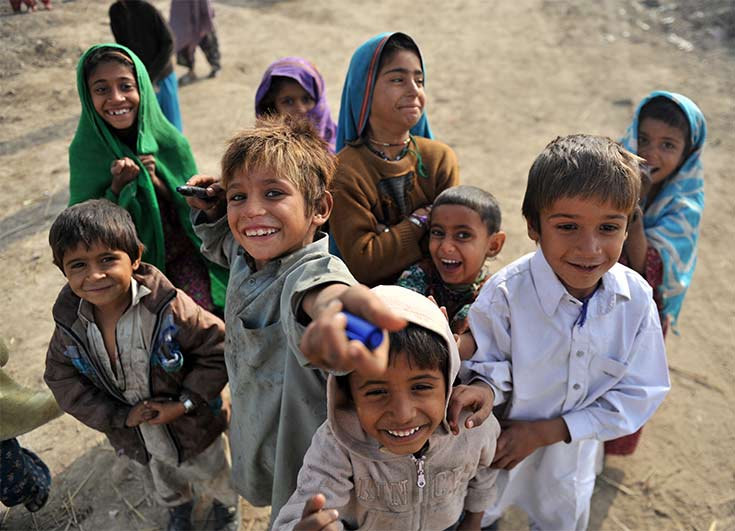
    “Pakistan has the second largest population of out-of-school children in the world”. This population makes up of 22.8 million children being out-of-schools in Pakistan who are between the ages of 5 and 16. This also means that 44% of the population of Pakistan in this age group is out-of-schools.

    The on-going pandemic of Covid-19 has further escalated the challenges in education in the country and it is said that an additional 1 million school going children will have dropped out of schools when the pandemic ends. The government of Pakistan alongside other stakeholders managed to enroll around 2.2 million children in schools in the last decade and these efforts seem to going at a loss owing to the pandemic.

    The parliament of Pakistan adopted the UN Sustainable Development Goals (SDGs) as the country’s national development goals in February of 2016. With the current government coming in to power in 2018, all the provinces were given a free hand in development and practicing their own priority frameworks.

    The provinces were able to conclude drafting their policy framework and SDG 4 (quality education for all) turned up to be a common goal for the provinces.

    Economist and public finance expert Asim Bashir Khan recently authored a white-paper “Public Investment in Education: An Appraisal of SDG 4 in Pakistan” which was published by Pakistan Youth Change Advocates (PYCA) and The Education Champion Network. This white-paper takes stock of Pakistan’s progress towards SDG4 and highlights several glaring gaps that negate the high priority accorded to education on paper.

    On paper, the provinces have key policies to achieve the SDG 4 targets including:

    • Access to Education
    • Quality of Education
    • Gender Parity in Education
    • Adult Literacy
    • Educational Infrastructure
    • Teacher’s Training

    Despite a limited number of targets and poor baseline figures, the progress towards achieving the target of quality education for all has been dauntingly slow. With the current pace of progress, it seems that Pakistan will not be able to meet the targets of Agenda2030.

    This white-paper presents the findings towards the SDG4 progress and also provides a concrete set of recommendations for Pakistani to meet the international commitments of SDG4. With 8 years still remaining, the federal and provincial governments must work collectively and effectively to ensure that Pakistan is able to live up to the international commitments.  

    A summary of the key recommendations in the White-Paper include:

    Eliminating Political Inertia:

    Despite the passage of more than five years since ratifying the 2030 Sustainable Development Agenda, Pakistan is yet to begin making the preliminary but significant adjustments identified in its National Framework.

    The federal and the provincial governments of Pakistan must be synced and work collectively on one agenda. The progress can’t bring any fruits if there is a different agenda on the federal level and a different on provincial level. This will ensure swift progress in the implementation and realization of the necessary steps.

    Classification of Education Budgets:

    It is equally important that budgets for education-related interventions, even if they are undertaken by other departments, should be classified under the education budget. The current approach under which at times large education development projects are classified under “social welfare,” “population development,” or other departments only serves to scatter the effort, making it unnecessarily tedious to monitor progress.

    Alignment of education budget heads with relevant SDG 4 indicators:

    First of all, there is a need to set up an SDG Committee for Equitable Quality Education-related policy scrutiny and parliamentary control. Budget must be adjusted to reflect on SDG4 targets and indicators while drafting budget proposals. SDG 4 budget tagging needs to be introduced and integrated into the Financial Management Information System (FIMS).

    Enrollment in Schools:

    To encourage more students to enroll in schools, the government must increase education stipend programs and introduce new ones that focus on girls and children with impairments.

    Elimination of Gender Disparities:

    In order to curb education inequality across Pakistan, the government should adopt gender-responsive budgeting. Solutions to track and trace out-of-school children by gender and location can greatly help identify the deserving children in need of education. There is also a dire need for a new infrastructure that focuses on facilitating continued learning for girls beyond the primary level.

    Qualified Teachers and Training Programs:

    To provide quality education, the federal and provincial governments must increase the number of qualified teachers with an emphasis on recruiting subject specialists in Math and Science. Investing in the recruitment of female teachers at a secondary and higher level to encourage parents to send their daughters to schools can also be a positive step towards progress.

    This article is part of Pakistan Youth Change Advocates’ #InvestInEducationStrengthenPakistan campaign. For more information follow their Facebook, Twitter, Instagram, and YouTube channels.

  • Wife leaves husband after getting 5 million followers on TikTok

    Wife leaves husband after getting 5 million followers on TikTok

    Investigative Journalist Waseem Abbasi shared a screen grab of a video of a person who claimed that his wife left him after getting five million followers on TikTok. TikTok is social media platform where viewers can watch and discover millions of personalized short videos.

    In a video interview of the husband, he said that she was a caring mom and was always concerned about her children. But after getting five million followers she left. She did not care about her children.

    Her husband said that their financial condition was not stable, but he used to provide every necessity. Her children said she was not literate enough to read messages on her phone but her daughters used to help her.

    Her husband and children want her back and requested her to come back in the video message.

    Social media users reacted to the news.

  • Shaniera Akram bursts into tears after listening  ‘Tu Jhoom’

    Shaniera Akram bursts into tears after listening ‘Tu Jhoom’

    Social Activist, Shaniera Akram took to Twitter to share her experience after listening to Abida Parveen and Naseebo Lal’s top trending song Tu Jhoom performed in Coke Studio Season 14.

    She expressed her emotions on the soulful song, Tu Jhoom by saying, “I have not heard this song before & have no idea what they are singing about but I’ve been sitting here for the last 25 minutes crying my eyes out! These incredible women just sang into my soul. God Bless this beautiful Country. “

    Famous Pakistani Singer and actor, Hadiqa Kiani also gave her tribute on Twitter to the soulful song performed by legendary singers

    Veteran actor and Director, Shaan Shahid also took to Twitter to appreciate the poetry and magical voices of Naseebo Lal and Abida Parveen.

    The Pakistan journalist, Mubashir Zaidi also expressed their love for the spiritual song.

    Living legends of the Pakistan music industry Abida Parveen and Naseebo Lal have opened the 14th season of Coke Studio with an extravagant song “Tu Jhoom.” The song has sent excited fans on a listening spree while they have gone crazy about it.

    More than 4.9 million people have been viewed this song as of Monday morning.

    The opening lines are sung by the folk queen Lal, followed by the Sufi maestro Parveen. “As we start on this new journey, we ask you to celebrate life,” read the official caption of the song.

    This year, Coke Studio is produced and curated by music composer Xulfi and written by Adnan Dhool, “Tu Jhoom’s” music is arranged and produced by Xulfi and budding artist Abdullah Siddiqui.

    Check out the spiritual song with magical voices here

  • Miracle baby delivered by passenger during flight to Uganda

    Miracle baby delivered by passenger during flight to Uganda

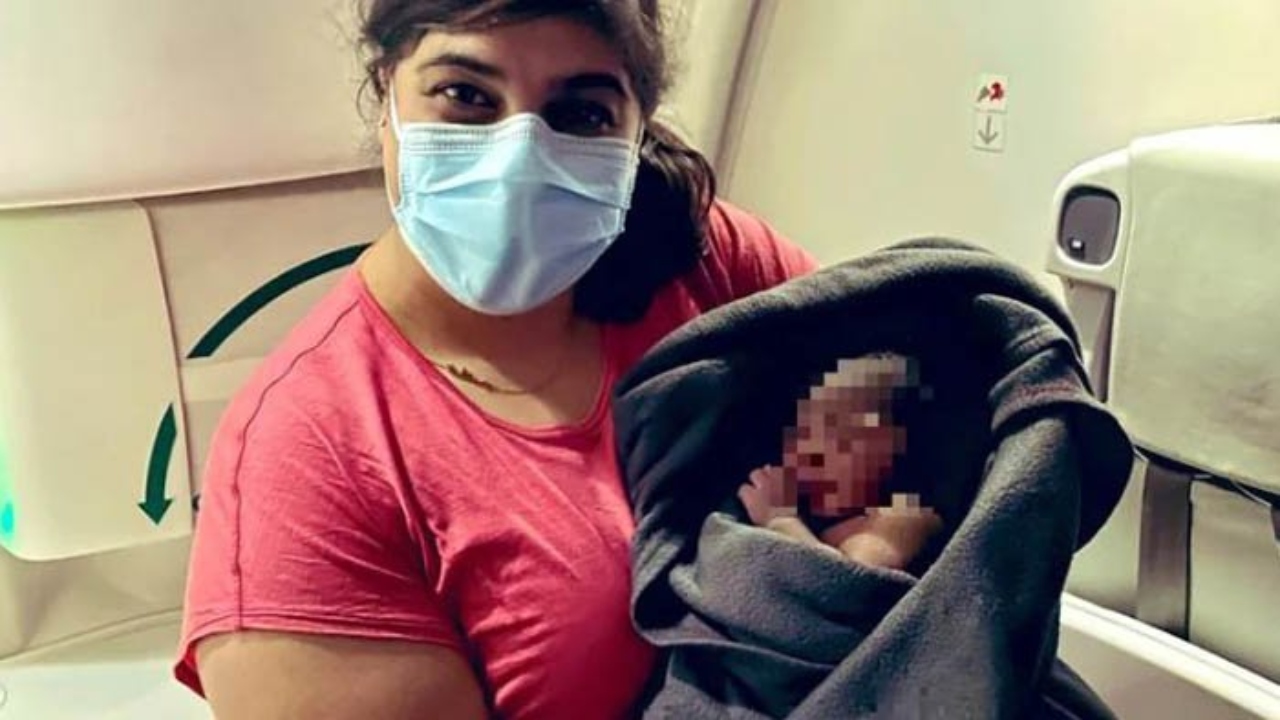
    A Canadian doctor helped a woman deliver a baby during an overnight flight to Uganda. The mother, a migrant worker who was on her way home was about to deliver her first child on the plane to Uganda from Saudi Arabia , when the Qatar Airways staff asked if there was a doctor on board.

    Dr. Ayesha Khatib, a professor at the University of Toronto, sprang into action when she answered an urgent appeal on Qatar Airways’ intercom for a medical professional.

    The baby, named ‘Miracle Ayesha’ after Dr Khatib, was born healthy, despite being early at 35 weeks.

    “I see a crowd of people gathered around the patient,” Dr Khatib told BBC. At this point, she was wondering if someone was having a heart attack.

    “As I got closer, I see this woman lying on the seat with her head toward the aisle and feet towards the window. And the baby was coming out!”

    Dr Khatib was helped by two other passengers, an oncology nurse and a pediatrician. She said that the baby was crying “robustly”. After she quickly checked the baby, she passed her on to the pediatrician for further checks.

    “I looked at the baby, and she was stable, and I looked at the mom and she was OK,” said Dr Khatib.

    “So I was like, ‘Congratulations it’s a girl.’ Then the entire plane started clapping and cheering and was like ‘Oh right, I’m on a plane and everybody is watching this.’”

    “The best part of the story is that she decided to name the baby after me,” says Dr Khatib.


  • ‘A kiss on the cheek isn’t remotely sexual’, Pakistani Twitter shares adorable pictures with their partners

    ‘A kiss on the cheek isn’t remotely sexual’, Pakistani Twitter shares adorable pictures with their partners

    Pakistani Twitter is filled with adorable pictures of couples sharing pictures of themselves with their partner, showing them affection. It all started when a user posted a picture of recent newlyweds Saboor Aly and Ali Ansari. In the picture which is from the day of the couple’s Shendi, Saboor can be seen showing love to Ali by kissing his cheek. However, one social media user did not like the idea and called the act “begairti.”


    “New generation wants to follow them but this is not a relationship goals, This is begairti,” the user wrote while sharing the picture.

    https://twitter.com/ViRgoGirL_T/status/1481119608799117312?s=20

    However, most Netizens instead of responding to the picture started sharing heart-warming pictures with their partner. Have a look at some of the pictures:

    https://twitter.com/kashmiriichai/status/1482436226284244993
    https://twitter.com/adilabhatty/status/1482656635743092739
    https://twitter.com/Affanarchist/status/1482594885136011264
    https://twitter.com/Tgoraya/status/1482410003667382272
    https://twitter.com/narejo/status/1482725283262341122
  • Islamabad High Court orders closure of all sheesha cafes in the city

    Islamabad High Court orders closure of all sheesha cafes in the city

    Islamabad High Court (IHC) has ordered the local administration to shut down all sheesha cafes in the federal city with immediate action and submit a progress report to the court as well.

    The Anti-Narcotics Force (ANF) along with the Islamabad administration and police have mobilised their resources to initiate the crackdown on all sheesha cafes operating in Islamabad.

    The complete ban on sheesha was announced across the country led by the Supreme Court previously in 2015 but in the following year, the bench headed by Justice Gulzar Ahmed of the Supreme Court expressed displeasure over the sale and import of sheesha and tobacco smoking items despite the ban from the apex court.

    This time the court emphasised that action must be louder than words.

    The court also asked the advocate generals from the provincial governments about the implementation of previous orders regarding the ban on sheesha smoking in public spaces.

  • Teen dies after accidentally shooting himself in Kasur

    Teen dies after accidentally shooting himself in Kasur

    A teenager accidently shot himself dead while cleaning a 12-bore gun in Kot Radha Kishan city of Kasur district on saturday, police said.

    The deceased was identified as 12-year-old Kamran.

    Citing his family members, the police said Kamran was cleaning a 12-gun when he accidentally shot himself, adding he died from a gunshot to his abdomen.

    His body was taken to a nearby hospital for medico-legal formalities.

  • Want a hotshot space in jail? Report reveals bribery makes influential prisoners live easy

    Want a hotshot space in jail? Report reveals bribery makes influential prisoners live easy

    It has been revealed in a report that the powerful and rich class in prison are bribing guards for special perks and facilities.

    A team led by Director-General (DG) Human Rights visited the jails and submitted its report to the Islamabad High Court (IHC).

    The report said that prison officials acknowledge that they are under intense political pressure. It has also been revealed that influential prisoners from Jhelum and Mianwali are being kept in Adiala Jail due to pressure from the Home Department. The report also revealed that inmates of Bhakkar Jail had provided evidence of money transfer to jail authorities.

    According to the report, the brother of one of the prisoners gave evidence of giving one lakh 40,000 to a jail guard.

    The report further suggests that prison officials are not aware of basic human rights. The prison meeting registers also indicate discrimination against inmates for meeting times and frequencies.

    The report also states that when senior police and prison officials are shown around the premises, not all that is shown and told is true. The report recommends training in human rights for prison officials.

  • Noor Mukadam’s father records statement in court, wants death for Zahir Jaffer

    Noor Mukadam’s father records statement in court, wants death for Zahir Jaffer

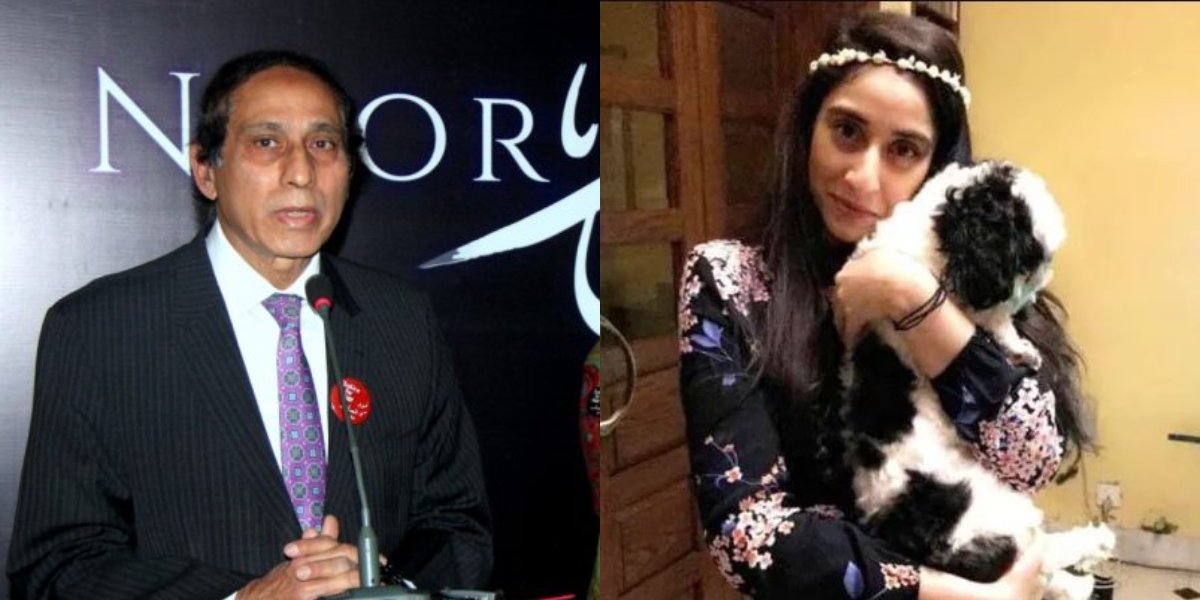
    Noor Mukadam’s father Shaukat Ali Mukadam has demanded capital punishment for the murderer of his daughter Zahir Jaffer. Mukadam, recorded his statement today in an Islamabad court.

    During today’s hearing Noor’s father said that he did not have a “personal enmity” with anyone. “My daughter was unjustly killed”, he added.

    “Zahir Jaffer should be given a death sentence,” he said. During his statement, he recalled the events leading to Noor’s death. He said that he and his wife had left for some work on July 19 and when he returned back to the house, Noor was not there.

    “[On] July 20 — I know Zahir’s family — Zahir called me on two numbers in the afternoon and said Noor was not with him,” he stated. He further added that later in the day at 10pm he got a call from the Kohsar police station informing him that his daughter had been killed and asking him to visit the police station.

    He went on to add that after the call he went to the police station and then went to Zahir’s house where he saw Noor’s body. He told the court that he signed a statement with Assistant Sub-Inspector Zubair Mazhar after identifying Noor’s body. He later signed off on a report on the cause of death. Shaukat added he had handed over Noor’s body for postmortem on July 21.

    Noor Mukadam was brutally murdered at a residence in Islamabad’s upscale Sector F-7/4 on July 20. Her death sparked national outrage, including protests and candlelight vigils across the country.

  • Study shows masks make people look more attractive

    Study shows masks make people look more attractive

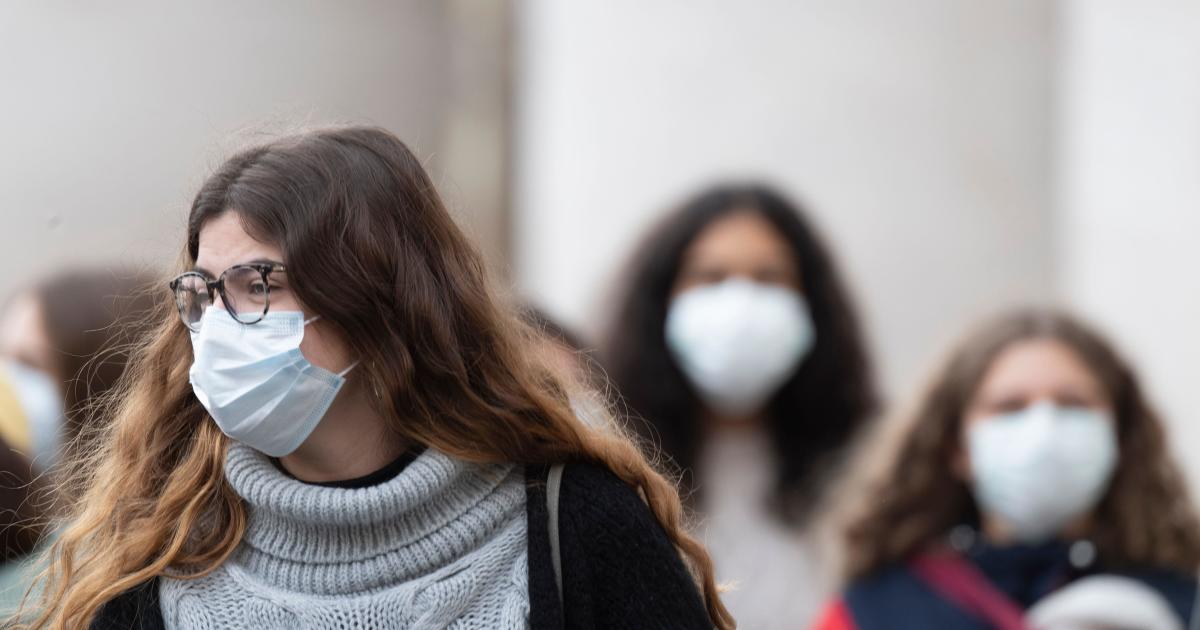
    Researchers at Cardiff University, Wales have released a study that found that both men and women are perceived as more attractive when they are wearing a mask, reports Guardian.

    Interestingly, similar studies before the pandemic had found that people wearing face masks are considered less attractive since people associate masks with diseases.

    “Our study suggests faces are considered most attractive when covered by medical face masks. This may be because we’re used to healthcare workers wearing blue masks and now we associate these with people in caring or medical professions,” Dr. Michael Lewis from Cardiff University said. “At a time when we feel vulnerable, we may find the wearing of medical masks reassuring and so feel more positive towards the wearer,” he added.

    The study also shows that a face covered with a disposable-type surgical mask is more appealing. During the test run by the institution, the participants said those wearing a cloth mask are significantly more attractive than the ones with no masks.

    Dr Lewis said it is also possible that masks made people more attractive because they direct attention to the eyes.