A couple in Georgia found 18 snakes under their bed before going to bed.
Max Wilcher and his wife, Trish, told the media they were about to go to sleep when Trish noticed something moving on the floor under the bed. She got a little closer to see what was moving. A few moments later, her husband saw a snake.
“And then a second later another piece moved,” Wilcher said.
“And I went to my husband: ‘We have snakes’,” Trish said.
He added that the 18 snakes were found under the bed but they did not want to harm them so they grabbed the snakes with tools and put them in a bag and left them in a nearby creek.
Trish then called wildlife experts to see if there are any more baby snakes.
At least 40 cases of the Delta variant — a highly virulent Covid-19 strain — have been recorded in the country in the last few days. Heath experts also suspect the presence of the Delta variant in Lahore.
With increasing number of cases of this deadly variant, here is everything you need to know about the Delta variant.
What is the Delta variant?
The Delta variant, also known as B.1.617.2, can spread more easily, according to Web MD. The strain has mutations on the spike protein that make it easier for it to infect human cells, which means people may be more contagious if they contract the virus and spread it more easily to others.
Why should we be worried?
As per the New York Times, Delta variant is believed to be the most transmissible variant yet, and it can cause more severe illness. One study found that people infected by the Delta variant were roughly twice as likely to be hospitalised as those infected with the Alpha Variant.
Does vaccines work against Delta variant?
Data suggests that several widely used shots — including those made by Pfizer, BioNtech, Moderna, Johnson and Johnson and AstraZenca — appear to retain most of their effectiveness against Delta.
How does the Delta Variant spread more rapidly inside the body?
A recent study explains why the Delta variant grows more rapidly in the body. Delta variant grows more rapidly inside people’s respiratory tracts and to much higher levels, researchers at the Guangdong Provincial Center for Disease Control and Prevention reported.
On average, people infected with the delta variant had about 1,000 times more copies of the virus in their respiratory tracts than those infected with the original strain of the coronavirus, the study reported.
After someone catches the Delta variant, the person likely becomes infectious sooner. On average, it took about four days for the Delta variant to reach detectable levels inside a person, compared to six days for the original coronavirus variant.
In the past 24 hours, Pakistan has recorded 2,327 cases of Covid-19 with a positivity rate of 6.1 per cent.
Statistics 16 Jul 21: Total Tests in Last 24 Hours: 37,690 Positive Cases: 2,327 Positivity % : 6.1% Deaths : 31
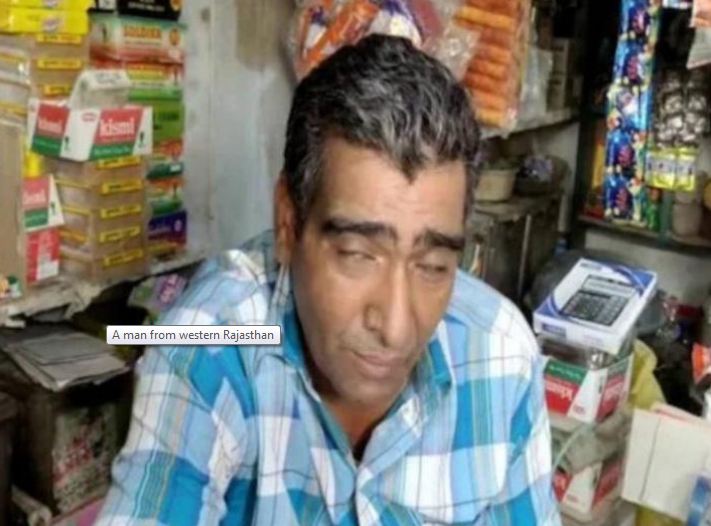
His family says that initially, Purkharam slept for over 7 to 8 days at a go but the symptoms worsened as time passed. Now he sleeps for 20 to 25 days in one go.
He was diagnosed with this rare condition 23 years ago, which has affected his life in such a way that his family members have to bathe and feed him while he is asleep.
Axis Hypersomnia can be described as a chronic neurological sleep disorder that leads to daytime sleepiness and/or long sleep hours (more than 9-10 hours in 24-hours).
Qatar has issued a new immigration policy directives to the concerned authorities in this regard. According to details, Pakistani citizens would be granted a 30-day tourist visa upon arrival at the airport for a fee of QAR 100 (4378.22 PKR) valid for a period of 30 days, which can be extended for a similar period.
Following are the conditions to get a visa on arrival:
Valid passport for at least six months.
Confirmed return ticket.
Polio vaccination certificate
Confirmed hotel reservation in one of the country’s hotels during the visit period.
Fully vaccinated with vaccines approved by the Ministry of Public Health and completing a period of 14 days after the last dose.
Must have a certificate confirming negative PCR test completed during 48 hours from the time of arrival.
Companies in the European Union can now ban employees from wearing a headscarf under certain conditions, including the need to project an image of neutrality to customers, the EU’s top court on Thursday, Reuters reports.
“A prohibition on wearing any visible form of expression of political, philosophical or religious beliefs in the workplace may be justified by the employer’s need to present a neutral image towards customers or to prevent social disputes,” the court said.
“However, that justification must correspond to a genuine need on the part of the employer and, in reconciling the rights and interests at issue, the national courts may take into account the specific context of their Member State and, in particular, more favourable national provisions on the protection of freedom of religion.”
The cases were brought by two German Muslim women, a special needs childcare worker and a sales assistant in a chemist. Both were told to remove their headscarves after deciding to wear the hijab when they returned to work after maternity leave.
Naz Shah, Member of Parliament for Bradford West, England has, in a tweet, said that she will raise concerns against the ruling, terming it as “Islamophobic, ignorant and a blatant attack on religious freedoms.”
Statement: Top EU court rules hijab can be banned at work
I will be raising the concerns of many regarding this Islamophobic, ignorant and blatant attack on religious freedoms. pic.twitter.com/3CncVXI1Qs
The Pakistan Medical Association (PMA) has advised the residents of Karachi to take precautionary measures to avoid becoming a victim of Naegleria fowleri.
According to details, Naegleria is a rare but deadly waterborne amoeba that grows in freshwater sources, reservoirs including poorly chlorinated water networks. It is advised to drink boiled water and not to wash face or bathe with polluted water.
PMA officials Dr Qaiser Sajjad, Dr Samreen Sarfaraz and Dr Abdul Ghafoor Shoro shared this at a press conference at PMA House on Wednesday. They demanded that the government ensures to supply chlorinated water to residents to avoid any unpleasant situation.
“Naegleria fowleri is a serious health issue. Recently, six deaths have been reported, five of them were from Karachi and one was from Balochistan, who also died in Karachi during treatment,” they said.
They added: “We fear that unreported deaths would be higher than the reported ones. Unfortunately, safe water is not available to the vast majority of our population. People are compelled to consume contaminated water that causes waterborne diseases like typhoid, gastroenteritis, hepatitis A, E and cholera.”
“The chief justice should take suo motu notice on this matter. It’s criminal negligence and responsible officials should be punished. We know that water has not been chlorinated at all for many years,” said Dr Mirza Ali Azhar heading PMA-Sindh chapter, adding that the general practitioners should be trained in disease diagnosis. “This contaminated water also carries a Naegleria fowleri amoeba, which enters into the brain through nostrils and starts damaging it and causes meningoencephalitis, which is fatal in 95 per cent cases and affected person dies eventually.”
“Naegleria fowleri is found all over in moist soil, freshwater bodies, poorly chlorinated swimming pools and water supplying pipes. When water contaminated with Naegleria is sucked through the nose during bathing, rinsing the nose and ablution, it invades olfactory neuroepithelium and rapidly destroys brain tissue, which causes severe meningoencephalitis within 1-9 days,” they said.
“The initial symptoms of the disease were headache, body ache, high-grade fever, drowsiness, fainting and coma,” they said, adding: “PMA is concerned over the fact that Naegleria fowleri has been reported from water being supplied by Karachi Water & Sewerage Board. The filtration and chlorination of potable water provided in the city is questionable.”
They said that the water distribution system was defective allowing seepage of sewage in the domestic water supply that resulted in contamination and caused dangerous diseases. Besides, people should not have gone to non-chlorinated swimming pools, they added. The PMA representatives advised the people to put chlorine tablets (one tablet in 1,000 gallons of water) in their underground tanks.
They said water tanks at homes, hospitals, schools, shopping malls and offices should be cleaned once a year. They said chlorine price has increased these days but people could use two tablespoons of bleach powder.
People can make paste of it with water and put it into their water tanks at night. This would be enough for 500 to 1,500 gallons of water to help prevent Naegleria.
The PMA requested all doctors, particularly general practitioners, to take it seriously if a patient shows symptoms of nausea, vomiting, headache and high-grade fever. Such a patient should be tested for Naegleria.
A Pakistani, Haroon Qureshi, who arrived in Japan as a student some 30 years ago, is reaching out to those living on the margins of society.
According to a report published in Mainichi, the national daily of Japan, Qureshi, a businessman from Pakistan, helps the homeless and those foreigners who have been detained by immigration authorities after failing to get refugee status.
He is also involved in the running of a mosque in Tokyo, Otsuka Masjid.
According to the Japanese daily, Qureshi’s efforts started just when he arrived in Tokyo to study computer programming in 1991. He began distributing food to the homeless in his neighbourhood in the capital’s Kita Ward.
“Now, three decades on, he has enlisted Japanese university students in his goodwill endeavours, seeing their involvement as a vital part of raising society’s awareness of the plight of the less fortunate,” it said.
The 55-year-old Qureishi said he believed there was a lack of understanding in Japan of why people ended up on the streets. He thinks the public’s attitude to the homeless is “cold.”
“The reality is that many times the homeless suffer from mental health issues and cannot fit into society,” the daily quoted him as saying.
So far, Qureshi had asked for students from Tokyo-based Keio and Tokyo universities to volunteer in his activities, which included serving meals to the needy.
In collaboration with Tenohasi in Tokyo’s Ikebukuro area, students and volunteers from the mosque recently helped in providing food to over 360 people.
“Today I witnessed a stark difference between normal people who were walking on the streets all dressed up, and those who had come to get food here,” the daily quoted Satoru Soejima, 18, who is studying Arabic at Keio University, as saying.
Qureshi, meanwhile, also leads another project called Food Bank to help the students themselves, some of whom have gone hungry after losing part-time work because of the coronavirus pandemic.
A soft-spoken man, he has also been helping those detained after their failed asylum bids since around 2000.
In one month, Qureshi received around 30 letters on average seeking help from detainees, mostly from countries in Africa or elsewhere in Asia.
“We may have different religions, colour or race. But I request everyone to try and feel the pain of other members of this huge (human) family, and do what they can,” he urged.
In recognition of his services the Pakistan Embassy in Japan awarded him with a letter of appreciation.
Ambassador Imtiaz Ahmad invited three extraordinary Pakistanis living in Japan for their social work that has also been highlighted in the Japanese media, including Qureshi.
According to the embassy, Qureshi was appreciated for his services that include providing food for the needy, financial help for the destitute and homeless, running an Islamic school and managing a graveyard for the Muslims.
The ambassador appreciated Qureshi’s work while stating that it has contributed positively to Pakistan and Pakistanis’ image living in Japan.
Qureshi thanked the Ambassador for the appreciation and vowed to continue and expand his humanitarian work, the embassy said.
Former cricketer and all-rounder Abdul Razzaq recently appeared in a TV show hosted by Nauman Ijaz with Pakistan women’s cricket team’s Nida Dar, where he passed sexist comments about her.
During the show, one of the members interrupted Dar while she was talking about her profession and said that women cricketers leave their profession and get married.
Abdul Razzaq was quick to jump in, saying, “Oh, they don’t get married.”
“Their field is as such. When they become cricketers, they strive to be as equal as their male counterparts, if not better than them. They want to prove that not only men, but they can also do it as well. The feeling [to get married] is gone [by the time they excel].”
“Aap inko hath mila kay dekh lein, yeh larki to nahi lagtein,” said Razzaq. (If you shake her [Dar’s] hand, she is anything but feminine).
People on social media are calling out Razzaq over his sexist comments.
Our women cricketers need to get more stronger and work more n more on their fitness to compete other teams, he should have encouraged her to do more hardwork on her fitness instead of making fun of her for looking manly. It was a 'mazaq' but still. https://t.co/ROsbRhWnXb
In a society like ours, women work so hard to be somewhere and THIS is how you invalidate their effort. Shame on him. Not everything has to revolve around kitchen. Just because men are conditioned to think that women belong to the kitchen does NOT mean they do. https://t.co/tAxUKxiERQ
I’m just appalled at what women go through on a daily basis. Sometimes they’re ridiculed for being very “feminine & weak”, sometimes they’re laughed at for being “masculine”. Can the society just let women be please? https://t.co/SBfzXAIPp6
Watch @ARazzaqPak expose his misogyny here; the TV crew saw nothing wrong with the comment! Nida Dar gets defensive, knowing that she can’t fight this mindset in the 5 minutes she’ll get to speak! She’s there to inspire young women, while he’s actively discouraging them! https://t.co/0X642oI0Ed
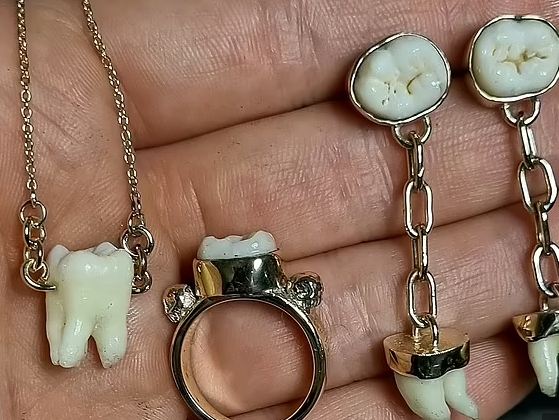
A jeweller in Australia is using the remains of dead people including teeth and hair to make rings and necklaces for their grieving families.
The 29,-year-old Jacqui Williams, owns Grave Metallum Jewellery which sells handcrafted commemorative pieces to help people deal with the loss of loved ones.
As per reports, all pieces are created in her Melbourne studio. Williams, who said she had always been drawn to the ‘morbid’ side of life even as a child, shared some of the stranger requests her customers had made.
‘I [was asked to use] an IUD (intrauterine device) in a piece of jewellery which I did decline due to it being plastic, and turning the bullet casing, from the bullet that a client’s grandfather shot himself with into a piece of jewellery,’ Williams said.
Jacqui Williams
The jeweller started taking interest in the grieving process when she lost her best friend a few years ago.
Williams is a strong believer that loss is easier to deal with when shared.
‘I do this work because I want to help people deal with their grief and loss as it’s something that is guaranteed for every living thing,’ Williams said.
The custom pieces are made in almost eight weeks and prices range from $350(Rs 55,657) to more than $10,000 (Rs 1,590,201).