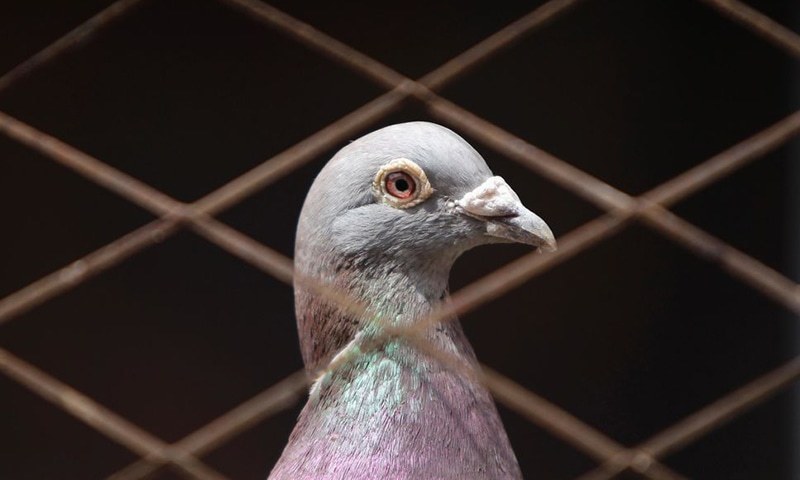
Indian forces have claimed to have captured another ‘Pakistani spy pigeon’ near Kahagargh, Amristar.
As per the report, the pigeon was allegedly carrying a “suspicious piece of paper tied to its legs” when it landed on the shoulder of an Indian army officer who was on guard duty about 500 meters from the border.
A First Information Report (FIR) has been lodged in Kahagarh police station in Amritsar against the intrusion of pigeon.
Last year in May, Indian forces were engaged in the same operation when a pigeon with a pink patch and tag on its leg was captured as a “suspected Pakistani spy.”
As per the police record, the pigeon had flown into the house of women living in the Chadwal area of Amritsar, who then caught the pigeon and handed it over to the police for investigation.
Allegedly, Pakistani spy pigeons have been trespassing the Indian borders regularly since early 2015.
TikTok, which is owned by Chinese company ByteDan could face a damages claim worth billions of pounds (dollars) in London’s High Court over allegations that they have illegally harvested the private data of millions of European children,Reutershas reported.
That case will be heard next week and affected children could receive thousands of pounds each if the claim is successful.
“TikTok is a hugely popular social media platform that has helped children keep in touch with their friends during an incredibly difficult year. However, behind the fun songs, dance challenges and lip-sync trends lies something far more sinister,” Anne Longfield, the former Children’s Commissioner for England told BBC.
Longfield alleged that every child that has used TikTok since May 25, 2018, may have had private personal information illegally collected by ByteDance through TikTok for the benefit of unknown third parties.
“Parents and children have a right to know that private information, including phone numbers, physical location, and videos of their children are being illegally collected,” she added.
A TikTok representative said privacy and safety were the company’s top priorities and that it had robust policies, processes and technologies in place to help protect all users, especially teenage users.
“We believe the claims lack merit and intend to vigorously defend the action,” the representative said.
Earlier this year in March TikTok was banned in Pakistan due to immoral content, but the ban was later lifted.
The popular video-sharing app was banned for the first time in October last year. The Pakistan Telecommunication Authority (PTA) had blocked TikTok after the company “failed to fully comply” with its instructions for the “development of an effective mechanism for proactive moderation of unlawful online content”. Later, the ban was lifted when the TikTok management assured authorities that it will block all accounts repeatedly involved in spreading obscenity and immorality.
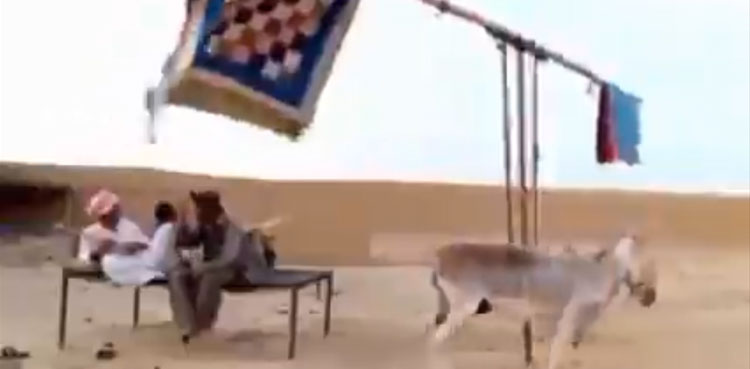
Villagers in India used a donkey to beat the summer heat by making a manual fan operated by a donkey.
A 54-second video that has gone viral on social media shows two men sitting in the middle of a deserted area. Two sheets are hanging on a stick. A donkey has also been tied to the stick. The sheets start rotating and act as a fan when the donkey moves around the stick.
However, the innovation did not sit well with social media users who accused the people in the video of torturing the animal.
Kisi bezubaan janwar ka istemal nahi karna chahiye ye galat hai aap experiment kijiye par kisi insaan ya janwar ke saath galat mat kijiye bahut worst hai ye video
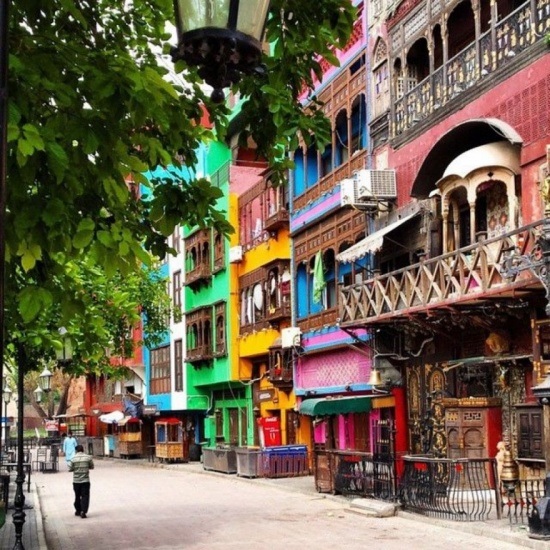
Students of the Lahore University of Management Sciences (LUMS) have developed a mobile application ‘Lahori Khoji’ that offers guided tours of the Walled City of Lahore.
LUMS professor and historian Dr Ali Usman Qasmi, while sharing details of the app on social media, said that “students designed the app and researched its content as part of a course offered at LUMS.”
Dr Qasmi said that students did thorough research to design and develop the mobile application.
“The students not only read the classical texts but also made several trips to the Walled City,” said Professor Qasmi.
To develop a walking trail for the gate assigned to them, the students read classical texts on Lahore's history, made several trips to the walled city, identified key sites, pinned them on google maps, and wrote historical notes about them. #walkinginlahore#LahoriKhoji
Lahore-based historian Faizan Abbas Naqvi also helped the students in designing the app.
My friend and Lahore-based historian, Faizan Abbas Naqvi, aka Lahore ka Khoji, worked closely with the students to supervise their research and curate their walking trails.#walkinginlahore#LahoriKhoji
The group of students is open to suggestions to improve the application as “app is a product of research carried out by undergraduate students who are not professional historians.”
Please note that the App is a product of research carried out by undergraduate students who are not professional historians. In case there is any factual or technical error or misinformation in the text, please let us know so that we can fix it.#walkinginlahore#LahoriKhoji
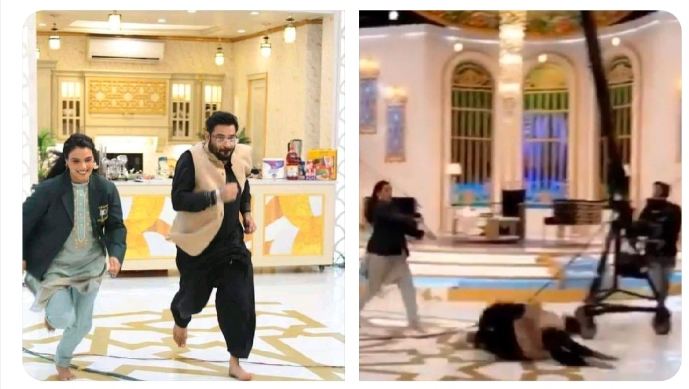
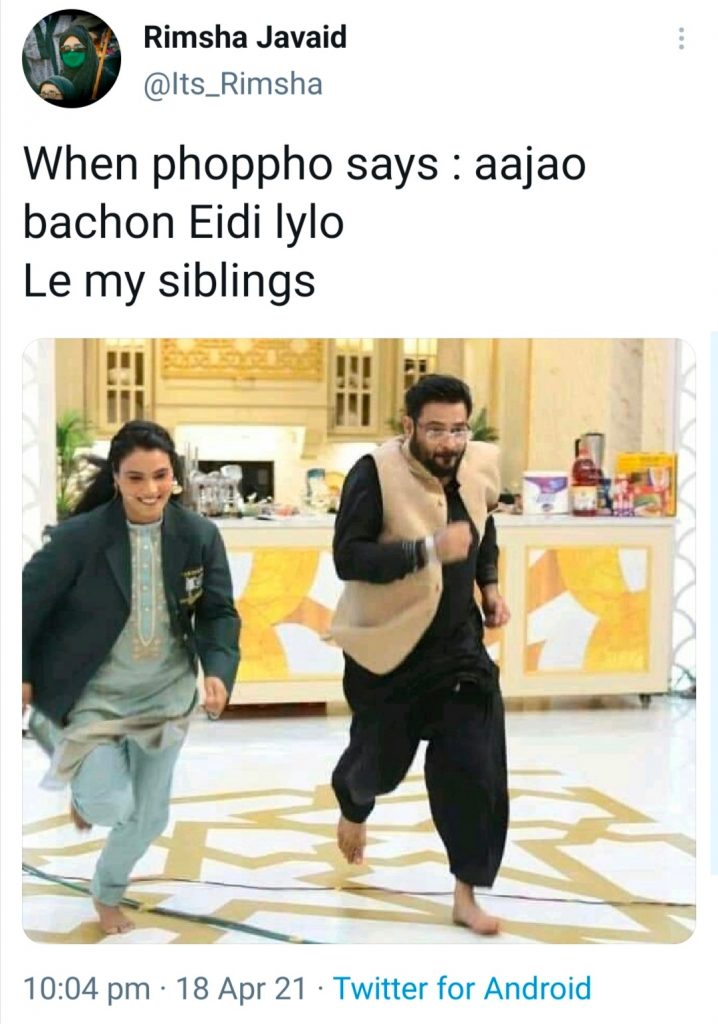
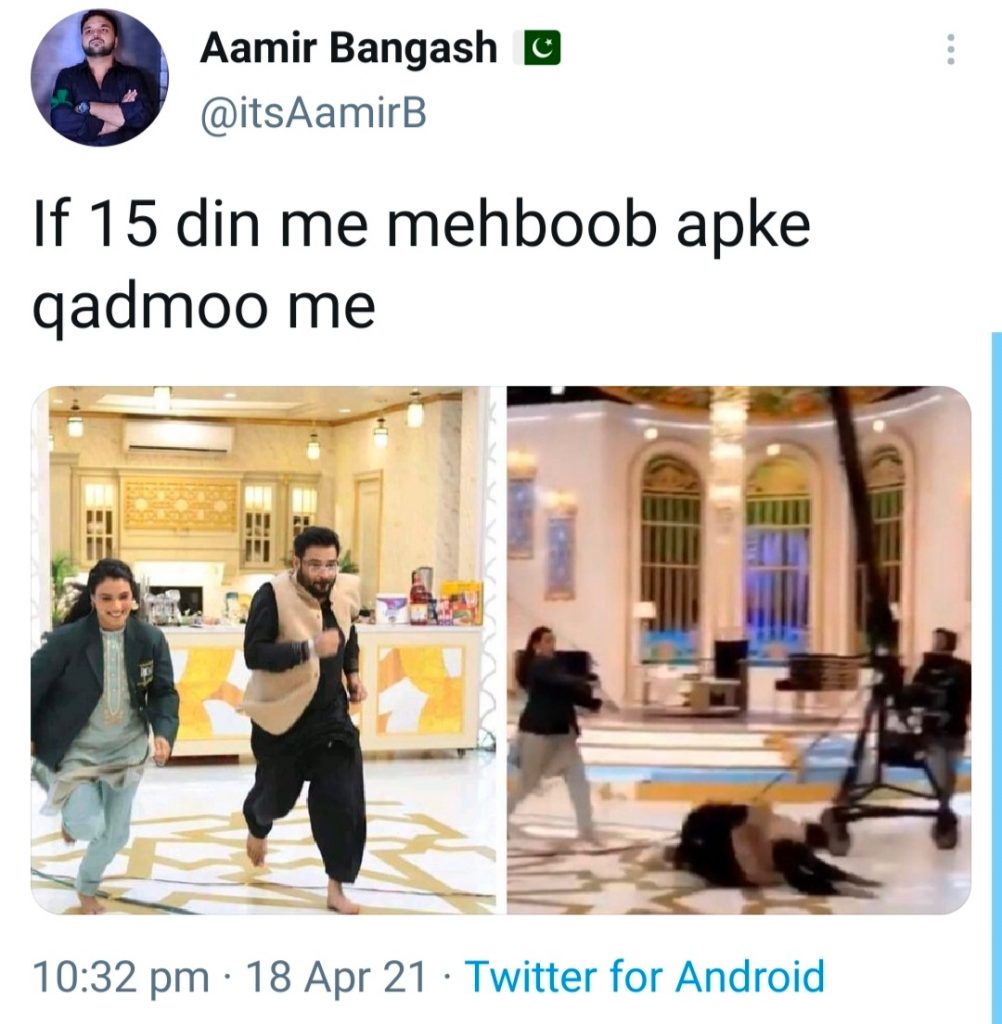
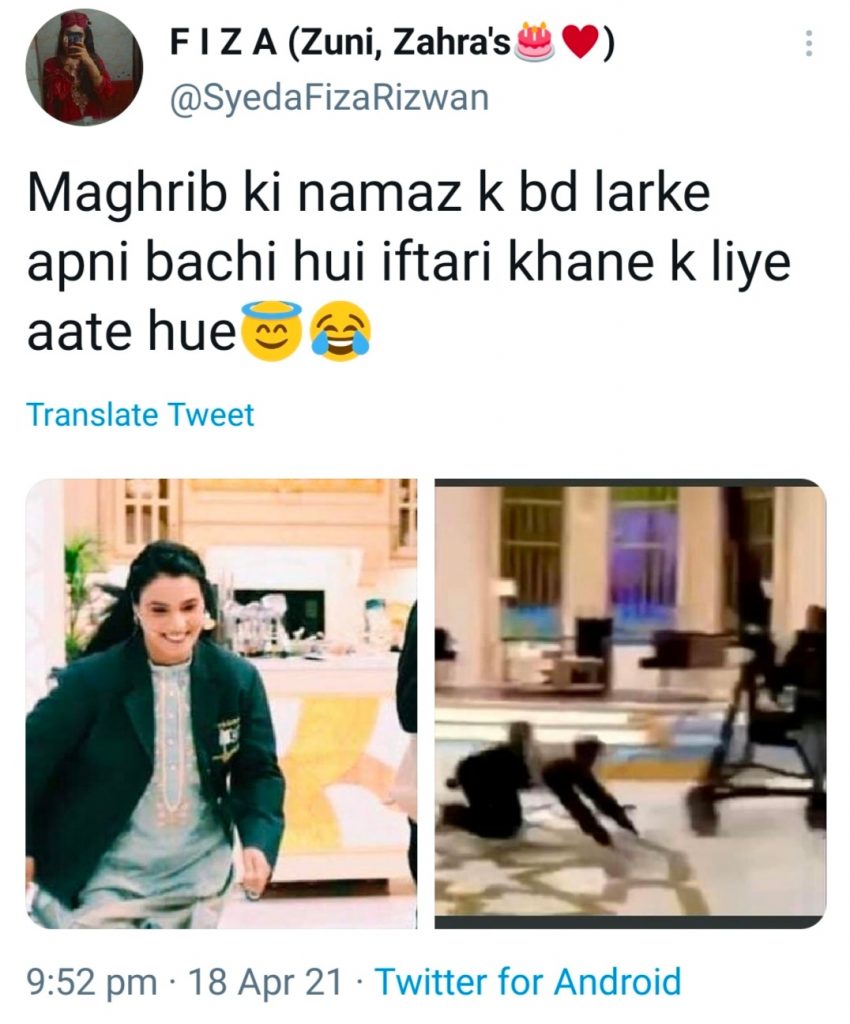
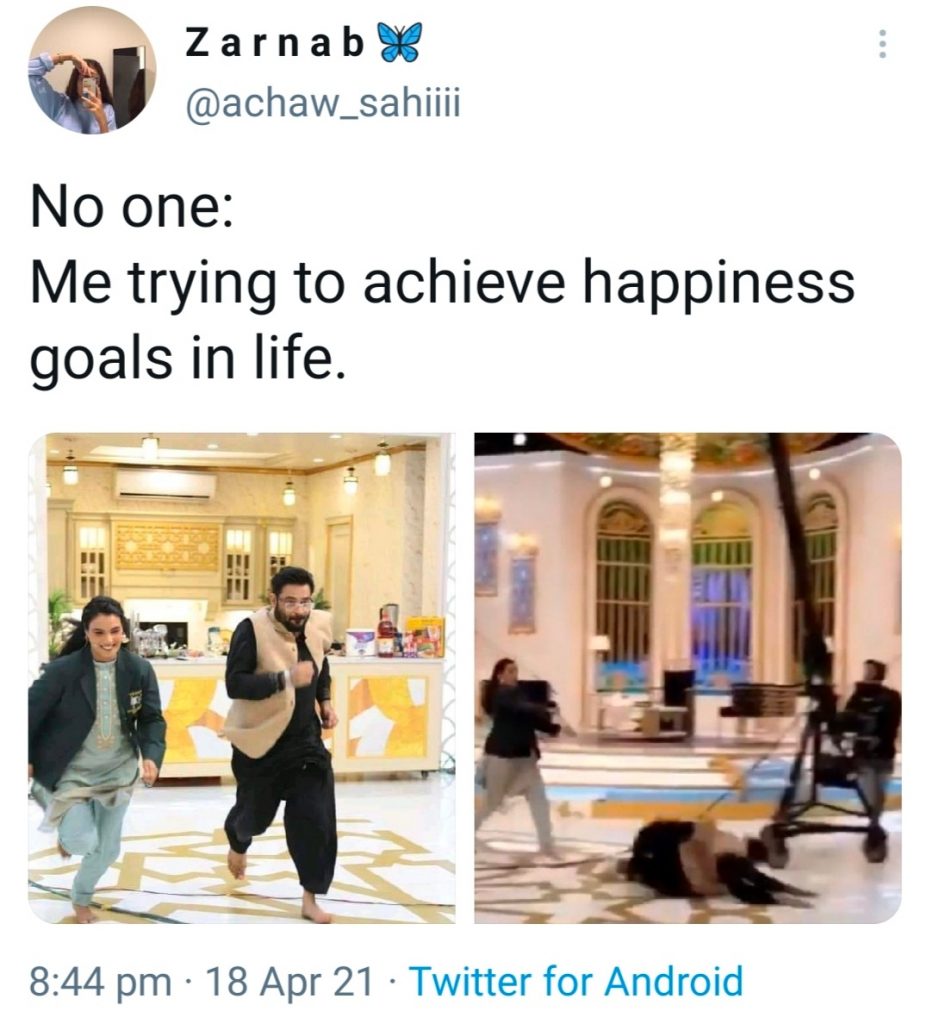
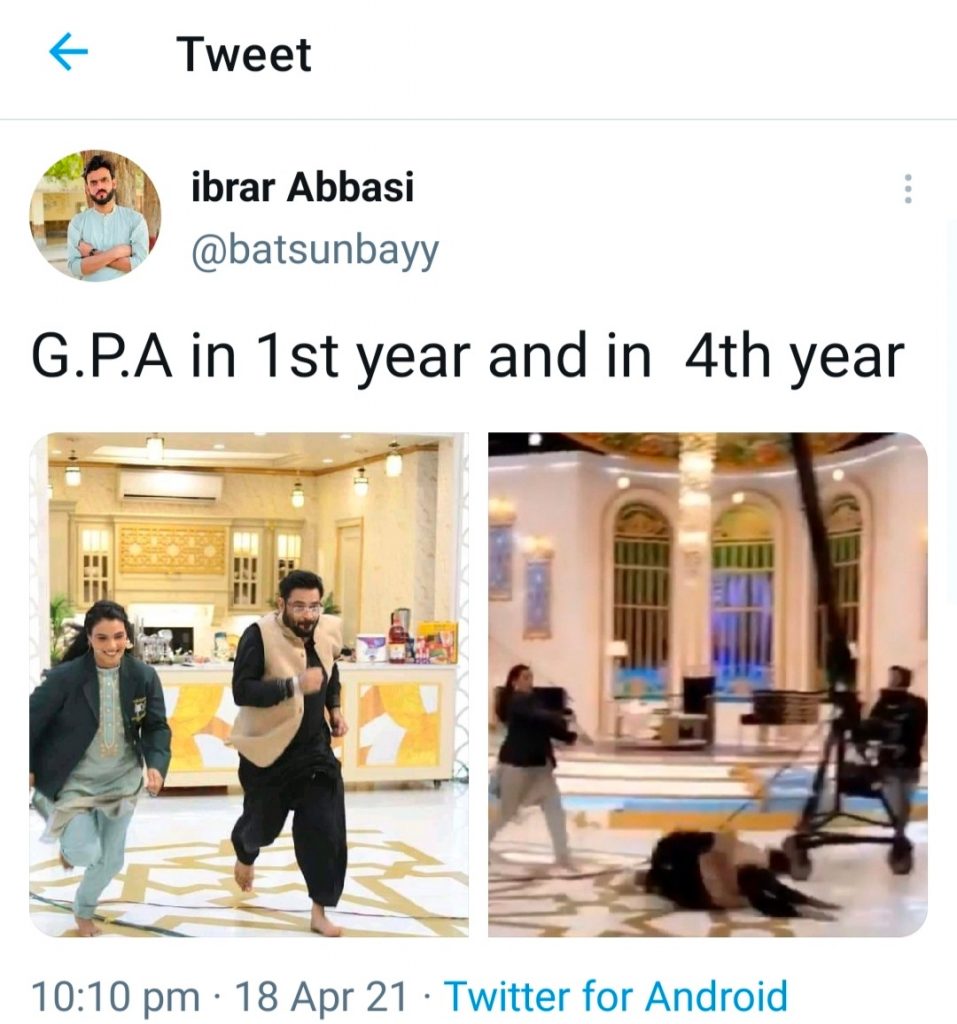
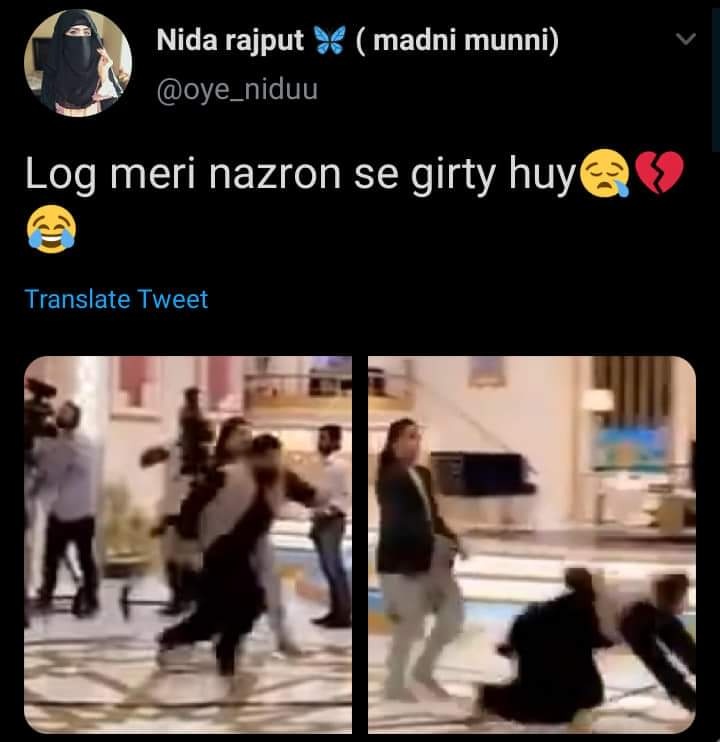
Host of Ramadan transmission, Piyara Ramazan, Aamir Liaquat Hussain, recently invited a Pakistani star Naseem Hameed on his show. The host challenged Hameed, who had won a gold medal at the South Asian Federation Games in 2010 for a 20-meter race on stage.
In an unexpected turn of events, the race did not end well and Liaquat took a slight fall on the floor.
Babu jee dheeray chalna😂..Amir Liaquat was racing with Naseem Hameed in Ramzan Transmission n slipped pic.twitter.com/LfILTPKZth
Nusret Gökçe, popularly known as Salt Bae, is being sued for $5 million by a Brooklyn-based artist William Hicks, who claims the social media star has used his artwork without permission all over the world, the New York Post has reported.
According to details, Brooklyn-based artist William Hicks filed a lawsuit filed in the District Court for the Southern District of New York on April 12, suing the renowned Turkish butcher, chef, and restaurateur for $5 million in damages after Gökçe reportedly printed his art on menus, takeout bags, and signs at international Nusr-Et Steakhouse locations in Turkey, Greece, and the United Arab Emirates without permission. Hicks claimed that Gökçe never sought a license to use the artwork and has yet to compensate him for use of the copyright.
“Defendants also unilaterally decided that they would instead unlawfully adapt, create, and distribute unauthorized derivative versions of the original works … to display in Nusr-et steakhouse locations in at least Abu Dhabi, Ankara, Etiler, Mykonos, and Bodrum Yalikavak Marina,” read the court documents.
Hicks allegedly sent a cease-and-desist letter demanding that they stop using the original artworks in April 2020, but Gökçe and the companies “doubled down on their already widespread infringement, expanding their willful use of the Infringing Materials to locations in Doha, D Maris Bay (Turkey), Boston, Dallas and several additional locations in Istanbul.”
Prime Minister (PM) Imran Khan has launched the Rehmatul-Lil Alameen scholarship program for underprivileged students, Radio Pakistan has reported.
As per details, a budget of 27.93 billion rupees has been approved for this national-level program which will be used over the next five years. The program will be implemented in 129 public sector universities across the country.
Speaking at the inauguration ceremony in Islamabad, PM Imran said the scholarship will be available to all Pakistanis including non-Muslims, adding that the federal government will annually provide Rs 5.5 billion for 70,000 scholarships.
PM Khan said that under the scholarship program a total of 350,000 scholarships will be provided in five years at a cost of Rs 28 billion.
He further said that the provincial governments of Punjab and Khyber Pakhtunkhwa will also separately provide scholarship to the students.
The premier asserted that the government is especially focusing on the education sector with the aim that “our youth learn from the Sunnah of Hazrat Muhammad Sallallaho Alaihe Wa Salam Khatim-un-Nabiyeen“.
— Government of Pakistan (@GovtofPakistan) April 15, 2021
Meanwhile, speaking on the occasion, Minister for Education Shafqat Mahmood said the Rehmatul-Lil Alameen Scholarship is a nationwide program and will be implemented in 129 universities across the country. He said fifty percent scholarships will be given to women whilst two percent to specially-abled persons.
Minister for Information and Broadcasting Fawad Chaudhry and Minister for Human Rights Shireen Mazari also announced the news on social media, encouraging those eligible to apply for it.
The provinces are also separately pursuing the Rehmatul-Lil Alameen Scholarship program. In Punjab, one billion rupees has been approved for this scholarship program annually, while Khyber Pakhtunkhwa has allocated Rs 427 million for it.
Sharing the news on social media, Zahra said: “Truly blessed to have been recognised amongst the top emerging and game-changing entrepreneurs.”
“Deeply humbled and so thankful to my family, my girls- who are my biggest inspiration, my friends and lastly my teams at Feya and Dyce without whom none of this would have been possible,” she added.
Writing about Zahra, Forbes said: “Immigrant Zahra Khan defied Pakistani cultural stereotypes and launched a career in the UK focused on empowering women.”
“The chef and mother of two runs Feya cafes and shops. She employs 30 full-time staff, hires female illustrators to design packaging, and donates 10% of retail profits toward professional coaching for women.”
Zahra opened her debut eatery Feya Café on Bond Street just months after the birth of her first daughter in 2018. Following the unprecedented success, the award-winning DIY dessert parlour and interior masterpiece DYCE was opened in quick succession, followed by flagship Feya Knightsbridge in December 2019. Zahra now employs a 75% female workforce across her three restaurants.
Meanwhile, the Forbes ’30 Under 30 Europe’ class of 2021 includes 300 honourees across each of the 10 categories, all under 30.
“Against the backdrop of turbulent social and economic conditions across the region, the sixth annual Under 30 Europe list celebrates the young visionary leaders and entrepreneurs who have made their mark on business and society in the past year,” says a statement by the publication.
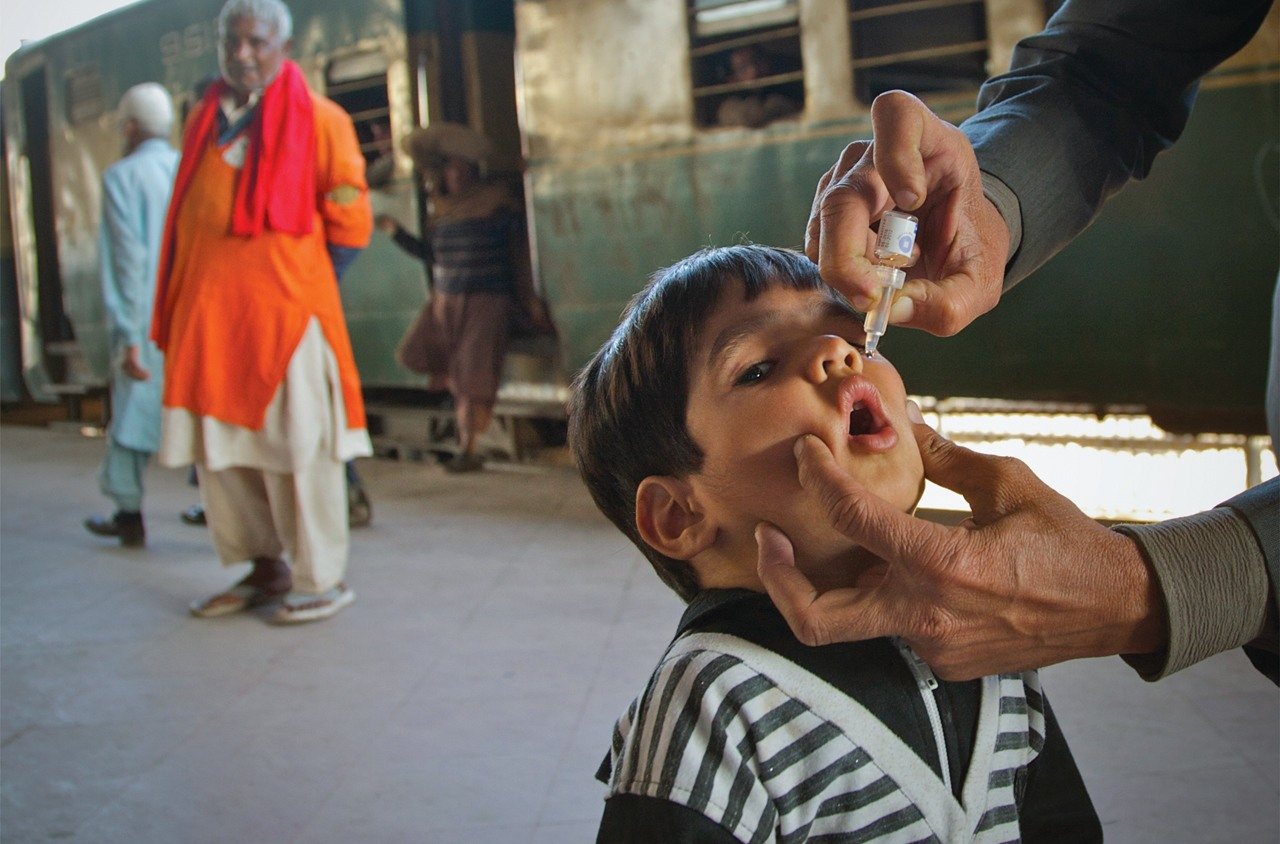
Lahore has become the first polio-free city in the country.
According to details, the Lahore deputy commissioner said that the fifth environmental sample taken from the city for the poliovirus tested negative. Earlier four environmental samples for the virus had tested negative, he added.
He credited the achievement to the doctors, polio workers, and the parents for making the city polio-free.
Earlier on April 3, around 3.5 million children got vaccinated during the first four days of the nationwide polio campaign in the country.
A five-day polio vaccination campaign commenced across the country on March 29 to vaccinate over 40.1 million children under the age of five.
As many as 290,000 polio workers were administering anti-polio drops across the country while following COVID-19 standard operating procedures (SOPs). Security forces were providing foolproof security to the teams to avoid any unpleasant situation.
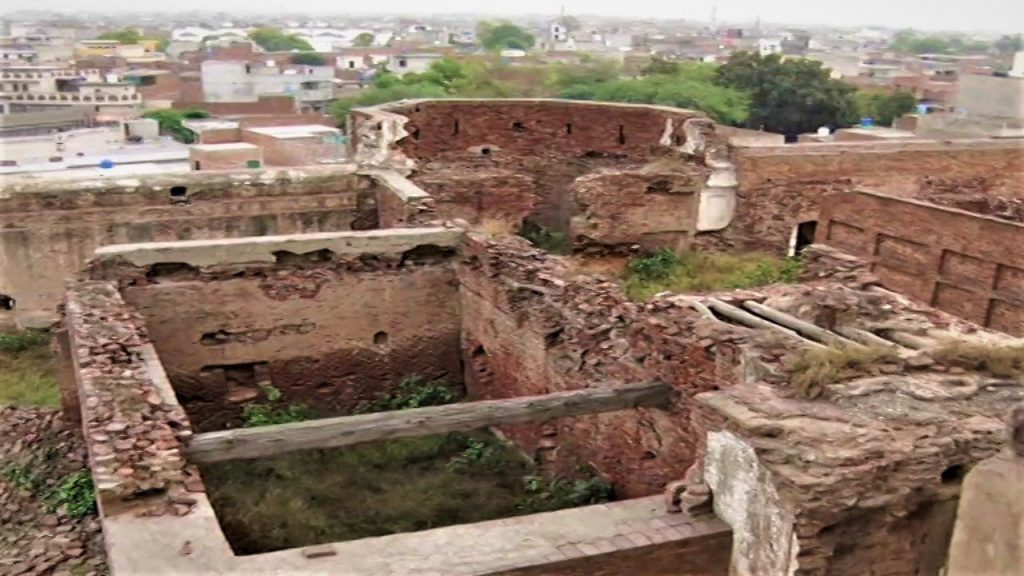
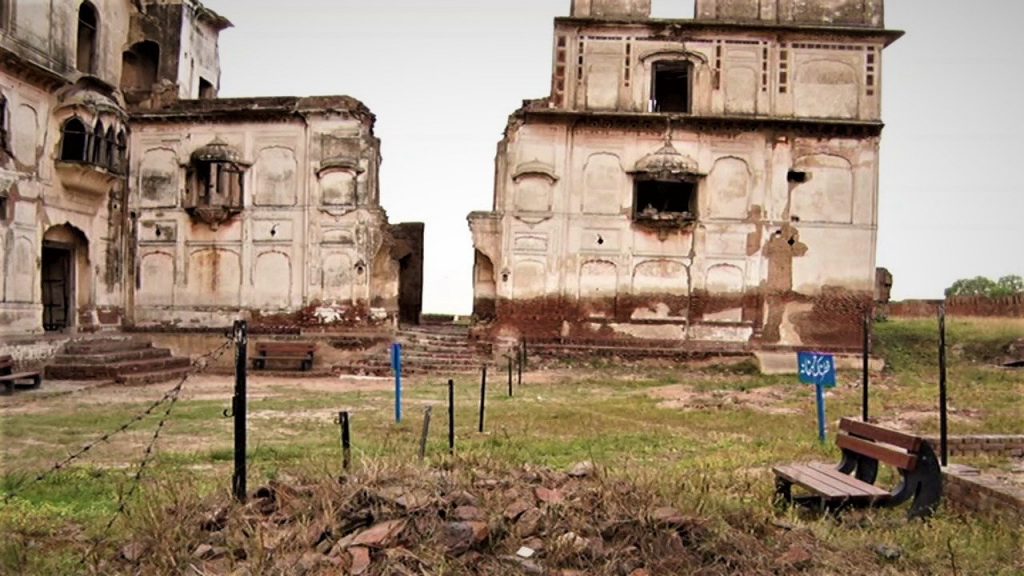
The Punjab Archaeology Department has announced plans to restore a 400-year-old Mughal-era fort-like palace in Sheikhupura.
According to details, a study will be conducted on the fort, currently in a dilapidated condition, before the restoration work.
The building underwent several structural changes over the years in different time periods with much of the building currently in ruins. Restoration work on the exterior walls is in progress.
Photo via The Express Tribune
Those involved in the restoration work have also suggested study tours from Lahore to Qila Sheikhupura and Hiran Minar, saying that they can be entertaining as well as informative. Only guided tours will be allowed inside due to the current condition of the fort.
Spread over an area of more than 64 kanals, the Sheikhupura Fort is perched on a high mound in the south of the city and is a magnificent symbol of the glory of the Mughal era. Experts have suggested that it was not a traditional fort but the residence of Emperor Jahangir, who had a hunting resort nearby.
Photo via The Express Tribune
An official of the Archaeology Department Malik Maqsood Ahmed says the fort was not built for military purposes but as a palace.
The fort was also used as a military base during the Sikh and British eras. After the partition of the Indian sub-continent, a refugee camp was also set up here.
Many government offices were also built here that resulted in the changes of the building’s structure and badly damaged the original historic look of the building.
Locals of the city say that the fort is the identity of the city. A mechanic who has been working in front of the fort for many years, says that if the government develops a food street after the restoration work in the fort, it will not only grow the business activities but also tourist interest.
Secretary Tourism and Archaeology Ehsan Bhutta said that when the fort was handed over to Punjab Archaeology Department in 2011, it was in a terrible condition.
In 2017, the department initiated a restoration project at the site, which is still continuing. The outer wall of the fort is being restored while the interior portions have been renovated and some benches have fixed there. Display boards with information have been installed at numerous places.