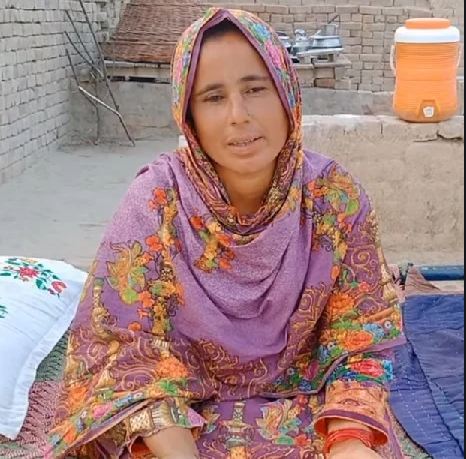
A YouTuber Muktiar Bibi, who makes videos on the daily routine of her life in the village, in a recent video, shared that she is receiving threats from a few people in her area. Muktiar, whose channel ‘Daily Routine’ has over 200,000 subscribers, alleged that people that she considered her close friends are threatening her to give them her channel or the earnings from it.
According to the Youtuber, these people even threatened her to kidnap her son or involve her in a legal case from which she would never be able to get out.
“They want us to either handover our channel or give them the money earned from this. I have kept my son Mohammad Abrar in the house for the past six to seven days. I don’t let him go outside because I am scared. I am a mother,” she said in the video. Bibi requested her viewers to support and help her. The video, now made private, was widely shared on social media, after which the Lodhran Police contacted Bibi.
“I request that you guys help me and tell me what can I do. We live in this small house. What do we know about court matters?”
I made this small channel and it eventually grew to the point where I could earn enough to feed my children and educate them. I have promoted some 30 channels here but never have I taken money from them. I promoted them so they can succeed and use their channel to earn.
At the end of the video, Muktiar told her followers that in case anything happens to her in the future, they should know her side of the story.
After the video went viral, the local police of Lodhran district went to her house and assured the family that they would be safe. She uploaded another video on Sunday in which she thanked the Lodhran Police DPO for offering support. The video showcases Muktiar and her son talking to the police and thanking them.
“I would like to thank the DPO of Lodhran, Syed Qara Hussain Shah. I pray that he succeeds in his life and stays happy,” she said.
Indian music producerYashraj Mukhate made a rap song using a scene from an Indian soap Saath Nibhana Saathiya that quickly went viral on social media.
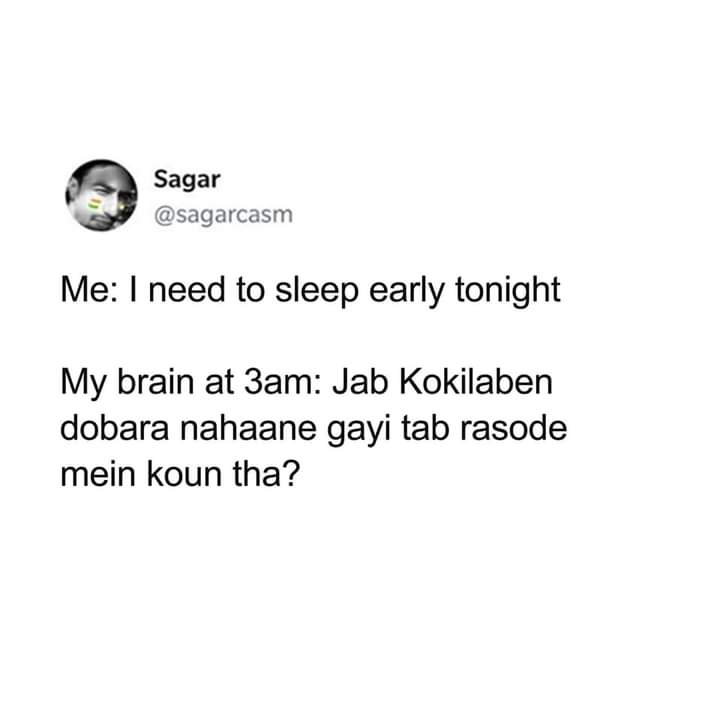
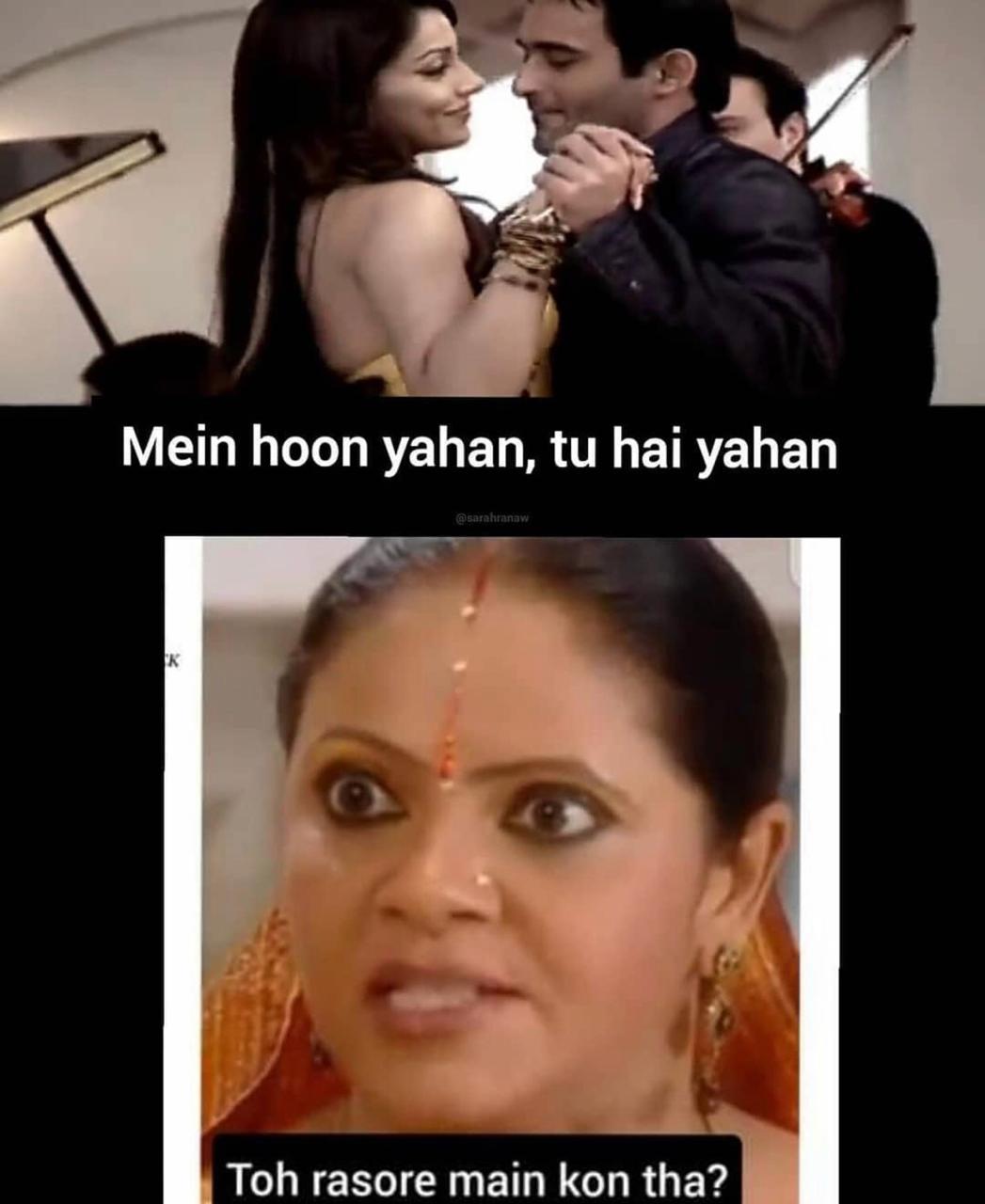
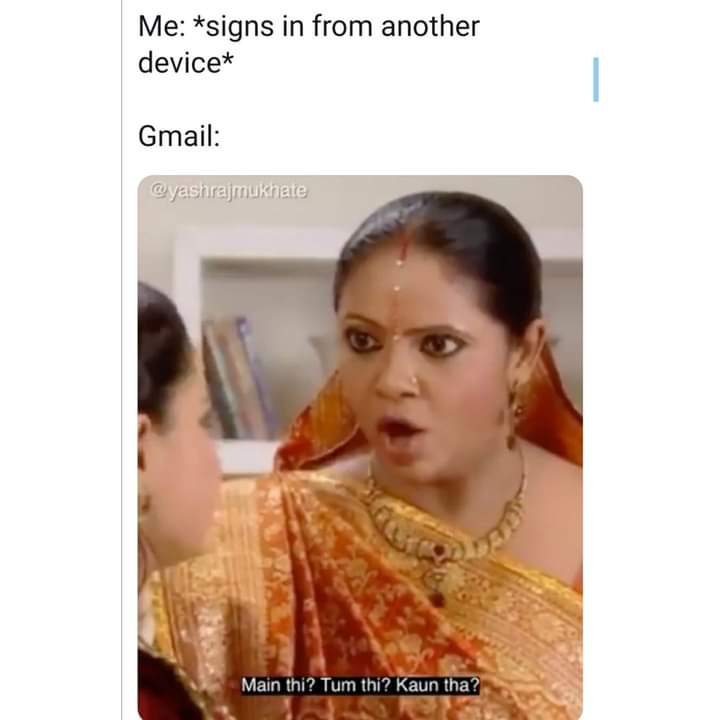
In the scene, one of the characters Kokilaben is seen asking who was responsible for a kitchen mishap and who took the ‘chanay’ out of the cooker when Kokilaben went to take a shower. The question is ‘Rashi Thi, Main thi, Kon tha? which is stuck in people’s minds and meme-makers are doing a great job at making people laugh.
She: He's probably thinking about other girls. He: Akhir Rashi Ben ne kyun cooker mai se chane nikaldiye aur khali cooker gas pe chada diya. 🤔. pic.twitter.com/qyC8btsEN8
The Mansehra district administration has sealed all hotels in Shogran, Naran and Kaghan after fresh cases of COVID-19 were reported among staff working at different hotels.
According to Dawn, Mansehra Additional Deputy Commissioner Maqbool Hussain said that the district health department had reported 47 cases of coronavirus at private hotels located in these spots. As a result, authorities decided to close down all hotels in the area to curb the spread of the virus. It has not yet been specified when the hotels will reopen but Hussain said that they would only be allowed to operate till the situation is brought under control.
Hussain further revealed that 48 hotels, including 22 main businesses and their respective branches, had been sealed at all three tourist spots and the infected patients had been quarantined at the hotels. He added that the local health department and officials were in the process of tracing and testing those who had come into contact with the patients.
On the other hand, ARY News reported that only five hotels in Naran and Kaghan have been sealed after some of the hotels’ staff tested positive for COVID-19. The report added that no ban has been placed on tourists wishing to visit the areas as some hotels have been reopened after disinfection.
Meanwhile, the Kaghan Development Authority (KDA) on Sunday recommended the Mansehra deputy commissioner to impose a ‘smart lockdown’ in Naran.
“It is proposed that a ‘smart lockdown’ [be imposed] on the hotels/restaurants to avoid the spread of COVID-19,” read the letter addressed to the DC.
After the government reopened businesses and allowed tourism in the areas, there has been a surge in cases of COVID-19 cases in Khyber Pakhtunkhwa forcing local authorities to start large-scale random testing of tourists.
“We have started conducting random testing of both tourists and hotel workers,” Raza Ali Habib, director general of the Galiyat development Authority (GDA) said, adding that 1000 tourists were tested during the last one week out of which only 25 tested positive.
According to a report by the KP tourism department, approximately 627,000 tourists entered Hazara and Malakand divisions after the government lifted COVID-19 restrictions. The reports further revealed that tourists’ inflow to Abbottabad and Galiyat was high as compared to other areas as more than 356,000 entered the areas in the first 12 days.
The government has been actively requesting people to take the necessary precautions and follow SOPs strictly to prevent the spread of the disease.
When the COVID-19 pandemic began and I started working from home, I bought into the uproar on social media about having more free time. My first, and perhaps only, resolution for this “extra time” was to read more books, and, in line with everyone’s suggestions about learning new skills and working on one’s own self, I thought I’d try and get two birds with one stone.
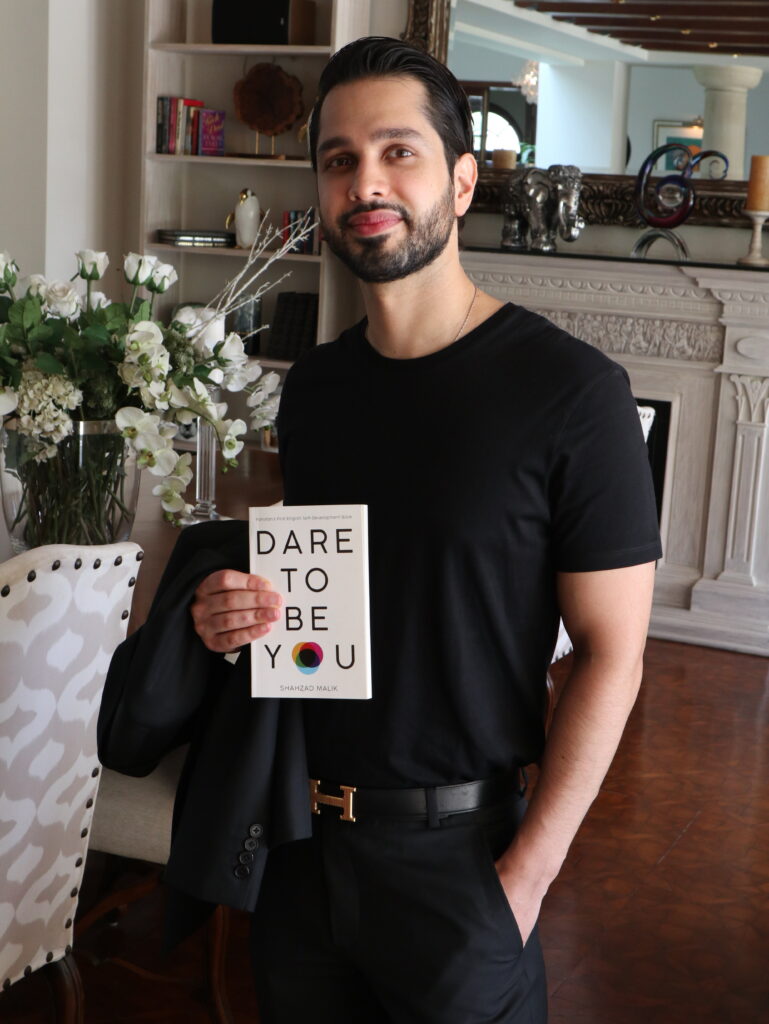
As it so happened, I came across this new book on social media: “Dare to Be You — Pakistan’s First English Self-Development Book” by Shahzad Malik. I was very intrigued and immediately went to the website and ordered it. The book arrived a couple of days later and honestly, I was blown away when I took it out of the packaging. It looked better up close than it did in the pictures. The cover design is beautiful — it’s very minimalistic and, quite like the book itself, it’s not in-your-face. It’s powerful in its subtlety.
It didn’t take me very long to finish the book once I started it. It’s not very long but, more importantly, once I started, I was hooked! I didn’t want to put it down. In fairness, I had not expected this when I bought the book or picked it up. I’m very wary of self-help books generally because they always feel very preachy to me. “You’re living life all wrong, and you must do x, y, and z if you want to be successful.” It almost always leaves a very bittersweet taste in my mouth. But, luckily, “Dare to Be You” isn’t like that at all! It’s very real and very candid. Like the author’s sitting right there talking to you. Like a conversation between friends.
I mean, of course, it isa self-development book, so of course, it’s going to include certain preferred acts and traits. But when I say the book is very real I mean that the author isn’t minimising what you’re going through. He seems to be well-aware of it. And when he talks to you, it feels like he’s talking to you as someone who has been through the things you’re currently going through, has managed to come out on “the other side”, and is now reaching back trying to pull you there too. I’m not one to take everything at face value, so I was a bit skeptical of whether the author actually “made it” and a few Google searches showed me he really had. And after reading the (deeply personal) incidents he’s narrated in the book and how he navigated through them, I really have a new-found respect for him.
“Dare to Be You” is built around one central idea that resonates throughout the book; all of us have the potential to be better and to do better, and we owe it to ourselves to try until we get to where we want to be. In certain places, the book definitely adopts a tough-love attitude, where it actively engages with the excuses we sometimes buy into. But the tough love is fair game, and, honestly? It really helps. Because it really makes you face what you’re running away from, while also guiding you to the support and confidence you need to win (think of the coach in any famous boxing movie pumping up the boxer before the big fight).
The book discusses a number of topics, all the way from overthinking to fear to finding one’s passion. It addresses the idea of mindfulness, of allowing ourselves to listen to our emotions rather than let ourselves be overwhelmed by our thoughts and the discouraging voices in our heads. This idea also flows through the book, and we are reacquainted with it at various points along the way, helping to really ground it in the reader’s mind. And in anxious times such as these, this has been game-changing. The book also lets readers explore how we can change our default way of approaching situations, by allowing for greater awareness of our internal frameworks. For instance, it allows us to explore the fears we carry, that hold us back, and lead to us minimising ourselves. This, in turn, allows us to see them for what they really are and shed them off, taking away their power over us so that we are not perpetually afraid and encumbered.
One of my key take-aways from the book has to be from the chapter on happiness. To quote from the book:
“I had become scared of feeling happy because I thought good things didn’t last. Think about it. It seems so simple when I write it down, but it was such a profound realization for me – that I could be afraid of happiness. That I could be afraid of something beautiful, simply because I was afraid I would lose it.“
The book really invites readers to give themselves a real, honest chance at happiness — both in the small everyday joys and as a mindset — that can become the basis for a more content and resilient life. And once you’re no longer afraid of happiness, the journey to discover your passion becomes a lot clearer (the book helps prevent the associated overwhelm by providing a structure to navigate your journey).
It’s been nearly a fortnight since I finished the book. And over the past two weeks, I’ve found myself thinking back to the book, and even picking it up to re-read certain parts of it. For a relatively light read, I’ve been pleasantly surprised by how it has stayed with me (almost on a subconscious level), allowing me to already start changing some of my habits that have just always been there. I find myself taking down my internal barriers one by one, and actively trying to do away with the voice inside my head that’s always more-than-happy to tell me I’m not good enough.
Granted, I haven’t yet achieved everything I wanted to and I haven’t arrived at the pinnacle of my life’s work. But “Dare to Be You” has certainly allowed me to start walking down the path I’ve been avoiding for a very long time. The path to a self-aware, authentic and meaningful life.
Rescue 1122 team found a python which was almost seven-foot-long from a house in Lahore’s Garhi Shahu area.
As per reports, the team had received an emergency call from a resident of Siddique Colony who found the python at his home. The rescue authorities managed to recover the python who was six feet and 11 inches long.
A spokesperson for the Rescue 1122 said it would be too early to say as to how and from where the snake came into the house. He further said that the python had been handed over to the Lahore Zoo administration under an already issued standard operating procedure.
He said the Rescue 1122 teams had responded to 1,719 emergency calls related to the existence of snakes all over the province since January this year.
A 76-year-old man in Khyber Pakhtunkhwa is fulfilling his dreams of getting a B.A degree.
The old man could not complete his studies due to financial crisis. The financial problems might have stopped him from continuing his studies but he did not give up.
Speaking to Independent Urdu, Muhammad Khan said, “I passed the matriculation examination in 1962 and joined the government school in 1963 as a teacher. I retired as a teacher in 2004 but was interested in education, now I have passed the FA exam in 2020 and now want to do a BA.”
Khan, who enjoys reading, further shared: “I want to get a Master’s degree after doing a BA.”
The elderly man added that he has educated his daughters from primary to postgraduate and now wants to continue his own studies.
After so many years, Khan has now taken admission to appear in the BA Part-I exams. The vice-chancellor of the University of Malakand is supporting Khan financially and any other help that he might need.
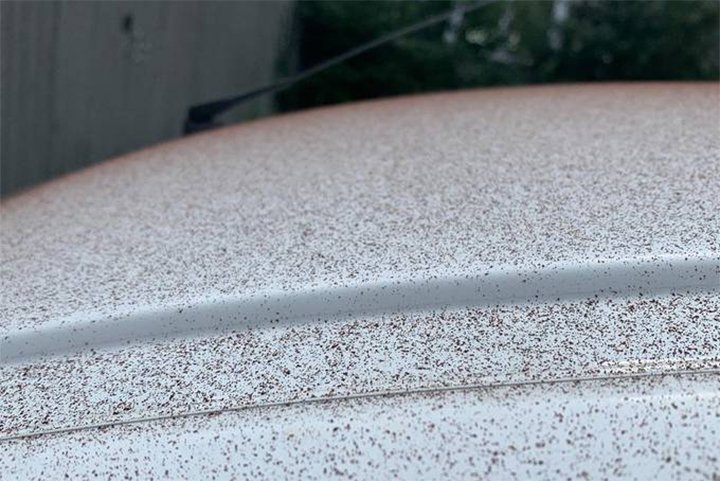
A chocolate lovers’ dream came true for residents of a small Swiss town when “chocolate snow” started falling from the sky after a ventilation fault at a Lindt factory.
According to details, the ventilation system of the Lindt and Spruengli company factory broke down and a light dust of cocoa powder spread in the nearby areas due to the winds.
The company made it known that the particles will not damage people or the environment. The company also confirmed that they will bear all cleaning costs as a car was covered in chocolate powder.
The problem was quickly addressed by the company and work resumed in the factory.
People kind of enjoyed the sweet disaster in the year 2020.
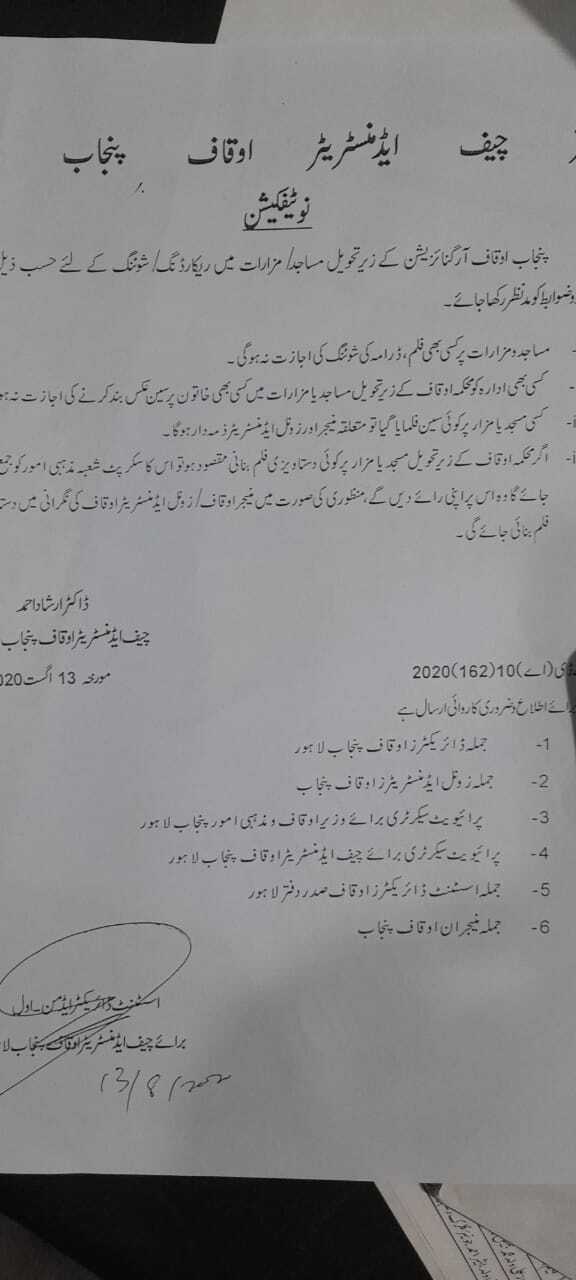
According to details, a notification dated August 13, 2020, states that if any act is recorded in a mosque or a shrine, the relevant manager and zonal administrator would be responsible.
The approval to shoot a documentary in these sites will be subject to consultation with the department of religious affairs, it adds.
The Auqaf department’s notification specified that no shooting featuring a woman in a shrine or mosque will be allowed.
Approximately 544 shrines and 437 mosques fall under the management of the department, which has been listed in its notification issued last week.
The decision came after public outcry against the shoot of a music video featuring Bilal Saeed and Saba Qamar at Wazir Khan mosque in Lahore. Though the two artists publicly apologised for hurting public sentiment and removed the sequence from their music video, they received a lot of backlash and cases were also registered over the scene picturized at the mosque.
A woman in the Indian state of Bihar was beaten to death for allegedly practicing black magic.
According to reports, the police said that the deceased, Geeta Devi, had reached at her in-law’s house in Jharkhand on Monday morning. As soon as she reached, a crowd attacked the 30-year-old with sticks and rods.
Her brother, daughter and mother-in-law were also manhandled when they tried to save her. Geeta was then, allegedly, dragged on the road and beaten up. By the time the police arrived at the scene, Devi was already dead. The police have said that an FIR (First Information Report) has been filed.
According to the villagers, Geeta’s neighbour and relative Munshio Mahto’s family had accused her of practising witchcraft. They threatened to kill her after Mahto’s son died due to some illness about two weeks ago.
Geeta had gone to her father’s house after she received the threats. But when she returned Mahto, along with 10 to 15 villagers, allegedly started beating her with sticks and rods killing her in the process.
The local police station officer-in-charge Parmeswar Singh said Geeta was lynched for allegedly practicing black magic.
“On the complaint of the deceased’s mother-in-law, an FIR has been lodged against Munshi Mahto and others in this connection. The body has been sent to Giridih Sadar hospital for post-mortem”, he said, according to a news report.
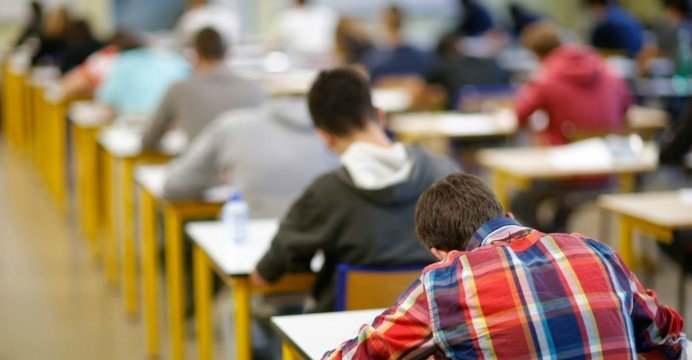
The Cambridge Assessment International Education (CAIE) has agreed to revise the grades issued for the June 2020 series and has announced that the grades will not be lower than the predicted grade submitted by the school, adding that “if a grade that was issued last week higher than the predicted grade, the higher grade will stand”.
Federal Minister for Education Shafqat Mahmood announced the decision on social media and expressed his relief over the matter.
Great news. Our tireless effort has been successful. Cambridge has decided that grades for June 2020 would NOT BE LESS THAN PREFICTED GRADES SENT BY SCHOOLS. PLUS Where a grade issued last week was HIGHER THAN THE PREDICTED GRADE, THE HIGHER GRADE WILL STAND.
Cambridge has also said that they will be announcing new grades shortly. To remove any uncertainty they have also asked SCHOOLS TO INFORM STUDENTS OF PREDICTED GRADES SENT TO CAMBRIDGE. This information was provided to schools on result day
I am so glad that this issue has reached a successful conclusion and the anxiety caused to students and their parents can now ease. Congratulations everyone
Similarly, Education Minister for Punjab Dr Murad Raas tweeted the official statement of Country Director CAIE which read: “We have decided that grades we issue for the June 2020 series will not be lower than the predicted grade submitted by the school. Where a grade we issued last week was higher than the predicted grade, the higher grade will stand.”
CONGRATULATIONS: Statement Country Director CAIE: We have decided that grades we issue for the June 2020 series will not be lower than the predicted grade submitted by the school. Where a grade we issued last week was higher than the predicted grade, the higher grade will stand.
The coronavirus pandemic and subsequent lockdown this year had forced CAIE to cancel its May/June 2020 exams worldwide. The examination board later announced that certificates would be awarded without exams under a new four-step assessment mechanism which included teachers’ predicted grades, ranking order, school review/approval and standardisation.
However, after the results were announced last week, students started raising concerns and protested against the grades which were lower than their expectations and previous performance. They believed that Cambridge’s grade prediction system downgraded their qualifications, causing many to lose university placements and essential scholarships. Following the outrage, the government stepped in to assist students and Mahmood on Friday shared that Cambridge agreed to review its grading procedure.
As a result of our intervention conveying the anguish of our students, I have just heard that Cambridge has agreed to review its grading procedure regarding the recently declared results. It will announce its final verdict after review on Tuesday
Meanwhile, in a statement issued Friday, CAIE said it had been listening to feedback and suggestions from schools and students and had been “looking carefully at how to act on it.”
“Since we released our results on August 11, we’ve been listening to the feedback and suggestions from our schools and students. We know schools have been pleased that we were able to provide grades in challenging circumstances,” it said.
It added, “We have also heard your concerns about some aspects of our process, and we understand the real anxieties Cambridge students are facing at the moment. We have been looking carefully at how to act on your feedback, and at the same time make sure schools, universities and employers continue to trust our qualifications.”
“On Tuesday, August 18, we will let you know the actions we will take,” it added.
It is pertinent to mention here that the issue at hand was not limited to Pakistan alone. According to a report in BBC, approximately 40% of A-Level results of students in England were downgraded after the exams regulator Ofqual used an algorithm based on a schools’ previous results. This sparked outrage among the public following which the UK government, after discussing the matter, announced that A-level and GCSE students in England will be given grades estimated by their teachers, rather than by an algorithm.