Category: Lifestyle

  • German Zoo might start feeding animals to each other as funds dry up

    After being forced shut due to the coronavirus pandemic, a zoo in northern Germany is facing so much financial pressure it may end up feeding its animals to each other in a worst-case scenario.

    According to reports, Neumünster zoo, in Schleswig-Holstein, has been closed since March 15. The zoo relies entirely on donations and entry fees to feed some 700 animals which include arctic foxes, maned wolves, seals and Germany’s biggest polar bear Vitus. It has not yet received any emergency aid promised by the federal government.

    Zoo director Verena Kaspari told the media, “If — and this is really the worst, worst case — if I run out of money to buy food, or if it should happen that my food supplier can no longer deliver due to new restrictions, I would slaughter animals to feed the other animals.”

    “We currently have funds that would bring us by around mid-May,” she added.

    As part of Kaspari’s worst-case-scenario plan, goats and deer would be killed first and the polar bear Vitus — which stands nearly 12 feet tall — would be the last animal to go. She assured that none of the animals slaughtered would be an endangered species.

    On March 31, the association representing 56 major zoos in Germany, including Neumünster, called on the government to release $100 million to save the industry.

    Meanwhile, a spokesperson for animal rights organisation People for the Ethical Treatment of Animals (PETA), Yvonne Würz, told DW that “population management” was “nothing new for zoos.”

    “Zoos are funded through and live from tiny baby animals. When there is not enough space for the animals they are often killed for food [for other animals],” said Würz.

    She explained that some zoos are transparent about the numbers of animals they kill each year. The European Association of Zoos and Aquaria estimates between 3,000 and 5,000 animals are killed in European zoos each year.

  • ‘Barber on Wheels’ offers haircuts at home with all safety measures

    ‘Barber on Wheels’ offers haircuts at home with all safety measures

    The coronavirus induced lockdown has placed us all in a situation we have never experienced before giving rise to a plethora of problems including men not being able to get a haircut. But in this unprecedented situation, people are coming up with many innovative ideas.

    Barber on Wheels is a startup in Lahore that offers a haircut at your doorstep with all safety measures. You can make an appointment and a hairdresser will show up at your house all suited up.

    The barbers sterilize all tools throughout the haircut and wear protective suits. 

    The haircuts happen in an outdoor setting to prevent the hairdresser from bringing in contaminants from outside. Clients are also required to wear a mask while getting a haircut.

    Here are the rates for their services.

    Cutting – Rs 700

    Beard Trimming – Rs 500

    Beard and hair cutting combo – Rs 1000

  • Fact Check: Did a leopard really attack a pet dog in Islamabad?

    Fact Check: Did a leopard really attack a pet dog in Islamabad?

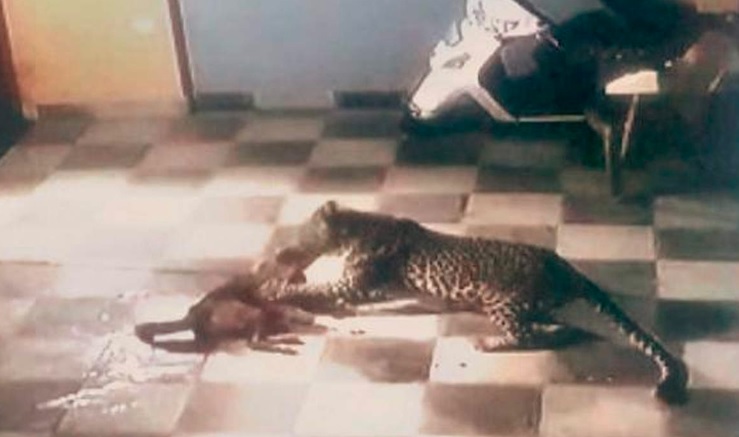
    Claim: Viral video of leopard entering a house and fighting a pet dog is being placed in a house on Margalla road, Islamabad.

    Fact: The video is actually from Gujrat, India and was posted 5 days earlier on Times of India.

    A video of a leopard entering a house and getting into a fight with a pet dog is going viral on social media and especially in Whatsapp groups. It is being speculated that the incident took place in a house on Margalla Road in Islamabad considering a leopard was recently spotted on a camera trap near the hiking trails.

    Read more – Leopard spotted near Islamabad’s hiking trails

    However, the Deputy Commissioner of Islamabad has confirmed that the video is not from Islamabad.

    Meanwhile, a quick Google search revealed that this incident took place in India. According to a report in the Times of India, the incident took place in Rajkot, Gujrat. The leopard was attempting to prey on the dog but when a vehicle passed by outside, it got scared and ran away. The owner of the house said that this is the first time he witnessed such an incident and that he alerted the forest department about it.

    “We have set up a cage with a live bait inside it to trap the leopard,” said an official from the forest department.

    The leopard population in Gujarat has witnessed a growth in recent years and it appears that the lockdown which is currently in place in the country is allowing these big cats to move around more easily.

    VERDICT: FALSE [OUT OF CONTEXT]

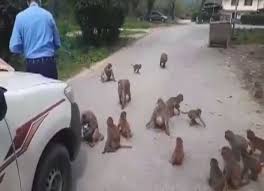
  • Islamabad cops feed monkeys during lockdown

    Islamabad cops feed monkeys during lockdown

    Human beings aren’t the only ones affected by the coronavirus lockdown in Pakistan. Animals are also suffering amid all this as many stray or wild animals haven’t been getting any food.

    As per reports, group of Islamabad policemen gave monkeys food during the lockdown to make sure they don’t go hungry either.

    Pakistan is currently under lockdown, with shops and markets closed to control the spread of the coronavirus. People are practicing social distancing while staying at home. That’s why stray animals could not find any food on the streets.

  • As economies fall, Apple ‘quietly’ launches new, only $399 iPhone

    As economies fall, Apple ‘quietly’ launches new, only $399 iPhone

    Apple has “quietly” — without fanfare — unveiled a new entry-level iPhone, aiming to appeal to consumers facing a suddenly bleaker economic backdrop.

    The updated iPhone SE will start at $399, or less than half the price of its flagship devices, and be available for order as of today (Friday) in more than 40 markets.

    Apple made the announcement in a statement, forgoing the normal splashy product launch events of the past few years.

    https://www.youtube.com/watch?v=SQIbeAk-bFA

    The screen is on the small side for smartphones, measuring 4.7 inches diagonally — bigger than the first-generation iPhone SE but smaller than the newest phones — yet boasts high-definition graphics for rich visuals.

    Apple trimmed coasts by leaving out some of high-end features such as facial recognition, giving iPhone SE a fingerprint sensor and a home-screen button which fans will remember from previous generations.

    While the iPhone had been in the works for months, the launch comes amid a pandemic-induced economic slump which has hammered the smartphone market and hit consumer sentiment.

    “It is incredibly fortuitous timing,” said Bob O’Donnell, analyst with Technalysis Research.

    “This is the exactly the phone a large percentage of people will want. It’s hard to justify spending $1,200 on a smartphone in this economic climate, yet people still depend heavily on their phones and a lot of people want to upgrade.”

    O’Donnell said the new device is also likely to appeal to consumers seeking a small-format handset, and in countries where consumers may have not been able to afford iPhones.

  • Heartwarming video shows Punjab cop buying food for stray dogs, feeding them

    Heartwarming video shows Punjab cop buying food for stray dogs, feeding them

    As the lockdown to curb the spread of coronavirus stays in place and animal rights activists voice concerns over strays starving to death, a heartwarming video over the internet has shown a Punjab Police cop buying food and feeding stray dogs by the side of a road.

    “If only people considered us policemen as humans. Forgive our mistakes. We are your servants. We deserve that much love,” wrote Lahore’s Deputy Inspector General (DIG) for Investigation Dr Inam Waheed as he tweeted the video that showed the cop, namely Ishtiaq, buying food and feeding it to dogs.

    WATCH VIDEO:

    https://twitter.com/inamkhan24/status/1250479090399883264

    Here’s what Twitterati, including celebrities, have to say about it:

    “I salute such great people,” wrote another user.

    Earlier, amid appeals by activists to take care of strays during the lockdown, heartwarming stories had surfaced of people helping animals suffering and adjusting to the changes caused by the coronavirus outbreak.

    “During the lockdown, animals have been abandoned in cages in markets and pet stores in Karachi. Many have starved and died. Dr Sheila is a vet working tirelessly to help collect, vaccinate and find shelter for these poor animals. Please, please, please donate. And share,” tweeted a user.

    Another user shared the picture of a group of volunteers feeding monkeys.

    Have something to add to this story? Let The Current know in the comments below.

  • What workplaces will look like after lockdowns

    Around the world countries are hitting their coronavirus peaks and starting to grapple with questions about when and how to reopen their economies.

    But those people fortunate enough to have not lost their jobs should be prepared for a “new normal” when they finally go back to work, say experts.

    Here is a preview of what to expect.

    No handshakes, fewer meetings

    Handshakes are out “indefinitely,” said Tom Frieden, the former director of the US Centers for Disease Control and Prevention (CDC). Next, offices will need to start thinking about practical measures.

    “Can we have doors that don’t have to be opened by people? Should we be taking the temperatures of all people who enter?” he said in a call with reporters.

    No-touch hand sanitizer dispensers will become common. Steps may be taken to reduce overcrowding in common spaces, and computers and phones may no longer be shared.

    Mask use will be encouraged, and some workplaces may provide them.

    Businesses like supermarkets are already keeping down the number of people who can enter, placing clear plastic barriers between employees and customers and enforcing physical distancing — this could be extended to all shops, cafes and face-to-face engagements.

    Offices may also stagger employee hours and have workers come in on different days so that fewer people are present at a given time — and cut meetings.

    “One of the positive impacts of COVID I hope will be fewer meetings, because there are just too many meetings,” added Frieden.

    More sick days

    “Staying at home if you are sick may be encouraged vs discouraged,” said Brandon Brown, a University of California Riverside epidemiologist.

    The US has a famously brutal work culture driven in part by the fact there is no federally mandatory sick leave.

    As a result, people tend to power through despite illness: an October 2019 nationwide survey of 2,800 workers by the accounting firm Robert Half found that 33 percent always go in when sick. That may change.

    Telework may become more common for many, especially as people have learned during enforced lockdowns that it is possible.

    “One thing that we found out from this pandemic and sheltering in place at home, is that in-person meetings are not always necessary. Virtual meetings should be an ongoing option from here on out,” added Brown.

    Counseling provided? –

    The pandemic has already extracted a devastating death toll, particularly in the hardest-hit region New York, and the onus for providing counselling may fall to a great extent on employers.

    “Don’t forget a lot of people are gonna go back to work having lost family members,” said Marc Wilkenfeld, a doctor who specializes in occupational medicine at NYU Langone Health.

    “I think the bigger companies or even the smaller companies are going to need to address these issues, because you do want a workforce coming back healthy, physically and mentally.”

    Toilet lids and better plumbing

    Workplaces will continue to hammer home the message to wash hands regularly and thoroughly, said Brown.

    Often touched surfaces will be cleaned more frequently, but greater attention will need to be placed on keeping bathrooms clean and improving plumbing, since there is some evidence that the coronavirus can be spread via feces.

    A recent Lancet paper recommended “do not ignore unexplained foul smells in bathrooms, kitchens, or wash areas” and included tips for improving plumbing like having functioning U-bends that prevent the outflow of sewage gases.

    One step toward mitigating the risk is flushing the toilet with the lid down, since a flush can release up to 80,000 contaminated droplets and leave them suspended in the air for hours if it’s not covered, according to a recent Hong Kong study.

    But many toilets in modern workspaces lack lids — a trend that may be reversed.

    Who returns first

    People over the age of 65 or who have underlying conditions like heart disease or diabetes are at higher risk for complications arising from COVID-19 — and their return to offices will come later.

    “When people start to go back to work, I think that it’s going to be that not everyone goes back at the same time,” Wilkenfeld said.

  • Residents distribute food among policemen doing duties amid lockdown

    The residents of Peshawar helped the policemen positioned on the roads to protect them.

    As per reports, a few volunteers gave food packets to the officers performing lockdown duties in the city.

    Health professionals and medical workers are undoubtedly fighting against coronavirus on the front lines, but we can’t ignore the role being played by the police, said a volunteer.

    The policemen thanked the volunteers for the gesture.

  • Govt contemplating three years jail for hoarders

    The federal government is working on a new rule to discourage hoarding and make the actions against profiteering more strict.

    According to details, Prime Minister Imran Khan had directed Minister for Law and Justice Farogh Naseem to draft an ordinance on the matter and that an ordinance has been sent to the PM for approval.

    The ordinance has suggested maximum sentence of three years in jail for the violators. They will also be fined 50% of the cost of the items they were stocking.

    According to the ordinance, all hoarded items would be seized and then auctioned off at different markets.

    The PM will present the ordinance in the Cabinet and after its approval, it will be sent to the President.

  • Adnan Jaffar makes Hollywood debut with ‘Homeland’

    Adnan Jaffar makes Hollywood debut with ‘Homeland’

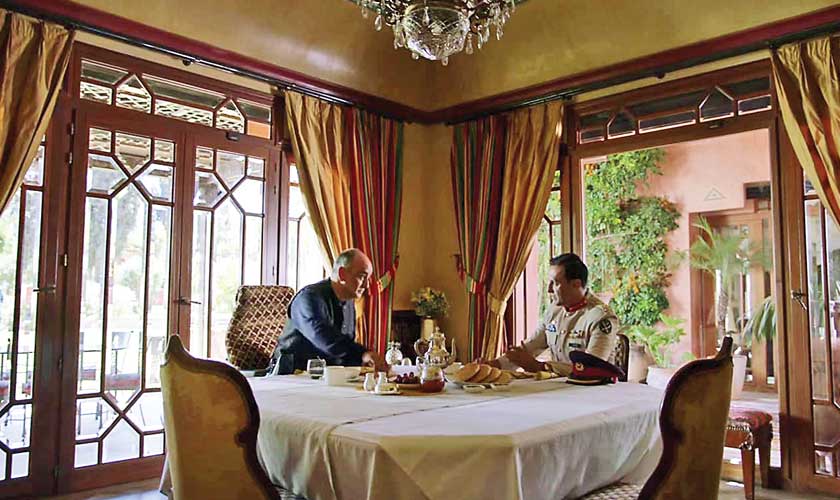
    Adnan Jaffar, who is currently essaying the role of Dr Feroz in the blockbuster drama Ruswai, has silently made his Hollywood debut with Homeland. The actor appeared in the ninth episode of the eighth season titled In Full Flight and essayed the role of a Pakistani General named Aziz who has a brief but heated exchange with Bunny Latif, played by the enigmatic Art Malik.

    In a recent interview, Jaffar, who started his career as a broadcast journalist, shared how he ended up getting the role in the final season of the award-winning series. He revealed that the team of Homeland was looking for an “English-speaking actor with a South Eastern face” and since a few of his films are available on Netflix, they ended up discovering him.

    “I was approached through a casting person who sent me an audition script, which I promptly recorded and sent back. They took a few weeks and luckily, the production team cast me in the character. To be honest, I wasn’t expecting it, being a ‘nobody’ on the international scene. So many people audition without success, plus it was such a high profile series. Any Indian actor could easily have done it, but I guess me (a Pakistani actor) being in it brought more authenticity,” Jaffar has said.

    Adnan further shared that the scenes were shot in Casablanca, Morocco and that his whole experience was very professional. He added that “playing a Pakistani Army officer was a proud moment” for him.

    Adnan began his career as a broadcast journalist for Dawn News. He made his film debut in 2015 in Jalaibee followed by Manto (2015), Moor (2015) and Jeewan Hathi (2016). He has also been part of many successful dramas, the most recent being Daasi and Ruswai.

    Meanwhile, Homeland in the past has often come in the line of fire for hurting Muslim and Middle Eastern sentiment. The show has also been criticised for showing Pakistan in a negative light within its storyline.