Category: Lifestyle

  • Old woman dies after refusing ventilator, told doctors to ‘keep this for younger’

    Old woman dies after refusing ventilator, told doctors to ‘keep this for younger’

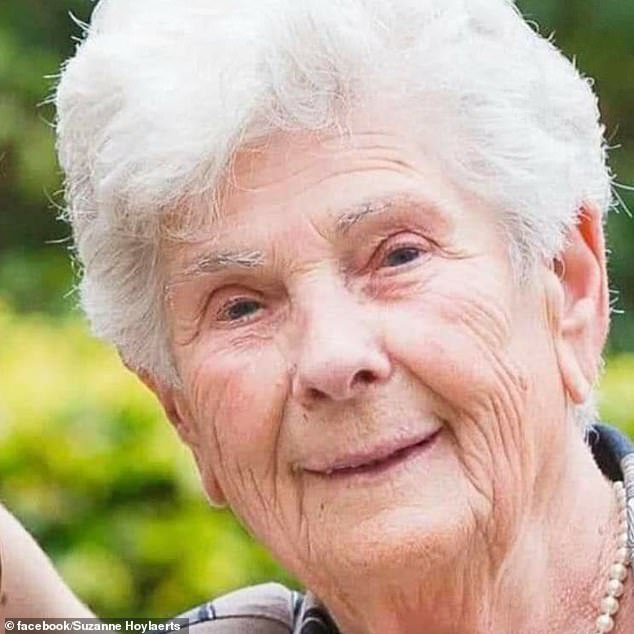
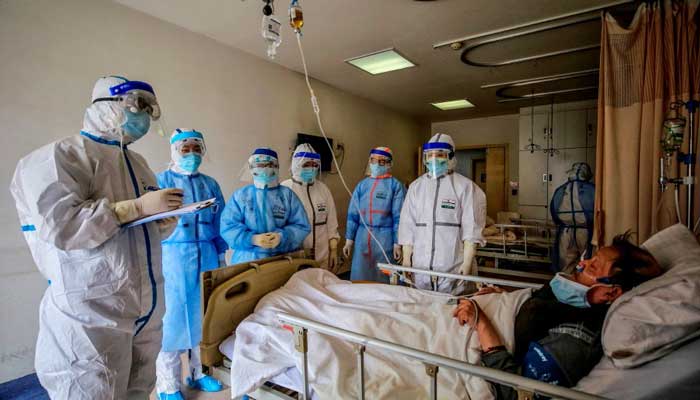
    A 90-year-old coronavirus patient has died in Belgium after selflessly refusing a ventilator and asking doctors to ‘keep this for younger patients’. 

    Suzanne Hoylaerts from Binkom, near Lubbeek, was hospitalised on March 20 when her condition rapidly weakened after contracting COVID-19. 

    Hoylaerts required medical attention after suffering from a lack of appetite and shortness of breath. She was admitted to hospital where she tested positive for the virus and was placed in isolation where even her daughter was unable to visit. 

    She reportedly told doctors at the hospital: ‘I don’t want to use artificial respiration. Save it for younger patients. I already had a good life.’ 

    There is a global shortage of ventilators, an important equipment to fight against the respiratory disease, amid the coronavirus pandemic.

    Hoylaerts passed away two days after she was hospitalised, on March 22. 

    Her distraught daughter Judith told Dutch newspaper: ‘I can’t say goodbye to her, and I don’t even have a chance to attend her funeral.’ 

    Belgium has reported 705 deaths according to the latest official toll.

  • Two men who lied to wives about going to Bangkok get quarantined by police

    Two men who lied to wives about going to Bangkok get quarantined by police

    We’ve all seen enough Bollywood and Hollywood movies where men lie to their girlfriends or wives about going on a business trip when in fact they are cheating on them with someone else. Well, something similar happened in India recently.

    According to a Twitter user, Abhijit Basak, whose Twitter bio identifies him as the State IT Cell Convenor of BJYM, West Bengal (India), two men got in for trouble when police paid them a visit.

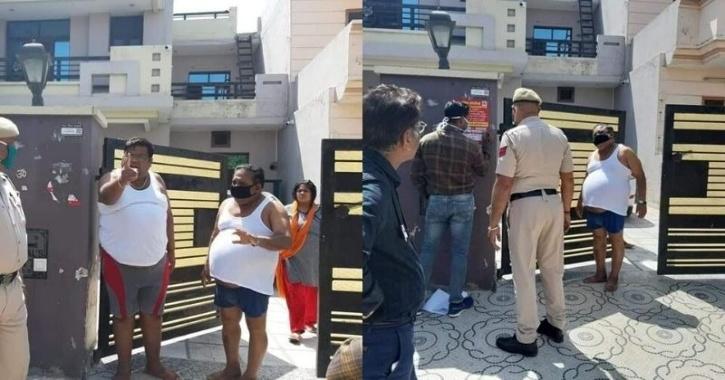
    This is what the tweet read, ‘They told their wives that they were visiting Bangaluru for business and actually visited Bangkok. However, after returning home, Police visited their homes with their travel records and pasted on the gate & explaining to their wives why their husbands need to be quarantined’.

    Things came crumbling down for two men in India when the truth about their vacation was revealed to their wives by the police.

    According to a report in the Indian media, the incident allegedly took place in Ambala. After tracking down their travel history, the police pasted posters that advised everyone to stay away from the member: as they are under quarantine for 14 days. However, twice the posters were torn by the involved party. When the police pasted them for the third time, they were misbehaved with.

    “Posters were placed two or three times outside the house. But they tore. When the team reached for the third time, then misbehaved. Police was given a written complaint, now the police will take action,” the report quoted Dr. Kuldeep Kumar, CMO, Ambala as saying.

    Well, we can certainly say that these men didn’t think they would get busted and how!

    On Twitter, however, people are concerned about the well being of the two and not because of coronavirus.

    https://twitter.com/drmanishgoutam/status/1244570055557316608?s=20
  • Coronavirus Lockdown: Karnataka health department asks quarantined citizens to send hourly selfies

    Coronavirus Lockdown: Karnataka health department asks quarantined citizens to send hourly selfies

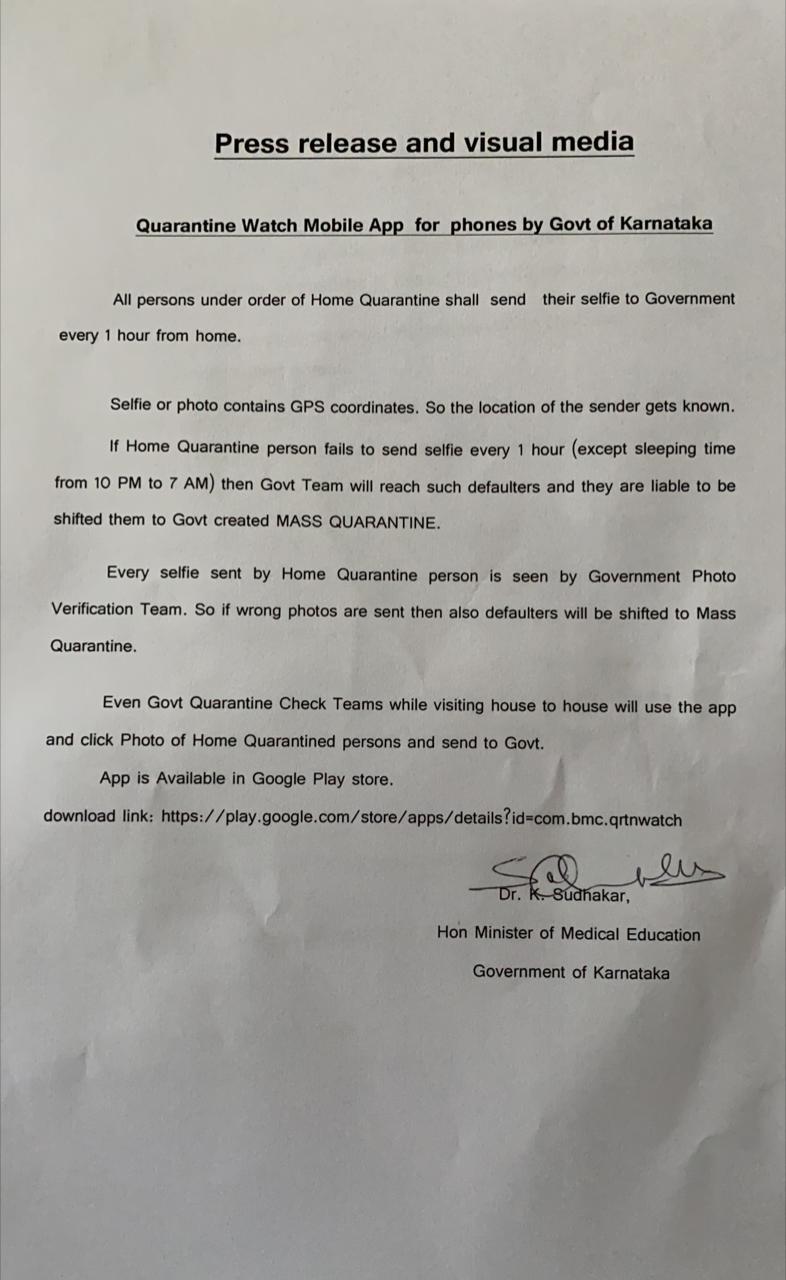
    The Karnataka health department in India is using a mobile app to curb violations by people in home quarantine through a system that requires them to upload hourly selfies, which is then corroborated with the global positioning system (GPS) location of their homes.

    The technological intervention was necessitated because of a large number of violations by those placed under a mandatory 14-day home quarantine.

    “All persons under order of home quarantine shall send their selfie to (the) government every one hour from home,” the state government said in a circular on Monday. The selfie will be cross-checked with the GPS data to see if the person is at the address of home quarantine.

    Thousands of people are currently in home quarantine in India due to the coronavirus outbreak.

    People who have come from an international destination have to quarantine themselves for two weeks even if they are asymptomatic. Others who have come in touch with anyone in the former category will also have to quarantine themselves in a similar fashion.

    The state government has warned that those who fail to send selfies every one hour (except sleeping time from 10pm to 7am) will be sent to mass quarantine centres.

    “Nobody can dodge the long arm of the law. Ten persons who were under home quarantine in #Bengaluru and escaped to their native place, were arrested and a case has been registered against them at Gurmitkal police station,” said B.H. Anil Kumar, commissioner of the Bruhat Bengaluru Mahanagara Palike (BBMP, the city civic body) posted on Twitter.

  • Lahore’s Defence and Cantt report majority coronavirus cases

    Lahore’s Defence and Cantt report majority coronavirus cases

    Majority of the coronavirus cases being reported in Lahore are from the Defence and Cantt areas of the city, an official of Punjab’s Provincial Disaster Management Authority (PDMA) has revealed.

    As per reports, Director Pperations at PDMA Nisar Ahmed said, “These people from the posh areas usually have a travel history and they are continuing their kitty parties and not practicing social distancing.”

    According to the provincial government’s daily statistics of those tested positive in the city, six people are “not traceable”.

    Ahmed, however, denied the information. “I don’t think that is true,” he said, adding that the Punjab government is using cellphone data and artificial intelligence to trace people, once they enter the province.

    “We can trace the travels of each one of the 11 million people in Lahore.  Anyone who leaves the airport, we know exactly where there they went, where they stopped and for how many minutes. This state-of-the-art technology is being used in Punjab for the first time,” he explained.

  • Workout at home with Katrina Kaif’s routine

    Workout at home with Katrina Kaif’s routine

    Two weeks into self-isolation/quarantine, we all seem to have one common complaint: our clothes are getting tighter due to all the food we are consuming. Not only that, but gyms across the country have also been closed which means that we’ve all essentially become couch potatoes.

    Katrina Kaif, who is possibly one of Bollywood’s fittest actors, has shared her at-home workout routine. While it looks fun and easy, let us tell you that it’s not. Be prepared for a heavy-duty sweat sesh and burn all those extra calories you have been consuming.

    https://www.instagram.com/p/B9zMwQJBoz_/

    This workout has even been endorsed by Zainab Abbas.

    A few days later, she shared an even more intense workout. To be honest, we couldn’t manage more than 2 rounds.

    https://www.instagram.com/p/B-HHD7XhxZO/

    Read more – No time to hit the gym? Check out these Youtube workouts for the busy woman

    If these seem a little too intense for you, check out videos by our local fitness instructors.

    Fatima Zahra Malick

    https://www.instagram.com/p/B-KRh_WB_kH/

    Nusrat Hidayatullah, The Forty Two Day Challenge

    https://www.instagram.com/p/B-R9kC8FHM2/

    Hydro Fit, Celebrity Trainer

    Let us know which one of these workout videos you tried and liked.

  • Hand care in the time of corona

    Hand care in the time of corona

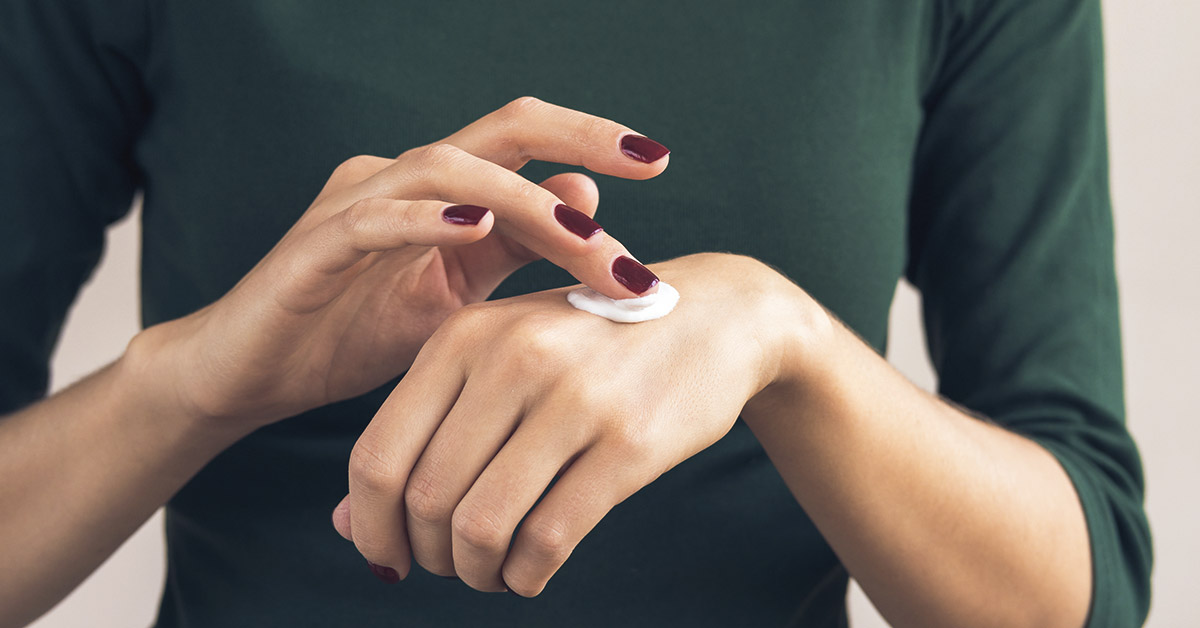
    Due to the coronavirus pandemic, all of us are constantly washing our hands. Our use of handwash, soap bar and hand sanitisers has gone up manifold. And all that excessive washing has not been kind to the skin on your hands which is becoming dry and/or patchy.

    While this does not mean that you stop washing your hands regularly, we recommend some tried and tested tips to ensure that your hands don’t become dry and wrinkly in this pandemic though it is advisable to follow these tips after the pandemic too.

    Exfoliate your hands

    Just like the skin on our face and body, the skin on our hands can benefit big from a weekly or bi-weekly exfoliation. Exfoliation can help slough off dead skin cell buildup, which will appear more prominently on your hands due to excessive hand washing or use of hand sanitisers. Wet your hands with lukewarm water, and massage a small amount of the scrub over both of your hands, working in circular motions. Rinse it off with warm water, and apply a hand cream.

    We recommend: Scoop O Scrub’s Frosted Hand & Foot Scrub

    This scrub is peppermint flavoured made with the finest sugar, essential oils and carrie oils. Use it two times a week — preferably before going to bed — so that the flakes on your skin are gone and you wake up to soft hands. Scoop O Scrub have two other hand & foot scrubs also — Hibiscus and Sea Breeze.

    Moisturise

    Use moisturising hand creams or lotions every time you wash your hands. Keep a lotion or hand cream near your sink. If applying lotion gets tiresome, at least do it 4-5 times a day.

    We recommend: Conatural’s Ultra Moisturising Organic Hand & Nail Cream

    We have used this cream and it really makes a difference. It is uniquely blended with Organic Aloe Vera and enriched with Organic Sweet Almond, Jojoba and Sunflower seed oils and Vitamin E. It is very good for dry and rough hands and prevents moisture loss, leaving them soft and supple.

    Massage your hands

    Massage your hands at night for at least three-five minutes to let the goodness of the moisturiser soak in. For very rough hands, mix your moisturiser with a bit of Vaseline so that they are protected all through the night. You can also use baby oil or any other essential oil for a hand massage.

  • Dua Mangi identifies kidnappers before the court

    Dua Mangi identifies kidnappers before the court

    Dua Mangi has identified the men who abducted her on November 30 last year before the court. The Karachi-based teenager, who was kidnapped from outside a restaurant in Karachi’s DHA was kidnapped for ransom. She has returned home a week later.

    The hearing of the case was in the court of the Judicial Magistrate South, Karachi. At the beginning of the hearing, Dua identified the kidnappers who were presented before her in the court.

    They were identified as Zohaib Qureshi and Muzaffar. Dua Mangi in her statement before the court said Zohaib and Muzaffar along with their partners had kidnapped her from outside a restaurant in Karachi.

    On March 18, the police had arrested two accused from different areas in the country in Dua Mangi and Bisma kidnapping cases.

    Additional IG Ghulam Nabi Memon confirmed that the five-member kidnappers’ gang that was behind Dua and Bisma’s kidnapping was led by an ousted police officer.

    Taking action on the intelligence reports, the police conducted raids in different areas of the country and arrested the two suspects, he added.

    Memon had said that the gang had taken cue for the kidnapping from movies.

  • Government launches Covid-19 information service on WhatsApp

    Government launches Covid-19 information service on WhatsApp

     The Federal Government has launched a ‘Coronavirus Information Service’ on Whatsapp to deliver updates about the coronavirus pandemic.

    According to the Prime Minister’s Office, people can get all information about the coronavirus, latest statistics and nearest labs by sending a message writing ‘Hi’ at 00923001111166.

    The Coronavirus Information Service will deliver information in Urdu and six regional languages, including Punjabi, Sindhi, Pashto, Balochi and Kashmiri.

    On Tuesday, Prime Minister Imran Khan announced the formation of youth force and public fund during his address to the nation to fight coronavirus pandemic across Pakistan.

    PM Khan said Corona Relief Tiger Force will be made of young doctors, drivers and people from any field which would be utilised to provide food and essential commodities to the areas likely to face lockdown. The force will also guide people to self-isolate inside their houses.

  • Ministry for HR introduces helpline for victims of domestic abuse

    Ministry for HR introduces helpline for victims of domestic abuse

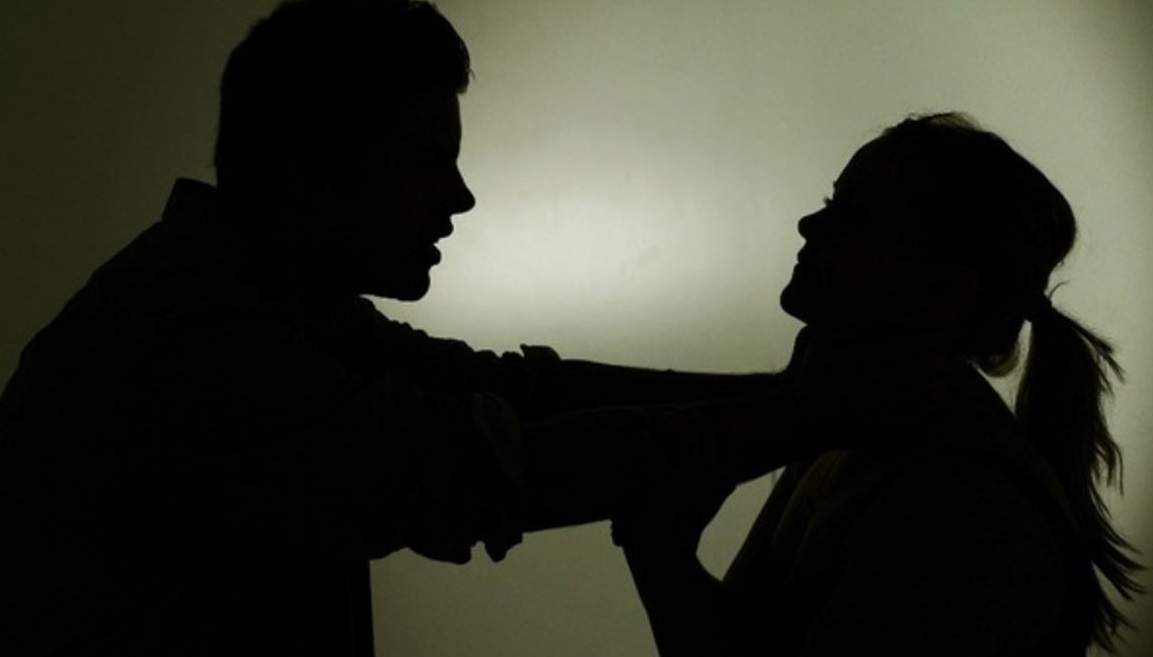
    With everyone under lockdown, it is being feared that cases of domestic violence and abuse will spike in the coming days. It has already been reported that cases of abuse are on the rise in Europe. The stress caused by social isolation coupled with fears around job security and financial difficulties is exacerbating tensions and increasing the risk of domestic and sexual violence against women and children.

    “For many people, their home is already not a safe place,” says a German federal association of women’s counselling centres and helplines.

    The case in Pakistan is also similar. You may have read accounts of people relating stories of their domestic staff begging them to let them come to work because they are miserable at their homes and face abuse there.

    Keeping this in mind, the Ministry of Human Rights has launched a helpline for those who are vulnerable or are facing any kind of abuse.

    In a tweet, the ministry shared the numbers of helplines and wrote, “Lockdowns and quarantine measures often leave women and children vulnerable to domestic abuse and violence – which is known to rise during emergencies.”

    “Our helpline is here to help you,” they added.

    Last week, The Duchess of Cornwall, Camilla Parker Bowles, also extended her support and reached out to those who may be victims of domestic violence and abuse.

    Meanwhile, according to a report in The Guardian, “Women and children who live with domestic violence have no escape from their abusers during quarantine, and from Brazil to Germany, Italy to China, activists and survivors say they are already seeing an alarming rise in cases of abuse.”

    For example, in Hubei province, the heart of the initial coronavirus outbreak, domestic violence reports to police more than tripled in one county alone during the lockdown in February, activists told local media.

    AFP reported that in Spain, which has the second-worst outbreak in Europe after Italy, a 35-year-old mother of two was murdered by her partner last week in front of their children in the coastal province of Valencia.

    France’s interior minister Christophe Castaner revealed that reports of domestic violence across the country have jumped by more than 30% since the country went into lockdown on March 17th. Castaner said that in Paris alone, cases were up by 36%.

    Activists say the increased threat to women and children was a predictable side effect of the coronavirus lockdowns. According to them, increased abuse “is a pattern repeated in many emergencies, whether conflict, economic crisis or during disease outbreaks, although the quarantine rules pose a particularly grave challenge.”

    Women rights activists across the world are demanding their governments not to overlook those most vulnerable in these situations and help them out in whichever way possible. However, they fear that if the lockdown continues, cases of domestic violence could reach unprecedented heights.

  • WHO considers ‘airborne precautions’ for healthcare workers after new study suggests coronavirus can survive in air

    WHO considers ‘airborne precautions’ for healthcare workers after new study suggests coronavirus can survive in air

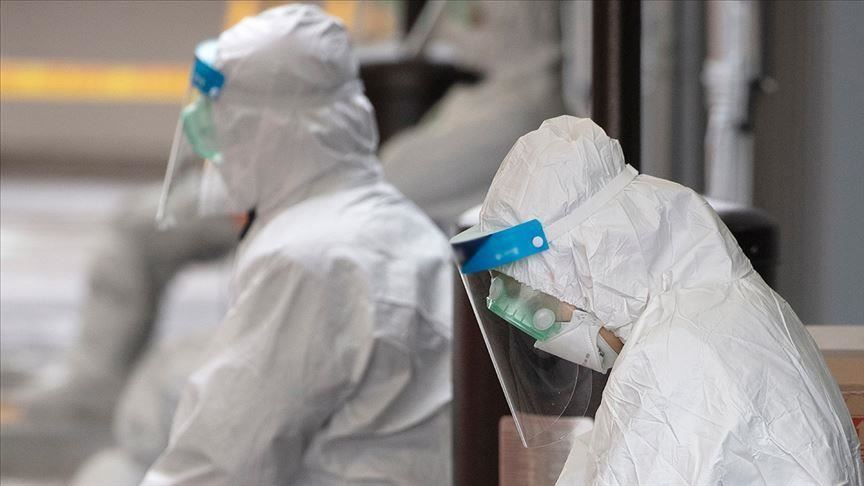
    The World Health Organisation (WHO) is considering “airborne precautions” for medical staff after a new study showed the coronavirus can survive in the air in some settings.

    The virus is transmitted through droplets, or little bits of liquid, mostly through sneezing or coughing, Dr Maria Van Kerkhove, head of WHO’s emerging diseases and zoonosis unit, told reporters during a virtual news conference on Monday. The everyday person shouldn’t be concerned, but medical professionals may be susceptible when performing certain procedures, in certain situations.

    According to Van Kerkhove, “When you do an aerosol-generating procedure, like in a medical care facility, you have the possibility to what we call aerosolise these particles, which means they can stay in the air a little bit longer.”

    She added: “It’s very important that healthcare workers take additional precautions when they’re working on patients and doing those procedures.”

    World health officials say the respiratory disease spreads through human-to-human contact, droplets carried through sneezing and coughing as well as germs left on inanimate objects. The coronavirus can go airborne, staying suspended in the air depending on factors such as heat and humidity, they said.

    In a separate incident in the US, Adam Burdick, a choir conductor, informed the 121 members in an e-mail that amid the “stress and strain of concerns about the virus,” practice would proceed as scheduled at Mount Vernon Presbyterian Church.

    Sixty singers showed up. A greeter offered hand sanitiser at the door, and members refrained from the usual hugs and handshakes.

    “It seemed like a normal rehearsal, except that choirs are huggy places,” Burdick recalled. “We were making music and trying to keep a certain distance between each other.”

    After two and a half hours, the singers parted ways at 9 pm.

    Nearly three weeks later, 45 have been diagnosed with COVID-19 or ill with the symptoms, at least three have been hospitalised, and two are dead.

    The outbreak has stunned county health officials, who have concluded that the virus was almost certainly transmitted through the air from one or more people without symptoms.

    In interviews with the Los Angeles Times, eight people who were at the rehearsal said that nobody there was coughing or sneezing or appeared ill.

    Everybody came with their own sheet music and avoided direct physical contact. Some members helped set up or remove folding chairs. A few helped themselves to mandarins that had been put out on a table in back.

    Experts said the choir outbreak is consistent with a growing body of evidence that the virus can be transmitted through aerosols — particles smaller than 5 micrometers that can float in the air for minutes or longer.

    A study published March 17 in the New England Journal of Medicine found that when the virus was suspended in a mist under laboratory conditions it remained “viable and infectious” for three hours — though researchers have said that time period would probably be no more than a half-hour in real-world conditions.