Category: Lifestyle

  • Pakistani advert featured on ‘Ads of the World’ website

    Pakistani advert featured on ‘Ads of the World’ website

    An advertisement for Pakistan Cables was featured on the Ads of the World website. Pakistan Cables is the country’s premier electric cable manufacturers.

    Designed by Wakhra Studios, the objective of the ad was “to increase awareness of Pakistan Cables’ SMS Verification System and encourage customers to validate the authenticity of their purchase.”

    AOTW is the largest creative advertising community in the world and features creative and out of the box ads from across the world.

  • Kensington Palace tweets about Royal Visit in Urdu

    Kensington Palace tweets about Royal Visit in Urdu

    Ahead of the Duke and Duchess of Cambridge’s first official visit to Pakistan, Prince William and Kate Middleton attended an exclusive reception hosted for them by His Highness the Aga Khan in association with Pakistan High Commission at the Aga Khan Centre in London.

    The Royal’s official Twitter handle, Kensington Palace tweeted about the event in Urdu and also shared pictures from it. They also revealed the official hashtag of their visit: #RoyalVisitPakistan.

    Prince William and Kate are scheduled to visit Pakistan from October 14 to October 18.

    Speaking at the event, the Duke and Duchess said they are excited to visit Pakistan to meet its people and to witness and experience its beautiful culture. The Duchess added that she is looking forward to trying out the spicy food. Prince William said that he has heard wonderful things about the country.

    Meanwhile, Kate wore a green dress for the event and accessorised her look with a pair of earrings from Pakistani brand Zeen.

  • Experts question Modi’s claims as millions still relieve themselves in public

    Experts question Modi’s claims as millions still relieve themselves in public

    India is to be declared “open-defecation free” by Prime Minister (PM) Narendra Modi on Wednesday evening, although experts question his bold claim that all 1.3 billion people in the country have access to a toilet, Agence France-Presse (AFP) has reported.

    Modi made his “latrines for all” pledge when he first assumed office in 2014 and is hailing the project’s success as India celebrates the 150th anniversary of the birth of independence hero Mahatma Gandhi, a sanitation champion.

    Since being elected, Modi’s government says it has built almost 100 million toilets, winning the leader plaudits abroad, including an award from the Bill and Melinda Gates Foundation last week.

    In March, the government had said fewer than 50 million people relieved themselves outside, down from 550 million in 2014, with more than 550,000 villages declared open-defecation free.

    However, experts are sceptical over his claims, citing data from rural as well as urban areas.

    “A lot of latrines have been constructed from 2014 to 2018. Latrine ownership increased from about 35 per cent to about 70 per cent,” said Sangita Vyas from the Research Institute for Compassionate Economics (RICE).

    “That increase did accelerate the reduction of open defecation but in December 2018 we estimated about half of the people in the states of Bihar, Madhya Pradesh, Uttar Pradesh and Rajasthan still defecated in the open,” she told AFP, doubting that the shortfall has been made up since.

    Many of the toilets that have been constructed are without a water connection and even when they are connected, cultural barriers stop many Indians from using them, experts say.

    Modi, 69, was set to make the grand announcement in his western home state of Gujarat today evening in front of 20,000 village chiefs.

    He was also due to visit the Sabarmati Ashram in Gujarat, where Gandhi based himself for many years, and where 10,000 jars of treated human faecal matter were to be handed to guests, the Indian Express daily reported.

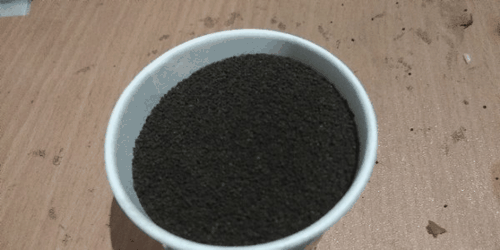
    The nutrient-rich matter — sun-dried, sieved into a tea leaf-like consistency and packed into the glass jars together with seeds — will then sprout upon watering.

    Before that, Modi early on Wednesday paid his respects to Gandhi, who was assassinated the year after India gained independence from Britain in 1947, at the Raj Ghat memorial in New Delhi.

    He said on Twitter that India was expressing “gratitude to Mahatma Gandhi for his everlasting contribution to humanity. We pledge to continue working hard to realise his dreams and create a better planet”.

    Other events also took place nationwide including in a hospital room in Pune where Gandhi was operated on for appendicitis in 1924.

    As many as 600 prisoners were also set to be released in an amnesty, media reports said.

    Later on Wednesday, a year-long, 14,000-kilometre (8,700-mile) “global peace” march was due to leave Delhi bound for Switzerland and taking in 10 countries.

  • Teen found dead as charging mobile phone explodes near her head

    Teen found dead as charging mobile phone explodes near her head

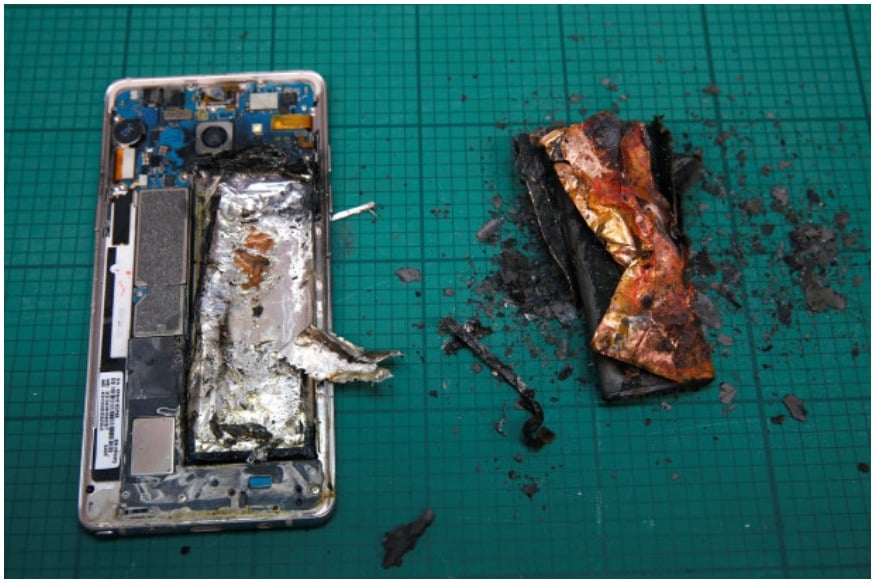
    A schoolgirl has died after her charging smartphone exploded on her pillow when she was sleeping. 

    The deceased girl was identified as 14-year-old Asetkyzy Abzalbek, whereas, the incident is reported from Bastobe, Kazakhstan.

    The girl went to bed listening to music. She was found dead the next morning by her relatives with an exploded mobile phone plugged into a power socket near her pillow. As per reports, she is believed to have received severe head injuries and died on the spot.

    Forensic experts later confirmed that the mobile exploded in the early morning after overheating as it charged. The brand of the smartphone was not disclosed.

    The latest death is among the series of mobile batteries’ explosion incidents reported in Russia and other parts of the world.

  • 5 pocket-friendly fiber-rich foods that help you lose weight

    5 pocket-friendly fiber-rich foods that help you lose weight

    Are you trying to lose weight? Or having any constipation problems? Here are five pocket-friendly fiber foods that can help you lose weight.

    How does this diet work?

    A high-fiber diet has wonderful benefits, one of these is weight loss. Fiber helps limit your hunger by adding bulk that gives you a feeling of fullness after consuming a meal without adding calories or increasing your blood sugar level.

    Fibrous foods need more chewing adds to the benefits of making you feel fuller and more content with your meal.

    Five easily available and pocket-friendly high fiber foods:

    • Oatmeal
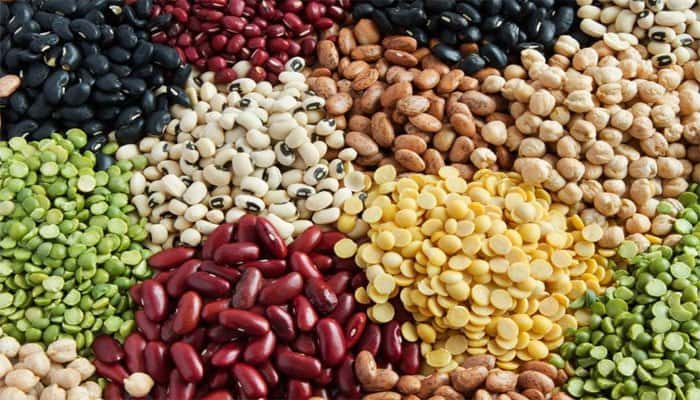
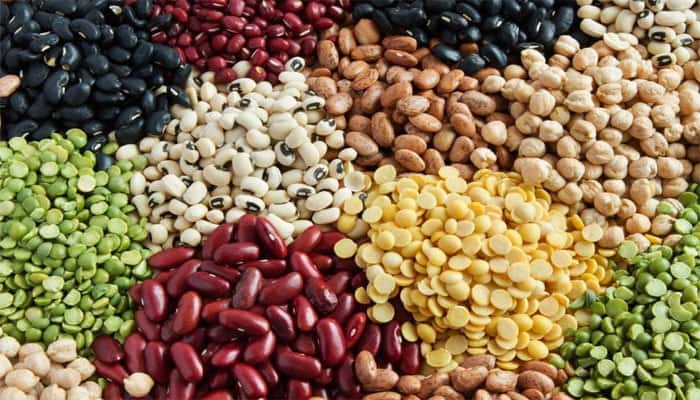
    • Beans
    • Chia Seeds
    • Lentils
    • Flax Seeds

     Oatmeal

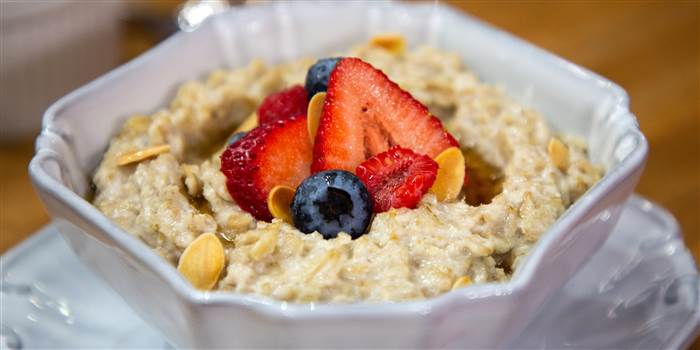
    A good breakfast is important for speeding up your metabolism, and oats can help you to improve your metabolism. Oats are the best food to start your day with if you’re trying to lose weight. You could have oatmeal with milk and add your favorite fruits. Also, please note that half (1/2) a cup of oatmeal constitutes 4 grams of fiber.

    Beans

     Kidney beans and black beans, apart from helping using weight loss also assist in improving gut and heart health. These beans also contain a very essential nutrient known as folate, a deficiency of which could cause weakness, fatigue, heart palpitations, and irritability.

     Chia seeds

    Chia seeds are superb in reducing belly fat and are undoubtedly one of the best high-fiber foods. You could sprinkle the small chia seeds on your morning oats or your day time smoothie, or even make a chia seed pudding. Do you know that just two tablespoons of these seeds give almost 11 grams of fiber?

    Lentils

    Lentils, ‘daal’ are a go-to food for lunch and dinner. The best part about lentils is their easy availability and consumption in almost every house of Pakistan. About ½ a cup adds about 8 grams of fiber. You could even use lentils in salads or soups.


     Flax seeds

    Flax seeds have high protein content which helps suppress your hunger and have low calories. The benefits of these seeds include cholesterol control, constipation relief and skincare.

    NOTE:  Go slow with this change and increase your fiber intake gradually over a couple of days for a healthy digestive system and a balanced diet.

  • Sindh Food Authority bans sale of unpacked tea, low-quality ketchup

    Sindh Food Authority bans sale of unpacked tea, low-quality ketchup

    The Sindh Food Authority has decided to ban the sale of unpacked tea and low-quality ketchup across the province.

    As per reports, the authority has also banned the sale of food items on printed papers and no one will be allowed to sell meat products without halal certification. Food items which have Monosodium Glutamate (Monosodium glutamate is a flavor enhancer commonly added to Chinese food, canned vegetables, soups and processed meats) in them have also been banned.

    According to the notification, a ban has also been imposed on the sale of all products which do not have halal certification.

  • Govt to impose ‘Cleanliness tax’ on every home

    Govt to impose ‘Cleanliness tax’ on every home

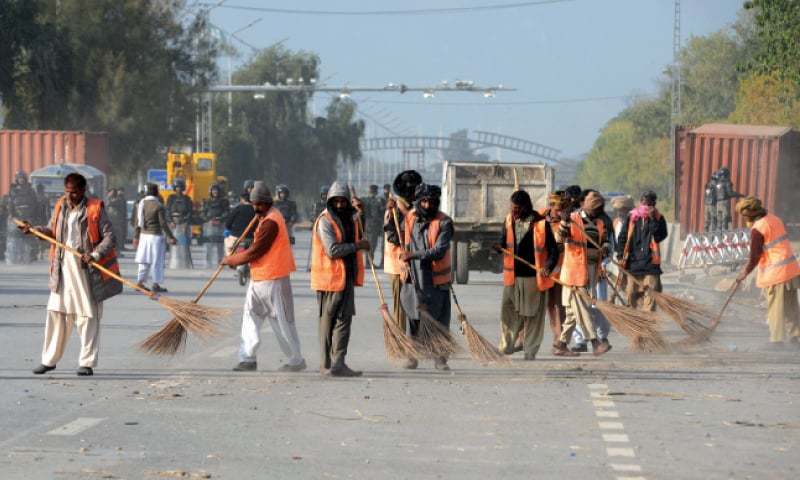
    The Pakistan Tehreek-e-Insaf (PTI) government has decided to impose “cleanliness tax” on every house in Islamabad, a private media outlet has reported.

    According to reports, every year the government spends nearly Rs2 billion on the cleanliness of rural and urban areas in the federal capital, considering which the municipal corporation has now sought references on how to levy the said tax.

    The corporation has also established a committee in this regard and is aiming to collect around Rs1 billion every year.

    The tax will initially be imposed on houses in urban areas and each house, including government properties, will have to pay it.

    WATCH VIDEO:

  • Huawei to launch 6G soon?

    Huawei to launch 6G soon?

    Chinese tech giant Huawei has already started working on 6G, the next generation of mobile networks after 5G, claims company CEO, Ren Zhengfei.

    5G is presently believed as the next generation of mobile communication, providing super-fast data speeds being important to new technologies like self-driving cars. While most counties in the world are still waiting for 5G, Huawei CEO Ren Zhengfei claims that the company is already doing research on 6G.

    As per reports, Huawei has been working on 6G along with 5G. However, the development of 6G is still underway and has a long way to go before it becomes a reality. The technology is still 10 years away as there are a lot of other things that need to be taken care of.

    Before a new mobile network generation can commercialize, standards need to be set by the industry. This has already happened in 5G’s case and discussions are ongoing for 6G, but standards can take years to form. It is also unclear what 6G will be used for.

    The company is currently focusing its efforts and resources on 5G deployment. It has signed more than 50 commercial 5G contracts, more than its closest competitors Nokia and Ericson.

  • Sindh announces to ban plastic bags

    Sindh announces to ban plastic bags

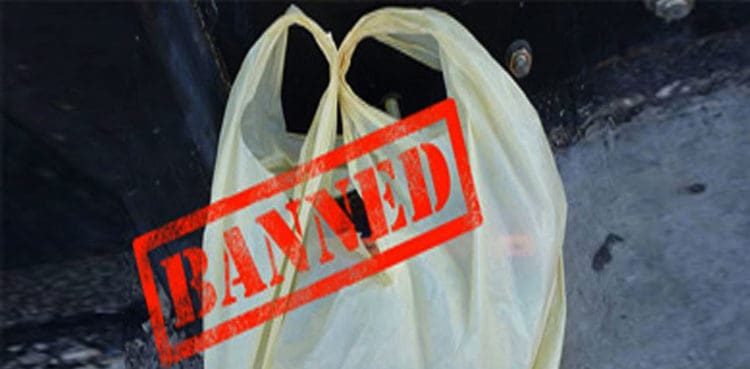
    The Government of Sindh has announced a ban on plastic bags across the province from October 1st (tomorrow).

    As per reports, the Sindh Government’s Environment Department has issued a notification to ban the production, sale, purchase, and use of non-biodegradable plastic bags.

    Legal action will be initiated against anyone who breaks the law. Special teams will monitor different markets and those found involved in any violation of the law will be punished accordingly, said the notification.

    Adviser to CM on environment Murtaza Wahab advised citizens to replace plastic bags with paper or cloth bags.

    Biodegradable refers to substances that are capable of being decomposed by bacteria and other living organisms and do not pollute the environment. Ordinary plastic does not degrade and stays in the ecosystem for years and years, creating pollution and health hazards for living things.

  • Kashmiris protest against India with apples

    Kashmiris protest against India with apples

    Farmers in India-occupied Kashmir (IoK) are intentionally letting their apples rot in a bid to discourage the valley’s most profitable export as bitterness towards the Indian government grows.

    According to a report by AFP, farmers are purposely sabotaging the crop, vital to the local economy, in protest against Modi’s government.

    At an orchard in central Shopian district, Ghulam Nabi Malik and his brother usually sell 7,000 boxes of apples per year earning them some seven million rupees (nearly $100,000). Their land is now idle, with branches drooping under the weight of unpicked fruit.

    “Let it rot on the trees,” Malik said, adding, “To leave the ripe apples rotting on the trees is the only form of protest we can do under the current circumstances.”

    Malik said that harvesting would allow the Indian government “to tell the world that everything is fine in Kashmir” and he wants the world to know that everything is far from fine.

    In early August, the Indian Government revoked Article 370 which granted special status to IoK. Troops were deployed in the region and all communication in the valley was blocked, cutting off Kashmiris from the outside world. Thousands of civilians and political leaders have been arrested and protests have raged since.

    Pro-independence fighters have pasted posters outside mosques, appealing to orchard owners not to harvest and instead join the protest.

    The fertile Himalayan region usually sells apple worth hundreds of million dollars each year, and more than half of Kashmiris are engaged directly or indirectly in cultivation.